67.7 Billion, the global "reseller" of large AI models is about to sell itself off.
Zheidong, July 24 report: According to a Wall Street Journal report today, U.S. fintech company Stripe is in talks to acquire OpenRouter, the leading large model hub. The specific transaction price is not yet known, but some insiders say the deal could be valued at around $10 billion (about 67.755 billion yuan).
Insiders added that several large tech companies are also considering acquiring OpenRouter. The deal between Stripe and OpenRouter may be announced soon, but negotiations could still fall through, and other bidders could emerge.
Founded in 2023 by Alex Atallah and Louis Vichy, OpenRouter is headquartered in San Francisco, USA. Its CEO Alex Atallah previously founded OpenSea, the world's largest NFT platform, exited before the bubble burst, and then moved into the AI track.
OpenRouter operates in an emerging track within the AI infrastructure field — the large model hub, which is essentially a model router or model aggregation platform.
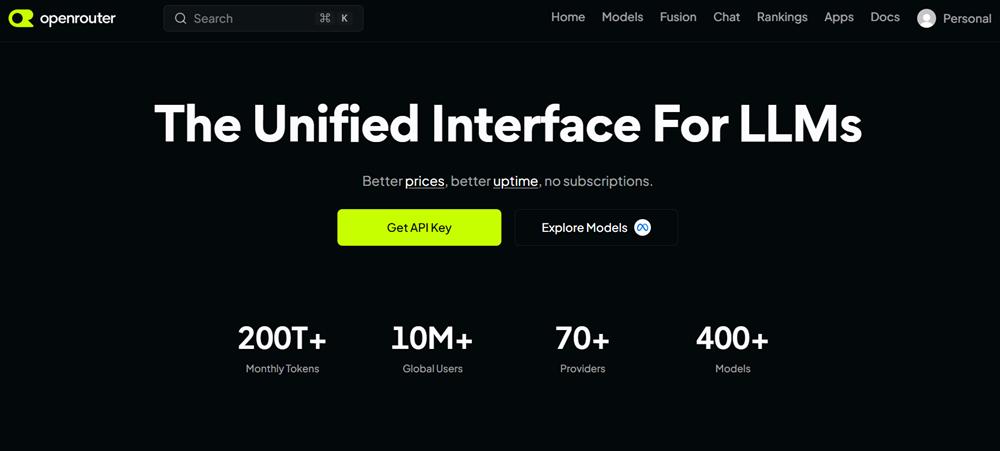
▲OpenRouter official website
Specifically, the OpenRouter platform integrates over 400 large language models, including closed-source commercial models such as OpenAI's GPT series and Anthropic's Claude series, as well as open-source models such as DeepSeek and Kimi. Developers and enterprises only need a single set of API interfaces from OpenRouter to call, compare, and switch AI models from different vendors simultaneously, without the need to separately integrate with each vendor.
The commercial value of this model lies in two points: First, it helps enterprises compare multiple options and automatically select the most cost-effective model for different task scenarios; Second, it provides failover capabilities — when a certain model service goes down or is rate-limited, it automatically switches to a backup service to ensure business continuity. For small and medium-sized developers who do not want to be locked in by a single AI giant but lack the capability to build their own model routing system, this serves as an extra layer of protection.
OpenRouter's business model is also straightforward: charging service fees to enterprise customers using its platform, or earning the price difference on model services when users top up their platform credits.
In May this year, OpenRouter was valued at $1.3 billion in its latest funding round, with investors including Menlo Ventures and CapitalG, the growth fund under Google's parent company Alphabet. It is worth noting that OpenRouter and Stripe have had a prior partnership, with the former using Stripe to process customer payments.
Stripe's acquisition of OpenRouter may seem like a cross-sector move, but it is fully aligned with its strategy of expanding into the AI infrastructure space in recent years. This payment company has long been deeply tied to the AI industry: as early as 2023, OpenAI selected Stripe to handle subscription payments for ChatGPT Plus; today, all companies on the Forbes AI 50 list that support online payments run on Stripe, with Anthropic, Midjourney, and Cohere all being its customers.
At the Stripe Sessions conference in April this year, Stripe launched 288 products at once, almost all themed around building economic infrastructure for AI, including the Link wallet open to Agents, streaming payments settled in real time per token, and the MPP protocol for machine-to-machine micropayments. Its co-founder and CEO Patrick Collison predicted that intelligent agents will dominate the vast majority of online transactions in the future.
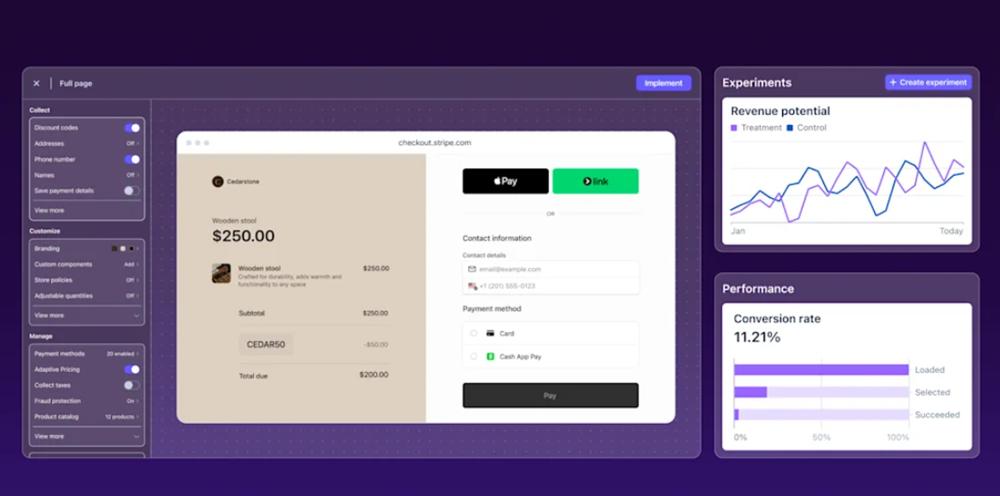
▲Stripe's payment services tailored for AI scenarios
In addition to its continuous new moves in the AI track, Stripe is also partnering with private equity firm Advent International to advance the acquisition of PayPal. The unilateral takeover bid they recently issued values PayPal at approximately $53 billion. However, this offer is considered too low, and Stripe and Advent are currently evaluating their next steps.
Conclusion: The multi-model strategy gives rise to the value of the "routing layer"
Currently, an increasing number of enterprises tend to adopt a multi-model strategy, meaning they do not put all their bets on a single vendor like OpenAI or Anthropic, but flexibly allocate different models based on cost, performance, and reliability.
OpenRouter can precisely provide such services, which is one of the important reasons why its valuation has continued to rise in this transaction. At a time when model capabilities are converging, enterprises that can more efficiently connect demand and supply are demonstrating significant value across the AI industry chain.
This article is from the WeChat Official Account "Zheidong" (ID: zhidocom), authored by Chen Junda, and published by 36Kr with authorization.