The "100% new energy outbound transmission" is put forward for the first time, and the decision-making level has proposed new methods to increase the consumption of new energy.
How to address the consumption and utilization of large-scale wind and solar new energy bases, the decision-making authorities have put forward new ideas.
According to China Energy Net, on July 10, the Action Plan for Energy Conservation and Carbon Reduction in the Energy Sector (2026-2028) released by the National Energy Administration proposed to promote in an orderly manner the planning and construction of clean energy bases such as those in desert, gobi and arid regions, and integrated wind-solar-hydro bases, as well as cross-provincial and cross-regional power transmission channels.
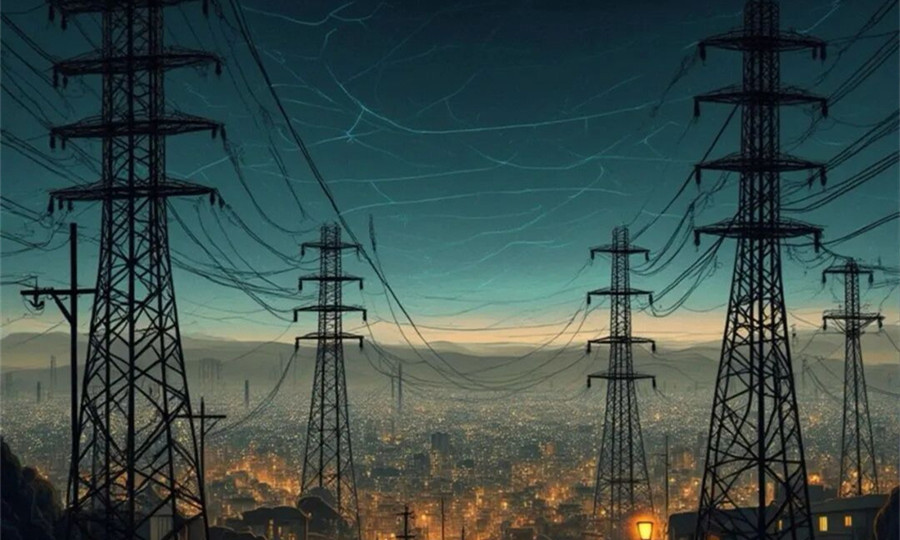
The document also proposed to conduct demonstrations and pilots for 100% new energy outward transmission projects.
This statement has quickly attracted great attention from the industry. On the one hand, it is "breakthrough" because previously, achieving 100% new energy outward transmission was almost unthinkable; on the other hand, it demonstrates "determination" — although it is only at the stage of "demonstration and pilot implementation", it reflects the National Energy Administration's resolve to solve the high curtailment rate of wind and solar power in large new energy bases.
The Dilemma of Large New Energy Bases: "Easy to Generate, Hard to Transmit"
At present, China's large new energy bases are mainly divided into three categories: new energy bases in desert, gobi and arid regions in the "Three-North" areas, integrated hydro-wind-solar bases in the southwest, and deep-sea offshore wind power bases in the east.
The existing capacity of the "three major bases" is extremely large. The new energy bases in desert, gobi and arid regions in the "Three-North" areas alone have a capacity of 200-300 million kW, and this scale is expected to rise to around 600 million kW by 2030. Before 2035, most of the annual new added new energy installed capacity of around 200 million kW will be deployed in these "three major bases".
However, new energy projects in large bases generally face the problem of "easy to generate, hard to transmit". As early as March 2024, the head of the New Energy Dispatch and Operation Office of the New Energy Research Center of China Electric Power Research Institute stated in a speech that the utilization rate of domestic new energy is experiencing a rare decline, and centralized new energy has shown the phenomenon of "no demand during low load, no transmission during peak hours" in cross-regional power transmission.
The so-called "no demand during low load, no transmission during peak hours" means that when new energy output from large bases is at its peak, the receiving areas in central and eastern China are in their low electricity consumption period with high local distributed new energy output, so they do not need a large amount of external power from wind and solar bases; while during the evening peak of electricity consumption in the receiving areas, the large bases cannot deliver power out.
Regarding the "easy to generate, hard to transmit" problem of large new energy bases, LU Ting from the Institute of Technical Economics of China Energy Investment Corporation recently pointed out in a special report on the outward transmission capacity of new energy bases in desert, gobi and arid regions that the assessment of the outward transmission capacity of these bases should not only focus on a single link, but establish a systematic assessment framework covering the entire chain of power sources, transmission channels and receiving grids.
Specifically, it is necessary to comprehensively consider the coupling constraints of the power source characteristics of the bases, the transmission capacity of DC channels, and the power receiving capacity of the receiving grids; promote multi-stakeholder collaboration across all links, and optimize the matching between base capacity planning and outward transmission channel construction; provide more accurate technical assessment methods for the outward transmission capacity of large new energy bases, to support the stable outward transmission and consumption of large-scale green power.
In short, the "easy to generate, hard to transmit" dilemma of large new energy bases stems not only from the high volatility of new energy, but also from the actual transmission capacity of UHV DC channels, as well as the space for receiving capacity in the receiving areas and the competition and game of new energy between the sending and receiving ends. Due to the complexity of the problem, the outside world once believed that there would be no simple and feasible solution in the short term.
Evolution of Consumption Ideas for Large New Energy Bases
In order to effectively solve the consumption problem of wind and solar large bases through west-to-east power transmission, the 14th Five-Year Plan requires that the proportion of renewable energy power in newly built UHV channels should in principle not be less than 50%.
In fact, this target could not be achieved for a long period of time. According to data from the National Energy Administration, in 2022, the proportion of renewable energy in UHV channels such as Tianzhong, Lingshao, Qishao, Zhaoyi, Jiquan and Shanwu was only 40%, 20%, 15%, 28% and 28% respectively.
In addition to the low proportion of new energy power transmission, there are also some problems in the overall transmission capacity of UHV. For example, in 2023, Qinghai had about 20 million kW of photovoltaic and nearly 10 million kW of wind power. The outward transmission of new energy to other provinces mainly relied on the Qinghai-Henan DC (±800 kV from Qinghai to Henan). This UHV outward transmission channel, the only one in Qinghai Province, was completed and put into operation at the end of 2020, with a designed annual transmission capacity of 40 billion kWh, but the actual annual transmission volume in 2023 was less than a quarter of the designed capacity.
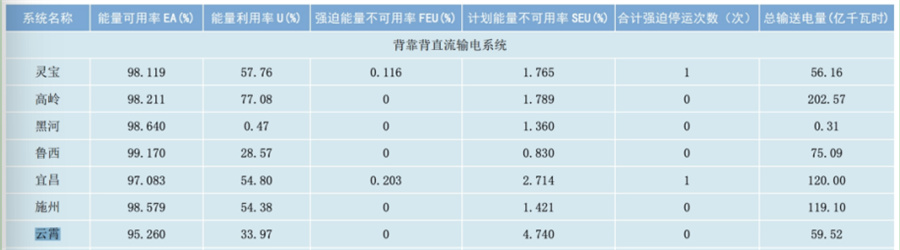
2025 Utilization Rate of Some UHV Transmission Lines
After the problems of UHV transmission capacity and new energy curtailment in large bases emerged, the state adjusted its consumption ideas in a timely manner, shifting from the single west-to-east outward transmission to "walking on two legs": not only improving the outward transmission capacity of new energy via UHV, but also exploring effective ways for local consumption of new energy in large bases.
In practice, there are two main methods for local consumption of new energy in large bases: one is the non-electric utilization of new energy, such as producing green hydrogen from wind and solar power; the other is direct green power connection, where some high-energy-consuming industries are relocated to the "Three-North" areas to form zero-carbon industrial parks, realizing direct green power connection for new energy consumption.
However, the local consumption of new energy in large bases itself has some insurmountable problems. For example, for non-electric utilization of new energy and green hydrogen production from green power, not to mention that the high cost is difficult to decrease effectively in the short term, even if the path of non-electric utilization of new energy is successfully implemented, it still cannot solve the carbon neutrality problem in the power sector. For another example, the direct connection of new energy green power cannot change the inherent characteristics of new energy such as randomness, intermittency and volatility, so the overall effect of this method on new energy consumption cannot be overestimated.
In other words, even if both "legs" of UHV outward transmission and local new energy consumption are used, the high new energy curtailment problem still exists. This can be seen from the comparison of new energy installed capacity and power generation between China and the United States. According to statistics from Zero Carbon World, as of April 2026, China's solar power installed capacity was 1.25 billion kW, and its solar power generation in April that year was 57.06 billion kWh. In the same period, the solar power installed capacity of the United States was about 280 million kW, and its monthly power generation was about 45.5 billion kWh. That is to say, China's solar power installed capacity is 4.5 times that of the United States, but its power generation is only 1.25 times that of the United States.
Under the same sun and the same energy storage technology, and with a power grid more powerful than that of the United States, there is only one explanation for China's high photovoltaic curtailment and low utilization rate: the United States has effectively reduced the output of gas and coal-fired power, making sufficient power generation space for new energy; while China has failed to effectively reduce coal-fired power output, resulting in high new energy curtailment and low utilization rate.
How to Achieve "100% New Energy Outward Transmission"?
Before discussing "100% new energy outward transmission", it must be clarified that at present, coal-fired power accounts for a large proportion in the outward transmitted power from large new energy bases.
For example, on May 8 last year, the ±800 kV UHV DC transmission project from Longdong to Shandong, with a total investment of 20.2 billion yuan, was completed and put into operation. This project is China's first outward transmission project of a large-scale comprehensive energy base with "integrated wind-solar-coal-storage", which delivers bundled wind, solar and coal-fired power. It can transmit 36 billion kWh of electricity to Shandong every year, of which the proportion of new energy is about 50%, and the rest is coal-fired power.
This leads to the problem that our power consumption is still not clean enough, and the progress of coal reduction and carbon mitigation is slow. This has also triggered many debates from all walks of life. For example, some people argue that the so-called cleanliness of electric vehicles is just "pseudo-environmentalism", because most of the electricity they are charged with comes from coal-fired power plants, and electric vehicles only move the pollution emissions from motor vehicles from roads to power plants.
However, it is not easy to achieve "100% new energy outward transmission". It is inevitable that no additional coal-fired power units will be constructed, and a large number of energy storage facilities need to be added. This not only has technical challenges, but also will inevitably lead to cost increases. On the one hand, it is of course the cost of construction, operation and maintenance of energy storage facilities; on the other hand, it is the rise in the cost of power transmitted from the entire large base.
More importantly, "100% new energy outward transmission" will also bring a series of challenges on the receiving side. Without the backup support of coal-fired power, the volatility of new energy outward transmission will be very obvious. At noon when new energy output in the west is at its peak, the east is exactly in a period without power shortage; when the east needs power during the evening peak, the new energy power generation capacity in the west is at its weakest.
Faced with 100% new energy power transmitted from the large bases, the receiving areas need to make every effort to cooperate in consumption, otherwise the generation and consumption sides cannot be matched, and the entire chain will break. To make room for the utilization of 100% new energy, the eastern regions also need to take practical actions to reduce coal-fired power output.
In short, whether analyzed from the sending side or the receiving side, the only way to realize "100% new energy outward transmission" is first of all to reduce coal-fired power generation. This is essentially a problem of redistributing the interests of the entire system.
However, as a major stakeholder, the coal-fired power industry is difficult to "revolutionize" itself, and the proportion of coal-fired power generation has always remained above 60%. To achieve "100% new energy outward transmission" and improve the utilization rate of new energy, it is necessary to adjust the medium and long-term contract signing ratio for coal-fired power plants, and accelerate the construction of a new type of power grid in the power grid dispatch mechanism.
Nowadays, as the state clearly proposes the demonstration and pilot of "100% new energy outward transmission projects", perhaps nothing will be impossible to achieve in the future. When a transmission line can realize 100% new energy, the breakthrough and imagination space in the future will be that more large bases completely abandon coal-fired power, and the resulting improvement in new energy consumption will be highly anticipated.
This article is from the WeChat public account "China Energy Net", author: www.hxny.com, authorized for release by 36Kr.