Use AI to beat Chinese cars
95% of automotive design work completed by AI, development costs reduced by 90%... It sounds impressive, but don't act as if Chinese automakers have no idea how to use AI.
"European automakers have an opportunity to catch up in product R&D — and potentially even surpass their Chinese rivals," Pierre Baque, Founder and CEO of Neural Concept, recently made a controversial remark.
Where does this controversial claim lie? There are two dimensions to it.
First of all, Baque essentially admitted that European automakers, the pioneers of the automotive industry, have fallen behind the rising Chinese automakers in product R&D.
This reminds the author of C Dimension of an interview two months ago with Philippe Brunet, Global CTO of Renault, who frankly stated that Chinese automakers are indeed leading, and "now Chinese consumers demand intelligent vehicles, and in two or three years, Europeans will too," adding that "China is not an isolated island — the United States is."
Secondly, this statement is not a compliment to China, but a case of "making dumplings just for a bit of vinegar" — "If European automakers can bravely adopt AI technology. But traditional European automakers need to move faster and make more strategic investments."
This is tied to the business nature of Neural Concept. From its name, Neural Concept immediately brings artificial intelligence to mind; its business is developing AI software for engineering teams to reduce costs in the manufacturing process.

Its essence is to help customers use past CAE data to train AI models that can quickly predict simulation results, thereby significantly accelerating the design iteration process.
Previously, advertising was described as "praising one's own goods," but now it has become "distorting comparisons and making baseless claims." Has no one told Baque that Chinese automakers have been widely using AI in production, manufacturing, and product features as a prevailing trend for a long time?
95% of automotive design work completed by AI, development costs reduced by 90%... It sounds impressive, but don't act as if Chinese automakers have no idea how to use AI.
01
Western Automotive Manufacturing Accelerates AI Adoption
"Automakers in Europe and the US are increasingly using AI in the production and manufacturing process to cut development costs, speed up product launches to the market, and compete with Chinese automakers."
This description aligns with the development background of Neural Concept.
Neural Concept is a Swiss AI CAE company founded between 2018 and 2019, with its core product being the Neural Concept AI Engineering Platform.
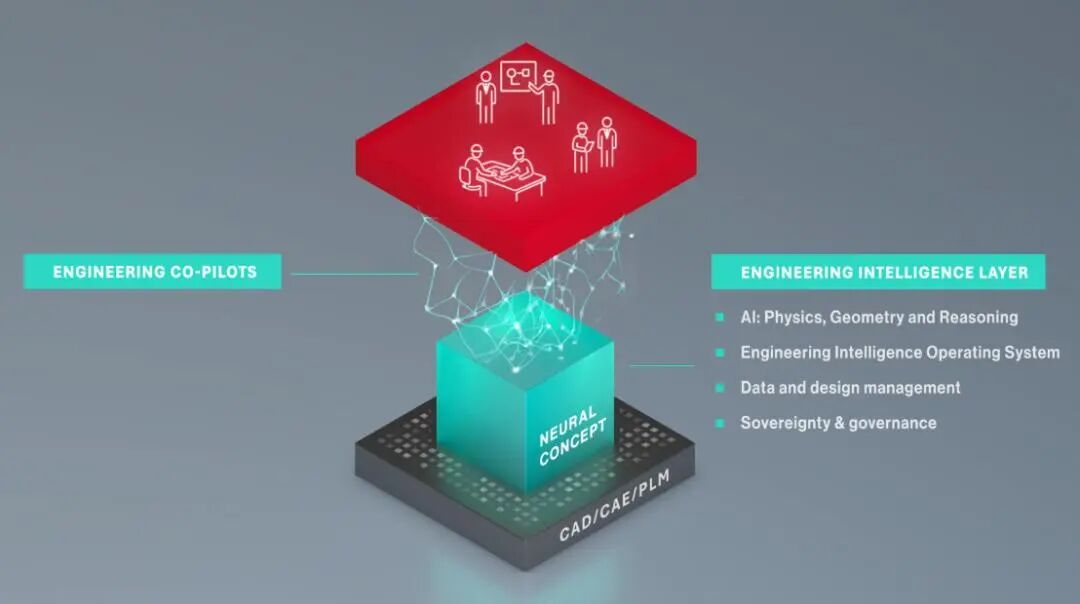
This technology platform can integrate with existing CAX systems in enterprises, directly process CAX files, manage computing power infrastructure, and on this basis, help enterprises create AI simulation models and Agents.
At events such as this year's CES, the Neural Concept AI platform launched new features including Copilot. What's new about it? For example, in automotive design, it initially creates geometric models based on design intent, then iterates through multiple design solutions via AI simulation to identify a more optimal one.
Looking at its English introduction, there are roughly three advantages.
First, it is connected to a large LLM language model, which can convert text descriptions into instructions. Copilot transforms the design intent described in words by engineers into manufacturable 3D geometric models, and supports conversational model modification, thus generating CAD geometries from design concepts.
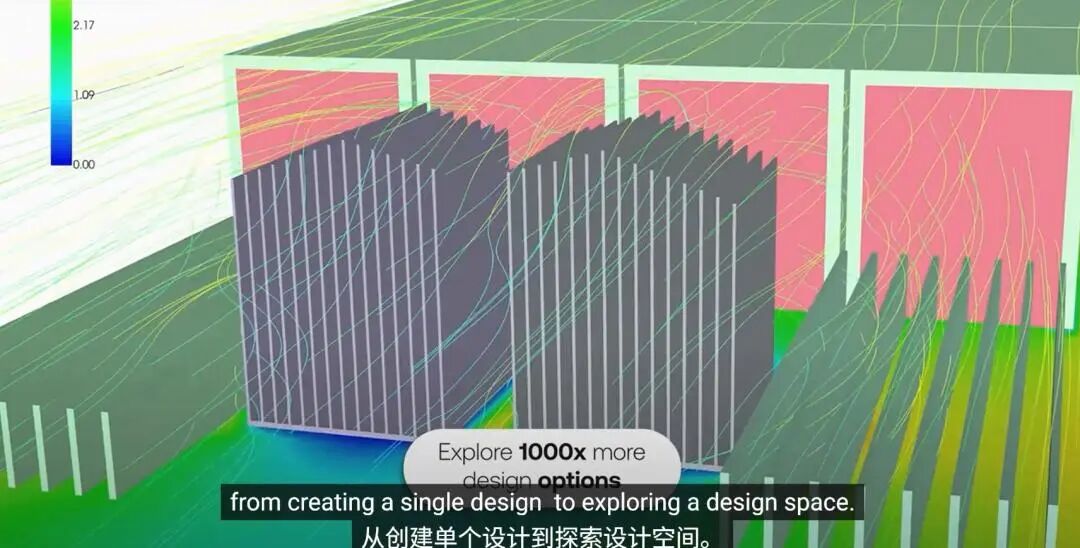
Secondly, it can generate multiple design variants as alternatives at one time, even up to thousands, instead of generating a single model using traditional methods.
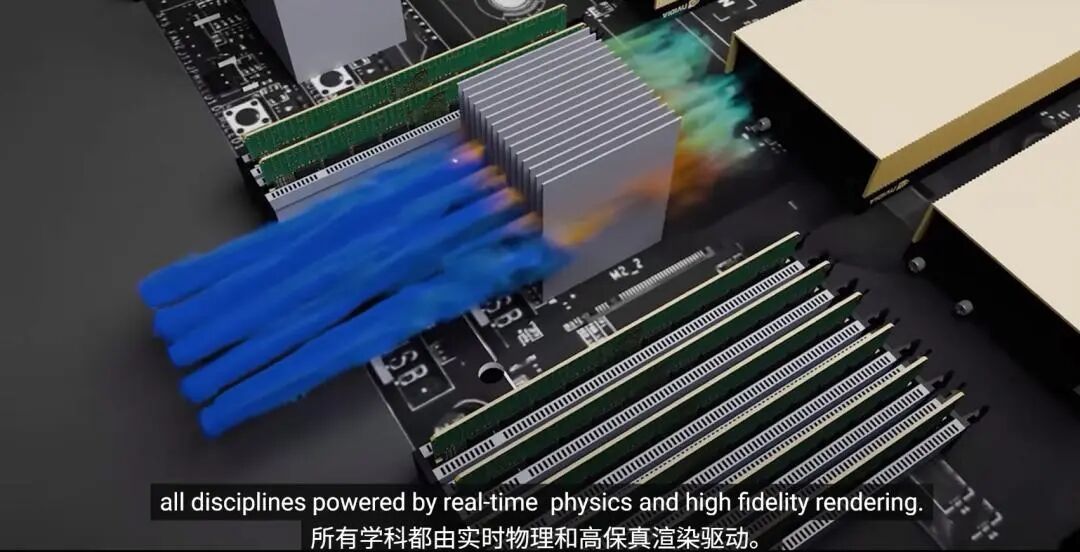
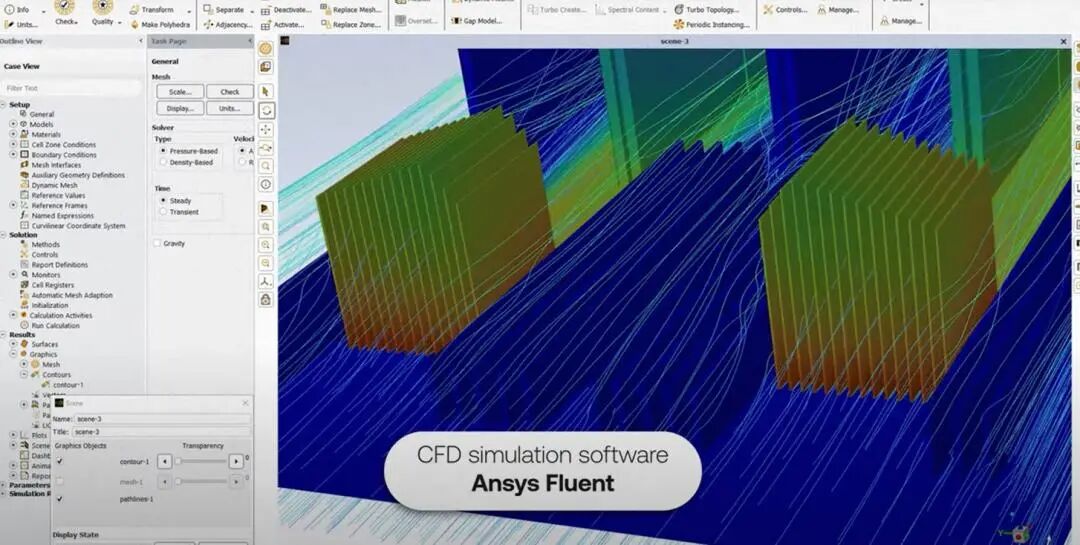
Third, it supports multi-physics simulation, including thermal management, fluid dynamics, crash, and electromagnetics, allowing users to quickly evaluate the performance of potential design solutions.
With the support of Copilot, from confirming design intent to quickly iterating through multiple solutions and finally selecting the optimal one, the entire process and required time have been greatly shortened.
The Neural Concept AI platform focuses on automakers and tier-1 suppliers as its key customers. It has now started to help 15 global automotive clients cut costs and shorten product launch times. Current customers include Jaguar Land Rover, Renault, General Motors, multiple F1 teams, suppliers like Eaton, as well as energy and aerospace enterprises such as GE Vernova, Leonardo Aerospace, and Safran.
"AI is indeed a game-changing opportunity that makes Western automakers more competitive against their Chinese rivals in R&D and manufacturing," Baque emphasized, essentially trying to promote his company's business.
This "AI salesman" finally added a little substantial content amid empty rhetoric: "This is a new race that has only just begun. There is no reason why European automakers cannot win in the end. The competition will be about how much of your R&D is done by AI, and how much is still done manually."
According to data disclosed by Baque, Neural Concept has helped its 15 automotive customers save $50 million in costs and reduce their time-to-market by two years.
It is certain that Neural Concept has strong capabilities in applying AI tools to the automotive CAD/CAE field, but does this determine the direction of the competition between Chinese and Western automakers?
02
"Defeat China"? It's All About Product Sales!
At the Automotive News Europe Congress held in Brussels on June 10, Baque stated that Neural Concept currently "can easily reduce the development time of certain components by 50%," and by 2030, artificial intelligence will evolve from designing individual components to designing entire assemblies, and eventually be responsible for 95% of the end-to-end vehicle design.
He said this will reduce the cost of development tasks (especially repetitive tasks) by 90% and save suppliers "hundreds of millions of dollars."
Baque divides the application of AI technology in automotive manufacturing into two parts: one is building a foundational AI model, and the other is applying the AI model to actual enterprise product development. There is a key difference between the two — and he believes European automakers have an advantage in this gap.
In addition, in his view, Europe benefits from its historical advantages, having nurtured the top automotive engineering, simulation, and development technologies.
He stated that almost none of these core foundational technologies originated in China initially.
He believes many automotive executives are trapped in a "chicken or egg first" dilemma — they demand immediate results from AI, but are unwilling to approve the upfront capital investment required to achieve those results.
Therefore, Baque cited the "top student" example of Tesla, trying to persuade European automakers to adopt AI on a large scale, as Musk introduced AI into automotive production quite early.
"New entrants like Tesla are adopting artificial intelligence faster, and traditional automakers should set efficiency goals for R&D, must force changes, and act boldly." To this end, Baque put forward two suggestions.
On the one hand, traditional automakers must now make clear leadership decisions to fully leverage artificial intelligence, while avoiding trying to build everything from scratch — which would take decades. "Be bold, force changes to happen."
On the other hand, automakers should establish dedicated AI competence centers. These departments are responsible for training mechanical engineers in AI technology, enabling them to solve engineering problems and collaborate directly with business units.
According to data from Indian research firm MarketsandMarkets, the automotive AI market will grow from $18.8 billion in 2025 to $38.5 billion in 2030, doubling in size.
After all that, the ultimate goal is still to advocate that "European automakers are unbeatable," with the real purpose of getting "everyone to buy our company's AI technology."
03
Technical Challenges Remain, Don't Even Talk About Surpassing China
Baque's premise must be that "Chinese automakers have no idea how to use AI," but as is well known, China's manufacturing industry is at the forefront of the world in applying cutting-edge technologies.
At present, many Chinese automakers have deeply integrated AI software into their manufacturing processes, achieving intelligent upgrades across the entire workflow from quality inspection and logistics to production scheduling.
Here are a few examples at random:
JAC Group: In collaboration with Huawei, it used the Pangu CV large model to integrate over 150 independent quality inspection small models, implementing more than 1,500 inspection scenarios at its Zunjie Super Factory, with a vehicle defect interception rate of 99.99%, realizing "one model applicable to multiple scenarios."
FAW Group: Built an "EOA" intelligent operation center, launching 20 "digital employees" to independently handle complex tasks such as production scheduling, reducing manual approval nodes by 60%, cutting R&D and production cycles by 50%, and lowering manufacturing costs by 40%.
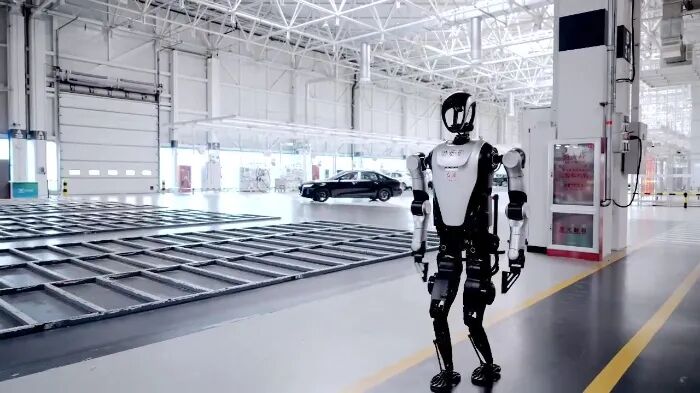
SAIC IM Motors: Deployed a "digital engineer" team composed of more than 30 AI agents to assist in generating 3D models of automotive components and writing requirement documents, reducing the design time for a single reinforcement plate from 2-3 hours to just a few seconds.
Weiben Intelligent: Provided an "integrated stamping, welding and logistics" solution for automakers such as FAW Jiefang. Through AI online quality inspection and 3D vision-guided robots, it achieved zero manual boxing in the stamping parts warehouse, increasing inventory turnover by over 30% and reaching a 100% defect detection rate.
...
These are all AI applications in the B2B field, which is unrelated to consumers. In the consumer-facing C-end field, the first step of deploying large AI models in vehicles is for intelligent cabins, followed by the second step of using them for intelligent driving. How blind and arrogant must one be to think that Chinese automakers are disconnected from AI?
In addition, Neural Concept's technological innovation will also face challenges.
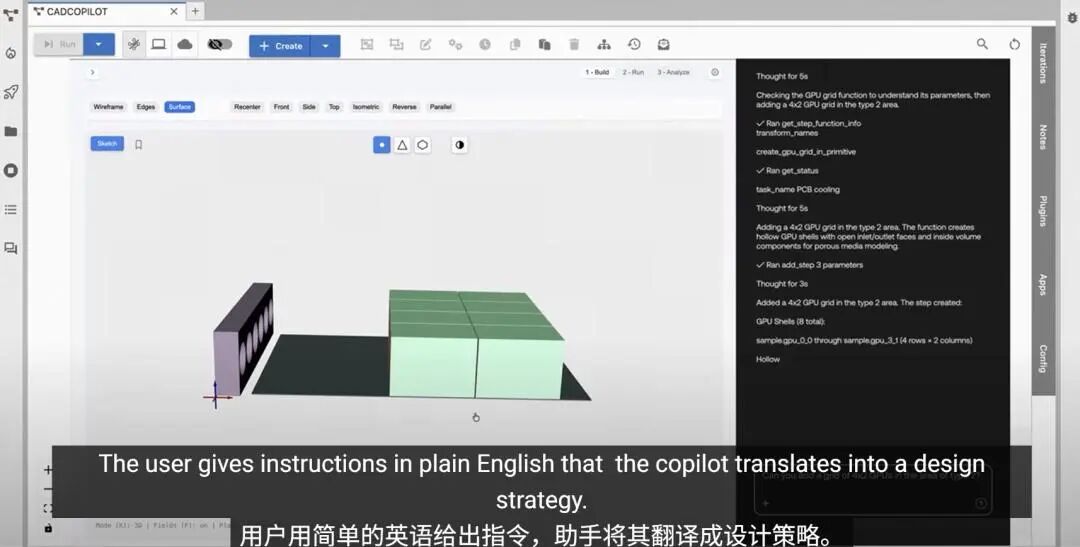
Looking at Neural Concept's Copilot feature, if it previously focused more on custom projects, Copilot represents a major step forward — essentially the integration of CAD and CAE, which points to a potential next-generation intelligent design workflow.
However, it is not easy for AI to understand CAD models. The CAE part is relatively simple, while generative modeling is far more difficult. It is still too early to be optimistic about fully realizing the general workflow from generative design to AI simulation.
For Chinese automakers, the right thing to do is to ignore such hype about "defeating Chinese automakers," focus solidly on manufacturing, and continue exploring the cutting edge of AI technology.
This article is from WeChat Official Account "C Dimension", Author: Shi Jie, Editor: Wang Yue, published with authorization from 36Kr.