The world's first prototype of AI robotic feeding tube system is here.
Recently, NASDAQ-listed medical technology company ENvue Medical (FEED) officially unveiled the ENvue Drive prototype — the industry's first automatic feeding tube placement system that fully integrates three modules: AI intelligent recognition, real-time electromagnetic navigation, and robotic automatic propulsion.
Unlike traditional navigation devices that only visualize catheter position, ENvue Drive is the first to close the full loop from AI perception to intelligent decision-making and then to mechanical execution, transforming bedside feeding tube placement from purely manual operations to standardized and automated workflows.
Although the device is still in the pre-clinical prototype stage, with FDA submission and commercialization not yet completed, the launch of this product sends a clear industry signal: medical AI is breaking through the boundaries of traditional auxiliary diagnosis and formally entering the clinical practice execution phase.
01
Visible Risks, Unattainable Precision
Feeding tube placement is one of the most frequent bedside procedures for ICU critical care patients.
The catheter passes through the nasal cavity, pharynx, esophagus, and finally reaches the stomach or small intestine. The path is short, but if it accidentally enters the airway, it may cause aspiration, pneumothorax, lung injury, or even death. This risk is further amplified in patients with impaired consciousness, on mechanical ventilation, or with complex anatomical structures.
Clinical statistics show that the incidence of catheter malposition during nasointestinal tube placement is 14.7%, of which 2.1% leads to severe complications or even death. Therefore, a safety-first process has been established in clinical practice: medical staff perform blind intubation based on experience, and then confirm the tip position via X-ray examination.
This process has barely changed in the past few decades. The global shortage of medical and nursing manpower has further exacerbated this challenge. Meanwhile, the more precise post-pyloric tube placement traditionally can only be completed in the endoscopy suite or interventional operating room, exposing critically ill patients to high transfer risks.
The industry has not been without attempts to iterate. Traditional electromagnetic navigation devices solved the pain point of "invisible paths", but catheter propulsion still requires manual operation, leaving trajectory deviations caused by hand tremors and uneven force unresolved. While high-end surgical and interventional surgical robots offer high precision, they are bulky, expensive, and only suitable for operating rooms, making them impossible to deploy in general ward bedsides.
The bedside intubation field has long lacked a lightweight intelligent device with both "precise perception" and "stable execution" capabilities — which is exactly the gap ENvue Drive aims to fill.
02
From Perception to Execution, AI and Robots Reconstruct the Full Intubation Process
ENvue Drive is not built from scratch.
Its underlying technology platform, the ENvue electromagnetic navigation system, has already obtained FDA 510(k) marketing clearance in the United States, achieved commercial deployment in dozens of hospitals across the country, and completed hundreds of clinical procedures in total, verifying its core advantage of "zero lung misplacement".
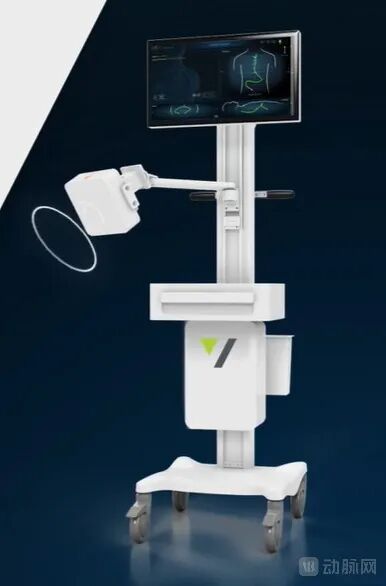
Schematic Diagram of ENvue System Model
The core principle of this system is to construct a three-dimensional positioning space covering the thoracic cavity and gastrointestinal tract through a body surface electromagnetic field. The micro-sensor at the catheter tip feeds back real-time position information, forming a multi-view visualized path on the terminal.
The system can accurately match the patient's body anatomy and intelligently distinguish the airway from the digestive tract. Even if the patient's position shifts during the procedure, it can maintain continuous and precise positioning, solving the blind spot problem of traditional blind intubation at the hardware level.
Building on this mature foundation, ENvue Drive integrates AI algorithms and a robotic execution module to achieve a qualitative leap from visualization to assisted operation.
In simple terms, ENvue Drive is a brand-new robot-assisted system that integrates the ENvue navigation platform (hardware foundation) and the Ask Oscar AI software (intelligent brain).
On the algorithm side, the self-developed AI intelligent navigation software Ask Oscar™ acts as the system's brain. Trained on massive clinical anatomical data, the system can identify key digestive tract structures such as the esophagus, stomach, pylorus, and small intestine in real time, dynamically track the catheter's travel trajectory, recognize path deviations in milliseconds, and predict airway risks in advance.
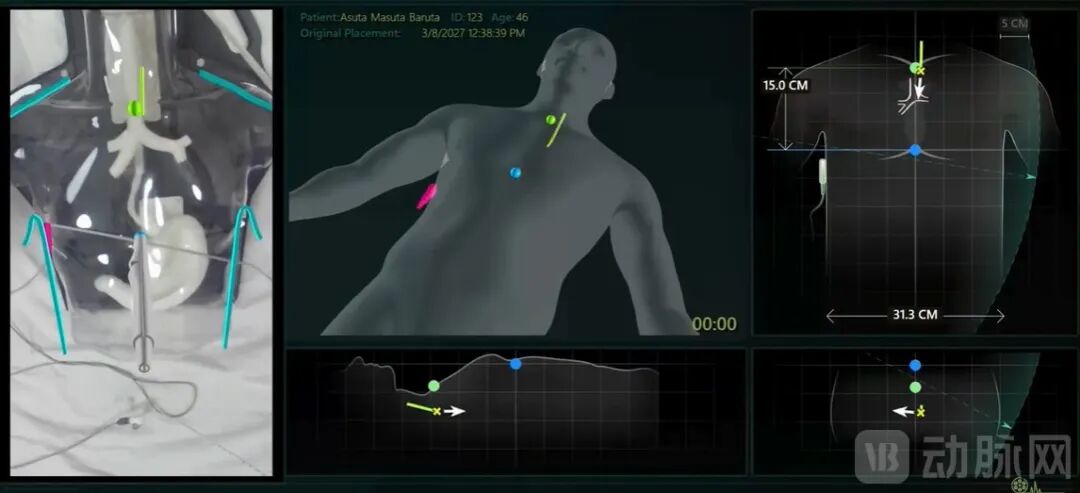
Schematic Diagram of AI Intelligent Navigation Software Ask Oscar™ in Operation
On the execution side, the newly integrated robot-assisted propulsion technology enables automated and semi-automated advancement of the feeding tube. The device can precisely control the propulsion speed and force, maintaining stability and uniformity throughout the process to eliminate intubation deviations caused by human fatigue and uneven force. At the same time, it interacts with the AI navigation system in real time to dynamically adjust propulsion parameters according to the patient's individual anatomical differences, and adaptively correct the travel trajectory.
In terms of safety, ENvue Drive adopts a human-machine collaboration mode of "robot-assisted, clinician-led". Medical staff can pause, intervene, and take over the device at any time. The robot is only responsible for standardized propulsion and intelligent deviation correction, and does not replace clinical decision-making.
In the recently completed full-process simulation demonstration, under the supervision of clinicians, ENvue Drive successfully completed the entire workflow: identifying anatomical paths, detecting trajectory deviations, providing corrective guidance, and assisting in advancing the feeding tube to the target position in the small intestine.
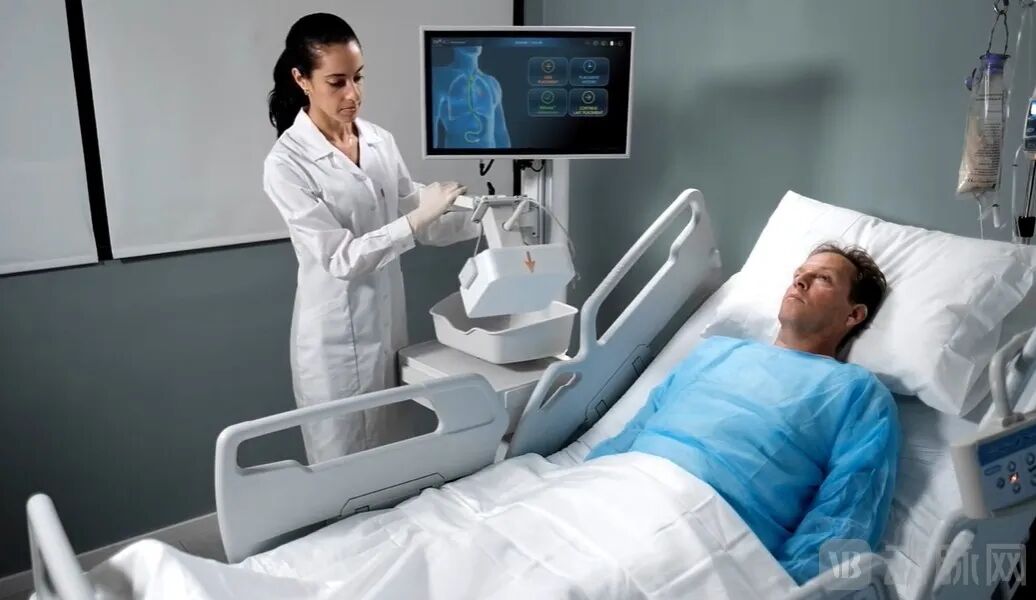
ENvue Drive Conducting Simulation Demonstration Under Physician Supervision
Compared with traditional devices, ENvue Drive requires no complex preoperative preparation, no operating room deployment, and no frequent post-operative X-ray verification, truly enabling rapid bedside deployment and precise intubation.
03
531 Cases with Zero Misplacement
ENvue Drive is built on a technical foundation supported by sufficient clinical data.
In June this year, an independent peer-reviewed study was published in *Critical Care Nurse*, the official journal of the American Association of Critical-Care Nurses. The study tracked 531 consecutive feeding tube placement procedures in ICUs of 5 hospitals, delivering highly convincing clinical results.
The data shows that this technical system achieved zero lung misplacement in 531 consecutive intubation cases, fundamentally eliminating the most fatal intubation risk; the incidence of ventilator-associated pneumonia (VAP) decreased by 67%, and the incidence of hospital-acquired aspiration pneumonia decreased by 20%, significantly improving the prognosis of critically ill patients.
In terms of workflow, the device can reduce the need for X-ray verification by 20%, effectively shortening the waiting time for patients to start nutrition support and reducing unnecessary radiation exposure.
From the perspective of hospital operations, based on actual measurements in a 5-hospital system, this system can save more than 350 nursing working hours per hospital per year, saving approximately $1.5 million in costs, while the bedside post-pyloric precise intubation capacity is increased by 4320%.
Solid clinical value has also promoted the steady implementation of the commercialization system.
At present, the ENvue navigation system has been commercially deployed in 40 hospitals in the United States. In 2026, it successively completed a three-year renewal with a large Group Purchasing Organization (GPO) and expanded to the burn ICU scenario in academic medical centers, building channels and clinical systems for the large-scale implementation of the subsequent ENvue Drive robotic system.
04
The Regulatory Journey Has Just Begun
In terms of market space, according to market research data from Grand View Research, the two major fields targeted by ENvue Drive — enteral feeding and vascular access — have a combined market size approaching tens of billions of dollars, with broad long-term growth potential.
In addition, the platform architecture of ENvue Drive was designed with multi-scenario scalability in mind. Although this demonstration focuses on the bedside advancement of enteral feeding tubes, the company stated that other high-volume bedside clinical scenarios such as vascular access, neonatal care, and urological access will be the future expansion directions of this platform.
According to the company's plan, it will continue to iterate the mechanical structure of the device and the accuracy of AI algorithms, complete multiple rounds of in vitro simulation verification before launching multi-center human clinical trials, accumulate sufficient safety and effectiveness data, and then advance the FDA compliance approval process.
From a research prototype to FDA-approved marketing, ENvue Drive still needs to go through rigorous clinical trials and regulatory approvals. However, this launch has already opened a door to an intelligent and standardized future for bedside feeding tube placement, a procedure that traditionally relies heavily on clinicians' experience.
This article is from the WeChat Official Account "vcbeat" (ID: vcbeat), written by Chen Maoyu, and published with authorization from 36Kr.