Samsung has taken the lead in launching the "wide foldable" device in the Android camp, with a starting price of 12,999 yuan. Can it replicate the success of blockbuster products?
Over the past six years, there has been an unwritten rule in the foldable screen category: Samsung defines the form factor, and other manufacturers follow suit. Whether it's the large vertical fold that unfolds upwards, or the small clamshell fold that flips up and down, all of them trace their origins back to the templates set by the 2019 Galaxy Fold and Flip generations.
However, at the Unpacked launch event on the evening of July 22, Samsung ultimately chose to "follow" as well. It unveiled its long-prepared wide-fold device, which has become the new standard model — the Galaxy Z Fold8 that took center stage on the stage.
In terms of appearance, it has become shorter and wider. Its inner screen has been stretched from the traditional nearly square aspect ratio to 4:3. When closed, it looks more like a passport than a slender, elongated phone.
Most importantly, it is still the first wide-fold device in the Android ecosystem. And the "wide-fold" product category was defined by Huawei over a year ago.
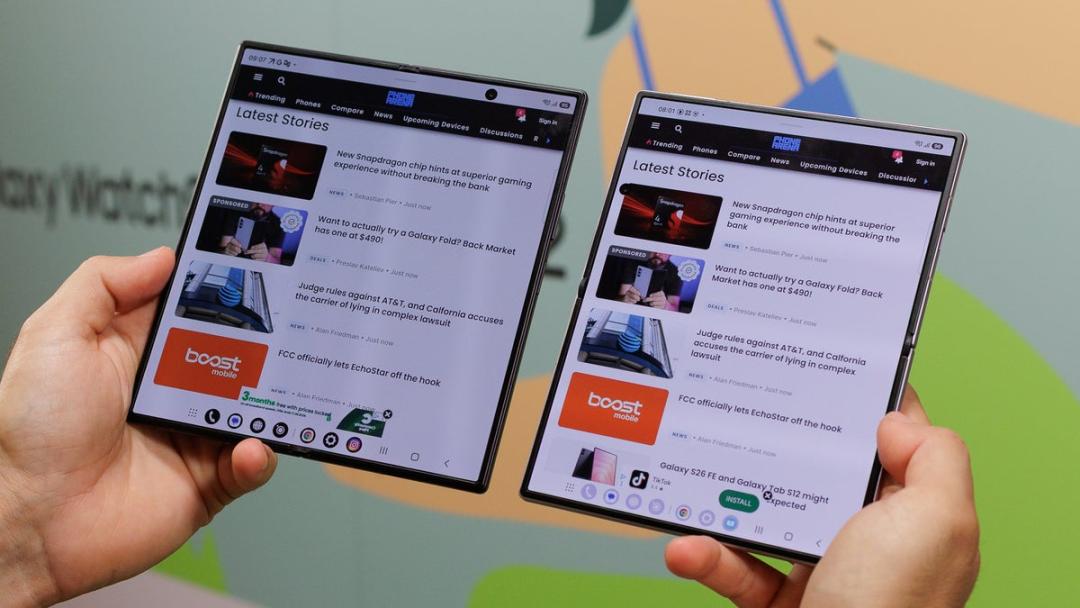
The Galaxy Z Fold8 is shorter and wider, and looks more like a passport when closed | Image source: Samsung
01
The Fold Gets Wider
The Fold8 features a 5.5-inch outer screen with a 10:16 aspect ratio. In practical terms: when closed, it is no longer that awkward "remote control" shape that is so slender that typing on it feels cumbersome. Instead, it is a phone with a width close to that of a conventional bar smartphone. When unfolded, its 7.6-inch inner screen adopts a 4:3 aspect ratio — this design is not for binge-watching videos, but to optimize experiences for reading, web browsing, and split-screen multitasking.
Weighing just 201 grams, it is the lightest Fold model in Samsung's history. Early hands-on feedback from media outlets is highly consistent: the most impressive aspect is not its chip or AI capabilities, but its exceptional ergonomic feel. A journalist from The Gadgeteer initially thought the wider design would feel clunky, but found that "spreading the weight across the wider chassis eliminates the top-heavy sensation entirely."
The majority of the time, foldable screen users actually use their devices in the closed state. The wide-fold form factor is the result of phone manufacturers collectively starting to take this reality seriously.
With a sufficiently wide outer screen, the keyboard gains ample horizontal space. The device functions as a normal smartphone when closed, and unfurls into a paper-like reading surface — both states of this device no longer represent compromises.
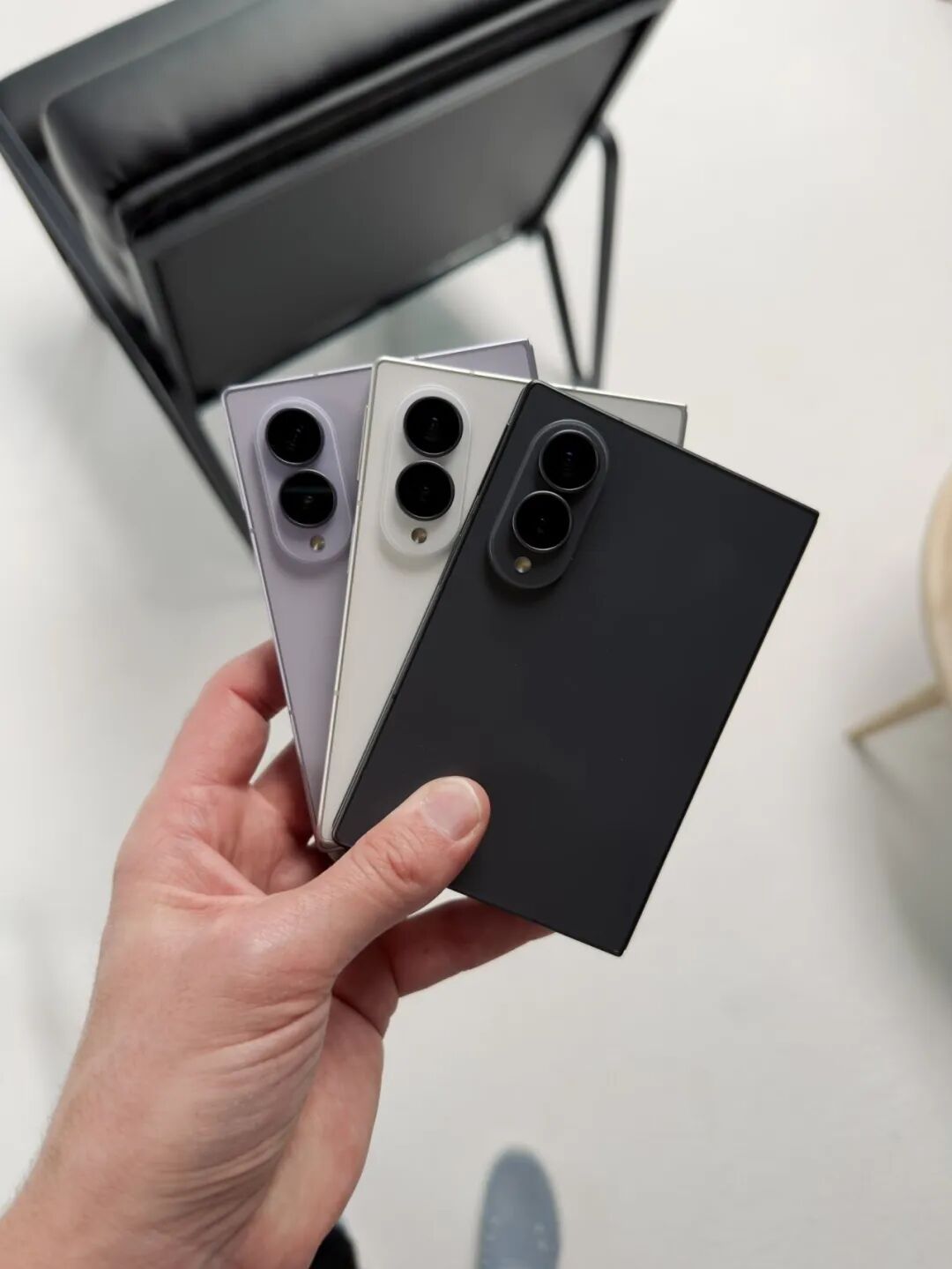
Real-world shot of the Samsung Galaxy Z Fold 8 | Image source: GeekPark
Another substantial update lies beneath the screen: Samsung has replaced the polymer material with a titanium alloy film sheet paired with a titanium plate, officially named Flex Titanium. It claims this design delivers a more subtle crease and smoother opening and closing motion. The visual performance in hands-on environments is indeed impressive, but a definitive conclusion about crease durability can only be drawn after months of actual use.
The remaining specifications can be summed up concisely: a new-generation Snapdragon 8 Elite chip, 4800mAh battery, 45W fast charging, and IP48 rating. The camera system features a 50MP wide-angle lens plus a 50MP ultra-wide-angle lens — there is no telephoto lens, which is a deliberate product positioning choice by Samsung to reserve that feature for the Ultra model.
There were two supporting roles at the same launch event. The Fold8 Ultra marks the first appearance of the "Ultra" suffix in the Fold series: it has an 8-inch inner screen, a thickness of only 4.1mm when unfolded, a 200MP main camera paired with a 3x telephoto lens, and follows the traditional large-fold path, with a starting price of 14,999 yuan in the Chinese market. The Flip8, meanwhile, is the lightest and thinnest small foldable ever made, weighing 180 grams with a starting price of 8,999 yuan.
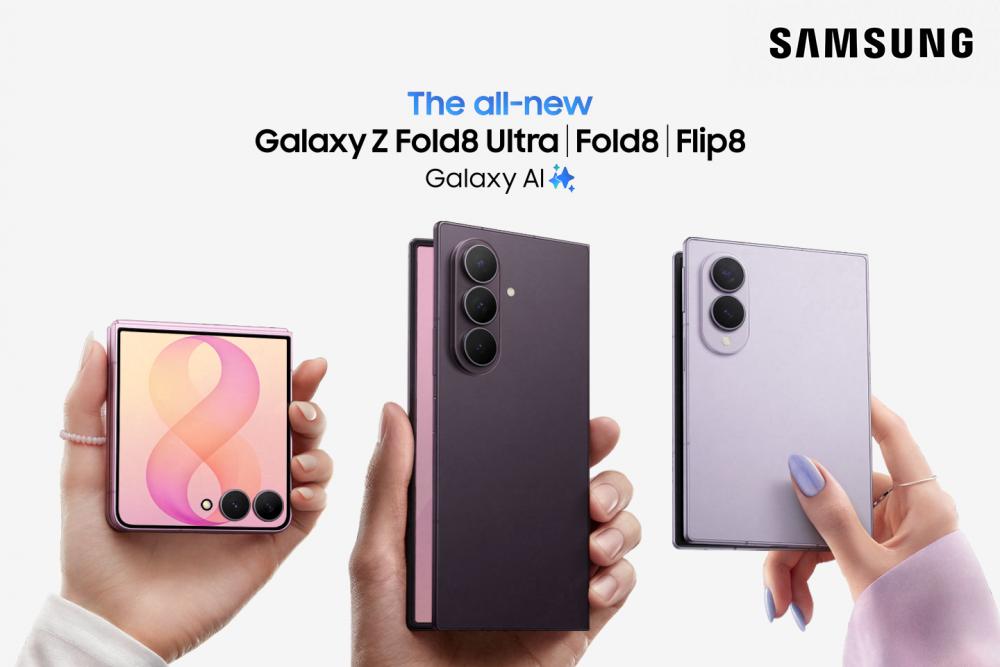
The 4.1mm-thick Fold8 Ultra introduces the "Ultra" designation for the first time in the Fold series, preserving the traditional large-fold product line | Image source: Samsung
Pricing has also changed. The Fold8 starts at 12,999 yuan in the Chinese market, roughly 1,000 yuan more expensive across the entire lineup than the previous generation.
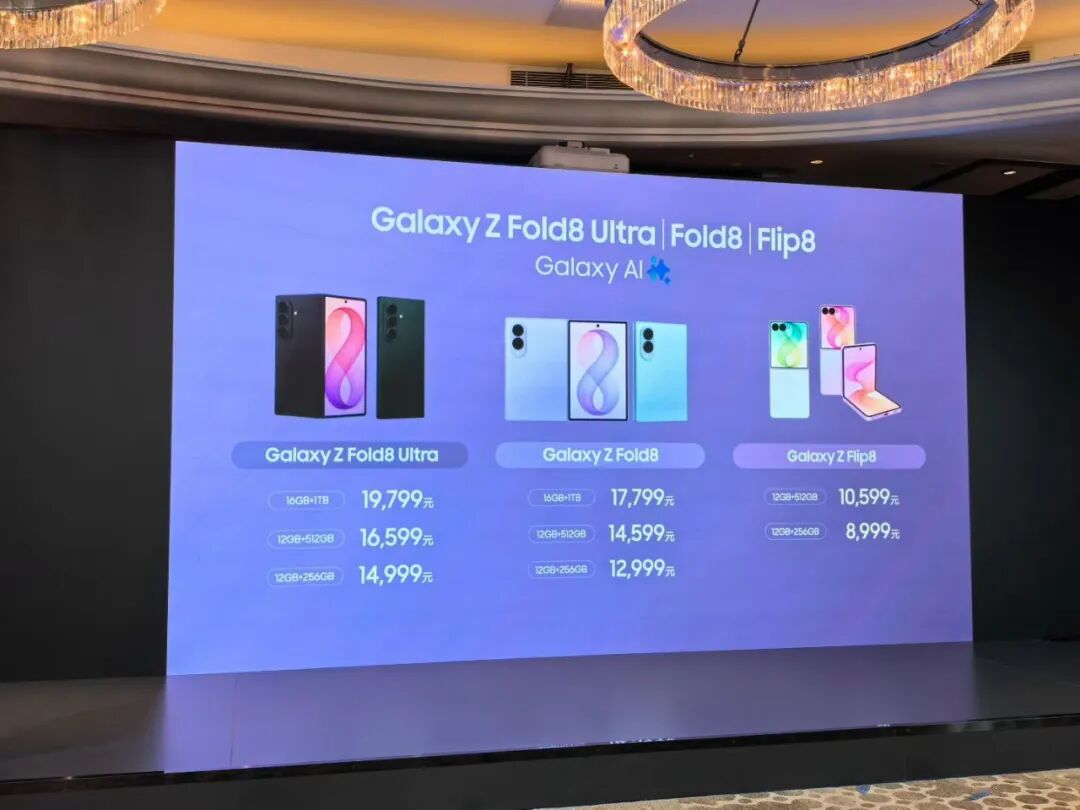
Official Chinese market pricing for the full 2026 Galaxy Z Fold8 lineup | Image source: GeekPark
Samsung attributes the price increase to AI-driven demand that has pushed up memory chip costs — even the traditional free storage upgrade for pre-orders has been canceled this time.
On one hand, this represents the most daring form factor revision in the brand's history; on the other, it carries the highest price tag ever. Samsung clearly believes this new shape is worth the cost.
02
Software Grows Wider Too
When the physical shape changes, the interaction logic must also be rearranged accordingly. One UI 9 has been fully optimized around the 4:3 aspect ratio this time: Samsung has designed two usage modes for this inner screen. When unfolded horizontally, it becomes a large canvas for games and videos. When held vertically, the aspect ratio naturally approximates that of a physical book, making reading long-form articles and e-books far more comfortable than on the previous nearly square inner screen.
Split-screen functionality is another area that showcases thoughtful design. Split View now supports file drag-and-drop operations: two apps are displayed side by side on the 4:3 canvas, and files can be dragged directly from one app into the other. The square screens of older Fold models always felt cramped during horizontal split-screen usage. After the screen became wider, this finally evolved into a genuinely usable desktop experience.
AI capabilities have also been re-adapted to match the new form factor. Now Brief and Now Nudge now support multi-window functionality, and Gemini integrates seamlessly with over 40 applications. The demo at the launch event showed that users could have the AI make restaurant reservations even with the phone closed. One UI 9 also adds a new AI Assistant Activity panel, providing the first-ever visible log of exactly what the AI has been doing on your behalf in the background. The 6 months of complimentary Google AI Pro bundled with new devices is a clear gesture of collaboration from Google.
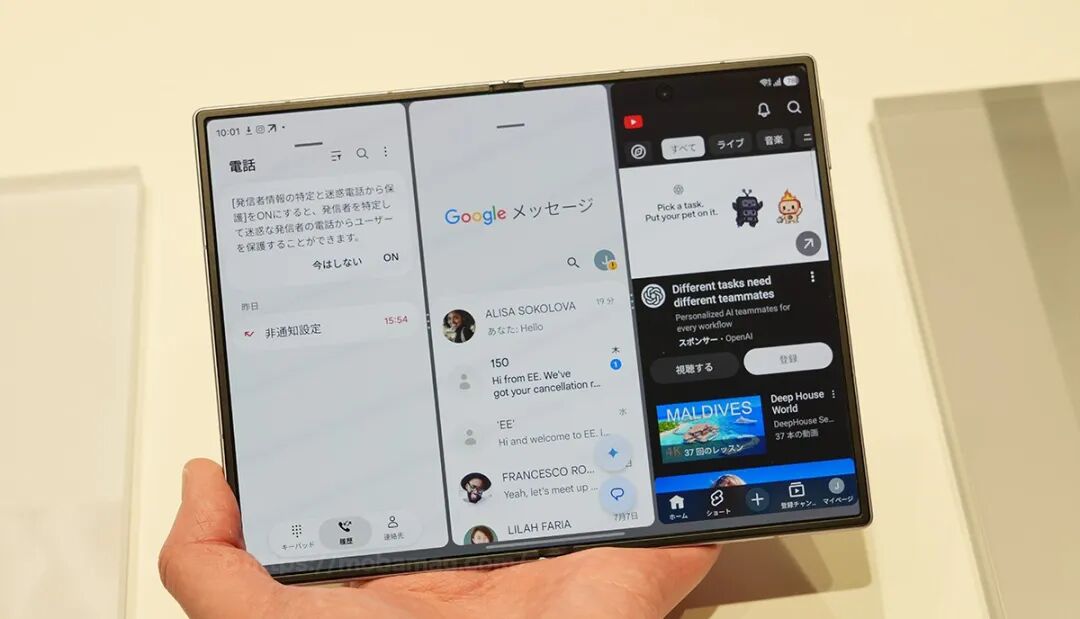
The closed-screen AI food ordering demo at the launch: Gemini has been integrated into over 40 apps within One UI 9 | Image source: Samsung
Samsung's true competitive advantage does not lie in its form factor — which others can replicate — but in the entire Android ecosystem that underpins this new design. Huawei's wide-fold relies on HarmonyOS to carry out app adaptation on an app-by-app basis. Samsung's wide-fold, by contrast, ships natively with Android 17, Gemini, and access to the world's largest app marketplace. The significance of the title "first wide-fold in Android" lies half in the "wide-fold" concept itself, and half in the "Android" ecosystem behind it.
03
The Power to Define Form Factors
But at the end of the day, the "wide-fold" design was not Samsung's invention.
In March 2025, Huawei launched the Pura X, the first foldable phone to feature a "wide" design. When closed, it was a compact square device; when unfolded, it revealed a screen with an aspect ratio close to that of a tablet. At the time, many people dismissed it as a whimsical experimental product from Huawei.
The market quickly delivered a very different verdict. Within a year after its release, cumulative sales of the Pura X exceeded 1.5 million units, claiming the top spot in high-end foldable sales. According to IDC, the shipment volume of this single model surpassed the combined total of all foldable devices from other manufacturers.
This past April, Huawei followed up with the larger-sized Pura X Max, featuring a √2:1 paper-like aspect ratio. The company describes it as a "foldable portable tablet," explicitly positioned as a direct replacement for the "iPhone plus iPad" combined device ecosystem.
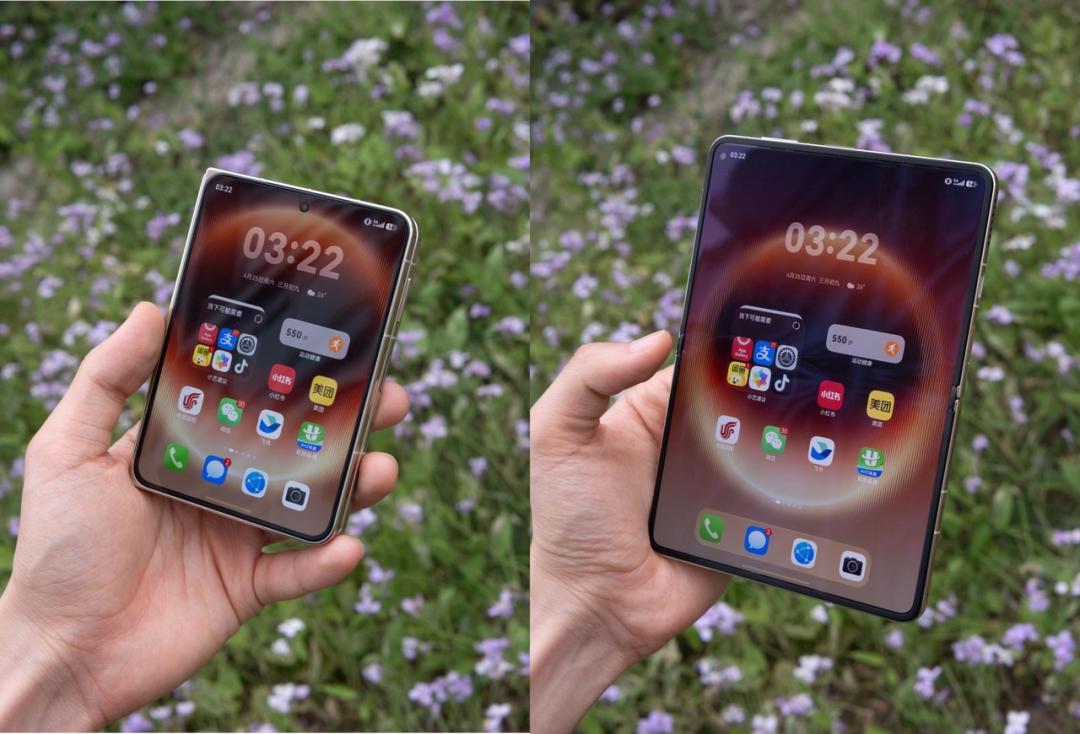
Huawei's first wide-fold device, the Pura X Max, has achieved tremendous sales success | Image source: GeekPark
This reflects the overall strong performance of the HarmonyOS ecosystem in the foldable screen market. IDC data shows that in the first quarter of 2026, Huawei alone captured 60% of China's foldable phone market, with Honor taking second place at 21%. According to Counterpoint's statistics, HarmonyOS now accounts for 19% of China's smartphone operating system market share, surpassing iOS for multiple consecutive quarters.
Foldable screens are currently the most dominant hardware category in the HarmonyOS ecosystem, and wide-folds are the fastest-growing segment within that dominance.
Against this backdrop, Samsung's recent move takes on a completely new meaning.
Supply chain sources report that Samsung has set a production target of 2.8 million units for the Fold8 — exceeding the 2 million units planned for the Fold8 Ultra and the 1.5 million units for the Flip8. Samsung has allocated the largest portion of this year's foldable production capacity to a form factor defined by Huawei, which it itself followed three months later.
For the first time in six years, the agenda for foldable screen form factors is no longer being set by Samsung.
And Samsung is not the only manufacturer following this trend. Industry insiders reveal that Xiaomi's upcoming MIX Fold 5 later this year will also adopt the wide-fold design. Leading manufacturers across the entire Android ecosystem are collectively voting in support of this new product category.
Of course, it would be inaccurate to say Samsung has "fully pivoted" to wide-folds. The Fold8 Ultra retains the flagship position for traditional large-folds, while Honor, vivo, and OPPO's main foldable product lines still stick to traditional form factors. For now, wide-folds remain a key growth direction, not the entire market.
04
Apple is Also Going 4:3
If we shift the timeline forward another five months, a third key player will enter this story.
At this point, rumors about the foldable iPhone have become so pervasive that they are nearly equivalent to an official announcement.
Based on combined information from MacRumors and Bloomberg journalist Mark Gurman, Apple's first foldable device is expected to debut alongside the iPhone 18 Pro this September. It will feature a book-style fold design, with an outer screen of roughly 5.5 inches and an inner screen of approximately 7.8 inches — and the aspect ratio will be exactly 4:3.
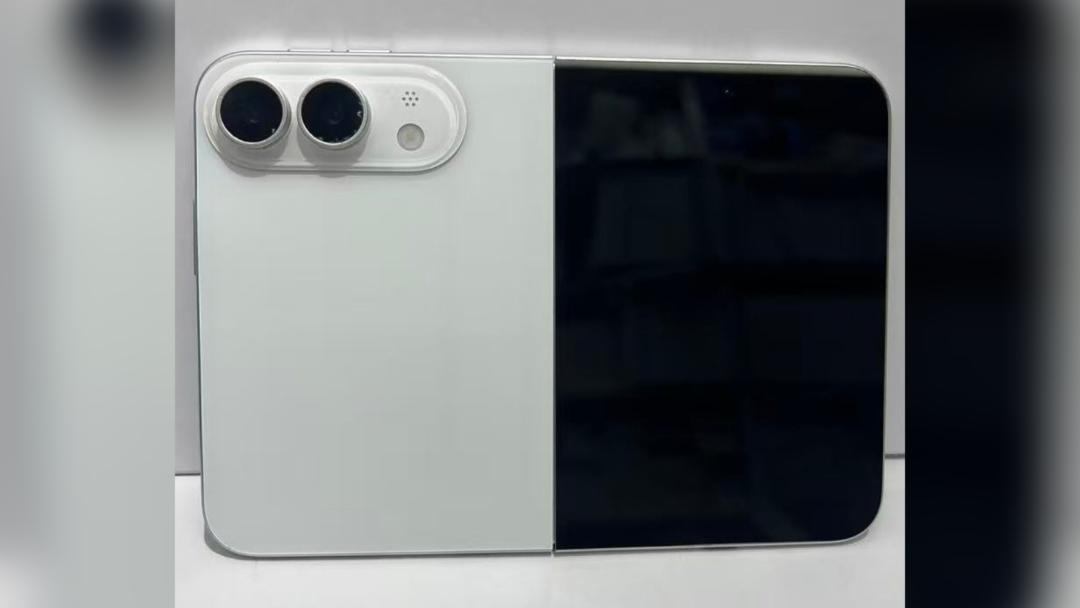
Render of the rumored foldable iPhone, whose inner screen also features a nearly 4:3 tablet-like aspect ratio | Image source: MacRumors
If the rumors prove true, the landscape will be: Samsung with 4:3, Huawei with √2:1, Apple with 4:3 — the flagship foldable devices from the three major OS ecosystems are converging on nearly identical form factors. This is no longer about "two phone screens glued together," but about "a foldable tablet," or more accurately, a foldable sheet of paper.
This convergence is far more memorable than any individual product. In the seven years since foldable screens first emerged, the industry has debated the question "should we even make foldables?" Now, the three major ecosystems have each delivered their own answers to a new question: what shape should a foldable actually take? And their answers are remarkably consistent.
Analysts have long laid out their expectations for Apple's entry into the market. IDC has raised its 2026 global foldable shipment growth forecast from 6% to 30%, primarily due to Apple's arrival. It predicts that the foldable iPhone will capture 22% of total shipment volume and 34% of total market value in its first year, with an average selling price of roughly $2,400.
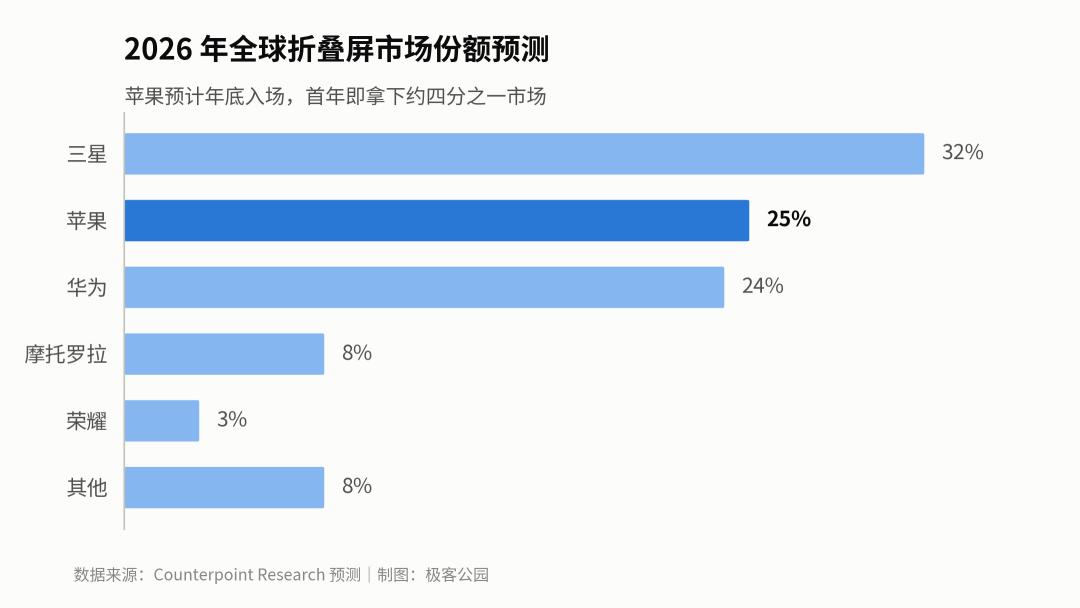
Counterpoint's market share forecast puts Samsung at 32%, Apple at 25%, and Huawei at 24%. CCS Insight puts it even more bluntly: "When Apple enters any product category, it immediately brings that category to an entirely new level of mainstream legitimacy."
This also explains two other seemingly minor moves at the launch event: Quick Share now supports seamless file transfer with AirDrop, and Smart Switch can now migrate passwords and call history directly from iPhones.
Ahead of Apple's official entry into the foldable market, Samsung is doing everything it can to lower the barriers for iOS users to leave the Apple ecosystem.
