Tencent QClaw Merged into WorkBuddy: The Agent Battle Enters the Integration Era, Who Can Become the Next Office Portal?
Over the past six months, AI Agents have experienced an unprecedented boom.
From desktop assistants to office automation, and then to "digital employees" capable of autonomously executing tasks, almost all technology companies are making rapid layouts. One team builds an Agent, and one business line bets on a direction. In less than a few months, a large number of AI office products with similar functions have appeared in the market.
But after the excitement, a practical problem has begun to emerge: Do we really need so many entry points for AI office?
It is reported that on July 20, Tencent released an internal organizational adjustment notice, transferring the relevant business and part of the team of the QClaw Product Center to the Sixth Cloud Product Division, which falls under the same management system as the AI office agent WorkBuddy. The QClaw product will continue to operate, but this adjustment is regarded as an important signal that Tencent's AI office strategy has shifted from multi-line exploration to focused investment.
Not long ago, Alibaba also announced integration moves, merging three Agent products QoderWork, Wukong, and MuleRun into "Qianwen Office"; ByteDance is also promoting the deep integration of Doubao and Feishu. The AI office track, which saw independent exploration and rapid trial-and-error over the past six months, is now undergoing a clear directional adjustment.
The changes behind this are actually worth paying attention to. In the first stage of AI office competition, the race was about who could launch products the fastest; but entering the next stage, the competition is no longer about "who has more Agents", but about who can create an AI work entry point that users truly use every day.
From frantic expansion to proactive integration, major tech giants are re-answering a question: In the future office era, how many AI assistants do users actually need? The answer might be: just one is enough.
01. QClaw Integrated into WorkBuddy: Tencent's AI Office Begins to Concentrate Resources
The most immediate change of Tencent's adjustment is that the two AI products are now under the same business line.
According to Tencent's internal notice on July 20, the relevant business and part of the team of the QClaw Product Center were transferred to the Sixth Cloud Product Division, which is the department where WorkBuddy is located. After the adjustment, QClaw and WorkBuddy are under the same management system, and the QClaw product will continue to operate.
On the surface, this is just an organizational structure change. But against the backdrop of AI office competition, the signal it sends is far from simple. Because QClaw and WorkBuddy themselves represent two different product paths.
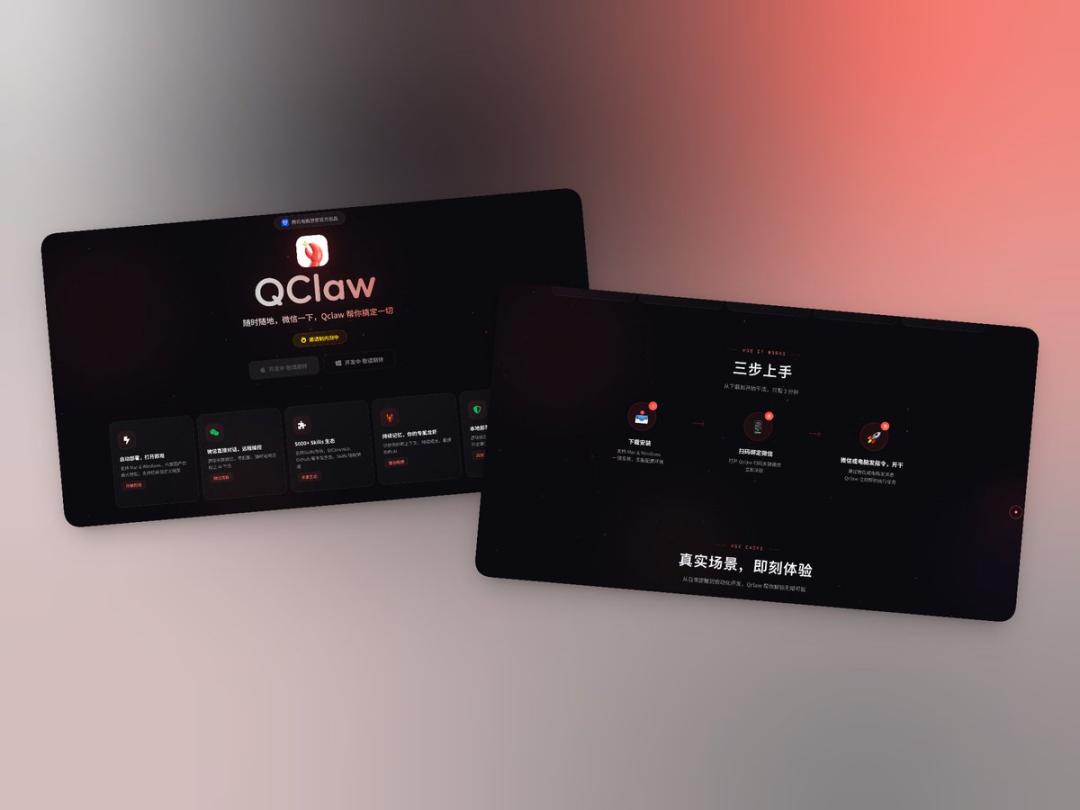
QClaw is more focused on individual user scenarios. It is built by the Tencent PC Manager team based on the open-source framework OpenClaw, and is a local AI assistant that supports Windows and macOS. Users can send instructions remotely through instant messaging tools to make their computers perform tasks. After launching the internal beta in March 2026, QClaw gained millions of users within a week, quickly becoming a high-profile desktop AI product.
WorkBuddy takes a different path. It places more emphasis on office productivity, and is positioned by Tencent as a full-scenario AI office workspace, covering scenarios such as daily office work, code development, and design creativity. Data shows that in June 2026, WorkBuddy reached 20.97 million monthly visits on domestic PCs, ranking first among 17 mainstream desktop AI-native office agents, exceeding the sum of the visits of the second and third place products.
One is a C-end personal assistant, and the other is an office efficiency platform. Why did Tencent choose to bring the two together?
The core reason may be: Compared to continuing to develop multiple directions, concentrating resources to build a stronger platform delivers higher value.
For AI products, model capabilities, plugin ecosystems, file parsing, task execution capabilities, and PC-side permission management capabilities all require significant investment. Integrating teams and capabilities can reduce redundant construction and allow the accumulated experience of different products to complement each other.
Of course, integration is not without risks. Different products have already formed different user perceptions. If functions are simply stacked together, the end result might be a product that is "all-encompassing but impractical". What truly determines the outcome is not the merger of teams, but whether the product can deliver a unified experience.
Therefore, the integration of QClaw into WorkBuddy does not mean that one product will disappear. Instead, it signals that Tencent is shifting from "pushing forward in multiple directions" to "focusing on building a single AI office entry point".
02. Major Tech Giants Begin to Consolidate Agents: AI Office Enters the Second Half
From Alibaba to Tencent and ByteDance, the simultaneous integration of AI products by major tech companies is no coincidence. It reflects that the entire Agent industry is undergoing a phase transition.
Earlier this year, when Agents first emerged, the industry embarked on a frenzy of exploration. Every company believed that AI Agents could become the next major entry point. As a result, one team built an Agent, one department built an Agent, and one scenario had its own Agent. Tencent internally explored different directions such as QClaw and WorkBuddy; Alibaba simultaneously advanced products including QoderWork, Wukong, and MuleRun; ByteDance also launched multiple directions such as ArkClaw, ByteClaw, Feishu aily, and TRAE SOLO.
This "competition mode" is normal in the early stage, because no one knows what kind of AI product end users will ultimately choose. However, the technical threshold for Agents is rapidly declining. When more and more products have similar capabilities, what becomes truly scarce is no longer "whether there is an Agent", but why users would open your Agent every day.
This is also the reason why major tech giants have begun to adjust their strategies.
First of all, running multiple products in parallel will lead to scattered resources. AI products require continuous investment in model calls, engineering R&D, user growth, and ecosystem construction. If multiple teams engage in redundant construction, not only will costs increase, but users will also be confused about which product they should choose.
Alibaba's situation is quite typical. Previously, Alibaba simultaneously promoted three Agent products: QoderWork, Wukong, and MuleRun. Although each had a different positioning, their product capabilities overlapped, and resources were easily dispersed. Therefore, Alibaba plans to launch "Qianwen Office", which will integrate the capabilities and teams of the three products based on QoderWork, and use the unified "Qianwen" brand.
Secondly, AI office competition is shifting from tool competition to entry point competition. In the future, users may not care which specific Agent they are using. What they care more about is: "I give the AI a task, can it help me complete it?" This means that AI office products will eventually evolve from single tools to platforms that connect documents, enterprise systems, development environments, and various workflows.
ByteDance's adjustment direction also reflects this point. Previously, TRAE was more focused on AI programming, while TRAE Work attempted to expand office agent capabilities. However, due to overlapping product positioning, ByteDance is internally exploring further integration between Feishu and Doubao, allowing AI capabilities to directly enter the office workflow, instead of requiring users to download an additional Agent.
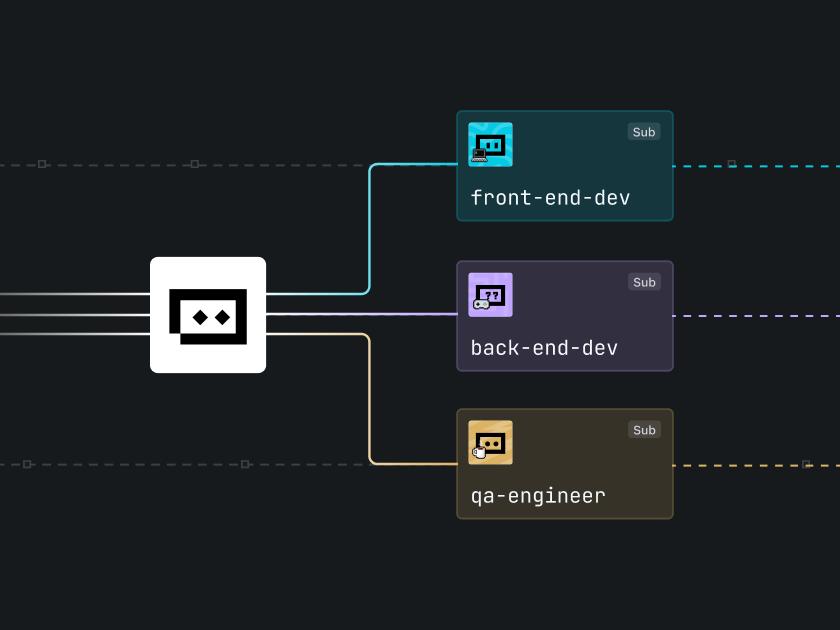
In short, major tech giants are saying goodbye to the era of "one AI assistant for every scenario". In the next stage, the competition is about who can become the first entry point for users' daily work.
03. After the Giants Enter the Market, Do Traditional OA Vendors Still Have Opportunities?
The biggest impact of major tech giants' integration of AI office on the entire industry is the reshaping of competition rules.
In the past, office software competition mainly focused on functions. The competition was about who had stronger document capabilities, more complete collaboration tools, and could meet more enterprise needs.
But in the AI era, the competition logic is changing. The future office entry point may shift from traditional software to AI assistants. Users may not necessarily open Word, Excel, or an OA system first, but directly tell the AI: "Help me organize this material." "Help me generate a report." "Help me complete the approval process." The AI will break down the tasks and then call different tools to get the work done.
This brings both pressure and opportunities to traditional office software vendors.
The pressure comes from the ecological advantages of major tech giants. Tencent has WeCom and Tencent Docs, Alibaba has DingTalk and Alibaba Cloud, and ByteDance has Feishu. These platforms have already accumulated a large number of enterprise users, giving them natural advantages in the competition for AI office entry points.
However, traditional OA vendors will not exit the market easily. The reason is that enterprise office work is not just about simple chat and content generation. Especially in the government and enterprise market, enterprises pay more attention to data security, private deployment, business process adaptation, and long-term service capabilities. These capabilities are the advantages that traditional OA vendors have accumulated over many years.
In addition, a large number of enterprises already have mature information systems. They will not tear down their existing ERP, CRM, and OA systems to rebuild them just because of the emergence of AI. A more realistic path is to gradually integrate AI capabilities into existing systems.
Therefore, two paths may emerge in the future office market: one is that giants like Tencent, Alibaba, and ByteDance rely on models, cloud, and ecosystems to build a super AI office entry point; the other is that traditional OA vendors rely on industry experience and enterprise service capabilities to embed AI into specific business processes.
The final outcome may not depend on who has the most Agents, but on who can truly solve the problems of enterprises.
04. Final Notes
From Alibaba's advancement of Qianwen Office, to Tencent's integration of QClaw and WorkBuddy, and then to ByteDance's exploration of the integration of Doubao and Feishu, a trend is becoming more and more obvious: AI office has ended its "frantic expansion" phase.
In the past six months, major tech giants were competing to see who could launch an Agent the fastest. Now, they are competing to see who can retain the truly valuable one.
For users, there may be fewer and fewer AI assistants. But every one that remains will become more powerful.
Because what the office era truly needs has never been more tools, but an AI partner that can truly help people get their work done.
This article is from the WeChat Official Account "First New Voice", written by Zhi Han, and published with authorization from 36Kr.