Google has launched three "Lite, Flash" models in a row, but its most powerful Pro model is absent again.
On July 21 US local time, Google DeepMind team released three new Gemini models in one go: Gemini 3.6 Flash, Gemini 3.5 Flash-Lite, and Gemini 3.5 Flash Cyber.
Among them, the flagship model Gemini 3.6 Flash delivers stronger performance in coding and multimodal tasks, but more critically, it consumes 17% to 65% fewer output tokens for the same workload than its predecessor.
Gemini 3.5 Flash-Lite is designed for extreme speed and cost-effectiveness, capable of generating 350 output tokens per second.
Meanwhile, Gemini 3.5 Flash Cyber is a specialized fine-tuned model focused on cybersecurity vulnerability detection and remediation, currently only accessible to governments and specific partners.
At the same time, the long-awaited flagship model Gemini 3.5 Pro still has not made an appearance. Google stated that it is conducting testing with partners, and for the first time revealed that pre-training work for the larger-scale Gemini 4 has already kicked off.
01 Say goodbye to "verbose" AI
In the application cost of large language models, the number of output tokens is directly linked to expenses and latency. One of the design goals of Gemini 3.6 Flash is to reduce this unnecessary consumption while maintaining or enhancing task completion quality.
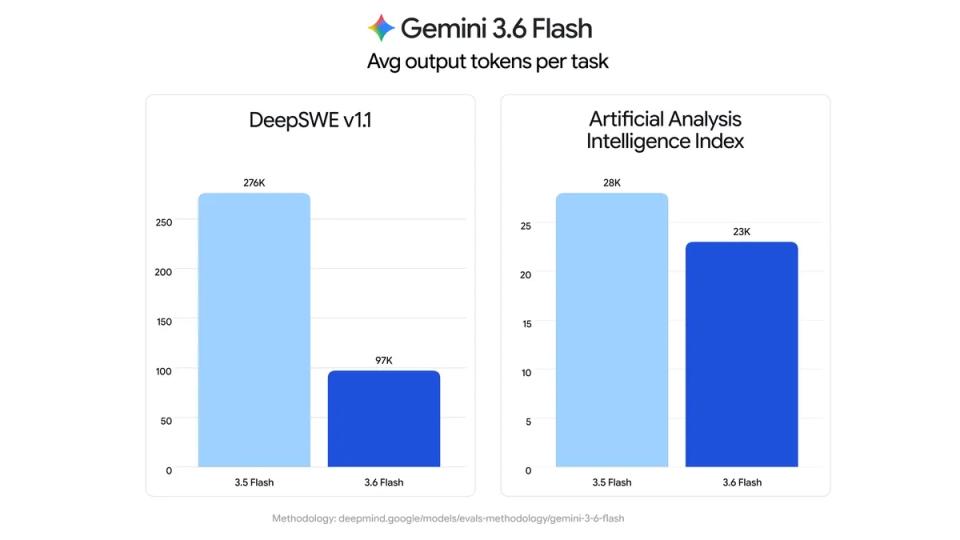
Real-world testing by third-party benchmarking agency Artificial Analysis Index shows that the model's output token usage is 17% lower than its predecessor. The savings effect is even more pronounced in complex engineering tasks requiring multi-step reasoning and tool calling.
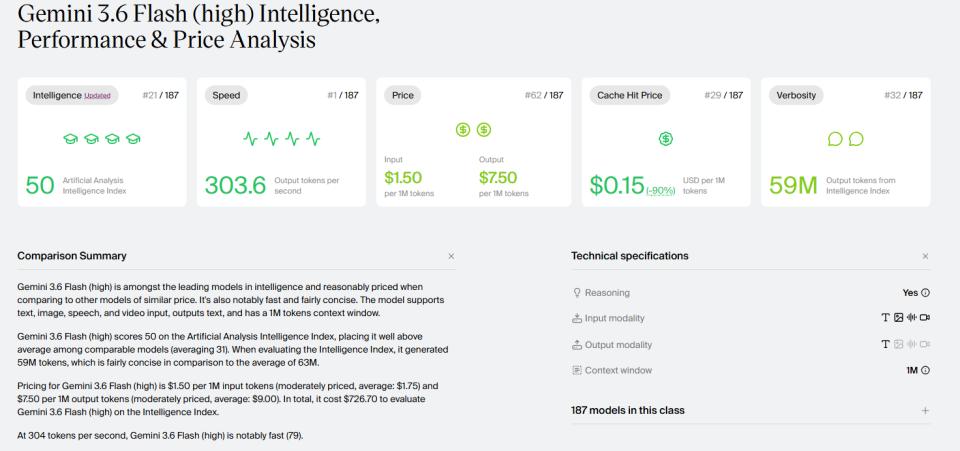
For example, in the DeepSWE benchmark test from Datacurve, token consumption was reduced by 65%, which means Gemini 3.6 Flash performed far fewer redundant code edits and loop operations when completing tasks.
This efficiency improvement has also brought a direct price reduction.
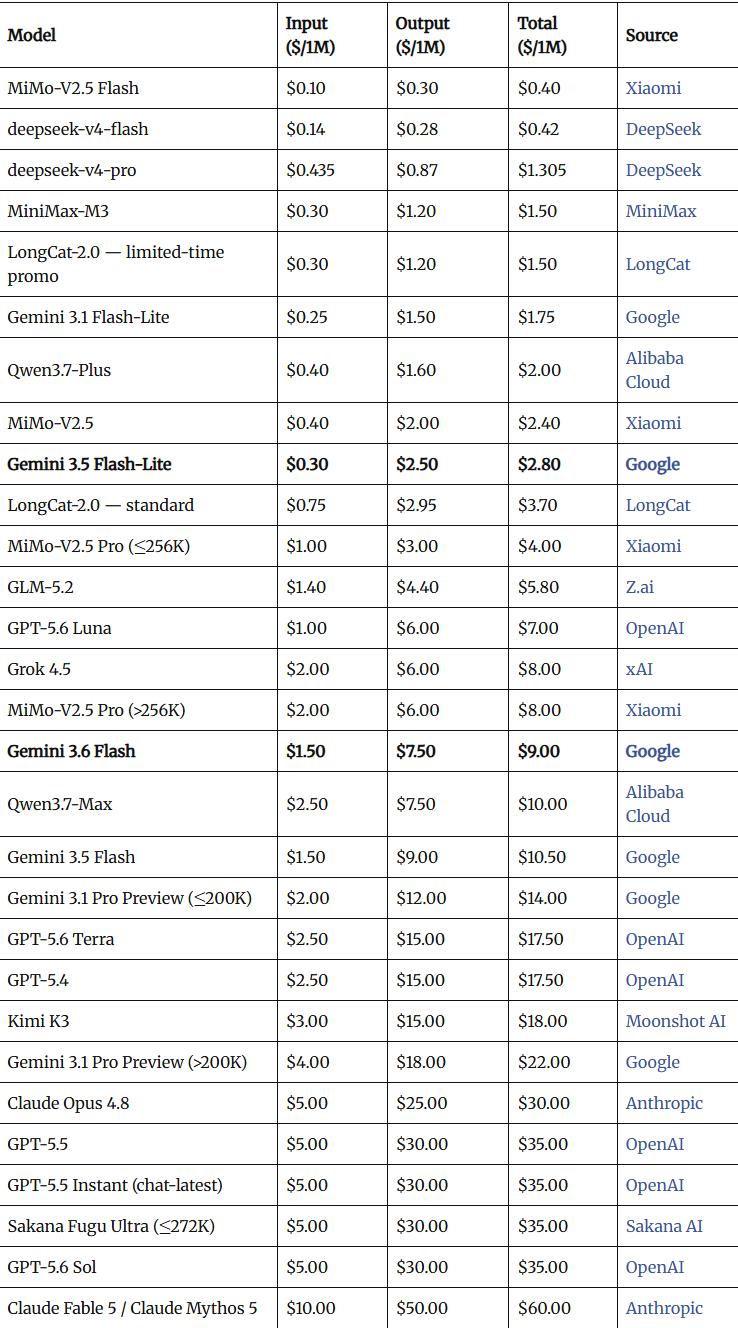
Gemini 3.6 Flash is priced at $1.50 per million input tokens and $7.50 per million output tokens. Compared with the 3.5 Flash price of $9 per million output tokens, the total cost of a single agent task is reduced.
In terms of performance, Gemini 3.6 Flash has achieved quantifiable improvements across multiple benchmark tests.
It scored 49% in the DeepSWE test, higher than the 37% of 3.5 Flash. In the MLE-Bench machine learning engineering benchmark test, the score increased from 49.7% to 63.9%.
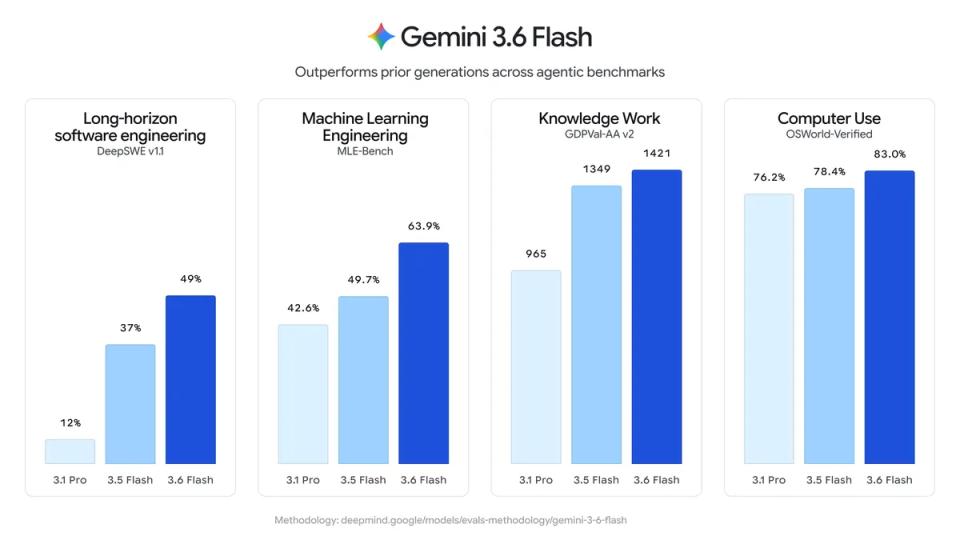
Its computer use capability scored 83% in the OSWorld-Verified test, up from 78.4% previously. This feature is now a built-in client tool for the Gemini API and Gemini Enterprise.
For knowledge work, its score on the GDPval-AA v2 benchmark increased from 1349 to 1421.
Multiple customers have already provided feedback.
Figma, Harvey, Hebbia, and JetBrains all stated that Gemini 3.6 Flash strikes a balance between token efficiency, accuracy, and speed when handling complex workflows and knowledge-based tasks.
Google demonstrated the performance of Gemini 3.6 Flash in several real-world scenarios.
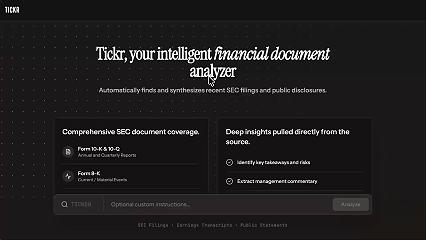
In the financial sector, using Managed Agents on AI Studio, the model can parse and analyze financial data and records more efficiently and accurately than Gemini 3.5 Flash.
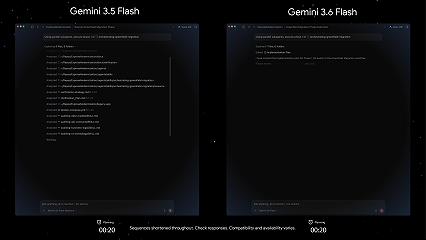
In code migration tasks, Gemini 3.6 Flash performs operations with multi-agent orchestration on the Antigravity platform, delivering lower latency and higher quality than its predecessor.
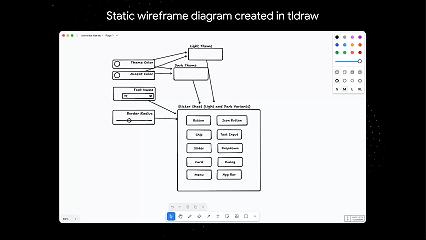
For creative tools, Gemini 3.6 Flash leverages visual understanding capabilities to build an interactive theme studio via the open-source Antigravity and tldraw drawing tools.

In addition, the model used the Canvas feature in the Gemini App to help developers create a photographic texture extractor for 3D workflows.
02 Pushing speed to new heights
Gemini 3.6 Flash pursues efficiency balance, while Gemini 3.5 Flash-Lite chases the speed limit.
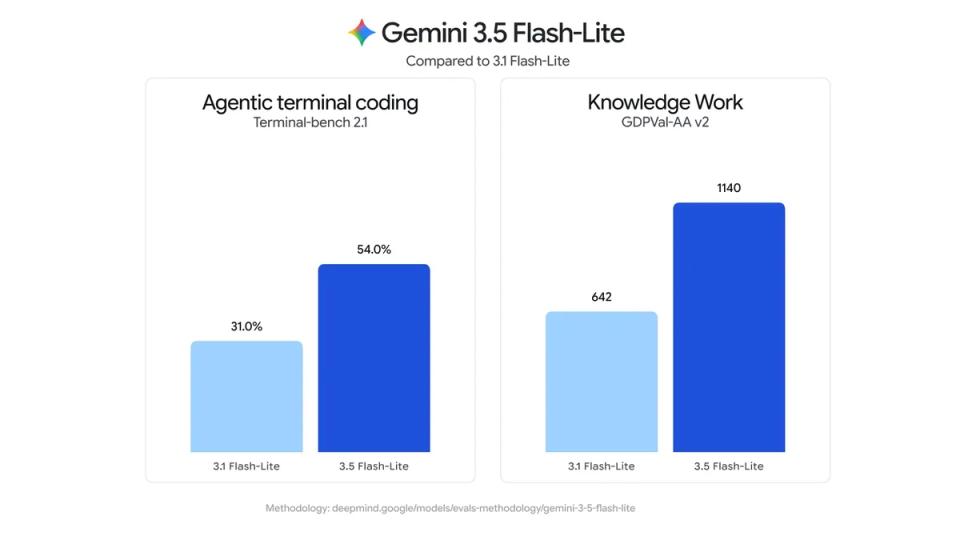
Google defines it as the "fastest, most cost-effective" model in the 3.5 series. According to real-world testing by Artificial Analysis, its generation speed reaches 350 output tokens per second, which is roughly twice the speed of the previous-generation 3.1 Flash-Lite.
Pricing is also highly competitive, at $0.30 per million input tokens and $2.50 per million output tokens. This low cost and high speed targets high-throughput business scenarios, such as agent search and large-scale document processing.
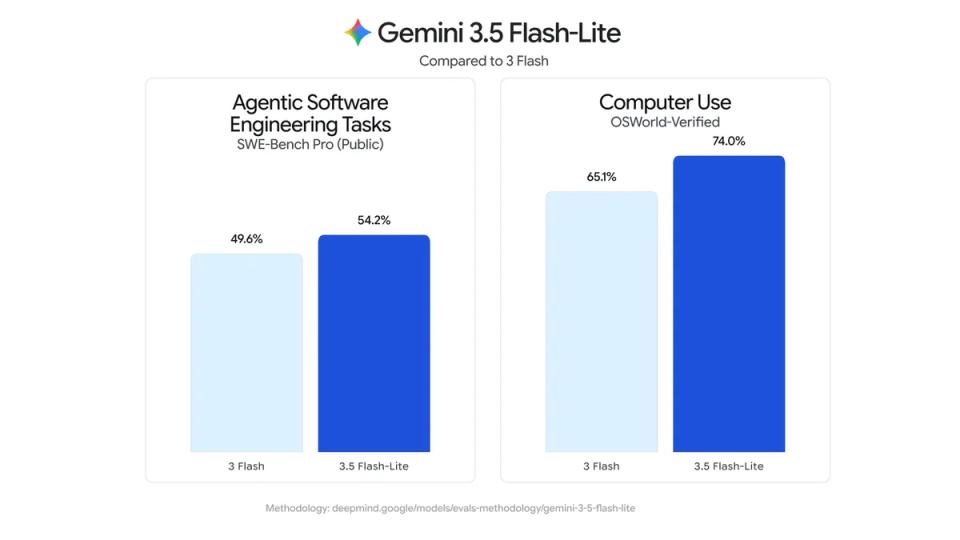
Despite the "Lite" in its name, Gemini 3.5 Flash-Lite scored 54.2% in the SWE-Bench Pro test, surpassing the 49.6% of the standard Gemini 3 Flash. In the OSWorld-Verified test, it outperformed Gemini 3 Flash's 65.1% with a score of 74%.
Developers can also adjust the model's "thinking hierarchy" according to their workload: when handling simple high-volume tasks, they can set it to the lowest thinking level for low latency and low cost; when facing complex sub-agent tasks, they can raise the thinking hierarchy to ensure quality.
Google has released four demonstration cases of Gemini 3.5 Flash-Lite across different scenarios.
The first case is extracting and integrating product features from massive e-commerce datasets.
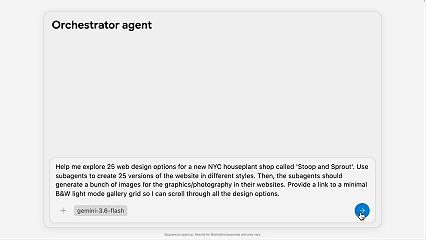
The second case is acting as a primary agent working in synergy with Gemini 3.5 Flash-Lite to instantly generate 25 unique, instantly explorable web design concepts.
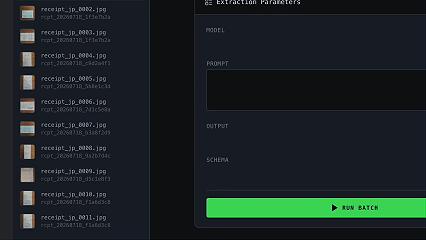
The third case leverages multimodal understanding capabilities to perform large-scale receipt translation and summarization.
The fourth case builds games by instantly generating and iterating multiple options.
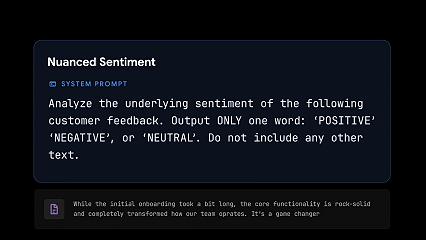
Early customers including Ashler, Paloalto, and Ramp all emphasized the model's unique combination of speed, intelligence, and cost-effectiveness, noting that it is suitable for scaling agent workflows and data processing tasks.
03 A dedicated model for "white hat hackers"
The third model Google released, Gemini 3.5 Flash Cyber, is specifically designed to identify and remediate cybersecurity vulnerabilities.
This model is fine-tuned based on Gemini 3.5 Flash. Google expects it to complete code security tasks typically assigned to large models at a lower token cost. It has already achieved cutting-edge performance in a benchmark test named CyberGym.
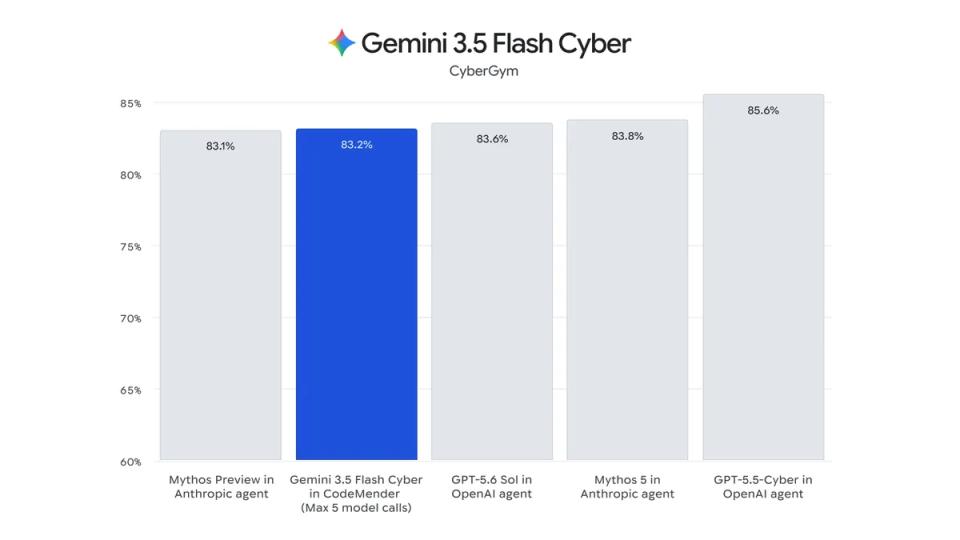
However, given the dual-edged nature of cyber offense and defense, Google has adopted a cautious delivery strategy for this model. It will not be open to all developers; instead, it will be directly integrated into Google's code security agent CodeMender as a limited-access pilot project, exclusively available to governments and trusted partners.
Tulsi Doshi, Senior Director of Product Management for Google's Gemini team, stated that this is to enable frontline defenders to identify and remediate critical vulnerabilities before they are widely exploited, reducing the risk of misuse.
Google revealed that in internal testing, the model identified 55 issues in the open-source codebase V8 JavaScript Engine, 10 of which were vulnerabilities that other models failed to detect.
From the layout of these three new models, we can see that Google's current strategy is to build advantages in efficiency.
Nowadays, more and more enterprises are starting to examine the return on investment of AI, realizing that massive token consumption does not always lead to good results. Google CEO Sundar Pichai mentioned earlier this year that some companies had already exhausted their full-year token budget by May. If they can use a mix of Flash models and other cutting-edge models, they can save significant amounts of money.
This mindset is reflected in the product: continuously driving down costs, increasing speed, while enhancing the model's ability to handle specific tasks.
Alongside these high-performance metrics, security is also a mandatory priority. Gemini 3.6 Flash has strengthened cutting-edge security protections in chemical, biological, radiological, nuclear (CBRN), and cyberattack misuse scenarios, improved its resistance to jailbreak attacks, while minimizing rejections of normal and beneficial use cases.
For regular users and developers, these models have been available on Google AI Studio, Android Studio, and the Gemini app since their release date, and can also be used in Google Antigravity and Gemini Enterprise applications.
Gemini 3.5 Flash-Lite will also be gradually rolled out in Google Search. Gemini 3.5 Flash Cyber will be launched via CodeMender under an invitation-only system.
04 3.5 Pro is still in testing, Gemini 4 is on the way
Even as Flash models are gradually being launched, the question that concerns the developer community most is always: When will Gemini 3.5 Pro be released?
Google's last update to the Pro series models was the Gemini 3.1 Pro released in February this year. Since then, competitors' flagship products have continued to iterate.
OpenAI has successively released GPT-5.5 and begun rolling out GPT-5.6, while Anthropic has launched Claude Opus 4.8 and Claude Sonnet 5, and expanded access to its cutting-edge model Fable 5.
In May this year, when Google released Gemini 3.5 Flash, it previewed that the Pro version was already in internal use and expected to launch within a month. Now at the end of July, the model is still in an undisclosed state. Bloomberg previously reported that Google is facing internal delays in launching 3.5 Pro due to difficulties meeting internal performance targets.
In response, Logan Kilpatrick, Technical Lead at Google DeepMind,