Changping 2026 Brain Science and Brain-Computer Interface Innovation Forum Held, Over 10 Enterprises Including Xinzhida and Zhiran Medical Settled in the BCI Cluster Area
In 2026, the brain-computer interface (BCI) industry enters a critical window for technological implementation and accelerated industrialization. On July 12, as an important sub-forum of the Beijing·Changping Life Science Forum, the 2026 Brain Science and BCI Innovation Forum with the theme of "Unbounded Brain-Computer, Smart Connected Future" was successfully held in Changping, Beijing. This forum was hosted by the People's Government of Changping District, Beijing, co-organized by the Promotion Association of Characteristic Industrial Parks in Changping District, Beijing, and jointly undertaken by the Future Science City Management Committee, the Management Committee of Zhongguancun Science Park Changping Park, Beijing Changping Science and Technology Park Development Group Co., Ltd., Beijing Precision Medical Innovation Park Management Co., Ltd., and VB Data.
The forum brought together 25 leading figures in the BCI field including YANG Pu, Member of the Party Leadership Group and Deputy Director of Beijing Municipal Science and Technology Commission and Zhongguancun Administrative Committee; WANG Houting, Member of the Party Leadership Group, Deputy Director and Second-level Inspector of Beijing Medical Products Administration; ZHAO Shiwei, Deputy Director of the Future Science City Management Committee and Vice District Mayor of Changping District; JIANG Tianzi, Foreign Academician of the European Academy of Sciences, Researcher of the Institute of Automation, Chinese Academy of Sciences, Director of the Beijing Key Laboratory of Brain Network and BCI, and Dean of the International Brain-Computer Intelligence Research Institute of Harbin Institute of Technology (Shenzhen); as well as ZHANG Mingjun, Long-term Appointed Professor of Tsinghua University, National Distinguished Expert, and Chief Scientist of the National Key Research and Development Program, along with representatives from innovative enterprises, investment institutions, scientific research institutes, and nearly 300 industrial ecological partners gathered at the scene to conduct in-depth discussions on core topics such as cutting-edge BCI scientific research, core technology breakthroughs, clinical transformation, industrial ecological co-construction, and capital-enabled development.
WANG Houting, Member of the Party Leadership Group, Deputy Director and Second-level Inspector of Beijing Medical Products Administration, stated in his address: "As a core track of high-end medical devices, BCI has been incorporated into the national strategic emerging industry plan and the national '15th Five-Year Plan' key cultivation direction. Beijing Medical Products Administration actively implements innovative service mechanisms, implements early intervention, one-enterprise-one-policy, and whole-process guidance, and accelerates the launch of innovative BCI products through research-review collaboration. Relying on the 'Chunyu Action' to promote the integration of government, industry, academia, research and medicine, implement Beijing's innovation policies, and cultivate local leading innovative enterprises. Collaborate with hospitals to build a joint research system and launch a number of clinical research projects; open the Key Laboratory of Artificial Intelligence Medical Devices to the public to share scientific research resources with universities, hospitals and enterprises; at the same time, strictly adhere to the safety bottom line of implantable medical devices and strengthen whole-process risk management and control. The Municipal Medical Products Administration continues to optimize review services, balance industrial innovation and product safety, help the high-quality development of Beijing's brain science industry, and promote innovative devices to benefit patients with brain diseases as soon as possible."
ZHAO Shiwei, Deputy Director of the Future Science City Management Committee and Vice District Mayor of Changping District, stated in his address: "Changping is one of the first highlands in China to lay out the brain science and brain-inspired industry, and has now built the most complete BCI industrial ecosystem in China, gathering 41 universities and 66 national key laboratories, forming an efficient transformation chain from basic research to clinical transformation; Changping has gathered 45 high-quality enterprises, realizing full coverage of invasive, semi-invasive, and non-invasive technical routes, and opening up the whole chain links of registration inspection, clinical trials, and application for registration. Many enterprises have obtained multiple medical device registration certificates; 'North Brain No.1' and 'North Brain No.2' have successively filled domestic technical gaps. The industry built in Changping has shown a vigorous development trend of solid foundation, complete ecology, fast transformation, and strong stamina. In the future, Changping will always be the best partner for the development of the BCI industry, allowing scientists to venture into uncharted territory, entrepreneurs to dare to develop hard technology, and investors to dare to invest in early-stage cycles."
Changping District is the core bearing area of Beijing International Science and Technology Innovation Center. With the agglomeration of three core resources of scientific research, talents, and clinical practice, it has formed a whole-chain industrial ecosystem with deep integration of industry, university, research and medicine, realizing the full layout from technology research and development to clinical application. It is one of the core regions in China with the best resources and highest transformation efficiency for the development of the BCI industry. Focusing on the goal of building a globally influential brain science and BCI industry highland, Changping District has established the first Zhongguancun (Changping) Brain Science and BCI Industry Agglomeration Area and Zhongguancun (Changping) Brain Science and BCI Industrial Park. Relying on the "One Core, One City" industrial pattern in the region, it makes full use of the 240,000 square meters of completed space in the Life Valley International Precision Medical Industrial Park, and accelerates the opening of the "last mile" of the BCI industry through the construction of common platforms, scientific and technological services, industrial activities, and talent training, promoting more innovative achievements from the laboratory to clinical practice and the market.
At the meeting, 11 enterprises including Xinzhida, Zhiran Medical, Beinao Lingchuang, Heze Technology, Xinyun Medical, Simei Medical, Lingxin Huizhi, Hetao Medical, Kongshanci, Naolian Xintong, and Houzhi Intelligent Manufacturing, together with Changping Development, completed the centralized signing of ecological enterprises in the Zhongguancun (Changping) Brain Science and BCI Agglomeration Area, deeply sharing Changping's complete brain science and BCI industrial ecosystem, and jointly building an integrated development platform connecting scientific research, clinical practice, manufacturing, and capital. In-depth decoding by Academicians/Experts: How BCI Technology Realizes Cutting-edge Innovation and Transformation
Academician JIANG Tianzi started from the basic theory of brain network groups, sorted out the domestic breakthrough path of domestic BCI, and systematically analyzed the whole process implementation path of laboratory cutting-edge achievements moving towards medical device registration and multi-center clinical implementation. He pointed out that "the new generation of BCI needs to break through decoding and brain region positioning methods, as well as brain-controlled and brain-control devices. Among them, the brain network atlas is the cornerstone of BCI. In the past, the drawing of brain atlases based on brain tissue specimens had a long cycle, was time-consuming and labor-intensive, only contained partial information of brain regions, and had rough distinction and lack of description of functional sub-regions. The brain network group atlas (fine brain partitioning + brain connection atlas) is an inevitable trend in the development of human brain atlases. Compared with existing brain atlases, it has more fine brain region division and different sub-region anatomical and functional connection patterns. The multi-brain region non-invasive/minimally invasive BCI system guided by the brain network group atlas can provide key tools for the diagnosis and treatment of brain diseases and the integration of brain-computer intelligence; neural regulation based on brain network group map navigation can achieve more precise targeted regulation, optimal regulation pose, realize closed loop of regulation mode, and form a personalized optimal stimulation mode."
Facing the current industry pain points where BCI hardware systems have begun to take shape and the closed-loop regulation of neural decoding faces many clinical challenges, Professor ZHANG Mingjun proposed a new development paradigm of embodied intelligent BCI — the core is to realize the integration of human brain carbon-based intelligence and silicon-based intelligence and the behavioral enhancement of intelligent robots, with three unique advantages of embodied intelligent BCI: "extraordinary sensing, ultra-fast decision-making, and advanced intervention". His team has self-developed a series of minimally invasive flexible electrodes and ultra-light miniature acquisition chips, realizing highly stable neural signal acquisition in animal experiments, which can predict the onset of neurological diseases such as epilepsy in advance and block them in advance, and realize precise lesion localization relying on a nonlinear neural dynamic model. Clinical data verification shows that it can predict the onset of epilepsy several seconds in advance and carry out closed-loop intervention; at the same time, the team is also expanding cross-scenario applications, combining animal BCI systems to deploy special monitoring and human-machine collaboration scenarios. This technology breaks through the interaction limitations of traditional BCI, integrates cutting-edge technologies such as AI algorithms, nano-ultrasound regulation, and cellular micro-nano robot drug delivery, and constructs a multi-modal closed-loop diagnosis and treatment system, providing a new technical route for future BCI clinical transformation and multi-scenario implementation.
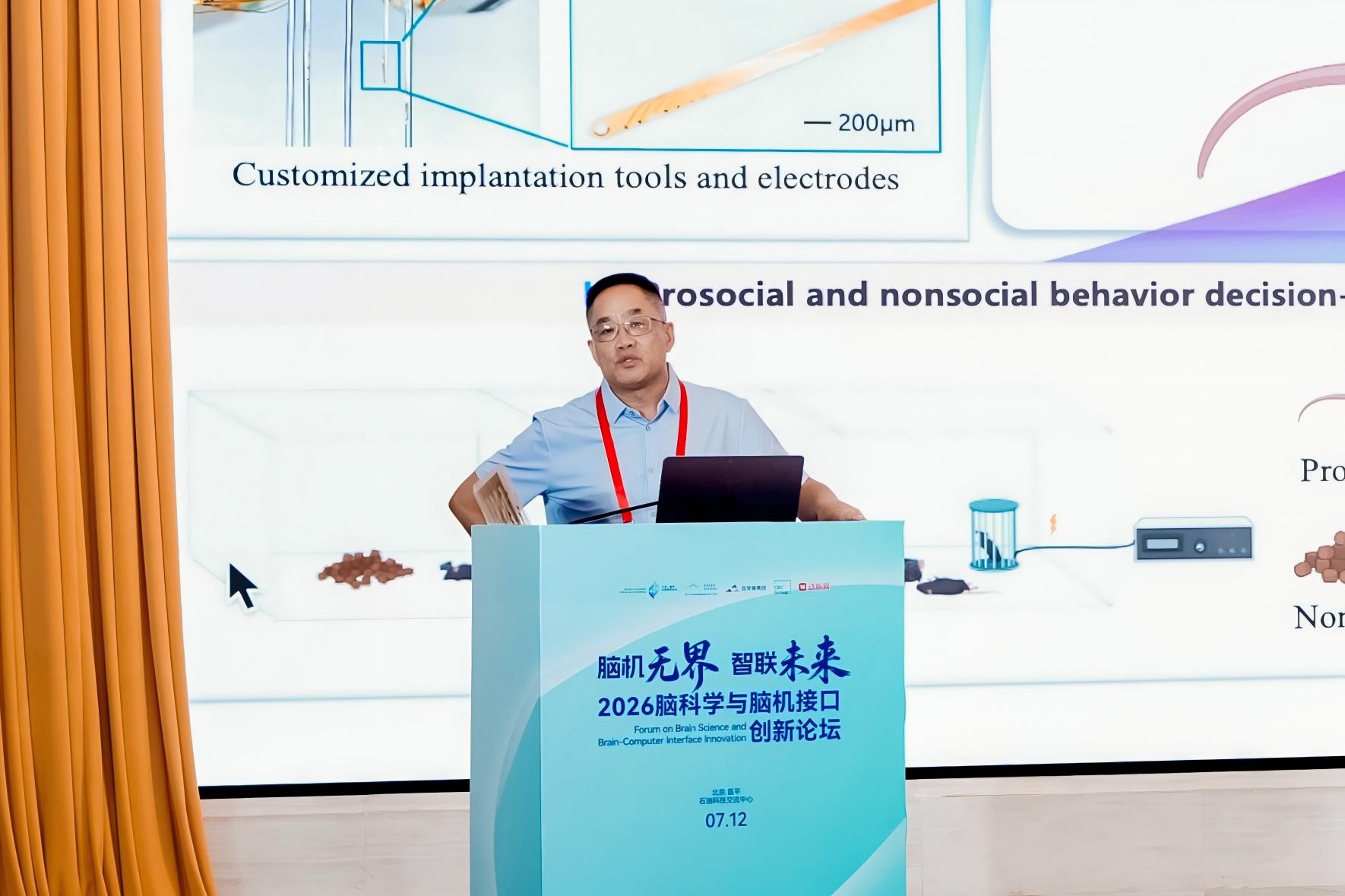
Insights from Leading Investment Institutions and Enterprises in the BCI Industry: The "Next Step" of Invasive BCI
The rapid growth of the BCI industry is inseparable from the exploration of leading enterprises and the support of capital. At present, the importance of flexible materials in the BCI field is increasingly prominent. The process optimization of flexible materials, long-term human safety verification, commercial cost control, and long-term capital empowerment are unavoidable issues in the industry. In a 1-on-1 dialogue, HUANG Jinglu, Vice President of Investment at Legend Capital, and SONG Qi, Founder and CEO of Zhiran Medical, discussed "the 'First Step' and 'Next Step' of Invasive BCI".
Founded in 2022, Zhiran Medical focuses on developing a new generation of invasive flexible BCI platform. When asked why they chose this "most difficult path", SONG Qi said that on the one hand, the team has profound accumulation of underlying technologies for invasive BCI; on the other hand, the team deeply realized that only invasive BCI can achieve high-bandwidth information interaction between the human brain and external devices. In 2026, Zhiran Medical achieved a number of key breakthroughs: in February, it developed stretchable flexible electrodes to solve the industry pain points of traditional electrodes being prone to displacement and prolapse; in March, the thousand-channel invasive flexible BCI system was launched and selected as the annual BCI innovation achievement; in May, it took the lead in launching China's first multi-center prospective clinical trial of invasive BCI with over 100 channels to accelerate the clinical transformation of technology. In the same month, its self-developed intracranial deep electrodes entered the green channel for innovative approval, helping BCI realize two-way read-write interaction and consolidating the foundation of the domestic neuromodulation BCI industry. In the future, the company will promote product registration application and large-scale clinical implementation in the short term, continuously iterate products in the long term, and combine AI large models and embodied intelligent technologies to continuously expand the diverse application scenarios of BCI.
Legend Capital is one of the first-tier investment institutions in China that systematically laid out the BCI track. It has invested in representative enterprises such as Zhiran Medical, Nuanxinjia, and Pinchi Medical around the important positions of the upstream and downstream of the industrial chain. HUANG Jinglu said that Legend Capital has long-term layout in innovative medical devices and BCI hard technology tracks, taking high-throughput invasive flexible BCI technology as the preferred strategic direction, and invested in Zhiran Medical in the early stage after completing the investigation of global technical teams. Its investment logic is that this technical path has an extremely high upper limit, and can even break through the physiological limit of the human body. Future commercial applications are expected to go beyond the medical industry and move towards the broad technology field. At the same time, there are high technical barriers in electrode materials, system integration, and long-term clinical verification, and the assets have high scarcity. In the future, the industry will accelerate differentiation, and enterprises with original high-performance implanted electrodes and complete clinical data closed loops will build long-term barriers. Legend Capital will continue to increase investment in BCI underlying hardware, neural decoding, and closed-loop regulation tracks, relying on Changping's complete industrial, policy, and financial ecosystems to help domestic BCI technology achieve global leadership. Collisions of Industry-University-Research Minds, Promoting the Industry to Reach a Consensus on Development
While the industry is accelerating development, there are still a large number of issues to be clarified in clinical implementation, technological exploration, and industrial collaboration. The formation of industrial consensus will undoubtedly help the BCI industry clear development obstacles. To this end, the forum set up three roundtables to provide a place for ideological confrontation between all sectors of industry, university and research. 1. BCI Implementation Practice and Industrial Collaboration Path in Brain Clinical Scenarios The first roundtable with the theme of "Clinical Anchoring: How to Build a Hospital-Enterprise Collaborative Transformation Ecosystem for BCI?" focused on practical issues such as the co-construction of in-hospital clinical pilots, real-world data collection, medical-enterprise joint R&D mechanisms, and in-hospital access for medical devices, sharing replicable clinical transformation cooperation models. WANG Xiongfei, Director of the Scientific Research Department and Director of the Research Ward of Sanbo Brain Hospital, Capital Medical University, chaired this forum. BIAN Yawen, Chief Operating Officer of Lingxi Cloud Medical Technology; CHEN Shuoqi, Vice President of Investment at Delian Capital; XU Xiangying, General Manager and Chief Medical Officer of Sanbo Brain Hospital Management Group, Secretary of the Party Committee and President of Sanbo Brain Hospital, Capital Medical University; HUANG Ning, Co-founder and Chief Scientist of Huachao Shenkong; SUN Yue, Co-founder & COO of Mingshi BCI participated in the discussion.
All participants agreed that the industrialization of BCI technology cannot be separated from real diagnosis and treatment scenarios. It is necessary to break through the four barriers of clinical practice, scientific research, enterprises, and capital, build an integrated collaborative platform, and complete product verification, iteration and optimization relying on specialized clinical resources. The meeting also proposed that the current BCI data governance system should be improved, and a full-chain industry standard covering equipment, quality control, clinical transformation, and data confirmation should be established; investors should prioritize selecting innovative products that truly solve the rigid needs of patients, and abandon projects that only show off skills. All parties also reached a unified idea on jointly building clinical wards, co-researching industry norms, and opening up the transformation channel of technology from the laboratory to patients. They believe that relying on the linkage model of medical institutions, industrial funds, and science and innovation enterprises can efficiently share R&D risks, share industrial value, and accelerate the large-scale clinical application of BCI products. 2. Weaving the BCI Network, Promoting Technology to Take Root in Clinical Practice and Land in Real Applications
The second roundtable was carried out around the theme of "Breaking Boundaries and Weaving the Network: How to Promote BCI Technology to Take Root in Clinical Practice and Move Towards Real Applications?" The guests jointly analyzed key bottlenecks such as large-scale mass production of domestic BCI hardware, equipment registration application, clinical indication expansion, and product commercial pricing, and discussed the three-party collaborative solution of technology, capital, and clinical practice. WANG Ningyuan, Founder of Nansu Technology, Ph.D. in Cognitive and Brain Science from the University of Minnesota, USA; YE Ying, Co-founder of Rouling Technology; ZHANG Lei, General Manager of Xinzhida and Senior Platform Director of Beijing Institute of Brain Science and Brain-inspired Intelligence; ZHANG Yang, Head of Clinical Medicine at Yinghe Brain Science participated in the discussion. WANG Zaicun, Chief Analyst of Medical Devices at CITIC Securities, Co-Chief Analyst of Pharmaceutical Industry, and Analyst of Future Industry Research Institute, chaired this forum.
