The shortest technology boom in history: Why the "Artificial Intelligence Era" will come to an end faster than you expected
Shen Translation is a translation team under 36Kr, focusing on technology, business, workplace, life and other fields, introducing new technologies, new perspectives and new trends from abroad.
Editor's Note: We have always assumed that the artificial intelligence revolution will last for decades, but various data show that we are already speeding full steam ahead toward the industry's saturation tipping point. Where will the world go after the hype fades? This article is translated and compiled, hoping to bring you inspiration.
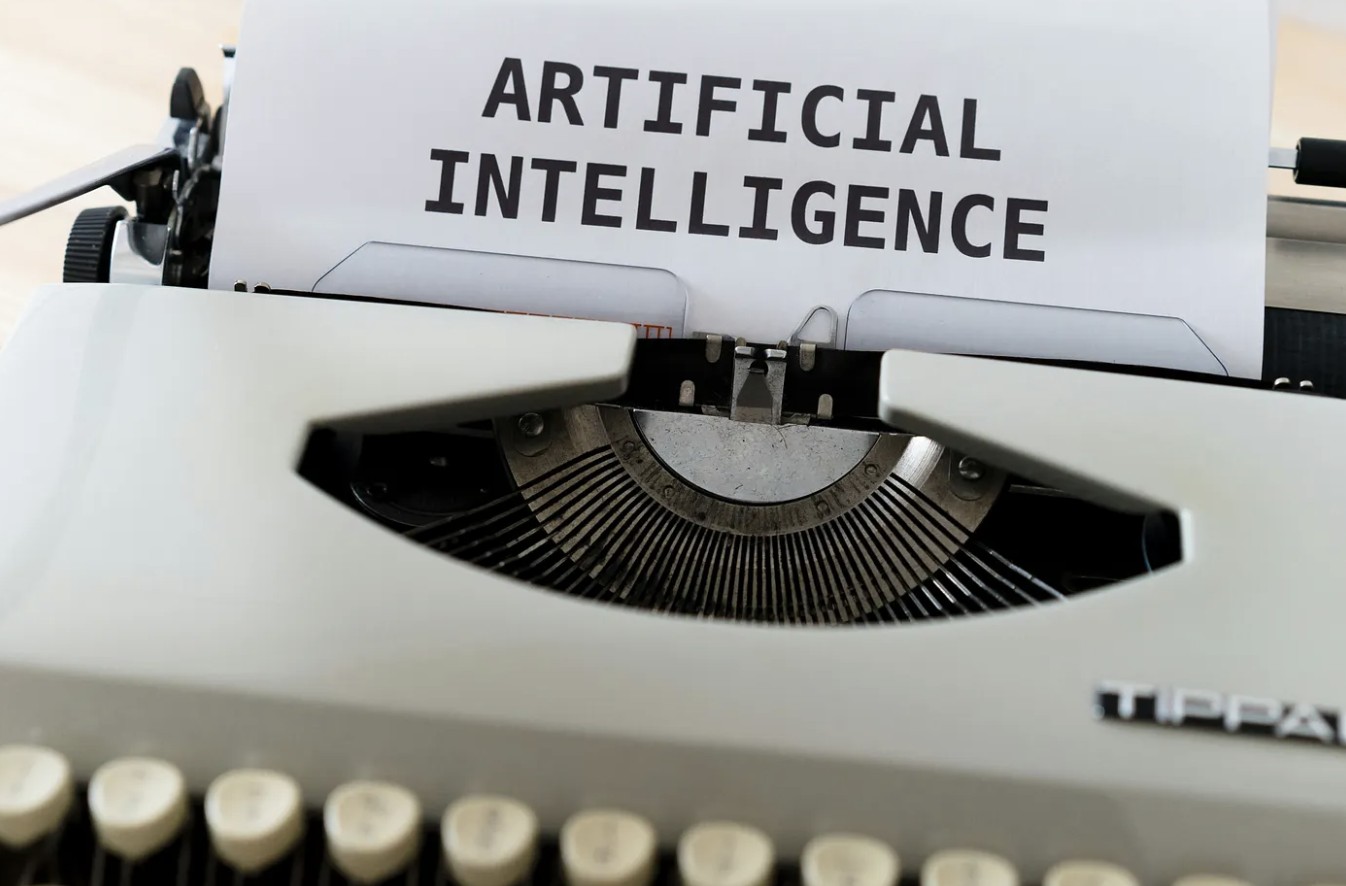
Image source: Unsplash
I majored in human-computer interaction and cognitive science, and spend a lot of time studying how humans adapt to various new technologies in my daily life. Right now I am applying for researcher positions, and ironically, a considerable proportion of jobs related to human interaction are already likely to be automated by artificial intelligence. That's just how full of coincidences life is.
But there is one question that everyone is shouting that artificial intelligence is the future, while I am thinking about a more calm proposition: what is the future of artificial intelligence itself?
Looking through human history, every round of technological revolution will come to an end. It is not that the technology itself dies out, but that it sheds its "transformative" attributes, fully integrates into daily life, and becomes as commonplace as wallpaper on the wall. The Internet never disappeared, it just penetrated into everything, and we have long stopped paying special attention to it. People no longer say "I'm going to surf the Internet", but live directly in the world built by the Internet. Artificial intelligence will follow exactly the same path, except that its evolution speed far exceeds the level that no one is willing to admit.
Every Round of Technological Boom Follows a Fixed Cycle
Few people at tech industry summits mention a clear historical rule: the mainframe era (1950s to 1960s) gave birth to programming languages, established the concept of software standardization, and the boom lasted for about a decade; the personal computer revolution (1970s to 1980s) brought computers into thousands of households, endowing the technology sector with a brand new connotation of "personalization", and it also thrived for ten years before the Internet took over the baton of development; the dot-com bubble in the 1990s saw unprecedented prosperity, followed by an equally brutal crash, after which the Internet quietly became the underlying skeleton for global capital flow; the mobile application era (2007 to 2015) reshaped the entire industry landscape, with the rise of social media and instant food delivery, and the salaries of programmers surpassed those of doctors, this golden period lasted for 10 to 12 years.
All technological booms have a prosperity cycle of around ten years, after which the next wave of technology will arrive. The iteration speed of artificial intelligence is 2 to 3 times that of all previous technologies.
The Alarming Rapid Iteration That Deserves Real Vigilance
Rewind to the beginning of 2023, when ChatGPT had just launched. At that time, the capabilities of large models were still clumsy, like stick figures drawn casually by toddlers, with a hint of fun in their awkwardness. It was indeed amazing, but far from threatening humans. The mainstream views back then were all relaxed: no need to worry, AI is still in its infancy.
But then GPT-4 came out, and later models supported multi-file code generation, which could build a complete website with just a piece of prompt. People who claimed at the beginning of 2023 that "artificial intelligence has obvious limitations" had to overturn their views by March. When the public just formed a set of inherent perceptions of artificial intelligence, the AI in their cognition had long been iterated and disappeared.
Entry-level jobs began to disappear quietly, and panic spread accordingly, followed by a set of recurring soothing arguments: humans are irreplaceable, artificial intelligence has bottlenecks, and everyone does not need to worry. But this panic is not groundless, it just came too early, and the public is not ready for it yet.
Google Has Hinted: We Are Right at the Saturation Tipping Point
Google previously held the world's largest developer conference, Google I/O. If you watched Sundar Pichai's keynote speech, you would hear a statement with a key hidden signal: "Today the artificial intelligence industry has entered a new stage, and users hope to see the actual value brought by artificial intelligence in various products they use daily."
Please re-read this sentence. The speech did not shout "we will set off the next disruptive revolution", nor did it hype "get ready to embrace new technologies that subvert cognition". Instead, it set the tone that artificial intelligence is already available for implementation, and what we need to do now is to make it adapt to the trivial daily life of ordinary people.
All products released at the entire conference fit this tone: Gemini is fully embedded in Search, Gmail, Docs, Android system, shopping carts, and smart glasses; an AI agent named Gemini Spark resides in the background of mobile phones, on standby around the clock, like a thoughtful assistant who is always on duty and never asks for a raise. Google's new platform is called Antigravity, which is built around autonomous agents, and can not only answer questions, but also fully complete the entire workflow on behalf of humans.
All of this is no longer an announcement to the world that "artificial intelligence is born", but a signal that artificial intelligence has been integrated into normal life just like furniture. Whether Google intended it or not, this conference officially declared that the era of artificial intelligence as an independent cultural wave is coming to an end.
We are already much closer to the end of the boom than to a brand new starting point.
The Unacceptable Reality
Artificial intelligence evolves extremely fast. By the time the society fully cultivates a generation of mature AI professionals, the industry's peak has long passed. Those leapfrog breakthroughs that reshaped the entire industry overnight and shocked the world have basically been completed. The remaining work is continuous optimization and polishing — even if the optimization effect is excellent, it is essentially improvement, not disruptive innovation.
No technological boom comes to an end with a spectacular crash. The unique feature of artificial intelligence is that it does not need to rely on humans to drive iteration, and can realize self-evolution: models are trained based on other large models, massive user feedback, and massive data, and technological iterations that originally took several years can now be completed in just a few months. This boom burns so rapidly only because the fuel that drives it can regenerate itself.
There is another unexpected twist: the most valuable AI-related jobs today are no longer engineers building underlying large models, but practitioners who define the usage boundaries of artificial intelligence, assess the impact of technology, and delineate restricted areas, such as artificial intelligence governance, privacy protection, and ethical norms. The most overlooked niche in the technology industry has suddenly become a top priority.
What Will the World Look Like After the Hype Fades?
Think about the state in which you use the Internet now: you don't consciously perceive the existence of the Internet, nor marvel at its magic. It is everywhere, like air, like the taken-for-granted thing that the light turns on when you press the switch. Artificial intelligence will eventually reach this stage. The "AI-empowered" labels marked on various products will quietly disappear, not because artificial intelligence is gone, but because marking it anymore is as redundant as putting a "electricity-powered" label on electrical appliances.
The 2026 Google I/O inadvertently showed this future in advance: hundreds of new products were released, all equipped with artificial intelligence, but none of them brought a disruptive impact. This is not a criticism, but a natural development trajectory that every truly popular technology will follow.
The next wave of technology will not be more powerful artificial intelligence, but ubiquitous ambient computing and people-centered design. This type of technology will hide behind the scenes and amplify human capabilities, rather than making humans more dependent on tools. The new generation that grows up with artificial intelligence will no longer be curious about AI, but will take its existence for granted. The technology they truly crave is born to fit human needs, rather than forcing humans to adapt to machines.
The artificial intelligence era will not end with a crash, but will follow the ending pattern of all great eras — fully integrate into daily life, so ordinary that no one will ever call it an "era" again.
And this turning point is much closer than various industry hypes have advertised.
Translator: Teresa