2026 WAIC concludes: Behind the abundance of novel AI species lies the ultimate clue to Physical AI
WAIC acts like a prism, revealing a complete cross-section of China's current AI industry: models are accelerating their transition from linguistic intelligence to spatial intelligence and embodied intelligence, while underlying computing power is building a domestic closed loop spanning from cloud superclusters to edge-side chips. There is no unified final answer, but everyone is moving forward firmly toward their goals.
Each edition of WAIC is like a dress rehearsal for the future world of AI.
In the past few years, the protagonists of this grand event were large models, multimodal systems, and intelligent agents. This year, AI has begun to leave the screen and enter the real world.
SenseTime set up a future laboratory on site, where the robot "Xiao Mai" independently completed the entire process of picking up goods, making products, and delivering orders, and will also be able to automatically restock and organize shelves in the future; Taishi Intelligent Navigation brought a robotic circular wiring harness assembly line to the exhibition booth, with a robot cluster demonstrating independent production line operations on site; Jiasu Jinhua converted half of its booth into a small football field, where robots less than one meter tall dribble, steal the ball, shoot goals, and even perform feints to get past defenders on their own.
These robots with diverse forms and full intelligence are stepping into consumer scenarios and production lines, becoming "partners" in our real lives.
The large number of tangible product launches have also made this WAIC unprecedentedly popular. More than 1,100 enterprises participated in this conference, with nearly 4,486 exhibits unveiled, setting a new historical high in terms of both exhibition scale and visitor flow.
However, behind the bustle, there are many industry insights worthy of further exploration.
What is driving AI to accelerate its entry into the real world? Where does the data for physical AI come from? Between world models and VLAs, which one is the key to breaking through the bottlenecks of physical AI? Phones, glasses, headsets, robots... Who will be the ultimate entry point for physical AI? As AI penetrates into thousands of industries, will China be able to define the global standards for "physical AI implementation" in the future?
As the 2026 WAIC draws to a close, I tried to find those answers that might be written into the future amid the hustle and bustle.
01
A Review of the Groundbreaking New AI Species at the WAIC Site
The on-site traffic at this WAIC was almost entirely dominated by fully iterated and upgraded AI robots.
A large number of robot products with novel forms and practical functions made their concentrated debut, subverting the public's inherent perception of robots.
The GD01 manned transforming mecha on the Unitree booth can be regarded as the top attraction of the entire exhibition. This new product, which was just fully released in May this year, is about 3 meters high, weighs 500 kg in total after carrying a person, can flexibly switch between bipedal and quadrupedal walking modes, is priced at 3.9 million yuan per unit, and is mainly designed for operations in high-risk scenarios.
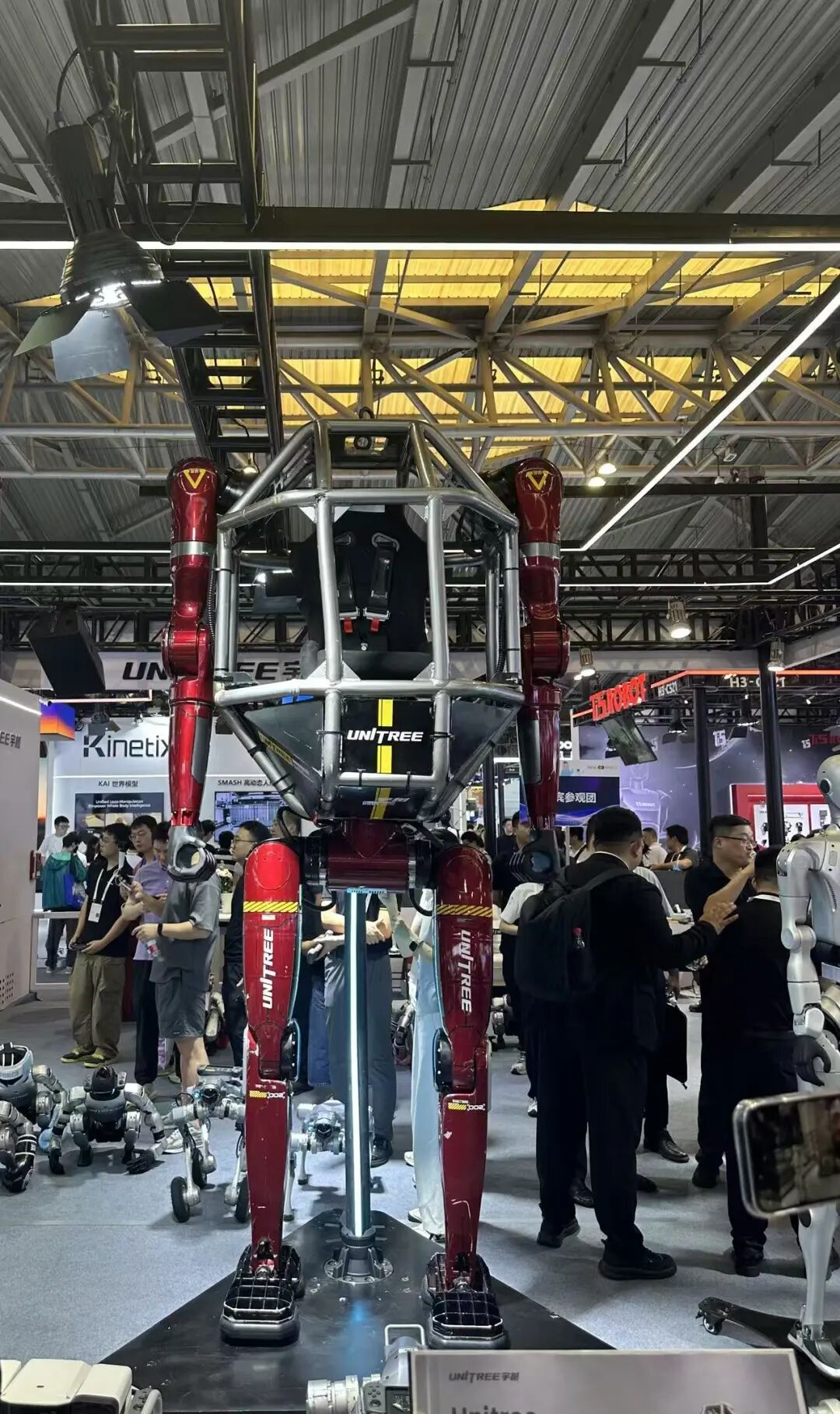
GD01 Manned Transforming Mecha
In addition to Unitree, a number of multi-form variable robots also have their own highlights. The Shangwei Qiyuan T1 supports free switching between wheeled-foot and quadruped modes, and was joked by netizens as "looking like a hybrid of human and dog". The TRON2 from ExDynamics can be assembled like Lego blocks into bipedal, dual-wheel-foot, dual-arm configurations, or even a "centaur" that can drag tires on the carpet while carrying 30 kg of weight.
The robot from Taishi Intelligent Navigation has the "strongest workplace vibe", as it directly moved a 1:1 automotive wiring harness production line into the booth, where a robot cluster with "wheeled chassis + dual arms" demonstrated production line operations on site. Leju's Kuafu robot, paired with Ant Lingbo, focuses on logistics and warehousing scenarios, and can efficiently complete cargo depalletizing, handling, and material feeding.
From industrial production, logistics and warehousing to consumer services close to daily life, the application scenarios of AI robots continue to expand.
The SenseTime booth directly built an immersive robotic convenience store called Shaomai Go, where the robot "Xiao Mai" wearing a baseball cap will pick up goods, hand over orders, and organize shelves on its own after you scan the code to place an order, with no human intervention required throughout the process.
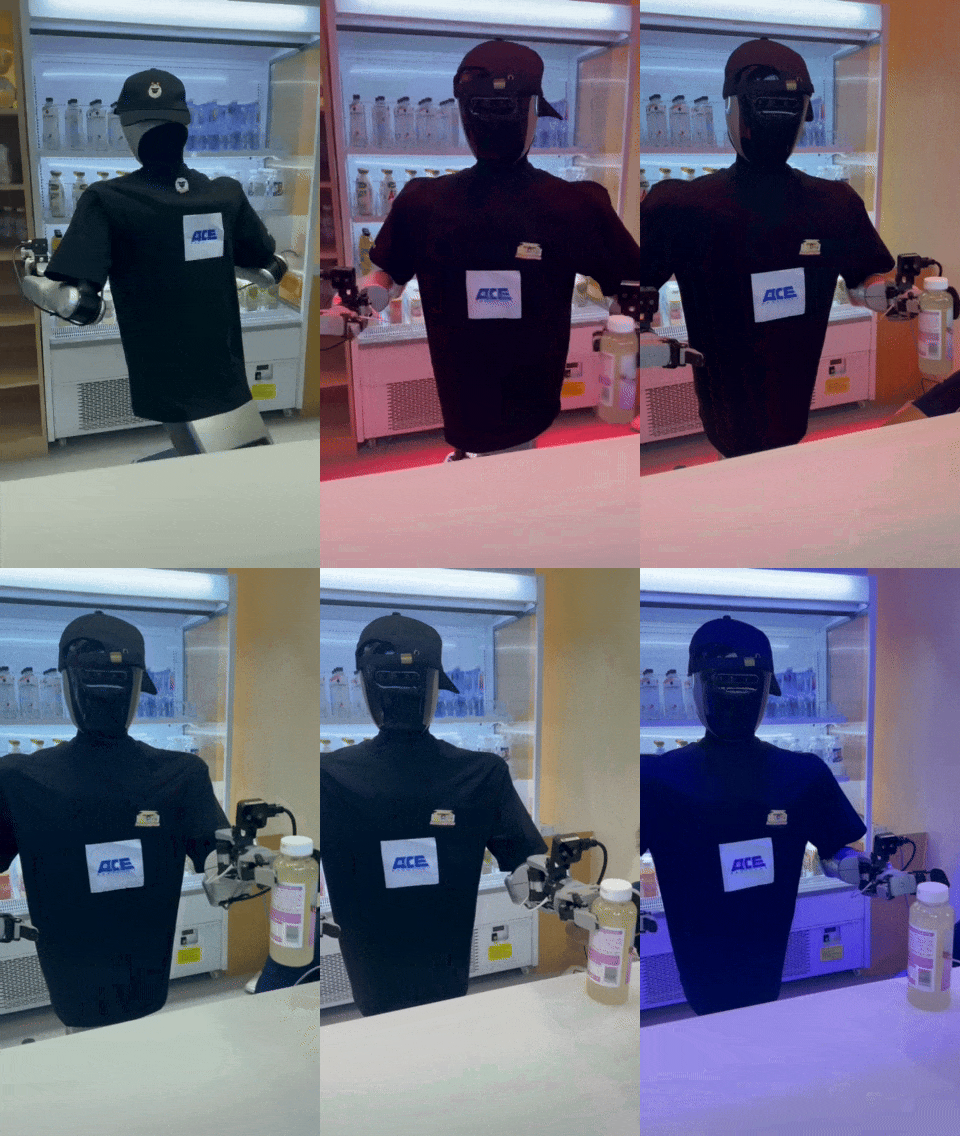
Robot "Xiao Mai"
According to the staff of Daxiao Robotics (incubated by SenseTime), 10 convenience stores have been opened in Shanghai, 20 across the country, and they have achieved an average daily order volume of 400 in real stores, with plans to open 100 stores before the end of the year.
In addition to large industrial and commercial robots on site, a number of lightweight, highly interactive bionic robots also won countless fans. Songyan Power's Xiaobumi is less than one meter tall, but it is a total "social butterfly" robot, proficient in skills such as autonomous walking, precise handshakes, following interactions, and rhythmic dancing, and it is priced at less than 10,000 yuan, making it extremely affordable. The bionic robot Xiaoyue focuses on emotional interaction, and can respond to the audience's actions in real time through changes in eye contact and facial expressions, giving AI robots "emotional perception".
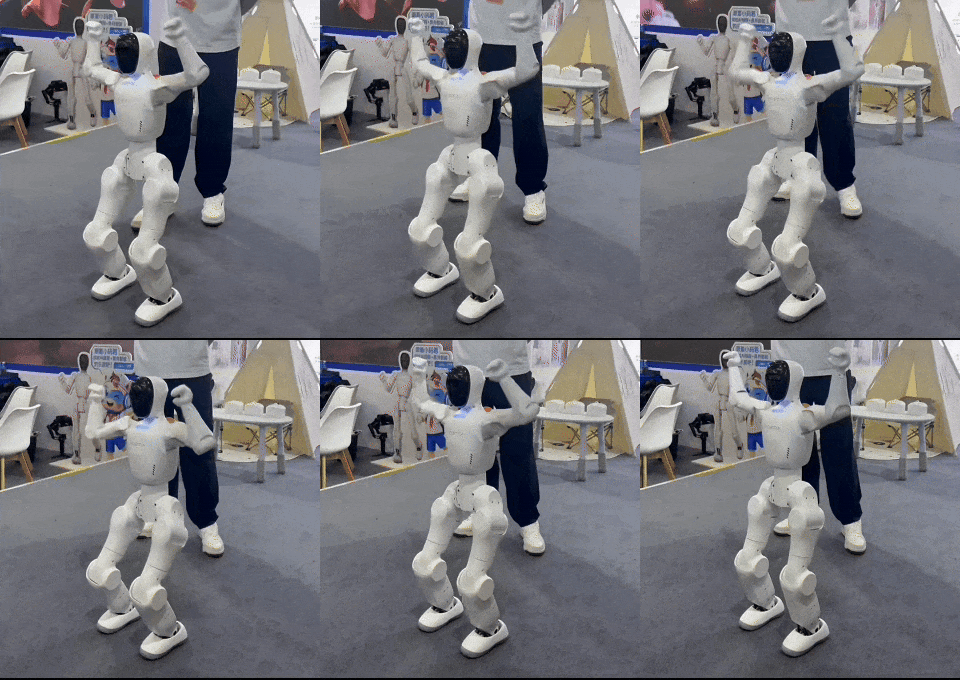
Xiaobumi
The football robots from Jiasu Jinhua can run for positions, pass the ball, shoot goals, and even perform feints; the full-size humanoid robots Oli and Luna from ExDynamics, one focuses on general operations and the other emphasizes interaction more.
The new products of Zhipu Robotics - Expedition A3Ultra, Elf G2 Max, and dexterous hands - also made their collective debut. The Elf G2 Max, which focuses on "safety-certified heavy-duty operations", directly targets the labor gap of "two shifts" in warehouses, and is currently running in JD Logistics' warehouses.
The new AI species at this WAIC are not limited to various robots with rich forms and powerful functions, but also include a large number of newly iterated consumer-grade AI hardware making their concentrated debut.
AI phones are a new hot spot in consumer terminals. Honor's exhibited Robot Phone became the internet-famous model of this exhibition due to its unique design. The device is innovatively equipped with a rotatable mechanical gimbal, giving traditional mobile phones a flexible mechanical interaction form. This phone has now opened full-channel reservations and is expected to be officially released in August.
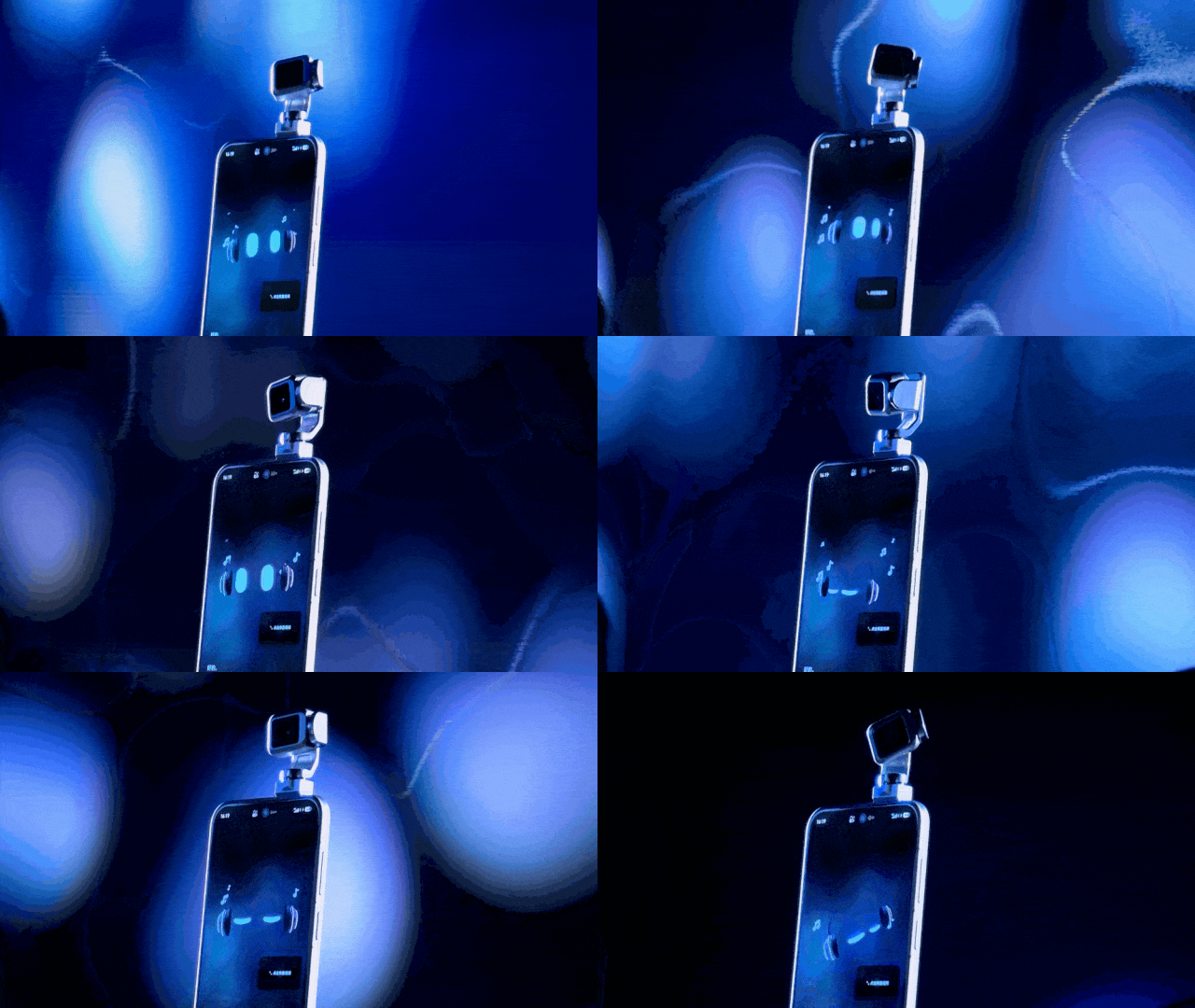
Robot Phone
The second-generation Doubao phone jointly launched by Nubia and ByteDance also made its appearance at WAIC. The model has a built-in Doubao mobile assistant, and its interaction solution has been changed from GUI to MCP. Functions can only be accessed after the corresponding application actively opens data and control permissions. All core calculations are completed on the local device, ensuring that data does not leave the device, balancing intelligent experience and privacy security.
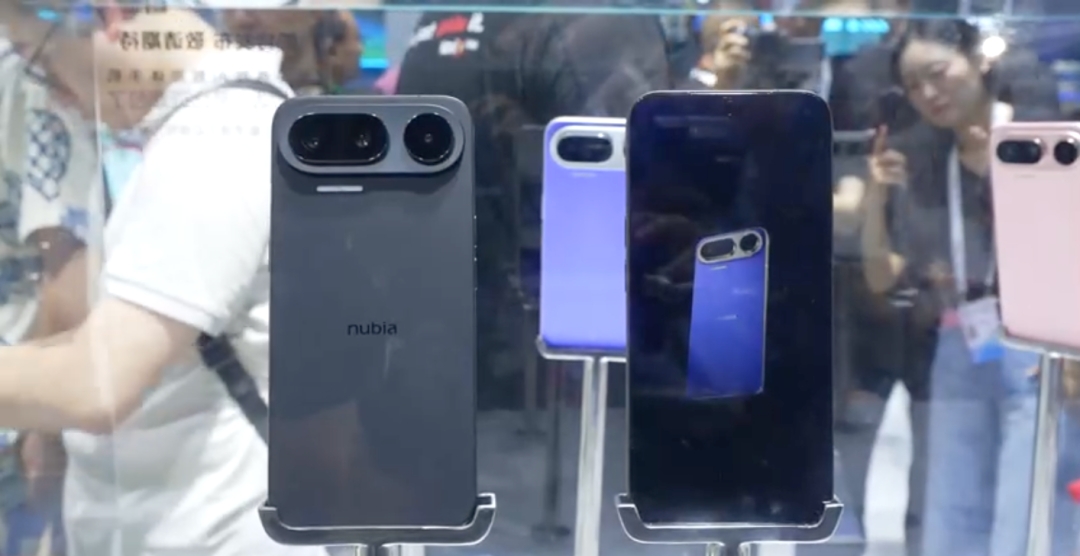
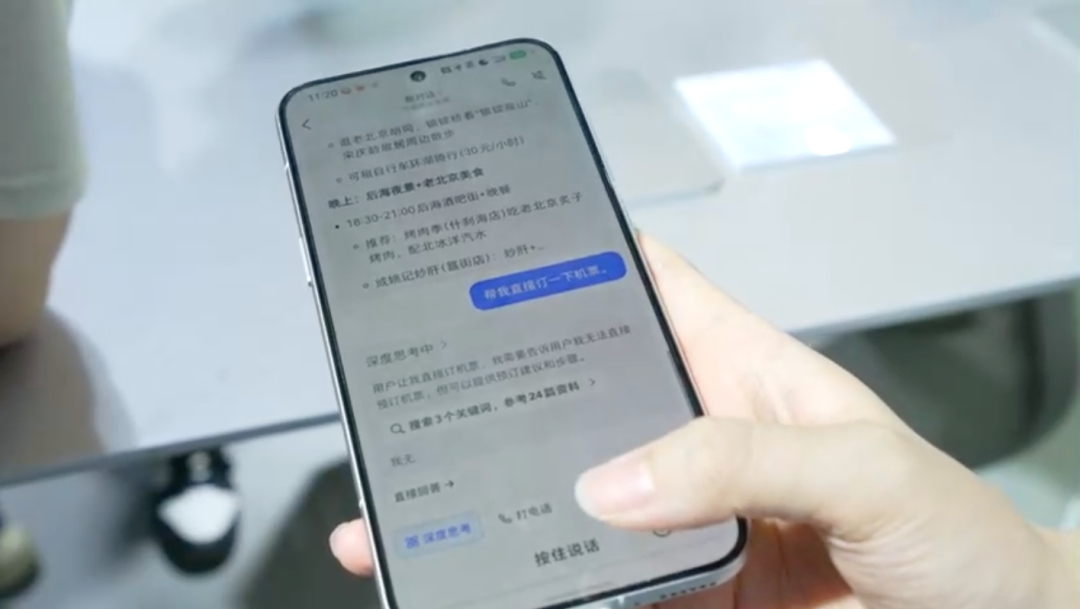
Nubia NaviX Ultra
The first physical AI terminal of STEPX under StepFun also made its grand debut. The product is deeply integrated into the Alipay ecosystem. The staff demonstrated the function of "querying services with one sentence" for us on site, such as finding the nearest charging pile. In the future, it will be deployed in various life service scenarios, making AI an efficient and convenient life assistant for the public.
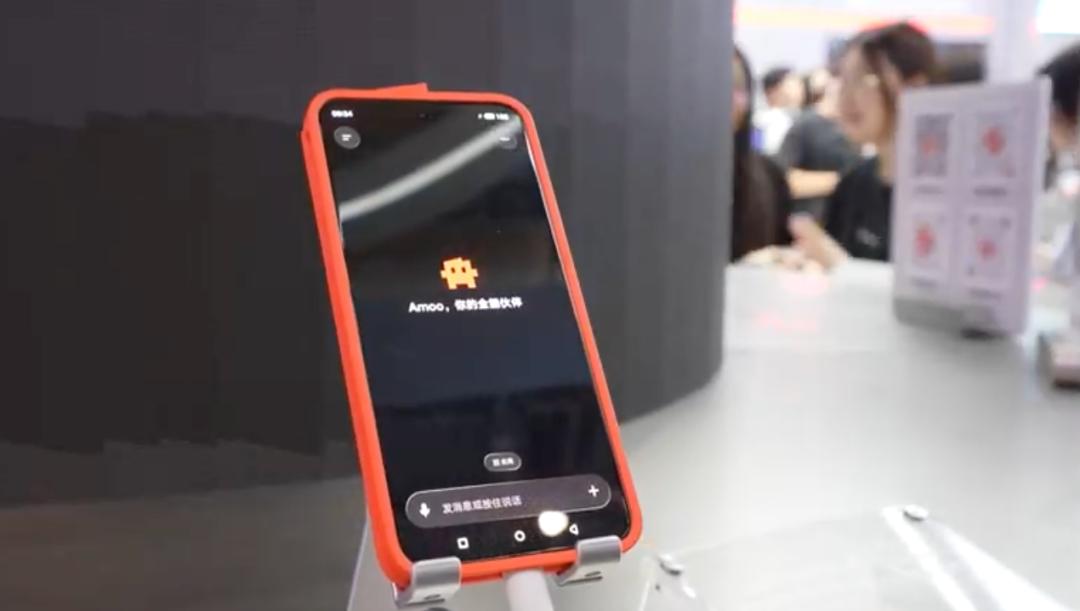
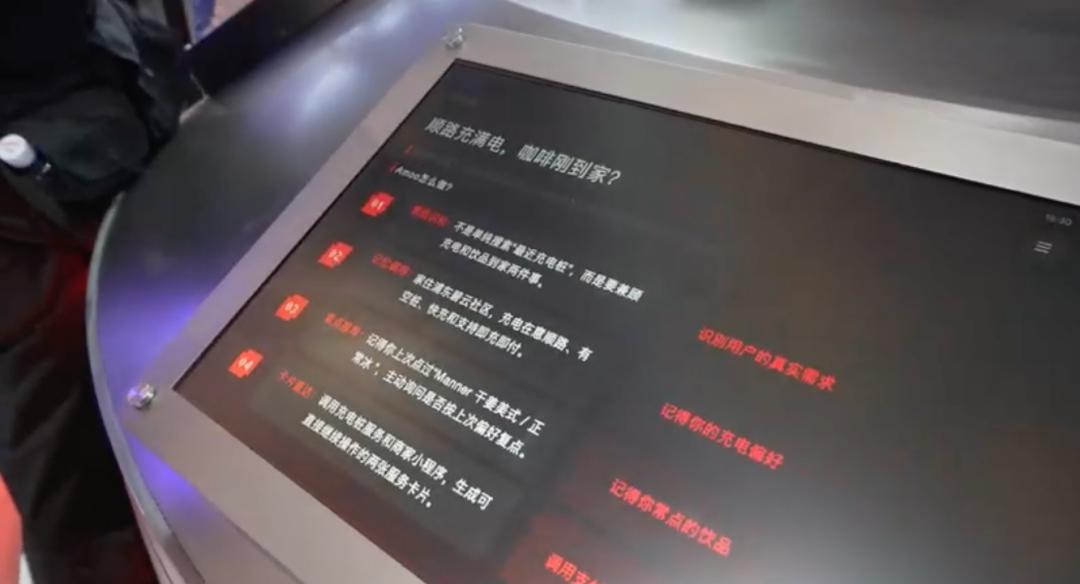
StepFun AI Phone
In addition to exhibiting star Agent products such as Wenku and Wangpan, Baidu's booth also showcased its own AI hardware ecosystem, among which the home care AI camera caught my interest.
The head of the Xiaodu brand told us that this AI camera has been on the market for more than a year. It uses Baidu's self-developed "care agent" as the core, dynamically calls Ernie Bot or other third-party models according to scenario requirements, and supports setting different monitoring scenarios for children, the elderly, pets, or custom roles. Its minimum price is more than 300 yuan, and currently several core AI care functions (such as face tracking and abnormal behavior recognition) are completely free.
The screen-equipped version supports two-way WeChat video calls, and also designs functions such as one-click for help and real-person rescue in the elderly-friendly health screen. This good-looking and practical AI camera makes me feel that this is what AI hardware should look like: affordable, practical, and no learning required.
In addition, there are also Alibaba's first AI earclip headphones and Amap's intelligent tour guide robot on site, providing new solutions for tour guide scenarios in parks and commercial districts; NetEase Youdao's OpenPods headphones support real-time bilingual simultaneous interpretation, adapting to multiple scenarios such as office work and learning; Iterative products such as iFLYTEK's AI glasses are also all on display.
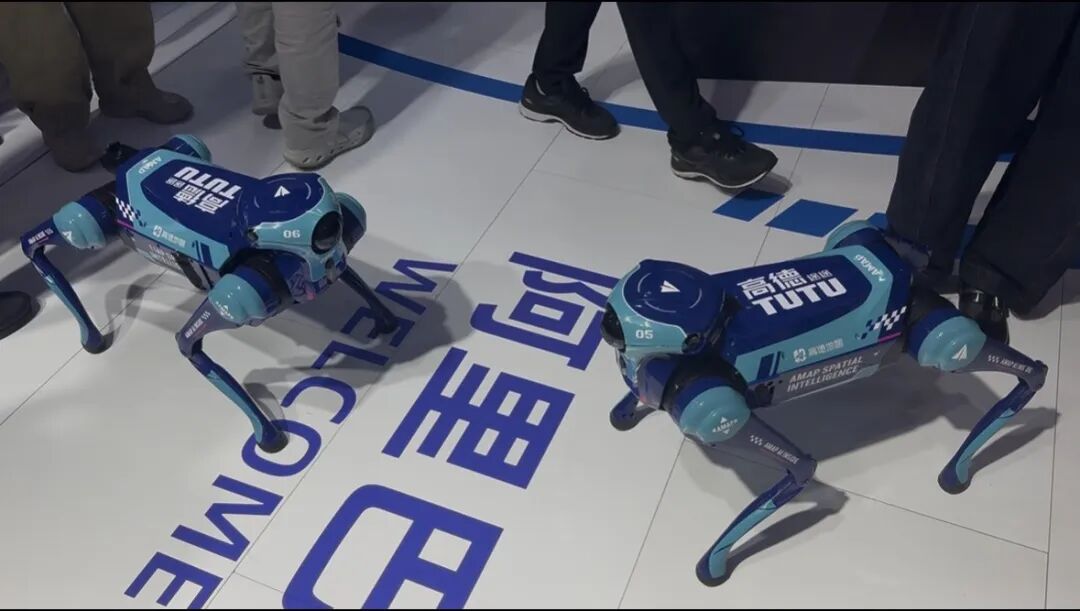
Amap Intelligent Tour Guide Robot
Looking at the hardware iteration trend of this WAIC, it is not difficult to find that in the past two years, the industry was still focusing on entry-level AI products that "can talk and interact". This year, practical AI hardware that "can be deployed, perform tasks, and improve efficiency" has fully exploded, moving toward real productivity and life services.
02
Why Did the "New AI Species" Explode Collectively?
The simultaneous maturity of foundation models, embodied intelligence models, and computing power infrastructure is the key to supporting the explosion of these new AI species.
In the past few years, the AI industry has paid more attention to the growth of model parameter scale. The change demonstrated by this WAIC is that large models are moving from simply pursuing "larger size" to the deep water zone of competition characterized by "stronger capabilities, deeper scenarios, and higher efficiency".
On the eve of the opening of WAIC, Moonshot AI released Kimi K3, which with a total of 2.8 trillion parameters and a 1 million token context window, became the world's first 3-trillion-level open model, continuing to explore the capability boundaries of larger-scale models in tasks such as complex reasoning and long text understanding.
MiniMax concentratedly displayed its flagship model M3 at the booth, and previewed the new generation of multimodal generation model H3. Through ecological cases such as robotic dogs, AI glasses, smart headsets, and AI toys, it intuitively presented the comprehensive capabilities of M3 in long context, code, and agent tasks.
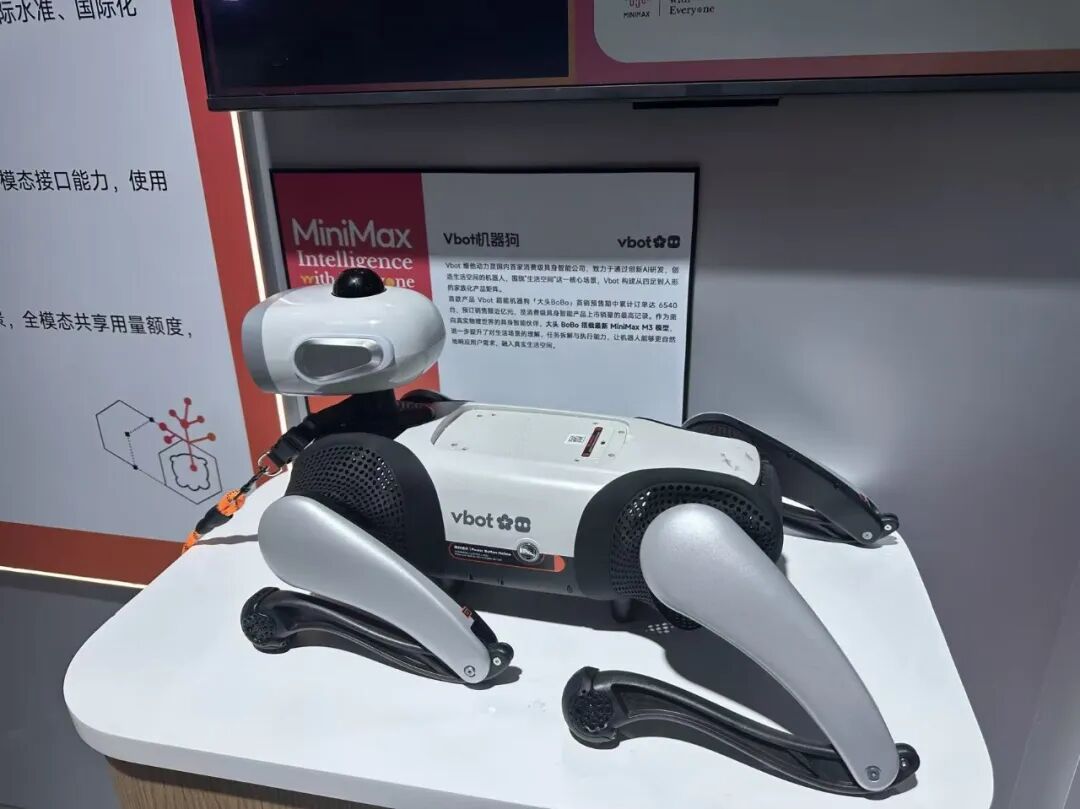
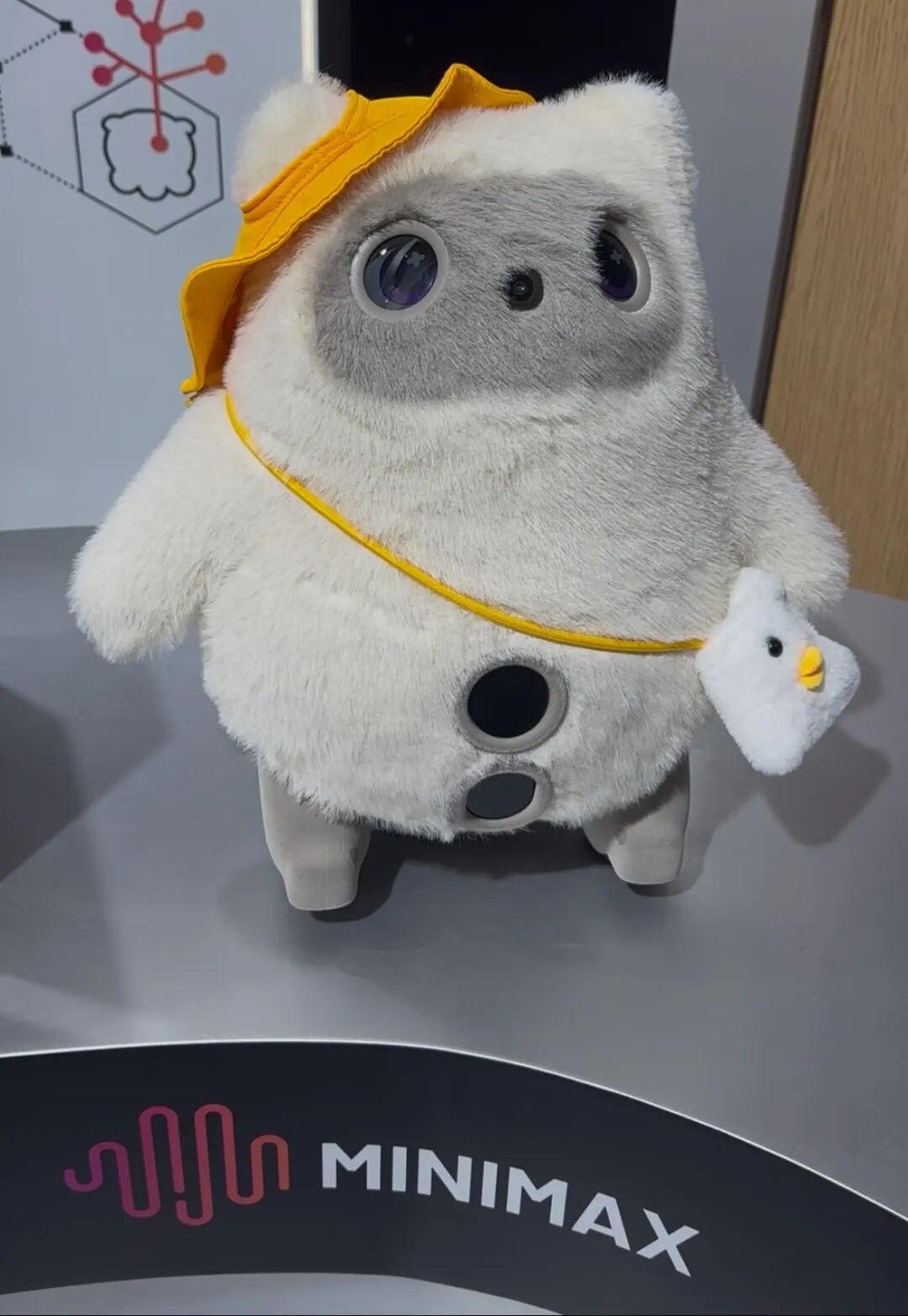
MiniMax Booth
Wall Intelligence has bet on the edge side. Its new generation MiniCPM5-1B maintains a leading position in the parameter scale below 2B, and has cooperated with Samsung to explore the deployment of edge-side large models in terminals such as mobile phones. Parameters are still important, but what determines industrial value is the ability of the model to enter specific scenarios and solve problems.
