When AI serves up standard answers, how can humans "Think Different"? A global line of inquiry sparked by the WAIC UP! Insight Sharing Session
When AI can instantly generate answers to everything, do "life choices" still have standard solutions?
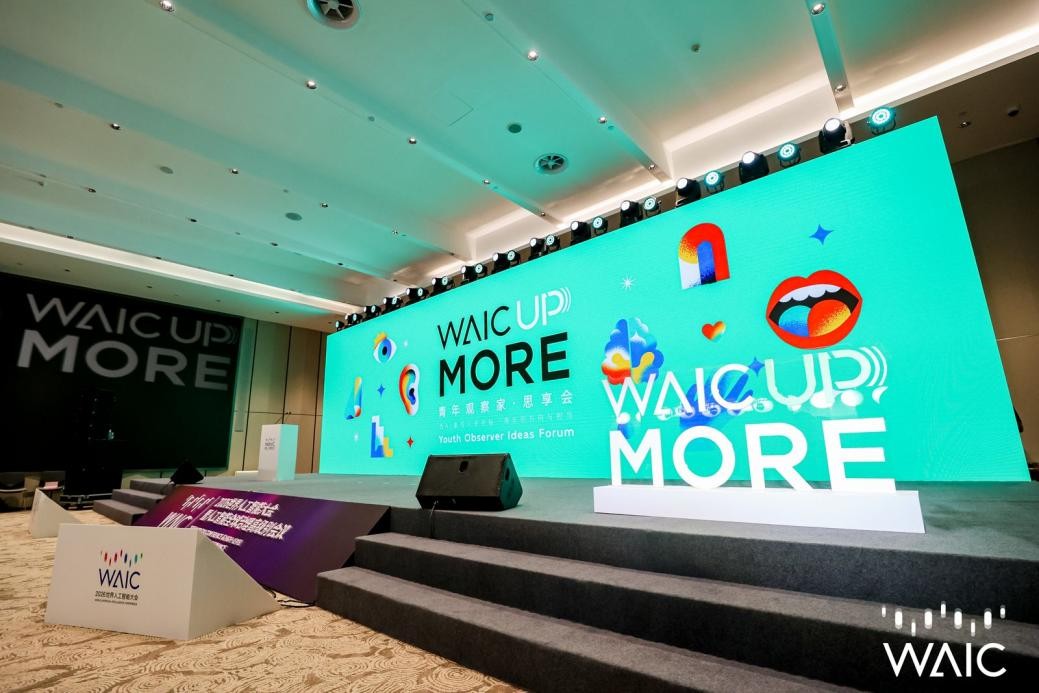
On July 18th, at the Shanghai World Expo Exhibition & Convention Center. In the main venue of WAIC, computing power, algorithms, and parameters were mentioned over and over, with capital and technology colliding in the air. A few hundred meters away, in a sunken plaza, five people laid their respective confusions out on the stage.
No authoritative speeches, no tech launches, no partnership agreements. Only questions.
A Nigerian international student asked: When AI can mimic smiles and generate greetings, can those heartbeat-free acts of kindness still be called genuine kindness?
A German engineering student found that when he worked on literature reviews, he "read" just like AI: browsing 600 abstracts, extracting keywords, skipping the full text. It was not until a lecture on vehicle routing planning, where a professor's one-hour talk made him "really listen" for the first time. He asked in return: When machines can generate content infinitely and human attention becomes a scarce resource, are we losing the ability to "really listen"?
A Chinese entrepreneur found that AI helped him figure out the optimal combinations for hundreds of equipment sets in his game, but the joy was never in the answer itself — when getting answers is so easy, the ability to ask the right questions has instead become the new scarce resource.
A math student from New York, in a rural kitchen in Yunnan, had a bunch of "visually correct" coriander sprigs sent back by the chef, and realized the gap between "following a recipe" and "understanding ingredients".
A business school student from the UAE, looking at the same business case, saw completely different judgments from classmates in China, the Middle East, Europe and America — the data was identical, but the conclusions were not. She wondered: When knowledge is at our fingertips, what exactly makes a person truly irreplaceable?
Five people, five coordinates. Their common trait is not age, but a widespread sentiment: as AI accelerates everything, the old map for defining success is failing, while the new map has yet to be drawn.
This thought-sharing gathering is precisely an attempt to find coordinates for this predicament.
It is not a "problem for young people". As AI is rewriting the underlying logic spanning education, employment, and social values, the entire society — families, schools, enterprises, policymakers — must rethink: what criteria do we use to measure human value? What is worth learning? What is worth investing in?
A journey of ideas thus kicks off.

"All progress depends on the unreasonable person."
— When AI can return answers instantly, what is left of education?
Bill Reichert, Partner at Pegasus Tech Ventures, stepped onto the stage and instead of talking about tech trends, threw out a more fundamental question: If the future cannot be accurately predicted, why are education systems still training people around predefined career paths?
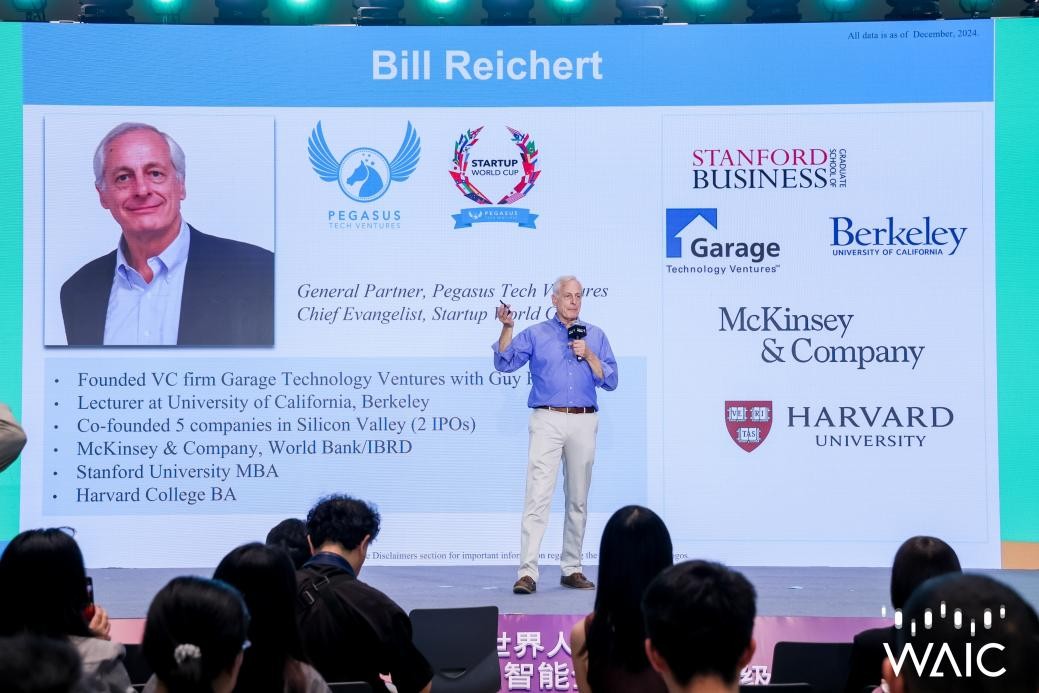
Keynote Speech "How Should Education Cultivate the Next Generation When the Future Is Unpredictable?", Bill Reichert, Partner at Pegasus Tech Ventures, Chief Evangelist of Startup World Cup
He presented a list of "Ten Major Shifts" — from earning a degree to continuous learning, from seeking answers to asking questions, from individual achievement to team creation, from following rules to breaking rules; from chasing the correct answer to raising the right question; from exam scores to leadership; from IQ to "street smarts"; from avoiding failure to leveraging failure; from acquiring knowledge to influencing human behavior; from being a professional to becoming an entrepreneur. Each of these ten points is dismantling the reinforced concrete of the modern education system.
Then he quoted a line from George Bernard Shaw that stuck in the venue like a nail:
"The reasonable man adapts himself to the world; the unreasonable one persists in trying to adapt the world to himself."
But the question is: Is our education system cultivating reasonable people, or unreasonable ones?
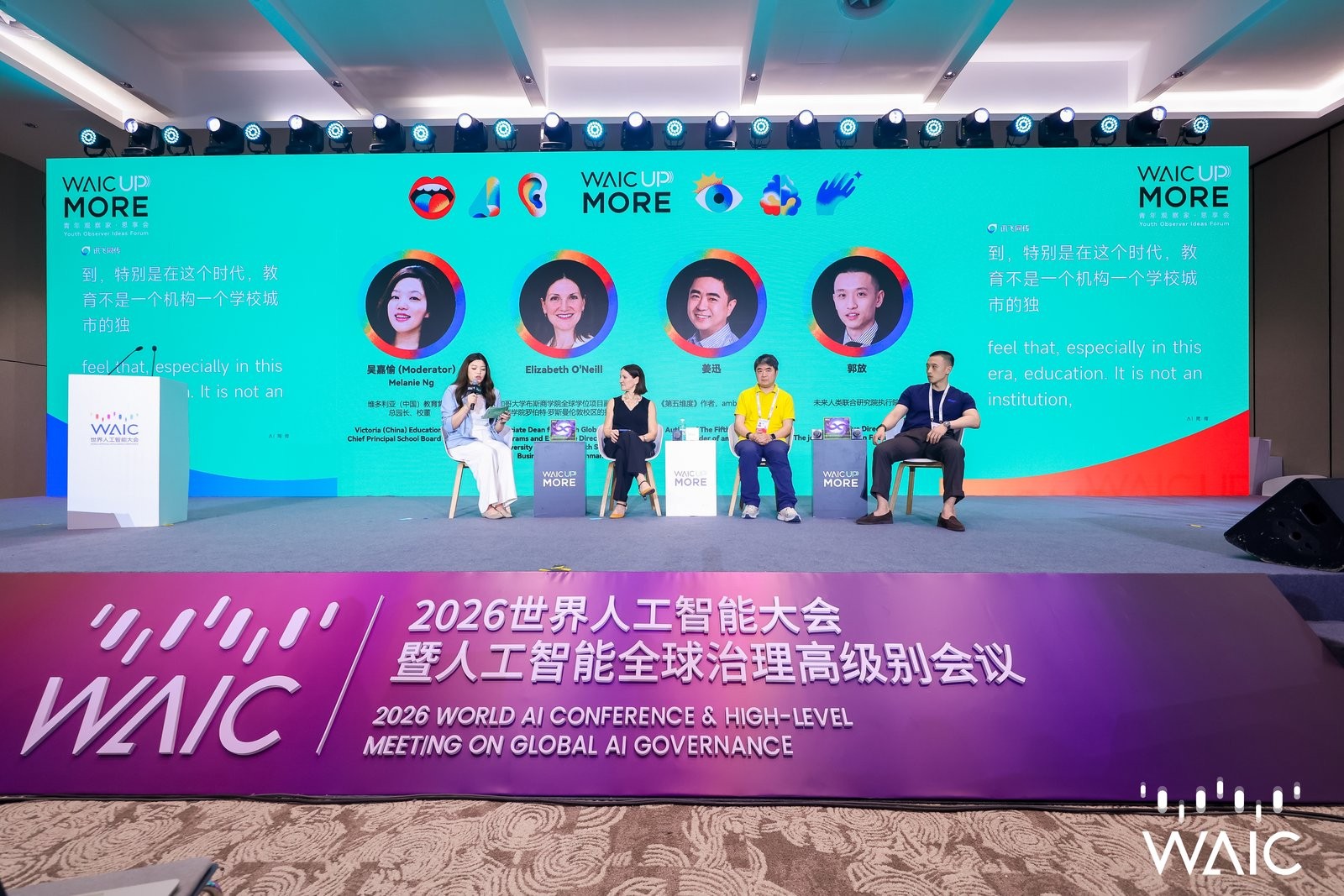
Elizabeth O'Neill, Associate Dean of Global Degree Programs at the University of Chicago Booth School of Business, said: "The University of Chicago prefers to teach students how to think, rather than what to think." This single sentence draws a clear line between the old and new paradigms of education.
Jiang Xun, author of *The Fifth Dimension*, put it more bluntly: "Over the past two to three hundred years, the core purpose of education has been to screen out people with specific capabilities to match corresponding assembly lines. But AI is changing this — as long as a person can raise a question, AI can help them quickly find a solution path."
Guo Fang, Executive Dean of the "Joint Research Institute for the Future of Humanity" jointly established by Renmin University of China and Westlake University, pushed the question further: "If you become a point within the distribution, you can easily be replaced by large models. What you need to do is strive to become a point outside the distribution."
A simple mathematical metaphor lays bare the harshest reality of education.
This discussion did not yield an answer. It is not only a challenge for China, but also a shared proposition for the global education system.
The question is: Who is listening?

"Treat AI-generated answers as drafts, not final versions"
— When AI makes "getting things done" no longer a scarce skill, what deserves higher value?
If education is the starting point, employment is the first real-world test.
Ryan Bedell, Associate Director of Career Advancement Programs at the University of Chicago, shared a set of feedback from enterprises. Students ask "Will AI take my job?", parents ask "What capabilities should we cultivate now?", while enterprises ask a different question: Who can help us solve problems and create value in the AI era?
Ryan said: "The information gap between these three groups of people is creating a collective sense of anxiety."
Based on long-term communications with hundreds of enterprises across the global finance, consulting, healthcare, and technology sectors, Ryan summarized four capabilities that employers value most in the AI era: complex problem-solving skills, authentic expression skills, the ability to turn ideas into reality, and the ability to build connections and collaborate between people. Then he repeatedly quoted a line on site:
"The best students are those who treat every AI-generated answer as a draft, not a final version."
In other words: AI generates answers, but you are responsible for them — judge if it is correct, ask if it is complete, verify if it is reliable.
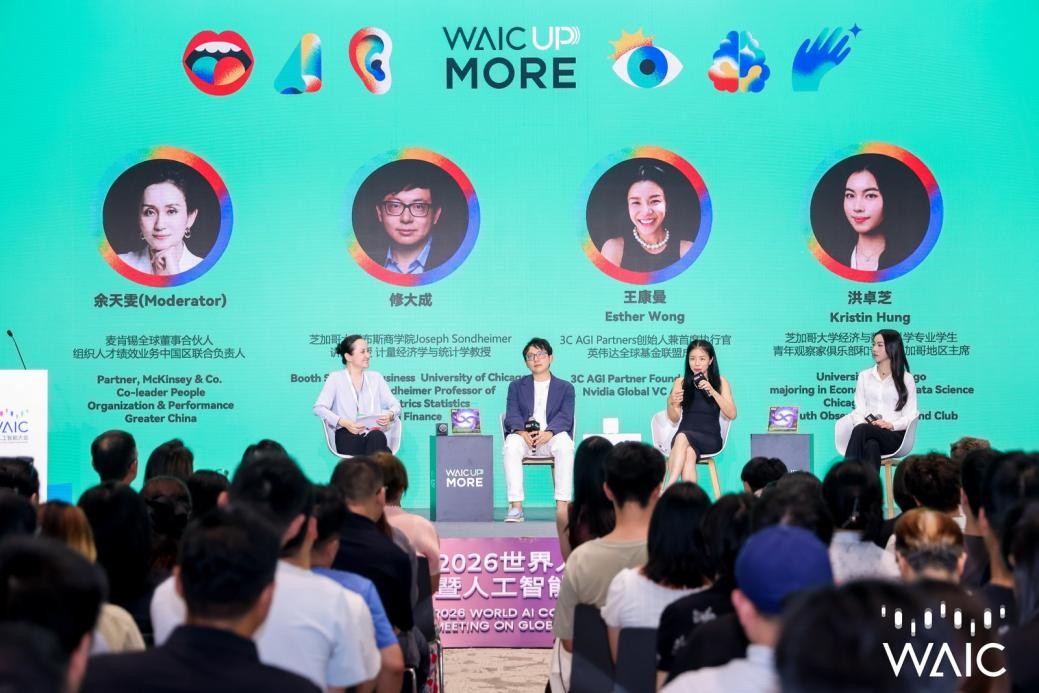
Under the moderation of Yu Tianwen, Global Managing Partner of McKinsey & Company, a roundtable discussion made the question even more pointed.
Hong Zhuozhi, the youth representative, shared her personal experience: "I once directly assigned tasks to AI, and found the answers were so complete that I left no room for my own thinking. Since then, I have forced myself to think through the problem first, and then let AI challenge my ideas."
Wang Kangman, Founder and CEO of 3C AGI Partners, put it more directly:
"If a task can be fully completed by AI, then that job does not need a human at all."
She cited the US banking industry as an example: a large number of standardized, repetitive back-office positions are disappearing, while roles that require understanding customers, nurturing relationships, and creating business value are becoming more powerful with the help of AI. In other words, AI is eliminating jobs that "require no thinking", while amplifying the value of people who "need to make judgments".
Xiu Dacheng, Distinguished Professor at the University of Chicago Booth School of Business, further pointed out from a cognitive perspective: "It is not AI that replaces humans, but people who know how to use AI. We need to shift from fear, anxiety, and resistance to embrace and creation."
Yu Tianwen finally listed a checklist: problem definition skills, professional judgment, learning agility, collaboration skills, empathy, courage in the face of uncertainty, and creativity.
The list is long. But the core is only one sentence: the parts that can be delegated to AI are growing larger, but problem definition, professional judgment, interpersonal connection, and accountability for results — these universal capabilities that transcend cultures — must remain in human hands.
The question is: Do universities teach these? Do companies recognize these? Does society trust these?

"One person plus one laptop is enough"
— When AI lowers the barriers to entrepreneurship, what becomes scarcer?
Entrepreneurship used to be a game of capital, teams, resources, and experience. AI is rewriting the rules of this game.
Rupert Hoogewerf, Founder of Hurun Report, stepped onto the stage with a set of global data: the number of global unicorn enterprises has reached 1600, their total value has increased by 40%, and the average valuation of AI enterprises is three times that of fintech enterprises.
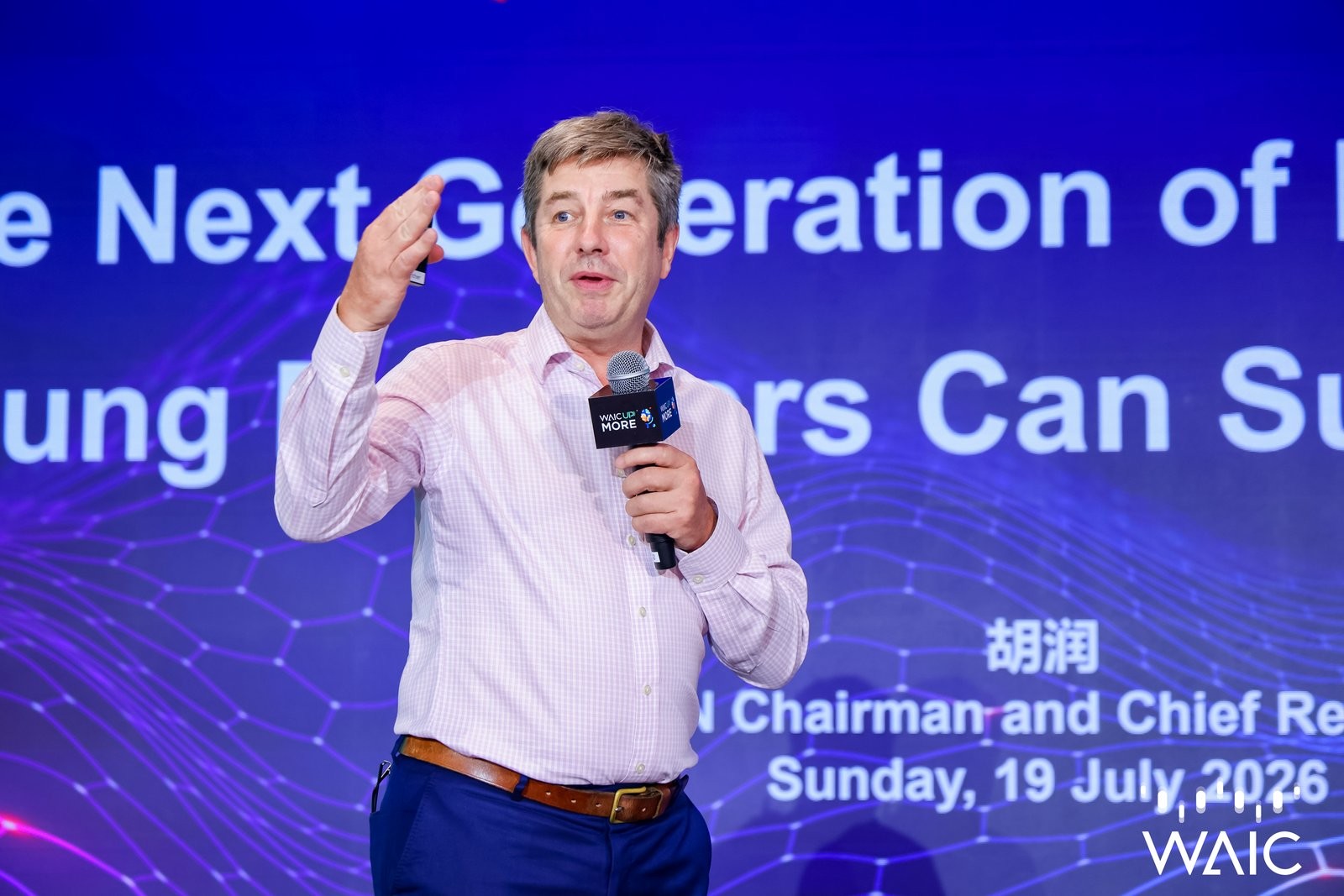
Keynote Speech "When AI Becomes a Partner, Where Are Young People's Entrepreneurial Opportunities?", Rupert Hoogewerf, Founder of Hurun Report
He talked about his entrepreneurial experience at the age of 29: no grand plans, more like a "dog sniffing out opportunities": "I thought this was good, so I headed this way; that place seemed nice too, the food there tasted good, so I went for a bite."
This sharp sensitivity to changes is precisely the capability that entrepreneurs in the AI era need most.
Rupert Hoogewerf believes that the number of unicorns is a hard indicator to measure the innovation vitality of a region:
"A city or a country with a large number of unicorns represents the development prospects of that city or country."
In terms of global distribution, China and the United States together account for more than 70% of the world's unicorns, and Europe is also catching up — the UK ranks third globally with 80 unicorns, surpassing India. But he pays more attention to an ongoing trend:
"One person plus one laptop is enough. A huge team is no longer a necessity."
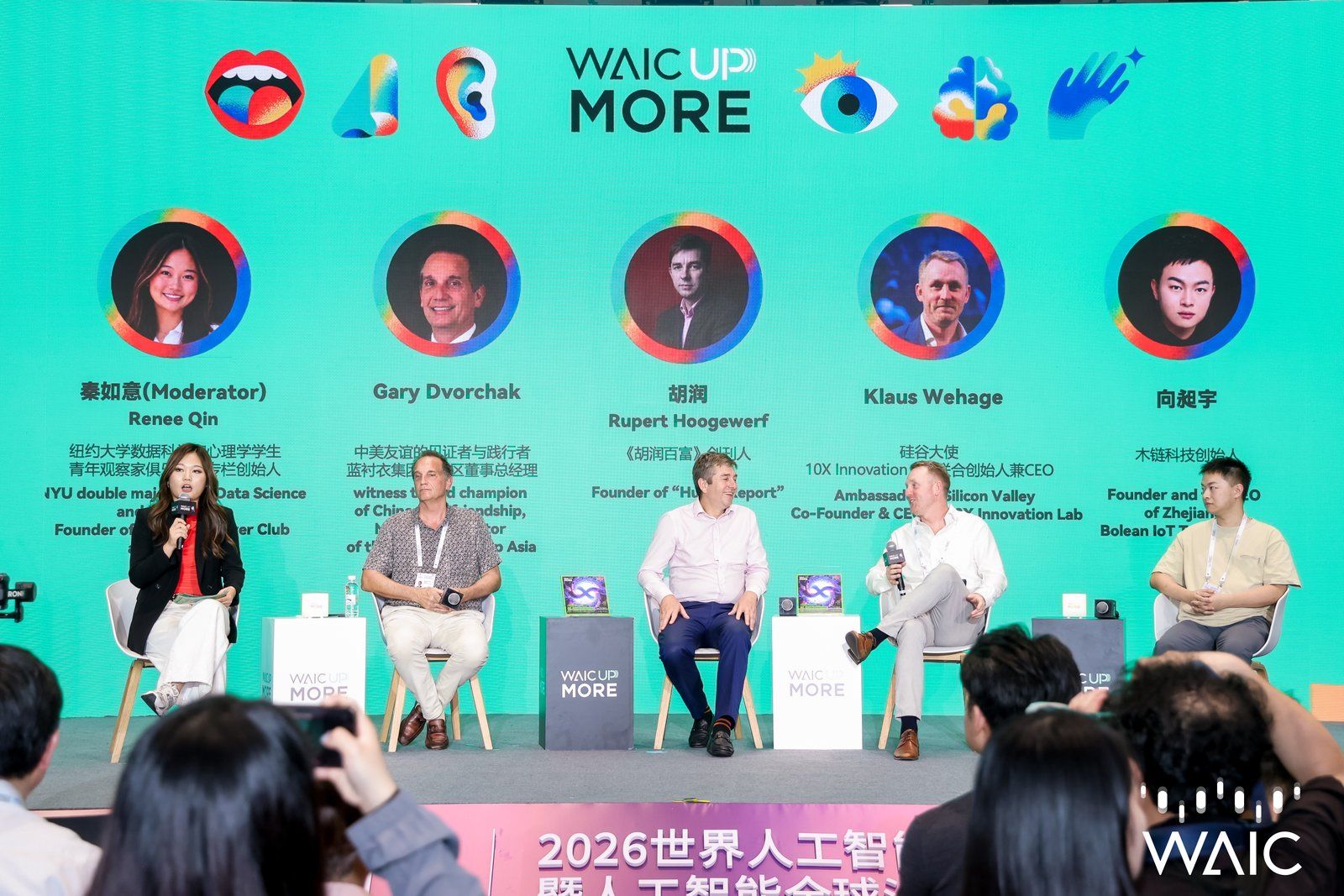
But during the roundtable discussion hosted by youth observer Qin Ruyuan, the views of the four guests made this trend more nuanced.
Klaus Wehage, a global growth consultant, has observed entrepreneurial ecosystems in more than 50 countries. He reminds: AI only reduces execution costs, not the difficulty of discovering real problems.
"Can the problem you are trying to solve 'travel' across boundaries?"
In other words: Can your solution transcend cultural and market boundaries? If not, no matter how advanced the technology is, it will be useless.
Xiang Changyu, Founder of Mochain Tech, pointed out from the manufacturing industry perspective: AI is driving a new "labor force equalization" — in the past, many complex capabilities were concentrated in a small number of professionals, but AI is lowering the threshold for ordinary people to create value. But he also warned: People still need to maintain deep thinking capabilities, otherwise they will only be driven by tools, rather than using tools to create.
Gary Dvorchak, Asia Regional Managing Director of Blue Shirt Group, pushed the topic to global competition:
"You will never differentiate yourself on basic intelligence — the difference lies in what you use it for and how you go to market.