WAIC 2026 Ultimate Review: 15 Core Trends to See Through the Second Half of the AI Era
The largest AI event in history is astonishingly hot, both psychologically and physically.
Driven by multiple overlapping factors, AI practitioners attending the World Artificial Intelligence Conference WAIC 2026 must have experienced several extremely memorable days, filled with a sizzling atmosphere, explosive information, and Shanghai's erratic weather that alternated between scorching heat and thunderstorms.
Even Yili and Luckin have each booked a huge booth. Yili played on a homophone, hanging up an advertisement for "Real AI (Love) Milk"; Luckin has long been deeply involved in the field, showcasing its AI coffee pop-up store, smart store, AI Lucky order-taking agent, and Luckin AI Moments.
During this exhibition visit, the Zhidx team walked an unprecedented distance — over 71,000 steps in three days, rushing through more than 500 booths in three major pavilions. Combining on-site exchanges, forums, and interviews, we have summarized 15 key trends of WAIC 2026.
1. AI mobile phones have entered the second half, evolving from "traditional phones + AI features" to "native agents". AI agent phones and robot phones are gaining explosive popularity, which will reconstruct the agent operating system.
2. The functions of AI glasses and AI earphones have become more practical and focused, both emphasizing lightweight design and long battery life. Some focus on specific functions such as translation and sports, while others target AI memory and active AI interaction. Home appliance giants are absent, and the story of whole-home smart AIoT is no longer being told. However, the sweltering weather made all carbon-based creatures realize that there are things AI can never replace, such as fans, air conditioners, and icy cold drinks.
3. The hype around "OpenClaw Lobster" has passed, but agents are thriving, becoming the only main thread running through terminals, applications, models, computing power, and embodiment. Various vertical industries such as power grids, banks, and operators all have agents. In particular, enterprise-level agents, as "AI colleagues", shoulder the important task of promoting the evolution of enterprise organizations.
4. The booths of major players such as Alibaba, Tencent, Baidu, and JD continue to follow the "large and comprehensive" platform route, covering everything from super nodes, chips, large models, cloud computing, embodied intelligence, AI hardware, AI applications to agent matrices and experience areas, striving to become the infrastructure in the agent era. Although ByteDance did not participate in the exhibition, Doubao can be seen everywhere.
5. In terms of flagship large language models, before everyone could even grieve over the large-scale ban of Claude accounts, domestic Fable-class models collectively "rushed" over. In these three days, Kimi K3 with 2.8T parameters became a hit immediately after open-sourcing, some users found that the official version of DeepSeek-V4 was in gray test, and Alibaba released the preview version of Qwen3.8 with 2.4T parameters, claiming that it "only loses to Fable 5". The new MiniMax model with 2.5T~3T parameters is also expected to be open-sourced soon.
6. Judging from the booth setup, the "Six Little Tigers of Large Models" are heading in different directions: Stepfun cuts into the AI phone terminal track, Moonshot AI firmly occupies the aesthetic ceiling, MiniMax presents a full ecosystem package of large models and agents, 01.AI sets up an interactive "boss personality test", and Baichuan Intelligence goes all in on AI healthcare.
7. The localization narrative is the real trend. The staff at many computing power booths will specially emphasize to us that their boards, whole machines, etc., have achieved "100% localization". From chips to IDM vendors, everyone is emphasizing "super nodes". Intelligent computing centers have entered system-level competition, involving key links such as chips, interconnection, liquid cooling heat dissipation, storage, optical fibers, and computing-power coordination. In the future, computing will focus on the development of optical computing, quantum computing, space computing and other directions, and domestic pioneers have already emerged.

8. This should be the largest gathering of domestic leading AI chip companies this year, which have fully disclosed their large-scale implementation achievements from chips, computing cards, servers, clusters, software to ecological applications.
9. Token has replaced FLOPS as the new measurement and settlement unit for the three layers of computing power, model, and application. AI Infra vendors have changed their main narrative. Last year, they were still selling computing power, but this year they are selling Tokens, collectively positioning themselves as "Token Stores" and "Token Factories".
10. Data released by the Ministry of Industry and Information Technology today shows that domestically developed quadruped robots account for nearly 70% of global sales, and there are more than 400 humanoid robot complete machine products, accounting for more than half of the global total. Robots have entered the first year of "real work", but the scene demonstrations are highly homogeneous. Where there is a performance, there will be a crowd. Non-physical AI is completely defeated in the face of human's natural love for watching excitement. Many booths have built real smart pharmacy scenes, as if they have emptied all the medicines from the pharmacies in the surrounding area.
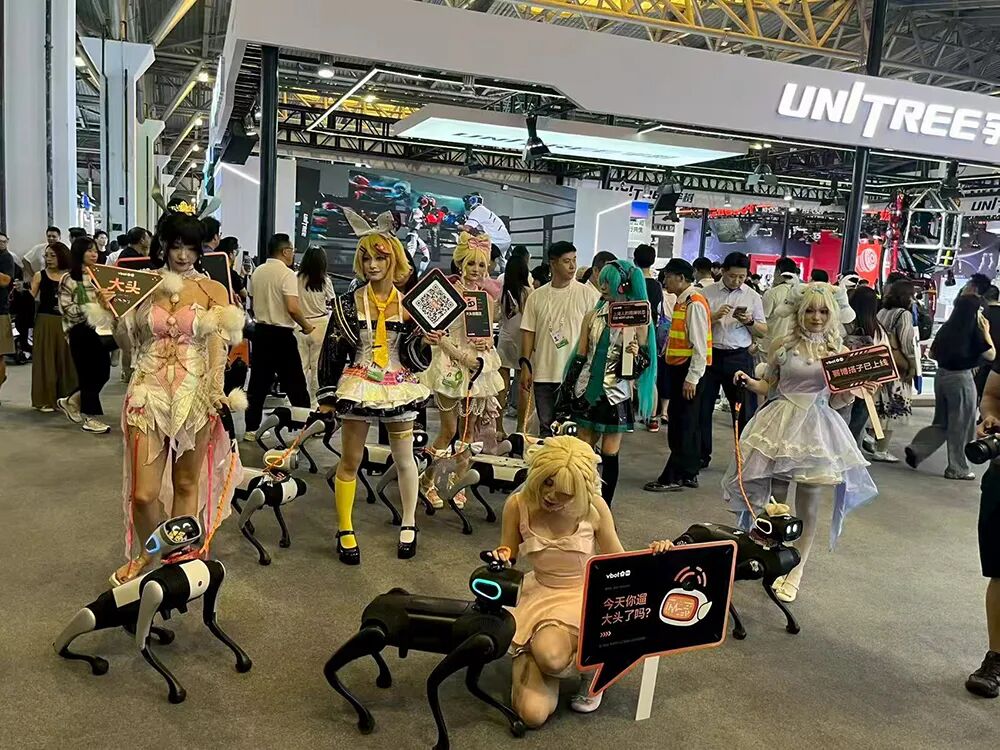
11. Many humanoid robots and robot dogs that can walk around and perform have staff next to them holding remote controls to operate them. Heat dissipation and battery life are still problems, and "hanging up", "lying down", and "slumping like a couch potato" can be seen everywhere among these hardworking robots. However, as the industry shifts to implementation, the practice of having some 2D cosplayers lead robot dogs on parade to attract traffic has made many audiences feel that the viewing experience is very poor.
12. What robots perform is not important; what really matters is the evolution of their "brain", "eyes", and "hands". Embodied intelligence has formed a four-chain resonance closed loop of "whole machine — brain — dexterous hand — data". The routes of embodied intelligence brains are still diverse, mainly focusing on embodied intelligence models and world models, and large manufacturers and large model companies have begun to cut into this track.
13. "Dexterous hands", which involve tactile perception and fine operation, are one of the most popular core components of embodied intelligence. In recent days, related startups such as Xinuo Future, Coronakey, Modality Tech, and Yimu Technology have completed new financing, and Yimu Technology's valuation has even exceeded 10 billion yuan.
14. Compared with pure text data, physical AI data is extremely scarce, and centralized collection has become a high-value area. Current common collection methods include real machine training, simulation, and wearable and non-ontology collection.
15. AI is continuously improving medical conditions, enhancing medical accuracy, and providing convenience for more people's health protection. At the same time, AI for Science is also accelerating scientific research progress in key fields such as life sciences, key materials, and earth meteorology.
In this rapidly advancing AI era, agents and embodied intelligence are in their prime, technological development is magnificent, capital is expanding at a doubling rate, and the speed at which new unicorns are born is a spectacle. Every industrial layer is pursuing innovation and change.
This article is very long and is divided into 12 chapters (AI phones, AI hardware, agents and AI office, large models, super nodes, chips, Token factories, robots, embodied intelligence models, dexterous hands, data collection, AI healthcare and scientific research). Every booth was visited by us in person, and the information was recorded manually without any AI assistance, ensuring no hallucinations.
If you want to understand the latest trends in a certain industry, you can directly scroll to the corresponding chapter to read. We hope this will be a very intuitive reference note.
01.
The First Year of AI Agent Phones,
Let the Phone Handle Things on Its Own
The hottest AI hardware during this year's WAIC is the AI agent phone, which aims to let the agent take over the phone and complete long and complex tasks for you through cross-app operations.
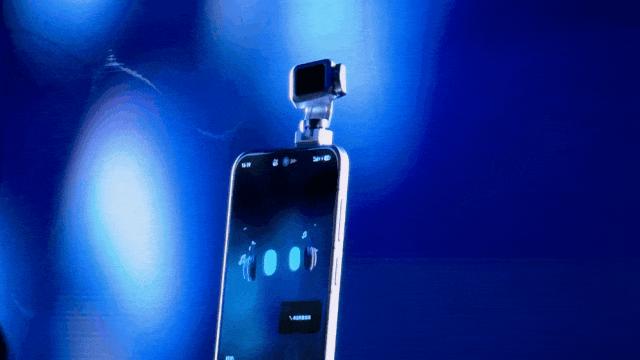
Among the three AI phones, Honor's Robot Phone has been open for pre-orders across all channels since July 18, and you can experience the real device at Alibaba's booth in the World Expo Exhibition Hall and Honor's booth in Xuhui West Bund.
The gimbal that can extend to observe the world is the soul of this phone. It is very agile and cute when interacting with people, and it can also perform more camera movements that fixed cameras cannot achieve when taking photos.
The newly launched StepX Neo, a native large model phone from Stepfun this week, was selected as one of the "Pavilion Treasures". It is equipped with the self-developed agent native operating system Step AOS and the agent Step Amoo, and has reached the first batch of ecological cooperation with Ctrip, Alipay, Didi, Meituan, etc. Exhibits are not allowed to be photographed, but you can watch the real machine demonstration of the agent handling things for you.
For example, when the user says the instruction "Help me deliver the document to the company, XXX is in a hurry", the system automatically identifies the current location, calls the contact information, matches the company address, and completes the errand service order. No App is opened throughout the process, and no instructions are entered step by step. The agent completes the task planning.
The second-generation "Doubao Phone" Nubia NaviX Ultra, which has not been officially released, is displayed in a glass cabinet at ZTE's booth, but it can only be viewed, not touched.
Zhidx experienced the second-generation "Doubao Phone" firsthand at ZTE Nubia's media appreciation meeting yesterday. The Doubao phone assistant intent model 2.0 adds support for submitting multiple tasks at the same time. For example, let Doubao open Douyin to find videos while searching for air tickets on Qunar and ordering iced Americanos on the Luckin App. Unprocessable tasks will automatically be in a queue.
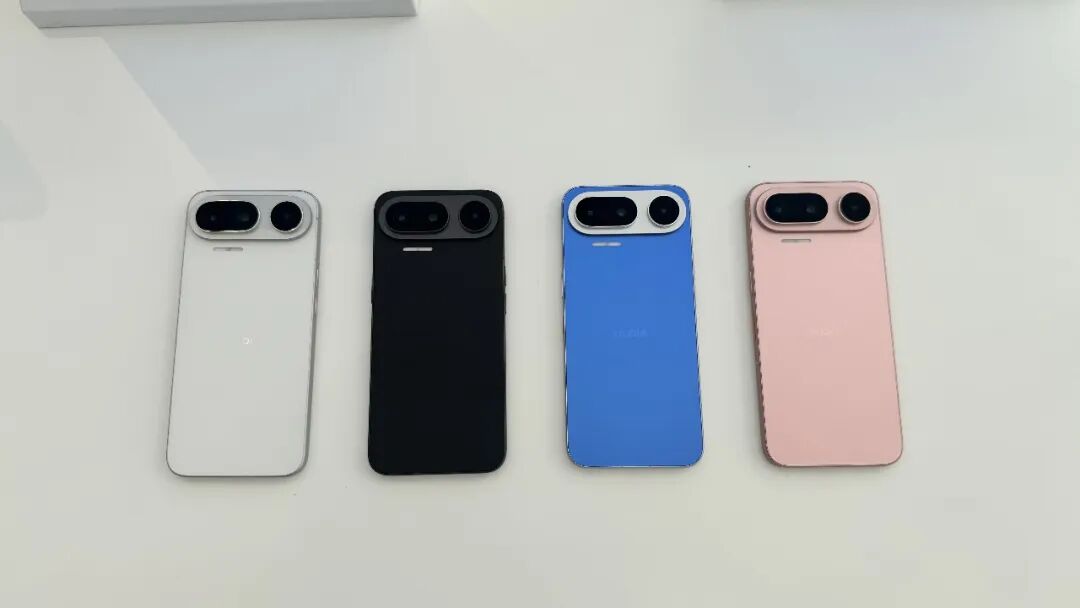
▲NaviX Ultra comes in four color schemes
The three "new species" of mobile phones have reached a consensus — system reconstruction: reorganize computing, data, applications, and service resources at the system level to build an agent-centric operating system.
Currently, there are two main ways for system-level agents to take over Apps: one is the GUI Agent route, which obtains simulated touch permissions from the bottom of the system, "understands" the interface and then operates independently, bypassing App authorization; the other is the protocol-based interconnection route, which can call authorized Apps.
Recently, there is an exciting piece of good news for the entire mobile phone industry: on July 8, the AI model services of Apple, Huawei, OPPO, vivo, Xiaomi, Samsung, and ZTE Nubia completed the filing collectively, which is equivalent to the mobile AI being issued a "birth certificate" by the regulator.
The cross-border alliance of "large model companies + hardware manufacturing companies" is becoming a mainstream organizational form.
For example, "Doubao Phone" is a cooperation between ByteDance and ZTE; in addition to self-developed models, Honor also announced that it will cooperate with Alibaba's Qwen large model to create a terminal large model solution deeply optimized for mobile scenarios; in addition, Qwen confirmed that it will be integrated into the Apple Intelligence of the Chinese mainland version; the end-side model of FaceSmart will be launched on Samsung phones.
National App Alipay has also cooperated with OPPO and Stepfun to support mobile AI assistants to call the AI version of Alipay's agent services.
In terms of mobile phone photography, Wonderscan, under iFlytek, demonstrated a very useful "anti-reflection" technology that can remove with one click the pain points such as reflection occlusion and reflection interference that are prone to occur when shooting museum exhibits and document materials.
In addition to mobile phones for adults, the AI terminal Xiaofangji created by Lingyuzhou for children can be held in hand or hung on the chest, transforming the real environment into a conversable and learnable smart space, accompanying children to learn anytime they ask.
At the opening ceremony of WAIC 2026, Yin Qi, Chairman of Stepfun, proposed that the agent wave will promote three structural changes: new systems, new carriers, and new networks.
At the new system level, agent capabilities are determined by both model capabilities and agent operating system capabilities. Agentic OS determines how far agents can "go" by connecting models with data, tools, interfaces, and devices;
At the new carrier level, the terminal design concept will further evolve from "people-oriented" to "human-machine symbiosis". Computers, mobile phones, automobiles, and robots will become different "bodies" of the same agent in different scenarios, supporting the continuous existence, free migration, and collaborative task execution of intelligent cross-terminals;
At the new network level, the A2A network will connect people and agents. Agents will have their own identities, capabilities, and credit, and independently find partners, organize collaborations, and complete transactions, becoming an important infrastructure for the agent economy.
02.
AI Glasses and AI Earphones Take Differentiated Routes,
Home AIoT Grows an Agent Brain
AI wearable devices pay more attention to lightweight, natural interaction, and seamless collaboration, allowing AI to integrate into people's daily lives more imperceptibly and proactively handle things for them.
1. AI/XR Glasses
The "Hundred Glasses War" is taking a differentiated path. During this WAIC, more than 25 AI glasses were exhibited, with weights generally less than 50 grams, and the lightest one is only 14.9 grams. Their functions do not pursue comprehensiveness, but make trade-offs.
In addition to general AI glasses, some AI glasses are mainly oriented to segmented scenarios such as translation and sports, such as BleeqUp's 4-in-1 sports shooting glasses and LLVision's professional AR translation glasses.
Among them, iFlytek AI Glasses was selected as one of the "Pavilion Treasures", featuring simultaneous interpretation functions, including call translation, online simultaneous interpretation, face-to-face translation, and photo translation, supporting translation in 122 languages.
Metax Intelligence exhibited the world's first holographic waveguide smart glasses, weighing only 28 grams, with added smart ring control.
Active memory and all-day wearing have become a major competitive focus. AI glasses manufacturers have reached a consensus: as the long-term memory of agents becomes infrastructure, glasses worn on the face all day are the most natural entry for collecting and calling personal memories.
Qwen AI Agent Glasses add full-duplex voice, eye tracking, and real-time user physical sign monitoring functions, enabling the device to generate personalized health reports and form agent memories.
Ant Group Willit AI Glasses cover functions such as scan-to-pay, city tour guide, and real-time information reminders, focusing on the lightweight AI entry for daily high-frequency use.
Xiaodu AI Glasses obtained the L3 level test certificate of the national standard series "Artificial Intelligence Terminal Intelligence Classification".