Why is the end-native architecture the optimal solution for Physical AI? The answer lies in this WAIC sub-forum of Om AI Connect.
On July 19th, Hangzhou Lianhui Technology Co., Ltd. (abbreviation: Om AI Lianhui) hosted the sub-forum "Empowering the AI Hardware Boom with Edge-side Streaming Multimodal Models" at the Shanghai World Expo Center. The forum focused on edge-side model technology research and industrial implementation, making it the only professional forum at this year's WAIC that deeply centers on edge-side multimodal and smart hardware deployment. The event officially released the "Initiative for the Collaborative Development of Edge-side Multimodal Foundation Models and AI Hardware", and simultaneously launched the Om AI Lianhui VLX Developer Community, marking that the edge-native technology route has officially transitioned from isolated technical exploration to a brand-new stage of in-depth industrial chain collaboration.
Consensus Gathered from Multiple Perspectives: Edge-Native Architecture Solves the Deployment Challenges of Physical AI
The current mainstream edge-side AI solutions in the industry generally adopt the technical pattern of "cloud pre-training + terminal pruning and compression", which has been maturely applied in various digital scenarios. However, as AI technology accelerates its penetration into the real physical world, physical scenarios impose rigid requirements on AI systems such as low-latency real-time response, offline independent operation, and local data privacy and security. The shortcomings of traditional cloud-migrated solutions continue to become prominent, and the industry is in urgent need of underlying technical architecture innovation to support the large-scale implementation of physical AI.
This forum brought together experts, scholars and industry representatives from the full-chain fields of university research institutes, chip architecture R&D, computing power supply, data security, and terminal manufacturing. Through in-depth discussions, the viewpoints gradually converged: the edge-native architecture is more suitable for the commercial deployment of physical AI scenarios. Zhao Tiancheng, CEO and Chief Scientist of Om AI Lianhui, pointed out that the real-time, dynamic and high-frequency interaction characteristics of the physical world determine that edge-side AI cannot be a "simplified subtraction version" of cloud models, and must reconstruct the underlying architecture and operation logic based on physical scenarios. Many participating scholars further confirmed that the core bottleneck of the large-scale implementation of embodied intelligence lies in the real-time perception and dynamic self-adaptation capabilities of terminals; coupled with the increasingly strict global data compliance policies, the security advantages of edge-side local operation have evolved from a deployment constraint to a core competitiveness driving industrial iteration.
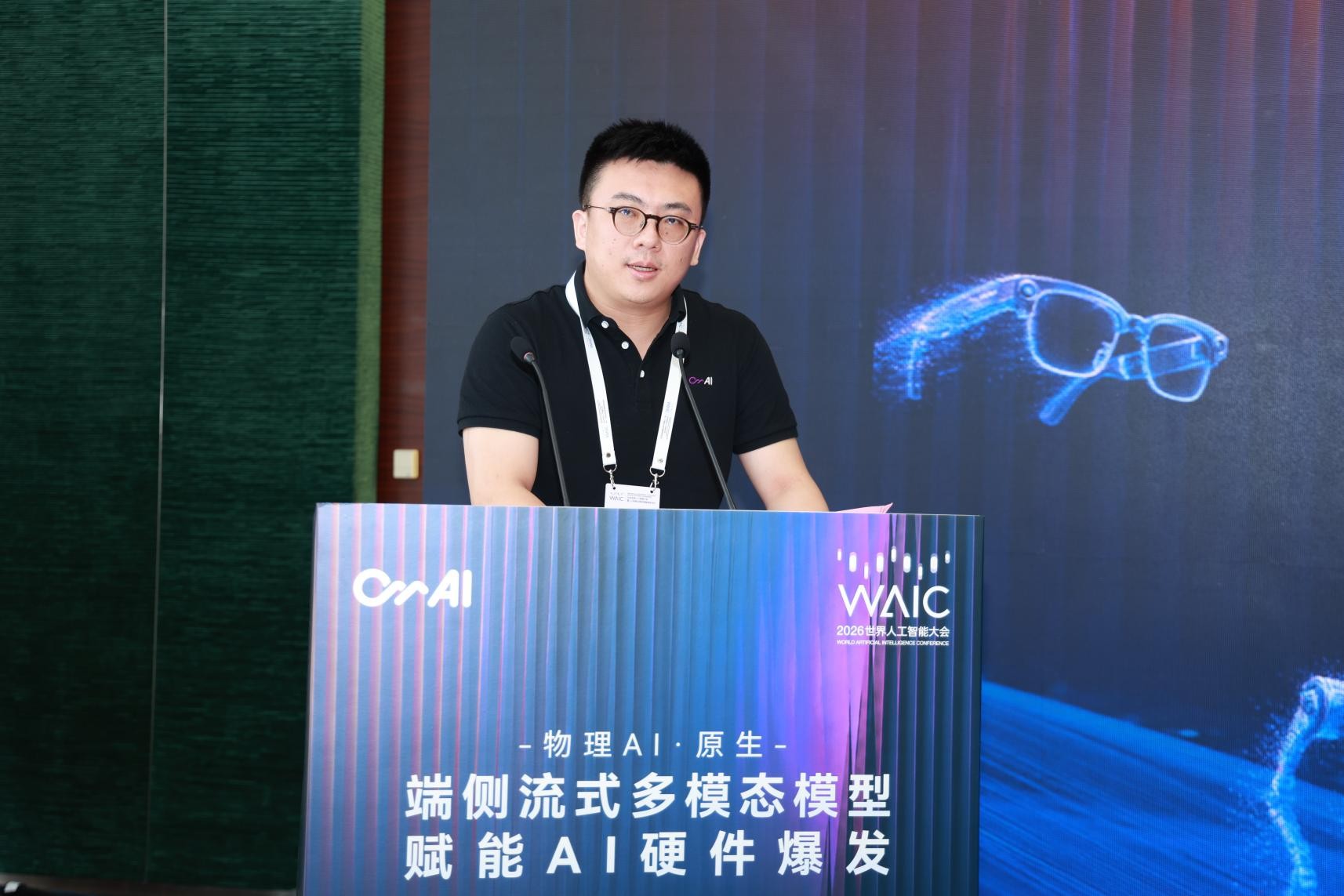
As an enterprise that took the lead in deploying and implementing the edge-native technology architecture in China, Om AI Lianhui has long focused on underlying architecture innovation, and independently developed the VLX edge-side streaming multimodal model series oriented to the physical world, which specifically addresses the industry pain points of traditional models such as high latency, poor adaptation, and weak real-time performance. Previously, this model series has opened an online experience channel, and this year's WAIC marks its first offline public appearance, attracting high attention from all sectors of the industry.
Prioritizing Co-construction of Standards: Dual-Drive of Initiative and Developer Community to Facilitate Ecosystem Collaboration
The current edge-side AI industry faces fragmentation issues such as complex hardware architectures, inconsistent interface standards, and high software-hardware collaboration costs, which are highly similar to the early dilemmas of the diverse computing power industry. The construction of a unified standard system has become a key starting point to promote the transition of edge-native technology from laboratory verification to large-scale commercial use.
Targeting this pain point, Om AI Lianhui officially launched the "Initiative for the Collaborative Development of Edge-side Multimodal Foundation Models and AI Hardware". The initiative puts forward three co-construction directions: first, co-build edge-native technical standards to promote the standardization of evaluation systems, interface specifications, and security frameworks; second, co-research integrated software and hardware solutions to promote the exploration of model-chip collaboration and edge-cloud collaboration boundaries; third, jointly expand physical AI industrial scenarios to promote the construction of data feedback mechanisms and open ecosystems in key tracks. The initiative is open to the entire industry, aiming to gather the strengths of scientific research institutions, hardware manufacturers, solution providers, developers and industrial investors, break down technical barriers, eliminate industry silos, and promote the standardized development of the edge-side AI industry.
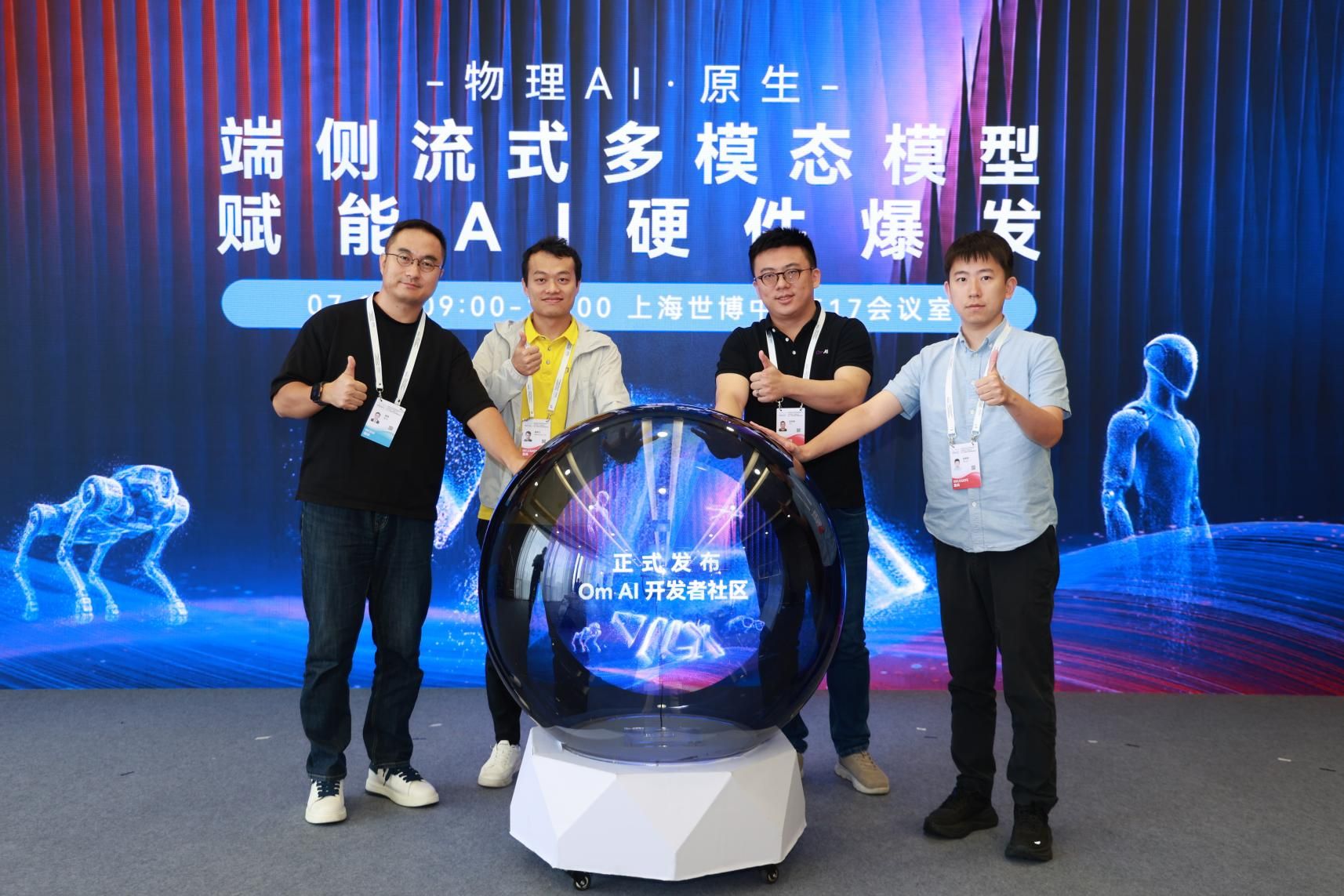
The simultaneously launched VLX Developer Community provides a core technical foundation for the implementation of the initiative. It is reported that this community fully opens the complete capabilities of the VLX edge-side multimodal foundation model to global hardware manufacturers, system integrators, and AI developers, supporting standardized model invocation interfaces, full-scenario adaptation SDKs and one-stop technical support services, which greatly lowers the threshold for edge-side multimodal AI development and helps cutting-edge technologies to be rapidly deployed in real scenarios across thousands of industries.
Anchoring Real Rigid Demands: The Window Period for the Physical AI Industry Has Opened
The two in-depth industrial dialogues at this forum verified the deployment value of edge-native technology from both the consumer side and the industrial side.
During the guest dialogue session, industry capital analyzed the outbreak logic of consumer-side edge intelligence from the perspective of industrial investment, and clarified the core industry judgment: at a time when the general-purpose computing power foundation is becoming increasingly perfect, the core scarce resource of the smart terminal industry has transformed into the native multimodal capability that adapts to the law of hardware iteration and supports ultra-low latency real-time interaction, which is also a key prerequisite for the large-scale popularization of terminal hardware such as AI PCs and smart wearables.

During the industry roundtable session, guests from the four core industrial chain links of terminal manufacturing, industrial operation, public law enforcement, and technical services jointly confirmed that in exclusive scenarios such as the low-altitude economy and maritime operations, edge-side AI has evolved from an optional intelligent upgrade to a rigid industrial configuration. Smart devices in relevant scenarios must have the capability of local independent operation, completely get rid of the limitations of the network environment, replace traditional manual operations with intelligent autonomous operation modes, and greatly improve operation efficiency and safety.
Zhao Tiancheng said: "The physical world is not a simple extension of AI in the cloud digital world. Edge-side intelligence requires the establishment of a dedicated architecture mindset, evaluation system, security framework and industrial ecosystem." In the future, relying on the dual engines of the industrial collaboration initiative and the VLX Developer Community, Om AI Lianhui will continue to focus on edge-native technology innovation, collaborate with industrial chain partners to build a standardized, open and collaborative physical AI industrial ecosystem, and boost the AI hardware industry to usher in a new wave of boom.