Once-obscure philosophy has become a hot topic for "taming" AI.
Who could have imagined that the philosophy, a once-obscure academic discipline, has unexpectedly become a trending topic in the current AI industry.
This was an unexpected discovery during our visit to WAIC this year — the event carried a surprisingly strong philosophical undertone.

△
For instance, at the parallel session "Mind and Intelligence · Youth Ecosystem Forum" under the WAIC AI for Science Open Forum, the first speaker to take the stage was Sun Ning, a professor from the School of Philosophy at Fudan University. During the main session of the AI for Science Open Forum themed "Original Innovation in the AI-Native Era", Sun Xiangchen, another professor from the School of Philosophy at Fudan University, also participated in the summit dialogue.
Coincidentally, the "2026 Blue Book for the Intelligent Development of Humanities and Social Sciences" released during WAIC by the Comprehensive Laboratory for National Development and Intelligent Governance of Fudan University once again brought in-depth thinking, research credibility, and AI governance into the spotlight.
To be fair, this seemingly sudden surge of philosophical interest actually has traceable origins.
A few years ago at AI conferences, the most discussed topics were parameters, computing power, and leaderboards. Today, AI can already write academic papers, perform mathematical proofs, generate protein conformations, and even simulate societies through groups of intelligent agents.
While AI has been advancing rapidly in capabilities, the problems it raises are increasingly approaching philosophical domains:
- Does a model that can answer questions fluently truly understand them?
- If AI can independently discover knowledge, does it qualify as a new type of scientist?
- If AI discovers laws that humans cannot explain but can be verified through experiments, should we trust them?
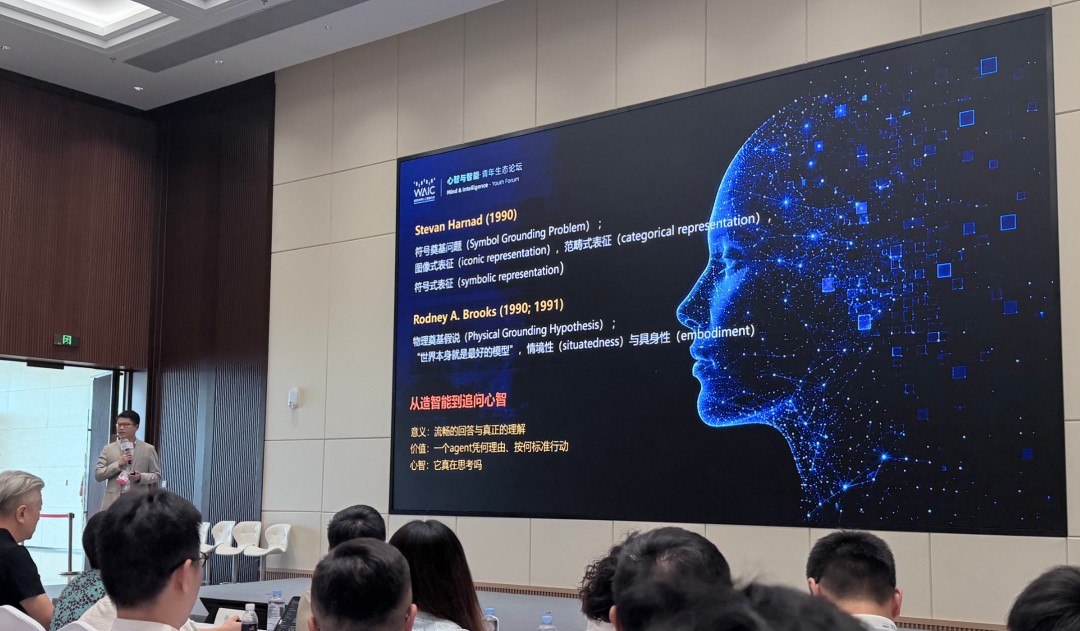
In his speech titled "Before Intelligence, There Exists the World", Sun Ning traced these questions back to their fundamental origins.
As early as the 1990s, cognitive scientist Stevan Harnad proposed the Symbol Grounding Problem, questioning how symbolic systems can acquire real meaning through perception and interaction. Around the same period, robotics engineer Rodney Brooks put forward the Physical Grounding Hypothesis, leaving behind an influential quote — the world itself is the best model.
△
Following this line of reasoning, Sun Ning proposed that an intelligence deeply rooted in the world must at least encompass body, environment, others, and history. The body imposes costs on actions, the environment provides feedback, others bring norms, and history allows failures to precipitate into experience.
He ultimately summarized this perspective into two sentences:
Before intelligence, there exists the world. Before mind, there exist relationships.
This set the tone for the discussions that day.
This youth forum was co-hosted by the Comprehensive Laboratory for National Development and Intelligent Governance of Fudan University, Shanghai AI for Science Research Institute, the School of Philosophy of Fudan University, Shanghai Qingpu Fudan Future Technology Research Institute, and Datawhale.
On stage were not only young scientists but also philosophers, social scientists, and entrepreneurs. The discussions spanned from self-evolving models to mathematical proofs, from protein dynamics to social simulations, and finally converged on the topics of governance and industry.
Problems that seemed scattered across different disciplines were thus connected together.
AI Starts Conducting Scientific Research on Its Own
Right after philosophers finished questioning "what intelligence is", Chen Yongchao, founder of HyperMind AI, raised a more specific question — can AI become a new type of scientist?

△
Traditional large language models primarily learn existing human knowledge from internet data. The self-evolving model mentioned by Chen Yongchao aims to engage in real-world tasks and continuously learn from the research process and environmental feedback.
Specifically, the model can independently generate research ideas, write code, run experiments, analyze data, and then accumulate traces of successes and failures to further adjust its data, model, and Harness system.
Chen Yongchao also presented a set of impressive results on site.
The Apex Search developed by his team generated 34 academic papers and submitted them to academic review systems such as ACL and ARR. According to the results he disclosed on site, approximately 10 of these papers are likely to be accepted into the Findings or main conference tracks, with two papers scoring 3.67 points — a rating higher than roughly 95% of human-submitted manuscripts.
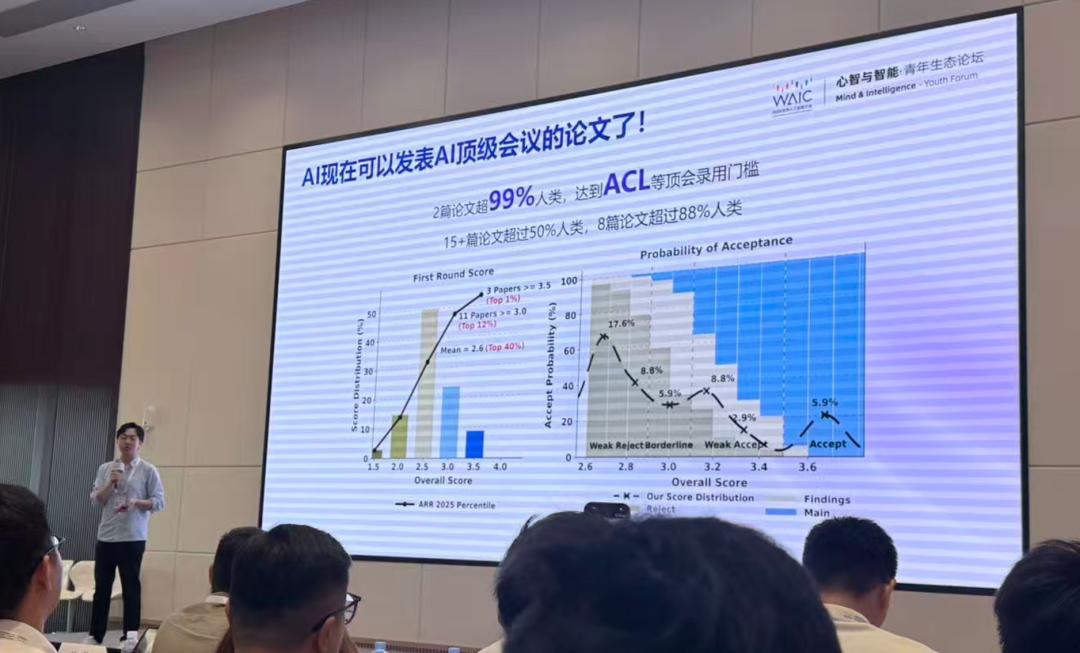
Some reviewer comments even included evaluations like "the first study in the field", "rigorous experiments", and "the proposition hits the nail on the head".
In other words, AI-generated research achievements have already passed the first round of review by human reviewers.
Yet new problems immediately emerged.
During the subsequent "Changes in Society" roundtable, Wei Zhongyu, a professor from the School of Data Science of Fudan University, raised the question: if AI generates and submits dozens of papers at once, and several of them eventually receive high scores, how exactly should we evaluate its research capabilities? Does this indicate that the system's research ability has reached the level of top conference publications, or that it has accidentally identified weaknesses in the existing peer review mechanism?
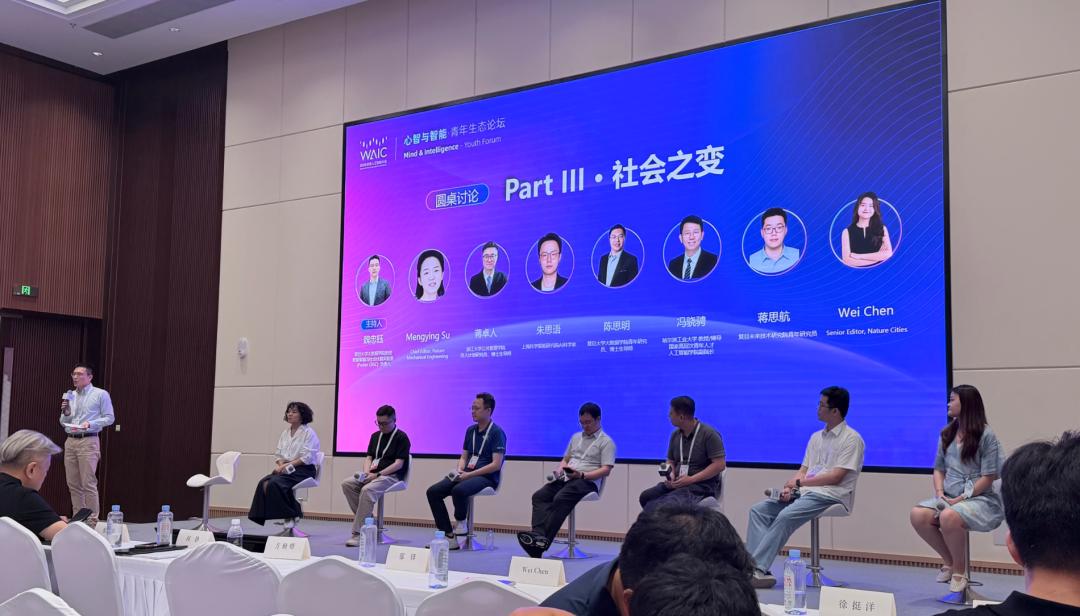
As paper generation becomes increasingly fast, evaluation may prove more difficult than generation itself.
Chen Yongchao himself also posed a series of questions: Can AI produce breakthroughs at the level of the Transformer architecture? How should massive scientific discoveries be evaluated? Who owns the intellectual property rights of AI-generated research outcomes? And if the system is used for harmful research, how should responsibilities be divided?
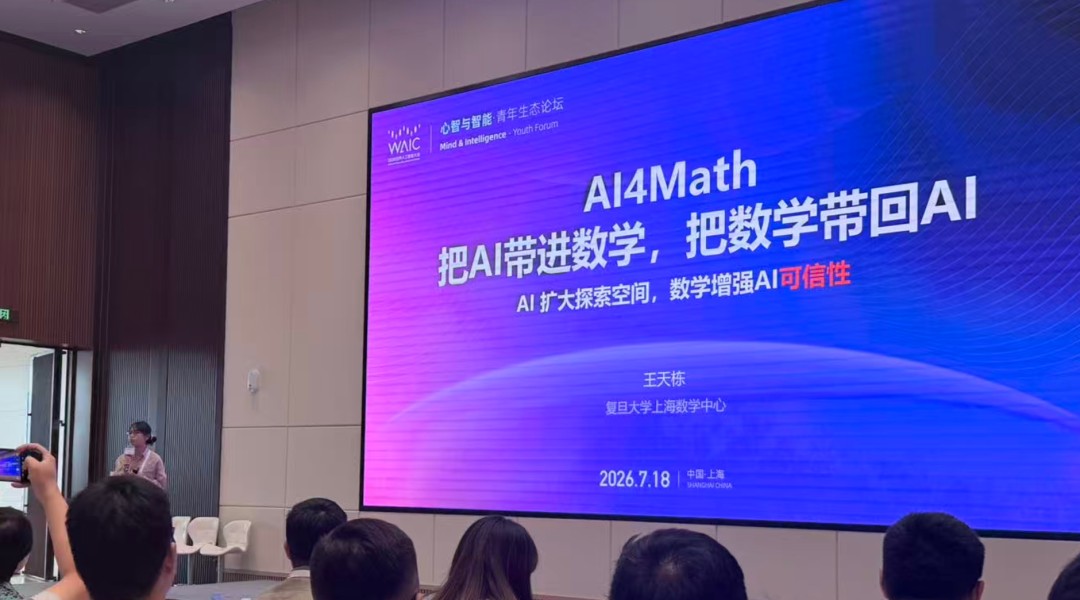
The next speaker, Wang Tiandong, an associate professor with tenure-track appointment at the Shanghai Center for Mathematical Sciences of Fudan University, proposed a clearer division of labor between humans and AI.
△
AI excels at retrieval, induction, and identifying special cases and counterexamples, and it can simultaneously generate dozens of candidate proof paths. Mathematicians are responsible for judging whether a problem is significant and whether a conjecture is worth researching, then applying rigorous concepts and structures to constrain the results. Finally, machine verification is introduced to check for skipped reasoning steps and calculation errors.
To put it simply:
AI expands the search space, humans define values, and machines are responsible for verification.
In this workflow, mathematics can provide AI with structural constraints, formal verification, error analysis, and defined application boundaries. Credibility does not mean never making mistakes; a more realistic standard is that errors can be detected, risks can be delineated, and conclusions can withstand re-examination.
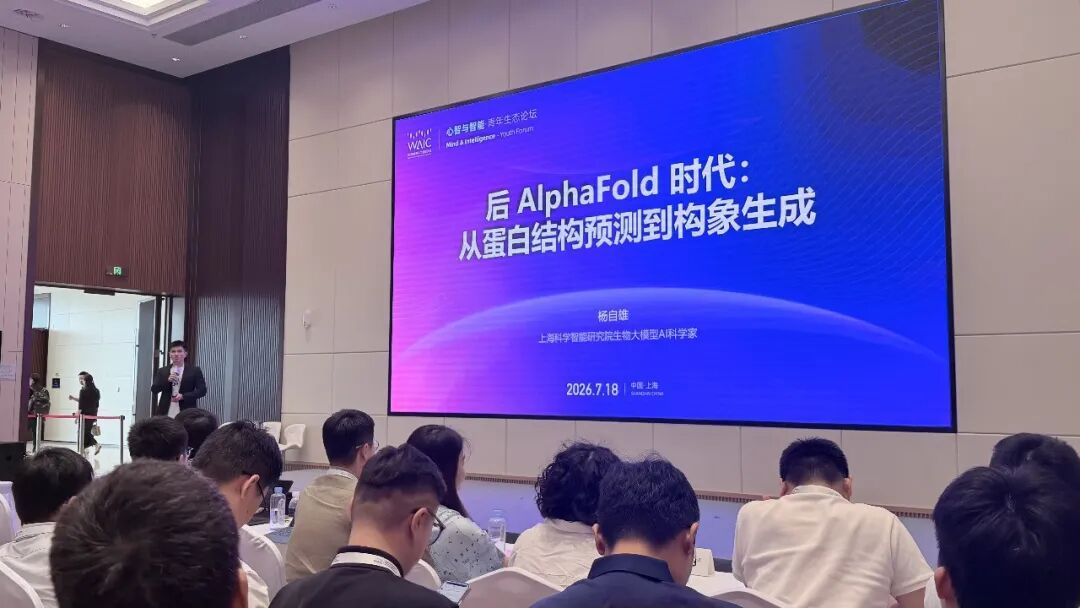
Subsequently, Yang Zixiong, an AI scientist from the Shanghai AI for Science Research Institute, extended the credibility discussion into the more complex domain of life sciences.
△
The core problem solved by AlphaFold is inferring high-probability static structures from sequences. However, biomolecules such as proteins and RNA are constantly in motion, and many of their functions depend on conformational distributions, state transitions, and temporal dynamics.
Therefore, research objectives in the post-AlphaFold era have shifted from "predicting a single structure" to "generating a dynamic trajectory".
This requires models to not only cover rare but critical conformations but also maintain structural stability during long-duration generation, while complying with thermodynamic, kinetic, and physical laws. While a large volume of static structure data has been accumulated, dynamic molecular data remains very limited, and relevant evaluation systems still need to be improved.
From mathematical proofs to protein dynamics, AI can indeed accelerate exploration and expand its scope. Yet for effective scientific discoveries to be made, evidence, experiments, and real-world feedback are all indispensable.
If mathematics and life sciences have relatively clear verification paths, things become even more complex when AI begins simulating humans and societies.
As Intelligence Integrates into Society, Governance Must Not Lag Behind
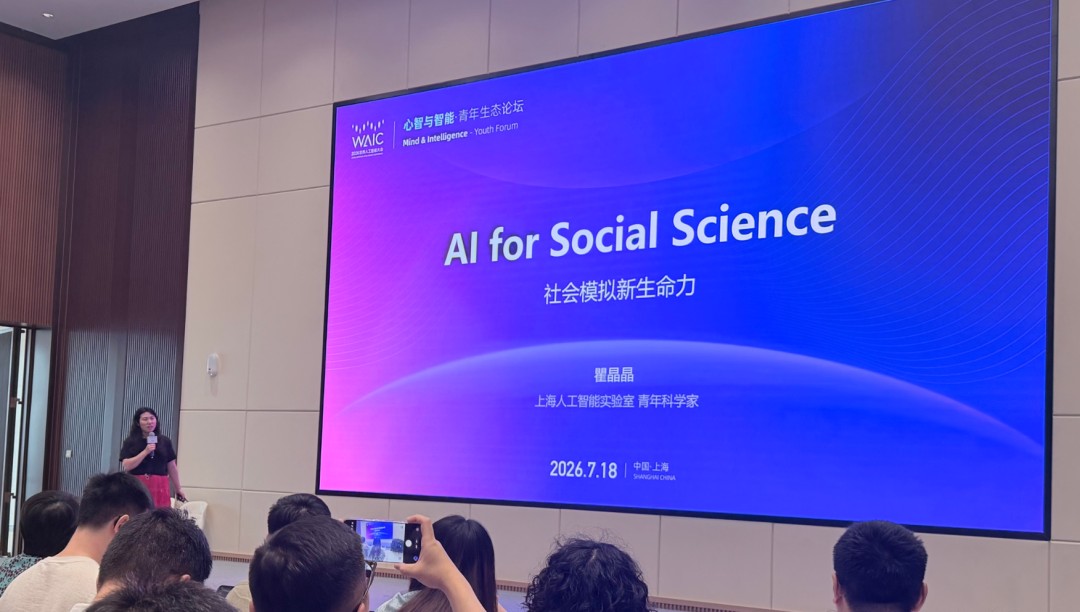
Qu Jingjing, a young researcher at the Shanghai AI Laboratory, focuses on the intersection of AI and social sciences.
△
In her view, social sciences form the core foundation for AI development. Alan Turing's research on "can machines think" was published in the philosophy journal *Mind*. Herbert A. Simon proposed the theory of bounded rationality, co-founded the Physical Symbol System Hypothesis with Allen Newell, and pioneered symbolic AI. Geoffrey Hinton combined psychology and cognitive science to develop neural networks simulating human brain mechanisms, which paved the way for the current large model era.
Now, this relationship is operating in reverse, as AI is bringing new experimental methods to social sciences. However, as AGI develops toward socialization and large-scale deployment, a core challenge persists: in large-scale, complex social evolutionary games, it is difficult to balance logical consistency and the credibility of experimental results.
Qu Jingjing demonstrated the social simulation platform Epitome. In terms of high-throughput efficiency, the platform can generate thousands of virtual samples with a single click, compressing decades of social evolution into just 14 hours. Researchers can freely adjust variables such as intervention policies and group relationships to quickly observe their long-term social impacts.
Such methods are particularly suitable for experiments that are difficult to conduct directly in the real world.
For example, how to simulate a child growing up from the third grade to the fifth grade in primary school? The model must not only reflect knowledge growth but also simulate psychological changes, behavioral patterns, and social relationships. Researchers also hope to test different education policies in this virtual environment to identify which approaches are more conducive to children's development.
While the idea is appealing, potential risks are inherent.
After all, while a large model can simulate an expert, it may not accurately represent a child embedded in specific family, regional, and social contexts. Do the attitudes exhibited by virtual characters stem from real social laws, or are they derived from stereotypes in the training data?
During the "Changes in Society" roundtable, Jiang Zhuoren, a principal investigator and doctoral supervisor under the Hundred Talents Program at the School of Public Affairs of Zhejiang University, shared a set of highly cautionary data.
In a cross-national trust study, the correlation coefficient of large model-generated data at the national average level could reach over 90%. However, when entering regression analysis, the coverage of statistical significance dropped to 34%-37%. When researchers attempted to recover national categories using this data, the results were nearly random.
In other words, while the model appears to resemble real society at a macro level, deviations are exposed once it delves into specific population groups and causal relationships.
More problematically, social data can form feedback loops.
Biases from the real world enter the training data, the model then participates in recruitment, education, content distribution, and public decision-making, and the new outcomes become training materials for the next iteration. Without auditing and bias correction, existing prejudices may be continuously amplified through these loops.
Thus, a straightforward reminder was raised during the roundtable:
Large models can be used to simulate society, but simulation results should not be mistaken for the voices of the real society.
Once AI integrates into society, governance can no longer remain focused solely on "model accuracy".
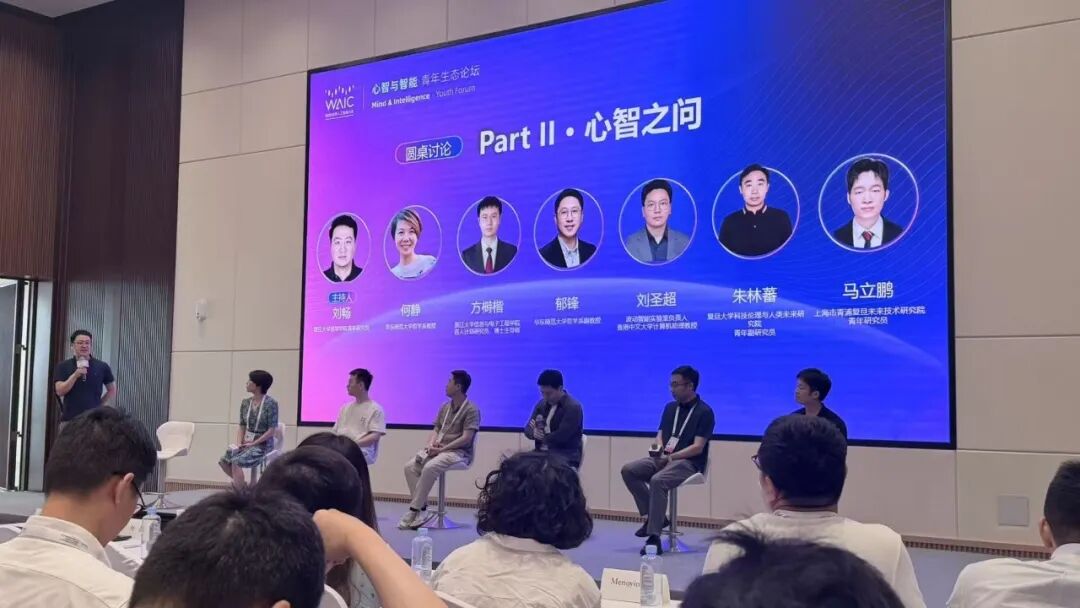
The "Questions of the Mind" roundtable discussed risks such as adversarial attacks, harmful biological research, and psychological dependency. Zhu Linfan, a young associate researcher at the Institute of Science and Technology Ethics and Human Future of Fudan University, also noted that current AI governance universally faces the dilemma of "stifling innovation when strictly regulated, and creating chaos when loosely controlled", requiring coordinated efforts from technology, policy, ethics, and international cooperation to develop more granular solutions.
His peer, Ma Lipeng, a young researcher at the Shanghai Qingpu Fudan Future Technology Research Institute, supplemented the discussion from a technical perspective. Today's AI can answer almost any question but lacks the metacognitive ability to "know what it does not know". Only by first enabling AI to recognize its own capabilities and boundaries can subsequent evaluation and governance have clear footholds. This also requires collaborative participation from multiple disciplines including philosophy, education, and computer science.
The issue of accountability is also becoming increasingly intractable.
When AI agents gain stronger autonomy, can they be recognized as actors in the legal or moral sense? If they cannot bear responsibilities independently, how should obligations be divided among developers, deployers, users, and final