The most worthwhile collection from UNIQLO might be discontinued soon.
Author | Evelin
Every spring and autumn, a crowd of shoppers dash to UNIQLO right on schedule, just to grab pieces from the U Collection. "The most worthwhile season of the year" has become a staple ritual on social media platforms, with popular styles selling out instantly upon release.
But this decade-long ritual may be coming to its final chapter.
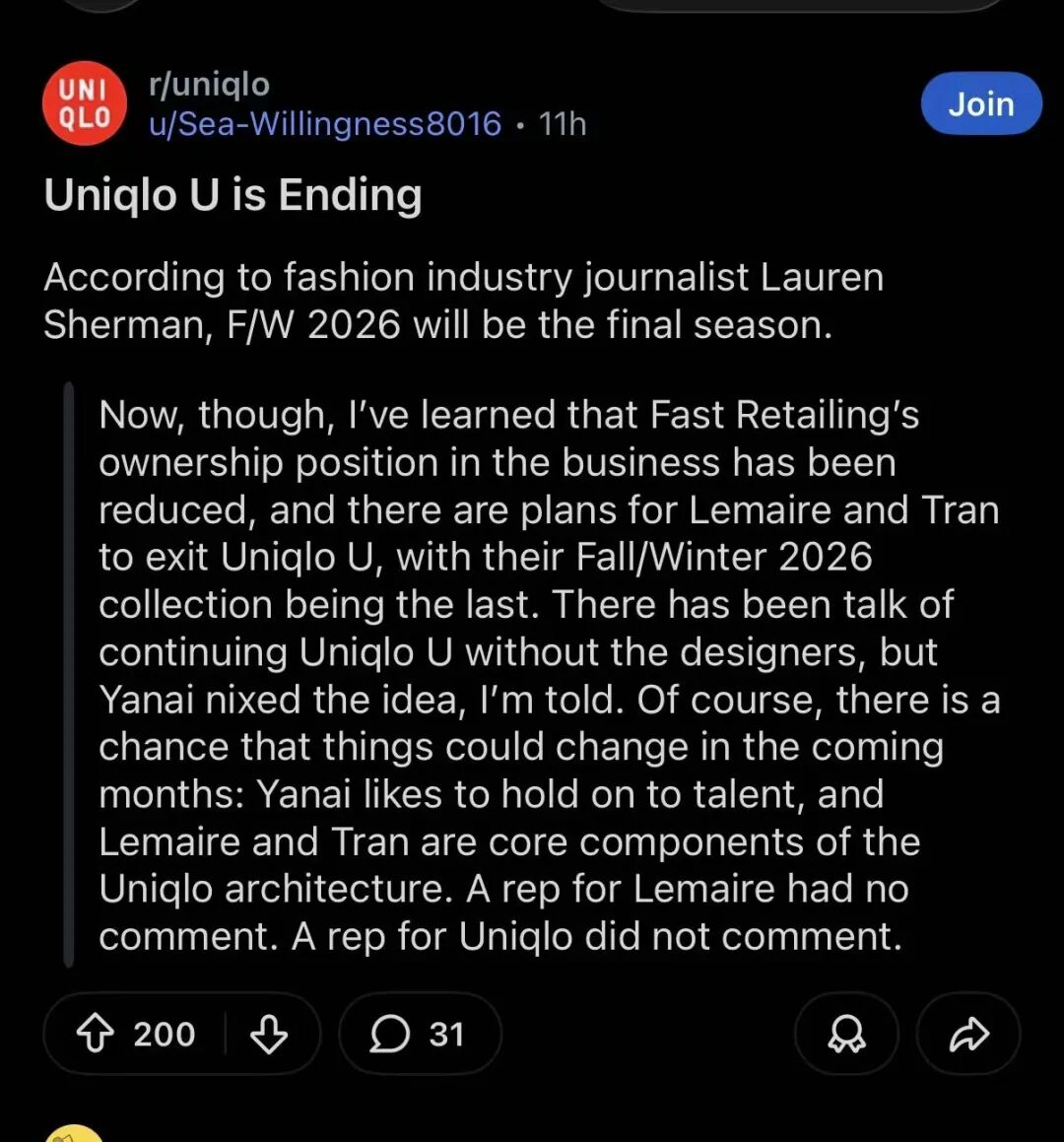
According to fashion journalist Lauren Sherman, Christophe Lemaire and Sarah-Linh Tran are planning to step back from the UNIQLO U Collection, and the 2026 Fall/Winter line could mark the end of their collaboration. Though she later added that nothing is fully finalized and changes could still arise, the news quickly drew widespread industry attention.
For most consumers, the U Collection is just one of UNIQLO's many designer collaboration projects, with many even grouping it alongside co-branded lines from names like J.W. Anderson and Marimekko.
But inside the fashion industry, the U Collection has never been just another co-branding effort.
From its first collaboration in 2015 to Lemaire joining UNIQLO as a full-time employee in 2016, it stands as one of the earliest examples of turning a designer partnership into a long-term product line: an independent product system, a fixed release rhythm, a loyal consumer base, and a distinct design identity that even profoundly reshaped UNIQLO's overall product aesthetic.
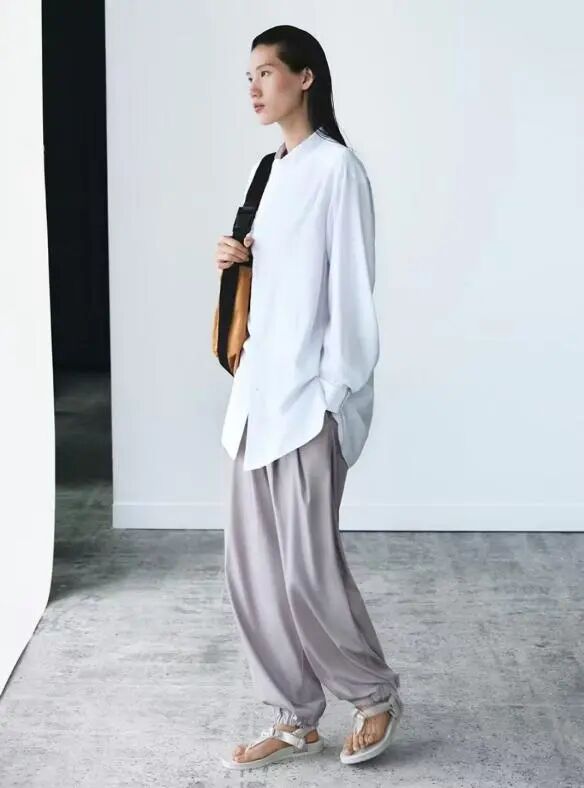
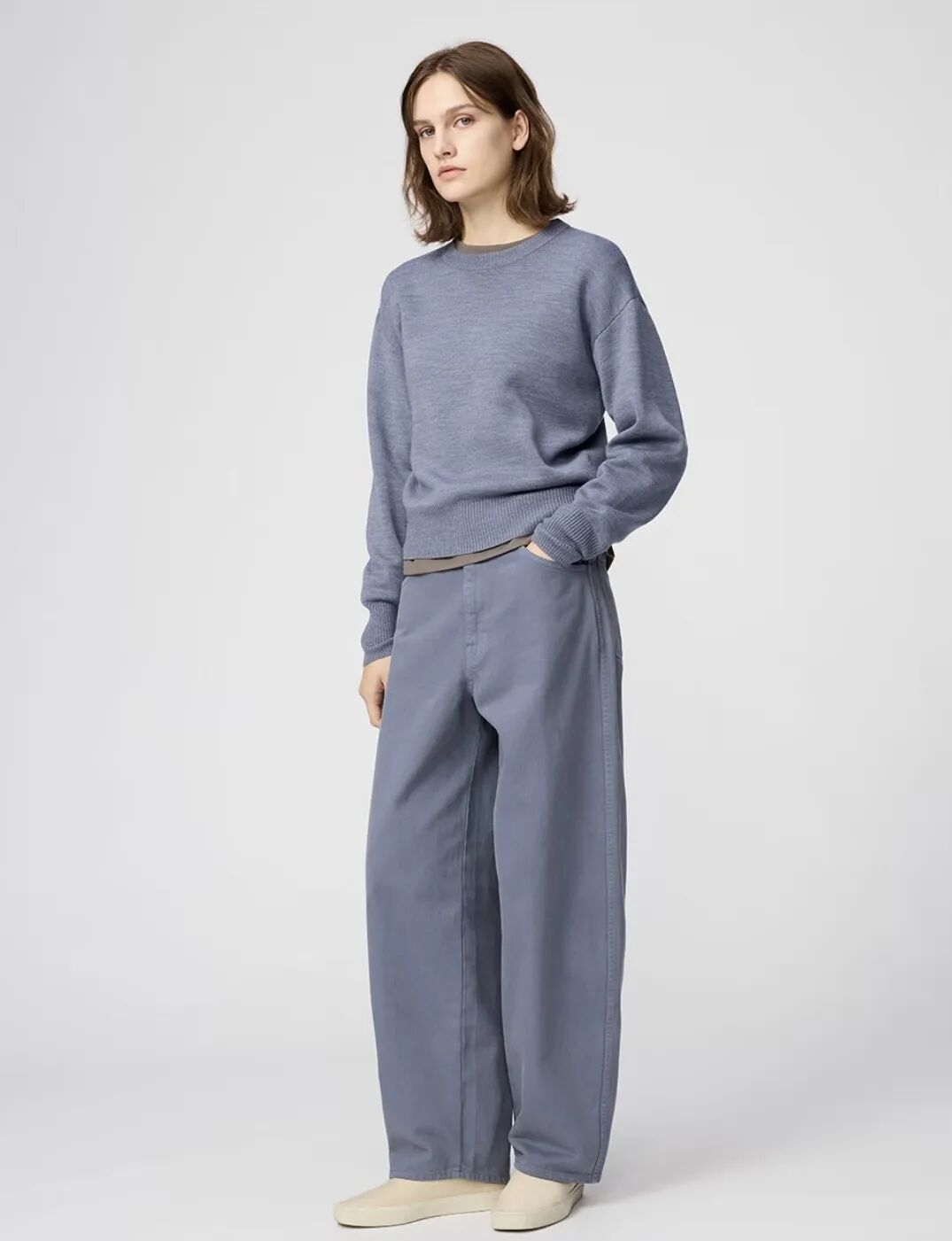
This is exactly why, as the market begins to discuss the future of the U Collection, the industry is not just concerned about whether a single line will disappear — it is asking a far more critical question: why do some designer collaborations only last a single season, while others become long-term brand assets?
Over the past decade, China's fashion industry has experimented with nearly every type of designer partnership. From international luxury designers to independent design studios, from streetwear crossovers to haute couture collaborations, co-branding has long become a standard move for brand upgrading. Yet very few cases have truly stood the test of time and continued to deliver lasting value.
The significance of UNIQLO's U Collection lies precisely in the alternative answer it provides.
Why Are Chinese Brands Obsessed With Designer Collaborations?
The origin story of affordable fashion brands partnering with top-tier designers is widely traced back to 2004, when H&M teamed up with Karl Lagerfeld. That collaboration not only generated record-breaking sales, but rewrote the rules of the fashion industry: high-end designer wear was made accessible to the mass market, and "democratized luxury design" became a proven, mature business model.
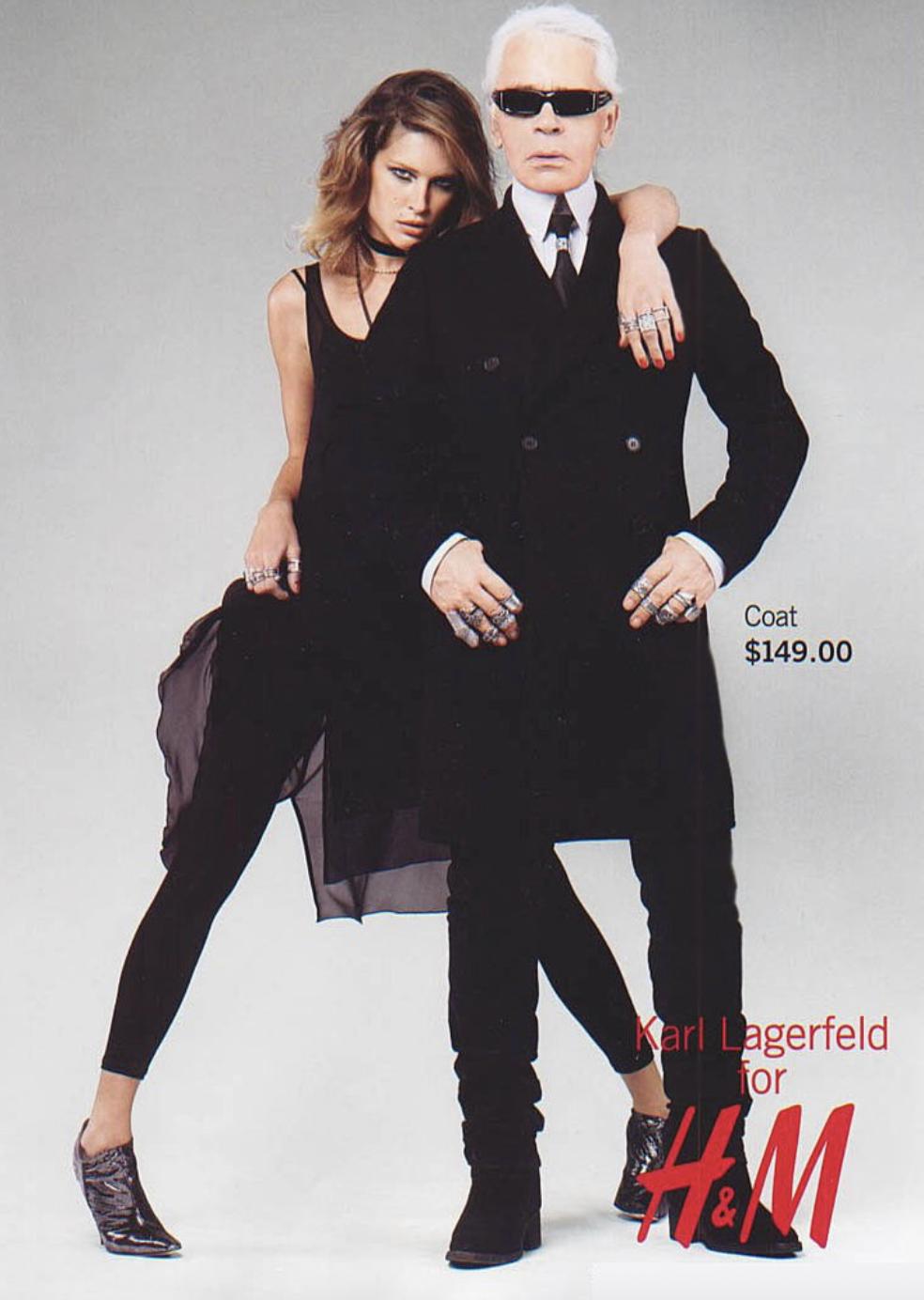
More than a decade later, this trend swept across the Chinese market.
Around 2017, Chinese apparel brands launched an unprecedented wave of designer partnerships, which peaked between 2018 and 2021.
One of the most pivotal shifts in China's fashion industry during this period was that the core competitive logic moved away from distribution channels and toward brand building.
In the past, apparel companies competed on store count, distribution networks, and supply chain efficiency. But as consumption upgraded and younger generations became the primary consumer group, shoppers grew increasingly willing to pay for aesthetics, brand identity, and design philosophy. Relying solely on channel advantages was no longer enough to build meaningful differentiation.
In February 2018, "China Li-Ning" made its debut at New York Fashion Week, proving to the entire industry that Chinese brands could win over young consumers through strong design and compelling fashion storytelling.
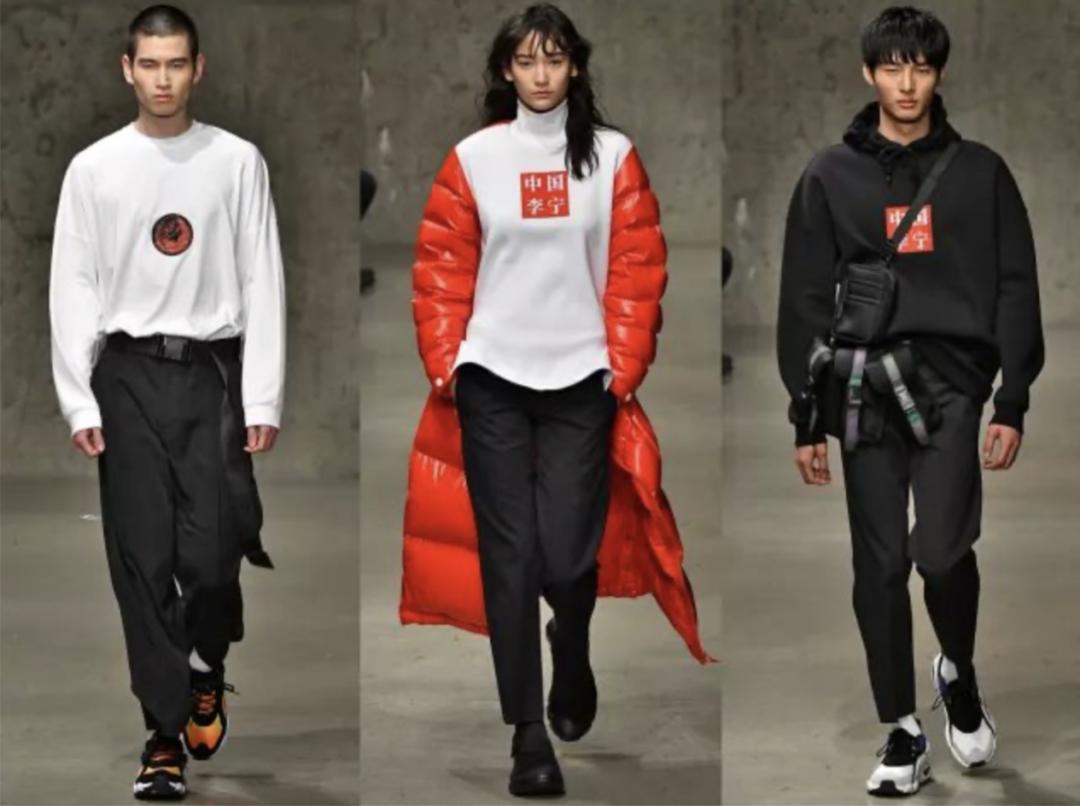
Design thus became a new competitive resource.
Yet for most Chinese apparel companies, this was their weakest point. For decades, China's fashion industry grew primarily through manufacturing expansion and distribution reach. Most founders came from factory operations, trade, or distribution backgrounds, and compared to their strong supply chain capabilities, brands generally lacked a mature, in-house design system.
Partnering with international designers therefore became the fastest, relatively cost-effective path forward. These designers not only brought in external design expertise, but more importantly, provided brands with the fashion credibility and premium narrative they had long been missing.
The most representative example is Bosideng. After 2018, the brand successively partnered with international designers including Tim Coppens, former design director of Ralph Lauren; Antonin Tron, who previously worked at Louis Vuitton and Givenchy; Ennio Capasa, founder of Costume National and protégé of Yohji Yamamoto; and Jean Paul Gaultier.
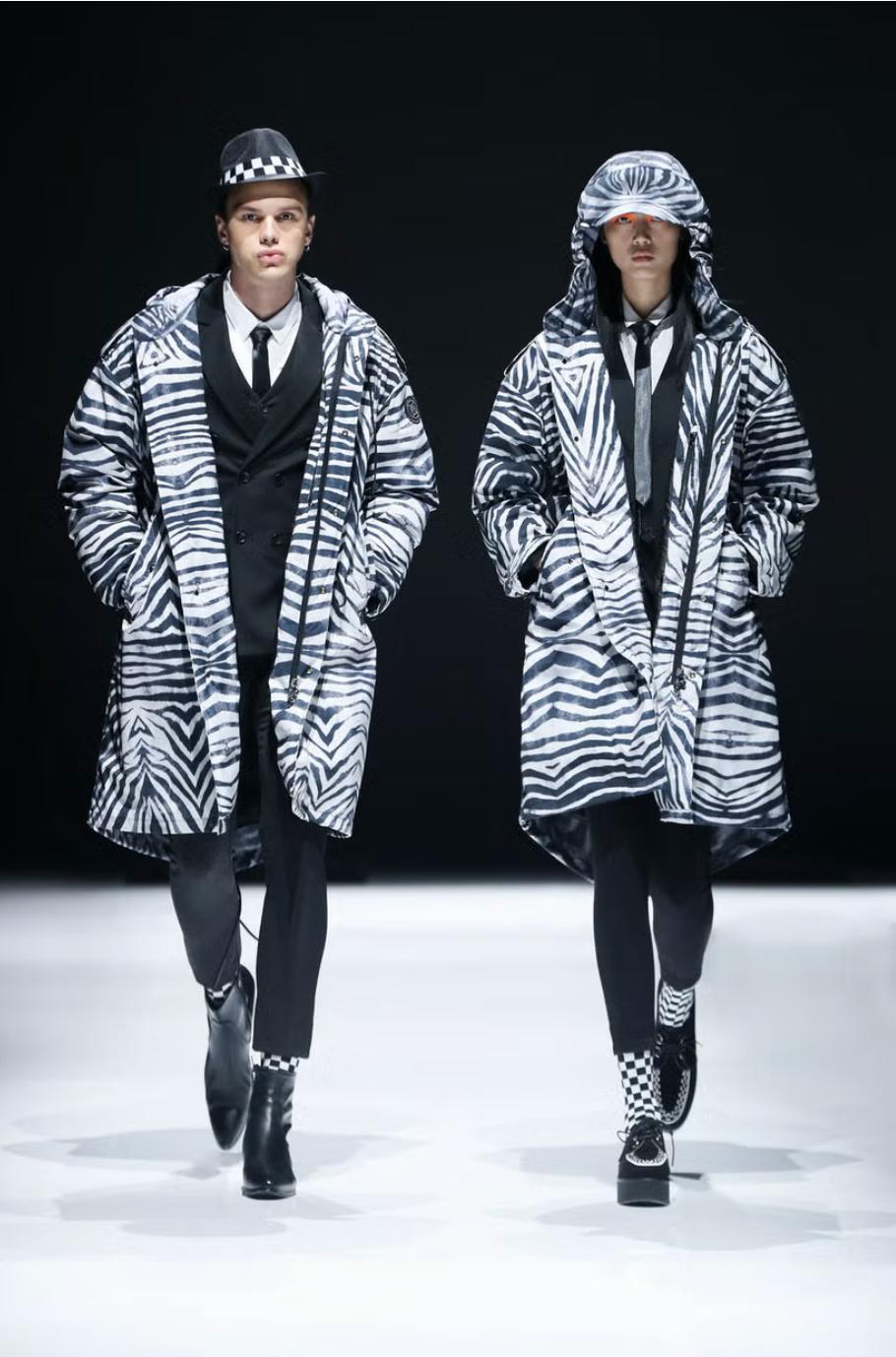
BOSIDENG X Jean Paul Gaultier
The continuous injection of design expertise has been a critical pillar of Bosideng's premium transformation. By placing international designer names on product labels, a historically mass-market brand gained a new, elevated narrative, and earned legitimate room to raise prices.
A research report from Guojin Securities shows that in 2018, Bosideng's core brand raised prices by 30% to 40%, with the revenue share of down jackets priced above 1,800 RMB jumping from 4.8% to 24.1%. By fiscal year 2022, products priced over 1,800 RMB accounted for 46.9% of its online sales, and its high-end Summit Series 2.0 line, positioned to compete with Canada Goose and Moncler, was priced above 10,000 RMB.
At the same time, brands including Peacebird, UR, GXG, Jomoo, FILA, and Anta also brought in international designers or launched designer capsule collections. For China's fashion industry at that time, designer partnerships became a near-standard configuration for brands pursuing youthfulness and premium positioning.
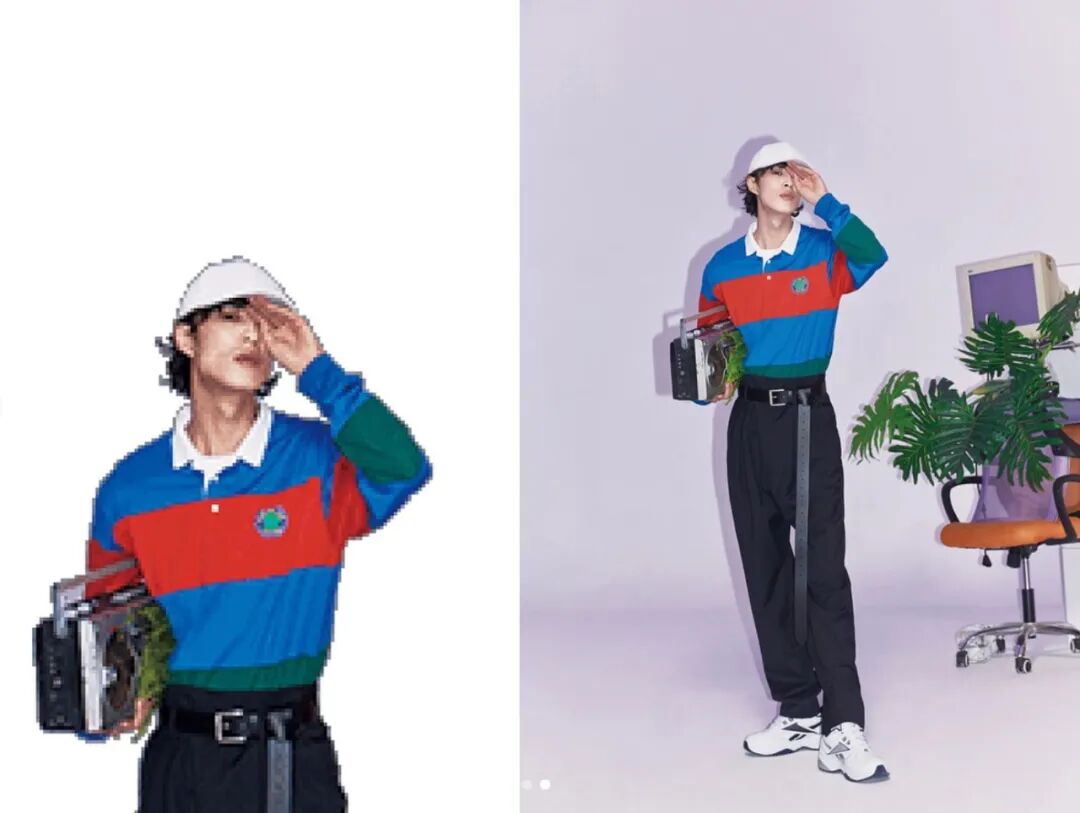
PEACEBIRD MEN x Ground Zero
Beneath the hype, problems soon emerged. The vast majority of co-branded projects followed an identical lifecycle: new product launch, media coverage, social media buzz, consumer rush purchases, the line being discontinued, then onto the next collaboration. In the social media era, this model functions more like short-term traffic buying: brands purchase the designer's influence, designers provide the brand with viral discussion and attention, and both sides complete a one-off commercial transaction.
Once the partnership ends, the traffic fades away. Brands gain exposure, but not necessarily tangible capabilities; consumers remember the designer, but often forget the brand behind the collaboration.
What Did UNIQLO's U Collection Get Right?
If most designer collaborations are essentially marketing campaigns, the U Collection is far more akin to long-term organizational capability building. Its biggest difference from short-term co-branding projects lies not in budget size, but in the shared goals both parties held from the very beginning.
After leaving Hermès in 2014, Lemaire hoped to refocus on his eponymous independent label. He consistently adhered to a design philosophy centered on functionality, everyday wearability, and long-lasting clothing — values that aligned perfectly with UNIQLO's LifeWear "clothing for a better life" concept.
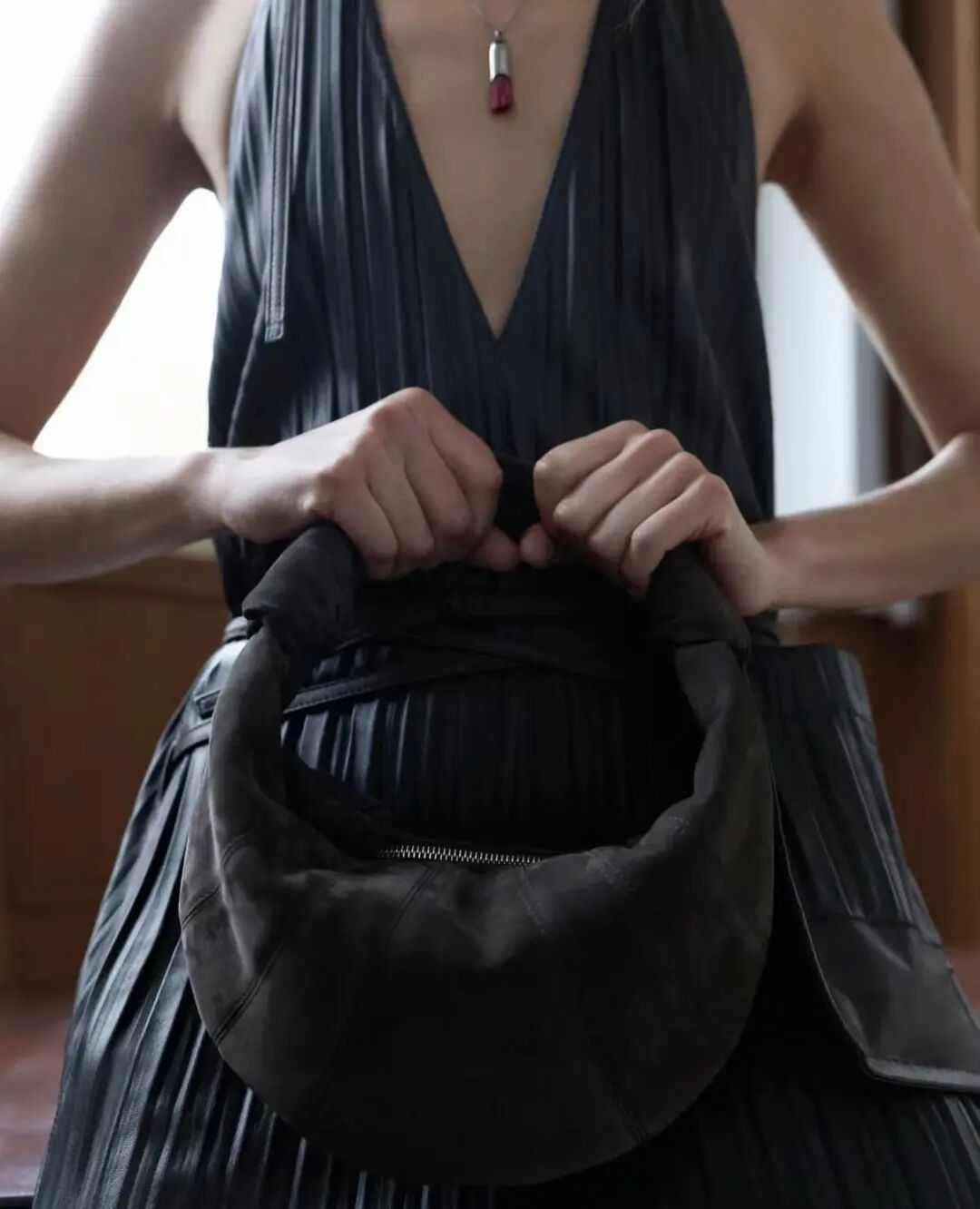
For Lemaire, his personal brand at the time, while highly respected within the industry, remained a niche designer label that needed a platform to reach global consumers. UNIQLO, meanwhile, was in the middle of a critical phase of global expansion.
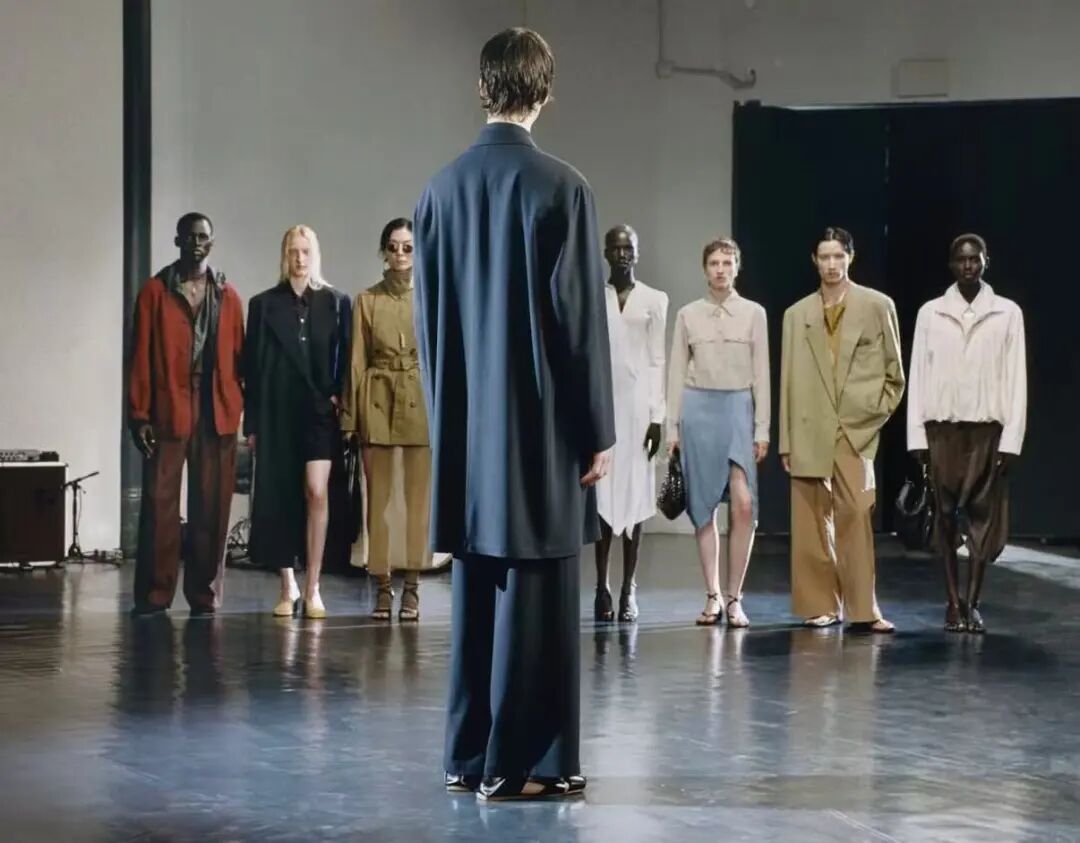
At that time, the Japanese domestic market had matured, and international operations had become the group's new growth engine. UNIQLO continued to enter new markets including Australia and Belgium, while expanding its footprint in global hub cities such as New York, Paris, and London.
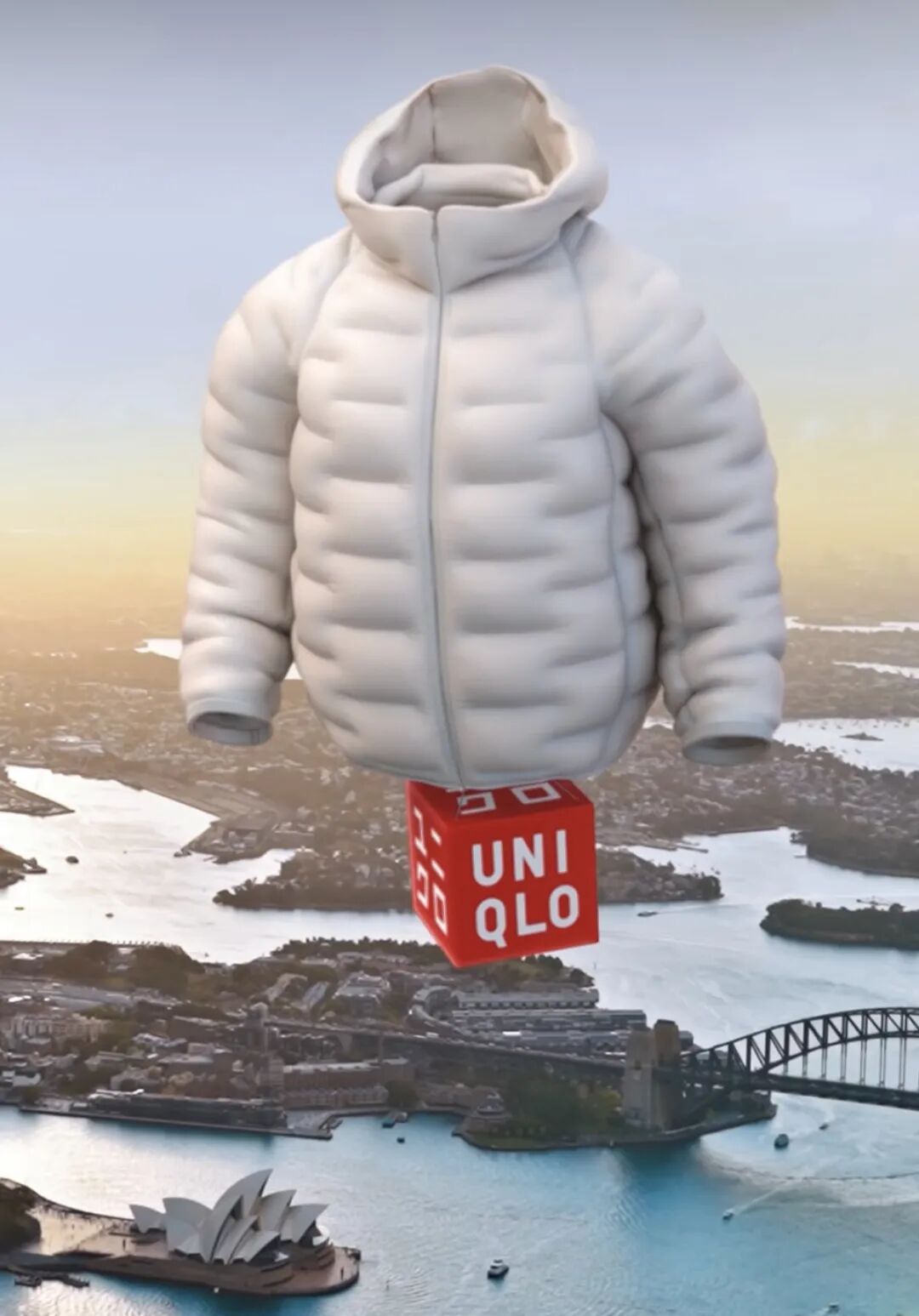
For Tadashi Yanai, who was then competing head-to-head with Zara and H&M, bringing Lemaire on board was far more than a designer collaboration: it was a deliberate brand upgrade move in UNIQLO's global expansion strategy.
In March 2015, UNIQLO announced its partnership with Lemaire to launch the "UNIQLO AND LEMAIRE" collection, which far exceeded market expectations. The core concept the two sides laid out at the time was "Timeless elegance to everyday essentials."
The success of that line quickly made both parties realize that what they truly agreed on was not the designer's celebrity status, but a shared understanding of what "everyday clothing" should be.
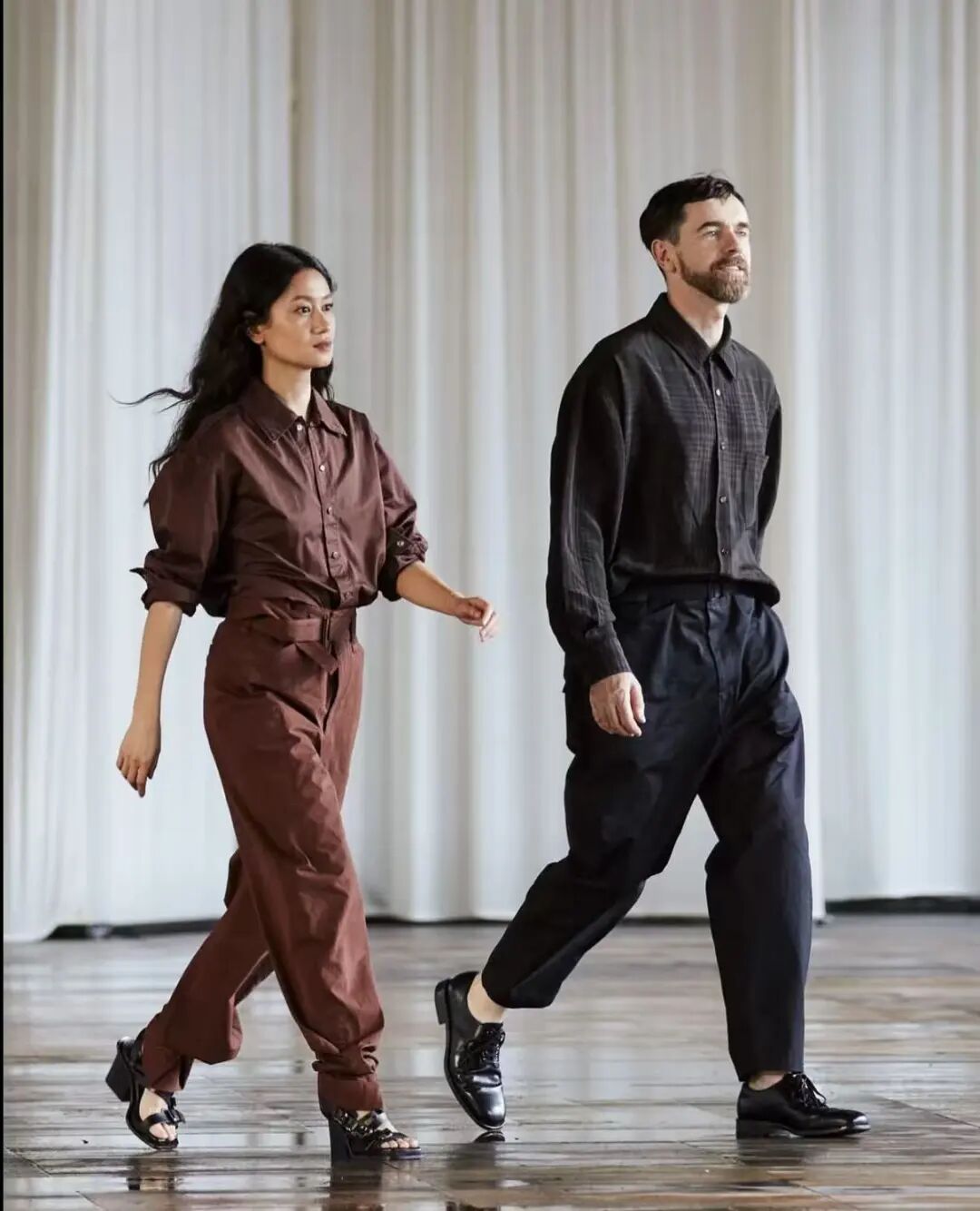
Rather than rushing to launch another quick co-branded line to capitalize on the momentum, UNIQLO directly established its Paris Research & Development Center and appointed Lemaire as its Artistic Director.
In 2016, the U Collection, defined by a distinct Lemaire aesthetic, officially launched. This marks the most fundamental difference between the U Collection and traditional co-branding: from day one, UNIQLO's goal was never to borrow Lemaire's name, but to embed the designer's expertise into the brand's permanent assets.
The designs belong to UNIQLO, the design methodologies reside in the Paris R&D center, and Lemaire is responsible for continuously refining and outputting a cohesive design language — rather than delivering a one-off celebrity marketing effect.
Over the past decade, the U Collection has developed an extremely distinct design identity. Relaxed silhouettes, dropped shoulders, minimalist color palettes, urban functional details, and high-quality foundational pieces have been repeatedly refined, optimized, and iterated. The design expertise accumulated through the U Collection has gradually seeped into UNIQLO's main product lines.
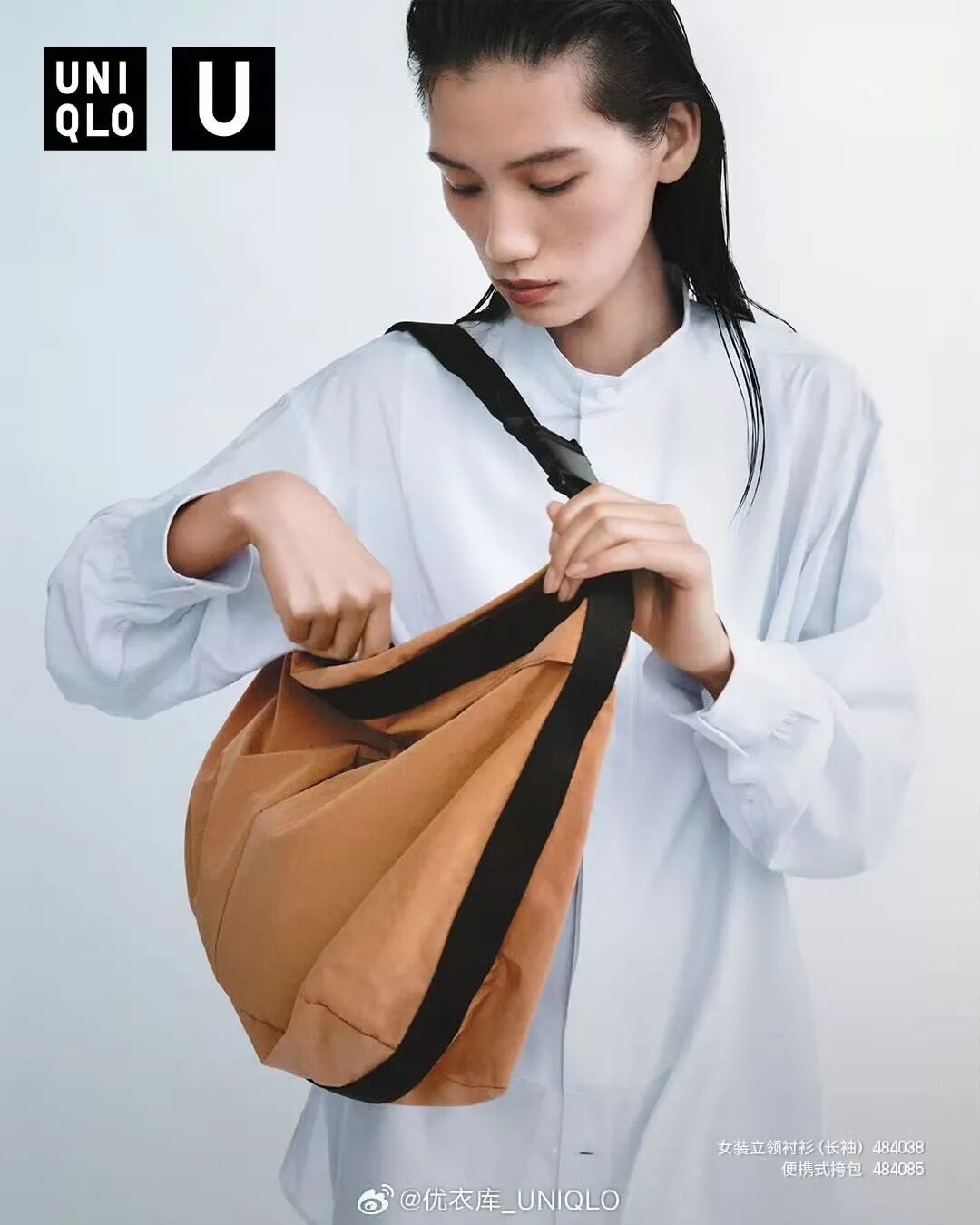
If the value of a traditional co-branding collaboration lies in creating a single viral hit, the value of the U Collection lies in transforming the entire brand.
The shift in consumer perception is the strongest evidence. A decade ago, shoppers rushed to buy the U Collection because it was seen as an affordable "Hermès for everyday." Later, more and more consumers purchased the U Collection for its own inherent identity, not just the designer association.
One consumer told Spicy that she first discovered the U Collection after seeing fashion influencers showcase it on social media, and later started visiting UNIQLO stores specifically to check for new U Collection drops. She had heard of the Lemaire brand, but did not know the designer Lemaire or the specific aesthetic he represents.
When consumers recognize and value the collection itself rather than the designer's name, a genuine long-term brand asset is formed. The reason the U Collection is continuously studied across the industry is not how many garments it has sold, but that it proves this: the most successful outcome of a designer partnership is not creating a single viral hit, but equipping the brand with the ability to consistently create hits on its own.
Designer Collaborations Are Entering a New Phase
After 2021, China's apparel industry entered a period of rationalization.
Designer partnerships did not disappear, but they are no longer positioned as the core of brand communication strategies as they once were.
The design director of a well-known domestic children's clothing brand once told the author that partnerships with designers or popular IPs may deliver short-term sales lifts, but in the long run, value can only be embedded in the brand when design capabilities are fully internalized.
As more and more brands jumped on the co-branding bandwagon, collaborations themselves lost their scarcity. Consumers grew desensitized to announcements of "another new designer partnership,"