Conversation with Yu Linyi, Chairman of Senbo Technology: AI applications compete not only on technology, but also on empirically validated closed business loops
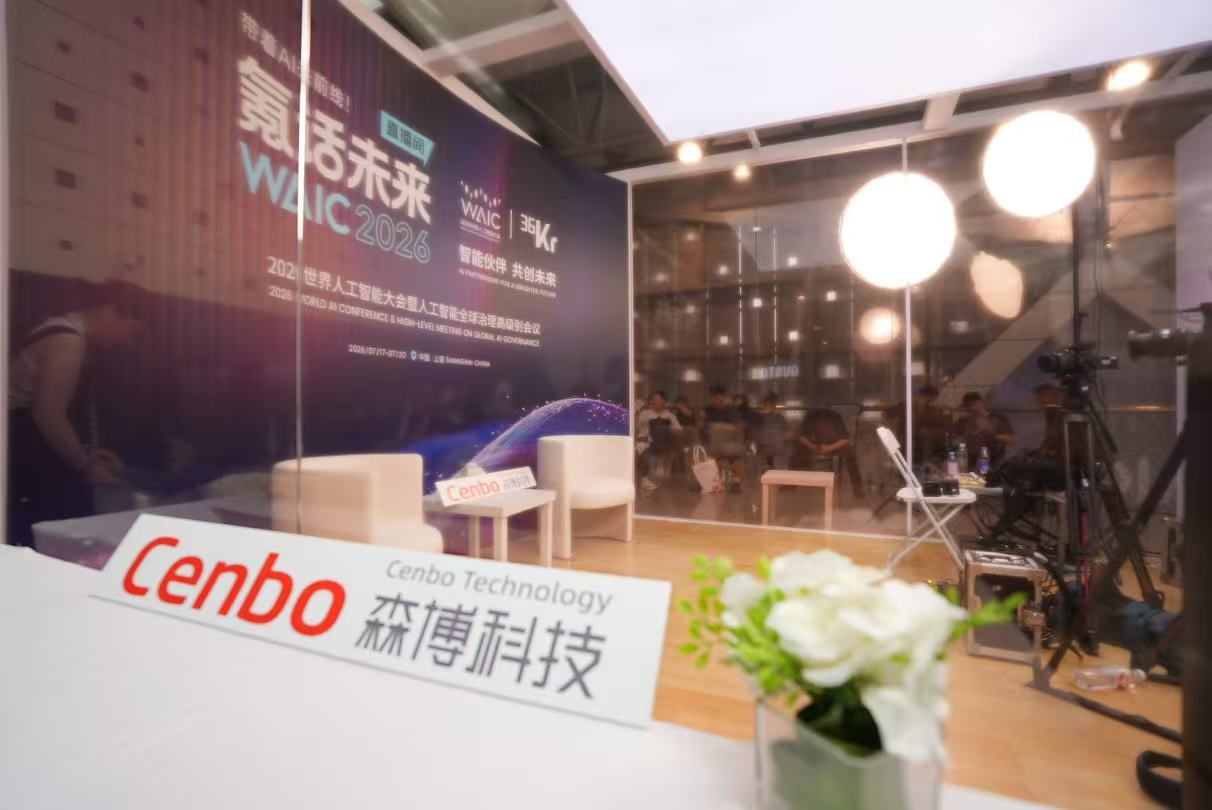
On July 17, 2026 World Artificial Intelligence Conference kicked off in Shanghai. As an important content window of 36Kr that has been deeply covering WAIC on-site for the third consecutive year, the "Kr-Talk Future" live broadcast room also launched on-site dialogues simultaneously on the first day of the conference. Yu Linyi, Chairman of Senbo Technology, accepted an exclusive special interview from 36Kr's "Kr-Talk Future" at the WAIC venue. Focusing on topics such as enterprise-level AI, agent implementation, industry know-how, and business closed-loop, he shared the practical path of Senbo's transformation from a marketing service company to an AI-driven technology service company.
The 2026 WAIC is themed "Smart Partners, Co-Create the Future". Compared with the industry's concentrated focus on model capabilities, parameter scales, and demo effects in the past few years, the discussions in the 2026 AI industry are clearly shifting downstream: enterprises are more concerned about whether AI can enter real workflows, undertake specific tasks, and be validated by business results. In other words, AI is no longer just a tool that "can answer questions", but aims to become a business partner that can collaborate with humans, embed into organizations, and create ROI.
This also makes the implementation logic of enterprise-level Agents clearer. General-purpose model capabilities are already sufficiently powerful, but after entering enterprise scenarios, what truly determines application effectiveness is often not the model itself, but business context, industry methodologies, process disassembly capabilities, and verifiable result feedback. Senbo Technology's observation precisely focuses on this point: the deciding factor for enterprise-level AI success is not "technology finding scenarios", but "scenarios refining technology".
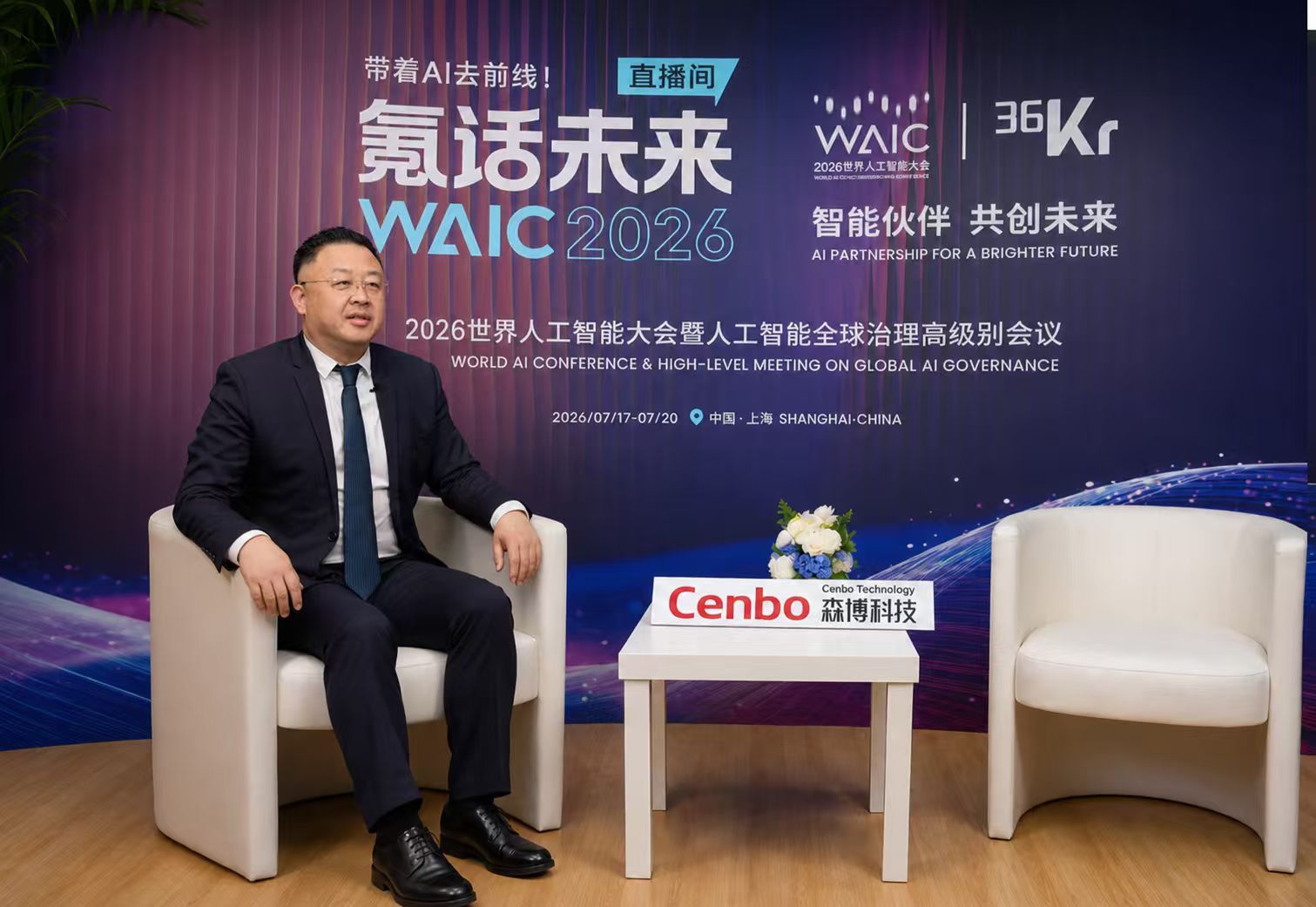
The following is the transcript of the dialogue, edited by 36Kr:
36Kr: The theme of this year's WAIC is "Smart Partners, Co-Create the Future", and the industry is also discussing how Agents can truly integrate into enterprise workflows. From Senbo's observation, what is the most noteworthy change in enterprise-level AI applications in 2026?
A: This year WAIC taking "Smart Partners" as its theme is in itself the clearest signal of an industry inflection point — AI has finally moved past the stage of "skill-show demos" and begun to transform from a "readily available tool" into a "partner that must integrate into business workflows and generate calculable ROI".
The core change we have observed is that the entire industry is shifting from "technology finding scenarios" to "scenarios refining technology". In the past two years, companies competed on who had larger model parameters and more impressive demos. This year, no matter investors or enterprise clients, the first question they ask is "How much profit can this thing generate for my business, and how much cost can it save?" A recent survey by Harvard Business Review states that 85% of agent projects have failed to deliver value. Essentially, this is not because the technology is inadequate, but because these AI systems have never been deployed in real business contexts, lack contextual understanding, judgment criteria, and result feedback, and naturally cannot become productive partners.
This is also what we most want to share at WAIC this year: the deciding factor for enterprise-level AI agents has never lain at the model layer, but in the empirical closed-loop within real business operations.
36Kr: Senbo transformed from a marketing service company to an AI-driven technology service company. What was the real turning point?
A: It was not a specific large model release, nor did we secure any particular financing round. The real turning point came when we developed our own premium brand Keyu.
With 20 years of experience in strategic consulting and digital marketing, Senbo has served industry leaders such as Midea, Haier, and Hisense. But we had never independently operated a full end-to-end brand lifecycle from 0 to 1 and then to industry leadership — until we spent three to four years building our international premium lifestyle brand Keyu into the No.1 player in the smart clothing care machine category. During this process, we suddenly realized: the methodologies we have accumulated over the years can be fully fed into AI to become self-operating agents; and the empirical business results generated by AI operation can in turn iterate our methodologies.
This process of "successfully running the business ourselves first" allowed us to establish a dual-system flywheel of "methodology + AI Agent", and also convinced us: to build enterprise-level AI agents, you cannot stand on the shore teaching clients how to swim — you must first get in the water and complete the first lap yourself. This is the core turning point of our AI transformation.
36Kr: If you use one sentence to introduce what Senbo is doing now, what is the biggest difference compared to traditional marketing service companies?
A: In one sentence: Senbo leverages 20 years of industry know-how and empirical methodologies to train AI Agent Teams for enterprises that are both domain-savvy and operationally capable.
The biggest difference from traditional marketing companies is: traditional companies sell "human experience" — consultants deliver plans, teams execute them, and the engagement ends after handover. Senbo sells "empirically validated AI productivity based on real businesses" — these agents are not just chat tools, but "AI employees" equipped with 20 years of industry knowledge and judgment criteria, proven in real business operations, and capable of continuous 7×24-hour iteration. Delivery is only the beginning, as they will evolve alongside your business.
The difference from pure AI companies is: other companies' AI is "smart but not necessarily domain-savvy", while our AI products are "both smart and deeply industry-proficient".
36Kr: Senbo has always emphasized that "AI application competition is not about technology, but about industry know-how". Which of the experiences accumulated from serving clients over the past 20 years are most suitable for being transformed into agents?
A: Having operated scenarios firsthand, we have now completed some staged abstractions. Scenarios that meet the following three requirements are suitable for AI agentization: First, the scenario must have a high level of digitalization — without digitalization, AI can hardly drive workflow operations. Second, enterprises must have high personnel investment and budget allocation in this scenario, which leaves sufficient room for agents to achieve cost reduction and efficiency improvement. Third, the scenario must have clearly defined judgment criteria, falsifiable metrics, and methodologies that can be validated by results.
Here are a few specific examples:
For instance, in the GEO (AI Search Optimization) field, Senbo has accumulated a complete methodology system: using the "Multi-Source Mapping Method" to infer what questions users will ask on AI platforms from multi-source search data across Baidu, Douyin, and Xiaohongshu; using the "ACCS Model" to build a four-layer source credibility system, ensuring that AI crawlers from any channel point to the same answer; using the "P-C-R Model" to track differences in source preference across each AI platform — for example, over 60% of cited content on Baijiahao flows to Ernie Bot, while over 35% of Douyin content flows to Doubao. These rules were not arbitrarily conceived, but extracted after tens of thousands of actual tests across 5 major AI platforms.
Another example is in the influencer marketing field: Senbo uses the "Dual-Tower Matching Model" for influencer selection — cross-matching the product feature tower and the influencer feature tower, and uses the "CVI-5D Model" for influencer evaluation — quantifying scores across five dimensions: communication power, conversion power, fan matching degree, cooperation compliance, and effective comment cost. This model, in typical client projects such as Haier, helped the client save 19.58 million yuan in marketing costs and reduced influencer spillover costs by 34%.
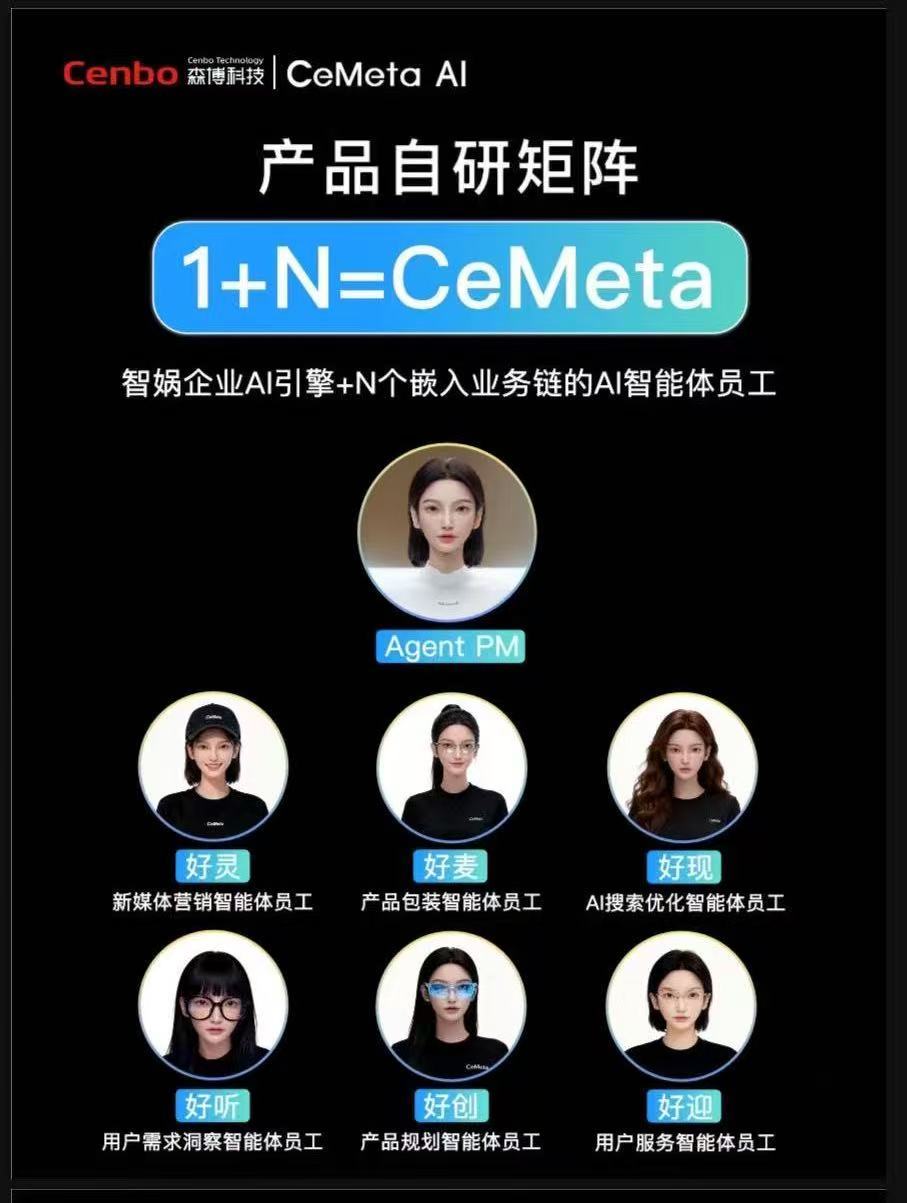
All the aforementioned methodologies, which used to reside in the minds of senior consultants, are now distilled into algorithms and refined into skills, becoming executable behavioral logic for AI agents.
36Kr: Many enterprises, when building Agents, tend to remain at the tool layer and find it difficult to truly integrate into business workflows. How does Senbo embed the context, workflows, and judgment criteria from clients' real scenarios into the CeMeta AI Engine and agent product system?
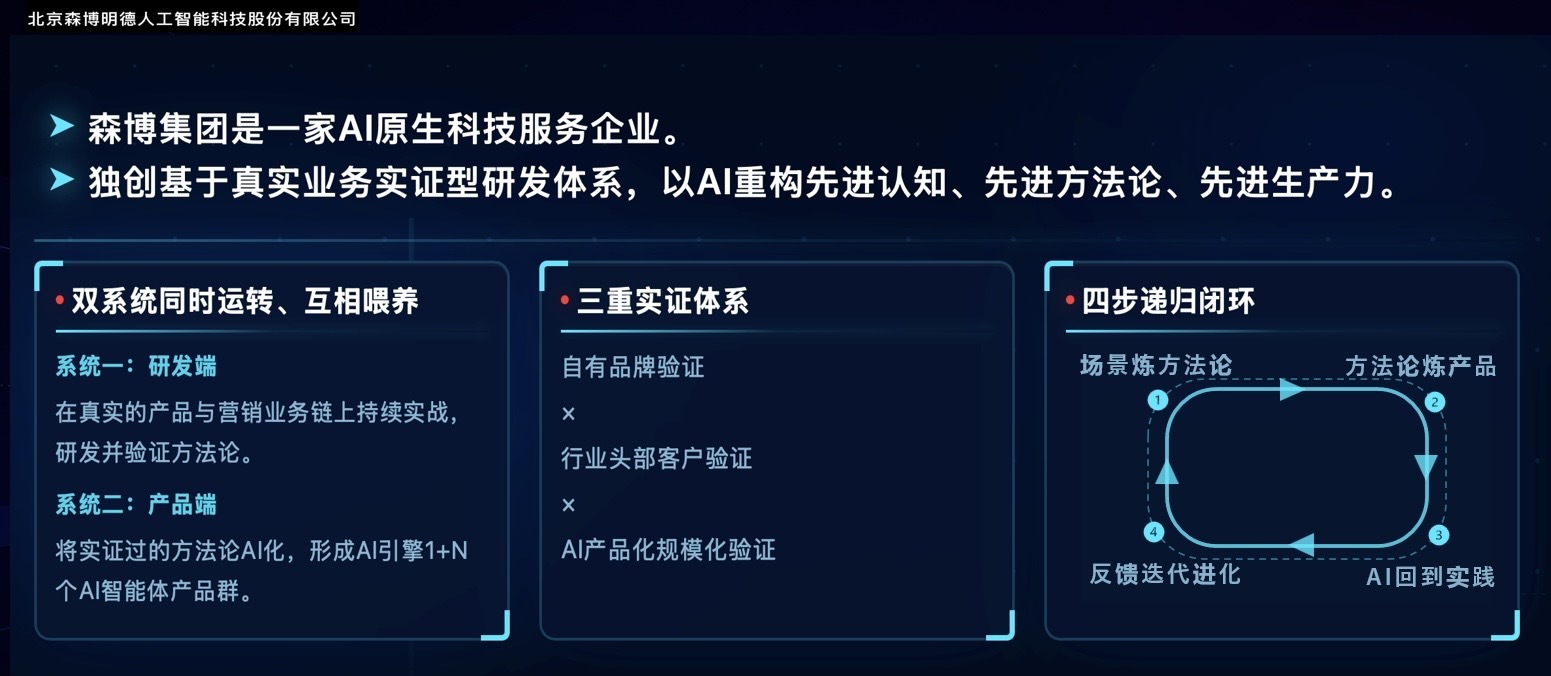
A: The core is Senbo's "Business Empirical R&D System (BER)" — every AI agent product must first be fully validated in real business operations before being deployed for clients.
Specifically, it is divided into four steps:
First step: Scenario Disassembly. Instead of asking clients "What AI features do you want?", we dive deep into the business ourselves to disassemble the full workflow of a scenario — defining what the input is, what the judgment criteria are, what the output is, and how to verify correctness. For example, for the GEO scenario, we break down the requirement of "making AI recommend your brand" into five links: problem definition → content production → channel distribution → effect monitoring → attribution iteration, with clear data metrics for each link.
Second step: Structurize Methodologies. Encode the disassembled judgment criteria and empirical rules into executable logic for agents. Instead of feeding documents directly into large models, we convert every judgment node into a quantifiable decision tree.
Third step: Practical Validation. Agents are directly deployed to run in real business operations. The "HaoXian" GEO agent was first validated on Senbo's own brand Keyu, raising the brand's AI recommendation rate from 0 to over 90%. Then it was deployed for Haier, achieving a 96% new product first-recommendation rate and 100% after-sales service call first-recommendation rate. The "HaoLing" influencer marketing agent was first validated on internal projects, then deployed for Haier, where the spillover rate of AI-selected influencers was 13% higher than that of manual selection.
Fourth step: Result Feedback. Every business result is fed back to calibrate the model. Reinforce correct outputs, correct erroneous ones, and maintain continuous iteration. This is why our agents become increasingly accurate with use — they are not static tools, but partners that continuously evolve in real business environments.
The foundation of this system is exactly our "ZhiWa" AI Engine — an enterprise marketing AI engine, responsible for unified management of enterprise context (knowledge), tools (Tools), standards (Standards), and data (Data), ensuring that every agent can operate in the real business environment of the enterprise.
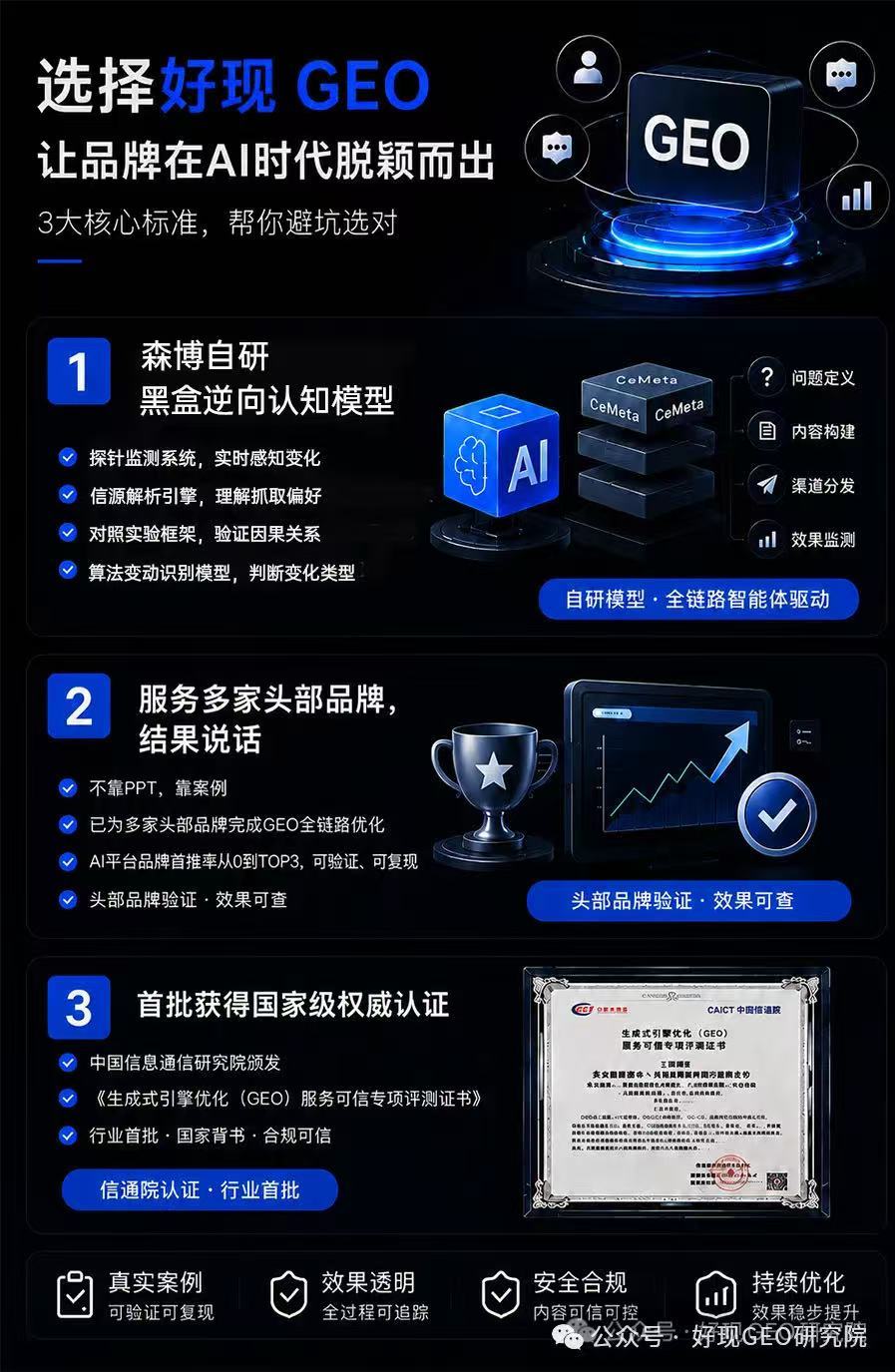
36Kr: From the GEO agent, influencer marketing agent to e-commerce marketing agent, Senbo has already delivered tangible results across the marketing chain. Next, will this "scenario refining technology" approach be extended to broader enterprise-level AI agent services?
A: The answer is yes.
The value of AI will never be limited to the marketing chain. During the past five to six years of Senbo's journey helping enterprises with AI transformation, we have been abstracting a layer of "methodologies for enabling enterprise AI transformation" — this methodology is the supporting system behind the recently popular concept FDE (Frontline Deployment Engineer). With this supporting system, Senbo is currently collaborating with multiple large model vendors and more industry-leading enterprises to replicate this Business Empirical R&D System (BER) to broader enterprise business chains including R&D, production, supply chain, and customer service.
For this year's WAIC theme "Smart Partners, Co-Create the Future", our interpretation of "co-creation" is not that AI companies develop products behind closed doors and sell them to clients, but that we work together with clients in real businesses to refine AI into truly productive AI partners — you provide the scenarios, we provide the methodologies and AI capabilities, and we jointly clarify the ROI of AI and elevate the full-link productivity of enterprises.
If you want to experience AI agents that can truly integrate into business workflows and deliver calculable ROI, you are welcome to add Senbo's enterprise WeChat account, starting with the "HaoXian" GEO agent, to jointly explore the real path of enterprise AI transformation and upgrading.