Tesla is in big trouble, as FSD may need to be completely overhauled.
"Legislation is not targeted at Tesla, but is rooted in practical realities such as New Jersey having the highest population density in the U.S. and extremely complex road conditions... There is currently insufficient evidence to prove that a single type of sensor paired with software can handle all scenarios that human drivers can manage."
Earlier this month, New Jersey State Senator Andrew Zwicker explained his original intention behind pushing Bill S1677 in a media interview.
This statement seemingly appears neutral, but in reality it draws a hard technical red line: L3 systems must adopt dual redundancy with cameras and millimeter-wave radars, while L4 systems are mandated to be equipped with LiDAR. For Tesla, which adheres strictly to the pure vision approach, this is no different from a "no-entry order" —
This not only means Tesla's Cybercab may be barred from entering the New Jersey market, but also signals the official arrival of an era of fragmented autonomous driving legislation and regulation across U.S. states.
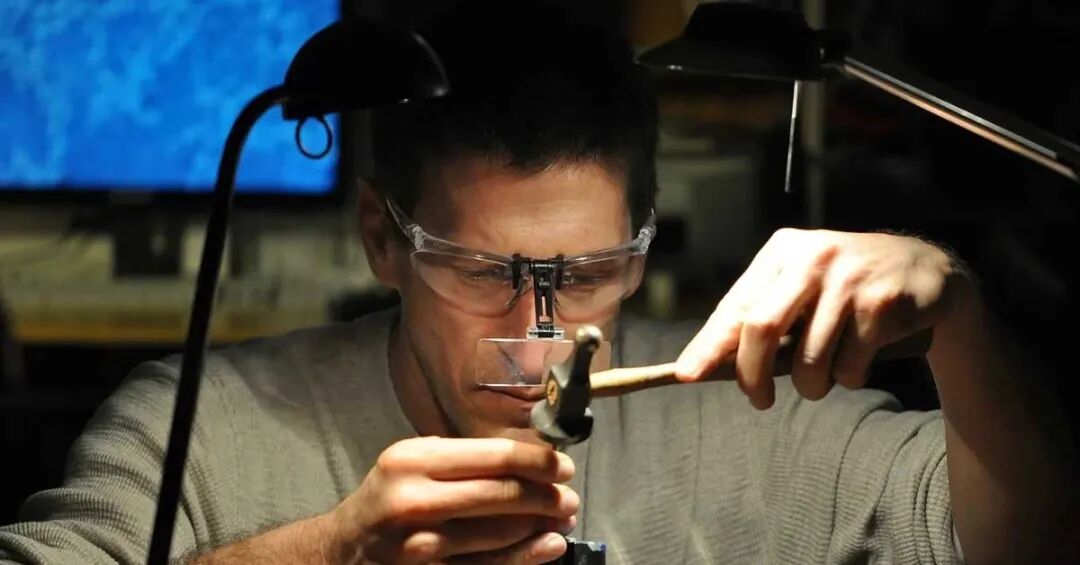
Figure | Do not dismiss Andrew Zwicker as a typical American politician. Before entering politics, he made notable achievements at the Princeton Plasma Physics Laboratory, so the relevant bill was formulated based on rigorous technical considerations
Almost simultaneously, on the other side of the Pacific, China's Ministry of Industry and Information Technology released the draft for approval of the mandatory standard "Safety Requirements for Autonomous Driving Systems in Intelligent Connected Vehicles". The public once misinterpreted it as "mandatory LiDAR for L3/L4", but reviewing the original text reveals that no specific sensor names are mentioned at all — the document only emphasizes perception coverage and failure compensation mechanisms.
One east, one west, two documents, two completely different regulatory philosophies. New Jersey has written a "hardware checklist" in black and white, while China has presented a "universal measuring stick" with a result-oriented approach.
While Elon Musk was still advocating that "LiDAR is a crutch", legislative bodies have used colder, pragmatic real-world logic to push the technical debate between pure vision and multi-sensor fusion from the academic arena to the stage of institutional game-playing.
Compliance would mean Tesla overhauling its existing FSD technology
Although lawmakers have pre-emptively stated that the bill is "not targeting any specific company", the intent of Bill S1677 to target Tesla remains abundantly clear. North American competitors such as Waymo and Zoox have reacted indifferently, as their systems already operate on a fusion framework of cameras, millimeter-wave radars and LiDAR — the bill in fact reinforces their technical moat.
If the bill passes, Tesla will have to perform major surgery on its "Full Self-Driving" system if it wants to operate Cybercab in New Jersey. This is far from a simple hardware addition — it represents a comprehensive restructuring from the physical hardware layer to the software architecture.
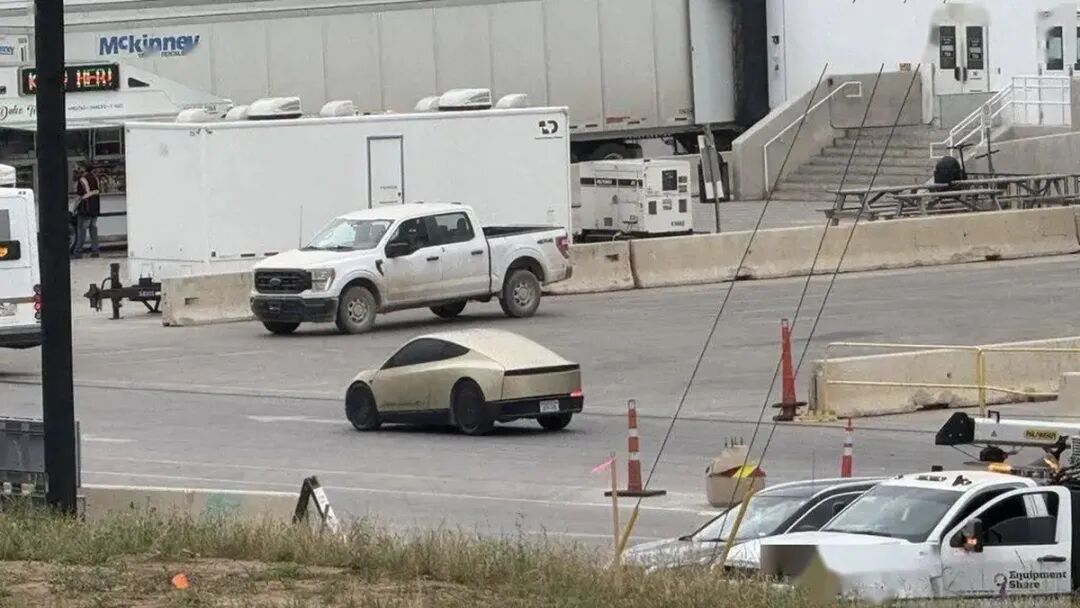
Figure | Tesla's Cybercab has already begun large-scale road testing across multiple regions in the United States
From a hardware perspective, Tesla's current HW4.0 hardware architecture is designed around the logic of extreme cost reduction through pure vision. Its wiring specifications, domain controller computing power allocation, interface protocols, and even power supply systems are all strictly optimized for an 8-channel vision sensor configuration — the company even aggressively eliminated ultrasonic radars in earlier iterations.
To meet the requirements of S1677, the L3 standard could barely be satisfied using the reserved millimeter-wave radar interface, but the LiDAR mandated for the L4 standard presents a challenge of an entirely different magnitude. This not only involves redesigning physical mounting points on the vehicle body, but also requires independent power supply modules, dedicated signal processing chips, and supporting cleaning and heating systems to ensure sensor performance in harsh weather conditions.
The ensuing ripple effects include bumper mold retooling, re-testing for electromagnetic compatibility (EMC), and adjustments to the entire production line tooling setup. Industry estimates suggest that the full-vehicle safety validation cycle alone will be extended by at least 12 months. This is by no means a trivial "modification", but a genuine full-model upgrade.
If the hardware reset is a cost that can still be absorbed, the impact on the software layer is nothing short of disruptive. After iterations to versions v12 and v14, FSD has evolved into an end-to-end pure vision BEV (Bird's-Eye View) architecture paired with an occupancy network. This neural network was trained on massive volumes of pure vision data — it only recognizes camera pixel inputs, and has no inherent understanding of LiDAR point cloud data.
Forcing the fusion of these two heterogeneous data sources will cause severe inconsistencies between training and inference. It is analogous to a person who has only ever seen black-and-white photographs suddenly putting on color 3D glasses: the brain cannot process the extra information, and instead becomes confused, leading to perceptual breakdown. This modality gap rarely results in performance improvements — it often leads to catastrophic system failures.
Furthermore, Tesla's proud global dataset of billions of kilometers of pure vision shadow mode data will instantly become obsolete, leaving its mature algorithms effectively starting from zero. Optimistic estimates indicate that re-accumulating fused "pixel + point cloud" scenario data, and completing full model retraining and validation, will take 2 to 3 years. This dual blow to both hardware and software will eventually trigger a collapse at the commercial level, completely undermining the extreme low-cost value proposition that the Cybercab was built upon.
The physical limits of pure vision and the complementary logic of LiDAR
Setting aside commercial and compliance factors to dive deeper into technical fundamentals, the appeal of the pure vision approach has never lied in impressive performance metrics, but in the internal consistency of its engineering philosophy. Humans rely on two eyes and a brain evolved over millions of years to navigate the vast majority of road scenarios — this forms the logical foundation of Musk's "crutch theory".
Translating this analogy to neural networks: cameras capture images, and end-to-end models directly map pixels to control commands, eliminating multiple intermediate representation stages such as perception, localization, and path planning. With sufficiently massive training datasets and comprehensive scenario coverage, the system can statistically approximate the generalization capabilities of human drivers.
The strength of Tesla's approach lies in the compounding returns of the Scaling Law: cameras are low-cost, deployed immediately upon mass production, and every Tesla vehicle on the road continuously uploads rare corner cases. As the data flywheel spins, the marginal cost of algorithm improvements steadily decreases.
From HW4.0 to FSD v12/v14, pure vision systems have demonstrated sufficient performance on North American suburban roads, highways, and standard urban streets to let some drivers safely take their hands off the wheel. These engineering achievements should not be entirely dismissed due to New Jersey's legislation — they represent a victory for artificial intelligence within clearly defined operational boundaries.
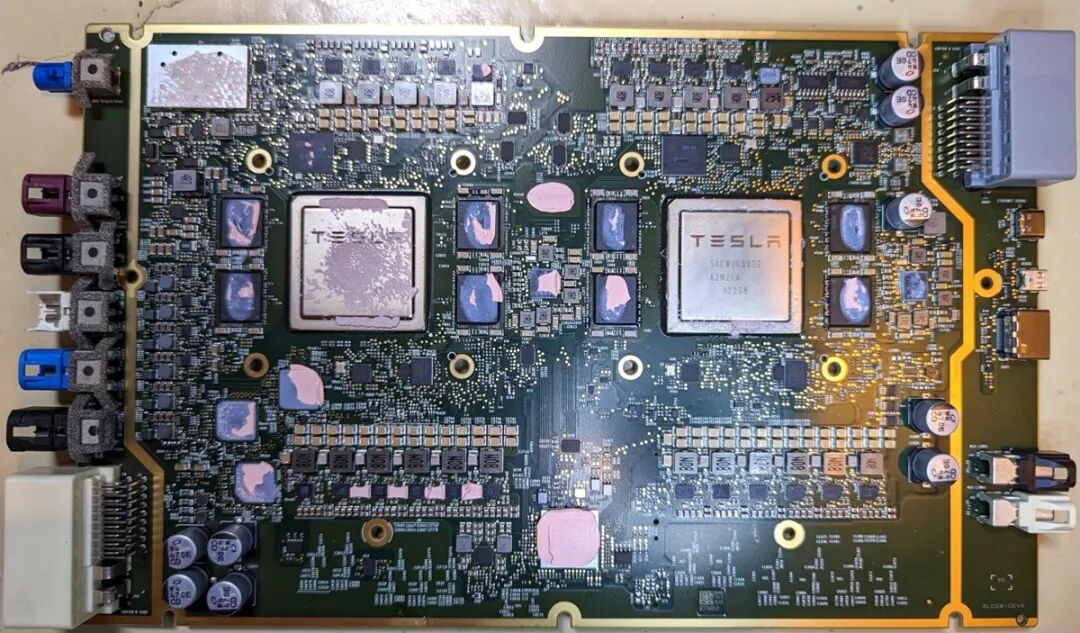
Figure | The HW4.0 motherboard already delivers computing power of up to 700 TOPS, but it may still struggle to support seamless integration of LiDAR data
However, the Achilles' heel of pure vision is deeply rooted in fundamental physical laws. As passive sensors, cameras are heavily dependent on ambient lighting, object surface texture, and contrast, while ranging relies on parallax and multi-frame estimation rather than direct physical feedback. This creates inherent flaws in specific scenarios: rain, fog, backlighting, unlit nighttime conditions, glare from oncoming high beams, and even white trucks on highways misclassified as "clouds" are all well-documented failure modes.
A more subtle example is the "fake wall" test: a light-absorbing or textureless wall can be directly absorbed into the background by a pure vision system, while LiDAR can accurately determine its distance with a single echo. Philip Koopman's observation that pure vision "only works reliably in clear, good road conditions" is not an insult to Tesla's engineering capabilities, but an objective description of the probability distribution of system performance.
In short, the long-tail failures of pure vision are precisely concentrated in those extremely rare scenarios that human drivers can handle, but where the sensors suddenly lose functionality — and regulators, insurance companies, and the public are fixated on this "critical veto power" that directly impacts life safety.
In contrast, LiDAR systems operate on a completely different set of physical principles.
LiDAR actively emits laser pulses, and new-generation high-channel-count units generate dense 3D point clouds that are unaffected by ambient lighting. Distance detection for low-texture objects, stationary obstacles, and suddenly appearing targets is performed at a physical level rather than through inference. When paired with millimeter-wave radars that provide Doppler velocity measurements and penetrate rain and fog, and cameras that ensure semantic and color recognition, these three heterogeneous sensors form a perfect complementary system for failure modes.
This is the true redundancy required by New Jersey's bill: when cameras fail, the other two sensors can still detect obstacles and track their movements. Years of operational data from Waymo in San Francisco, Phoenix, and Los Angeles show that this three-sensor fusion solution may not be theoretically optimal, but it is undoubtedly a high-confidence approach that has been validated through large-scale commercial deployment.
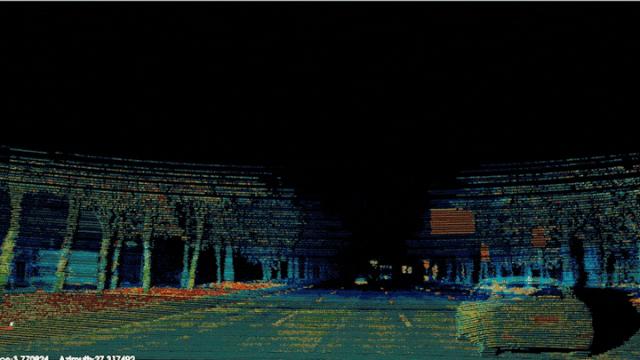
Figure | Essentially, LiDAR is just a continuously operating, wide-range multi-angle rangefinder — calling it a "crutch" (or a guide cane) is not inaccurate, but its core value is that it can instantly measure the true distance of all surrounding objects, free from visual illusions
It is worth noting that the entry barrier for this high-confidence solution has been drastically lowered by domestic Chinese supply chains. Hesai and RoboSense have pushed the price of automotive-grade LiDAR down to the thousand-dollar level, meaning that almost all Chinese companies including Huawei ADS, Xpeng, Li Auto, and Xiaomi have opted for the triple-redundancy configuration when submitting their L3 solutions. The incremental cost per vehicle is controlled between 4,000 and 12,000 RMB, accounting for less than 3% of the total vehicle cost for models priced above 200,000 RMB.
Tesla's predicament is that its pure vision doctrine is tied to the commercial logic of "trading cost reductions for scale", while for its competitors, adding LiDAR is simply purchasing a tangible, measurable safety guarantee. The pure vision camp has not reached a dead end — iterative improvements in 4D millimeter-wave radars are attempting to fill performance gaps. But for now, LiDAR remains the most reliable physical patch to overcome the inherent physical limits of perception systems.
The China-U.S. regulatory divide: institutional game-playing between hardware checklists and system resilience
Turning back to China, the release of the draft mandatory standard "Safety Requirements for Autonomous Driving Systems in Intelligent Connected Vehicles" by the Ministry of Industry and Information Technology in summer 2026 demonstrates a regulatory philosophy completely different from that of the United States. Rumors once spread widely that "L3/L4 will mandate LiDAR, and pure vision systems will not be eligible for certification", but this interpretation was later disproven.
An executive at Xpeng Motors clarified on social media that the word "LiDAR" does not appear anywhere in the full document.
Reviewing the original text confirms that this mandatory standard adopts a classic result-oriented approach, only setting quantifiable safety metrics: the perception system must laterally cover 9 meters on each side of the vehicle, the minimum forward detection distance must match the maximum vehicle speed, and the system is required to have a built-in compensation mechanism for degraded perception performance.
The standard does not interfere with whether companies choose pure vision, vision + millimeter-wave radar, or a full LiDAR setup — they only need to prove that their system meets the established safety thresholds. Paired with the classification standard GB/T 40429-2021, China has established a regulatory framework that "provides the measuring stick without choosing the path for you". The ingenuity of this institutional design is that it does not directly reject any technical approach, but forces companies to make the most rigorous technical selections by setting extremely high safety thresholds.
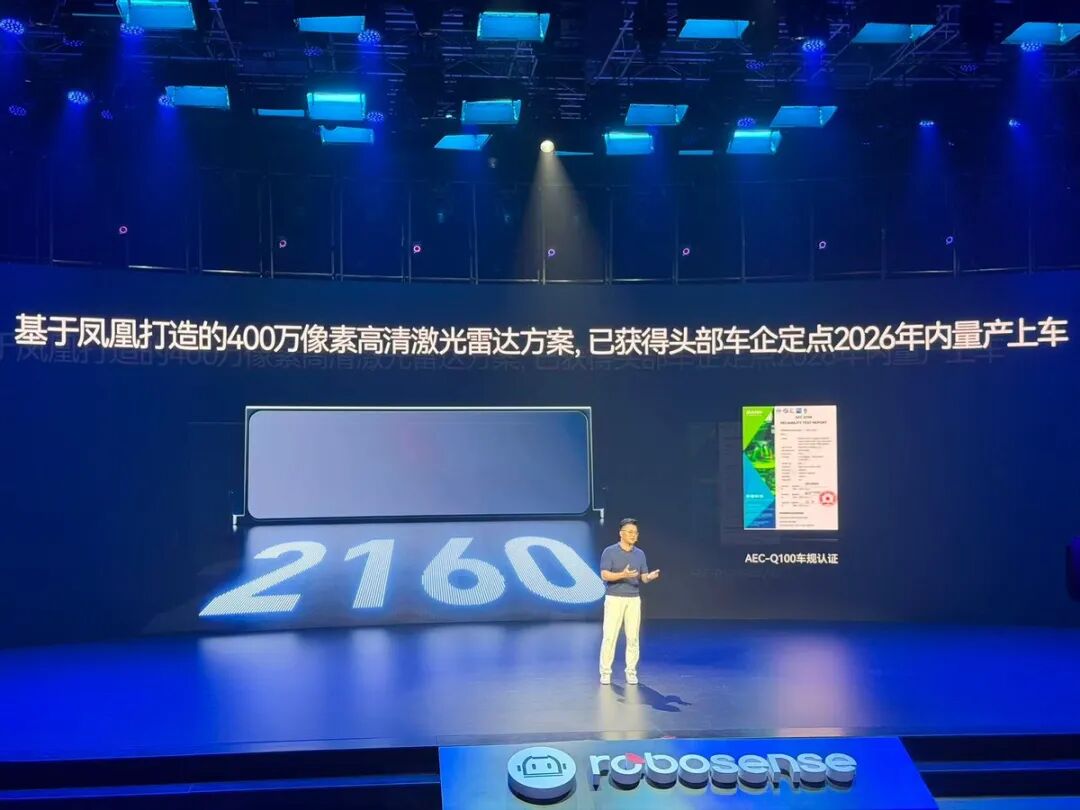
Figure | For Elon Musk, the worse news is that as Chinese competitors push forward rapid technical iterations, LiDAR accuracy is steadily improving, and current models already have certain imaging capabilities...
The significant differences in regulatory logic between the two documents reflect two distinct governance philosophies.
New Jersey's Bill S1677 embodies the typical approach of U.S. state-level legislation: under the federal system, regulation of cross-state Robotaxi operations is inherently fragmented, and lawmakers prefer "auditable, accountable" management through hardware checklists. This approach is straightforward and uncompromising, easy to enforce and assign liability, and avoids prolonged technical debates over algorithm black boxes after accidents — it is a classic example of the hardware redundancy mindset.
China's mandatory standard, on the other hand, embodies the system resilience mindset: it does not predefine technical routes, but pushes companies to iterate their technologies through a unified safety benchmark. How to achieve system degradation after perception failure, pull over safely, or use V2X roadside data to supplement perception is left entirely to market choices.
Neither approach is inherently superior — they correspond to different stages of industry development and different regulatory pain points. U.S. state-level legislation faces already deployed Waymo and Tesla pilot operations on public roads, making hardware checklists the most pragmatic way to safeguard public safety. China, meanwhile, is striking a balance between accelerating industrial development and ensuring safety, allowing market mechanisms around data, insurance, and liability models to naturally select the optimal solution by keeping technical routes open.
Looking at the nine domestic pilot companies that have submitted L3 certification applications, the vast majority have voluntarily opted for LiDAR configurations. This is not a result of regulatory coercion — it is a natural choice for automakers to reduce liability risk, as L3 accident responsibility shifts to the system in complex road conditions featuring peak-hour traffic, rain, snow, tunnels, and backlighting in major Chinese cities.
Returning to New Jersey's bill, far from being a "targeted attack on Tesla" as some conspiracy theories claim, the legislation is an inevitable outcome of regulation lagging behind technological progress. S1677 only restricts commercial driverless fleets and does not affect FSD functionality on private consumer vehicles — New Jersey's Tesla owners can still use the feature normally. The only real casualty is the narrow use case of steering-wheel-free, pedal-free, pure-vision L4 commercial operations — which is precisely the core of Tesla's Robotaxi business proposition.
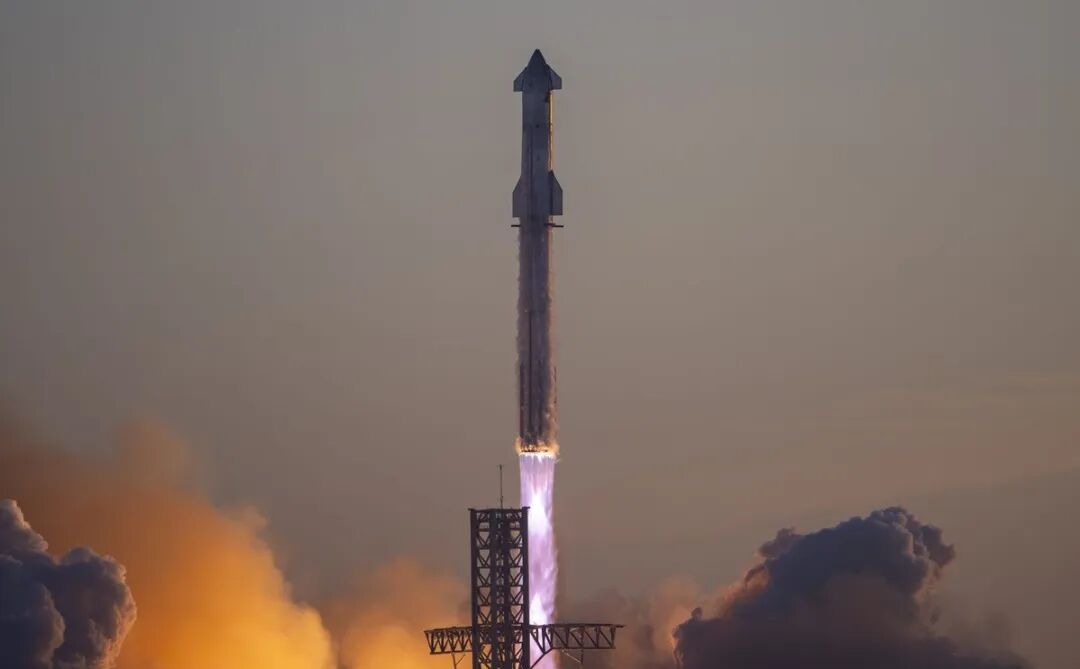
Figure | That said, billionaire Elon Musk is now devoting most of his attention to SpaceX, so this setback for Tesla may not be catastrophic
In reality, the debate over the merits of pure vision versus LiDAR has long transcended the scope of technical superiority, entering a practical phase focused on regulatory compliance and business model adaptation. Musk's beliefs have their own