36Kr Exclusive | This Humanoid Robot ODM Maker Secures Tens of Millions in Financing, With Fine-MEC and Sunsoar Tech Making Sequential Investments
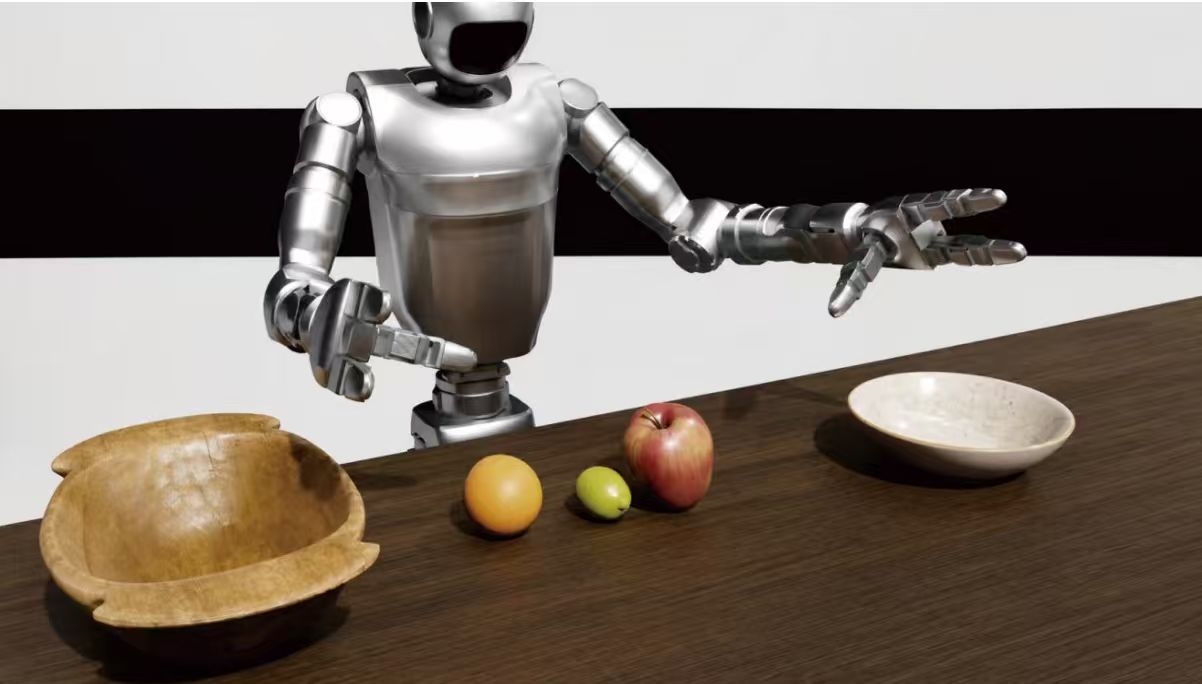
Image Source / Enterprise
This article contains approximately 2400 words, with an estimated reading time of 6 minutes
Author | Xue Ou
Editor | Silai Yuan
36Kr has learned that BXI Robotics, an ODM solution provider for humanoid robots, has recently completed a new round of financing valued at tens of millions of yuan, with the investor being A-share listed firm Sunlution Technology. The funds from this round will be primarily allocated to R&D of next-generation humanoid robots and overseas market expansion. Previously, BXI Robotics secured its first institutional financing in 2025, backed by listed company Fast Corporation.
Although BXI Robotics was founded in 2022, its team initiated R&D work on humanoid robots as early as 2020. Chen Yan, the company's co-founder and CEO, graduated from the School of Computer Science, Southeast University in 2003, and accumulated years of experience in secondary market quantitative trading before embarking on robotics entrepreneurship. Co-founder Liu Fuqiang earned his bachelor's degree from Southwest University of Science and Technology, and participated in the National College Student Robotics Competition for four consecutive years during his university studies, winning multiple awards.
The company focuses on full-stack independent R&D of highly dynamic biped humanoid robots, and is one of the few domestic teams that simultaneously possess capabilities in complete machine design, core motors, motion control algorithms, and scenario software delivery. Currently, the company mainly provides ODM services for general-purpose humanoid robots to brand clients, with solutions covering white-label complete machines, joint motor modules, motion control algorithms, and application software development.
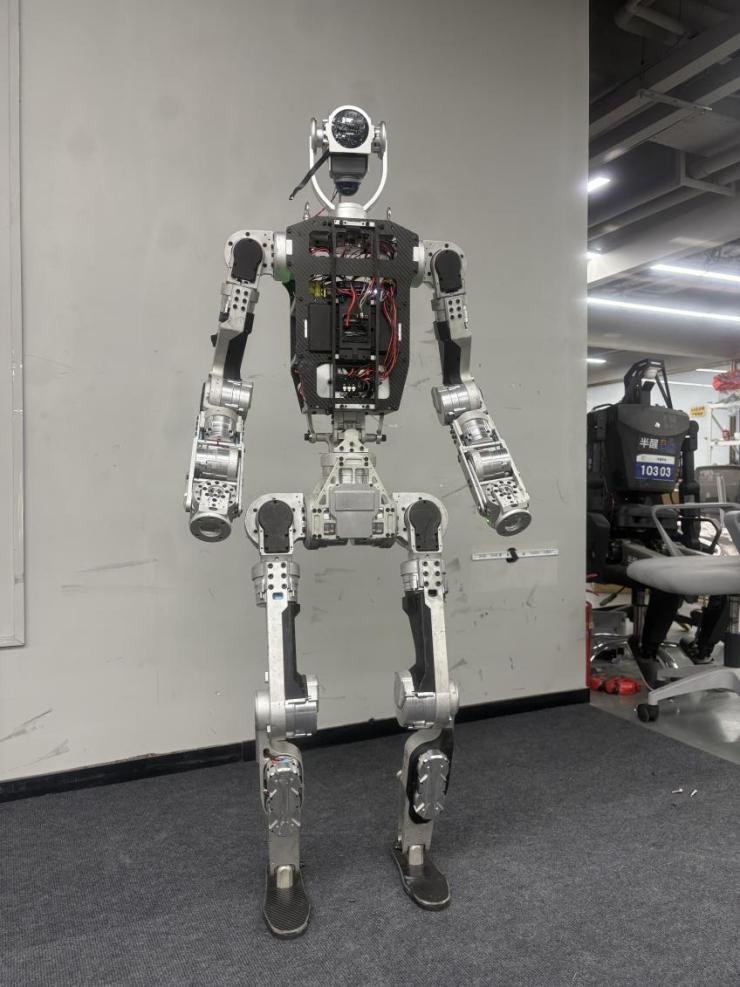
Display of BXI Robotics related products (Image Source / Enterprise)
The decision to adopt the ODM route stems from the BXI Robotics team's pragmatic judgment on market demand. Chen Yan, the company's founder, told 36Kr that after the humanoid robot track gained momentum, a large number of companies hoped to quickly launch their own branded humanoid robot products, but self-development faced practical pain points such as long R&D cycles (typically 2-3 years), difficulties in team formation, and uncertain outcomes. This has created a tangible market demand for ODM services.
BXI Robotics' core advantage lies in its "full-stack independent R&D". Unlike many solution integrators in the market, BXI started with motor development and gradually built up full-chain capabilities covering electronic control, structural design, motion control algorithms, and more.
"We start from the complete machine requirements and reverse-design every single component," Chen Yan explained.
Taking joint motors as an example, when the team launched the project in 2020, high-torque motors and high-frequency electronic control systems that could meet the backflip requirements of humanoid robots were not commercially available. BXI began independent R&D starting from joint motor modules, tested cycloidal and planetary solutions, developed planetary joint motors with a peak torque of 800 N·m, and implemented an in-motor water cooling scheme. Paired with its self-developed 1000Hz electronic control system, the team produced its first-generation prototype. After iterations, the company now offers three standardized planetary hollow joint motor modules, BXI-50/70/85, which cover all 31 degrees of freedom across the humanoid robot's body.
In the ODM market, customers have long decision-making cycles, large single-order amounts, and extremely high requirements for supplier reliability. BXI Robotics positions "real-world validation" and "mass production delivery" as its core selling points.
36Kr has learned that BXI Robotics is one of the very few ODM solution providers that have participated in and completed a robot marathon. In April 2025, its unmodified mass-produced "Elf 2" robot joined the first Beijing Humanoid Robot Half Marathon, finishing in 4 hours, 2 minutes and 19 seconds to secure 6th place. In April 2026, the "Elf 3" competed again, finishing the race with a net time of 150 minutes and ranking among the top participants.
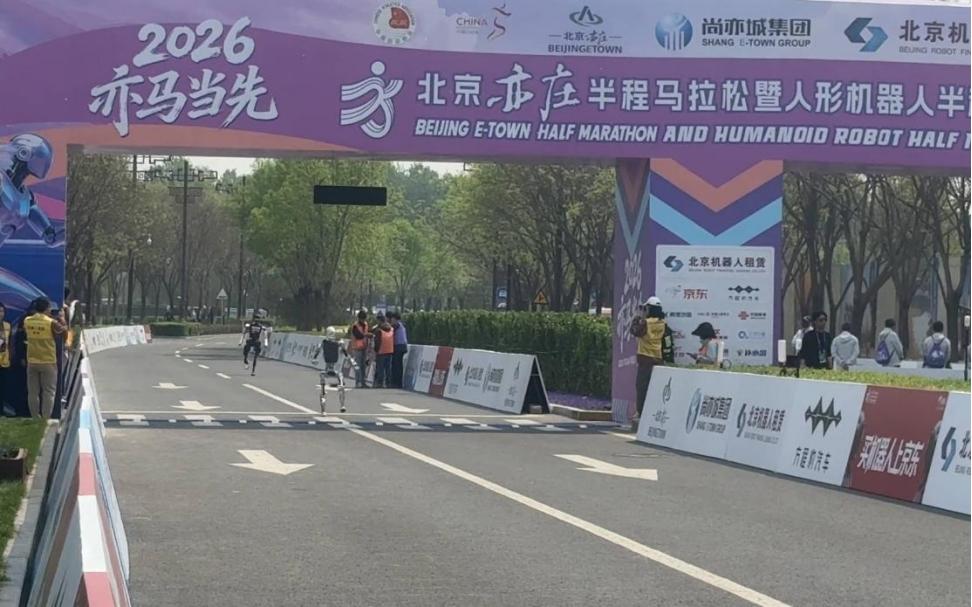
BXI Robotics' "Elf 3" participating in the robot marathon (Image Source / Enterprise)
In terms of production capacity, supported by the manufacturing bases of shareholder Fast Corporation located in Shenzhen and Changzhou, BXI Robotics currently has a monthly production capacity of dozens of units, which can be rapidly expanded to over 100 units per month in the short term. The company estimates that from July 2026 to July 2027, the monthly order value is expected to exceed 10 million yuan, with annual revenue projected to surpass 100 million yuan.
The company revealed that its clients include leading tech and internet firms, multiple major domestic automotive manufacturers, and robotics enterprises, covering categories such as OEMs, secondary developers, embodied intelligence "brain" R&D providers, and vertical scenario operators in sectors like textiles, photovoltaic cleaning, and unmanned car washing.
Overseas markets are also a key priority for BXI Robotics. The company already has leading tech clients in the U.S. and is actively expanding into markets including South Korea, Japan, and Europe. "No country wants to rely on others for humanoid robots, and every local market has huge ODM demand," Chen Yan noted.
In terms of R&D directions, BXI Robotics will focus on breakthroughs in three modules: end effectors (dexterous hands), perception, and computing, to enhance the robot's ability to "perform tasks freely".
The team judges that the "free movement" capability of biped humanoid robots has been well resolved in the past few years, while the ability to "perform tasks freely" will become the industry's next phase of competitive focus.
Below is an edited excerpt of the conversation between 36Kr and the BXI Robotics team:
36Kr: Compared with other ODM solution providers, what is BXI's most distinctive competitive advantage?
Chen Yan & Liu Fuqiang: We can truly deliver a full-stack solution spanning from motors, electronic control, sensors, and customized computing power to motion algorithms and manipulation algorithms, which has been validated through mass production and real-world competitions. When clients partner with us, they don't need to source additional suppliers, significantly lowering the risk of project failure. We operate like a fully rounded hexagon—no single side can be missing. While the market may seem crowded with competitors, clients actually have very few viable options.
36Kr: Why did you choose the ODM route instead of building your own brand?
Chen Yan & Liu Fuqiang: We discovered this ODM "gold mine", and our current priority is to fully tap into its potential. The end market for humanoid robots is currently dominated by research institutions and laboratories, where the purchasers are making capital expenditures rather than ordinary consumers. A large number of companies want to quickly launch their own branded humanoid robots, but self-development comes with long cycles and high risks. We spent five years advancing from scratch to a mature 60-point level, and partnering with us essentially allows clients to "buy time with money".
36Kr: How do you view the development pace of the humanoid robot industry?
Chen Yan & Liu Fuqiang: People tend to overestimate short-term trends and underestimate long-term development. When we first started in 2020, our only dream was to make the robot walk. Today, the industry has already solved the "free movement" problem, and the next step will be addressing the "free task execution" challenge.
We predict that humanoid robots will truly enter daily life by 2027—not just viewed on screens, but seen operating around us. This industry does not grow linearly; it advances in stepwise phases. Once a critical threshold is crossed, explosive concentrated growth will follow.
Investor Perspective:
Wu Weizi, Secretary of the Board of Sunlution Technology (688507): Sunlution highly recognizes BXI Robotics' underlying hardware innovation capabilities, robust R&D team, and standardized mass production business model. BXI independently develops core robot joints and open complete machine bases, achieving high-precision dynamic motion regulation. Its technology is rare in the market and easy to implement. The lightweight ODM delivery significantly lowers the industrialization threshold for embodied intelligence, and is highly synergistic with Sunlution's physical AI simulation system, serving as a key link connecting simulation to physical robot deployment.
This strategic investment will promote deep integration of both parties' technologies and products, improving the complete embodied intelligence technology chain around hardware adaptation, data iteration, and motion control reconstruction. The two sides will break the closed hardware barriers of traditional robots, create a standardized, open, and lightweight base to provide a dedicated hardware carrier for physical AI algorithm iteration, and build a full-domain data closed loop where real robot operation data flows back to Sunlution's physical AI platform in real time. This forms a cycle of "simulation training - real machine deployment - data return - model optimization - iterative retraining", continuously improving the simulation accuracy of physical models. Leveraging the "Yingzao · Wanxiang" large model to reconstruct robot motion control logic, the collaboration will achieve highly dynamic autonomous motion regulation, enabling hardware to act as the physical execution terminal for physical AI. This marks a major breakthrough in transitioning from physical simulation to real embodied intelligence deployment, delivering humanoid robots with advanced operational capabilities.