After the return of CPU, what changes have taken place in the logic of the AI industry?
The evolution of the tech world always catches people off guard.
Back in 2006, NVIDIA wrote the phrase "CPU is the host, GPU is the device" in the first chapter of its CUDA programming manual.
At that time, few people took this statement seriously.
After all, the CPU is soldered to the motherboard, and the GPU is slotted into the chassis — that was the undeniable physical reality.
Over the following two decades, GPUs advanced at a blistering pace to claim the throne of computing power; NVIDIA itself grew from a supporting component vendor into the undisputed ruler of AI infrastructure.
Yet the peak of a story often signals the arrival of a turning point.
Right when NVIDIA's H100 chips were being scalped for as high as $40,000 a unit and still remained scarce, the bottlenecks in AI computing power became increasingly obvious.
Looking back at "CPU is the host, GPU is the device" now, there is actually another way to interpret it:
The CPU takes the lead, while the GPU plays a supporting role.
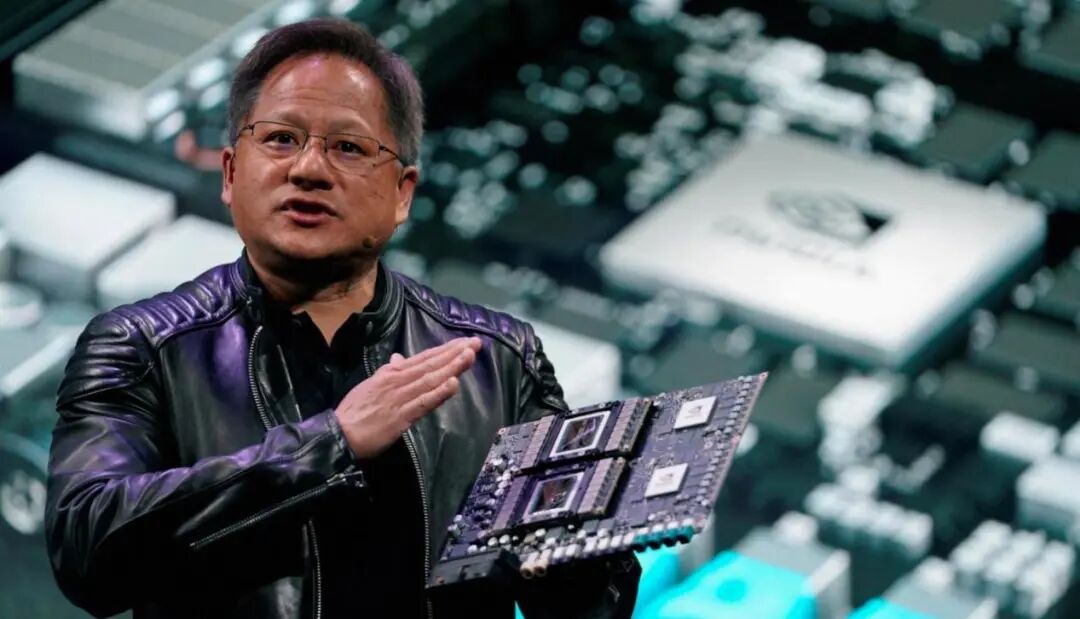
In 2023, NVIDIA launched the Grace CPU, marking a shift from its long-standing "All-in GPU" strategy to a "CPU+GPU heterogeneous collaboration" model.
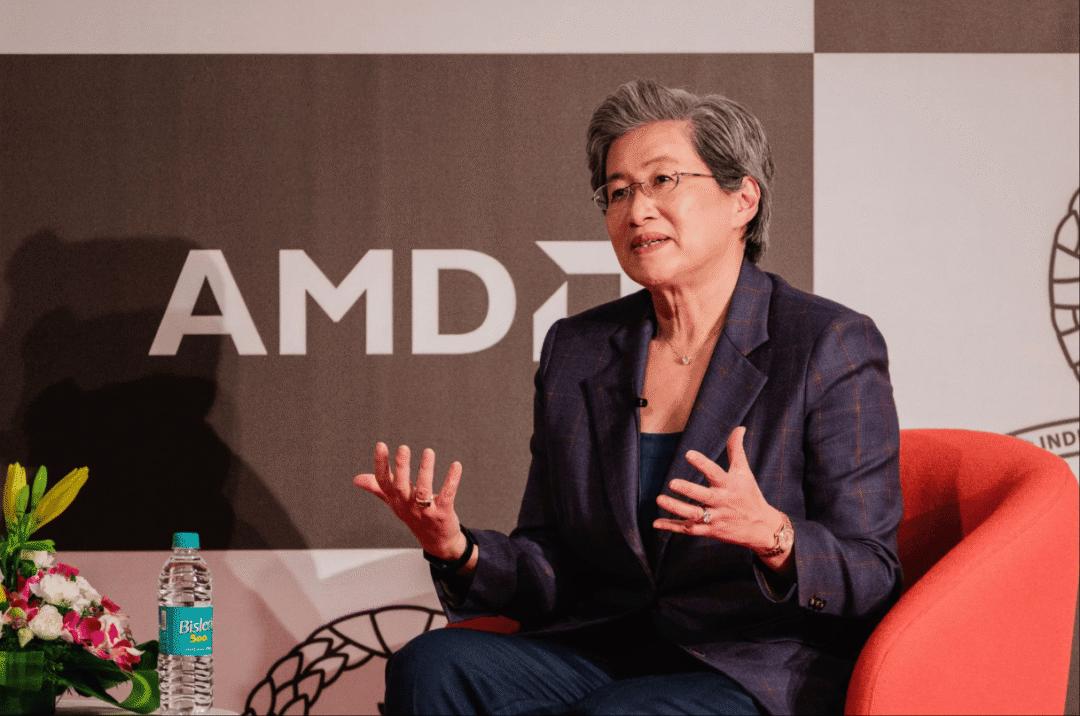
The following year in 2024, Lisa Su, CEO of another chip giant AMD, pointed out in a media interview: "Over the past three to four years, the global CPU market has seen relatively steady growth with an annual growth rate of only 3% to 4%; driven by the AI wave, however, the average annual growth rate of the global CPU market will surge to over 35% in the next five years."
The renewed focus on CPUs is not the fulfillment of a prophecy, but a conclusion the tech giants have calculated line by line from their real-world financial statements.
This accounting concept is called "diminishing marginal returns" — as the scale of GPU deployment expands, the incremental computing power gained from each additional GPU quietly shrinks.
The reckless pursuit of raw computing power through brute force is no longer an unquestioned industry truth.
Old beliefs are wavering, and a new story is beginning.
The Paradox of Burning Cash to Sustain Operations
The chip industry has Moore's Law guiding its development, and the AI track has its own governing principle, widely known in the industry as the "Scaling Law."
Roughly speaking, if you multiply the computing power of a large model by 10, its performance may only increase by 2 to 3 times.
The relationship between computing power and cost does not grow in lockstep; instead, it exhibits a "logarithmic" pattern of diminishing returns.
That's why while the public always witnesses the soaring performance of large models, tech giants see that every jump in performance requires more and more expensive resources than before.
The larger the model, the harder it becomes to boost its computing performance. Even AI cannot escape the curse of the strong.
Therefore, over the past two years, to feed the "behemoth" of large models, the total annual capital expenditures (CapEx) of Microsoft, Google, Meta, and Amazon jumped from the $100 billion level in 2021 to approximately $230 billion in 2024, equivalent to around 1.7 trillion RMB.
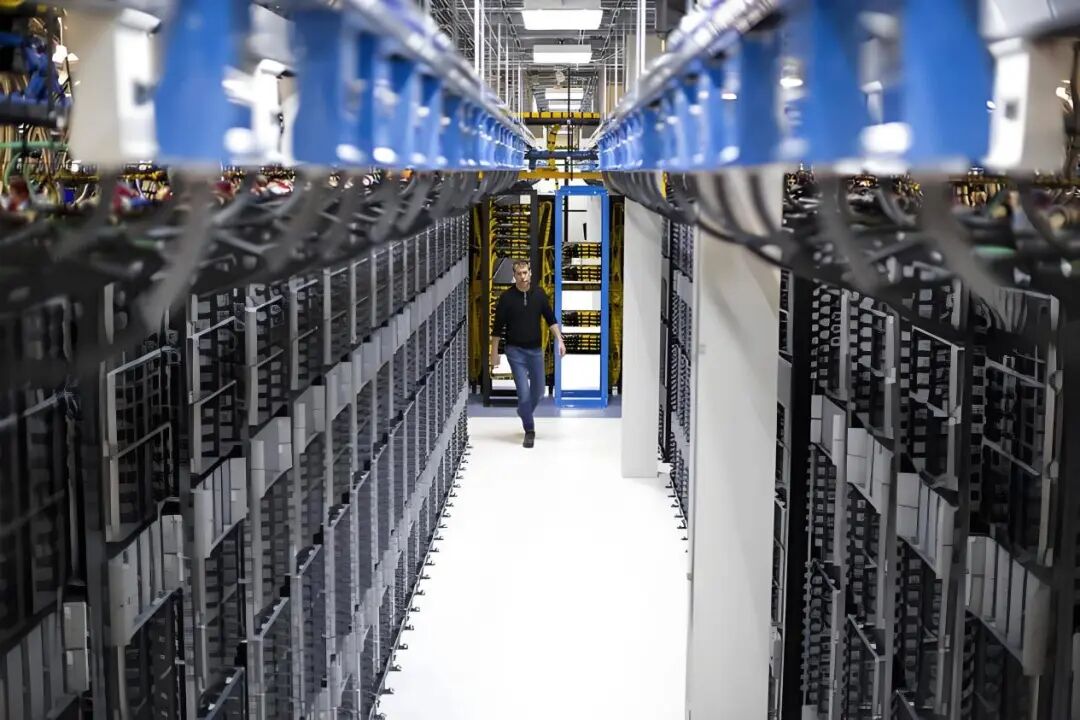
This massive sum was mainly invested in data center construction, GPU procurement sprees, and securing scarce power quotas.
Earlier disclosures from Microsoft revealed that as early as 2022, it had deployed a data center with tens of thousands of A100 GPUs dedicated exclusively to large model training for OpenAI.
Meanwhile, Meta founder Mark Elliot Zuckerberg publicly stated on Instagram in 2024: "By the end of 2024, we will have approximately 350,000 NVIDIA H100s. If we include other GPUs (from AMD and other vendors), our total computing power will be roughly equivalent to 600,000 H100s."
Among these, the procurement cost of 350,000 NVIDIA H100s alone exceeds $100 billion.
What's even more of a "bottleneck" is electricity.
The United States faces not just a shortage of electricity, but also an underpowered power grid.
In Northern Virginia, the world's largest data center cluster, companies that want to build new data centers have to wait 3 to 5 years just to get access to the power grid.
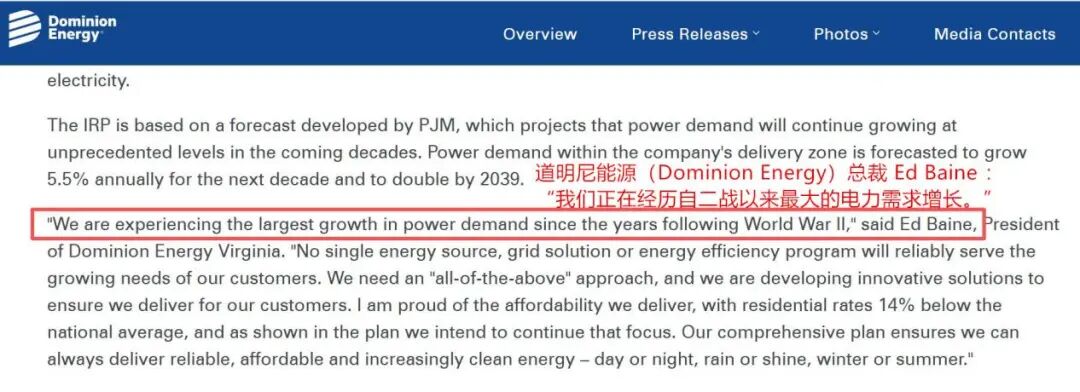
Dominion Energy, the largest local power company, noted in a filing with regulators: "We are experiencing the largest growth in electricity demand since World War II."
Due to power shortages, many companies have decided to find their own solutions.
Meta built a gas-fired power plant for its exclusive use next to its data center campus in New Albany, Ohio.
Sustained spending on capital and energy has enabled real progress in AI technology.
ChatGPT, launched in November 2022, surpassed 1 million registered users within 5 days and hit 100 million monthly active users in 2 months.
By the end of 2023, tech companies worldwide were discussing AI Agents, identifying them as the future of the AI industry.
This seemed to suggest that as long as you can pile up enough computing power, commercial value will naturally emerge.
Unfortunately, despite the huge market demand for large models and the fact that many countries have elevated the AI industry to a "national strategy" priority,
tech giants are still blocked by three major obstacles: the reliability trap, the cost black hole, and ambiguous accountability.
The Technology Roadmap Also Needs a Redirection
The most fascinating part of the tech industry is that its ceiling is so high it's invisible. Once a business model works, it can capture excess returns.
But its cruelty lies here too — when "spend money to buy a future" becomes the only universal business narrative, everyone is forced into a marathon with no visible finish line.
According to public estimates, by 2026, the cumulative AI capital expenditures of Microsoft, Google, Meta, and Amazon will exceed $600 billion.
A report from Industrial Securities shows that by the end of 2025, nearly 80% of enterprises deploying AI worldwide have not yet achieved an increase in net profit.
On one side are the giants waging a no-holds-barred arms race, and on the other is the stark reality that the vast majority of players are "only burning cash with no returns."
Facing such severe risks and challenges in the AI industry, tech giants have shown an almost crazy level of consensus.
Google CEO Sundar Pichai expressed the urgency of AI investment during the Q2 2024 earnings call: "The risk of under-investing is far greater than the risk of over-investing."
Amazon CEO Andy Jassy made similar remarks during the Q3 earnings meeting the same year: "This is an extremely huge opportunity, one that perhaps only comes once in a lifetime. In the long run, customers, our business, and shareholders will all be glad we didn't hold back — that we went all in."
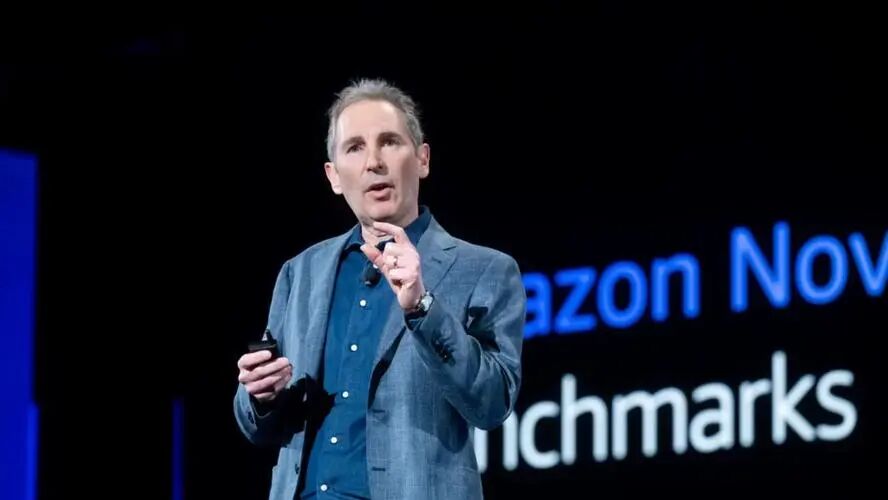
These enterprises have made their stance clear: even if it means burning cash, they are committed to delivering on their mission.
But the public and capital do not want this path dependency of "spending money for technology."
What everyone needs is a tangible, visible "scale" — a clear progress bar for technological development.
A directly usable, tangible scale is the financial statement.
It can clearly show exactly how much money you will need to spend when AI transitions from a "novelty" to an "everyday utility."
This is why current Agent users are keeping a close eye on Token costs.
To cite a nearby example, Yiwu — the world's largest small commodity distribution hub — has tens of thousands of merchants already using AI Agents in their daily operations, automating the entire workflow: copywriting generation, multilingual translation, voiceover, and video production.
In the past, this would have been a classic story of reducing costs and increasing efficiency.
But the situation is far more complex now.
Advanced Agents that can run autonomously in continuous loops have turned into bottomless pits gobbling up Tokens.
At a time when leading vendors are all showcasing their Agent offerings, Token costs are completely transparent.
For example, a flagship-level Agent like Claude Sonnet 4.x developed by Anthropic costs roughly $15 per million output Tokens. As long as the Agent's loop calculations don't go haywire, a small company wouldn't spend much in a month.

Dario Amodei, co-founder and CEO of Anthropic
The trouble is, the computational processes behind Tokens are a "black box": CPUs and GPUs work in tandem, continuously feeding the results of one calculation into the next loop. The more calculations you run, the more errors you are likely to make.
Some merchants who tested tools like OpenClaw found their monthly AI bills skyrocketed from a few hundred yuan to the 5,000-yuan level.
Clearly, they didn't ask the Agent to do that much work, yet their expenses multiplied several times over.
The Agent was "burning Tokens," but users had no idea at which step the consumption started.
Anthropic, the developer behind the Claude large model, released a set of data when analyzing multi-Agent systems: a single Agent completing a typical task consumes 4 times more Tokens than a regular conversation; in a multi-Agent collaborative scenario, this figure can jump to 15 times.

Foreign trade merchants in Yiwu have an extremely high AI adoption rate
The cost-effectiveness of Tokens will, to a certain extent, determine the future of Agents.
Since we can't prevent errors from happening, we have to find ways to help users reduce costs — an industry practice commonly known as "Token compression."
What exactly is "Token compression"?
Simply put, it means streamlining user prompts to reduce the overall computational load.
The goal is that no matter how messy a pile of requirements a merchant throws at the Agent, the Agent can extract the most useful core part and deliver a result that satisfies the user as much as possible.
As long as you implement Token compression properly, even if you can't avoid the cost increases caused by loop errors, you can still help merchants cut their expenses.
An improved user experience directly affects application ratings and rankings, and can even help enterprises build a "worthy of investment" reliable image in front of capital markets.
However, when it comes to technology, the on-stage demo always looks effortless, but every backstage step is enough to make vendors go through blood, sweat, and tears.
If companies iterate their technology solely by chasing the word "certainty," they will likely still feel that something essential is missing — a sense of conviction.
The Core of Technology Lies in Its Commercial Mission
After the macro-to-micro discussion above, you might have started to get the picture.
The AI industry has actually long shouldered too many responsibilities and missions: governments focus on the grand strategy of "building the nation through technology," capital seeks to multiply its money, and users demand products that are easy to use, visually appealing, fun, and affordable.
But these priorities often fall into endless conflicts when resources are limited:
When capital assigns high valuations, enterprises are pressured to set high prices, promote bold concepts, and launch explosive products. The tradeoff is that their offerings fail to deliver real-world value, update slowly, and even compromise the user experience.
By now, tech giants across the globe have deployed massive computing power infrastructures worldwide. It's high time those neglected user experiences were prioritized for upgrades.
What does user experience actually mean?
In today's materialistic world where product ads are more dazzling than real life, many people have forgotten the true meaning of this term.
Veteran industry observers can sum it up in three points: reliable performance, controllable costs, and a promising future.
Just think — whether it's a bicycle, a laptop, a house, or a job, aren't these the exact experiences ordinary people want?
Ironically, current Agents happen to miss all three of these points perfectly.
Not only is their accuracy questionable, but their endless loop calculations also make their costs extremely unpredictable.
This is certainly not an unsolvable problem.
At its core, it's a very time-honored concept: business ethics — to make sure you dare buy my product again tomorrow, I can't cheat you today.
In other words, the explosive experience, the time and effort savings, and the low costs that were promised in press releases must all be