Under the "pincer attack" of battery electric, hybrid, and fuel cell vehicles, is there still any practical value for hydrogen internal combustion engines?
According to China Energy Net & China Hydrogen Energy, the WP15 in-cylinder direct injection heavy-duty hydrogen internal combustion engine and the CA6HV3 heavy-duty hydrogen internal combustion engine independently developed by Weichai Power (SH: 000338) and FAW Jiefang (SZ: 000800) have recently passed the environmental emission certification tests respectively.
Weichai Power stated that this is the first hydrogen internal combustion engine product at home and abroad to meet the China VI regulations. FAW Jiefang claimed that this is the industry's first "double-zero emission" hydrogen internal combustion engine product.
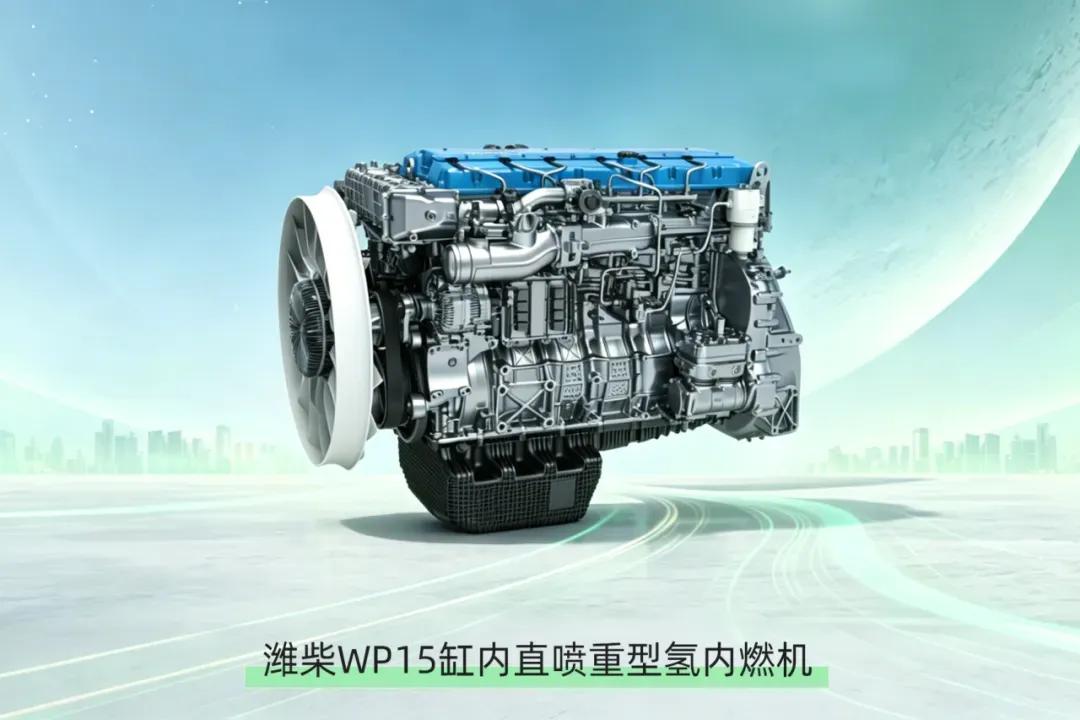
A hydrogen internal combustion engine is an internal combustion engine that uses hydrogen as fuel. Its working principle is similar to that of a traditional gasoline engine, generating power by burning hydrogen. Along with hydrogen fuel cells, it is one of the important technologies for hydrogen energy utilization.
Although research on hydrogen internal combustion engines began about 30 years earlier than research on hydrogen fuel cells, due to its shortcomings in combustion speed, thermal efficiency and storage, it has been unable to move out of the laboratory for a long time, lagging behind the development of hydrogen fuel cell technology, let alone compared with technologies such as pure electric and hybrid in the field of new energy vehicles.
In recent years, with the acceleration of the global energy transition, hydrogen energy has attracted much attention. Well-known industry enterprises such as Kawasaki, Toyota, Weichai, and Guangxi Yuchai have all increased their research on hydrogen internal combustion engines. The passing of the environmental certification of the hydrogen internal combustion engine products of Weichai Power and FAW Jiefang is an important phased achievement in the development of hydrogen internal combustion engines.
Hydrogen internal combustion engines have obvious advantages
The renewed emphasis on hydrogen internal combustion engines in recent years is mainly due to their clean and environmentally friendly characteristics.
First of all, hydrogen internal combustion engines burn hydrogen, and the product of the chemical reaction is water. It does not produce carbon dioxide when fossil fuels are burned, which directly helps to mitigate global warming.
Secondly, in addition to not emitting carbon, hydrogen internal combustion engines have also achieved "near-zero pollutant emissions". Through core technologies such as "lean combustion", hydrogen internal combustion engines can currently reduce nitrogen oxide emissions to extremely low levels. Taking FAW Jiefang's CA6HV3 as an example, its nitrogen oxide emission is only 5% of the China VI standard limit.
Another important point is that hydrogen internal combustion engines can reuse more than 80% of the components and production chains of existing traditional internal combustion engines. This not only significantly reduces carbon emissions caused by the construction of new production lines, but also greatly reduces the cost of production line transformation as well as subsequent maintenance and servicing costs.
In addition, from the perspective of the entire industrial chain, hydrogen internal combustion engines can also use industrial by-product hydrogen, because their purity requirements for hydrogen are not high. They can "turn waste into treasure" by using the otherwise wasted hydrogen for power generation, achieving the dual benefits of emission reduction and energy utilization.
In addition, the further increase in policy support has also provided impetus for the development of hydrogen internal combustion engines.
At the beginning of March this year, the "Funding Support Standards for Comprehensive Hydrogen Energy Application Pilots" was released. The document mentioned that for the promotion and application of hydrogen-powered rail locomotives, ships, mining trucks, forklifts, two-wheeled vehicles, aircraft, backup power supplies, combined heat and power, hydrogen energy storage power generation, etc. that meet technical requirements during the pilot period, reward points will be calculated based on the rated power of the fuel cell system (or power systems such as hydrogen internal combustion engines and hydrogen turbines).
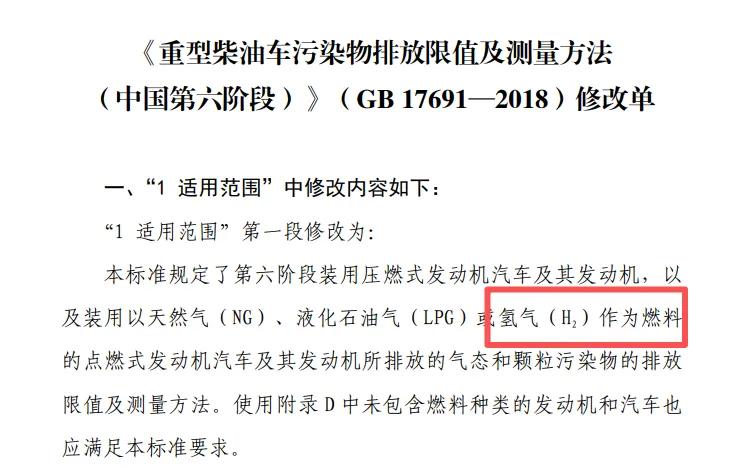
In April, the Ministry of Ecology and Environment and the State Administration for Market Regulation jointly issued the amendment to the "Limits and Measurement Methods of Pollutant Emissions from Heavy-Duty Diesel Vehicles (China Phase VI)", which formally incorporated hydrogen internal combustion engines into the standard system. This means that hydrogen internal combustion engines have obtained a "birth certificate".
Wide application scenarios but still in technical verification
Although hydrogen internal combustion engines have shown strong development potential, there is still a long way to go before practical application. From the perspective of application scenarios, there are mainly three categories, but most of them are still in the technical verification stage.
The first is the field of medium and heavy commercial vehicles. As early as 2024, Weichai Power joined hands with Sinotruk to release the Yellow River X7, the country's first commercial hydrogen internal combustion engine heavy truck. Qingling Group globally launched a hydrogen internal combustion engine range-extended heavy truck in May 2026. Recently, the Jiefang "Xingyi" J6V 49-ton tractor completed more than 100,000 kilometers of vehicle reliability verification, covering real operating conditions such as trunk logistics, heavy-load climbing, high temperature and extreme cold, and frequent start-stop.
The second major scenario is the power generation field. Weichai Power's hydrogen internal combustion engine generator set has achieved the country's first stable grid-connected operation of pure hydrogen power generation, which is implemented in the Wuxi Huaguang Environment Energy Microgrid Demonstration Project. The supporting WP13 hydrogen internal combustion engine precisely controls the speed fluctuation within ±3r/min; Hubei has put into operation the country's first self-owned brand hydrogen internal combustion engine generator set for commercial demonstration operation, with a power of 350 kW and a power generation efficiency of 44%; the world's first mass hydrogen internal combustion engine power generation project located in Yizhuang, Beijing - the Zhongguancun Deutz Hydrogen Internal Combustion Engine Power Generation Demonstration Project was officially ignited on September 11, 2024.
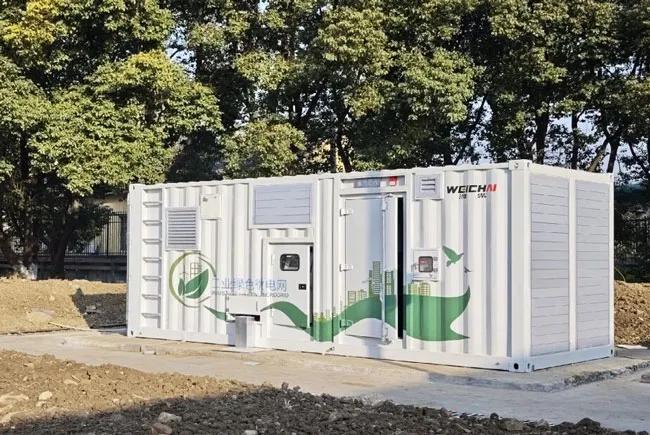
Weichai Power Wuxi Huaguang Environment Energy Microgrid Demonstration Project
The third is the ship and construction machinery scenario. The world's first demonstration ship "Hongqi Hydrogen Energy 1" with a power system of "hydrogen internal combustion engine + organic liquid hydrogen storage", developed under the lead of Huacanke Marine Technology (Shanghai) Co., Ltd., started construction in 2026 and is expected to be launched for trial navigation at the end of 2026. Guangxi Yuchai's hydrogen internal combustion engines have been put into demonstration applications in fields such as long-distance tractors and port dump trucks; in terms of special vehicles, sprinklers equipped with Guangxi Yuchai hydrogen internal combustion engines have been officially put into operation in Cangzhou, Hebei.
China Energy Net notes that the technical verification of these major scenarios has been basically completed, but commercial orders have not yet been released in large volumes. This is in sharp contrast to the current state of hydrogen fuel cells, which have "orders, deliveries, and operations".
Large-scale application faces three major challenges
Up to now, there have been no large-scale commercial delivery orders for hydrogen internal combustion engine products, which has also affected industry confidence.
Taking the hydrogen energy heavy truck for commercial vehicles with the fastest commercialization progress as an example, Weichai Power has not disclosed the specific order quantity and amount so far; on July 1 this year, FAW Jiefang signed a strategic cooperation agreement with Guangdong Yunt Hydrogen Energy Technology Co., Ltd. The two parties agreed to promote the mass sales and implementation of 3,000 hydrogen energy heavy trucks, but when it will be implemented remains uncertain.
China Energy Net notes that behind the slow large-scale application are three major constraints faced by the commercial application of hydrogen internal combustion engines.
First of all, to truly achieve "net zero emissions" at the source, green hydrogen needs to be used. However, the cost of green hydrogen production, storage and transportation remains high. Even though hydrogen internal combustion engines have lower hydrogen purity requirements than fuel cells, fuel cost is still the biggest obstacle to large-scale applications.
Second, hydrogen refueling infrastructure is severely insufficient. Heavy trucks running on trunk lines and ships sailing on waterways both require sufficient hydrogen refueling networks along the routes. At present, there are only hundreds of hydrogen refueling stations across the country, and they are highly concentrated in a few demonstration city clusters.
Third, the technical shortcomings of hydrogen internal combustion engines themselves have not been fully overcome. Problems such as backfire, knocking, and pre-ignition are still persistent problems in the industry, and there is a certain gap in thermal efficiency compared with fuel cells. It is understood that the maximum thermal efficiency of hydrogen internal combustion engines can currently reach 46.8%, while that of hydrogen fuel cells can reach 60%.
The three constraints of cost, infrastructure and technology restrict each other. If any link gets stuck, the commercialization of hydrogen internal combustion engines cannot be scaled up.