APEC enters the "Chengdu Moment": Unlocking the industrial leap behind the "market capitalization code"
One in the west and one in the east, two Chinese cities have jointly stepped onto the forefront of the global AI wave.
On July 16, the APEC Ministerial Meeting on Digital and Artificial Intelligence and related Digital Week events kicked off in Chengdu; on July 17, the 2026 World Artificial Intelligence Conference and the High-Level Meeting on Global AI Governance opened in Shanghai. The two major homegrown events held simultaneously have become an exceptional window for China to share its digital experiences and innovative solutions with the world.
Looking back over a longer timeline, this marks the third time China has hosted APEC in 12 years, following previous hosting stints in 2001 and 2014. This year will see 11 ministerial-level meetings in specialized fields alongside supporting activities, among which the APEC Ministerial Meeting on Digital and Artificial Intelligence and its associated Digital Week programs rank as one of the most significant and content-rich events in the series of APEC specialized ministerial gatherings.
The landing of this landmark event in Chengdu not only recognizes the digital infrastructure and industrial strength of western China, but also provides the city with a platform to showcase China's AI governance wisdom and industrial upgrading pathways to the international community. Taking listed companies as an observation point, the fluctuations in their market capitalization reflect far more than capital flows—they chronicle a city's transformation from "Made in" to "Smartly Made in".
Over the past decade, Chengdu's "Market Capitalization Champion" title has changed hands several times, with leading enterprises including Guojin Securities, Tongwei Co., Ltd., Sichuan Investment Energy, and Eoptolink Technology ascending to the top in succession. Each shift in the "throne" corresponds to a transformation in the industrial structure: from finance to photovoltaics, from energy to optical modules, Chengdu's industrial coordinate system has been continuously evolving.
As AI becomes the new defining benchmark, Chengdu is presenting its new answer.
Evolving Structure for New Growth
On July 15, the National Bureau of Statistics released data showing that China's GDP reached 69.5704 trillion yuan in the first half of the year, marking a 4.7% year-on-year increase. Behind this figure, new growth drivers represented by high-end manufacturing, the digital economy, and modern services have contributed over 40% to economic expansion, increasingly becoming the mainstay powering China's economy.
This structural shift is a strategic imperative as well as a demonstration of development vitality, with its most tangible manifestation seen in enterprises. When viewed over an extended timeline, the rise and fall of market capitalization among listed companies—especially leading ones—often correspond to industry cycles and the precise strategic layout of a city's industries.
According to Wind data, the STAR 50 Index posted a cumulative increase of 64.25% in the first half of the year, while the ChiNext Index rose by 35.58%. By industry, the electronics and communications sectors led the entire market with gains of 86.29% and 73.59% respectively. This transition in growth momentum paints a far clearer trajectory when examined through the lens of a specific city.
Located in western China, Chengdu has witnessed four transitions in its "Market Capitalization Champion" over the past 12 years. (All total market capitalization data cited in the article is sourced from Wind, calculated based on the closing price on the last trading day of each year from 2014 to 2025, and using the June 30 closing price for the first half of 2026.)
From 2014 to 2016, Guojin Securities represented Chengdu's financial sector to claim the top spot; from 2017 to 2024 (overtaken by Sichuan Investment Energy in 2018), Tongwei Co., Ltd. representing the electrical equipment sector took over the lead, embarking on a seven-year reign. Since 2025, Eoptolink Technology has staged a comeback representing the communications sector, underpinning Chengdu's goal of building a "Light Speed City" for data transmission.
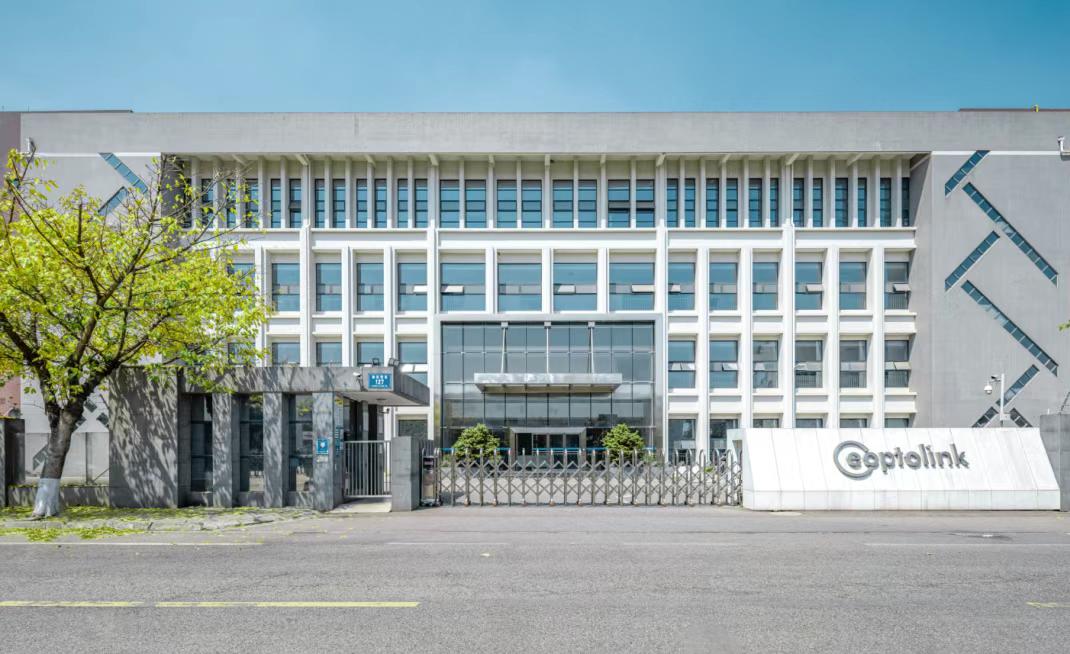
Chengdu Eoptolink Technology Co., Ltd. Image source: Chengdu Release
On the surface, this appears to be just fluctuations in market capitalization and industry transitions, but at a deeper level it represents a shift in the city's priority industrial layout. Last September, the "Chengdu Action Plan for the Innovative Development of Embodied Intelligence Industry (2025-2027)" was officially released, proposing that the embodied intelligence industry scale exceed 500 billion yuan by 2027, with targeted deployment across four domains: intelligent chips, optical communications, intelligent manufacturing, and intelligent security, including the initiative to build the "Light Speed City" for data transmission.
At that time, Chengdu had already attracted three of the world's top 10 optical module manufacturers: Chengdu Zhihe Optical Communication Technology Co., Ltd. (a subsidiary of Zhongji XuChuang Co., Ltd.), Chengdu Eoptolink Technology Co., Ltd., and Chengdu Source Photonics Co., Ltd.
In 2025, Chengdu's industrial added value of enterprises above designated size surpassed 500 billion yuan, with total operating revenue hitting 1.79 trillion yuan. The city has cultivated two trillion-yuan level industrial clusters in electronic information and equipment manufacturing, alongside 11 key 100-billion-yuan level industrial chains spanning artificial intelligence, aerospace, software and information services, among others.
These fertile manufacturing grounds have nurtured a distinctive cohort of Chengdu-listed enterprises.
Wind data shows that Chengdu's 123 listed companies are primarily distributed across sectors including defense and military, pharmaceuticals and biology, computer, machinery and equipment, basic chemicals, public utilities, communications, and automobiles. Among these, the proportions of listed companies in defense and military, pharmaceuticals and biology, computer, and machinery and equipment stand at 16.26%, 13.82%, 8.94%, and 8.94% respectively.
The vast majority of these sectors are emerging tracks prioritized in Chengdu's industrial layout, representing the segments with the greatest growth potential. Leveraging their sharp market acumen, Chengdu's listed companies have progressively secured early positions in tracks like artificial intelligence, pharmaceuticals and biology, and commercial aerospace, leading the city's momentum transformation.
Main Trajectory of Ascension
From a national perspective, cities that recorded rapid total market capitalization growth in the first half of the year, such as Suzhou, Chengdu, and Wuhan, are all led by optical industry champions—Eoptolink Technology in Chengdu, Dongshan Precision in Suzhou, and Yangtze Optical Fibre and Cable in Wuhan. The rising market capitalization of these leaders intuitively reflects the booming momentum of their optoelectronic industries.
While external observers witness the explosive growth of optical module leaders, the underlying reality is a competition among cities for industrial ecosystem strength. Since 1988, when the Institute of Optics and Electronics, Chinese Academy of Sciences (hereafter referred to as "IOE") relocated entirely to Shuangliu, Chengdu, the city has spent over 30 years gathering hundreds of upstream and downstream enterprises including Eoptolink Technology, forming a full-chain development ecosystem spanning optical chips, optical devices, and optical modules.
This has also laid a solid anchor for Chengdu in the era of artificial intelligence. On China's national AI map, cities like Beijing and Shanghai lead with systematic advantages, establishing leadership in domains such as AI chips, data centers, and large models. As a city renowned for innovation and creativity, Chengdu has carved out its unique influence through a strategy of "optical communications + application layer breakthroughs".
In Chengdu, optical modules serve as the "heart" connecting data centers and AI clusters, functioning as a pivotal hub bridging upstream and downstream segments of the AI industry. The "Chengdu 15th Five-Year Plan for National Advanced Manufacturing Base Development (Draft for Comments)" proposes that by 2030, Chengdu will build a nationally leading artificial intelligence industrial cluster with global influence, becoming the core AI engine in western China, a national smart computing and network hub, and a leading city across the full "Chip-Optical-Terminal-Cluster" industrial chain.
Statistics show that Chengdu has completed construction of over 80,000 5G base stations, ranking among the top in China in terms of base station scale, and has established a multi-tiered computing power system integrating supercomputing, intelligent computing, general computing, and edge computing, with a total computing capacity exceeding 20,000 P.

Image source: Chengdu Release
All these elements form the solid foundation for the artificial intelligence industry's advancement. According to the plan, by 2030, Chengdu's AI industry scale will exceed 400 billion yuan, driving 2 trillion yuan in related industrial output.
From this perspective, Eoptolink Technology becoming the new "Market Capitalization Champion" this round signals the explosive growth of Chengdu's optical communications industry, and even the broader artificial intelligence sector. Wind data indicates that Chengdu is home to 5 listed companies in the communications field—Eoptolink Technology, Huiyuan Communications, Zhongguang Lightning Protection, Kunheng Shunwei, and Tianyi Co., Ltd.—alongside 4 listed companies in the electronics sector led by Chengdu Hua Microelectronics.
Academician Luo Yi of the Chinese Academy of Engineering and Professor in the Department of Electronic Engineering at Tsinghua University believes that Chengdu possesses inherent foundational advantages in both optoelectronic conversion chips and integrated circuit chips. Its strengths in optoelectronic conversion chips are primarily concentrated in market-facing segments such as packaging and modules, while its advantages in integrated circuit chips lie in the design domain, supported by a relatively complete industrial chain. Additionally, Chengdu excels in FPGA and analog-to-digital conversion technologies.
In his view, these two types of chips and the development of the artificial intelligence industry are mutually reinforcing. Chengdu can leverage the opportunities presented by AI advancement to further drive the growth of the integrated circuit chip and optoelectronic conversion chip industries.
This also represents a critical breakthrough point for the advancement of Chengdu's artificial intelligence industry.
Currently, driven by industries including electronic information, artificial intelligence, and digital cultural creativity, the added value of Chengdu's core digital economy industries accounts for over 15% of its GDP, with the city progressing toward the target of reaching a 16.5% share during the 15th Five-Year Plan period. The competitiveness of digital industries such as artificial intelligence and data has achieved a leading position nationwide.
Behind this progress lies not the explosive growth of a single enterprise, but a systematic elevation of the city's core industrial trajectory.
Greater Aspirations
Global industrial competition has entered an era of "scenario-driven" development. Cities spanning New York, London, Beijing, Shanghai, Guangzhou, Chengdu, and Hefei are all leveraging scenario innovation to drive future industrial layout, reflecting that the underlying logic of urban development is undergoing transformative changes.
Not long ago, Chengdu hosted a promotional event for scenario innovation policies, during which Chengdu Scenario Innovation Technology Co., Ltd. (hereafter referred to as "Chengdu Scenario Company") was officially inaugurated. Positioned as the "unified platform for coordinating and serving all scenario resources across the city", Chengdu Scenario Company has moved to center stage, signifying a comprehensive upgrade in Chengdu's industrial development strategy.
In the past, enterprises and research institutions faced the challenge of "where to validate and apply" their new technologies and products. Today, Chengdu has proactively opened up its scenario resources, empowering industries through real-world and high-value scenarios, and emerging as a central hub driving the large-scale development of emerging industries such as artificial intelligence and the low-altitude economy.
Statistics show that Chengdu boasts over 2,200 state-owned business entities, more than 5.5 million square meters of industrial facilities across 31 parks, an urban rail transit network exceeding 750 kilometers, and 20,000 kilometers of urban greenways and underground utility pipelines. In 2025, 79 scenarios have already been released, and for 2026 the city plans to continuously identify over 100 new scenario requirements across domains including embodied intelligence, the low-altitude economy, and digital cultural creativity.
Since last June, Chengdu has been regularly conducting real-world validation activities for robots and artificial intelligence. According to Li Junjie, Secretary-General of the Chengdu Robot Industry Association, real-world validation can be interpreted as "starting from the end point", meaning to use applications as the driving force to facilitate targeted technical matching, and leverage practical applications to feed back into technological iterations, ultimately promoting the successful implementation of products.
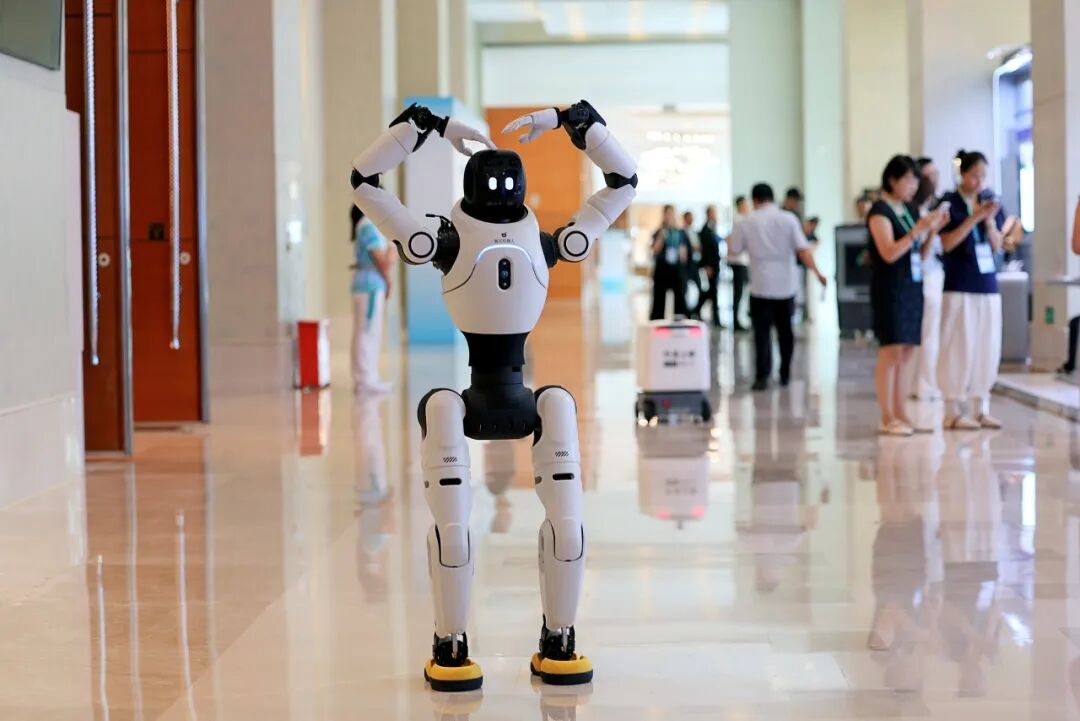
The Unitree Robotics showcased at APEC Digital Week Image source: Photographed by Zhang Jian
This is precisely the leveraging power of scenarios for integrating scientific research and industry. Real-world scenarios not only effectively bridge the gap between technological and industrial innovation, but also determine the market competitiveness of new products. This principle applies to embodied intelligence, and even more so to the low-altitude economy and intelligent connected vehicles.
According to the plan, Chengdu will promote the growth and strengthening of nine strategic emerging industries: integrated circuits, artificial intelligence, intelligent connected vehicles, aerospace, rail transit, low-altitude economy, biomedicine, and green hydrogen energy, aiming to establish a leading development edge nationwide.
A clearly defined target is to ensure that emerging industries account for over 40% of the economy by 2030, becoming the new pillar of Chengdu's industrial system.
This represents a systematic elevation of the city's industrial foundation, which requires not only more "killer application" enterprises along industrial chains like Eoptolink Technology, but also the support of additional 100-billion-yuan level industries such as optoelectronic displays and advanced energy. Listed companies will continue to assume the critical role of "pioneers".
In fact, Chengdu is leveraging its capital market hub advantage to foster a virtuous cycle connecting technology, industry, and finance. This year's Chengdu municipal government work report outlines plans to optimize financial services, refine fiscal-financial interaction policies, promote "park loans", organize over 200 industry-financing matchmaking events, and add more than 5 new listed companies. Multiple measures will be implemented to ensure stable growth and structural adaptability in the total volume of social financing.
From this perspective, as Chengdu elevates its position on the national industrial coordinate system, its listed company sector is poised for new advancement. During this process, Chengdu can reasonably expect to achieve even greater breakthroughs in nurturing companies with market capitalizations reaching hundreds of billions, and even trillions of yuan.
This article originates from the WeChat Official Account "Urban Evolution Theory", authored by Dan Zhongkui, and published by 36Kr with authorized permission.