The meeting between Messi and Yamal on the field of the World Cup final is also a grand stage for brands to showcase themselves.
On July 19, 2026, at MetLife Stadium in New York-New Jersey, the World Cup final between Argentina and Spain is about to kick off. These few hours, which draw the attention of billions of viewers worldwide, have never been just a football match. They represent the highest-level commercial showcase for top-tier brands that takes place once every four years.
As the two final teams walk out of the locker room tunnel, the world will see and think of not only Messi's final dance and Yamal's arrival as the future of football, but also Adidas' jerseys, boots and match balls, Google Gemini's AI technology, Louis Vuitton's trophy case, the viral LEGO building-block advertisement that dominated social media before the match, and the presence of numerous Chinese brands.
These global top brands collectively deliver their most significant annual brand exposure during the World Cup final, yet their exposure logic varies: Adidas targets the "physical space", Google Gemini locks onto the "digital space", Louis Vuitton focuses on "emotional value", while LEGO centers on "memory value". Meanwhile, numerous Chinese brands appear at the infrastructure level — these five dimensions together form a complete commercial landscape of the World Cup.
Adidas: The "Full-Gear Monopolist" of the Final Pitch
Adidas' presence in the 2026 World Cup final is an almost suffocating example of "full-gear monopoly".
In terms of jerseys, Adidas supplies the official kits for both final teams simultaneously — Argentina wears the blue-and-white striped defending champion jersey, while Spain sports a revolutionary new design dominated by red with yellow gradient three stripes. This rare scenario where "both final teams are our clients" is not the first time in Adidas' 70-year history of sponsoring national teams — Adidas provided jerseys for both sides in the 2014 Germany vs Argentina match, the 2018 France vs Croatia game, and the 2022 Argentina vs France final. However, the 2026 iteration is far more thorough, as even the official match ball comes from Adidas.
For match balls, Adidas has launched the first "AI-connected football" in World Cup history — embedded with a 500Hz IMU (Inertial Measurement Unit) sensor that collects motion data 500 times per second, enabling real-time monitoring of the ball's rotation, speed and trajectory, and working in synergy with the Semi-Automated Offside Technology (SAOT) and VAR system. The core customers for this ball are not ordinary fans, but FIFA, the refereeing team and broadcasters — through this ball, Adidas has upgraded itself from a "jersey supplier" to a "football infrastructure provider in the AI era".
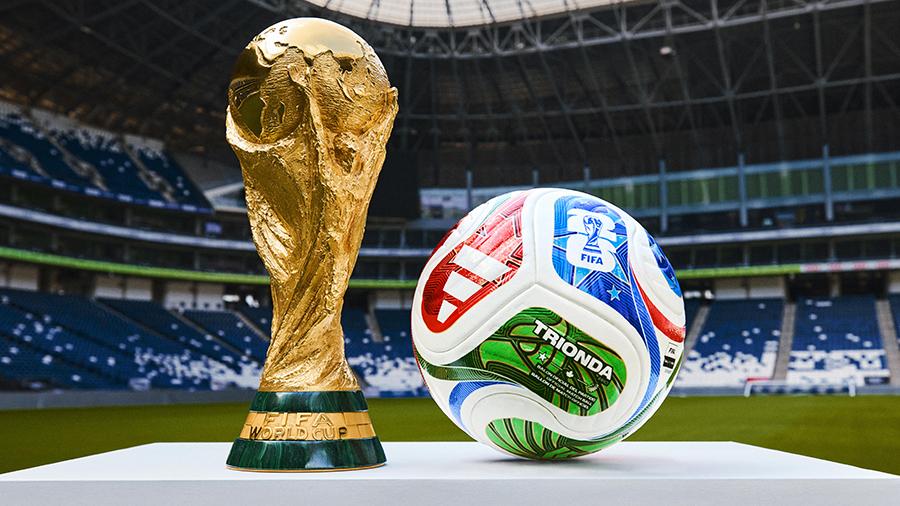
Image source: Internet
On the footwear front, almost all key players from both final teams are wearing the Adidas X series — Messi, Álvarez, Yamal, Pedri, Rodri and Olmo are all equipped with the X Crazyfast boot line. Global search volume for the X series boots on final night is expected to surge by 800%-1200% within 90 minutes — this is the direct boost that the "final big-screen effect" brings to core products.
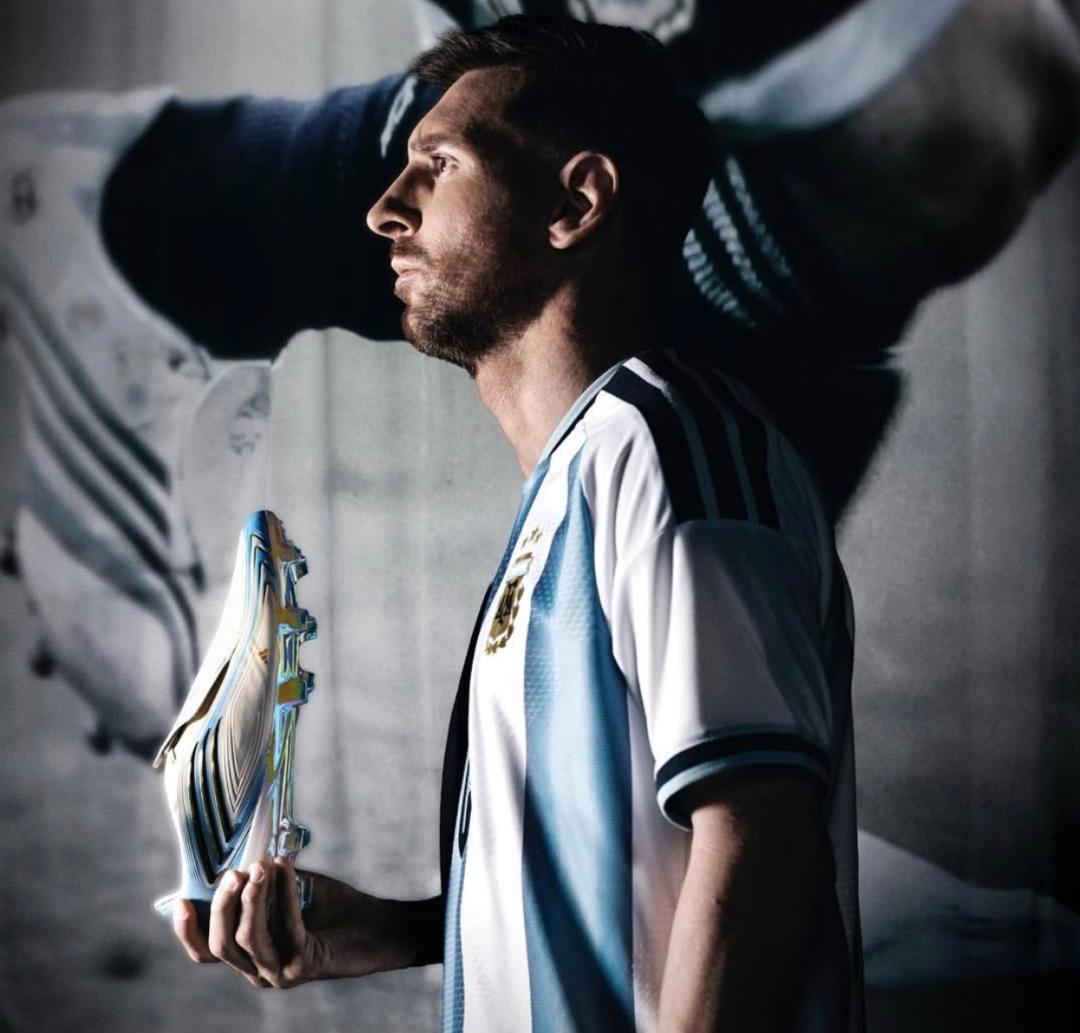
Image source: Internet
The commercial returns are immediately tangible. Adidas' parent company stock price once rose 3% on July 14 after Spain eliminated France 2-0 — the market already views "Spain advancing to the final" as a victory for Adidas. Adidas' Q2 2026 financial report shows that football category revenue increased by 18% year-on-year, with World Cup-related products (jerseys, boots, match balls) contributing about 40% of the growth. For Adidas, the 90-minute final is not just a football match, but an annual "brand settlement moment" — it can realize the accumulated 4-year marketing investment all at once overnight.
Google Gemini: The "Dual-Penetration Player" in the AI Era
If Adidas occupies the physical space of "traditional jerseys + match balls", then Google Gemini occupies the new-generation digital space of "AI collaboration + content generation" — this represents a new paradigm of brand sponsorship in the AI era.
On Argentina's side: In March 2026, the Argentine Football Association (AFA) officially announced a "strategic alliance" with Google, making Google the "Main Sponsor Global" of the Argentina national team. The Gemini AI logo will appear exclusively on Argentina's training gear — meaning Gemini will be by Messi's side during every training session, every press conference and every official photo. Compared with the traditional jersey advertisement that "only prints a logo on the chest", Google's penetration is much deeper — it embeds "AI tools" into the team's daily workflow.
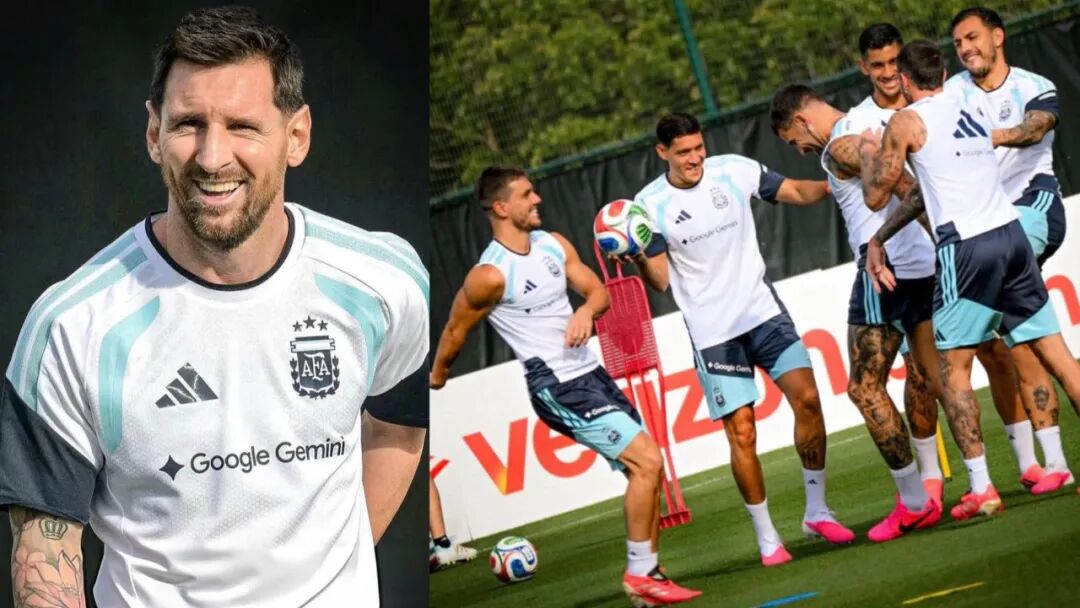
Image source: Internet
For Spain: In early 2026, the official RFEF podcast "Estrellas Unidas" (United Stars) was sponsored by Google Gemini, featuring player podcast interviews + AI-generated tactical content — a joint collaboration between Spain's men's and women's national football teams. In contrast to Argentina's "exclusive training gear" approach, Spain takes the "content + AI collaboration" route.
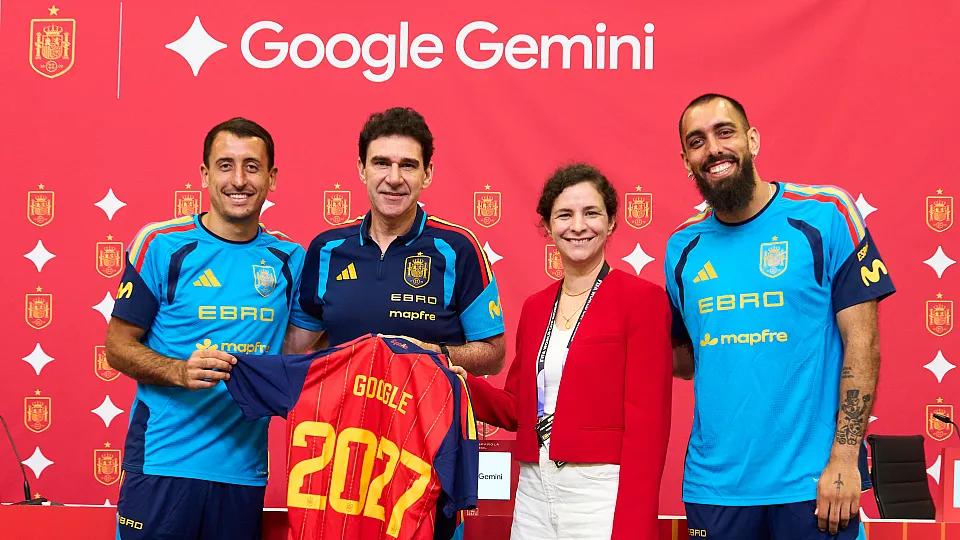
Image source: Internet
The brilliance of this "dual penetration" strategy lies in the fact that it does not compete with Adidas for the chest of jerseys, nor with Coca-Cola for event sponsorship slots — instead, it opens up a brand new "AI collaboration" position. Google does not buy ad placements, but offers "live demonstrations of AI tools". When an AI company positions itself as a "team AI advisor" rather than an "event sponsor", the brand association it gains is completely different — the former is a "tool partner", while the latter is just an "advertiser".
Strategically, Google's core mission in 2026 is to upgrade Gemini from a "general chat tool" to a "professional domain AI assistant" — and the World Cup serves as the best "professional domain showcase window". Through Argentina's "AI-enabled training" and Spain's "AI-powered content", Google has simultaneously verified two application scenarios of Gemini in the sports field — B2B (intra-team collaboration) and B2C (fan content consumption).
On final night, Google plans to launch an "AI-enhanced" final live stream on YouTube — real-time tactical analysis, player movement heatmaps, and 3D reviews of key actions, all powered by Gemini. Google is turning the World Cup final into a "large-scale demo ground for Gemini Pro" — which is far more persuasive than any ad placement.
Image source: Internet
Louis Vuitton: The Luxury Narrative from "Luggage" to "Champion Trophy Case"
If Adidas occupies the physical space and Google occupies the digital space, then Louis Vuitton occupies the "ritual space" — embedding itself into the most climactic 90 seconds of the World Cup.
In July 2026, FIFA officially announced a partnership with Louis Vuitton to launch an exclusive custom hard case for the final champion trophy — the iconic LV hard case will carry the FIFA World Cup Trophy onto the pitch on final day. This is not LV's first involvement with the World Cup: LV customized a Trophy Trunk for the World Cup Trophy at the 2010 South Africa World Cup, and I recall it did the same in 2022. However, the 2026 version is more systematic — LV not only provides the trophy case, but also becomes an official FIFA supplier and brand licensor, launching World Cup-themed window displays and limited-edition products.
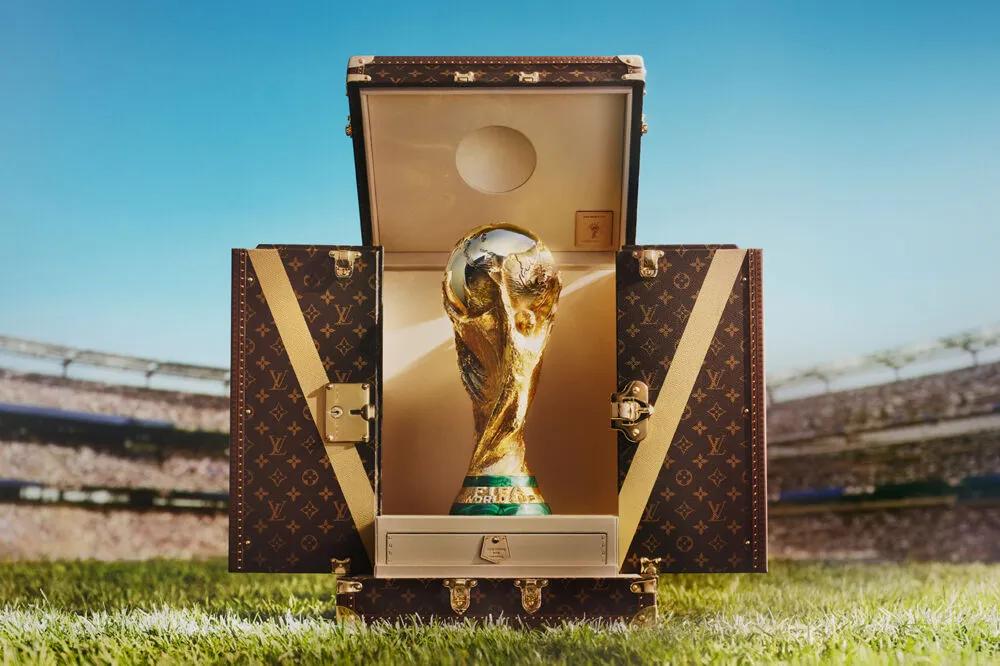
Image source: Internet
The commercial logic behind this "trophy case sponsorship" is extremely sophisticated — LV does not buy 90 minutes of in-match advertising time, but invests in the "90 seconds of the champion lifting the trophy" — the moment that draws the most concentrated attention from 6 billion global viewers, with its equivalent advertising value (CPM) far exceeding that of ordinary ad placements. The global exposure LV gains from a single "hard case" is equivalent to a top-tier ad placement worth hundreds of millions of dollars.
The deeper strategic significance lies in the fact that LV is deeply integrating "luxury consumption scenarios" with "top-level sports events". When an LV Trunk appears on the podium of the World Cup final, it sends a message that "LV is not just a luxury brand, but also a witness to the world's highest-level ceremonies and honors" — this kind of brand association enhancement is impossible to achieve through any traditional advertisement.
LVMH Group, the parent company of LV, released its Q2 2026 financial report showing that the LV brand (leather goods + ready-to-wear) grew by 9% year-on-year, with "sports event co-branded products" contributing about 15% of the growth — the World Cup is just one part of it, but it is the part that "best represents the highest global standard".
Of course, LV's recent lawsuit against the domestic Chinese tea brand Jasmine White in China has sparked controversy, which may affect its business in the Chinese market.
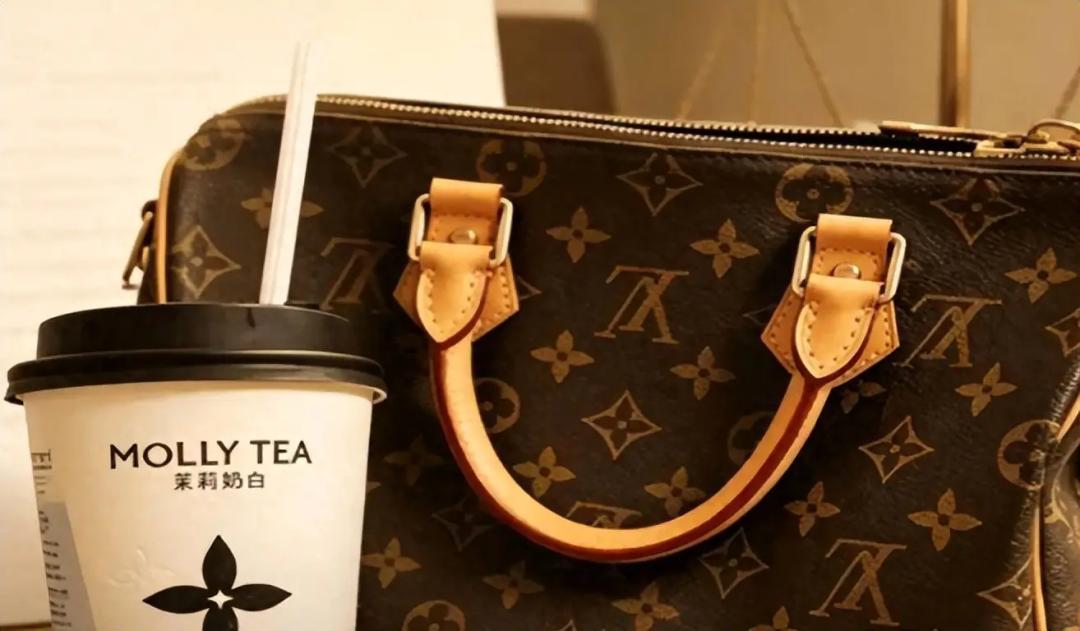
Image source: Internet
LEGO: The "Exclusive Toy Category Player" in the Consumer Goods Track
Through "LEGO Editions" (Icons series), LEGO has become the first "exclusive toy category partner" in FIFA history — marking the first time in the LEGO Group's 93-year history that it has partnered with FIFA. This year's product portfolio includes a 1:1 replica of the FIFA World Cup Trophy made of 2,842 building blocks (retail price approximately $169), an official emblem set, and Football Highlights and Football Legend building block figures of 4 star players (Messi/Ronaldo/Mbappé/Vini Jr.). The accompanying advertisement "Everyone Wants a Piece" features the four players playfully "assembling" the World Cup Trophy in a sunroom, with pre-orders exceeding 80,000 units on the first day of release.
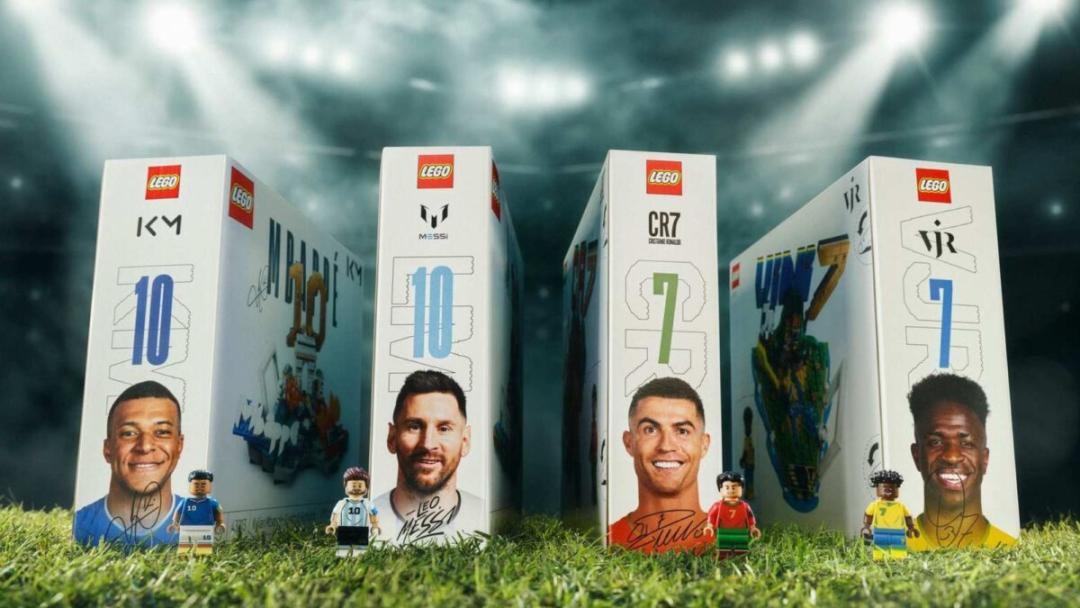
Image source: Internet
LEGO positions itself not as an "event sponsor", but as a "consumer goods operator of World Cup themes" — complementing the three brands on the final pitch: Adidas locks in "gear", Google secures "digital space", LV targets "emotion", and LEGO focuses on "memory". The official FIFA system delivers strong 90-minute exposure, while LEGO taps into the post-match family emotional consumption cycle that lasts for 5 or even 10 years — the two tracks do not replace each other.
What Are the Ways Chinese Brands Participate in the Final and the World Cup?
It is worth noting that some Chinese brands have appeared in the final through the official sponsorship matrix of this World Cup, while others have deeply participated in the global narrative through "curve engagement".
The most direct approach is the "FIFA official system" — Lenovo (the first Chinese top-tier official technology partner in FIFA history), Hisense (exclusive partner for VAR video assistant referee display technology), Mengniu (official dairy sponsor for three consecutive World Cups, with endorsements from Messi, Mbappé and Yamal), Milkland (official cheese brand), Wuliangye (Chinese mainland Baijiu co-branding), and Geely Galaxy (title sponsor of CCTV's "Football Gala") — they have deeply embedded Chinese brands into the "infrastructure layer" of the World Cup through conventional endorsements, technology integration, category exclusivity and platform cooperation.
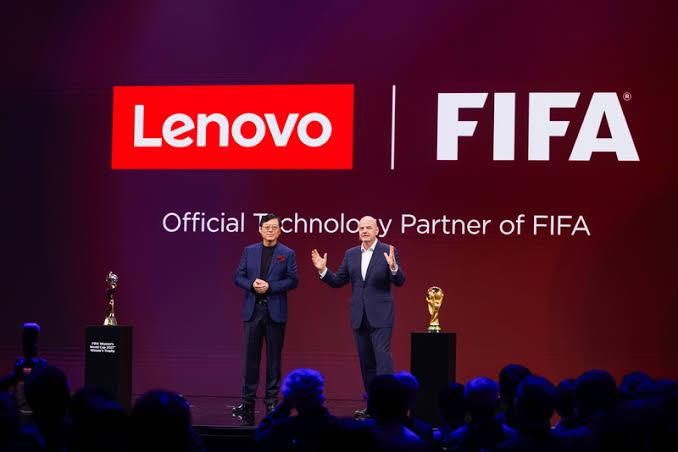
Image source: Internet
Other approaches fall under the category of "curve participation".
The first curve is the "national team curve" — Cotti Coffee signed a partnership with the Argentina national team, TCL signed with three national teams (Spain/Germany/Argentina), and Changan Qiyuan signed with the Portugal national team — they bypass the official FIFA system, cooperate directly with participating teams, and leverage the "traffic high ground" of the two final teams to build brand momentum.
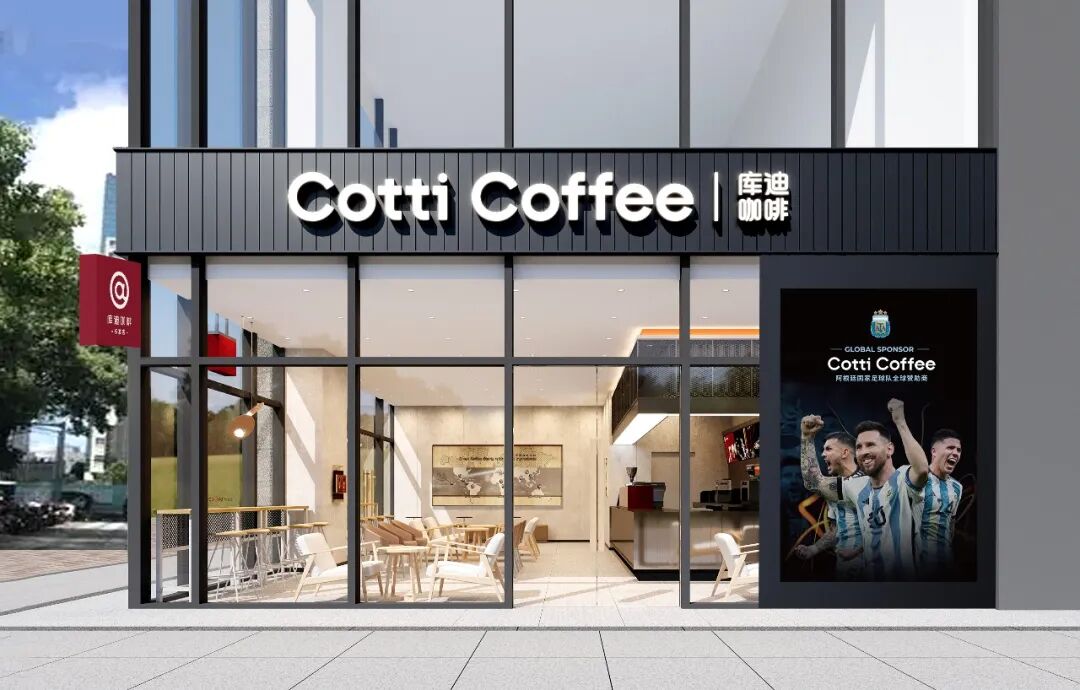
Image source: Internet
The second curve is the "player endorsement curve" — Wanglaoji (Haaland), Dongpeng Hydration (Mbappé), vivo (Cristiano Ronaldo/Mbappé/Bellingham), OPPO (Bruno Fern