Chinese people grow vegetables, Americans grow hemp, how does the AI vegetable growing machine sweep the world?
01: Growing Vegetables With a Machine?
The innate talent for growing vegetables that Chinese people have cultivated over thousands of years needs no further explanation.
Even after decades of urbanization, our passion for growing vegetables has never faded. As long as we find an empty patch of land, we will definitely plant something there.
From home balconies to rooftop terraces, even the green belts in residential communities can be transformed into small vegetable gardens.
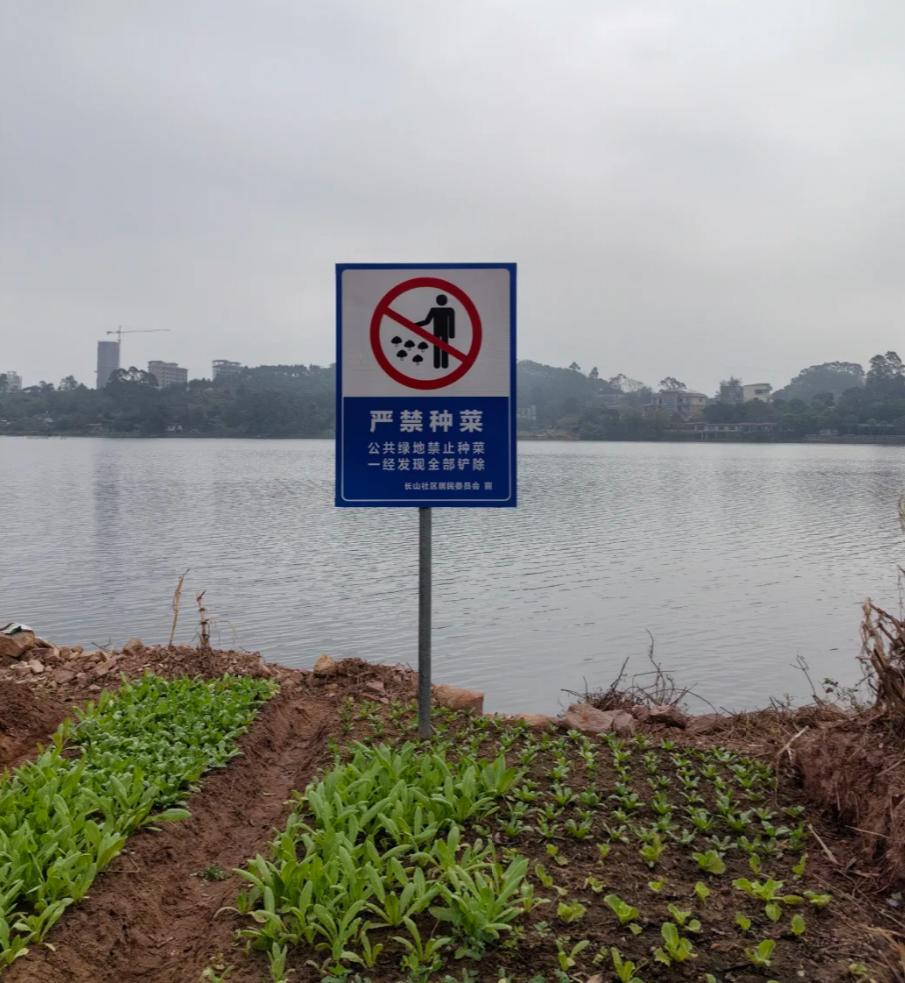
Chinese-style Humor
However, there is now a novel new option — growing vegetables inside a machine.
In recent years, beyond our time-honored soil-based gardening tradition, a growing number of users at home and abroad have been trying out "vegetable growing machines" to experience a cyber vegetable garden.
The principle of vegetable growing machines is easy to understand: they focus on soilless cultivation, with various specific planting methods including hydroponics, aeroponics, hybrid hydroponics and more.
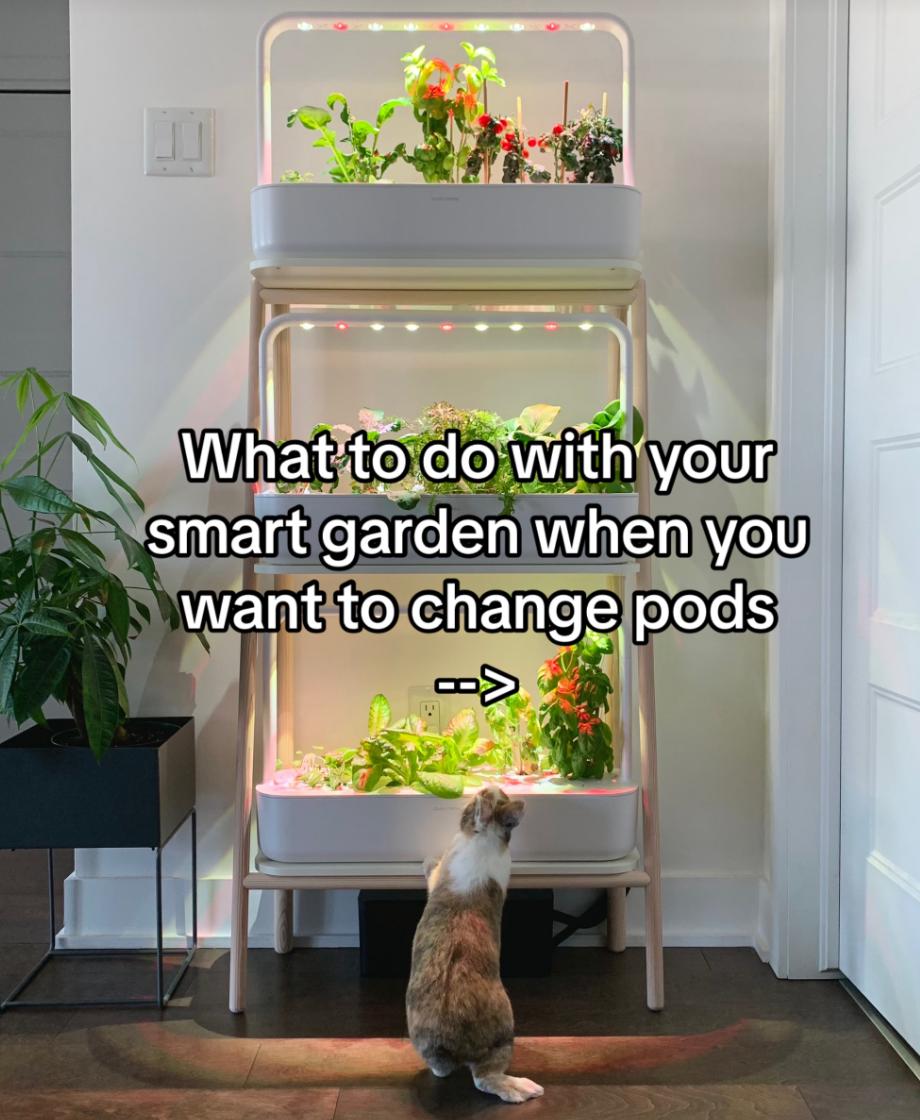
Popular Model Overseas
In classic sci-fi movie settings, humans are no longer born naturally, but are raised in nutrient solutions with tubes attached — vegetable growing machines operate on a very similar principle.
Then some people may ask: Soilless cultivation is not exactly a new concept, why is it suddenly trending now?
Because this technology has been fully commercialized now, allowing people to grow vegetables at home just like playing FarmVille back in the day, while eliminating the hassle of transporting soil and applying fertilizer.
The operation steps are extremely simple: after purchasing the machine, you just need to assemble the planting chamber, lighting fixtures and water tank modules, plug in the power and connect to the internet, then insert the modular seed pods into the machine — and you are all set. No more exposure to wind and sun, the plants keep growing under constant light, and you can pick fresh vegetables right when you want to eat them.
Especially for home vegetable growing, there are two key factors that are easily overlooked by most people — space utilization and ornamental value.
Freed from the constraints of soil, vegetable growing machines can meet these two needs in a variety of forms.
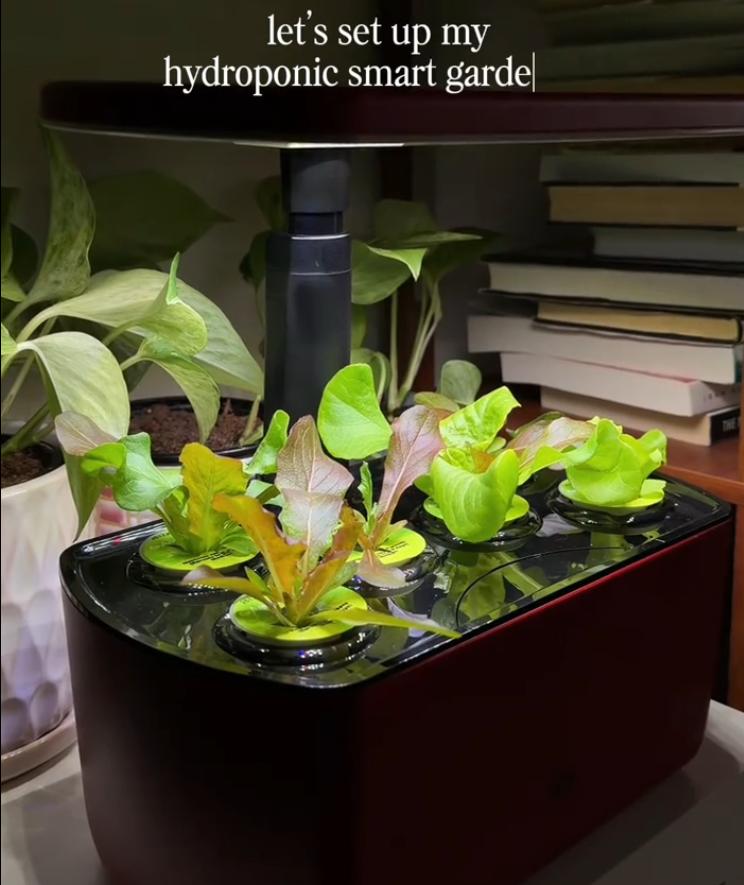
It Can Also Serve As A Tabletop Bonsai
For people with limited indoor space and low vegetable demand, there are flat desktop vegetable growing machines available.
About the size of a microwave oven, they take up very little floor space and can be placed directly on the kitchen counter, perfect for short-stature crops like lettuce and herbs. They may not be ideal for crops that require large vertical growing space such as tomatoes and peppers, but as a combination of "indoor greenery + daily ingredients", many people are willing to give them a try at the affordable price point of just a few hundred yuan.
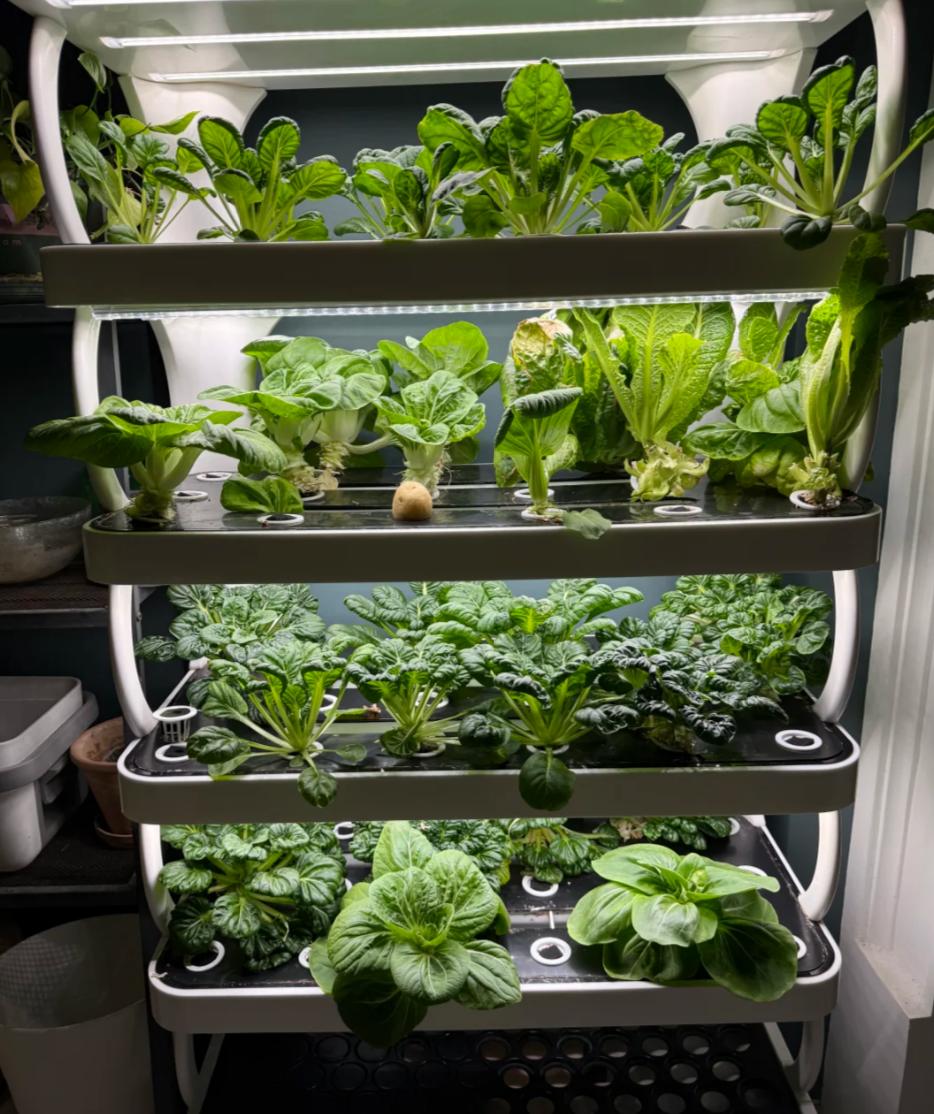
If you are a heavy consumer and grower of vegetables who wants to expand capacity, it is extremely easy to do so: the flat design allows you to stack additional layers just like building blocks.
You can add as many layers as you want, each layer has independent water supply and lighting functions, and can be freely placed just like a storage shelf.
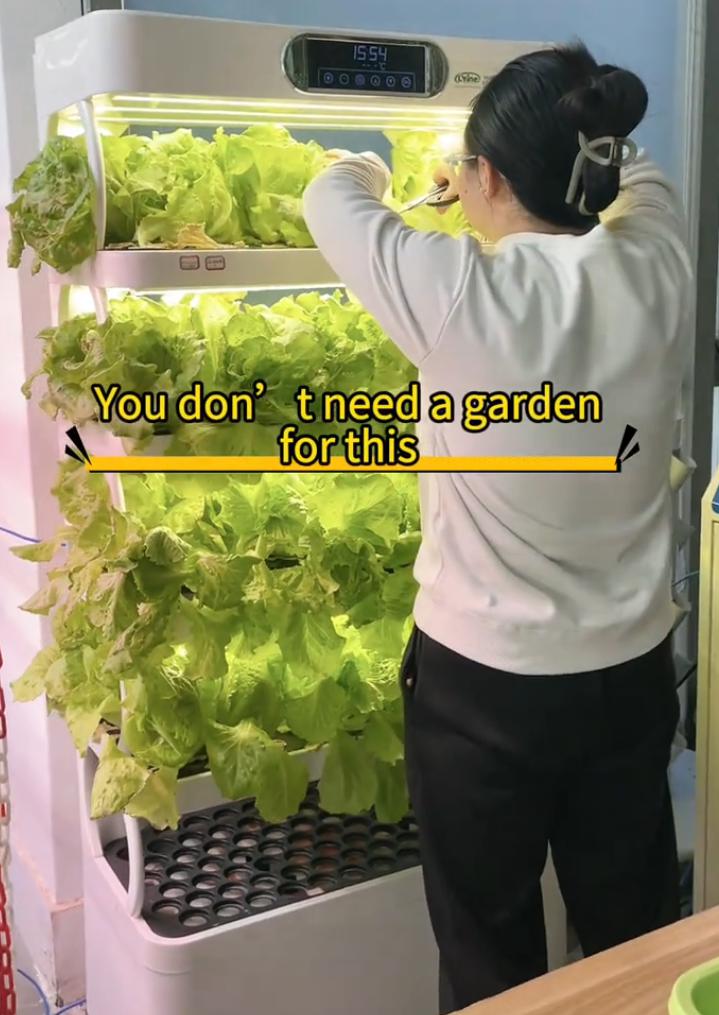
Of course, if you think this is the design limit of vegetable growing machines, you are really underestimating human creativity and passion for growing vegetables.
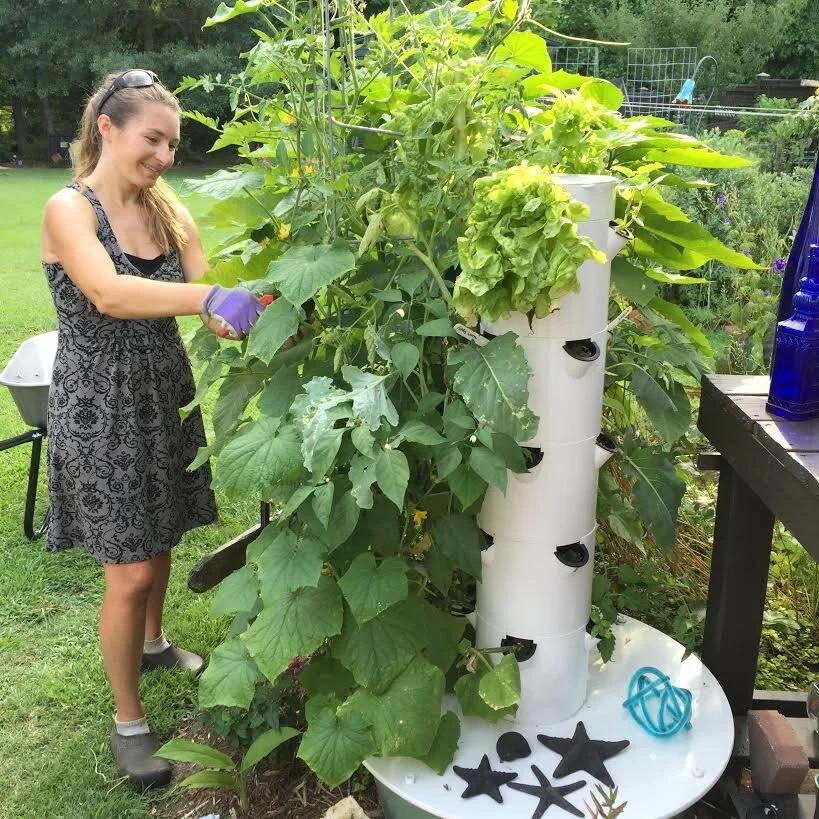
If the stacking block scheme only focuses on "vertical development" to save space, the tower-shaped design truly perfectly combines space efficiency with home aesthetics.
First, there is the single-tower design represented by Tower Garden: a standard 1.52-meter-high column that occupies only 0.28 square meters of space. The basic design features a layered tower body with multiple planting holes on each layer, ranging from 24 holes to 48 holes. The more layers there are, the higher the yield of a single tower.
It Saves Land Space Even Outdoors
Technically, it adopts a pure aeroponic cultivation approach.
Aeroponics does not simply submerge the roots in water: instead, nutrient solution is atomized through high-pressure nozzles and sprayed directly onto the suspended roots.
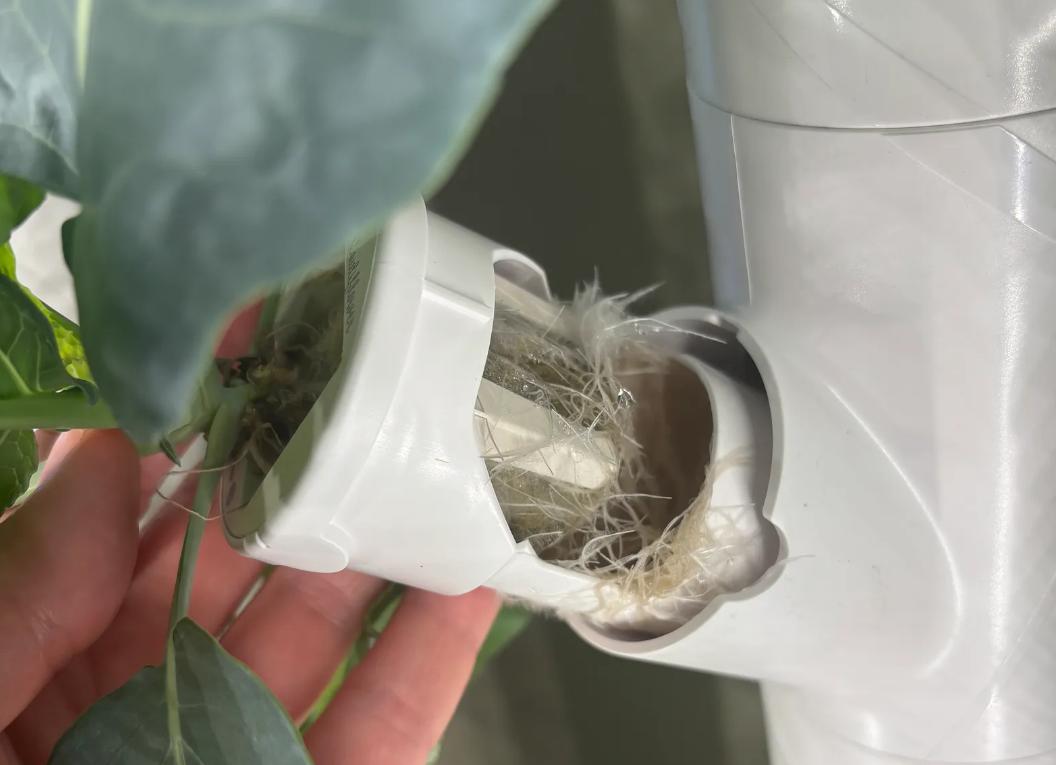
This brings completely different technical characteristics from hydroponics: the efficiency of root oxygen exposure is greatly improved. Official data shows that the harvest speed is 3 times faster than traditional soil cultivation, yield is increased by 30%, while water consumption is only 2%-10% of traditional planting.
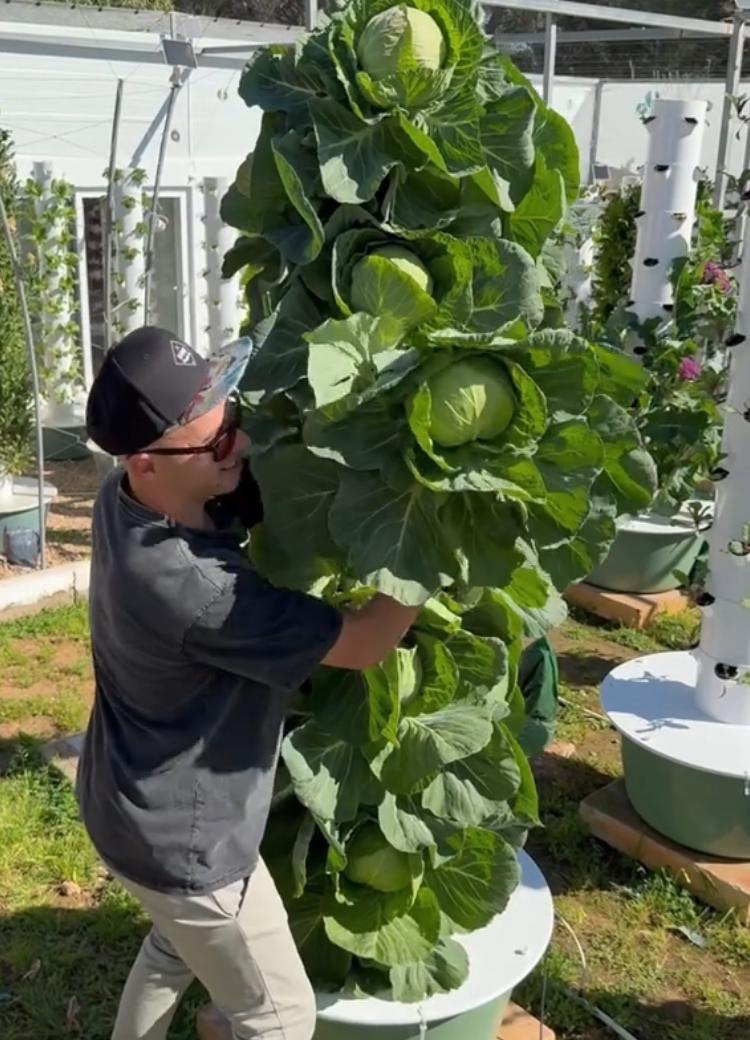
The entire vegetable tower is also equipped with a 360-degree rotatable base (realized through ball bearings), making it convenient for users to pick and prune from any angle without walking around the machine.
Height Can Be Freely Extended By Adding Layers
Next is the multi-tower design represented by Gardyn: not satisfied with just one single tower, it fixes 2-3 independent tower columns on the same base and water tank to form a "tower cluster". This is currently the most popular vegetable growing machine design, and it does look very "cyber green punk" when placed at home.
In the multi-tower configuration, the three planting columns share one water circulation and lighting system, with a total capacity of up to 30 plants per unit. This design not only retains the vertical space efficiency of a single tower, but also further reduces the floor space through "multi-column parallel connection".
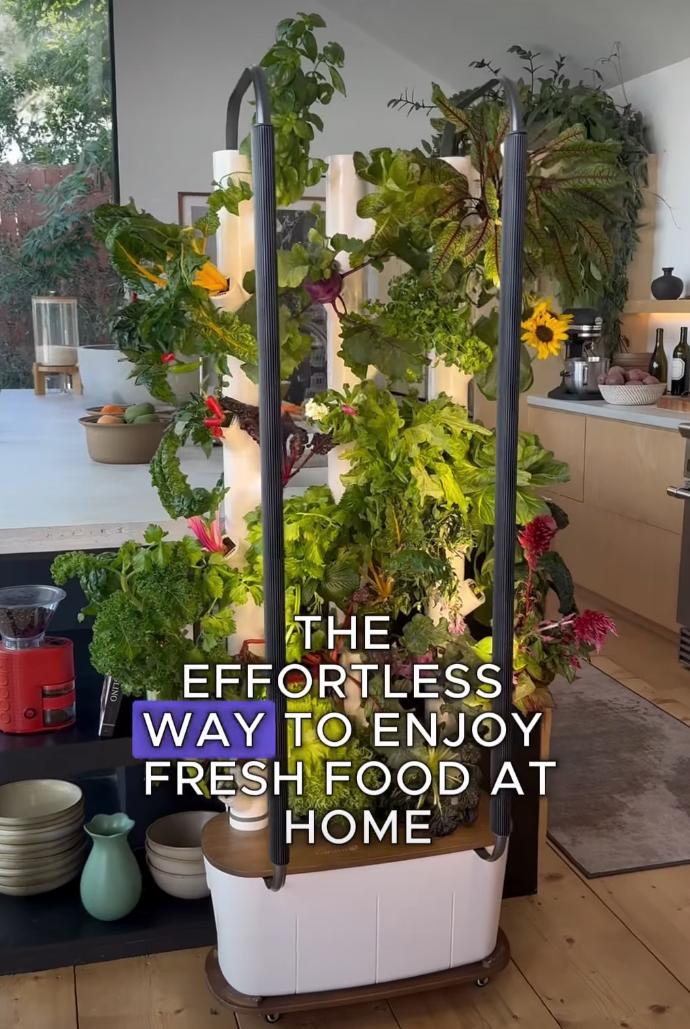
Multi-tower Models Allow You To Grow Different Plants Freely
Compared with spreading 30 plants on the same flat surface, the tower cluster structure can accommodate all of them in less than 0.2 square meters of floor space, and it has a higher degree of furniture integration. Many products are directly designed to look like standing air conditioners or display cabinets to be placed in the living room.
Since the flat and stacking designs essentially follow the "spreading out" idea, simply adding more layers will keep increasing the floor space or vertical height required.
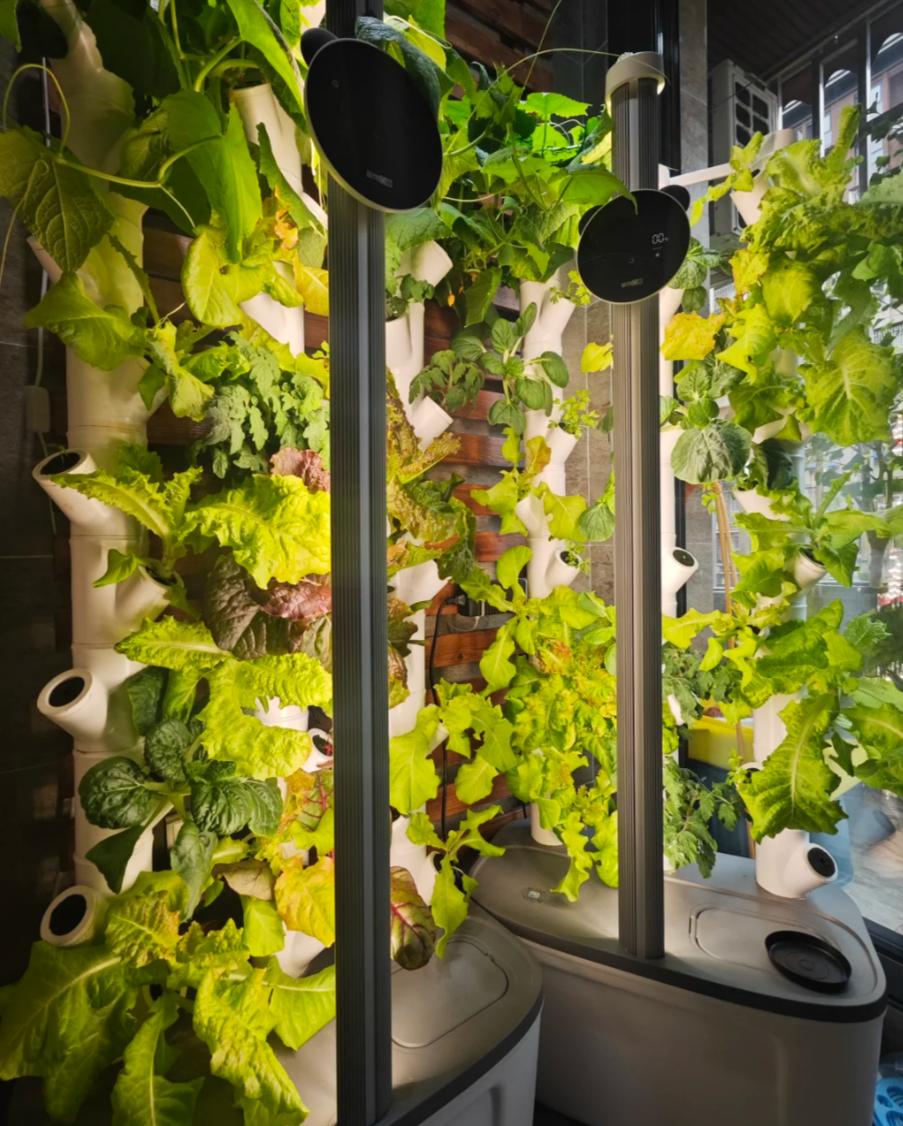
The tower-shaped design arranges plants in a 360-degree circular distribution along the vertical axis, allowing planting holes to be inserted on all sides of the same column, significantly increasing the number of plants that can be supported per unit of ground area.
The tower structure also makes it easy to design LED lights as "light arms" distributed along the tower body, which can illuminate plants from multiple angles at a closer distance, further promoting plant growth.
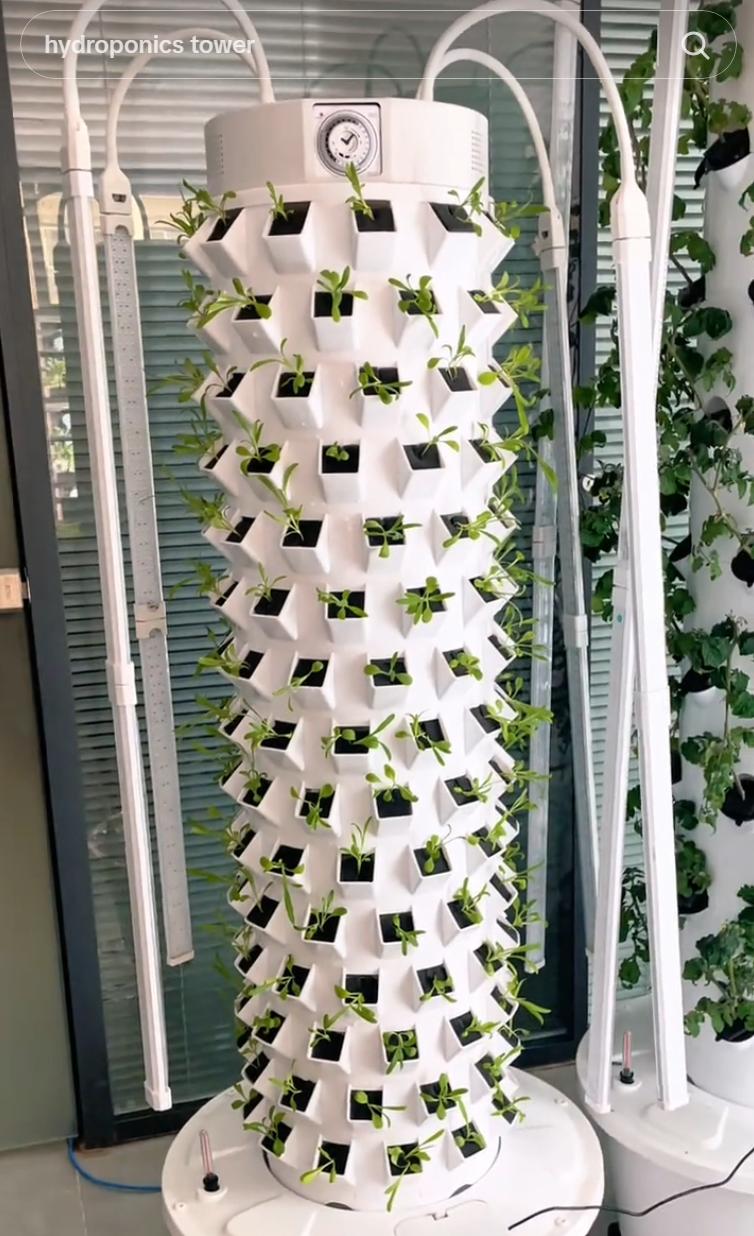
It Does Look A Bit Like Cockroach Antennae Though...
More importantly, aeroponics requires roots to be fully suspended and exposed to atomized nutrient solution, and this structure is naturally more suitable for the vertical tower shape: gravity naturally guides excess mist downwards, avoiding the water accumulation and oxygen deprivation issues that easily occur in flat hydroponic trays.
This is also the reason why many vegetable growing machines choose to adopt "hybridponics" based on the tower design: this new technology combines the stable nutrient supply of hydroponics with the high-oxygen root environment of aeroponics, and the vertical space of the tower structure perfectly provides the practical foundation for this "hybrid technology".
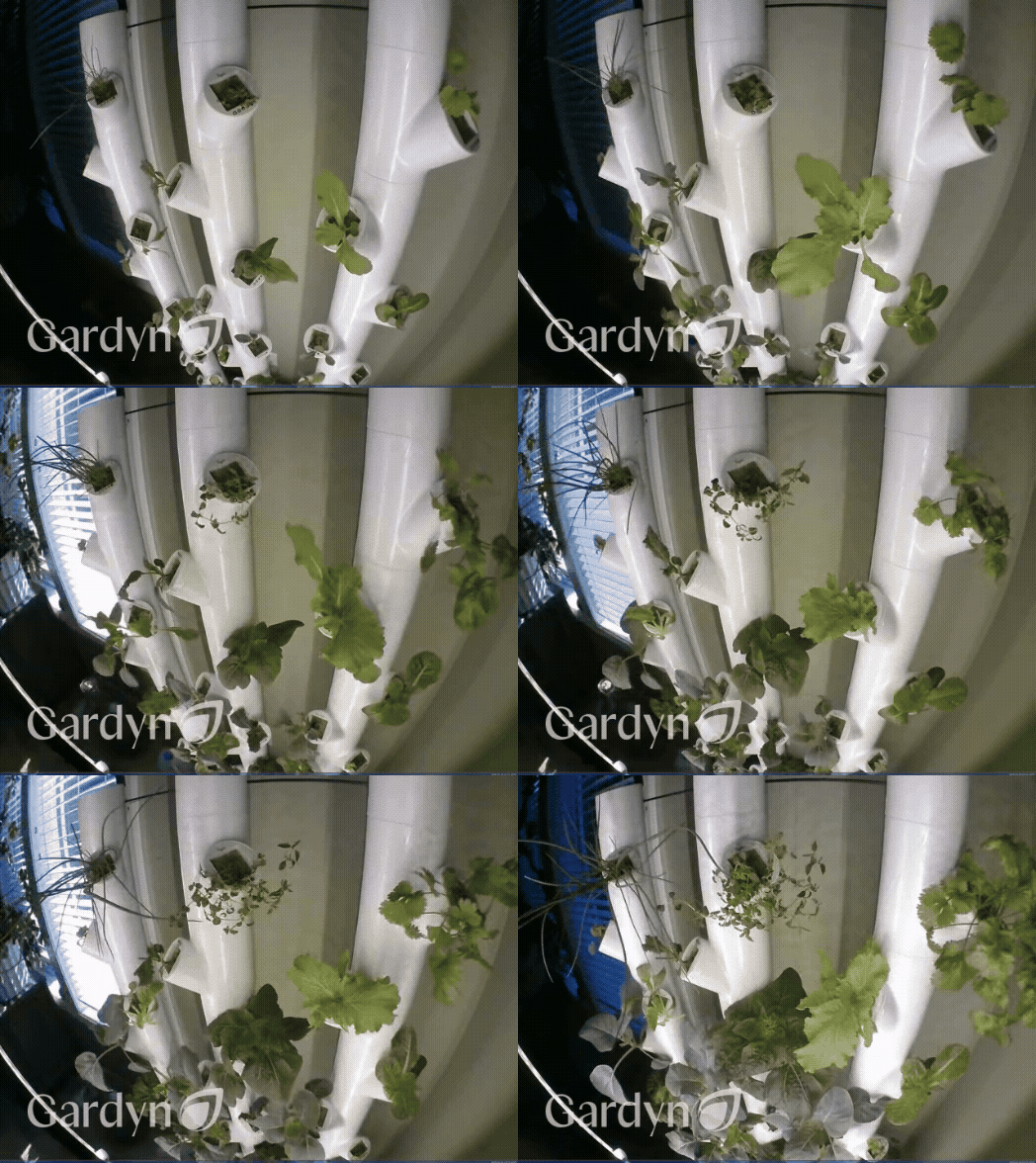
Watch The Plants Grow In Real Time
With the development of AI technology, vegetable growing machines naturally allow artificial intelligence to participate in the "plant monitoring" work.
The core selling point of modern vegetable growing machines is no longer simply "how many plants can be grown". Instead, built-in cameras continuously capture plant conditions, and AI automatically identifies insufficient light, water or nutrients, then adjusts lighting duration and nutrient solution ratio accordingly, bringing users a more relaxing planting experience.

For many office workers, they can finally enjoy the fun of growing vegetables effortlessly, without constantly worrying about water or fertilizer shortages, only to find their vegetables have turned yellow when they get home.
Not to mention that when you are on a business trip or traveling, you can completely rest assured about the growth status of your vegetables at home, and remotely monitor and adjust the settings via the app.
Furthermore, vegetable growing machines truly make vegetable growing more adaptable to the fast pace of urban life, focusing on providing a hassle-free experience.
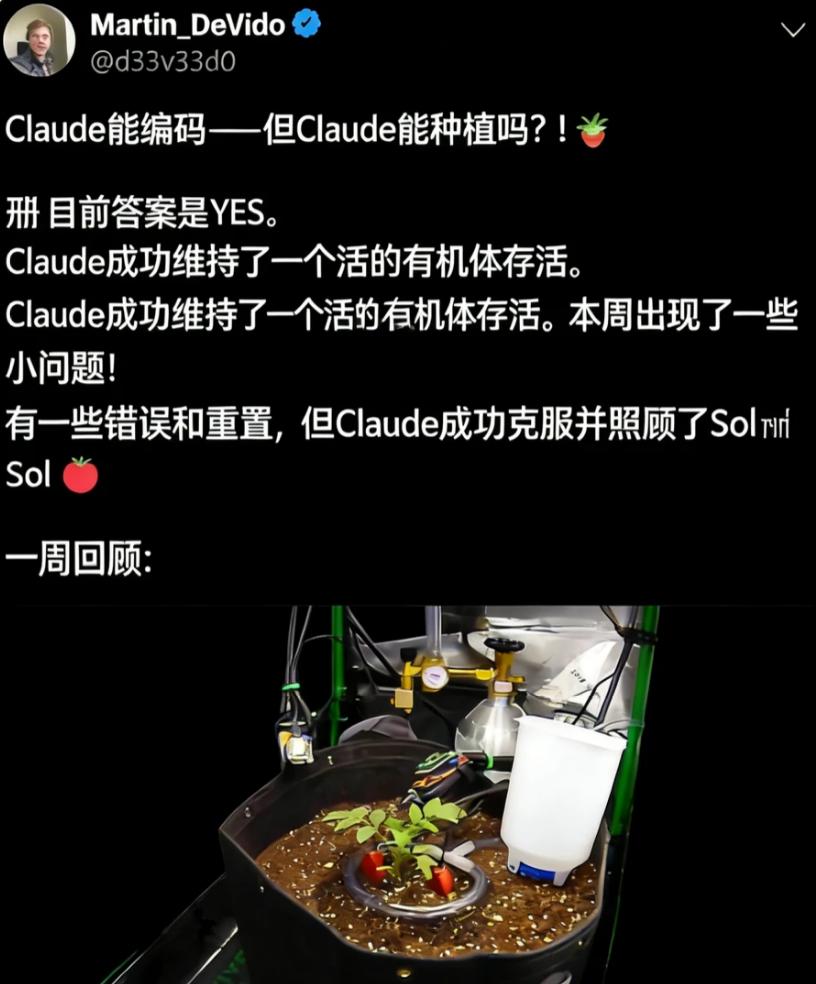
Of Course, There Are Also More Geeky Ways To Play
It saves users from the hard work of frequently preparing soil and applying fertilizer, and eliminates concerns about soil-borne pests and diseases, as well as pollution from pesticides and heavy metals.
It can also rationally formulate nutrient solutions based on the mineral elements required for plant growth, allowing vegetables to retain higher vitamin content.
For households with limited balcony space or insufficient natural light, these machines can overcome these constraints, allowing vegetables to grow 24 hours a day, and you can pick them right when you want to eat.
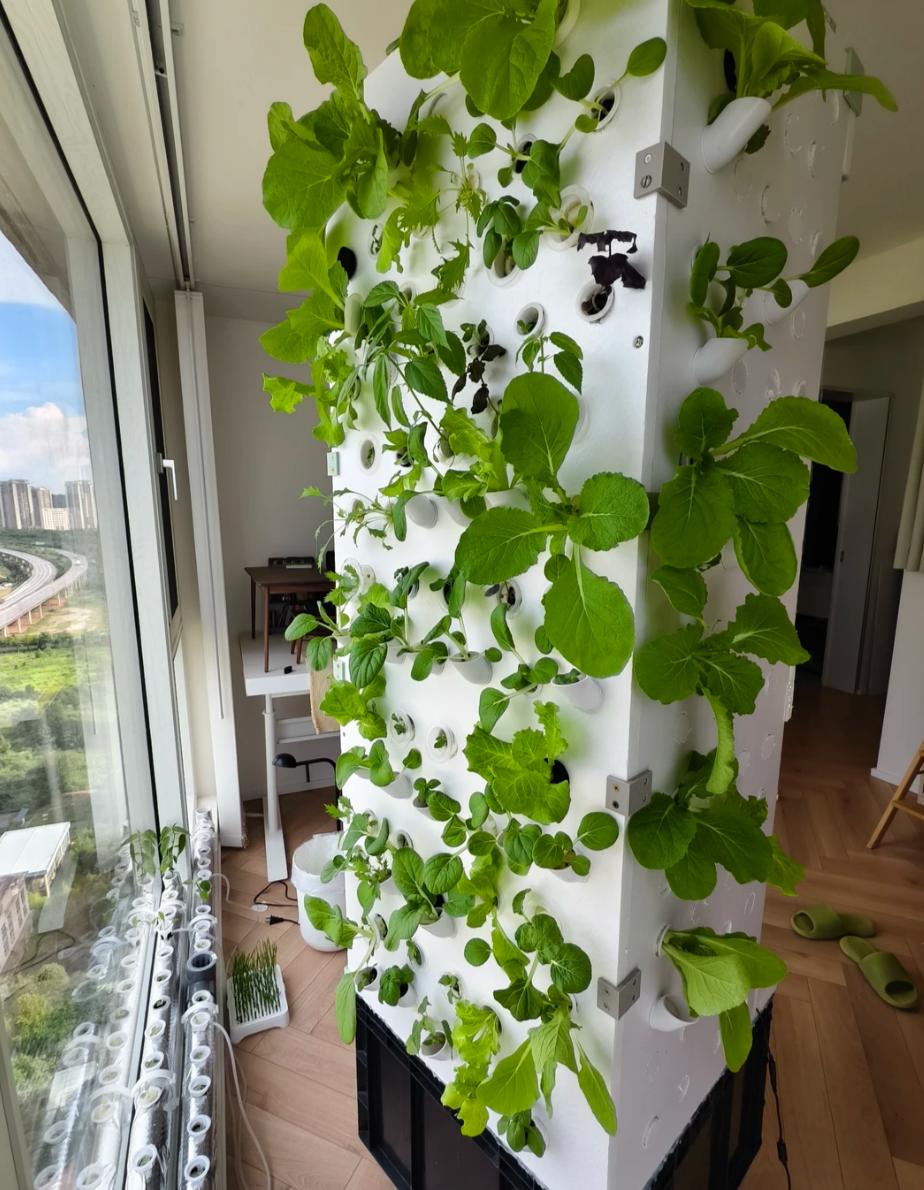
Advanced Enthusiasts
At this stage, vegetable growing machines still have many consumer shortcomings. After all, in the eyes of many people, you can grow vegetables with just some soil — is it really necessary to spend so much money on this?
One tester tried to grow nearly a hundred vegetables with a 5-layer vegetable growing machine. While admitting it was a very rewarding experience, he also complained about practical pain points such as the high price of the machine (th