Factory workers rush to get employed, Apple is expected to produce 10 million foldable phones within this year
Every July, Apple enters mass production, which has almost become the "biological clock" of the consumer electronics industry. But on this year's production lines, foldable smartphones have emerged as a new addition.
According to reports from CLSA, Apple has raised this year's production preparation target for foldable iPhones to approximately 10 million units, exceeding the previous widespread market expectation of 7 million to 8 million units, marking an increase of nearly 30%. This demonstrates Apple's strong confidence in entering the foldable display market.
As one of Apple's largest domestic contract manufacturers, Foxconn has simultaneously launched a large-scale recruitment drive. In early July, Foxconn facilities in Ganzhou (Jiangxi Province), Longhua and Guanlan in Shenzhen (Guangdong Province) released recruitment notices, seeking workers aged 18 to 50 for the production and processing of precision components for Apple smartphones.
Multiple Foxconn facility employees confirmed to reporters from IT Times that the foldable display production lines have already been activated. From workforce preparation on production lines, yield rate ramp-up to shifts in the supply chain landscape, mass production of Apple's first foldable smartphone has pressed the acceleration button.
"Waited a whole day just for the interview"
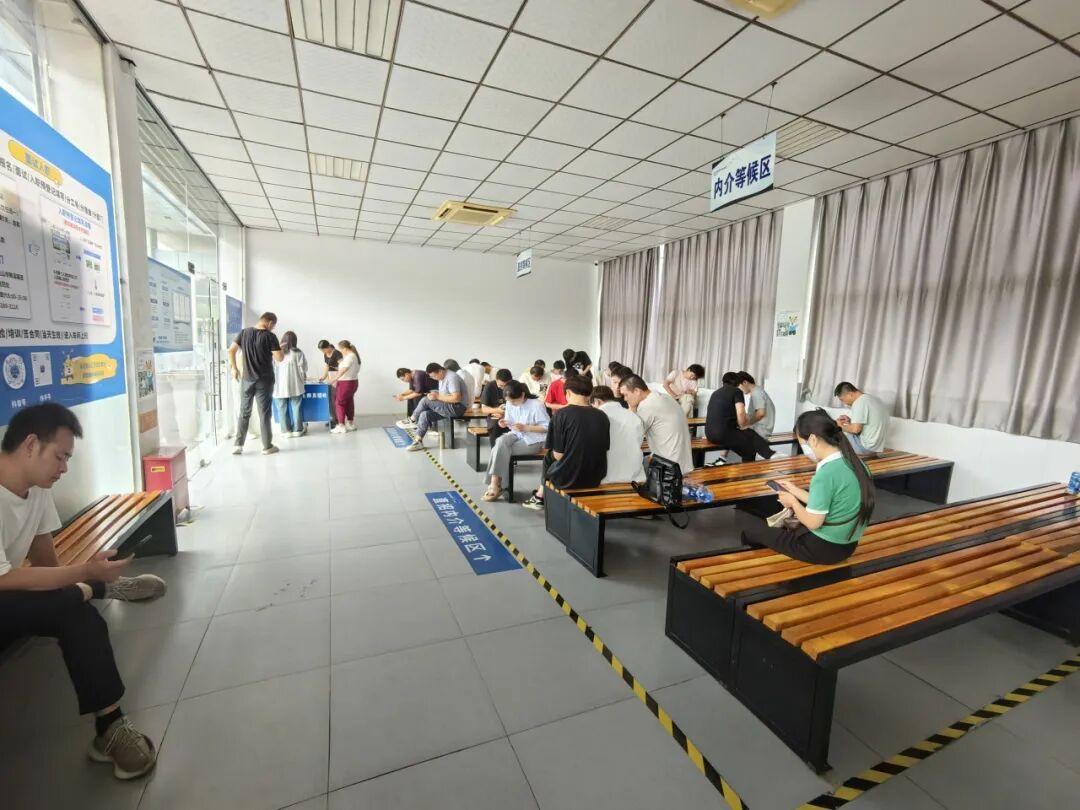
Long queues have once again formed outside Foxconn's factory gates. Young people dragging suitcases have traveled from their hometowns, arriving at these manufacturing facilities with the punctuality of migratory birds. The hourly wage figures on recruitment notices show that with bonuses and overtime pay, workers can accumulate a considerable income after three months, which has attracted many applicants.
"Now is the peak period for large-scale recruitment. Assembly and component production for Apple's foldable display are both ramping up. Tasks related to motherboards, flexible flat cables, cameras, displays and other parts are assigned to different workshops depending on which department you're placed in." A recruiter at Foxconn Shenzhen told IT Times reporters.
According to Foxconn's recruitment information, the A1 Business Group and 3W Business Group in Longhua are responsible for components and cameras respectively. The employment period for hourly workers and summer interns runs from July to October, with hourly wages ranging from 22 to 25 yuan (varies by department). Regular employees receive a base salary of 2,600 yuan during the probation period, which increases to 2,950 to 3,300 yuan after confirmation. Overtime pay is 25.42 yuan per hour on weekdays, 33.9 yuan per hour on weekends, and 50.85 yuan per hour on public holidays. With performance bonuses and night shift allowances added on top, the comprehensive salary exceeds 5,000 yuan.
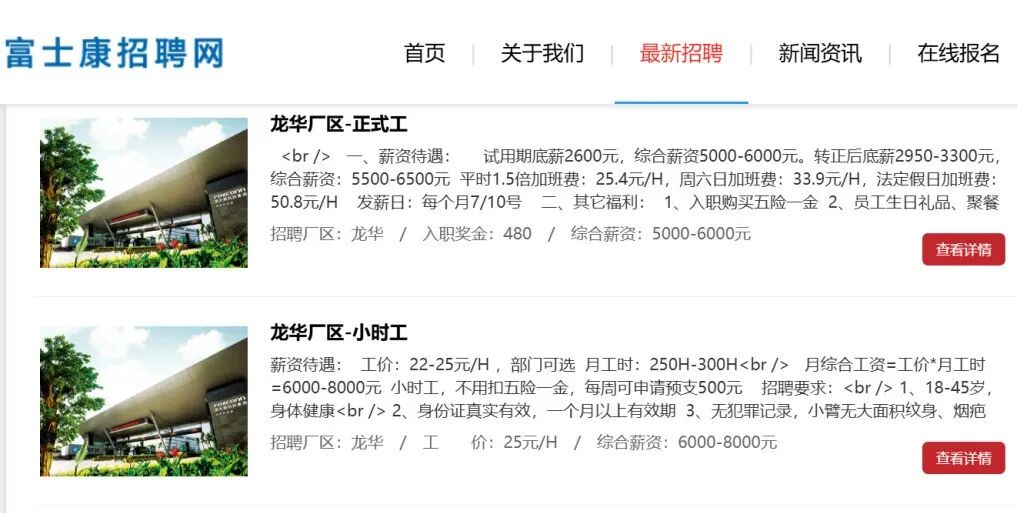
In addition, the comprehensive monthly salary for hourly workers at Longhua Foxconn can reach 6,500 to 7,500 yuan, while regular employees earn 5,500 to 6,800 yuan per month. Regular employees who have worked for a certain period are also eligible for performance-based pay raises ranging from 200 to 500 yuan.
Foxconn Zhengzhou has intensified its recruitment efforts even further. The A Business Group and iPEG Business Group in the airport zone are offering hourly wages up to 25 to 27 yuan, plus bonuses ranging from 200 to 400 yuan, with no quota limits for mass recruitment. This marks a slight increase compared to the around 23 yuan hourly wage at Foxconn Zhengzhou back in March.
With improved compensation, long queues naturally form at recruitment sites. "I arrived on July 12th, spent almost a full day just waiting in line for the interview, and the next day I had training in the morning and was assigned to a workshop in the afternoon." Zhou Yan (pseudonym) was fortunate to successfully become a CNC (Computer Numerical Control) operator. He told reporters that although he currently works about 2 hours of overtime every day, the work pressure isn't overly high. The real "overtime rush" with 12-hour shifts won't begin until around August, "which will allow me to earn an extra 1,000 to 2,000 yuan."
During Apple's mass production sprint, similar scenes play out every day: queuing for interviews, being assigned to departments, and starting work on production lines, repeating in cycles. These young people who have traveled from all corners of the country may not care much about display creases or hinge craftsmanship. They only know that this summer, the faster the machines run, the more solid the growth of numbers in their bank accounts will be.
The "Foldable Display Challenge" on Production Lines
Unlike conventional straight-screen smartphones, foldable smartphones are essentially "movable devices", with hinges, glass support plates, 3D glass covers and other components serving as core assembly parts.
Unconfirmed information reveals that Apple's foldable device will adopt a horizontal book-style inward folding design, with a body thickness of approximately 4.5 mm when unfolded and around 9.2 mm when closed. Compared to current mainstream Android foldable flagship devices, it has a distinct thickness advantage in the unfolded state.
In terms of display configuration, the outer screen is a 5.5-inch panel without the Dynamic Island, which matches the screen size of iPhone 6 Plus/7 Plus/8 Plus, a regular iPhone size that meets the needs of daily quick operations. The inner screen is a 7.8-inch 4:3 aspect ratio OLED panel, close in size to the 7.9-inch display of iPad mini, and supports 1-120Hz LTPO adaptive refresh rate.

A Foxconn employee told IT Times reporters that the foldable display production line does not pose a high technical threshold for ordinary workers. Complex processes have been broken down into a series of simple standardized operation procedures, allowing workers to start working after short-term training. The core task on the production line is to strictly follow standardized work instructions for operations.
The real challenge in mass production lies in yield control. Previous industry leaks indicate that to achieve a "nearly crease-free" visual experience, Apple's first foldable device uses a liquid metal (amorphous alloy) hinge, which is 2.5 times stronger than mainstream titanium alloys but extremely difficult to process. Currently, the mass production yield of liquid metal hinges in the industry is around 65%. From the supply chain perspective, this device is exclusively assembled by Foxconn, with Samsung Display as the exclusive supplier. Apple has already placed component orders for the first batch of 7-8 million units.

Image source: Foxconn Recruitment Group
According to reports from Jiemian News, the latest supply chain information shows that the abnormal noise tolerance issue of liquid metal hinges has been largely resolved, and display creases also meet Apple's internal mass production standards. However, affected by the brand-new structural design, the initial overall device production yield is still in the ramp-up phase. Only small-volume shipments are expected after the autumn launch, and large-scale deliveries will not be achievable until the fourth quarter.
Apple's "Ambition" for Foldable Displays
Beyond the production lines, the capital market, tech media, upstream and downstream supply chain players, and hundreds of millions of consumers worldwide are all waiting for the same signal: Apple's first foldable smartphone has finally moved from blueprints to mass production lines. What truly excites the capital market and the tech community are the numbers and ambition behind Apple's grand strategy.
According to the latest quarterly report on foldable display panel shipments and technology released by Counterpoint Research, total foldable smartphone panel shipments in 2026 are expected to reach approximately 27.5 million units, a roughly 24% increase from 2025. Revenue is projected to hit about 4.4 billion US dollars, representing a year-over-year growth of around 48%.
After a moderate adjustment in 2025, foldable smartphone panel shipments will return to an expansion cycle in 2026. The growth momentum will come not only from the recovery of shipments but also from the increase in average selling price (ASP) and optimization of product structure driven by high-end projects from Apple and Samsung. The industry recovery trend shows a clear concentration in the second half of the year, with total shipments in the third and fourth quarters accounting for 64% of the annual total. This indicates that the full-year rebound heavily depends on Samsung's product cycle, Apple's procurement rhythm, and the rapid follow-up by Chinese smartphone manufacturers.
Counterpoint Research believes 2026 will be a transition year for brand competition in the foldable smartphone market: Samsung is expected to rank first with a 31% market share; Apple's first foldable device (estimated to be named iPhone Ultra after launch) is projected to contribute approximately 29% of the foldable panel procurement share in its first year, becoming a core variable in the foldable smartphone market; Huawei is expected to account for around 24% of foldable panel procurement.
Apple will not immediately "take over" Samsung and Huawei, but it will expand the market and shift the competition focus to large foldable devices with wider unfolded sizes that feature higher unit prices, greater reliability, and fewer creases.
IDC predicts that driven by Apple's first foldable iPhone, the global foldable smartphone market will grow 30% year-over-year in 2026. Based on the 10 million unit stocking target, Apple is attempting to capture a market share equivalent to half of the 2025 foldable display market with just one generation of products.
Expected to Reach up to 17,000 Yuan
However, renowned Apple analyst Ming-Chi Kuo has "poured cold water" on this pre-launch hype. He posted on social platform X that his latest industry survey shows that assembly shipments of foldable iPhones in the second half of 2026 will be around 7 to 8 million units, with only 500,000 to 1 million units in the third quarter, accounting for about 10% of the total in the second half of the year. In contrast, shipments of iPhone 18 Pro and Pro Max in the third quarter are estimated to reach approximately 20 to 22 million units, far exceeding foldable models, and have already met the inventory level required for official launch. This more than 20-fold difference almost guarantees extreme supply shortages for foldable models in their early launch stage.
This analysis implies that after the September launch event, the foldable iPhone is likely to repeat the 2017 iPhone X scenario – being announced at the same event but with delayed sales, and supply constraints will persist until the end of the year.
Ming-Chi Kuo points out that the foldable iPhone and iPhone X share high similarities in core logic: both products use innovative user experience as their core selling point while facing early-stage production capacity bottlenecks caused by complex manufacturing processes. Back then, due to innovative designs like the full-screen display with notch and TrueDepth camera, the iPhone X suffered from insufficient production capacity in its early launch period, with order delivery times once extended to 5-6 weeks and daily production volume only 50,000 to 150,000 units. The supply shortage situation was not largely resolved until December. Canalys data shows that in Q4 2017, global shipments of iPhone X reached 29 million units, of which the Chinese market accounted for 7 million units – a figure slightly lower than industry expectations.
In terms of pricing, Ming-Chi Kuo estimates that the foldable iPhone will cost around 2,300 to 2,500 US dollars (approximately 17,000 yuan). Fubon Research recently released an industry report also predicting a selling price of 2,399 US dollars. Pre-orders for this model are likely to sell out quickly, with delivery times extended to 4-6 weeks or even longer. The period from the end of 2026 to the first quarter of 2027 will be the best window to assess real market demand for Apple's foldable display devices.
This article originates from the WeChat official account "IT Times" (ID: vittimes), written by Shen Yibin, and published with authorization from 36Kr.