With over 2,000 patents, how does Dreame floor cleaners become the industry benchmark?
Over the past five years, floor washers have been one of the fastest-growing niche categories in China's home appliance industry. Yet a striking phenomenon has emerged: the market is booming, while brands are becoming increasingly polarized.
In 2020, there were only a few dozen domestic floor washer brands. As the industry expanded rapidly, that figure once surged past 300. Widespread generic designs, inflated performance specs, and relentless price wars filled the seemingly bustling track — yet fewer and fewer brands have maintained consistent investment in technology and iterative product upgrades.
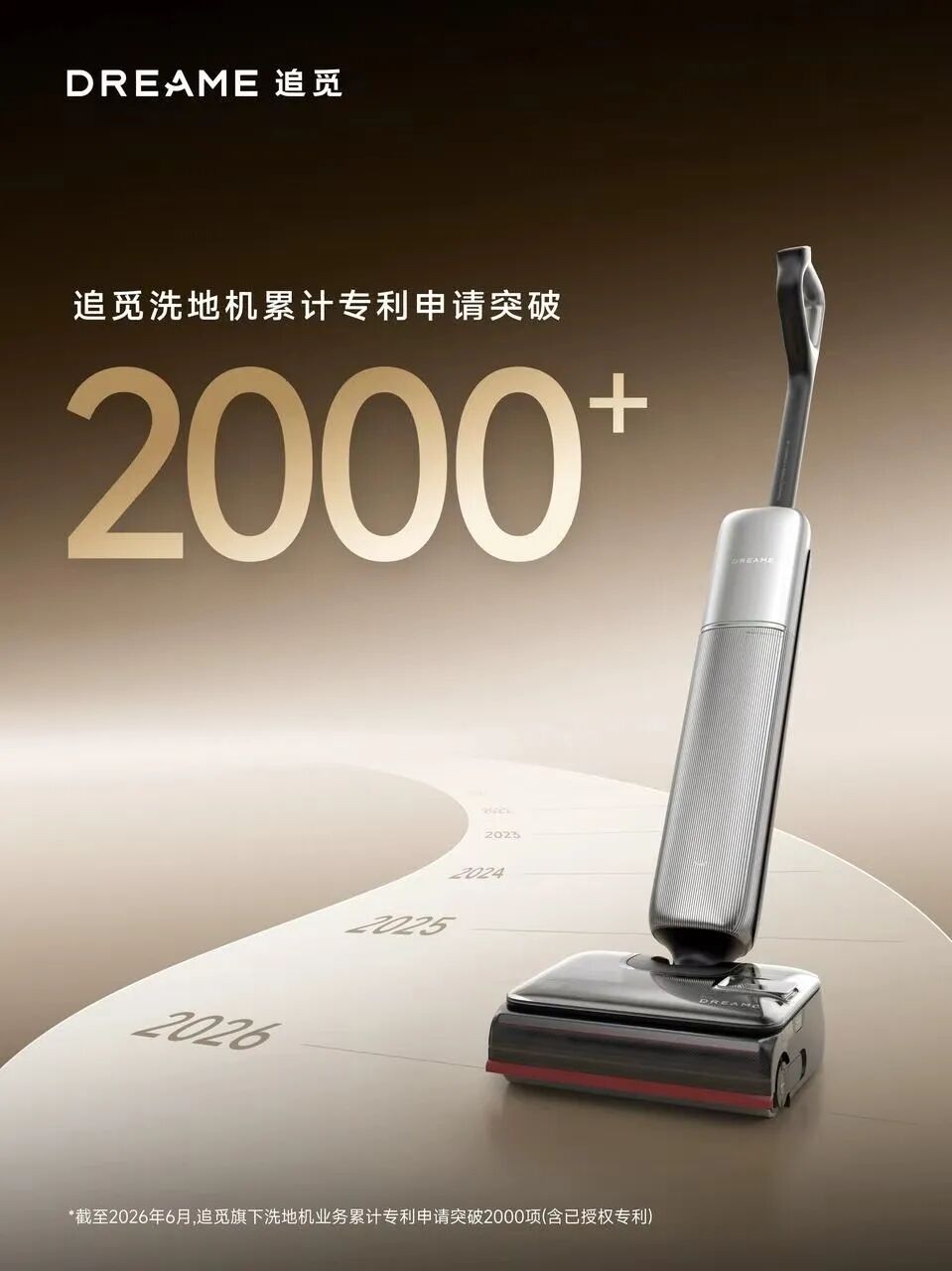
On the flip side of this chaos, leading players are accelerating their market concentration. In May 2026, Dreame Home announced a set of data: its global cumulative shipments of floor washers exceeded 10 million units; in July, its number of global patent applications surpassed 2,000, ranking among the top in the industry.
The fact that Dreame Home hit new milestones in both market scale and patent applications almost simultaneously is hardly a coincidence. It points to a deeper question: in this long-distance race of the floor washer industry, what is the real factor that sets leaders apart from others?
From Feature Stacking to Experience Reconstruction: Dreame Reshapes Industry Competition Through Technological Evolution
As the floor washer industry enters a mature phase, competition has shifted from parameter upgrades to experience optimization.
Suction power, battery life, and brush roller rotation speed have gradually become industry standard configurations. What truly differentiates products now is the ability to solve complex household cleaning scenarios.
Over the past five years, Dreame Home has continuously iterated on core technologies focusing on thermal cleaning, spatial intelligence, and maintenance-free systems, steadily expanding the functional boundaries of floor washers.
In the thermal cleaning field, targeting high-difficulty cleaning scenarios such as heavy oil stains and dried-on dirt in Chinese household kitchens, Dreame T12 pioneered the integration of steam cleaning into cordless floor washers in 2022. It delivers 100℃ high-temperature steam in just 30 seconds, dissolving stubborn stains with heat and eliminating bacteria through steam, marking the official entry of floor washers into the cordless steam era.
In 2024, the H40 Ultra further introduced 85℃ hot water stain dissolution technology. Equipped with a high-power instant-heating boiler and a 360° surrounding water outlet system, it keeps hot water acting continuously at the front of the brush roller, improving cleaning efficiency for heavy dirt scenarios like kitchen oil and dried stains, and significantly reducing the operational cost of repeated mopping and manual rework.
But the R&D team soon discovered: while hot water solved the oil stain problem, it still wasn't fast enough. One Dreame Home R&D engineer recalled, "What users want is a clean floor the moment they walk over it, not standing around waiting."
This seemingly minor difference in user demands directly led to the development of the next-generation dual-thermal system.
The H70 Ultra Station launched this year has completely reconstructed the entire thermal system. Combining 400℃ instant-heat steam and 90℃ hot water, paired with a 330W aerospace-grade boiler and multi-stage heating tubes, it generates steam in just 20 seconds — nearly doubling the industry's steam output efficiency. It achieves 99.9999% physical-level sterilization, sets a new industry benchmark for heavy stain cleaning, and delivers three major breakthroughs: efficient cleaning, deep decontamination, and extreme sterilization.
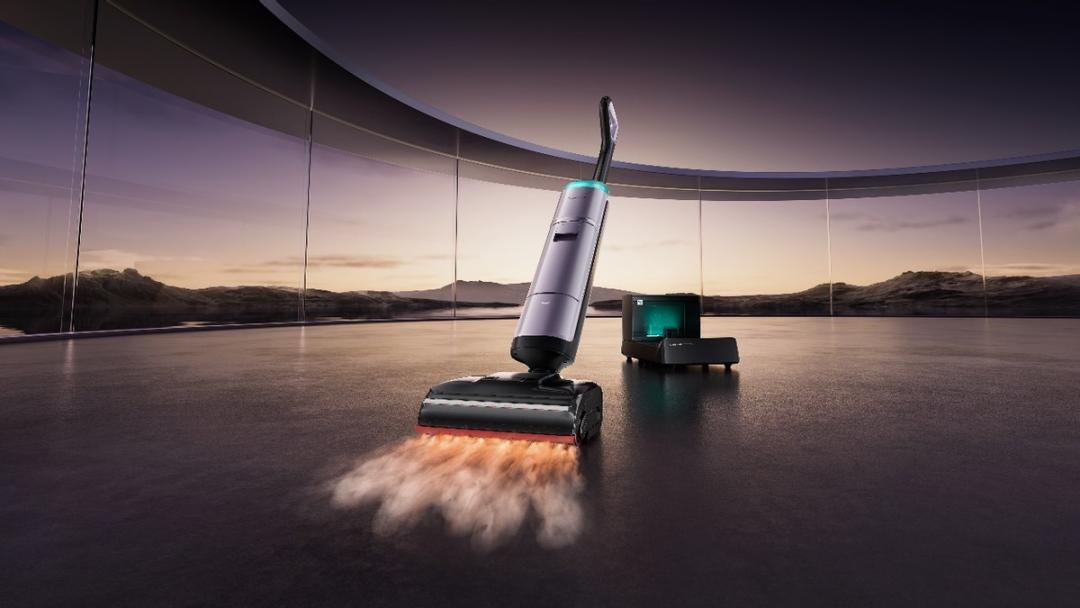
Figure: Dreame H70 Ultra Station Floor Washer
If thermal technology ensures thorough cleaning, spatial intelligence ensures no spot is left uncleaned. The few millimeters along walls, skirting boards, cabinet edges, under beds, and under floating cabinets have long been blind spots that floor washers struggle to cover.
"Why is there always a dark line along the wall?" This was one of the most common complaints Dreame Home product managers heard during in-home user surveys.
Traditional engineers shared a consistent solution: thinning the plastic border on the side of the brush roller, reducing it from 5mm to 1mm, and eventually creating the marketing concept of "0 edge-to-edge cleaning". But insiders all know that the brush roller bearing and side waterway structure inevitably occupy space, creating a physical limit. Most of the so-called "0 edge-to-edge" claims are nothing more than marketing rhetoric.
Until one Dreame mechanical engineer proposed a "counterintuitive" idea during an internal discussion: "Since the brush roller can't reach, why not make the brush roller extend itself?"
This seemingly simple shift in thinking gave birth to Dreame Home's robotic arm technology for floor washers.
In 2024, Dreame T40 Ultra officially launched the SmartCapture Intelligent Lifting Robotic Arm. Through the processes of "sensing, lowering, capturing, and scraping", it achieves zero water residue and true edge-to-edge cleaning, becoming the first to apply robotic arm capabilities to edge cleaning scenarios and establishing Dreame as a global pioneer in robotic arm floor washers.
But the team didn't stop there. As users raised higher requirements for removing stubborn stains, Dreame T60 Ultra's AI Dual Robotic Arm took a step further in 2025 by simulating manual scraping and washing motions. Adding a rear robotic arm to the existing front one, the two work in synergy: the front arm flexibly adheres to edges, while the rear arm applies rigid pressure, completing water scraping and stubborn stain removal simultaneously.
In 2026, Dreame T70 Ultra Station is equipped with Dreame EdgeHunter Edge-Tracking Robotic Arm, which combines high-precision TOF sensors to achieve millimeter-level environmental perception and dynamic outward expansion fitting, realizing 0mm edge-to-edge wet mopping. For low spaces like under refrigerators and cabinets, it can also manually extend 30mm with one click for deep cleaning, endowing the floor washer with the ability to actively understand space and adjust its movements.
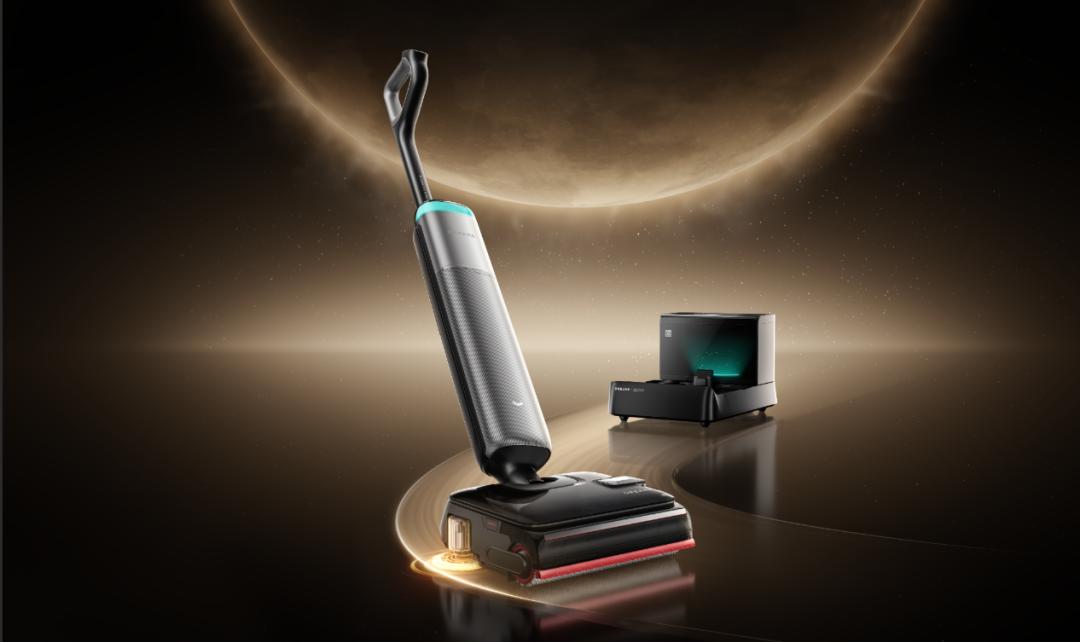
Figure: Dreame T70 Ultra Station Floor Washer
Focusing on reducing the post-cleaning maintenance burden for users, Dreame Home has also continuously improved its self-cleaning and maintenance-free technology system.
"If 'self-cleaning' still requires users to manually remove and dry the brush roller, then it can't be called true self-cleaning," this is a principle repeatedly emphasized in Dreame's internal product definition meetings.
In 2022, Dreame H12 pioneered the combination of 60℃ high-temperature soaking washing and 60℃ hot air through-drying, creating a precedent for integrated washing and drying of brush rollers. In 2023, the H30 upgraded this system to 60℃ high-temperature soaking washing + 5-minute fast drying, shortening waiting time. In 2024, the T40 Ultra innovatively introduced 100℃ Volcanic Lake soaking washing, further enhancing the dissolution capacity for oil and stubborn stains.
Since then, Dreame has continuously refined technologies such as forward-reverse self-cleaning, floating hair-cutting comb teeth, far-infrared low-noise through-drying, and sewage antibacterial deodorization, pushing industry competition from basic "self-cleaning" capabilities to the true realization of "maintenance-free".
Looking back at Dreame Home's technical roadmap over the past five years, it has consistently expanded technical capabilities around real cleaning scenarios rather than lingering on meaningless parameter competition.
From Demand Insight to Technical Implementation: A Complete R&D System Drives Sustained Innovation
Technology does not emerge out of thin air. Behind the 2,000+ patents lies a precisely operating systematic innovation system.
In the past few years, Dreame's R&D investment has long remained more than three times the industry average, with R&D personnel accounting for over 70% of total employees and R&D investment making up about 7% of sales revenue. It has formed a tiered R&D mechanism of "mass-producing one generation, developing one generation, and pre-researching one generation". While consumers are using current-generation products, the next generation has already entered the development phase, and more cutting-edge technologies are being continuously verified in the laboratory.
Dreame Home's long-term R&D investment lays the capability foundation for sustained innovation. But what truly determines the direction of technology is user demand.
Dreame Home conducts annual in-home surveys covering more than 5,000 families worldwide. It collects real demands based on lifestyles, floor materials, and cleaning habits across different countries and regions, and integrates the survey results into product R&D, forming an accurate closed loop of "user demand → technical R&D → product implementation".
All innovative technologies and product solutions must undergo full-scenario, highly stringent simulation verification in Dreame's laboratories.
In Dreame Home's laboratory, the R&D team has built a full-scenario simulation environment covering different floor materials such as tiles, wooden floors, long-pile and short-pile carpets, and stone. It also reproduces typical global stains including Chinese cooking oil, soup, sauces, coffee, milk, pet stains, and sediment particles, to continuously verify user experience dimensions such as cleaning effect, operation convenience, grip feel, noise, and odor prevention.
Meanwhile, Dreame has established a reliability limit testing system far exceeding industry standards.
To adapt to different global markets, Dreame Home has built a simulation testing system covering different water qualities, temperature and humidity levels, salt spray environments, and cross-border transportation vibrations. It tests scenarios ranging from extremely soft water to extremely hard water, from tropical high-temperature high-humidity conditions to -17℃ low-temperature environments, and simulates long-distance transportation vibrations during sea and land shipping.
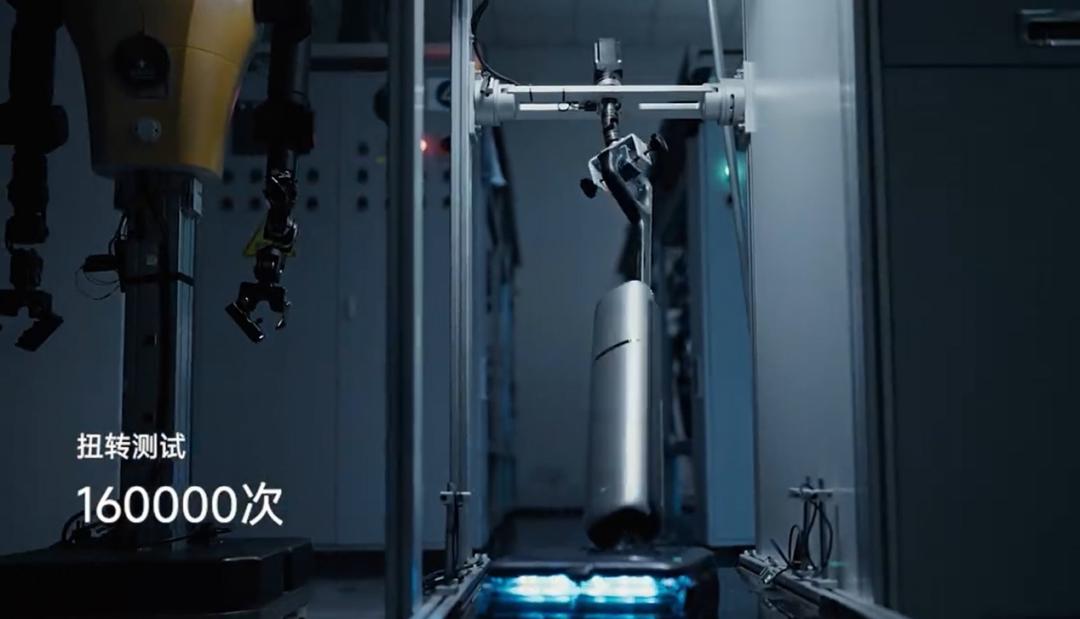
Before products launch on the market, they must complete reliability verification far higher than industry standards: 500 hours of continuous full-machine operation, 12,000 threshold-crossing tests, 30,000 wall-collision tests, and 160,000 full-machine torsion tests. Core components undergo durability tests including 800 hours of main motor load operation, 20,000 suction motor start-stop cycles, and 250,000 lifting cycles for the edge-tracking robotic arm, ensuring long-term stable product use with ultra-high standards.
The Next Round of Competition Has Begun: Floor Washers Are Evolving into Home Smart Terminals
Floor washers are transitioning from functional appliances to smart cleaning terminals.
Future products will need not just execution capabilities, but also perception, judgment, and autonomous decision-making capabilities.
For Dreame, this is not a completely new starting point. Over the past few years, the algorithms, sensor technologies, and control capabilities Dreame has accumulated in the robotics field have been gradually migrated to floor washer products, enabling originally independent cleaning functions to form a complete intelligent system.
Through multi-spectral ultrasonic recognition technology, the device can automatically adjust suction power, water volume, and cleaning strategies based on stain types. Using TOF sensors paired with edge-tracking robotic arms, high-integration SOC, and real-time control algorithms, it achieves millimeter-level dynamic edge recognition for spatial environments such as walls and furniture edges. For different floor materials including wooden floors, tiles, and carpets, it automatically matches cleaning paths and operation modes. In addition, through the synergy of dual motors, dual chips, and intelligent algorithms, the floor washer can sense the user's push-pull trend in real time and automatically adjust assistance to reduce operational resistance.
These capabilities seem to correspond to different functions, but they all address the same core issue — enabling the machine to gradually evolve from "executing cleaning tasks" to "completing cleaning autonomously".
Looking back today, the 2,000+ patents are more like a technical roadmap for Dreame Home.
It records not only the R&D accumulation of the past five years, but also how an enterprise connects user demands, technical R&D, and product innovation into a continuously operating capability chain.
At a deeper level, these 2,000+ patents are becoming the historical manuscript for the shift of global cleaning appliance industry discourse power.
Twenty years ago, when European and American brands introduced floor washers to China, they presented a "category" — telling Chinese consumers "such a product exists".
Twenty years later, Chinese enterprises are presenting the "standard" — showing the global market "what a good floor washer should be like".
Dreame's role in this process is that of an enterprise that, when the industry was trapped in meaningless parameter competition, chose a more challenging path: focusing on tackling hard technical problems, and raising the experience ceiling bit by bit with original technologies.
This capability is what truly creates the competitive gap for the future.