ByteDance Enters the Physical AI Arena, Ushering in the Second Wave of the "Feast"?
Recently, media reports revealed that ByteDance is exploring entry into the autonomous driving sector, focusing on unmanned logistics scenarios, with related research falling under the Volcano Engine Automotive Industry Line. In response to market rumors, ByteDance officially clarified: ByteDance has conducted extensive early-stage research and exploration in cutting-edge areas of large AI models, including the field of Physical AI, but has no plans to develop intelligent driving businesses.
The core highlight of this public discussion is not whether ByteDance will launch autonomous driving services, but that tech companies have reached a consensus: the saturation of large model competition has peaked, and new growth opportunities for AI lie in the physical world.
Over the past decade, from recommendation algorithms to computer vision, from voice interaction to large language models, AI has reshaped the efficiency of information production, yet it has never shaken the fundamental logic of the real economy. As pure online traffic dividends gradually deplete and the marginal returns from stacking models continue to diminish, the entire industry is searching for a second growth curve.
Physical AI, however, injects intelligence from the digital world into physical scenarios, allowing AI to step out of servers and beyond screens, upgrading its role from "processing information" to "transforming the world." This ushers in a second wave of AI development that is far more profound and carries greater long-term value than generative AI.

A Paradigm Shift from Symbolic Minds to Embodied Entities
Many people mistakenly view Physical AI as simply "smarter robots" — this is the most superficial misunderstanding. Physical AI is not a single category of product, but an entirely new paradigm of intelligence. Its underlying logic differs fundamentally from all forms of AI we have been familiar with in the past.
The foundation of traditional artificial intelligence lies in symbols and statistics. Large language models learn statistical patterns of language through training on trillions of tokens, generating fluent text by predicting the next token. Traditional image recognition fits features using labeled data to classify pixel content. This type of intelligence remains at the level of "correlation": it knows that Word A and Word B frequently appear together, or that a combination of pixels corresponds to a certain object, but it never understands the causal logic behind these phenomena.
This is why large models experience "hallucinations." They do not understand that a glass will shatter when dropped on concrete, or that water boils at 100°C under standard atmospheric pressure. These fundamental laws of the physical world are not present in their training corpora or cognitive frameworks. They can recite physical laws, but cannot apply them in real-world scenarios.
The core breakthrough of Physical AI is building intelligence upon causal understanding of the physical world. Its training objective is no longer to predict the next word, but to predict the next physical state after an action is applied. This capability is supported by an underlying system called the world model — a learnable, inferable, interactive virtual physics simulator. Within this simulator, AI comprehends all physical rules such as gravity, friction, inertia, and collisions, developing intuitive physical capabilities similar to humans, enabling it to make decisions aligned with real-world laws in actual environments. This leap from "statistical correlation" to "physical causality" represents the most fundamental paradigm shift in the history of artificial intelligence.
Another revolutionary aspect of Physical AI lies in its system architecture. Past automation systems and traditional robots generally adopted modular architectures: a perception module collected environmental information, a planning module generated action plans, and a control module drove hardware execution. These three modules were developed and tuned independently, with data transmitted between them via interfaces.
The pain points of this architecture are very apparent: every layer of transmission causes information loss and error accumulation, the adaptation cost between modules is extremely high, and the system easily fails when encountering unpreset scenarios. Traditional industrial robots can only perform fixed actions on structured production lines and shut down at the slightest deviation; early autonomous driving solutions responded sluggishly to unexpected driving conditions — essentially these are all limitations imposed by modular architectures.
The maturation of large model technology brings an end-to-end solution to Physical AI. Just as large language models use a single model to complete the entire process from input to output, Physical AI can also achieve direct mapping from raw sensor inputs to actuator control signals through end-to-end training. There are no longer fragmented module divisions, as all perception, cognition, decision-making, and control capabilities are integrated into a unified model. Errors are optimized holistically, and the system's generalization ability is qualitatively improved.
Taking autonomous driving as an example, end-to-end solutions no longer require separate target detection, lane line recognition, or path planning. Instead, raw data from cameras and LiDAR is directly input into the model, which outputs control commands for acceleration, braking, and steering. This architecture not only significantly reduces engineering complexity but also enables the system to handle more long-tail scenarios — the core prerequisite for Physical AI to move out of laboratories and into complex real-world environments.
Why Did Physical AI See Concentrated Breakthroughs in 2026?
The concept of Physical AI is not new; related academic research has been ongoing for over a decade. However, its transition from laboratories to industry, and from a niche topic to an industry consensus, has precisely occurred in the past two years. This is driven by the simultaneous arrival of four technological and industrial inflection points, creating a rare resonance effect.
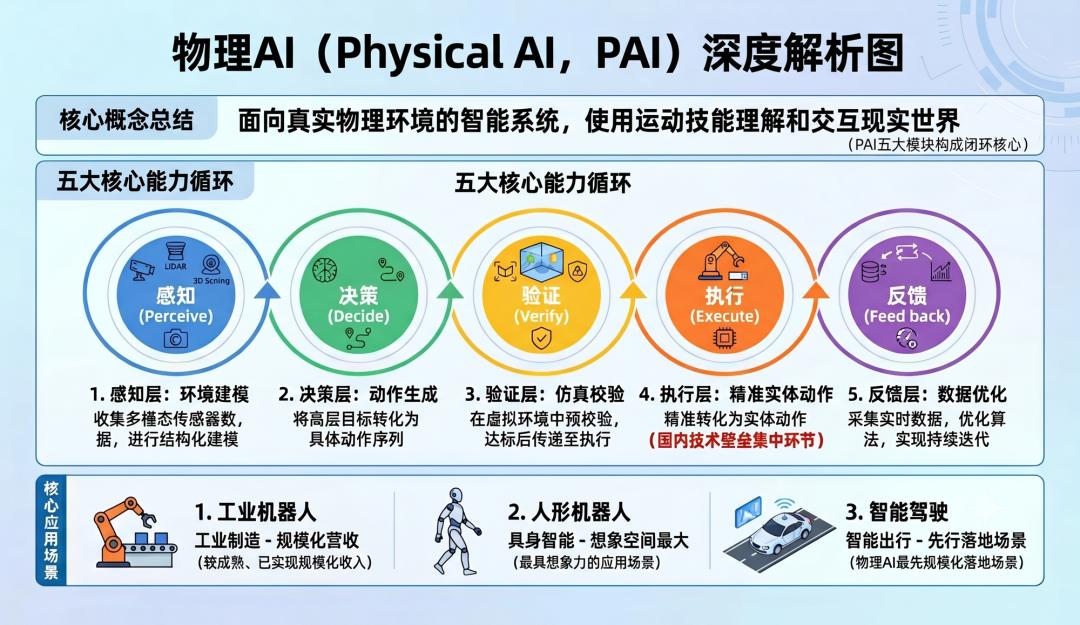
First, the spillover of large model technological capabilities equips Physical AI with a general-purpose "brain."
Three years of explosive development in generative AI have inadvertently paved the way for Physical AI. Transformer architecture, large-scale pre-training, multimodal fusion, reinforcement learning alignment — these proven technical methodologies from the large language model domain can almost be directly transferred to Physical AI.
The most critical transfer is the attention mechanism's ability to process spatiotemporal sequences. Large models use attention to handle contextual correlations in text, while Physical AI uses attention to process spatiotemporal correlations in vision, point clouds, and motion states. The shared technical foundation allows Physical AI to avoid building its system from scratch, directly reusing engineering experience, computing frameworks, and training methods accumulated in the large model era.
More importantly, large models have validated the feasibility of the path to general intelligence. In the past, AI for physical scenarios was developed on a case-by-case basis, with one model trained for each scenario requiring redevelopment when switching to new use cases. However, Physical AI built on foundation models possesses the potential for cross-scenario generalization. For example, a world model trained on autonomous driving can be adapted for robotics with minor adjustments; physical laws learned in industrial scenarios can also be transferred to logistics scenarios. This generality forms the basis for scalable replication of Physical AI.
Second, breakthroughs in simulation technology have solved the data bottleneck of Physical AI.
The biggest pain point of Physical AI is not algorithms, but data. Training large language models can leverage free text with trillions of tokens scraped from the internet. But training Physical AI requires massive volumes of real interaction data. Having a robot practice grasping objects 10,000 times in reality takes months and incurs huge hardware costs; making autonomous driving systems traverse millions of kilometers in extreme conditions is not only expensive but also carries safety risks. The difficulty of data acquisition long constrained the development pace of Physical AI.
The maturation of digital twin and physical simulation technologies has completely broken this bottleneck. Simulation platforms represented by NVIDIA Omniverse can construct highly realistic virtual physical environments: light reflection, object materials, friction, and gravitational acceleration can all highly replicate the real world, even simulating extreme conditions like rain, fog, and strong light. AI can train 24/7 in simulation environments, completing years of real-world driving mileage in a single day and testing countless extreme scenarios that would be unsafe to attempt in reality.
Even more critical is the maturation of "domain randomization" technology. In the past, the biggest problem with simulation training was the reality gap — the system performed perfectly in the simulator but failed when deployed in the real world. Domain randomization addresses this by randomly altering environmental parameters during simulation, such as object colors, light intensity, and friction coefficients, enabling models to ignore irrelevant distractions and focus on core physical laws, significantly improving the success rate of transfer from virtual to real environments.
Third, comprehensive reduction in hardware costs makes physical "bodies" finally affordable.
No matter how advanced AI algorithms are, they ultimately need to be deployed on hardware platforms. Over the past few years, hardware costs related to Physical AI have been declining across the board.
The most typical example is LiDAR. A decade ago, a single mechanical LiDAR unit cost hundreds of thousands of yuan, representing the largest cost barrier to the commercialization of autonomous driving. Today, the cost of solid-state LiDAR has dropped to the thousand-yuan range, with its size reduced enough to be embedded in vehicle bodies while performance has improved several times over. Beyond LiDAR, the costs of core sensors such as cameras, millimeter-wave radars, and IMU inertial measurement units are declining at an annual rate of 20%-30%.
Of even greater industrial significance is the widespread adoption of the "pre-installed mass production" model. Taking autonomous driving buses as an example, the industry previously relied heavily on retrofitting, where sensors and computing units were dismantled and added to mass-produced vehicles. This approach had high customization requirements, kept per-vehicle costs elevated, and extended delivery cycles to several months. The pre-installed mass production model, by contrast, integrates autonomous driving systems into the overall vehicle architecture from the design phase, using standardized platform development and leveraging the automotive industry's scaled supply chain to spread costs. This model not only reduces per-vehicle delivery costs by over 40% but also cuts delivery cycles by two-thirds, making large-scale commercialization economically viable.
Three Leading Tracks: Who Will Be the First to Reap the Dividends of Physical AI?
Physical AI represents a vast spectrum covering the entire physical industry, with implementation progress varying dramatically across different tracks. Based on current commercial maturity, three tracks have already validated their business models and entered the stage of large-scale deployment.
Autonomous Driving — The Most Mature Physical AI Implementation Case
If we were to identify the best example of Physical AI, the answer would undoubtedly be autonomous driving.
Many people fail to realize that a vehicle with full autonomous driving capabilities is currently the world's most mature, complex, and commercially successful Physical AI entity. It needs to perceive the 3D physical environment through multiple sensors, predict the motion trajectories of surrounding vehicles and pedestrians, make driving decisions based on traffic rules and road conditions, and ultimately control acceleration, braking, and steering to complete physical actions — while continuously collecting data and iteratively optimizing throughout the driving process. This fully covers the complete Physical AI closed loop of "perception-decision-validation-execution-feedback."
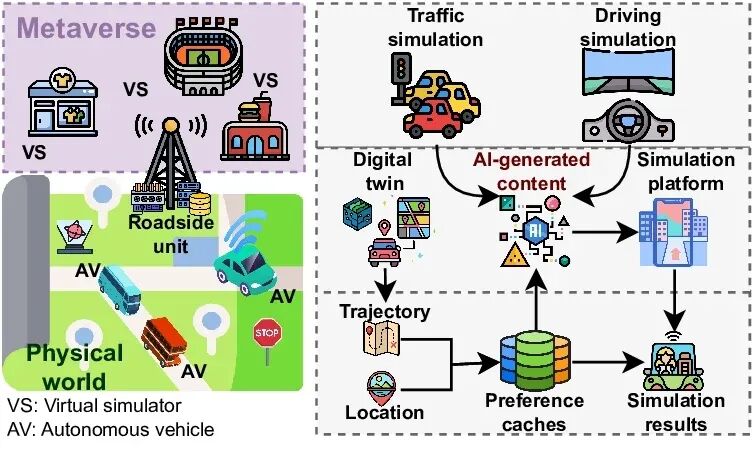
Compared to humanoid robots that remain in the demonstration phase, autonomous driving has already achieved genuine large-scale commercial operation. Among its sub-sectors, autonomous driving buses, trucks, and unmanned logistics represent the areas with the highest certainty and fastest deployment speed — fixed routes, closed or semi-closed scenarios, moderate speeds, and high scenario standardization have allowed them to cross the commercial threshold first. Autonomous driving companies such as Mushu Auto, Inceptio Technology, KargoBot, Neolix, and 9zhi Intelligent have realized platform-based development and large-scale application of autonomous driving technologies, delivering shorter cycles, lower deployment costs, and directly accelerating the commercial popularization of autonomous driving.
Industrial Intelligence — The Most Underappreciated Productivity Revolution
If autonomous driving is the most visible track of Physical AI, then Physical AI in the industrial domain is the quietest, most profitable track. It does not stand in the spotlight, but it is already silently reshaping manufacturing productivity.
The core form of industrial Physical AI is the closed loop of "digital twin + intelligent decision-making." Enterprises build 1:1 high-precision digital twins for production lines, equipment, and factories, completely replicating equipment status, production processes, and material flows in the physical world. AI simulates, deduces, and optimizes within the digital twin environment to generate optimal production strategies, which are then deployed to physical production lines for execution. Real-time data from physical production lines is fed back to the digital twin to continuously improve the model.
This model has already delivered tangible value in multiple scenarios. Predictive maintenance is one of the most widely deployed use cases: AI uses data such as equipment vibration, temperature, and electrical current to predict component failures in advance, completing maintenance before equipment shutdowns to avoid massive losses from unplanned downtime.
Beyond that, Physical AI continues to penetrate scenarios such as production line scheduling, quality inspection, and process optimization. For example, traditional quality inspection relies on manual visual checks, which are inefficient and have high missed detection rates. AI-powered quality inspection based on machine vision not only operates faster and with higher precision but also can identify an increasing number of defect types through continuous learning. Unlike consumer-facing applications, industrial customers have strong willingness to pay and clear ROI metrics, so commercialization progresses smoothly once the technology meets requirements.
Specialized Robots — Pragmatic Deployment from "Performance" to "Practical Work"
Humanoid robots represent the most imaginative direction for Physical AI, but they are also the farthest from large-scale commercialization. The first to achieve commercial deployment are specialized robots focused on specific scenarios.
For a long time, the public perception of robots was that they could dance impressively but could not perform practical work effectively. Traditional industrial robots are pre-programmed, capable only of repeating fixed actions in highly structured environments and failing to operate when the environment changes even slightly. Physical AI endows robots with environmental adaptability and autonomous learning capabilities, allowing them to handle a certain degree of unstructured scenarios.
Currently, the most commercially mature specialized robots are concentrated in the logistics and warehousing domain. Autonomous Mobile Robots (AMRs) can independently plan paths, avoid obstacles, and complete material handling tasks in warehouses, replacing traditional manual forklift operators and porters. These scenarios have relatively controllable environments, clear demand, and well-defined ROI calculations, and are already in a phase of rapid popularization. Beyond that, specialized robots such as inspection robots, cleaning robots, and sorting robots are also rapidly penetrating their respective use cases.
In contrast, general-purpose humanoid robots remain in the technology validation and small-batch pilot phase. Their appeal lies in their "generality" — theoretically, they can replace humans in all physical labor tasks — but this very generality also exponentially increases technical difficulty. Balance capabilities, dexterous manipulation, environmental generalization, and cost control are all world-class challenges. The industry generally agrees that specialized robots will first experience explosive growth, while large-scale commercialization of general-purpose humanoid robots may require another 5 to 10 years of technological accumulation.
Three Cognitive Misconceptions: Don't Underestimate Physical AI
As the concept gains popularity, one-sided interpretations of Physical AI have emerged in the industry. Three common misconceptions deserve special clarification.
Misconception 1: Physical AI Is Just a Smarter Robot
This is the most widespread misunderstanding. Robots are one of the carriers of Physical AI, but by no means the only one.
Physical AI is a technical paradigm — any AI system that directly perceives the physical environment and acts directly on the physical world falls under the scope of Physical AI. Its carriers can be vehicles, robots, but also factory production lines, port gantry cranes, urban traffic systems, and hospital surgical equipment.
Conversely, not all robots qualify as Physical AI. Traditional pre-programmed industrial robots and remotely operated drones are just automation equipment without autonomous cognition and decision-making capabilities, so they do not belong to Physical AI. Simply put: automation is "following preset instructions," while Physical AI is "acting based on real-time conditions"; robots are the "body," while Physical AI is "the mind that understands the physical world." Having a body without a mind is just mechanical automation; having both a mind and a body is genuine Physical AI.
Misconception 2: Physical AI Will Soon Fully Replace Humans
Every breakthrough in AI technology triggers a wave of unemployment anxiety, and Physical AI is no exception. Objectively, however, Physical AI is still very far from fully replacing humans.
All currently deployed Physical AI systems are concentrated in structured, repetitive, rule-defined scenarios, such as autonomous driving on fixed routes, standardized material handling, and procedural quality inspection work. The common features of these tasks are few environmental variables, fixed action patterns, and clear evaluation criteria — precisely the types of work that humans are not good at and do not want to