Have urban services become a new testing ground for embodied intelligence?
The same robot, if placed in a factory workshop and on an urban road, is essentially facing two completely different worlds.
In structured scenarios (such as factory workshops), the deployment of robots has been very mature, but once entering open environments (such as urban roads), the difficulty level is completely different. Especially in urban outdoor environments, robots need to operate non-stop 7×24 hours, which requires them to withstand wind, sun exposure, and constant flow of pedestrians and vehicles.
The *Embodied Intelligence Development Report* released by the China Academy of Information and Communications Technology summarizes the current situation in one sentence: It is difficult to form a closed loop for data, models, ontologies and scenarios. But there is no doubt that embodied intelligence in 2026 has begun to move from the technical verification stage to the scenario implementation stage, and urban services are becoming a crucial test field to verify all implementation capabilities.
Facing this status quo, Kusa Technology, which aims to "enable embodied intelligence to serve open urban scenarios", has made a clear choice: integrate the full-stack engineering of data collection, model training and robot deployment, let robots operate in the real world first, and ensure stable performance. According to Kusa's judgment, to bridge the gap of large-scale implementation, both R&D and engineering capabilities must be excellent at the same time.
Kusa was founded in 2023. Its core team comes from universities such as Tsinghua University and Shanghai Jiao Tong University, and core members have 15 years of R&D and management experience in complete vehicles, robots and autonomous driving. Its core products are service robots for open urban scenarios, which have been deployed and operated in more than 40 cities.
In mid-July this year, Kusa Technology released an embodied intelligence development platform, Kusa Robo Platform. The platform has a clear positioning: it is an engineering platform specially built for city-level embodied intelligence deployment, forming a full-stack closed loop from data collection, model training to multi-terminal deployment and remote operation and maintenance. As one of the few companies that have actually entered this test field, Kusa aims to use this platform to answer a question that no one in the industry can clearly explain:
Why is building a dedicated platform the key to the large-scale implementation of embodied intelligence?
01. Why is city-level embodied intelligence so difficult?
Teams that transition from autonomous driving to robot R&D almost all thought at the beginning that they only needed to upgrade 2D problems to 3D ones.
Kusa's team thought the same way at first. It seemed not very difficult to upgrade from a flat plane to 3D space, but when they actually dived into real scenarios, they found that the benchmark had completely changed.
The most essential difference lies in the change of evaluation methods. In the same scenario, the task of a passenger car is to travel from point A to point B without collision and with a comfortable riding experience, which counts as success. But an urban sanitation robot is the opposite: it needs to actively make contact with various objects and make corresponding judgments.
For example, for a bulging black plastic bag on the road, no matter whether it contains bricks, a mineral water bottle full of water, or an empty bottle, the actual required handling methods are vastly different. For autonomous driving, it is enough to roll over it or bypass it, but a sanitation robot has to try to sweep it, and decide what to do next only if it cannot be moved. Because the hard indicator of sanitation work is to clean up all garbage, bypassing every object means the robot is not working at all.
The change of evaluation method hides an underestimated dimension and difficulty: physical interaction.
Tao Sheng, Co-founder and CTO of Kusa Technology, told 36Kr that autonomous driving pays little attention to contact mechanics, because the automotive industry has many years of accumulation and the chassis is "already well developed". However, urban service robots must fully couple the torque feedback and rotation control of the end cleaning structure with the control of the whole vehicle. This is the core difference between the leap from "vehicle" to "robot". To handle physical interaction well, sensors alone are not enough, and the model must understand the physical world itself.
02. Why choose urban scenarios specifically?
Tao Sheng said that the core judgment comes from seeing real and urgent demands:
Urban spaces have high complexity and strong technical barriers, and can directly generate implementable commercial value, making them the most suitable ground to verify the engineering capabilities of embodied intelligence. More importantly, the market penetration rate of the urban service robot industry is very low, less than 1%, which is a blue ocean to be developed.
A business that is difficult to carry out but has clear returns is also a "difficult but correct thing" worthy of long-term technical investment. This threshold determines that city-level embodied intelligence requires a dedicated engineering platform, and Kusa's answer is Kusa Robo Platform, which starts with three core technologies.
03. Base, Fuel and Brain
The three core technologies released this time have clear respective divisions of labor.
Kusa OS is a dedicated operating system for city-level embodied intelligence, responsible for the stable operation and real-time scheduling of robots; Corner Factory is a data factory, responsible for automatically mining, cleaning and labeling long-tail scenarios from data; Kusa Omni-CTS is a multimodal embodied model, responsible for the complete link from scenario perception, cognitive understanding to action output. The three technologies answer the same question: how can robots operate stably, learn quickly and understand scenarios in cities?
The first problem Kusa OS solves is "stable operation". The origin of this operating system can be traced back to 2018, when Kusa's core team was working on port autonomous driving.
ROS2 is the most mainstream open source software framework in the robotics community. It focuses on flexibility and ease of use in design, which facilitates researchers to quickly verify new algorithms, but at the cost of insufficient hard real-time performance, resulting in unpredictable latency and jitter, and potential risks in urban service scenarios that have very high requirements for long-term stability and real-time performance.
This is also the core reason why Kusa independently develops Kusa OS from the bottom layer.
Just like urban services, port scenarios also require 7×24 hours of non-stop operation, with very high requirements for long-term stability and real-time performance. Starting from the real demands of scenarios, Kusa independently developed a full set of systems from scratch based on data distribution technology. The core idea is to make the system more streamlined, and each module is strictly controllable. A smaller system can be more stable.
In the process of long-term iteration, it has solved three major problems for the industry: long-term stability, deterministic scheduling, and latency jitter reduction.
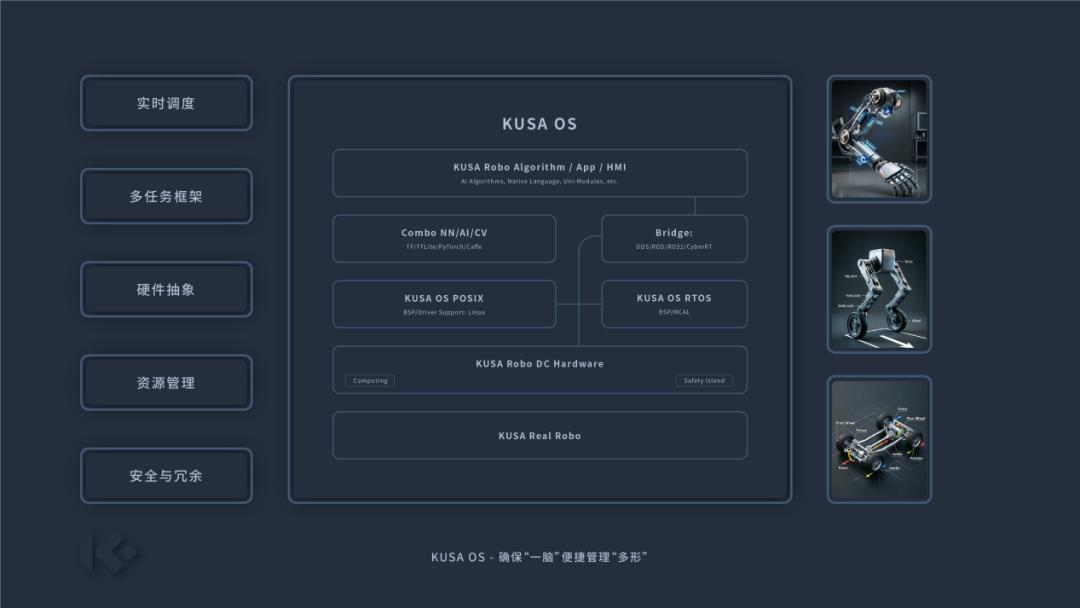
However, the cost of independently developing the OS in the past few years is also very real.
"Even now, I am still struggling with it," Tao Sheng described. The biggest challenge is the incomplete toolchain. The ROS2 community originally has a large number of open source contributions covering the full link from real-time visual monitoring, robot dynamics simulation to world scenario reconstruction, but all of these need to be built by the team itself for self-developed systems. Kusa's solution is to build a new programming toolchain, use descriptive language to automatically generate initialization code, and minimize the migration cost.
The cost of independent research and development has finally brought underlying freedom and real-time stability.
If the OS is the base, then Corner Factory is the fuel, because it solves the problem of "continuous learning".
Kusa's data flywheel has been fully validated: when the company's first mass-produced product was launched, the entire pipeline was already connected, and now the proportion of automatic labeling has increased from 80% in the early stage to over 90%.
According to Tao Sheng's introduction, a complete data link works as follows: when a robot encounters an abnormality during operation and triggers a stop, it automatically saves multi-sensor data for several seconds before and after the incident. After returning to the operation station, the dedicated data collector transmits the data back to the data factory. The data first undergoes desensitization for faces, license plates and other sensitive information, then enters automatic labeling, which has been upgraded from early 2D segmentation and classification to 3D occupancy grid and 3D reconstruction. Manual staff perform the final repair and confirmation, then a dedicated model filters out the long-tail scenarios that are truly worthy of learning, and the data is stored in the library for model training.
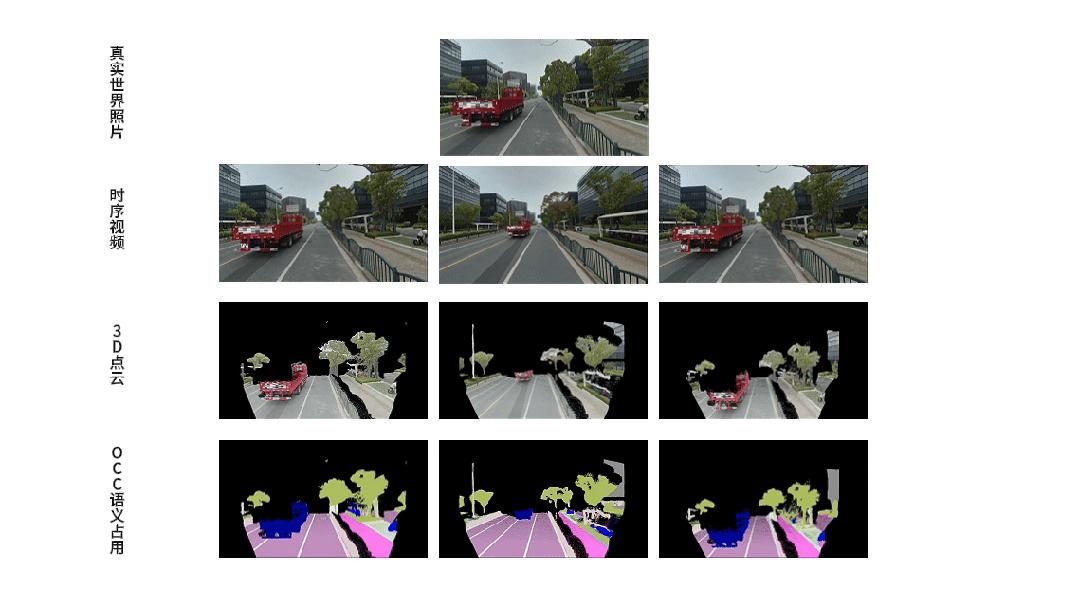
In Corner Factory, Kusa Omni-CTS generates time-series video streams based on single-frame real scenario input, and synchronously derives 3D point clouds and OCC semantic occupancy from them. Kusa Omni-CTS takes OCC/3D point cloud as the core intermediate representation, builds physical-level spatial constraints between 2D observations and 3D structures, ensures the accuracy of spatial understanding, and supports the efficient operation of the data closed loop and weekly-level model iteration.
But Tao Sheng also said frankly: "The data flywheel or pipeline is not the barrier. Data is the real barrier. Because data is extremely related to scenarios, what you have not seen is what you have not seen, and it is impossible to make it up by engineers' imagination. The first-mover advantage brought by the data flywheel essentially requires time multiplied by volume."
The top-level Omni-CTS, as the brain, solves the engineering problem of making robots "understand scenarios".
Tao Sheng explained that the "first principle" of Kusa's model is: the difficulty does not lie in a specific technology, but in the change of thinking method. He even joked: "We are just a patchwork monster". But the patchwork is not random assembly, but integrating cutting-edge ideas from different fields such as video generation, spatiotemporal encoding, and 3D Gaussian into an original solution.
There is a more accurate statement in the engineering field: this is an innovation of model structure - it breaks through the difficulty of asynchronous input of the model.
The core problem is also very specific. On real robots, multiple sensors are inherently unaligned. For example, LiDAR works at 10Hz, the camera at 30Hz, and the IMU may be at 1000Hz, and the data arrives at completely different rhythms. Forced synchronization will either cause waiting lag or generate contradictions, and the model performance will drop significantly directly.
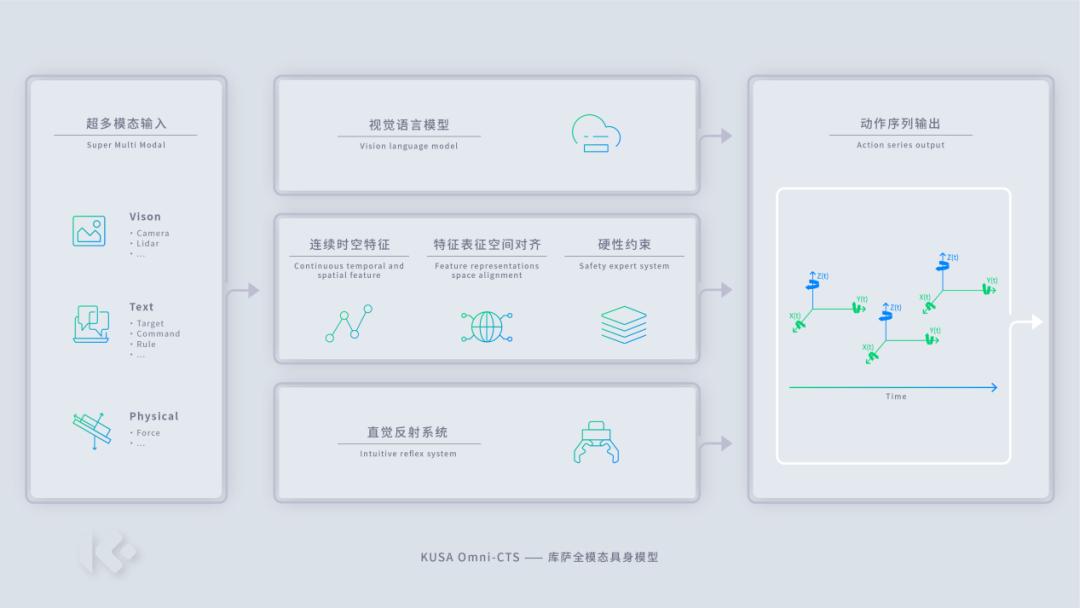
This is exactly the problem Kusa Omni-CTS aims to solve, and its solution is divided into two layers:
The first layer is cross-modal asynchronous feature alignment. Abandoning traditional discrete frame alignment, it constructs continuous spatiotemporal curves in the high-dimensional latent space. Vision, LiDAR, IMU, and torque feedback are collected at their own respective rhythms, and automatically "align the clocks" after entering the model, allowing data to flow naturally without relying on expensive hardware synchronization.
The second layer is physical consistency prediction - which is the response to the "physical interaction" problem. It constructs continuous trajectories conforming to physical dynamics in the high-dimensional space. The model can not only understand what is happening currently, but also predict various possible subsequent situations in advance based on physical laws and environmental changes, and then select the most reasonable execution method.
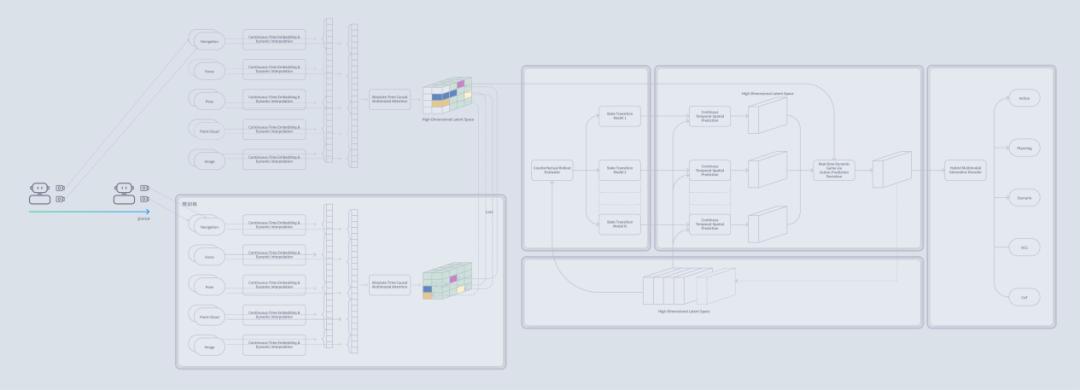
Kusa Omni-CTS model structure diagram: a multimodal model based on continuous spatiotemporal prediction
From the hardware perspective, this design does not require many hardware changes, but it solves the problem of significant decline in model capability when time jitter occurs. In the embodied intelligence field, multimodal fusion is the ultimate solution, which has high performance ceiling and can guarantee basic performance at the same time.
For Kusa, R&D and engineering are never two separate things. R&D alone cannot achieve implementation; engineering alone cannot maintain technical barriers. Kusa chooses to carry out the two tasks simultaneously. The structural innovation of Kusa Omni-CTS and the underlying reconstruction of the self-developed OS are supported by solid R&D capabilities; and the coupling of OS, data flywheel and multimodal fusion turns R&D achievements into an engineering system that operates stably and learns quickly. It can be said that R&D is Kusa's basic skill, and engineering is its killer feature.
The three technologies together form a closed loop of cognitive evolution. Looking deeper, each individual technology may be replicated in the short term, but the deep coupling of OS, data flywheel and multimodal fusion, multiplied by the time accumulation in urban scenarios, forms a full-stack collaborative systematic advantage, building a unique moat for Kusa.
04. Has it been fully validated?
Since we mentioned this is an exam, what is more important is the score.
At present, Kusa's embodied intelligence products have been deployed in more than 40 cities. In terms of growth rate, starting from zero in three years, the delivery scale has expanded several times or even dozens of times continuously. Such a steep growth curve has never appeared in this niche track.
In medium and large open road scenarios, Kusa has entered the stage of normalized operation where the business model is validated and actual operation value is generated. But Tao Sheng immediately poured cold water on the optimistic expectation:
In terms of stock, the large-scale problem has not been perfectly solved. The scenario generalization capability still needs to be enhanced, the hardware has not been tested by extreme weather, and the milestone of increasing production capacity from 500 units per single line to 5000 units is still in progress.
His original words are very straightforward, and carry a lot of weight for the industry: "Before full verification, everything is just empty talk."
This is because the mass production ramp-up from 0 to 1 is a breakthrough, 1 to 100 is a breakthrough, and 100 to 10000 is also a breakthrough. The problems faced at each stage are different, and in most cases, it is impossible to tell which stage is "more difficult".
The only thing that is certain is that on this ramp, technological iteration must be driven by real demands - the long-tail scenarios in the real world are always more than preset ones.
The first convincing scenario is a "unremarkable" fishing rod.
When Kusa expands from municipal roads to scenarios closer to people such as parks, industrial parks and scenic spots, the team sometimes encounters fishing rods set up by anglers, which are only one or two centimeters thick and stand alone. The team used to focus on ground segmentation to detect water pipes and wires, and never thought there would be such thin objects in the air, so they could only recollect data and retrain the model.
Tao Sheng gained an insight from this: before large-scale implementation, most technological iterations are aimed at newly discovered scenarios. The team cannot preset all problems at the beginning, and this is a gradual discovery process.
The second case is "paper and pencil next to the schoolbag".
In the evening, the robot sees a schoolbag, paper and pencil, with a student running nearby. Through semantic understanding of this image, it can judge that the running student ahead is likely to be the owner of the stationery, and the schoolbag and stationery are temporarily placed, so it chooses not to clean them; the next day, when the schoolbag and the person are no longer there, the same piece of paper will be judged as leftover garbage. The realization of this scenario judgment relies on the large model's semantic understanding capability of the entire image, which can associate people, objects, time and space together.
Whether it is identifying a fishing rod or understanding the scene after school, the reason why these iterations can happen quickly and be deployed to robots rapidly relies on the data flywheel of Corner Factory and the universality of Kusa Robo Platform.
In addition to long-tail scenarios, the platform must also support form switching. The most powerful evidence of the platform's universality is that one brain can manage multiple forms.