The proliferation of AI-generated faces triggers the uncanny valley effect: short dramas all look identical, and "real human presence" has become a scarce resource.
Never did we expect that homogenization in the AI era would arrive faster than imagined. Before diving into the article, let's first look at a screenshot from an AI-generated short drama:
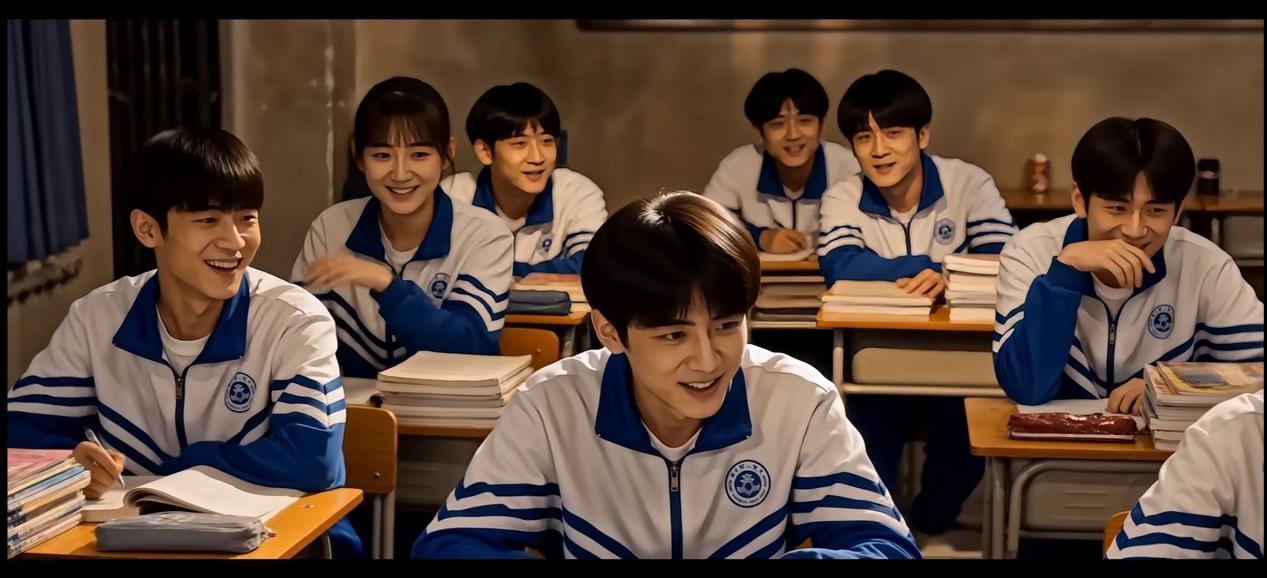
Image Source: Douyin AI Short Drama
You may have noticed that almost all male characters in these dramas look identical: the same face shape, the same hairstyle, even the exact same center-parted bangs. This phenomenon is not limited to a single drama—when you open another AI short drama, you will find that all AI actors, regardless of gender, share nearly indistinguishable appearances.
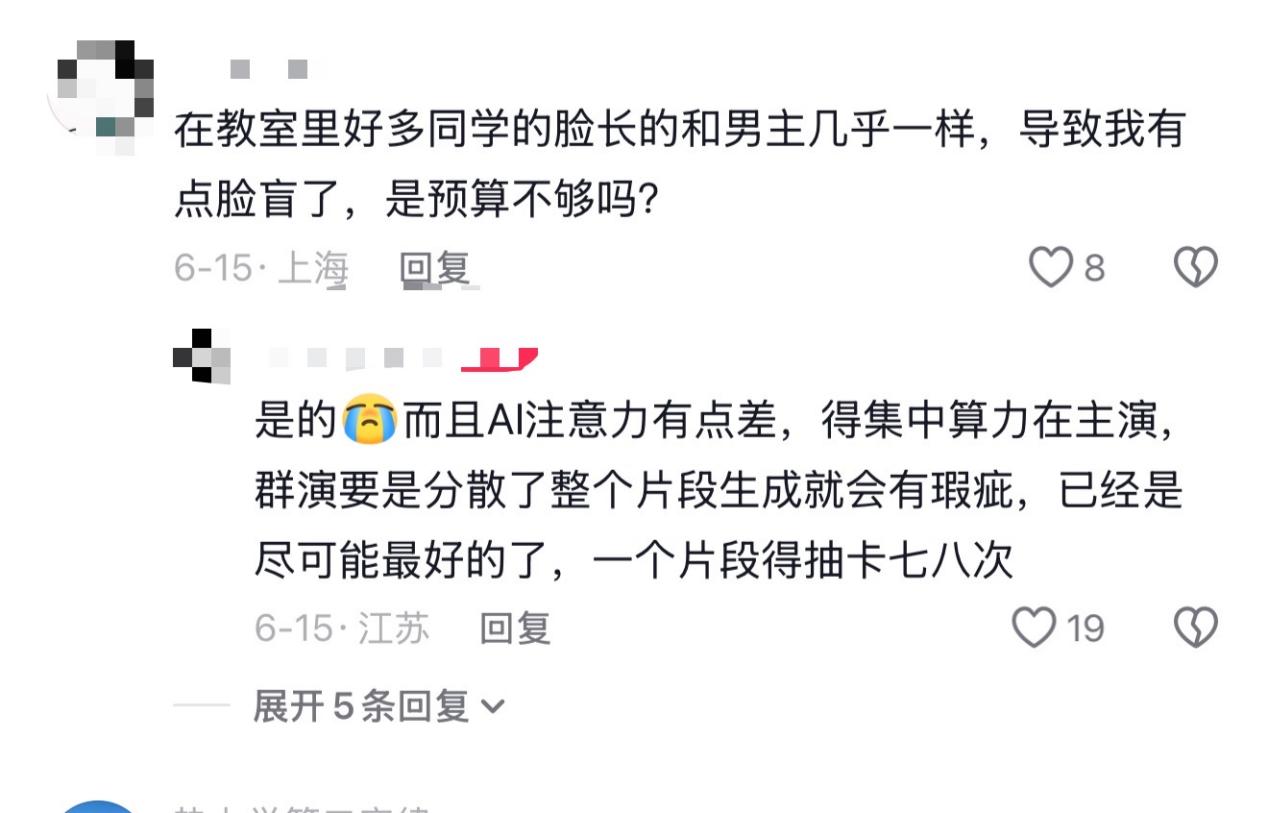
Some viewers in the comment section also spotted this issue, and the production team responded that this is already the best possible outcome, requiring 7 to 8 rounds of generation attempts for a single scene.
Lei Technology (ID: leitech) found that this is not an isolated case. According to data released by the China Online Audio-Visual Association in the first quarter of 2026, AI-generated micro short dramas have accounted for over 95% of all newly launched short dramas in the industry. That means, 9 out of 10 short dramas you scroll through are performed by digital actors.
Data from NewRank also shows that from January 1 to June 30, 2026, there were at least 9 AI-related videos (labeled as AI-generated) on Douyin that accumulated over 100 million total views.
The production volume has exploded, but the audience's patience has also hit its breaking point. On Weibo, a trending topic titled "AI Faces Uncanny Valley Effect" garnered 2.747 million total views. The topic highlighted that the same few AI-generated faces of men and women appear repeatedly in AI-simulated human dramas, causing physical discomfort for viewers. So why do almost all AI-generated faces look the same?
Identical AI Faces: Root Causes Lie in Data, Algorithms, and Cost
First of all, it is certain that AI's aesthetic preference is not innate—it is trained by massive datasets. Currently, over 70% of the training materials for mainstream image and video models come from social media and fashion websites, where the photos themselves are already highly homogenized: large eyes, high nose bridges, sharp chins, essentially the standard portrait features that attract the most traffic and achieve the widest dissemination.
When AI models generate human faces, they are essentially playing a probability game, whose top priority is to produce a face that absolutely looks like a real human.
To achieve this, the algorithm automatically converges to the statistical average of all human faces, smoothing out niche and extreme facial features—a mechanism called "central tendency stabilization". Droopy eye corners are gentler and less aggressive than upturned ones; a soft jawline is less likely to go wrong than a sharp, defined jaw angle. To avoid generating distorted or asymmetrical faces, AI tends to choose the safest combination of features.
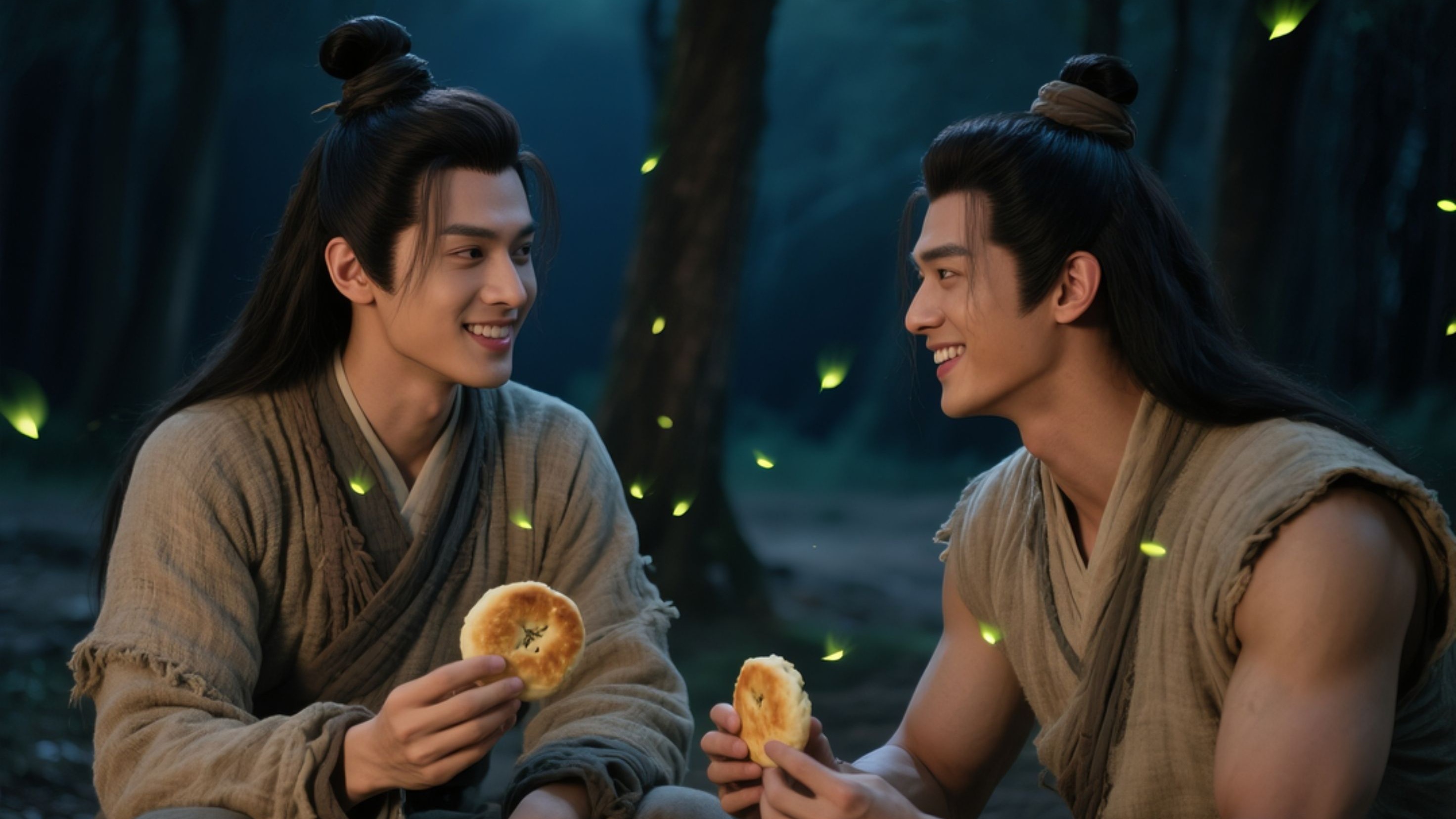
Image Source: AI Generation
Video models have even stricter requirements: they need to ensure that dozens or hundreds of consecutive frames show the exact same person from all angles, so they naturally favor faces with symmetrical features, standard contours, and easily controllable expressions—these faces remain consistent no matter how the camera moves.
Platforms are also fueling this trend: many video generation platforms have already enabled prompt enhancement by default. You might think you only entered a few simple keywords, but in reality, the backend has automatically added a full set of standard aesthetic presets: large eyes, high nose bridge, fair skin, soft lighting, cinematic texture, and delicate facial features. Everyone is fed the same set of descriptive terms, so it is no surprise that the outputs all share the same face.
Interestingly, when we explicitly add specific appearance requirements to the prompts, such as tanned skin, messy short hair, or black-rimmed glasses, the generated results immediately become diverse. This proves that the model is fully capable of producing varied outputs—the problem is that most creators do not provide sufficient detailed descriptions, so the system automatically defaults to its standard settings. Diversity requires deliberate design and investment, which the current assembly-line production model actively discourages.
From a cost perspective, the production cost of AI short dramas is inherently low. With the workflow of completing one drama per person per day, production teams have neither the motivation nor the time to individually polish unique character designs.
Wang Xiwen, Dean of the Beijing Huaxia Industrial Internet Intelligent Technology Research Institute, described the current standard process in an interview with China News Service: Creators first use viral, high-performing prompts to generate a standardized beauty baseline, then lock a fixed "seed value" to ensure the character's facial features remain consistent throughout the entire drama, and finally reuse this template to mass-produce more works.
There are even pre-packaged AI character libraries available online, including front-facing, side, and back view assets. Production teams directly purchase these ready-made material packs to train their models. When everyone takes shortcuts, the result is the entire internet sharing the exact same set of faces.
Homogenization Becomes a Major Flaw of AIGC, and "Human-Like Authenticity" Turns into a Scarce Value
We have to admit that in this AI era, the sense of real human authenticity is becoming a scarce resource.
A recent article published by People's Daily titled "Art Thrives on 'Human Touch'" pointed out: After watching 10 short dramas, 9 of the protagonist faces look like they came out of the exact same plastic surgery clinic. Homogenized appearances and rigid, empty expressions make mass-generated AI videos lose all warmth. The so-called "human-like authenticity" is the half-second hesitation hidden in an actor's gaze, the suppressed sob when their mouth twitches, or an improvised line in a local dialect. These tiny, uncalculated expressions that cannot be precisely predicted by algorithms are exactly what form the soul of performance.
If you think the "identical faces" problem only exists in AI short dramas, you are missing the bigger picture. AI music composition, AI animation, AI writing—almost all AIGC content tracks are accelerating toward homogenization.
For example, AI animation faces the exact same problem. When generating characters, it also relies on mainstream aesthetic preferences in training data, and is constrained by the algorithm's central tendency stabilization mechanism. The character designs in AI-generated comic dramas are also full of identical delicate facial features and standard contours. The only difference is that short dramas have realistic human face collisions, while animations have 2D character face collisions.
If the identical faces in AI short dramas make viewers feel uncomfortable, the novels written by AI are simply unreadable.
In February 2026, Tomato Novel took action against 855 violating accounts that abused AI for mass content creation. The announcement stated that these accounts updated hundreds of works per day, producing shoddy, highly homogenized, unreadable content—even the cover images were all identical.
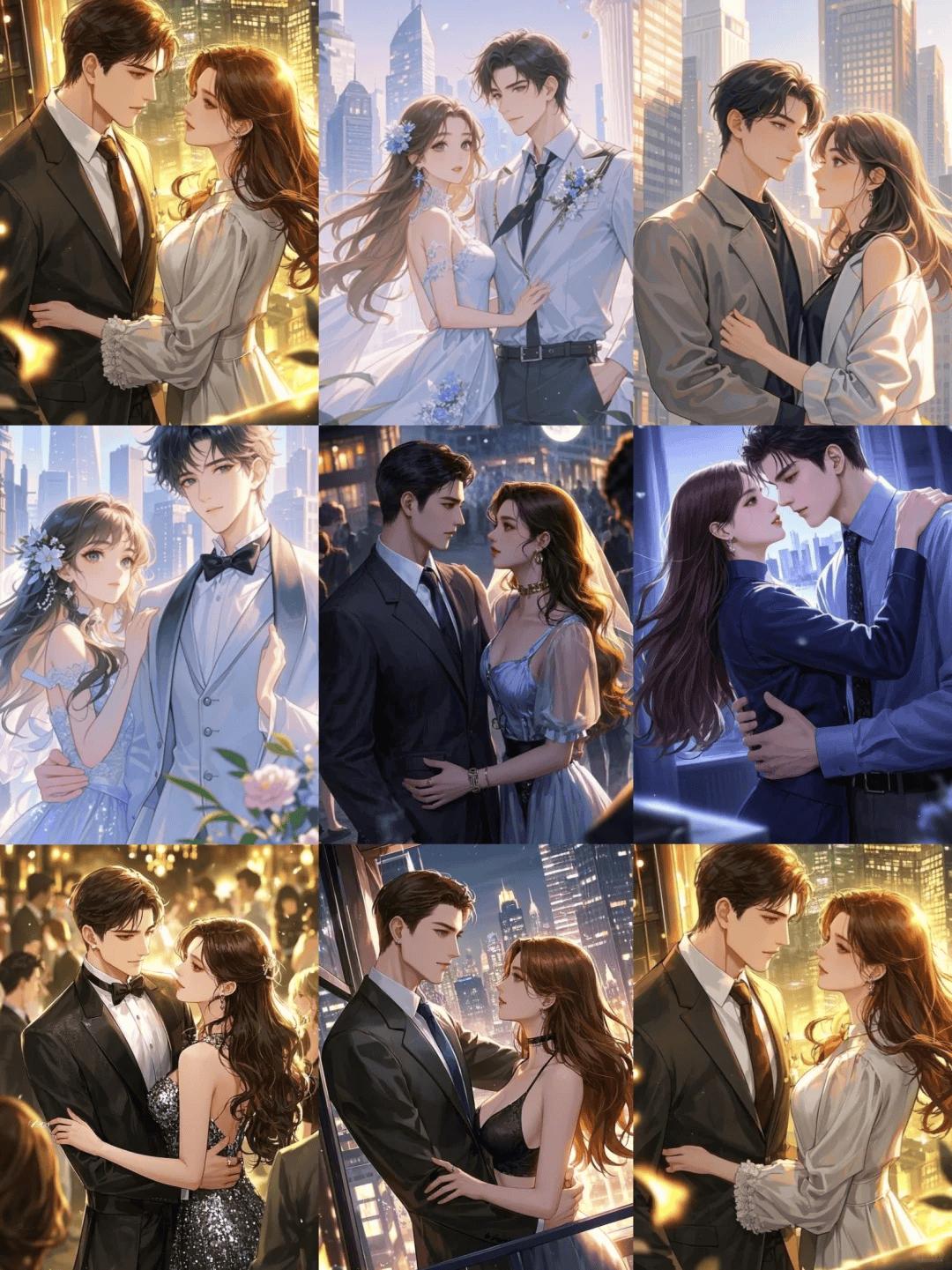
Image Source: Sohu.com
Statistics show that among newly launched novels in March 2026, the three overused tropes—"broken engagement revenge", "rebirth restart", and "system upgrade"—account for 62% of all works, over 90% of which are AI-generated. When you open a new novel, the first 10 chapters are all about the protagonist being rejected after an engagement, unlocking a cheat system, and then humiliating others to level up nonstop, exactly like eating pre-made food where every side dish tastes the same.
Around the same time, major US publishing house Hachette urgently pulled the popular horror novel *The Shy Girl* from shelves after an AI detection company found that 78% of its content was suspected to be AI-generated.
The homogenization of AI writing is even more severe than that of short dramas, because AI models are trained on the exact tropes of online literature. The massive amount of "broken engagement counterattack" and "underdog awakening" templates in training data are internalized by the model as the optimal solutions.
Research from a Microsoft team found that AI will give characters "selective amnesia" in long-form writing: for example, a childhood friend that was detailedly introduced in the first 3 chapters will act like a total stranger when they meet again in chapter 50; a protagonist who was established as a fire-attributed top-tier spiritual root in the early chapters will suddenly become a water-attributed useless nobody later, simply because the AI forgot the previous setting as it wrote.
Even if you modify vocabulary, adjust sentence structures, or change punctuation marks, they are only superficial fixes. The underlying narrative logic of AI is fixed: it prefers single-threaded storytelling, avoids moral ambiguity, has never experienced real life, does not understand death, and has no idea what unspoken, lingering emotions feel like. It can only follow a standard story template. As Professor Miao Huaiming from Nanjing University puts it: most AI-generated sentences are clichés, covering every aspect but lacking individuality and depth.
The Industry Is Addressing AI Homogenization, and Human-Like Authenticity Is Making a Return
So the question is: when can we return to the era full of "human-like authenticity"?
Research from Benchmarking shows that human-curated content with deliberate, subtle imperfections outperforms pure AI-generated content by 40%-60% in user retention time and share rates. A report from Hootsuite also found that consumers have developed aesthetic fatigue toward over-polished, overly perfect content, and the sense of real human authenticity has become an anchor of trust.
This proves that the sense of real human authenticity is becoming a scarce resource. AI has indeed driven production costs down to the floor, flooding the market with massive homogenized content that temporarily drowns out real human-created works. But the audience's core demand has never changed: what people always want to see is a warm-blooded real person telling a story they truly believe in.
Fortunately, positive changes are already happening.
At the end of June, People's Daily published an article titled "Tired of AI Faces? The 'Human-Like Authenticity' Should Make a Comeback", which stated:
For the micro short drama industry, the audience's rejection of identical AI faces should not only trigger reflection, but also serve as a clear signal. First, technology can be used to reduce costs and shorten production cycles, but assembly-line production cannot replace artistic value and humanistic care. Second, AI is ultimately just an auxiliary tool, and professional work should still be handled more by professional real humans. Third, producing 100 "almost identical" products can only compete for the existing market share, while creating one memorable work is the only way to generate new growth.
The China Online Audio-Visual Association is also leading the formulation of the "AI Micro Short Drama Content Quality Evaluation Standard", in which character distinctiveness is listed as an independent scoring item. Once this standard is implemented, the cost for production teams to mass-pass reviews with the same generic face will rise sharply.
At the same time, overseas copyright lawsuits are also pushing the industry toward self-discipline. In March 2026, an independent actor in the United States sued an AI short drama platform, accusing it of using his facial features to train the model without authorization. Although the case was eventually settled out of court, it has sounded the alarm for all platforms.
AI can infinitely approximate real humans, but there is an insurmountable gap in this process: that suppressed sob, that gaze that lingers half a second longer, that improvised line in a local dialect.
Technology can never replace real human emotions. If AI-generated identical faces fill all our screens in the future, what we lose will not only be visual diversity, but also the most precious essence of art: the human touch.