In the post-Zhang Xuefeng era, who exactly has taken over the massive business of the college entrance examination?
On March 24, 2026, Zhang Xuefeng, a renowned expert in college application guidance for China's national college entrance examination (Gaokao), passed away in Suzhou due to sudden cardiac arrest at the young age of 41. What he left behind was a set of application methodologies that had offered hope to millions of families, along with a vacant niche in the Gaokao guidance market.
He has exited the scene, leaving no trace of his achievements behind. Yet this year's Gaokao season has arrived as scheduled, with public anxiety mounting steadily as everyone anticipates the emergence of a new leading mentor.
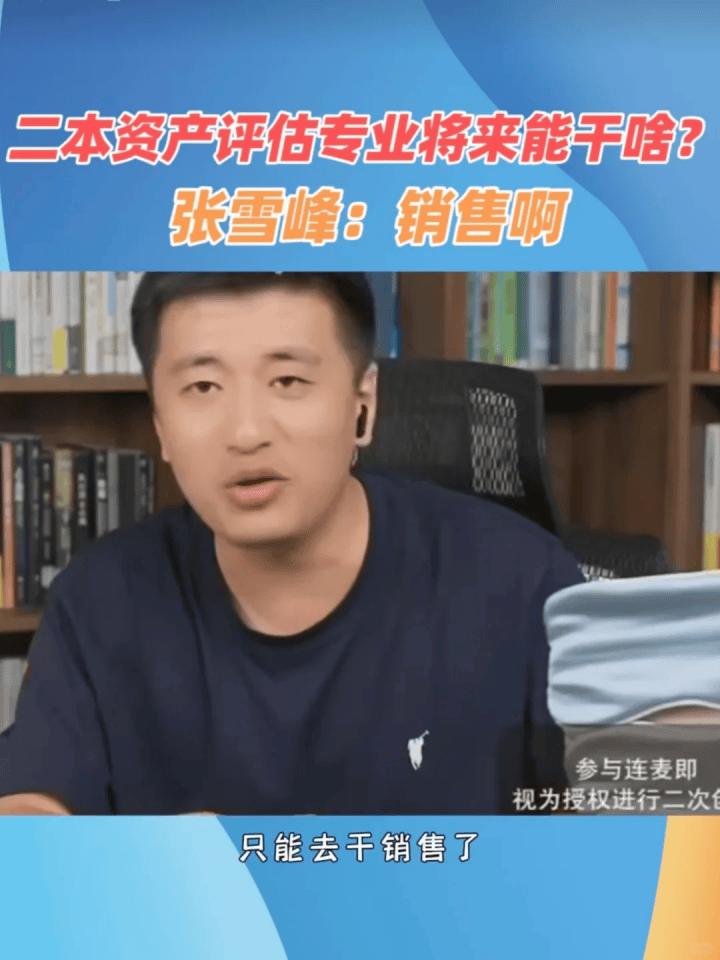
The popularity of Gaokao application guidance has kept rising after Zhang Xuefeng's passing
When the application window opened in July, the long-awaited "solution" for parents finally surfaced: there will be no next Zhang Xuefeng, but instead a wave of 24/7 accessible AI tools that charge no consultation fees.
During the 2026 Gaokao season, major tech corporations including Alibaba's Qwen, Tencent's Yuanbao, Baidu, and ByteDance's Doubao all launched dedicated AI Gaokao application features. On the very first day of score releases, tens of millions of query requests flooded these AI platforms simultaneously.
As of June 24, over 14 million users had utilized Qwen's AI Gaokao Application Agent to look up universities, majors, and consult on application strategies — a figure that even exceeds the total number of 12.9 million Gaokao test-takers nationwide in 2026. Since the Gaokao commenced on June 7, the volume of Gaokao-related inquiries on Qwen has seen a consecutive 5-day month-over-month growth rate exceeding 100%, with the daily surge on June 25 surpassing 1000%.
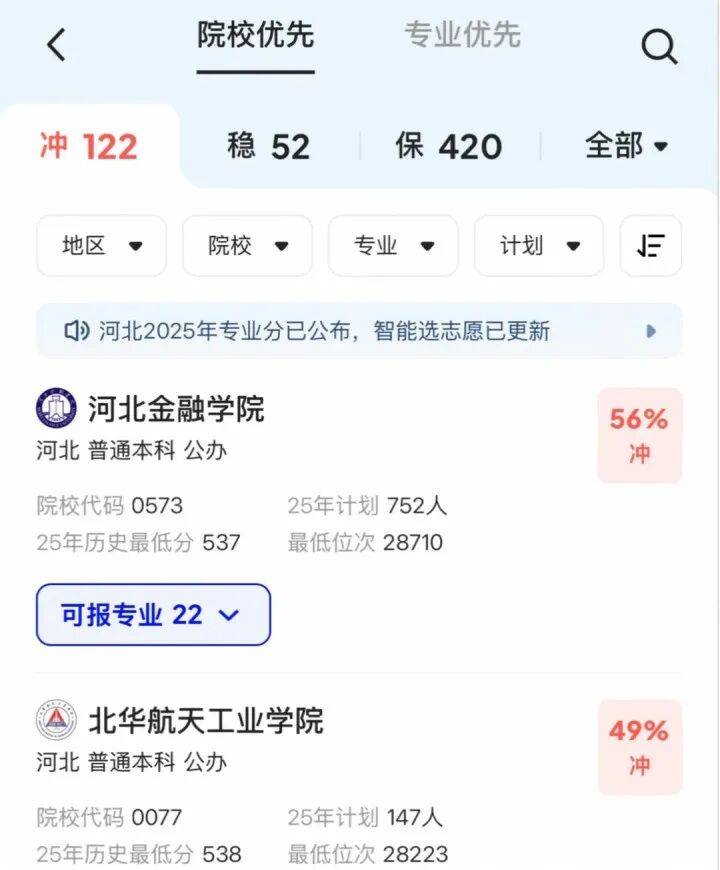
The Qwen App helps examinees analyze three tiers of application options and their corresponding admission probabilities
Baidu also delivered an impressive performance: it served approximately 250 million cumulative users throughout the Gaokao period, with total service interactions exceeding 1.2 billion, among which 15 million users utilized Baidu's AI Application Assistant. Tencent Yuanbao announced that its "Yuanbao Gaokao Guide" has answered nearly 80 million questions related to Gaokao applications.
Behind these staggering numbers lies an industry that is being fundamentally reshaped by AI.
AI-powered college application guidance has exploded in popularity this summer
Renowned Gaokao tutors charge hundreds or even thousands of yuan per class, yet even parents who accompany their children through studies often cannot grasp advanced academic concepts such as derivatives or conic sections. They can only verify their investment is worthwhile by tracking their child's exam rankings.
But Gaokao application guidance is fundamentally different: it delivers immediate, tangible results. Parents do not need to understand any specialized knowledge — they only need to recognize university names, admission scores, and employment prospects. The barrier to entry is so low that anyone can participate, and the deeper their involvement, the more concrete their anxiety becomes. Information asymmetry is packaged as a simple multiple-choice problem that can be solved simply by purchasing the right service.
This psychological gap of "I can understand it, but I still can't handle it myself" has made the Gaokao guidance business far more commercially promising than academic tutoring itself. Many parents and examinees firmly believe that every point lost in the exam can be recovered through a well-crafted application: with smart choices, lower-scoring students can secure spots at top universities, and with accurate information, a single application form can rewrite one's life trajectory. This obsession with a life-changing turnaround has made Gaokao application guidance far more valuable than academic tutoring.
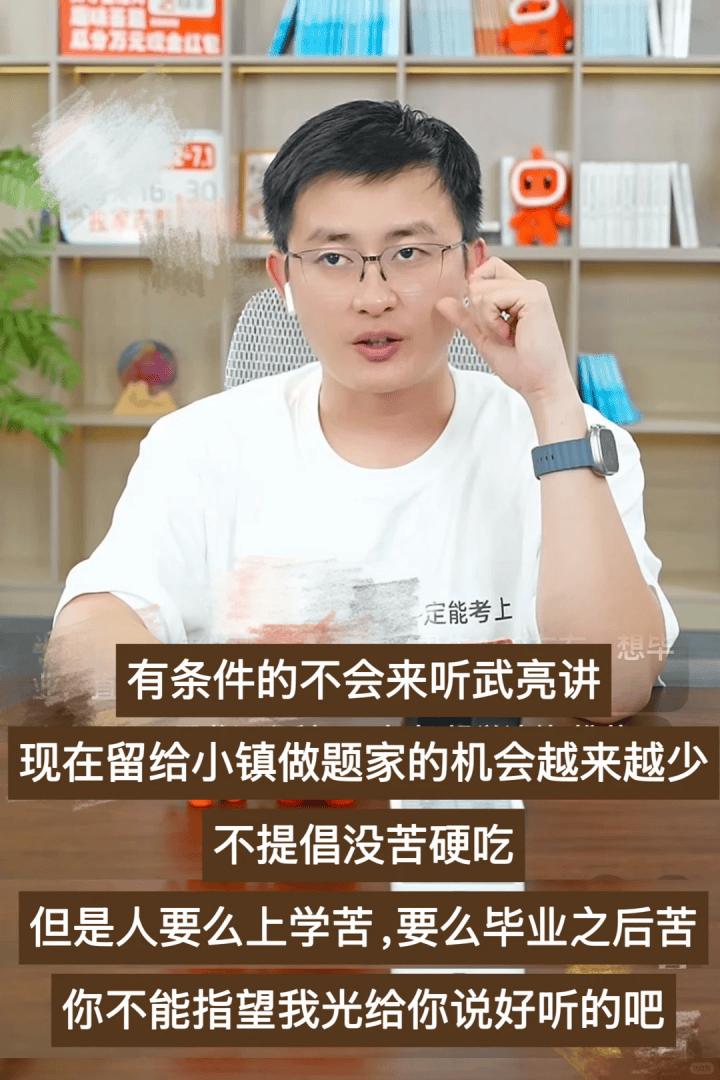
Wu Liang from Xuefeng Weilai has emerged as the new industry successor
At its core, Gaokao application guidance revolves around two key elements: information asymmetry and anxiety.
With over 3,000 universities and more than 2,000 majors across China, each province enforcing distinct admission rules, and the added complexity of concepts like "university-major clusters" and "major (category)" multiplying application difficulties, it is nearly impossible for an average family to fully grasp all these details within just a few days.
On score release day, 2026 Gaokao examinee Xiao Wu stared at the number on her phone screen for a long time: 618 points, ranking roughly 12,000th in the province — a decent but not exceptional score that left her in a state of utter indecision. She pulled out the thick, brick-sized application guidebook distributed by her school. Flipping to the table of contents, she saw densely packed names of universities nationwide, each followed by dozens of majors, along with years of historical admission score lines and ranking data.
Her target was a local 211 Project university, whose minimum admission ranking last year was 11,000th — slightly higher than her current ranking, though historical fluctuations were not uncommon. After flipping a few more pages, she found that the university's flagship major had an admission ranking of 9,000th last year, while its least popular major accepted students ranked as low as 13,000th.
"My mind went completely blank," Xiao Wu recalled. "Should I prioritize getting into the university, or securing a spot in a desirable major? What if I get admitted to the university but get displaced into a major I hate? If I prioritize the major, the university's reputation might not be strong enough — will that put me at a disadvantage when job hunting? I can't even make up my mind for this single university, let alone fill out dozens of subsequent application slots."
She turned to her parents for advice. Her father was firm: "If you can get into a better university, go for it — you can switch majors later once you enroll." Her mother insisted the opposite: "The major matters more than the university. Even a top university degree is useless if you study a major with poor employment prospects." Neither could convince the other, and eventually they passed the decision back to her: "You choose, we don't understand this stuff."
Xiao Wu was completely lost. She tried scrolling through short-video platforms for answers, but the algorithm quickly pushed her into a vortex of fear-mongering content: "2026's most problematic major rankings released," "These five categories of majors are being replaced by AI," "Rather than missing admission entirely, avoid these types of majors." Just as Zhang Xuefeng once dissuaded students from choosing civil engineering, journalism, and medical majors, every video conveyed the same message: pick the wrong major, and your entire life will be ruined.
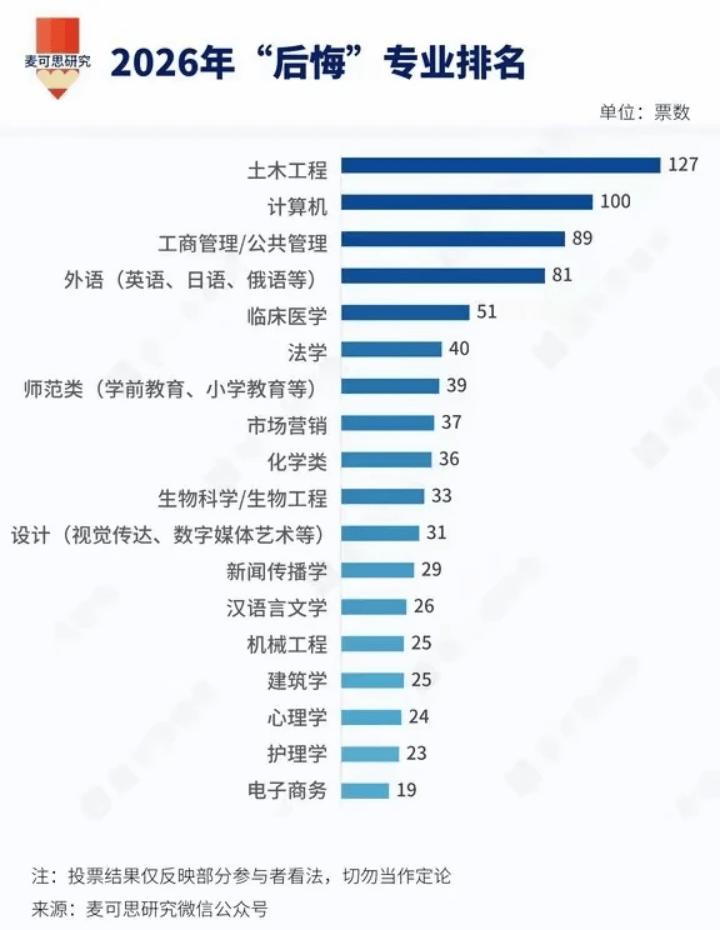
Major rankings that deliberately stoke public anxiety
After two sleepless nights, she saw a short-video creator recommend AI application guidance: input scores, rankings, and personal interests, and a full report would be generated in minutes. After downloading the tool, the AI quickly produced a comprehensive plan that clearly outlined three tiers of "reach, safe, and backup" universities, paired with detailed major employment analysis and historical admission trend data. She could even further customize the application list by sharing her geographic preferences and desired academic fields.
Yet even with everything prepared, Xiao Wu remained hesitant: "The AI has organized all the information for me, but I still don't know which option to pick — because I haven't figured out what I truly want. Can my entire life really be decided in just a few days?"
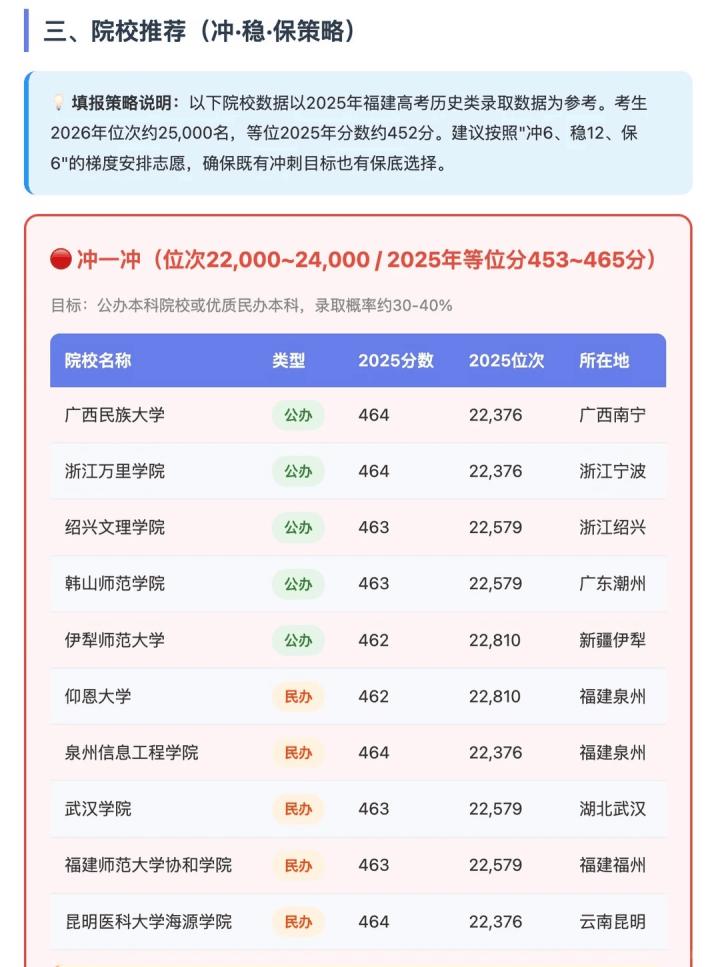
Workbuddy generates customized application plans based on each examinee's specific situation
Information asymmetry alone does not drive people to spend money — it is anxiety that makes parents willingly open their wallets.
Anxiety acts as a powerful amplifier for information asymmetry. On short-video platforms, slogans such as "Information asymmetry determines admission success or failure," "It's such a waste to underperform with a high score," and "Not a single point will be wasted" are repeated endlessly. The more confused parents become, the more panicked they grow, and the more eager they are to pay for peace of mind. Information asymmetry and anxiety feed off each other, tugging at parents' emotions like a game of tug-of-war.
A single point difference can send a student tumbling from a Double First-Class university to an ordinary undergraduate program. Even if they get into their dream university, they might be displaced into an unpopular major. Blindly following trends to apply for popular majors can later lead to career burnout if the field does not align with their interests or strengths. These real-life precedents have plunged countless examinees and their parents into deep anxiety.
A CCTV investigation found that well-known agencies tier their pricing into three brackets: 4,980 yuan, 8,980 yuan, and 12,980 yuan. The only difference between tiers is the claimed seniority of the tutors, labeled as 5 years of experience, 5-10 years of experience, and professor-level expertise with over 10 years of experience. In reality, these so-called senior application experts are often new hires with less than two months of work experience or part-time college students — their "credentials" are entirely made up on the spot.
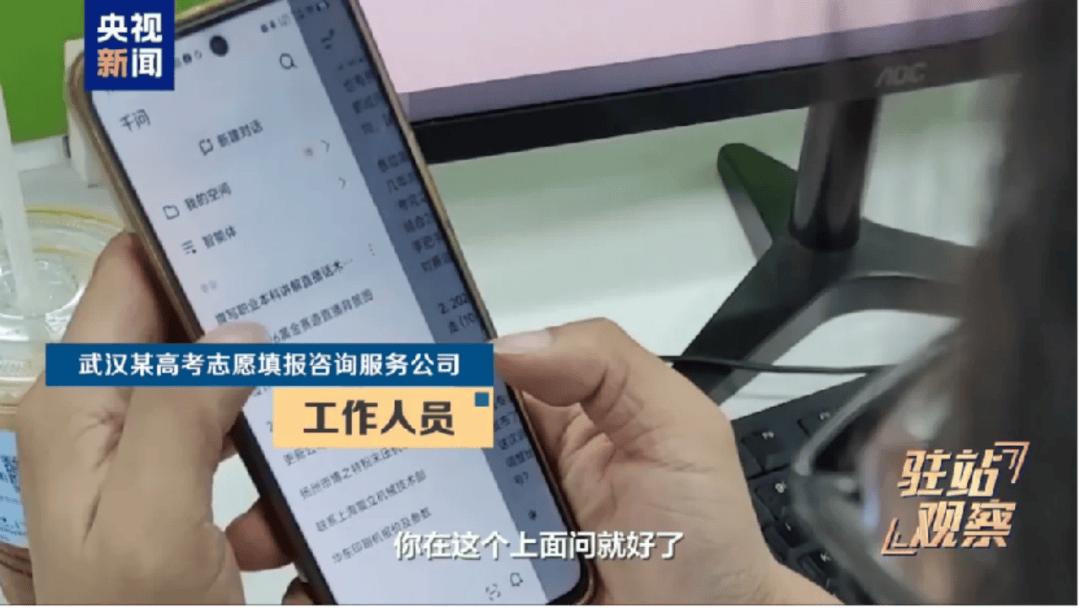
CCTV journalists visit unregulated Gaokao application guidance agencies
Agency employees themselves admit that their professional titles are self-assigned, and their certificates can be easily edited using photo editing software. They only need to undergo short, assembly-line style training before starting work. Their core tasks require no technical expertise at all: they rely entirely on free AI tools like Qwen to generate application reports, never studying admission policies or analyzing enrollment data themselves, simply copying and pasting AI responses to send to parents.
Yet parents are completely unaware of this. In CCTV's exposed footage, a parent confessed that he purchased a bundled service covering comprehensive evaluation applications plus 80 application slots for over 10,000 yuan, with 30 to 40 other parents in his school group also paying for the service. When asked why he was willing to spend such a large sum, he said the payment was mostly for peace of mind.
Swept up by the anxiety of "not wasting a single point" and "a good application matters more than a good exam performance," spending over 10,000 yuan for a sense of certainty seems more reassuring than letting their children take their chances on their own — even when the industry practitioners themselves cannot distinguish which information is AI-generated.
Information asymmetry leaves people unsure where to start, while anxiety makes them too afraid to proceed. AI can organize information efficiently, but if you do not understand your own true aspirations, you will still feel indecisive, hesitant, and regretful no matter which option you choose.
They are not application experts — they are AI "tamer"
Even more absurdly, many of these "application experts" who guide others through the process have never experienced the stress of college applications themselves, and in some cases, their own educational attainment is not even higher than that of the examinees they are advising.
Open the BOSS Zhipin job platform and search for "Gaokao Application Tutor," and you will find vacancies spread across the country.
An education group in Xi'an posted a recruitment notice for part-time Gaokao Application Tutors, requiring only a bachelor's degree, no prior experience, and offering free training. No relevant academic background, industry experience, or even personal experience with college applications or university enrollment is required. As long as candidates are willing to join, they can start working after just a few days of training. Another agency recruited short-term part-time application tutors at a partner high school in Daliangshan, offering a daily base salary of 400 to 450 yuan, plus performance bonuses of over 80 yuan for each completed student application. The entire training cycle can be as short as three days.
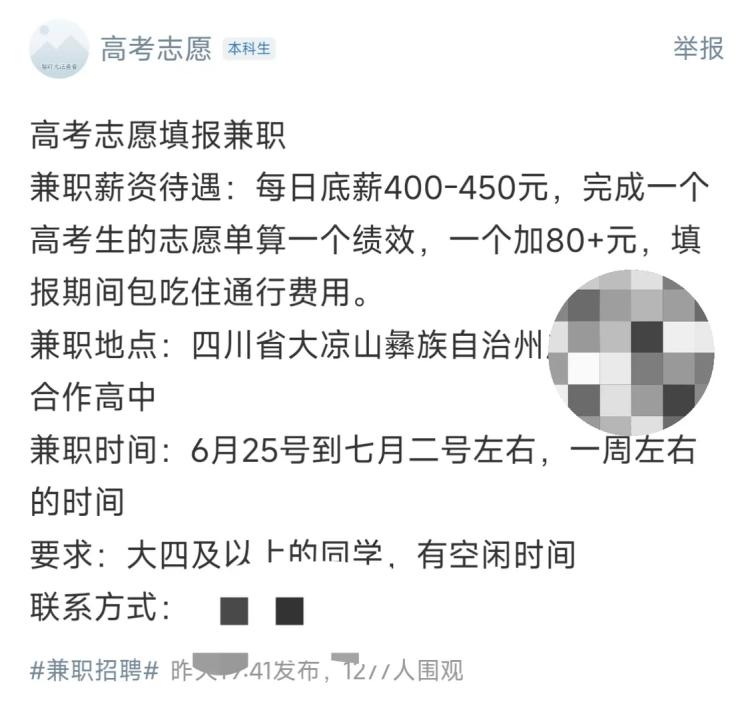
Part-time Gaokao application guidance roles have extremely low entry requirements
Xiao Zhou was one of these recruited part-timers. She graduated from college in 2025, with no background in education, academic advancement, or data analysis. When she came across this job posting on BOSS Zhipin, she barely even understood what a "Gaokao Application Tutor" was. But the job description sounded very appealing: a daily salary of 400 to 450 yuan, with all meals, accommodation, and travel expenses covered, and the work period lasting only about a week. She submitted her resume and quickly received an interview invitation.
The interview was far simpler than she expected. The interviewer did not ask her any questions about universities, majors, or admission rules — they only verified her educational background, available time, and communication skills. That same afternoon, she got the job offer: four days of training with daily assessments, followed by a second round of evaluation, after which she would start working directly with parents to develop application plans.
The training content surprised her. There was no systematic policy interpretation, no analysis of historical admission data, no explanation of provincial enrollment rules. The agency only provided her with a set of standardized script templates, several live-stream video clips, and a pre-written interactive script that she could read directly from. The core message her supervisor repeated throughout training was simple: "Direct all professional questions to AI, and focus all your energy on convincing parents to pay for our services."
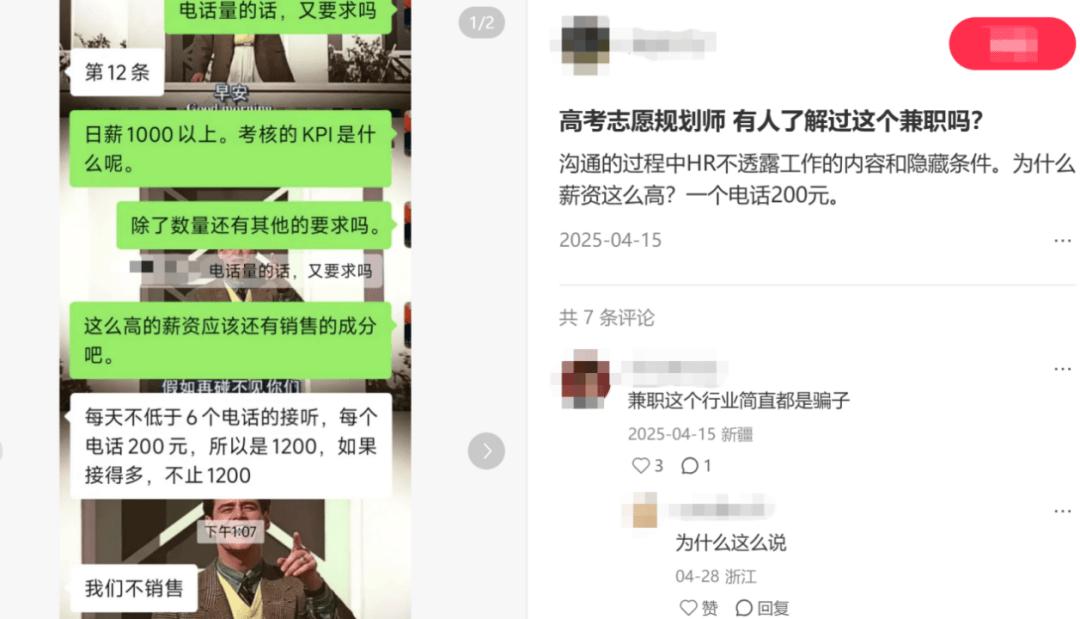
Many Gaokao application planners essentially perform sales roles
Xiao Zhou initially found this absurd. She herself had never gone through the regular Gaokao application process — as an art student, she took the separate college entrance examination for art programs, and only had a vague understanding of concepts