Led by a former Alibaba top talent, ByteDance's self-developed intelligent driving system emerges, and "Huadi Dimo" faces its strongest rival yet
Finally, ByteDance has taken this step.
According to 36Kr reports, ByteDance is advancing steadily into the autonomous driving field, with specific matters handled by Seed's world model team led by Zhou Chang, former technical director of Alibaba's Tongyi Large Model.
At this stage, advanced intelligent driving has become an essential feature for mid-to-high-end vehicle models, and it is continuously penetrating the mass market. Some products priced under 100,000 yuan are already equipped with L2+ level advanced assisted driving, while a small number of models are fitted with LiDAR.
Precisely because of the importance of autonomous driving, almost all domestic and foreign automakers are developing related technologies. Beyond car companies, there are numerous technologically leading autonomous driving enterprises. In China alone, there are the "Big Four" firms, alongside others such as Pony.ai, Baidu Apollo, and WeRide.
In such a fiercely competitive market, is it truly necessary for ByteDance to enter?
In the era of integrated cockpit-driving systems, ByteDance needs autonomous driving technology
The automotive industry is the largest industry in the world, with suppliers like Bosch, Denso, ZF, and Mobis each generating annual revenue reaching hundreds of billions of RMB. In 2025, battery giant CATL recorded a net profit exceeding the combined total of 14 listed automakers on the A-share market.
After entering the era of electrification and intelligence, many internet giants including Huawei, Xiaomi, and Baidu have ventured into the automotive industry, seeking a share of the market, and ByteDance is no exception.
Up to now, ByteDance's layout in the automotive sector mainly consists of two parts: connected car services and automotive cloud.
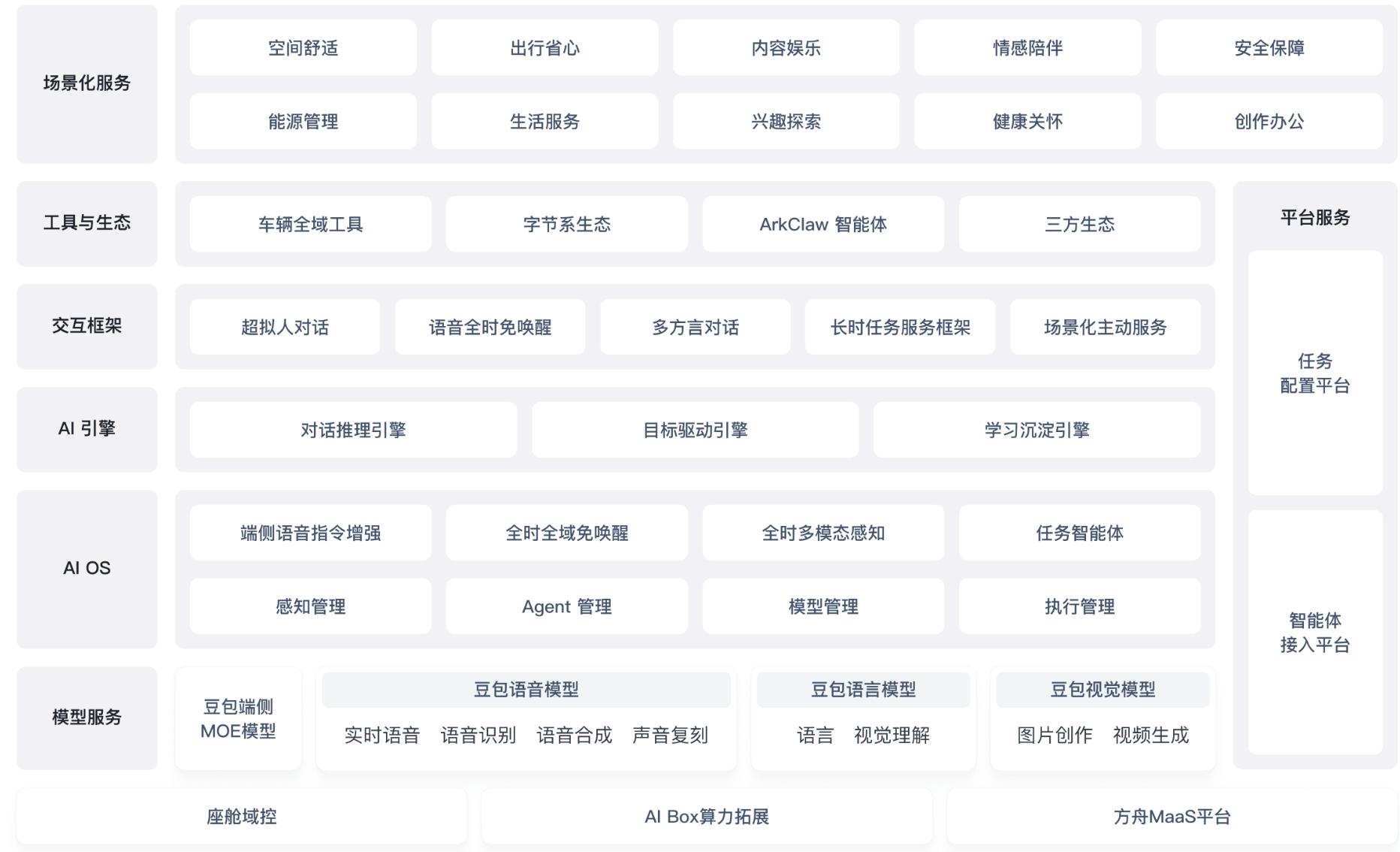
Connected car services refer to the intelligent cockpit and AI large models provided by ByteDance. As early as 2020, ByteDance established its connected car team, focusing on in-vehicle infotainment systems to integrate content like Douyin into the cockpit ecosystem.
(Image source: Volcano Engine official website)
Around 2023, ByteDance successfully deployed its Doubao large model in vehicles to provide AI services for users. During this year's Beijing Auto Show, Volcano Engine revealed that over 7 million vehicles are now equipped with the Doubao large model, covering more than 50 brands and 145 vehicle models.
ByteDance's automotive cloud offers infrastructure such as computing, network, and storage resources; autonomous driving cloud services that cover platform offerings including simulation training, data annotation, image rendering, and cost-effective GPU clusters; as well as content ecosystems spanning vehicle management, after-sales data analysis, and production data management.
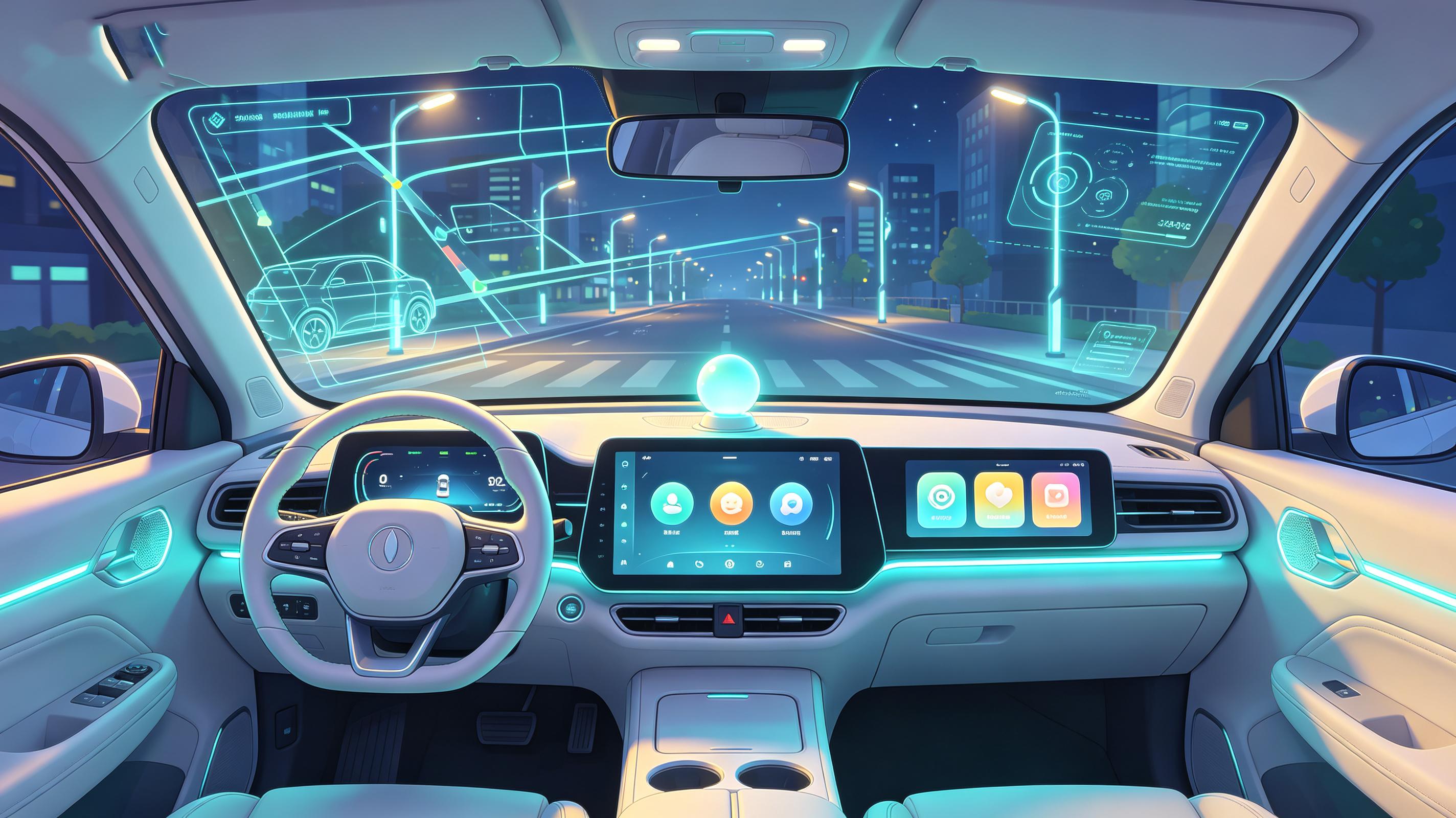
In the course of continuous evolution, Dianchetong (ID: dianchetong233) has observed a distinct trend emerging in the automotive industry: the integration of cockpit and driving systems. Leading new-energy vehicle manufacturers like Xpeng and Li Auto have already merged their autonomous driving teams with their intelligent cockpit teams.
Compared to distributed architectures, the integrated cockpit-driving system boasts advantages such as lower costs, reduced latency, native interconnection, free computing power scheduling, and higher OTA efficiency.
Even if the cockpit and autonomous driving technologies come from different vendors, an integrated cockpit-driving system can still be achieved. However, this requires coordinated scheduling between automakers and suppliers, resulting in higher technical difficulty, potentially extended development cycles, and inconsistencies in experience consistency and software reusability. If technological leadership slips away and the core intelligent driving algorithms and data closed-loop are controlled by third parties, ByteDance will be unable to deeply participate in the iterative development of intelligent driving.
(Image source: Generated by Doubao AI)
ByteDance needs its own autonomous driving technology to meet the demands of automakers and consumers in the era of integrated cockpit-driving systems.
Currently, the automotive project with the highest level of ByteDance's involvement is Saidou Auto under Seres. However, the intelligent driving solution for its first model, the AIVA ME7, was selected from a third-party autonomous driving company. If ByteDance's autonomous driving technology matures, Saidou Auto might choose ByteDance's solution instead of seeking another external supplier.
For ByteDance, autonomous driving technology not only allows it to claim a share of the automotive industry's market, but also serves as a ticket to the comprehensive layout of embodied intelligence.
The core of embodied intelligence is that devices can perceive the world through sensors and understand it via large models. Autonomous vehicles are undoubtedly the category with the highest general applicability, sales volume, and development prospects in the short term among all embodied intelligence products.
The collective entry of domestic and foreign automakers such as BYD, Xpeng, Li Auto, and Tesla into the robotics industry also proves that autonomous driving technology can be replicated in robots or other embodied intelligence products.
Is autonomous driving the ticket to embodied intelligence?
In the past two years, when automakers explain their self-developed autonomous driving technologies, they frequently mention a term: world model.
In simple terms, a world model can construct a deducible virtual world in the system's "mind", with its core lying in understanding physical laws, predicting the future, simulating trial and error, and evolving from "seeing" to "foreseeing" — it is also the core foundation of advanced intelligent driving.
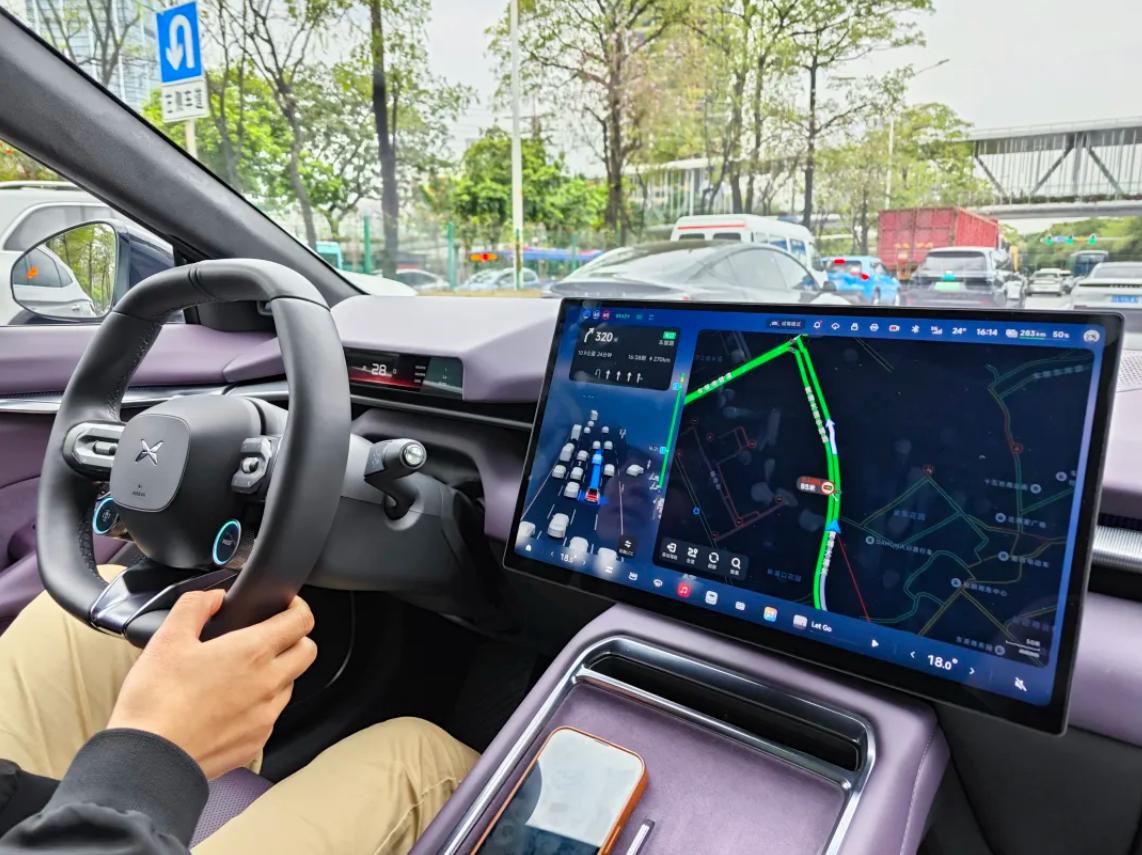
Xpeng's intelligent driving solution adopts a combination of world model and VLA. VLA enables judgment and decision-making, while the world model can predict the next actions of targets. The combination of the two ensures the controllability and safety of the system in complex scenarios.
(Image source: Photographed by Dianchetong)
In the era of embodied intelligence, the world model is absolutely an indispensable technology. ByteDance started its layout relatively early, making the development of autonomous driving technology based on the world model relatively less difficult. Moreover, training a world model requires massive amounts of data and super computing power. Leveraging ByteDance's 10,000-GPU level intelligent computing cluster, the Seed team can efficiently process multi-modal video sequences and road perception data, allowing the model to spontaneously learn physical laws, traffic common sense, and human driving behaviors.
In addition, training a world model requires a large amount of data, and vehicles equipped with advanced intelligent driving systems are the best "data collectors". Sensors such as cameras, LiDAR, and millimeter-wave radars mounted on autonomous vehicles can collect massive multi-modal data in real time, covering roads, vehicles, pedestrians, and the environment.
These data contain rich physical information (speed, acceleration, collisions, occlusions), behavioral information (human driving habits, traffic rules), and scenario information (urban areas, highways, parks), which are "high-quality data" for training world models and physical AI.
The capabilities of Tesla's Optimus humanoid robot are inseparable from the billions of miles of real data collected by FSD.
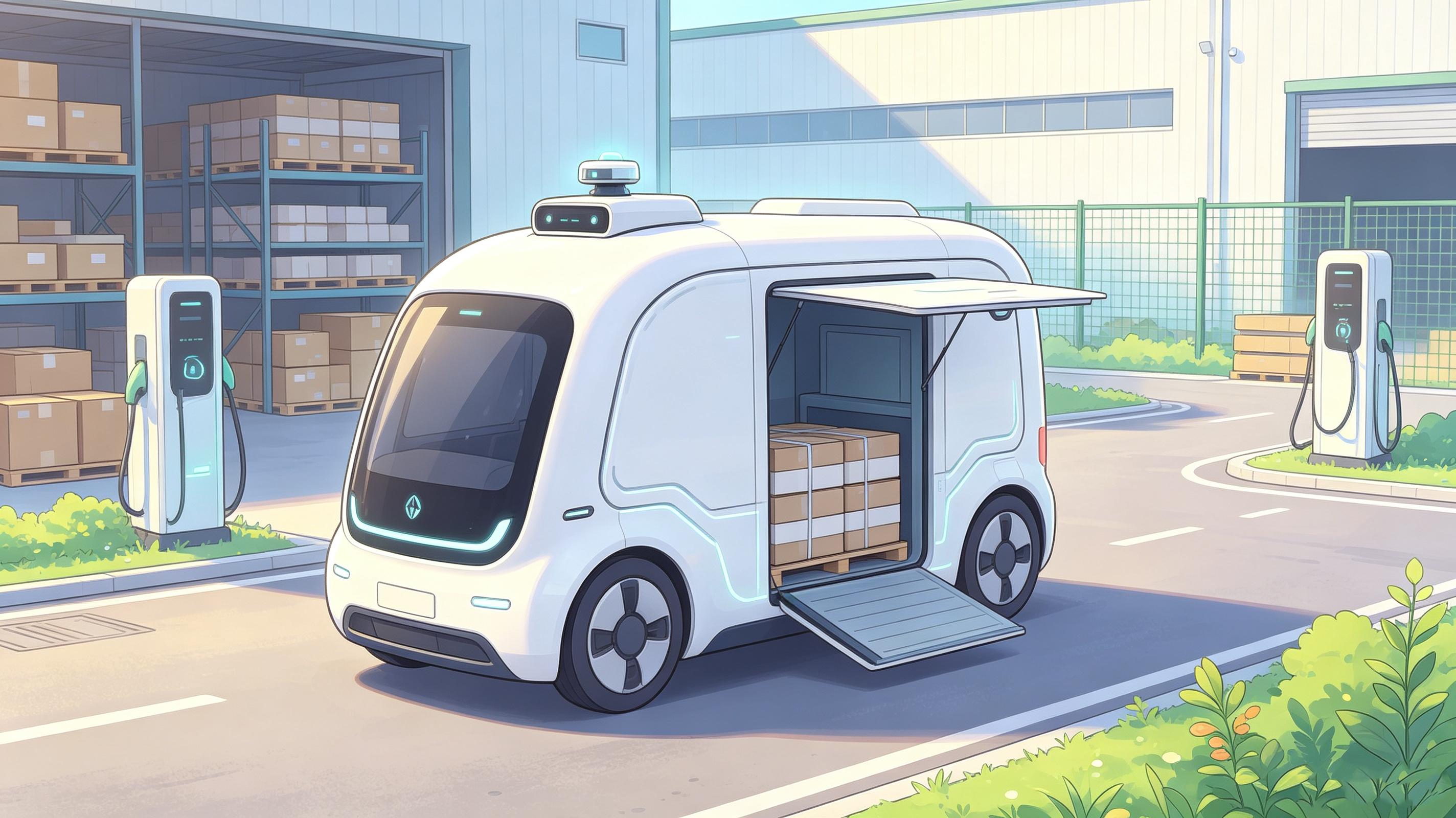
It is worth noting that ByteDance has not blindly and hastily applied autonomous driving technology to passenger vehicles. Its initial business direction targets unmanned logistics vehicles.
(Image source: Generated by Doubao AI)
Compared to passenger vehicles, unmanned logistics vehicles operate in simpler scenarios, making the implementation of advanced intelligent driving less technically challenging, which is suitable for initial technology validation. After the technology matures, ByteDance may further validate it on the Saidou AIVA model and gradually achieve commercial deployment.
Eventually, ByteDance will fully replicate the world model capabilities accumulated from autonomous driving to embodied intelligence fields such as robots, industrial equipment, and smart homes. For example, providing a world model foundation for service robots to support navigation, operation, and interaction; offering high-precision trajectory planning and obstacle avoidance capabilities for industrial AGVs; and equipping smart home devices with physical interaction and scene understanding capabilities.
Through this "technology reuse + scenario expansion" approach, ByteDance will build a full-scenario physical AI ecosystem covering "vehicles, people, and homes".
In the future, whether robots, industrial equipment, or smart terminals will rely on the physical cognitive capabilities of world models, and ByteDance is expected to become a core technology provider in this field.
"Physics" is the most important carrier of AI
ByteDance's entry into autonomous driving this time seems to be catching up with the automotive intelligence wave, but in reality, it is a top-level strategic layout for the physical AI era. For ByteDance, autonomous driving is by no means a single incremental automotive business, but a key entry point and core training ground for its transition from traditional content AI to embodied intelligence in the physical world.
Different from automakers like Huawei and Xpeng, whose core goals are to "deploy in-vehicle intelligent driving and enhance the overall intelligence of vehicles", ByteDance's underlying logic is more long-term oriented. Automobiles are currently the optimal, largest, and most authentic physical data field. The iterative development of intelligent driving technology is essentially the only way for ByteDance's world model to evolve from "virtual cognition" to "physical cognition".
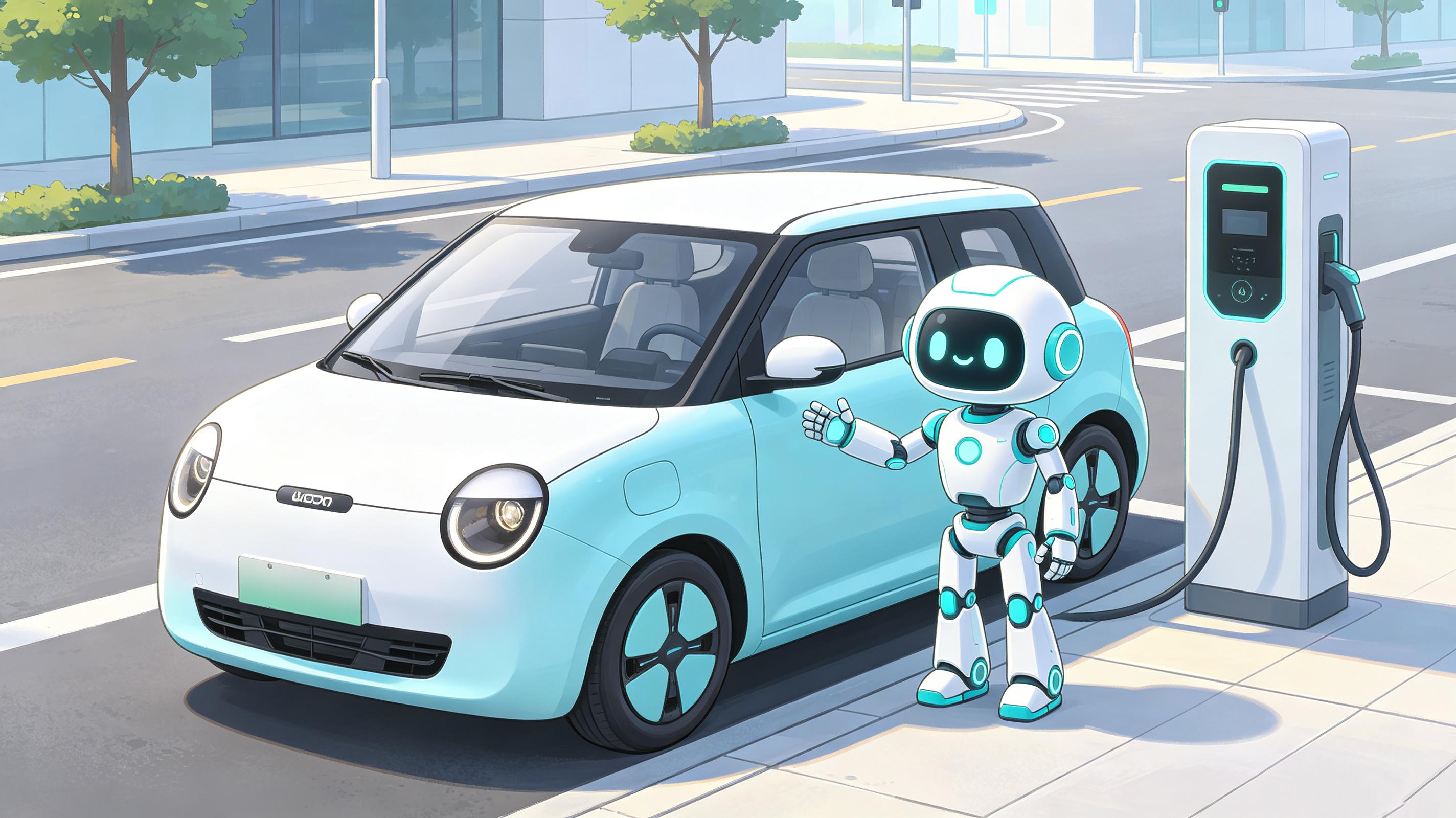
Relying on the world model technology foundation of Zhou Chang's Seed team, ByteDance has not rushed into the high-difficulty, highly competitive urban intelligent driving for passenger vehicles. Instead, it first launched unmanned logistics in closed scenarios, verifying physical AI capabilities in low-risk, highly controllable scenarios, accumulating high-quality physical time-series data such as real road conditions, dynamic obstacles, and vehicle motion interactions, and continuously correcting the model's physical deduction logic.
(Image source: Generated by Doubao AI)
This layout also perfectly complements the shortcomings of ByteDance's previous automotive businesses. Previously, ByteDance deeply cultivated the automotive software ecosystem through intelligent cockpits, in-vehicle large models, and automotive cloud, but it always lacked the core intelligent driving capabilities. Now that integrated cockpit-driving systems have become an absolute industry trend, it faces problems such as technological fragmentation, data silos, and over-reliance on external suppliers.
Self-developed intelligent driving can not only adapt to the full-stack intelligence needs of partner automakers like Saidou Auto to achieve deep cockpit-driving collaboration, but also rely on on-board multi-sensors to continuously deliver massive real-scenario data for physical AI training, building a unique data flywheel.
In the final analysis, autonomous driving is only ByteDance's short-term entry point, while physical AI and full-domain embodied intelligence are its ultimate destinations.
The world model and physical AI capabilities refined, validated, and iterated through automotive scenarios will be fully extended in the future to various physical terminal devices such as service robots, industrial AGVs, and smart homes. This move by ByteDance breaks away from the single competition in the automotive industry. In essence, it is a pre-emptive positioning in the second half of the AI era, using automobiles as a fulcrum to complete the ultimate transformation from a content internet giant to a physical AI infrastructure service provider.