A $3000 billion market cap giant is targeted by Chinese rivals
There is a uniquely distinctive AI company listed on the US stock market.
It does not train large language models. Its first paying client was the CIA, and over the subsequent two decades, it primarily served U.S. government agencies, the FBI, and the military, while also expanding into the energy, aviation, and healthcare sectors. When it went public in 2020, it was almost universally dismissed by mainstream Silicon Valley venture capitalists. Yet in the nearly six years that followed, its market capitalization surged more than 20 times. In 2025 alone, its valuation jumped from $1.7 trillion to $4.2 trillion. As of early July 2026, its market cap has remained steadily above $3 trillion.
This company is Palantir. Its Q1 financial report, disclosed in May this year, recorded quarterly revenue of $1.63 billion, representing an 85% year-over-year growth rate, with an operating margin exceeding 60%.
Across the Pacific Ocean, a cohort of Chinese companies is now targeting this exact market position.
On November 3, 2025, "the first Agentic AI stock" Minglue Technology debuted on the exchange at an issue price of HK$141. Its opening price rose 117.73%, immediately pushing its market capitalization past HK$40 billion. Three months later, "AI Harness" Haizhi Technology saw its opening price surge as much as 260% on its first trading day, with its market value temporarily reaching HK$39 billion.
Alongside firms like Xunce Technology and the earlier-listed Fourth Paradigm, these new "AI to B" stocks that have successively debuted on the Hong Kong Stock Exchange over the past year or more are almost universally pitching the exact same narrative: to become China's Palantir.
Using AI to transform corporate production workflows has been one of the most heavily bet-on directions over the past two years, yet a truly large-scale, closed-loop commercial operation has still not materialized. Palantir delivered a proven solution over two decades, while its Chinese "apprentices" are now gambling on whether they can replicate that success in their domestic market.
01. With the CIA and FBI as clients, it built a $3 trillion valuation
Palantir was founded in 2003. Its technical origins are entirely distinct from mainstream Silicon Valley AI firms. Initially, founder Peter Thiel set out to create a big data analytics company focused on anticipating and countering terrorism.
The company's first external funding came from In-Q-Tel, the venture capital arm of the CIA. In 2005, Palantir secured roughly $2 million in investment from In-Q-Tel, and the CIA became its first paying customer.
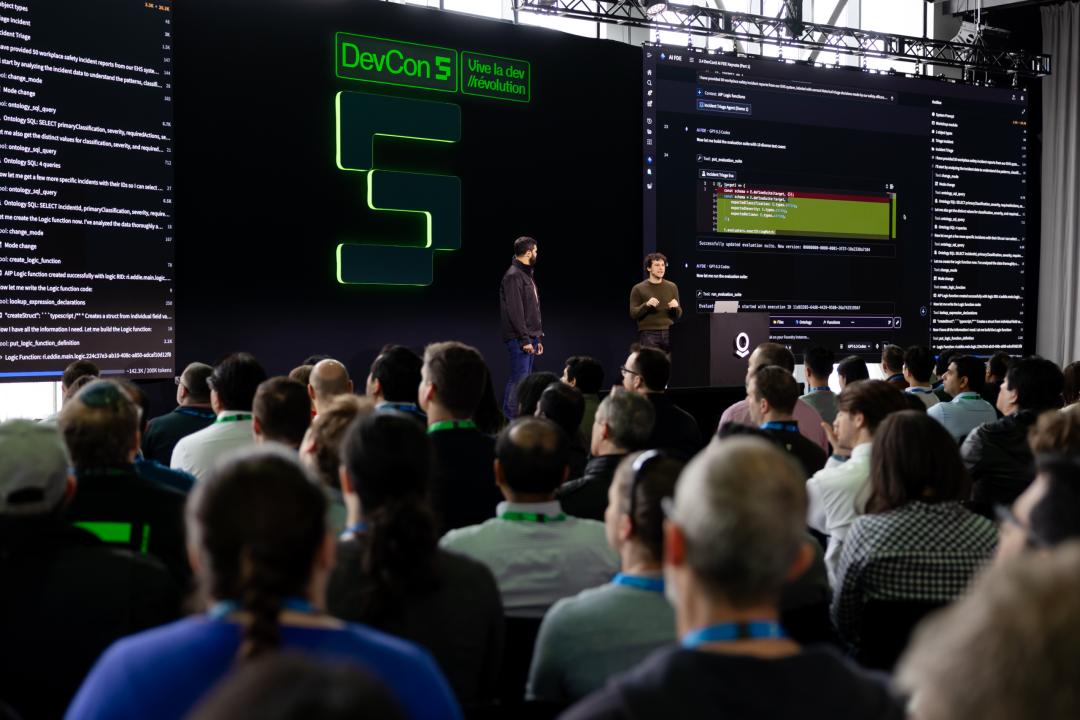
In its early days, Palantir exclusively operated in the government (G-to-B) sector. Its first product, Gotham, delivered big data analytics services primarily for government, defense, intelligence, and law enforcement clients, including the U.S. military, CIA, FBI, NSA, and other agencies.
After accumulating substantial technical capabilities around 2016, Palantir expanded into the enterprise (B-to-B) space with Foundry, positioned as "the central operating system for enterprises." It migrated the refined capabilities developed in government scenarios to enterprise customers. A flagship example is the Skywise platform co-developed with Airbus, which digitally manages millions of aircraft components and their complex supply chains.
The underlying logic of its services revolves around a well-documented concept called "Ontology." Simply put, an "ontology" is a semantically unified index of all domain-specific knowledge within a given industry. More colloquially, it functions as a "brain" that possesses comprehensive expertise in a particular sector.
This concept sounds abstract, but its true value becomes tangible when applied to real-world scenarios.
He Feihong, CFO of Haizhi Technology, told *Dingjiao One* that in the power industry, for instance, a standard large language model presented with the question "Why have fault costs for 110kV transformers risen recently?" typically returns a neutral analysis — noting, for example, a 18% increase in fault incidents, a 6-hour extension in repair durations, and a 12% rise in spare parts procurement costs.
This appears to be a "plausible" AI response, but it cannot tell operations managers what actionable steps to take next. An agent built on top of an ontology, by contrast, would think like a highly experienced senior power operations technician: "This batch of transformers is experiencing issues — are they from the same production run as last year's problematic units? Does that indicate a widespread quality defect in this batch? If so, what other transformers of this model are still deployed across our power grid?"
The key difference is that the former only processes raw information, while the latter invokes a complete, accumulated system of industry-specific logic and workflows.
Ontology solves the problem of usability, while FDE addresses the implementation process. Short for Forward Deployed Engineer, FDE is an innovative delivery model pioneered by Palantir. In essence, the FDE model productizes the service capabilities of a consulting firm by stationing engineers directly at client sites, often for months at a time, to integrate the software deeply into every aspect of the client's business operations.
This model requires extremely high upfront investment, as the labor cost of a senior FDE far exceeds that of a typical software engineer. However, once an industry-specific ontology is fully developed, the cost of onboarding the second client in that same sector drops dramatically, and marginal costs approach zero as the customer base scales. This is why Palantir's gross margin has consistently remained above 80% for years.
Before the AI boom, Palantir's business model had already operated stably for many years, yet capital markets valued it no higher than a conventional SaaS software service company.
What ultimately elevated the valuation of this model to $3 trillion was Palantir's 2023 launch of AIP, the Artificial Intelligence Platform.
AIP is not a standalone product; it is an AI orchestration layer built on top of Foundry's ontology layer. It delivers two core functions: first, it integrates large language models as plug-and-play capabilities, allowing enterprises to select GPT, Claude, Gemini, or open-source models, while AIP ensures these models' reasoning capabilities operate on the enterprise's proprietary ontology. Second, it platformizes the deployment process that previously required months of custom coordination, enabling enterprises to build an AI Agent that integrates into their workflows in weeks or even days.
This represents a far more significant advancement than mere efficiency gains: it transforms Palantir from a data analytics firm into the de facto inference layer entry point for enterprises adopting AI.
Following AIP's launch, Palantir's revenue growth accelerated dramatically. Since 2023, quarterly revenue growth has climbed from just over 10% to 85%, while net profit margin expanded from roughly 10% in 2023 to 54% in the first quarter of 2026.
This "FDE + Ontology + AIP" combination is emerging as the standard architecture for AI to genuinely integrate into enterprise production workflows.
02. Four categories of domestic companies positioning against Palantir
In the Chinese market, the concepts of "AI to B" and "Palantir" began receiving widespread attention almost simultaneously.
This is no coincidence. Over the past two years, with the exception of coding-focused AI tools, virtually no AI application has successfully achieved a strict, fully closed-loop commercial operation.
Zhang Huan, Vice President of Strategic Development at Haizhi Technology, told *Dingjiao One* that the current concentration of enterprise demand on Coding Agents primarily reflects the fact that other forms of Agents are still in early development. However, coding also has its limitations: it primarily augments individual capabilities as a bottom-up application driven by personal user needs, whereas large-scale enterprises require B-to-B Agents that follow a top-down, far more complex systematic design.
Furthermore, coding only covers the highly standardized B-to-B production scenario of software development, with high computing power costs and low customer stickiness. Since coding products are abundant in the market, enterprise buyers typically prioritize performance or cost-effectiveness, making migration from one Coding Agent to another nearly costless.
Palantir's customers are fundamentally different. The core data used to build the ontology itself represents the highest migration cost. Once Palantir's top clients run their entire business logic on its platform, switching vendors becomes prohibitively expensive.
This means that if a Chinese company can successfully replicate this high-margin, high-retention, high-pricing, deep-customer-relationship model domestically, its valuation ceiling will far surpass all existing comparable firms.

The companies currently vying for the title of "China's Palantir" fall broadly into four categories.
The first category includes large language model developers and cloud service providers. Leading large model firms such as Zhipu AI, Moonshot AI, and MiniMax are not, strictly speaking, direct competitors for the "China's Palantir" position; their role is more analogous to model capability suppliers.
Zhipu AI previously worked on knowledge graphs, which represent one technical path to building an ontology. However, rather than developing B-to-B services directly, model providers prefer deep partnerships with enterprise AI service firms. The rationale is straightforward: they lack industry-specific know-how and do not have the resources to implement FDE-style B-to-B delivery.
The cloud service providers that possess full-stack capabilities aligned with Palantir's path include major players like Baidu, Huawei, Alibaba, and Tencent. These companies have comprehensive B-to-B service capabilities, and they already deliver AI services to government, public security, energy, and enterprise clients. Their business models closely resemble Palantir's Gotham, Foundry, or a hybrid of the two.
The second potential group of "China's Palantir" candidates comprises consulting firms and traditional SaaS companies.
Accenture, Deloitte, McKinsey, and KPMG already have overlapping business operations with Palantir in the U.S., as they all use labor-intensive service delivery to engage clients. However, this model faces significant challenges in the Chinese market.
Large Chinese enterprise clients are rarely willing to pay directly for "consulting" services, project-based delivery generates almost no reusable product assets, and the market does not grant sufficient valuation premiums to these types of players.
The third category consists of data governance-focused companies, which typically originated in the data middleware and real-time data processing sectors. They excel at multi-source data integration, cleansing, governance, and visual analytics, with robust underlying data integration capabilities. They have accumulated substantial industry-specific knowledge data and developed AI service platforms built on top of that data. Representative firms include Fourth Paradigm, Deeply, and Xunce Technology.
An industry insider told *Dingjiao One* that the services these data governance companies provide to enterprises are similar to Palantir's offerings, but their shared weakness is a relatively underdeveloped ontology layer — there is a significant technical gap between raw data and a mature ontology. "If data governance alone were enough to disrupt the market, Snowflake would have already put Palantir out of business, but that has not happened."
The final category consists of industry-grade AI companies, which have developed far deeper ontology capabilities than data governance firms.
In critical production environments, enterprises generally require deterministic execution capabilities, where the AI's entire reasoning process must be explainable, traceable, and auditable. Under these requirements, vector data or simple visualizations often cannot fully and accurately represent all the production elements of an enterprise.
For example, describing a company's equity structure with just two 50% shareholders can be accurately conveyed with a simple sentence (vector data) or a diagram. But with 20 shareholders holding varying stakes and a multi-layered equity architecture, language or basic charts become inadequate for clear representation.
The prevailing industry solution today is knowledge graphs, which use graph data to abstract and model information on top of vector and relational data. This approach has a higher technical threshold than basic data governance and requires strong high-performance computing expertise.
Key players on this path include Minglue Technology — known as "the first Agentic AI stock" — TRS, which started with NLP and focuses on vertical large models, Ant Group, which has deep expertise in financial knowledge graphs, and Haizhi Technology, a government services veteran that ranks among China's top knowledge graph developers. With the exception of Ant Group, all these companies have at some point been labeled "China's Palantir."
They are also the group whose business logic most closely mirrors Palantir's. Haizhi Technology, for instance, is called "AI Harness" because it uses knowledge graph and graph-model fusion technologies to create a "harness" for general-purpose large language models, ensuring AI operates within a rigorous framework that reduces probabilistic AI hallucinations.
He Feihong told *Dingjiao One* that a top-tier master's graduate from Tsinghua University today is comparable to a highly capable individual AGI, yet even they would struggle to perform well quickly after joining a new company. Even with clear instructions and full access to all company documents and meeting minutes, they still cannot immediately become an effective frontline employee.
A better approach is to assign them an experienced senior mentor to dynamically guide their actions. This mentor is essentially an "ontology," and knowledge graphs serve as the technical vehicle for implementing ontology theory.
These four categories of companies each have distinct strengths and inherent weaknesses. Overall, China does not yet have a true Palantir — only fragmented partial counterparts.
03. What would a Chinese Palantir look like?
While China's AI-to-B sector has surged in popularity since late 2025, attracting massive capital inflows and intensified competition from all players, a $100 billion giant that can fully match Palantir's capabilities is unlikely to emerge in the short term. This is partly because Palantir's technical moat, built over decades, cannot be replicated quickly, and partly because the Chinese market environment may not demand an exact copy of Palantir's full business model.
The most formidable barrier to replicating Palantir's technical moat is its temporal accumulation. Its graph computing engine has been refined over 20 years in zero-tolerance scenarios like counter-terrorism and battlefield operations — expertise that cannot be accelerated by capital or massive computing power.
Customer spending power represents another key difference. Palantir's multi-billion-dollar government contracts can support long-term on-site deployment by top-tier FDE engineering teams. China's government and state-owned enterprise market follows a similar payment logic, where long-term government, public security, and energy clients can sustain heavy on-site delivery models. Haizhi Technology, for example, has served these types of clients for over a decade.
However, when expanding to private enterprise customers, the payment dynamics in the Chinese market diverge significantly from those in the U.S.
China's B-to-B market is still dominated by one-off project deliveries: clients pay for a system that passes acceptance checks, vendors earn revenue from individual projects, and neither side has strong incentives to invest in long-term product development. Additionally, Chinese clients are far more willing to pay for tangible hardware and visible features, making it difficult for the invisible but high-value ontology layer to command corresponding prices.
This directly limits the possibility of a complete replication of Palantir's model in China.
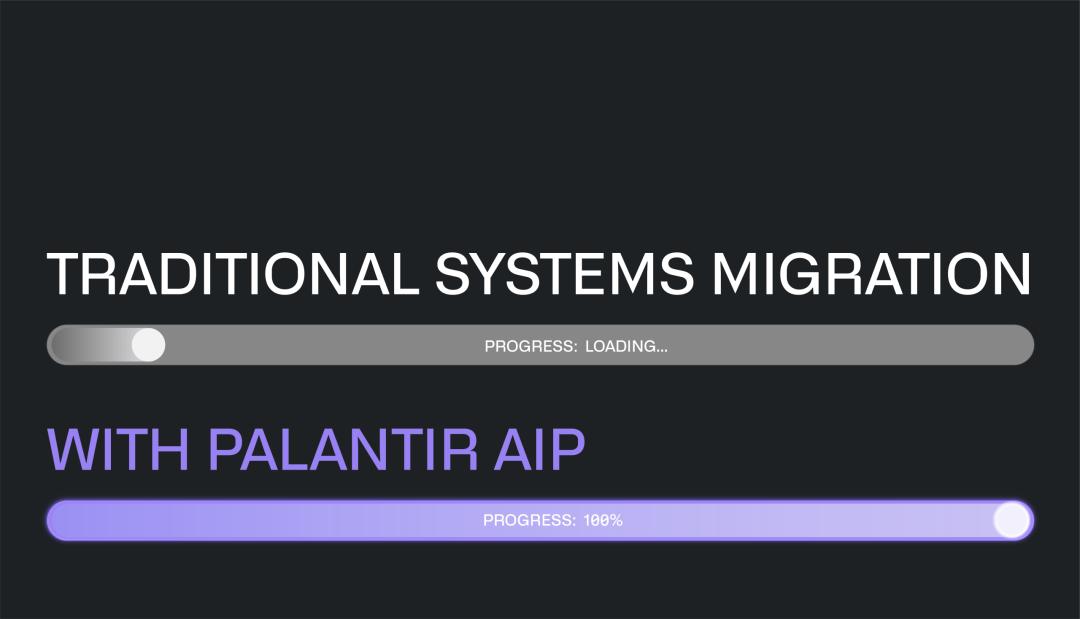
As a result, almost none of the four categories of "China's Palantir" contenders can currently execute the full-stack path with their existing structures. Large model firms lack industry-specific know-how and remain focused on iterating model capabilities. Data governance companies lean toward the Foundry path but lack a mature ontology layer, failing to bridge the gap from raw data to actionable knowledge. Consulting firms are tied to project-based delivery and struggle to achieve Palantir-style product scalability. Industry-grade AI companies are constrained by scale and have not yet reached their full commercial potential.
This explains why the "China's Palantir" position remains vacant — all types of companies are approaching it, but none have fully arrived.
This does not mean the domestic AI-to-B sector lacks growth potential. As general-purpose large language models become increasingly homogeneous and capability gaps between models narrow, industry deployment capabilities will become the core competitive differentiator.
The company that ultimately wins the race to become China's Palantir must possess at least three critical capabilities: deep expertise in underlying graph