Star Step released "the world's first AI phone". What kind of layout is Yin Qi planning?
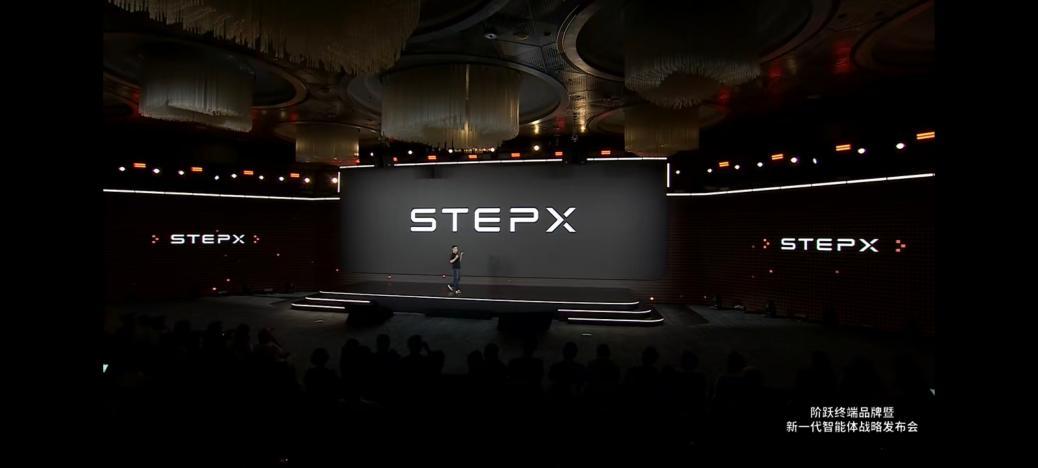
On the evening of July 13, the world's first large-model native agent smartphone STEPX Neo made its debut.
Furthermore, StepNova simultaneously launched STEPX, the world's first large-model native AI terminal brand, and Step AOS, the world's first agent-native operating system, preloaded with its self-developed agent Amoo, aiming to build a truly integrated new AI species that unifies "models, software, and hardware".
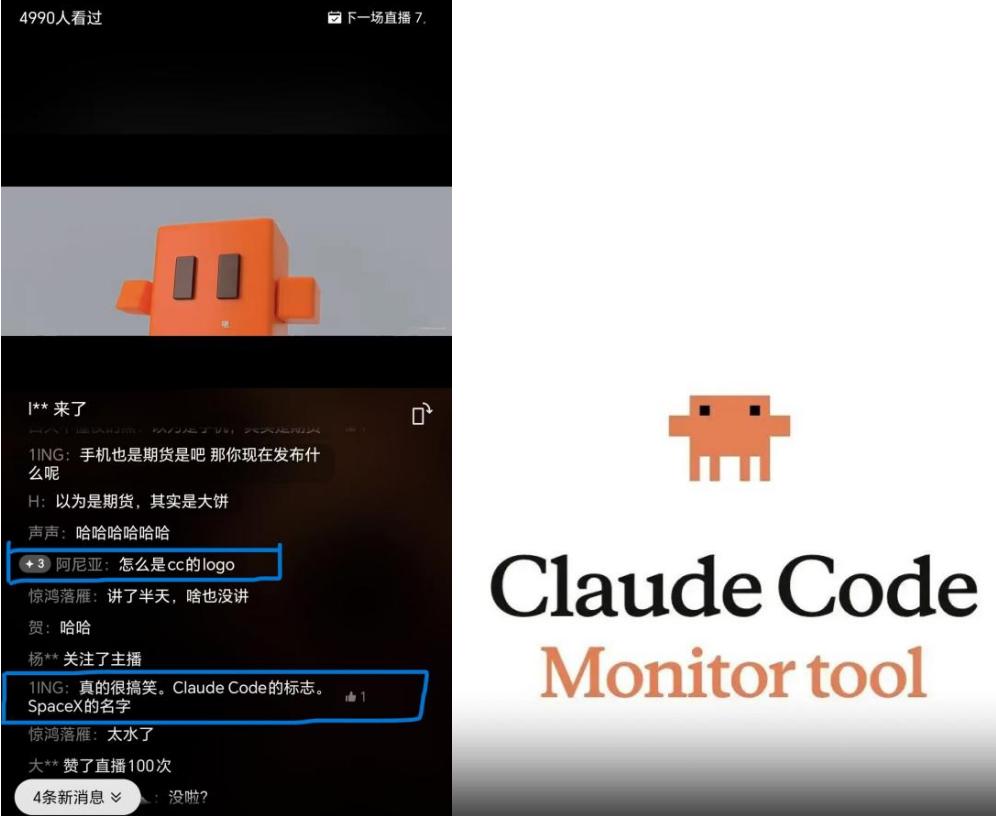
However, when many attendees spotted the familiar-looking logo on the screen, they might have mistakenly thought they had walked into a Claude Code launch event, as StepNova's logo bears a striking resemblance to the latter's branding. It remains unclear whether the company is concerned about potential legal accusations from Anthropic (the parent company of Claude Code).
Back to the core topic: Over the past few years, nearly every smartphone manufacturer has filled their launch event presentations with AI-related features, such as AI-powered photo editing, AI-generated summaries, and AI call answering.
Yet none of these products qualify as genuine AI smartphones. Before StepNova's STEPX Neo, the product that left the deepest impression on the public and came closest to realizing a true AI smartphone was last year's "Doubao Phone". However, after its initial viral surge, the Doubao Phone faded from public view with no further updates.
Does StepNova have the capabilities to resolve the unresolved issues that the "Doubao Phone" failed to address?
1. What makes Step AOS different?
StepNova's core advantage lies in a fully closed-loop ecosystem that integrates "models, capital, manufacturing, and distribution channels".
This large-model unicorn, founded in Shanghai in 2023, is led by Jiang Daxin, former Microsoft Global Vice President, who serves as CEO, with Yin Qi holding the chairman position. Among the current "Four Great Dragons" of domestic large-model enterprises, it stands out with a distinct technical label: the "overachiever" of multimodal capabilities.
Behind this label is StepNova's Step series of general-purpose large model matrix, which covers comprehensive capabilities spanning language processing, multimodal understanding, and advanced reasoning. The agent-native operating system Step AOS, launched alongside the new smartphone, acts as the core pillar of this entire ecosystem.
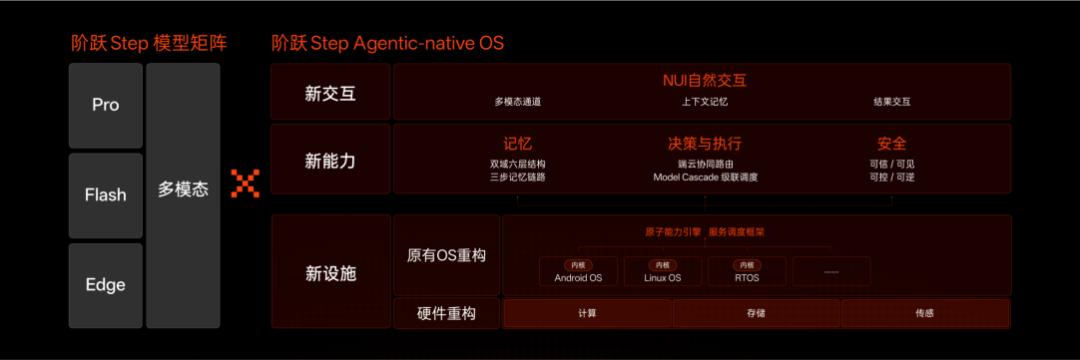
While traditional mobile operating systems are built around the paradigm of "humans operating applications", Step AOS reallocates hardware resources and system capabilities centered around intelligent agents. To achieve this, Step AOS breaks down underlying system capabilities based on the MCP standard into four categories of minimal units: communication, applications, files, and system, allowing agents to freely call and combine these resources.
In terms of human-computer interaction, Step AOS introduces the NUI natural interaction mechanism, supporting multimodal inputs including voice, visual perception, and text, while automatically completing user identity and preference profiles through contextual memory.
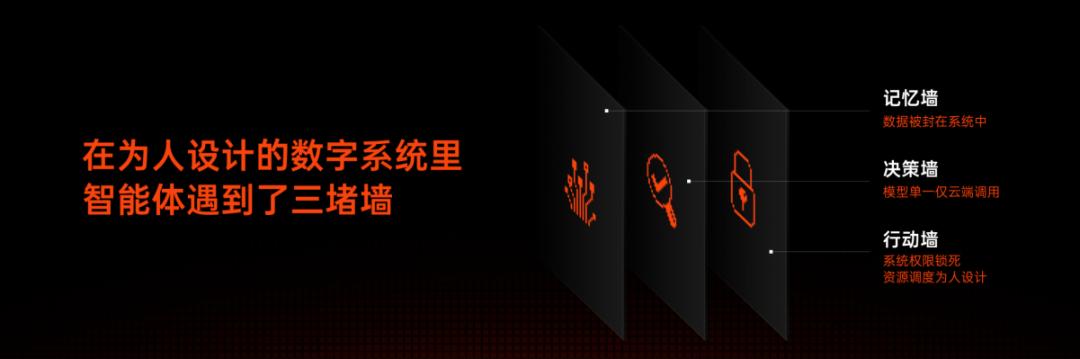
To break through the "three barriers" limiting agent performance (memory barrier, decision barrier, and action barrier), Step AOS establishes a dual-domain three-step memory architecture, divided into a user domain and an agent domain. Following the three-phase workflow of "memorizing, organizing, and recalling", the system enables agents to continuously deepen their understanding of user habits and preferences.
For decision-making and execution, Step AOS adopts an end-cloud multi-brain architecture, which dynamically allocates large language models of different scales based on factors such as task complexity, cost, and latency. It can progressively upgrade processing levels when necessary, balancing fast response speeds and deep reasoning capabilities.
The Step series of general-purpose large models form the technical foundation behind the Step AOS operating system.
In 2025, StepNova took the lead in open-sourcing the Step-GUI series of models, and in June this year, it open-sourced the MoE model Step 3.5 Flash. On the ranking list published by authoritative evaluation institution Artificial Analysis, this model ranks first among mainstream models with an output speed of 409 tokens per second.
Furthermore, to improve operational efficiency and cost-effectiveness, StepNova released Step 3.7 Flash in May this year. The model has a total parameter count of nearly 200B, but through its sparse MoE (Mixture of Experts) architecture, only around 11B parameters are actually activated during each inference process, enabling it to achieve a maximum output speed of 409 tokens per second.
However, even the most advanced GUI models face inherent latency and privacy bottlenecks if they can only run on the cloud. Thus, on July 12, the day before this launch event, StepNova rolled out the full Step Edge on-device model family, consisting of four products: the base model, Audio, GUI, and Gen, all purpose-built for terminal scenarios such as smartphones and vehicles.
These four models cover all core tasks that a terminal-based agent needs to handle, including understanding user voice commands, recognizing content displayed on the current screen, determining the next optimal action, completing operational tasks, and generating new content.
This on-device model family boasts several remarkable key performance indicators: for instance, local tool call execution latency as low as 0.1 seconds ensures real-time responses for frequent simple tasks without requiring cloud uploads; full-modal privacy protection allows all sensitive data including text, visual content, and voice to be processed entirely locally; and the native end-cloud collaboration mechanism enables fast on-device responses for simple tasks while offloading complex reasoning to the cloud.
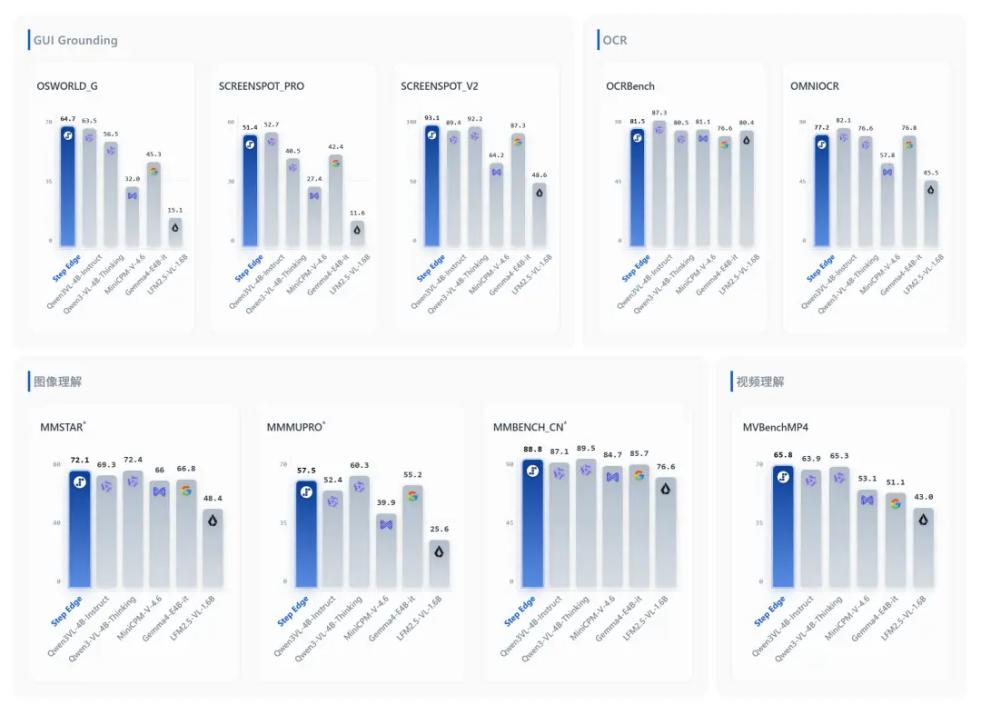
In evaluations covering 29 core metrics including image understanding, OCR, and GUI operation, Step Edge secured the top spot, outperforming mainstream competing models such as Qwen3-VL and MiniCPM-V.
Putting all these pieces together, we can clearly observe StepNova's three-tier technical layout for large models:
1. Cloud Pro models: Designed for highly complex reasoning tasks, advanced planning, and long-workflow operations;
2. Cloud Flash models: Prioritizing high speed, low cost, and optimized performance for high-frequency agent workflows;
3. On-device Edge models: Acting as the local execution layer, responsible for real-time environmental perception, GUI operations, private data processing, and basic tool invocation.
In real-world terminal scenarios, the three tiers of models operate collaboratively through the end-cloud architecture: the Edge model responds to voice commands locally and invokes the photo library to identify invoices; lightweight data is transmitted to the Flash model for fast processing, while extremely complex tasks trigger the Pro model to perform in-depth reasoning.
The launch of the full on-device model family marks StepNova's completion of a fully integrated collaborative system combining "Pro + Flash + Edge" models.
With all foundational elements in place, the AI smartphone officially makes its grand entrance.
2. How to avoid the pitfalls that the "Doubao Phone" encountered?
Compared with other members of the "Four Great Dragons" including Moonshot AI, Zhipu AI, and MiniMax, StepNova maintains a relatively lower public profile. This is because the company has focused its efforts on B2B services and terminal implementation, without launching any breakout viral products, and it has not yet entered the capital markets to leverage public funding.
The launch of STEPX Neo represents a prime opportunity for StepNova to gain widespread public recognition.
In the intelligent terminal landscape, beyond smartphones, vehicles, smart glasses, wireless earbuds — and virtually any device with a display — can potentially become access points for large models to reach end users. Unlike the mobile internet era, where application developers could easily capitalize on existing infrastructure, modern large-model enterprises that fail to proactively expand into terminal ecosystems risk being locked out of user interactions by hardware manufacturers and operating system providers.
However, for a large-model enterprise to independently build a smartphone production line characterized by heavy asset investment, low profit margins, and high operational turnover, the associated risks cannot be underestimated.
For this project, StepNova has opted to collaborate with Huaqin Technology. Notably, in StepNova's most recent funding round of approximately $2.5 billion, a string of hardware supply chain enterprises including Huaqin Technology, Longcheer Technology, OmniVision Group, and ZTE Corporation were listed as investors.
What StepNova is pursuing is essentially an industrial alliance experiment in the AI era built on mutually aligned interests, which inevitably carries some unforeseeable inherent risks.
The most immediate challenge is ecosystem barriers, a lesson that can be learned from the "Doubao Phone". Last year, Doubao and Nubia jointly developed an engineering prototype that demonstrated features such as cross-platform price comparison across e-commerce sites, photo library access, and even voice-controlled opening of a Tesla trunk — the demonstrations ran smoothly and delivered impressive results.
Yet soon after, major mobile internet giants including WeChat, Alipay, Taobao, and Meituan moved to distance themselves from Doubao, and Doubao eventually had to disable those related capabilities.
Learning from this prior experience, StepNova simultaneously announced at this launch event that leading applications including Alipay, Baidu, Trip.com, DiDi, Meituan, JD.com, WPS, and CapCut have joined as its first batch of ecosystem partners.

Nevertheless, these partnerships alone are far from sufficient to win genuine user acceptance for the new smartphone. For most major app providers, this is not a technical issue, but a matter of business survival.
As things stand, this AI smartphone is more akin to a "showroom demo" designed to showcase the full capabilities of AI agents, and to demonstrate how far the product still needs to evolve before consumers are willing to pay for it. How far StepNova can ultimately go will largely depend on one key figure: Yin Qi.
3. Yin Qi's grand strategic blueprint
In addition to serving as Chairman of StepNova, Yin Qi also holds the chairman position at Qianli Technology.
His personal resume represents a top-tier background in the AI industry: he was part of the first graduating class of Tsinghua University's renowned "Yao Class", co-founded Megvii Technology with his classmates at the age of 22, and launched the Face++ facial recognition platform. Megvii once became an $80 billion valuation unicorn and was recognized as one of the previous generation's "Four Great Dragons" of AI.
However, Megvii Technology's IPO journey saw it submit listing applications to the Hong Kong Stock Exchange in 2019, later shift its focus to the Shanghai STAR Market, before voluntarily withdrawing its application in 2024. After more than five years of efforts to go public, the company ultimately failed to complete its IPO.
Yin Qi officially took on the role of Chairman of StepNova in January this year, overseeing the formulation of the company's overall strategic rhythm and technical direction. On the same day, StepNova announced the completion of over RMB 5 billion in Series B+ financing, setting a new record for the largest single financing round for a domestic large-model enterprise over the previous year.
By May, StepNova secured nearly $2.5 billion (approximately RMB 17 billion) in financing, surpassing the $2 billion funding round previously raised by Moonshot AI. This financing round saw concentrated participation from industrial capital, with smartphone and consumer electronics supply chain enterprises including Huaqin Technology, Longcheer Technology, OmniVision Group, and ZTE Corporation all participating, covering multiple links from complete device manufacturing to upstream core component production.
It is evident that Yin Qi still wields significant influence in the capital market. Following its shareholding restructuring, rumors have emerged that StepNova is preparing for a Hong Kong Stock Exchange IPO. If successfully listed, it will become the third domestic large-model enterprise to go public in Hong Kong, following Zhipu AI and MiniMax.
In media interviews, Yin Qi has stated that transitioning from a technical engineer mindset to focusing on business operations and value closed loops represents the core transformation of his second entrepreneurial journey. The AI industry faces extremely high commercialization difficulties, requiring continuous iteration even for experienced practitioners. The fundamental purpose of a business is to create value for users and build a sustainable operating model.
This philosophy forms the underlying logic of his current strategic layout: AI must integrate with the physical world to form a deliverable, fully closed-loop business model.
Between the two companies Yin Qi leads, StepNova is responsible for providing the "brain" (the foundational large model), while Qianli Technology delivers the "body" (intelligent vehicle and terminal implementation). He describes the relationship between the two enterprises as an "Ironman Triathlon" that unifies model development and terminal deployment.
According to his vision, StepNova occupies a unique position in the "AI + terminal" industry. This is not a pure-play large-model enterprise, but a full-stack participant covering everything from model research and development to end-user terminal delivery. Vehicles, smartphones, smart glasses, and any other screen-equipped device can serve as access points for large models to reach users.
While this blueprint appears ideal on paper, it cannot hide underlying challenges. Currently, Geely Holding Group is the majority shareholder of Qianli Technology, and Yin Qi assumed leadership at Qianli with the support of Li Shufu, the founder of Geely. While StepNova can advance toward the goal of achieving "brain-body" synergy within this ecosystem, its potential market expansion outside this system will inevitably be constrained.
Furthermore, neither Geely in the automotive sector nor Nubia in the smartphone industry qualifies as a top-tier market leader. It remains to be seen how significant a market impact this newly launched AI smartphone can generate.
More critically, AI technology iterates at an extremely rapid pace. StepNova not only faces potential resistance from major app providers, but also must guard against unexpected competition from other large-model enterprises entering the market. As the first large-model company to launch a native large-model agent smartphone, StepNova will either seize a first-mover advantage or become a sacrificial pioneer. The final outcome will be determined by real user experiences after mass production and commercial launch, the success of its capital market operations to complete an IPO, and whether dominant platforms like WeChat are willing to open their ecosystems to the new device.