The world's first AI Agent smartphone is here: integrated with Alipay, Meituan, Didi and Baidu
Reported by Zhidx on July 13, StepFun, a Shanghai-based large model unicorn, just unveiled three major new products at its launch event: the world's first agent-native operating system Step AOS (Step Agentic-native OS), the personal agent Amoo, and the large model-native AI terminal brand STEPX.
The world's first large model-native agent phone, STEPX Neo, which had long been highly anticipated by the public, also made its debut at today's event.
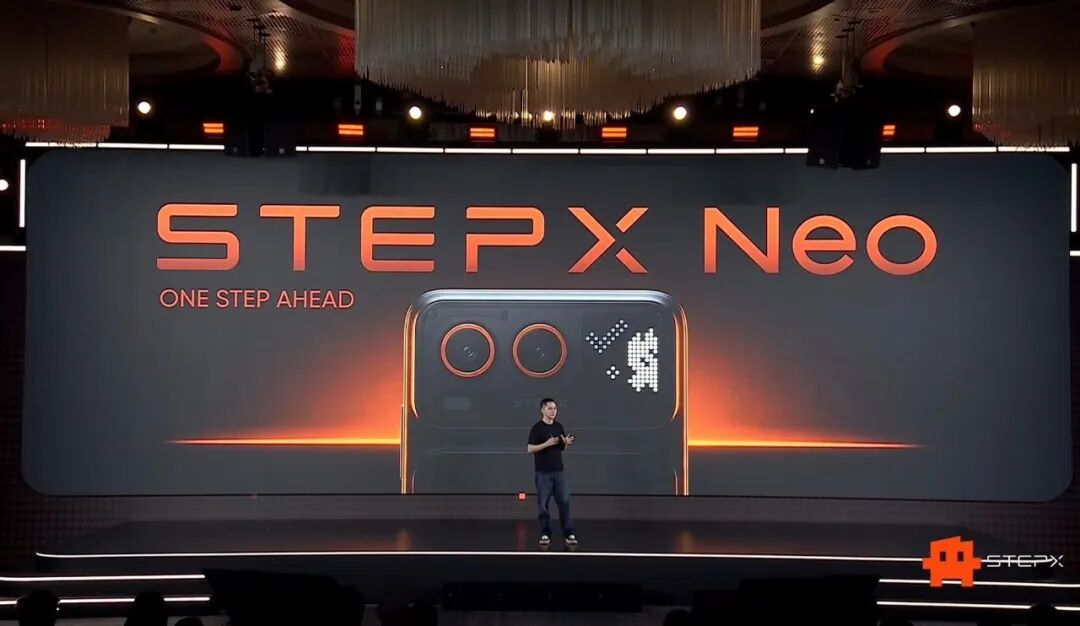
STEPX Neo is equipped with Step AOS, an agent-native operating system independently developed by StepFun, and embeds the new-generation system-level personal agent Amoo. Users no longer need to open apps one by one — they simply state their intentions as if chatting with an assistant, and the agent can autonomously understand, plan, schedule across apps, and ultimately complete the tasks.
Step AOS also features the capabilities of long-term memory, edge-cloud collaboration to handle complex tasks, and all operations are auditable and reversible to ensure safety and controllability.
The positioning of STEPX Neo is similar to the "Doubao Phone" that was widely discussed in the industry earlier. It also needs to address ecosystem issues to encourage apps to grant permissions to agents. At present, StepFun has reached ecosystem cooperation with a number of mainstream apps including Alipay, Meituan, Amap, Didi, JD.com, Baidu and more.
Yin Qi, Chairman of StepFun, said that today's launch event is only the first half. Over the next 100 days, they will jointly build an agent ecosystem with users, covering various types of agents, skills and other content. At the launch event 100 days later, more agents will be unveiled.
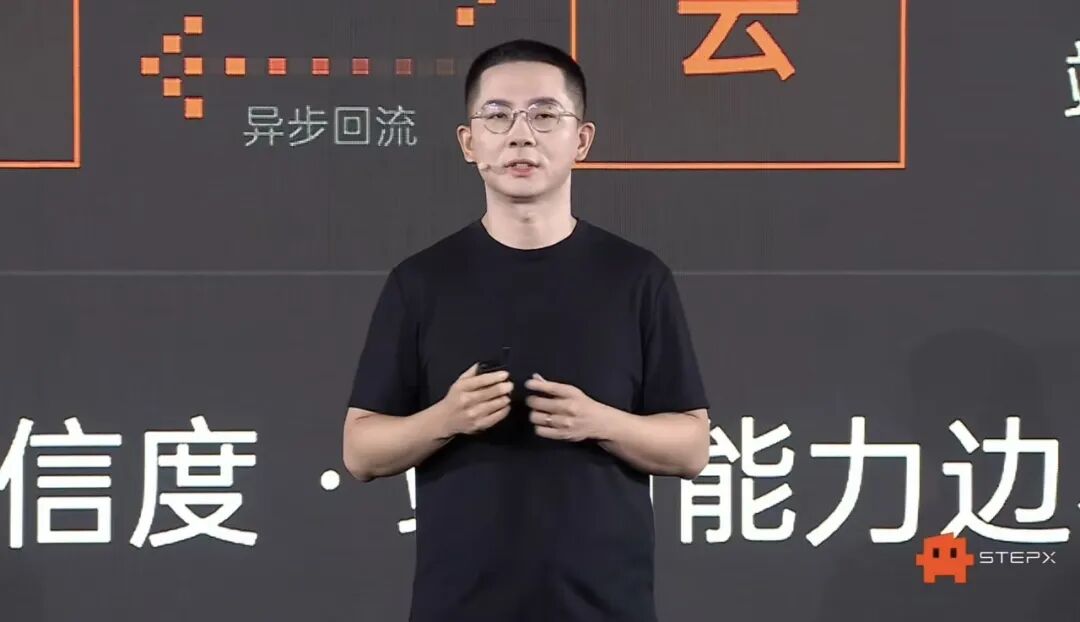
During the post-event media session, Yin Qi and Ni Jiale, President of Step Terminals, shared the first-phase goal of StepFun for AI terminals: they do not solely pursue shipment volume, but must achieve a certain scale, hoping to get early users on board as quickly as possible.
Yin Qi mentioned that the Doubao Phone is a very important exploration for the entire industry, which has truly brought the concept of agent phones to public attention. StepFun has very unique ideas about the definition of agent phones and operating systems, and looks forward to the emergence of more new agent phone brands.
In his vision, future agent phones may no longer be traditional phones — you will hardly use them to make calls, and interacting with them does not mean longer usage time is better. Instead, they can help you complete tasks with a very simple interaction.
01. Debut of Step's New Hardware Brand Products: Why Build an Agent Phone?
Yin Qi revealed that StepFun has long been considering whether to enter the hardware sector on its own, and has heard many voices dissuading them from doing so. But they ultimately decided to create an AI-native agent terminal brand, STEPX.
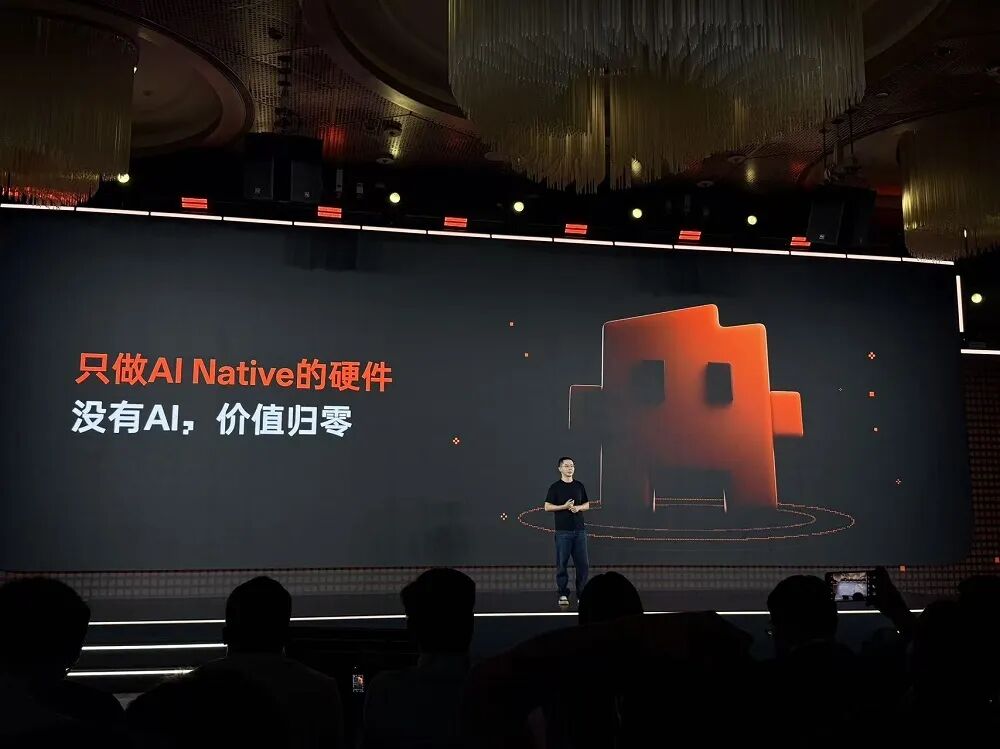
The products developed by STEPX are AI-native hardware. StepFun defines this type of hardware as: without AI, its value drops to zero. At the same time, this type of hardware needs to realize the trinity and integrated development of models, software, and hardware.
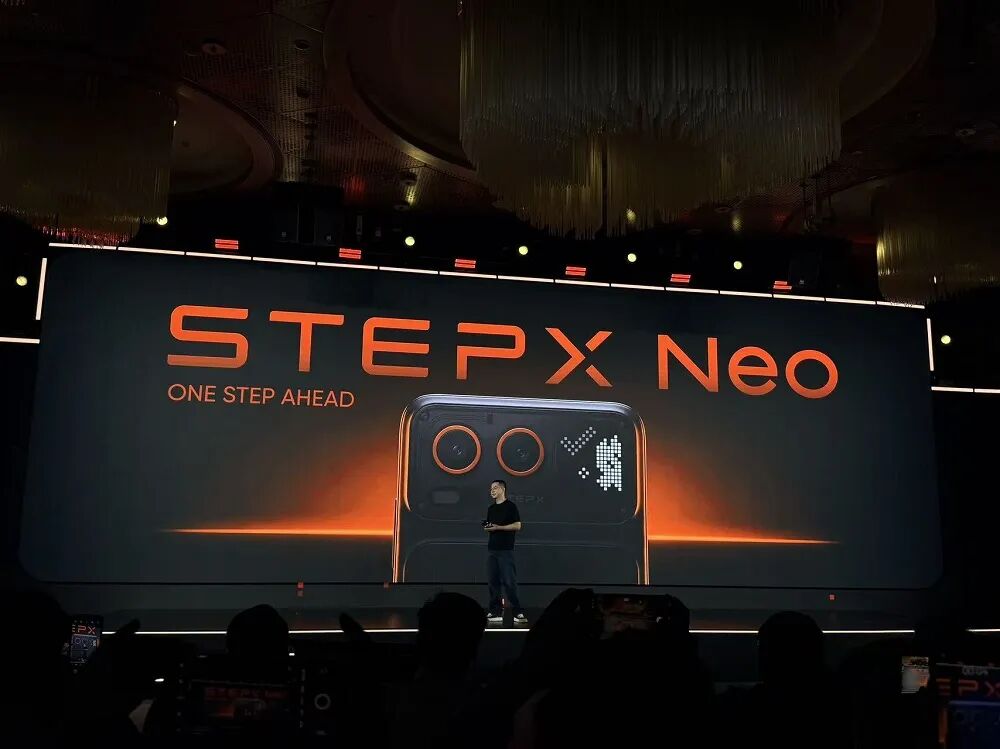
STEPX's first product, STEPX Neo, made its debut today. Yin Qi specifically emphasized that this is not a formal "launch".
Why did they choose a phone as their first agent terminal? StepFun believes that the primary device for future agents should still be a portable device that can interact with users at high frequency.
Secondly, the screen remains the main way for users to communicate with machines, and agent devices also need to be equipped with a screen. Finally, this device needs to have a certain level of edge-side computing power.
The combination of these three points ultimately leads back to the form factor of a phone.
This launch event did not introduce the specific parameters of this model in detail, but focused heavily on the ecosystem. After the system and model of the hardware product were ready, StepFun launched ecosystem cooperation with a number of major domestic internet companies. The first batch of ecosystem partners includes Alipay, Meituan, Amap, Trip.com, CapCut, JD.com, Didi, Baidu, Weibo, WPS, and more.
Yin Qi said that many people believe there are inherent barriers and conflicts between agent terminals and apps, but this view is completely wrong. He believes that from software in the PC era, websites in the internet era, to apps in the mobile internet era, application forms have been evolving all the time. Applications will not disappear; instead, there will be more of them with more different carriers, and agents in the AI era will become the new application carriers.
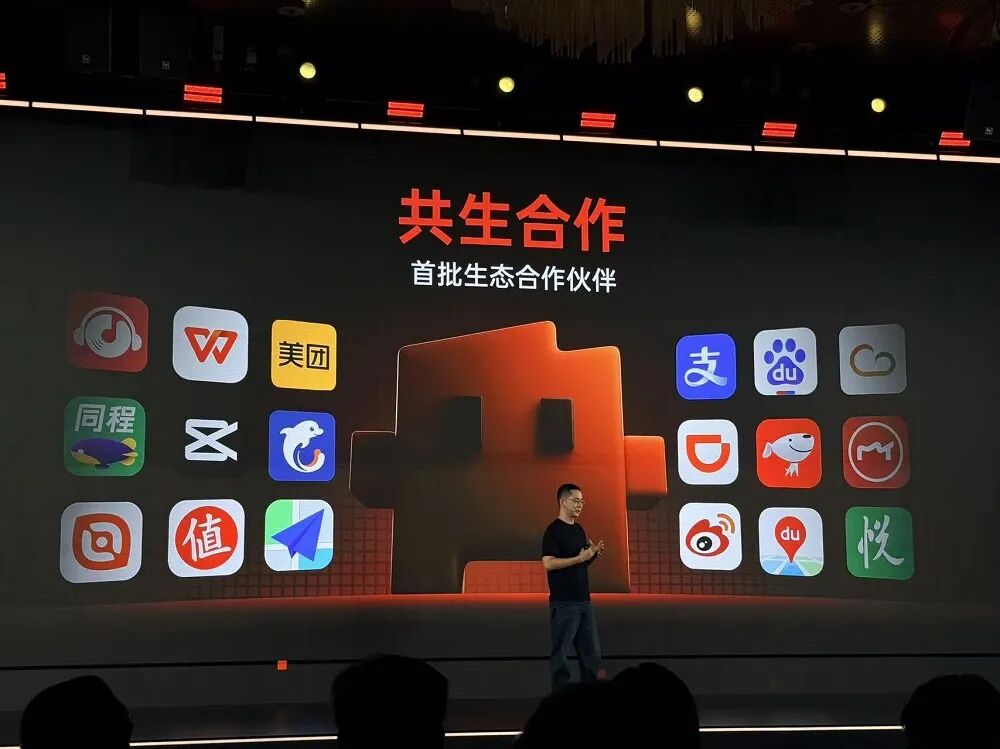
To further build the ecosystem, StepFun partnered with Bilibili to launch the "Fantasy Project", inviting a thousand makers to experience the devices in advance and create interesting agents. StepFun is also collecting user demands publicly, launching the 100-day Co-Definition Plan to build various agents based on the hardware operating system and models.
02. Launch of the Agent-Native Operating System, New 1.5 Trillion Parameter Model on the Way
To make agent hardware like STEPX Neo truly land, StepFun needs to make more innovations at the system level and in the agent field. Therefore, StepFun launched the agent-native operating system Step AOS and the new-generation personal agent Step Amoo.
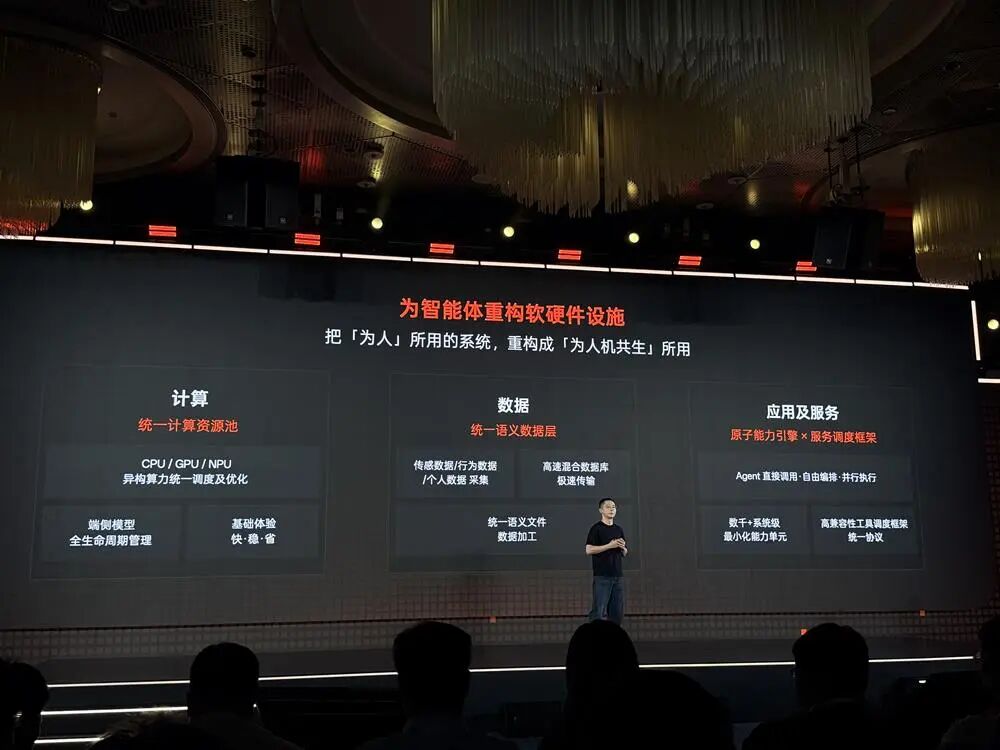
Among them, Step AOS has been reconstructed from three aspects: system capabilities, interaction methods, and underlying infrastructure.
Memory capability has become a standard feature for many agents. Step AOS builds a two-domain three-step memory structure: the user domain allows agents to remember and understand users, while the agent domain is used to accumulate their own knowledge and experience.
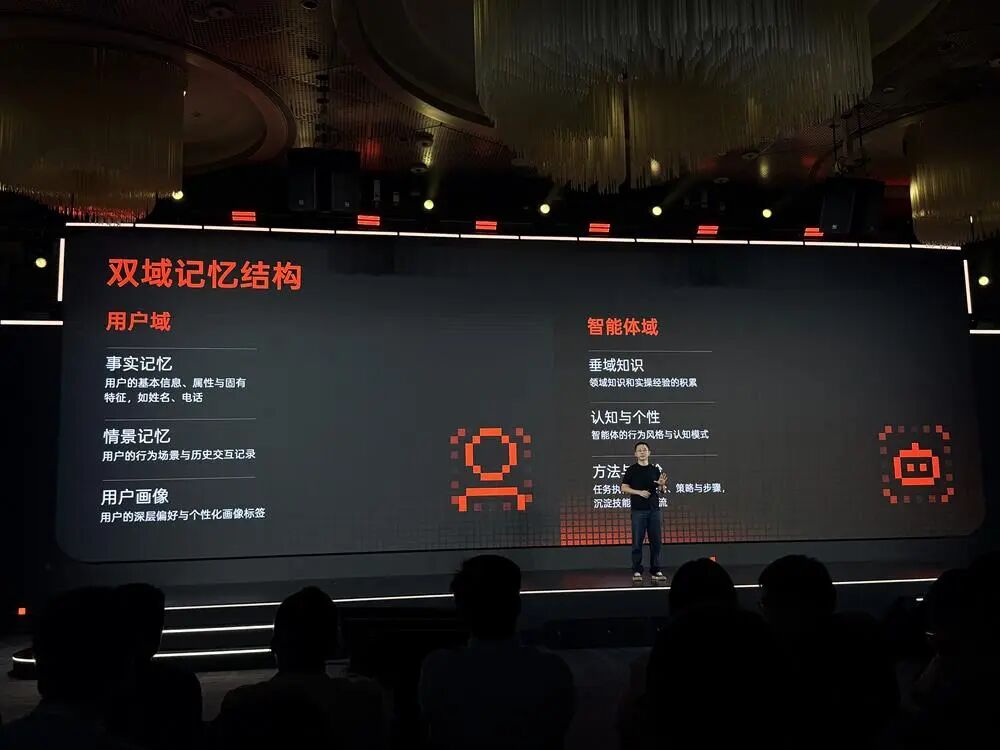
This information is not simply accumulated, but precipitated in three steps: first, recorded during daily interactions, then organized, deduplicated, and precipitated in the background, and finally recalled when needed.
In terms of decision-making and execution, Step AOS enables edge and cloud models to collaborate and divide work more flexibly. For simple tasks such as setting an alarm clock or finding a photo, Step AOS follows the principle of "prioritize edge-side execution whenever possible". For highly complex long-tasks, the cloud model takes charge.
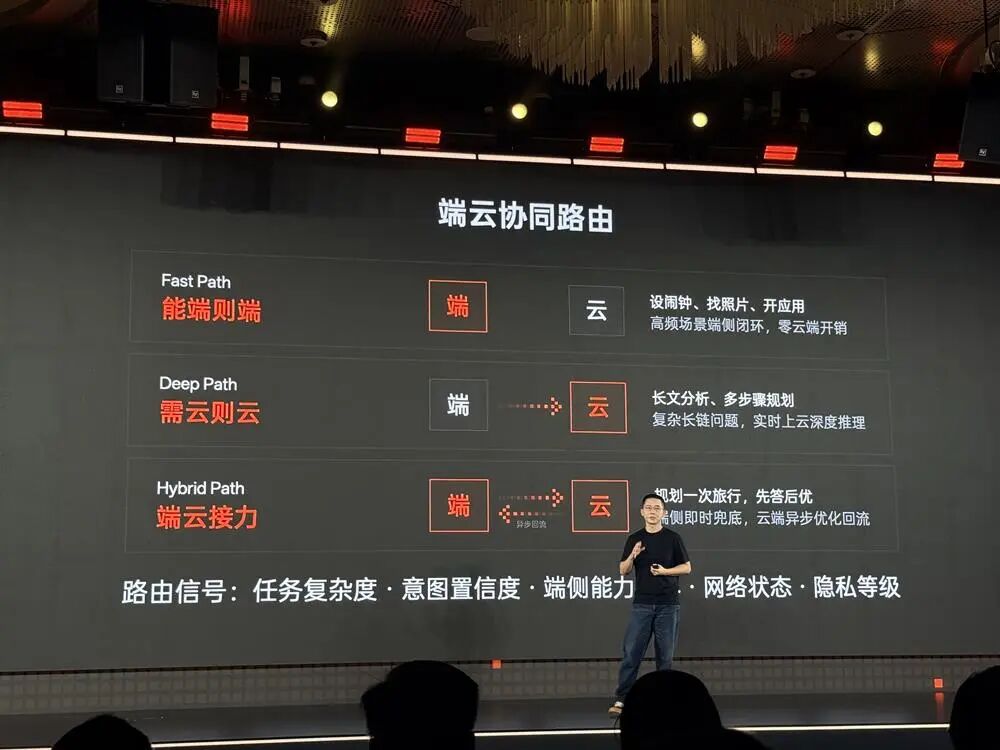
Yin Qi judges that the more common mode should still be edge-cloud hybrid collaboration, completing tasks in relay: the edge provides real-time feedback, and the cloud delivers in-depth thinking results. At the same time, model routing should be determined mainly by the model itself, rather than based on fixed rules.
Supporting the edge-cloud collaboration system is StepFun's model family covering edge-side to cloud-side, with sizes ranging from 300M to 400B. The presentation slides at the launch event also showed that StepFun's flagship inference model Step Pro is about to be released, with parameter count exceeding 1.5 trillion.
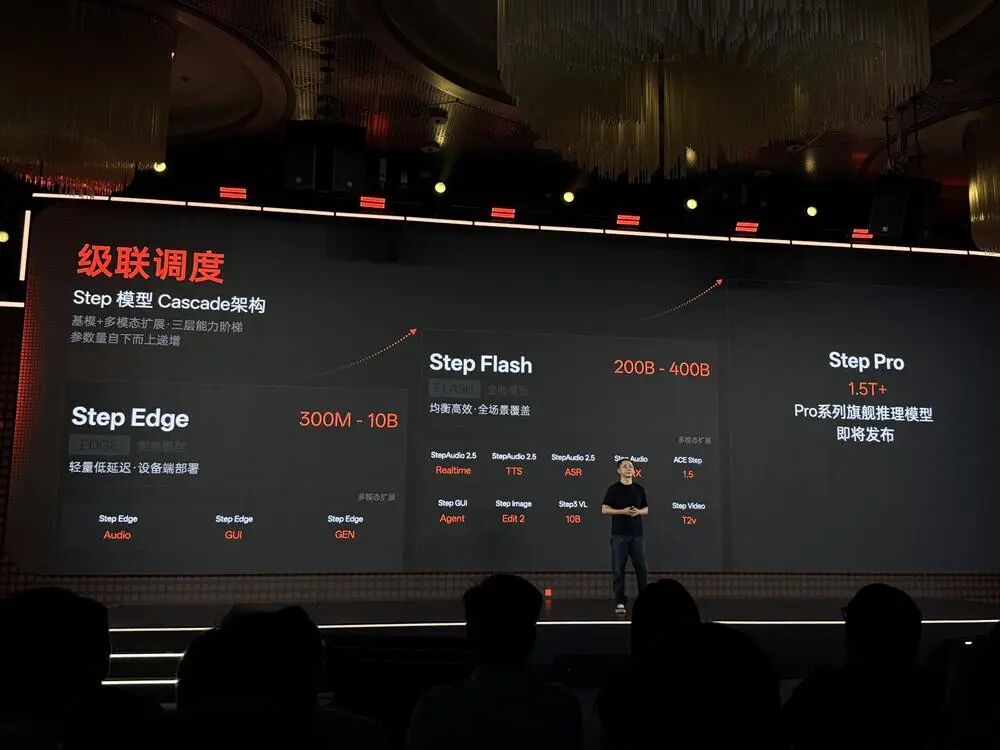
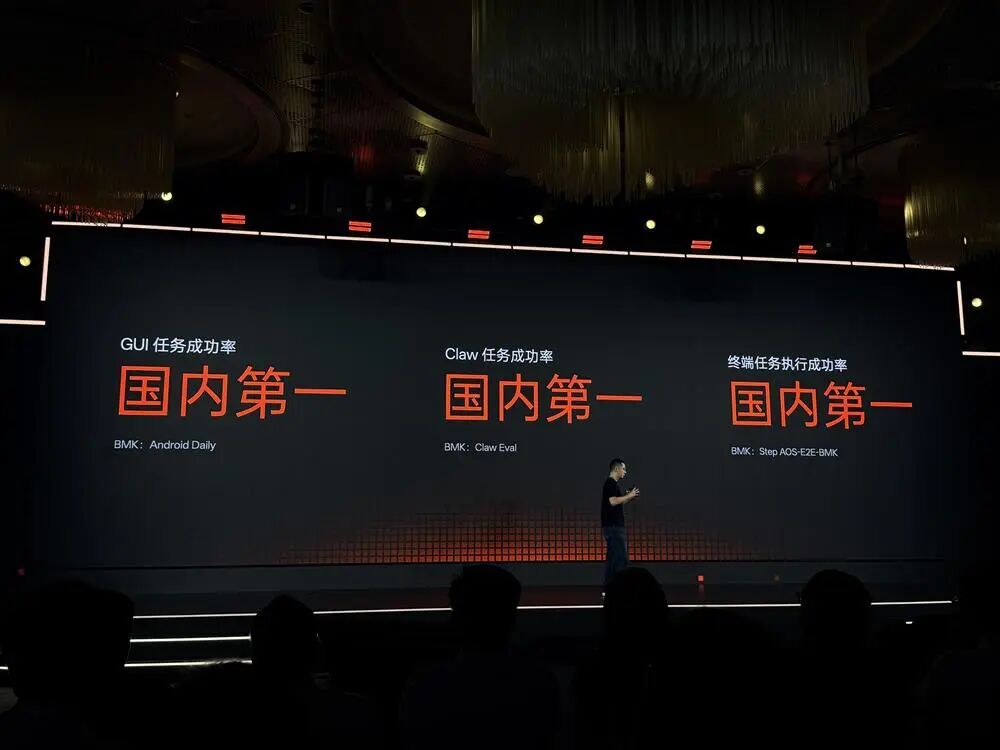
The full suite of Step Edge edge-side foundation models, which StepFun just released yesterday, is specially customized for terminal hardware. These models rank first globally among similar edge-side models in 29 authoritative benchmark tests, and achieve first place in China in benchmark tests for GUI, agents, and terminal tasks.
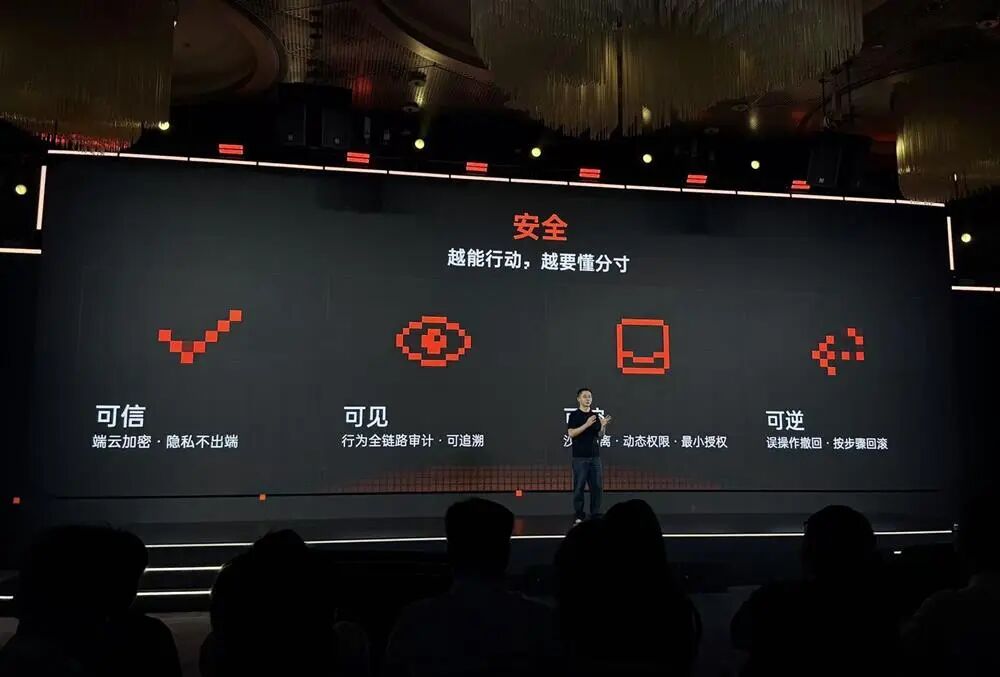
Security is equally important for agent-native operating systems. Step AOS defines security in four dimensions: trusted, visible, controllable, and reversible.
In this operating system, agents complete tasks in a trusted execution environment, their operations are auditable and traceable, permissions are granted on demand and revoked immediately after use, and misoperations can be undone with one click.
At the interaction layer, the main transformation of Step AOS is shifting from "process interaction" to "result interaction". Users no longer need to issue instructions step by step — they only need to express their task intentions, and the agent can complete the rest of the workflow, actively outputting task plans, execution progress, and suggestions.
At the underlying hardware and software infrastructure level, Step AOS redesigned computing power, data, and application services for agents. It realizes unified scheduling of heterogeneous computing power such as CPU, GPU, and NPU through a unified computing resource pool, and also builds a unified semantic data layer for processing to achieve high-speed data transmission.
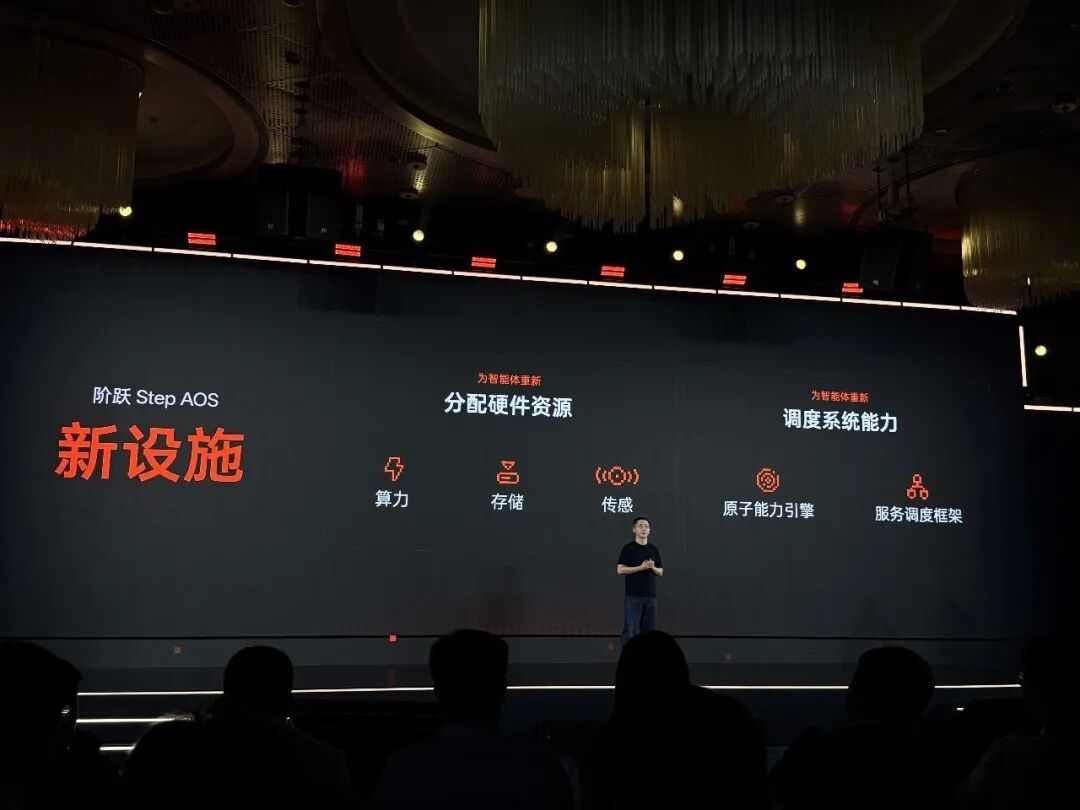
In terms of applications and services, the atomic capability engine of Step AOS breaks down the functions and services of the original system into atomic services suitable for agent scheduling and orchestration, and opens these capabilities to the entire ecosystem.
The ultimate goal of these designs is to make the system more suitable for the usage pattern of human-agent symbiosis.
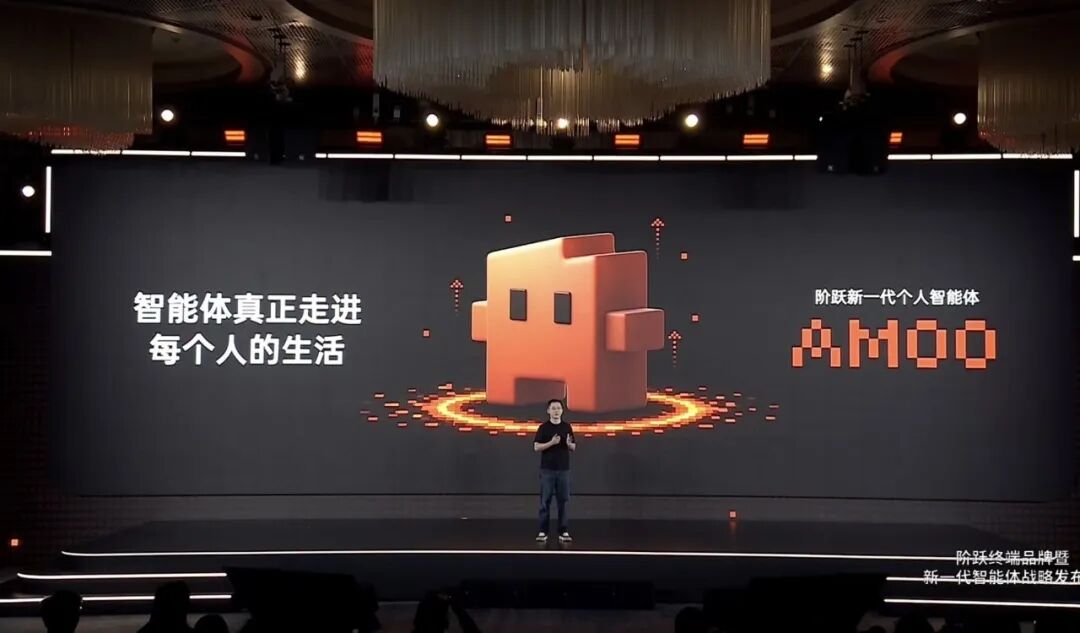
Leveraging the system capabilities of Step AOS, StepFun launched the new-generation personal agent Step Amoo. This is a system-level agent that can achieve cross-app scheduling, edge-cloud collaboration, and other capabilities, and can also execute tasks across different devices.
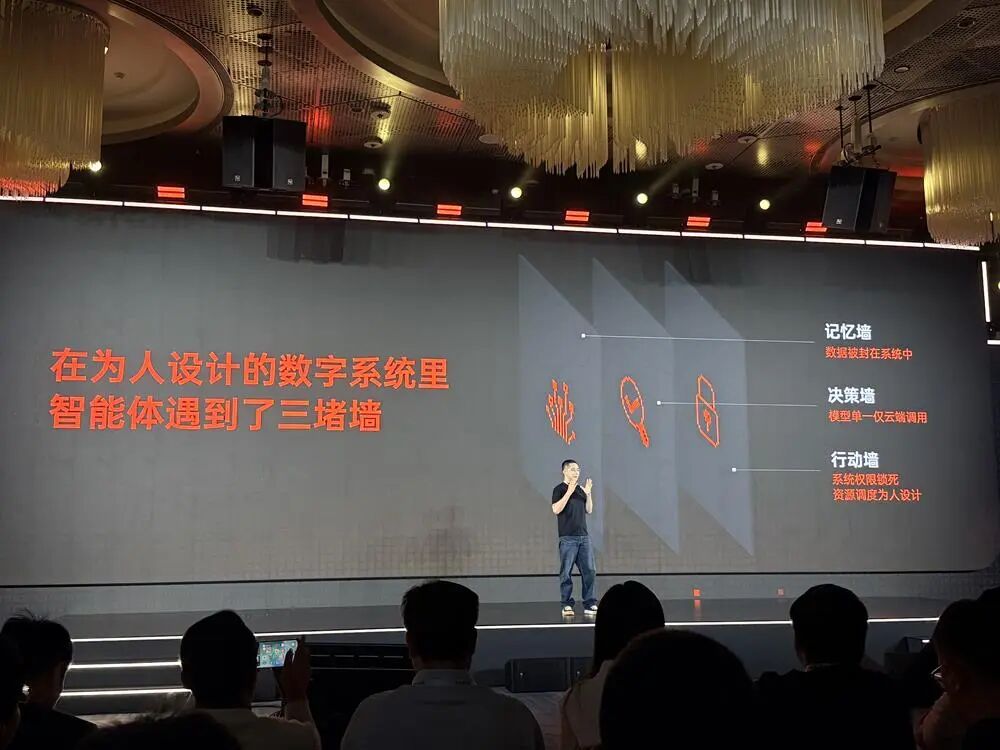
In Yin Qi's view, limited by the mobile internet system, agents today still face "three walls": the memory wall, the decision wall, and the action wall.
Specifically, data fragmentation between apps causes AI to lack cross-application memory, making it unable to provide better services for users. Secondly, most agents can only connect to one model, and a single model cannot balance efficiency and complex reasoning, limiting decision-making capabilities. More importantly, agents are always trapped in the application permission system and cannot truly complete tasks on behalf of users.
The design of Step AOS and Amoo is expected to provide solutions to the above challenges.
03. Conclusion: Agent Phones Still Await Market Validation
At this launch event, StepFun tried to bridge the last mile from agents "being able to think and speak" to "being able to actually get things done" through the integration of hardware and software, edge-cloud collaboration, and ecosystem cooperation.
Although the hardware details unveiled this time are limited, the advancement speed of its ecosystem layout has already shown stronger implementation advantages compared to the "Doubao Phone" at the same stage.
Of course, whether future agent phones can truly break down data barriers between apps, continuously expand the breadth and depth of the application ecosystem, and encourage users to accept and rely on this brand-new interaction method still needs to be tested by the market and time.