Mufan Power has completed two consecutive rounds of financing totaling over 500 million yuan, providing a power security foundation for computing power in the AI era.
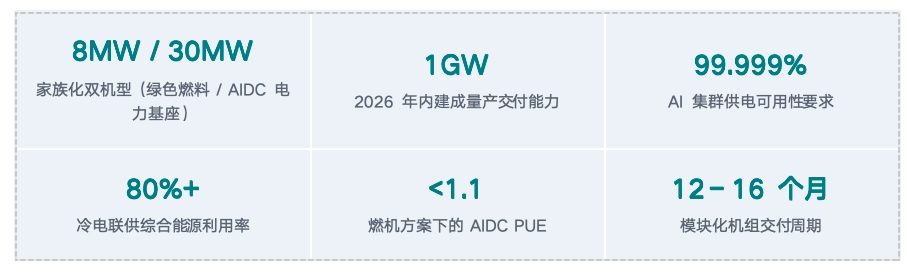
A few days ago, Shanghai Mufan Power Technology Co., Ltd. (hereafter referred to as "Mufan Power") announced the completion of two consecutive rounds of financing totaling over RMB 500 million. The Series C round was led by Sequoia China, with participation from Qiming Venture Partners, Envision-Sequoia Carbon Neutral Fund, C&D Emerging Investment, Dacheng Finance, Hillhouse Venture Capital, and Shanshui Capital. The Series B round was jointly led by C&D Emerging Investment and Qiming Venture Partners, with Shanshui Capital also participating. The raised funds will be primarily used to construct mass assembly and manufacturing centers for Mufan Power's core products — gas turbines and turbine product lines, as well as high-power full-unit factory performance acceptance centers, to support scaled production expansion of Mufan Power's fully self-owned intellectual property gas turbines. Mufan Power plans to complete a manufacturing and delivery base with 1GW mass production capacity by 2026, building an independently controllable, rapidly scalable power security foundation for the computing power industry in the AI era.
Lin Gang, General Manager of Mufan Power, stated: "The current global construction of AI data centers is undergoing a 'self-owned power plant' revolution. In the North American market alone, the supply-demand gap for gas turbines will reach tens of gigawatts in the next three years, and bulk procurement of gas turbines by overseas tech giants has become standard practice. Domestically, 'synergy between computing and electricity' has just been written into the 15th Five-Year Plan for energy construction, and 'strengthening computing with electricity, promoting electricity with computing' has become a national strategic direction, offering us an unprecedented policy window. This round of financing will accelerate the construction of Mufan Power's mass manufacturing capacity for gas turbines and turbine equipment, enabling us to meet the explosive demand for self-owned power stations for AIDC (Artificial Intelligence Data Center) at home and abroad simultaneously. Mufan Power will not only serve domestic computing infrastructure well, but also bring China's fully self-owned intellectual property gas turbine solutions to the global market to compete internationally. We are confident that in this global computing power and electricity race, China's high-end gas turbine and turbine equipment will secure its rightful place."
Mufan Power was founded by a Germany-returned team led by Lin Gang, with core technologies covering hydrogen-rich gas turbines and industrial waste heat and pressure recovery turbine power generation equipment, focusing on the development of new-generation zero-carbon clean power generation technologies and products. The company's self-developed world's first hydrogen-ammonia gas turbine and the world's pioneering three-fuel zero-carbon low-nitrogen burner can achieve dry low-nitrogen combustion of hydrogen, ammonia, and natural gas without hardware modification, covering power generation needs from kilowatt-level to tens of megawatts. Based on the family-style product philosophy of "modular scaling, serialized design", the company currently promotes two main models: 8MW and 30MW. The 8MW model focuses on green fuel scenarios, while the 30MW model targets AIDC power foundation scenarios — this "single unit with multiple fuels" technology foundation is not only Mufan Power's entry ticket to AIDC power supply, but also its long-term moat for future green transformation.
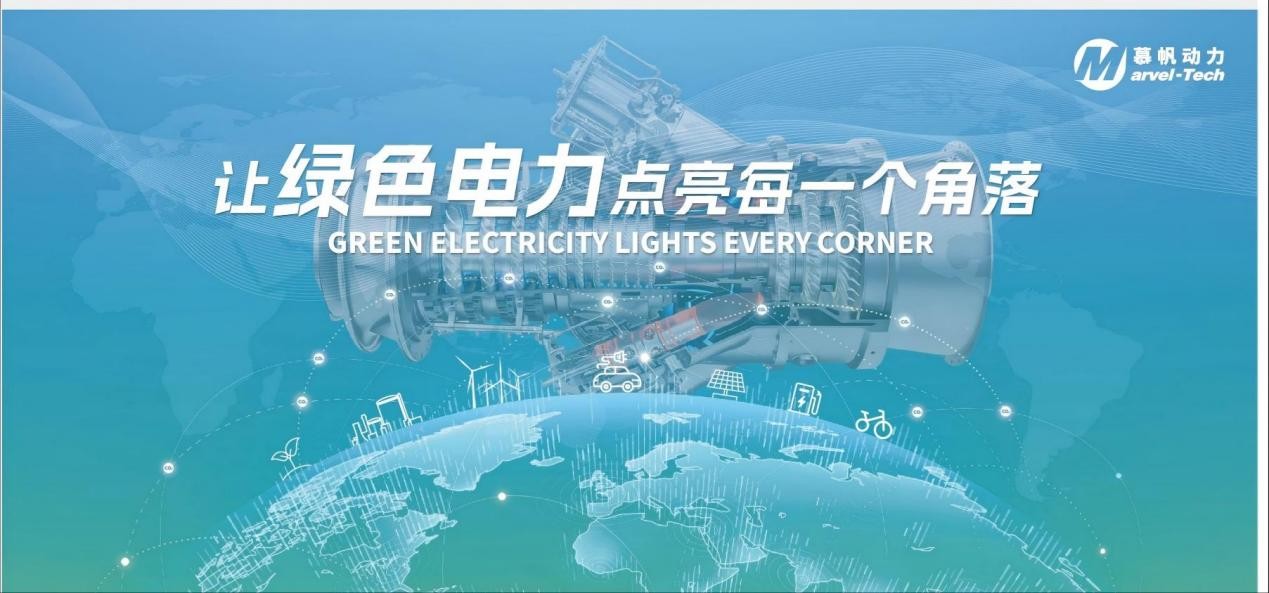
Mufan Power: Empowering every corner with green electricity
01 The competition of AI is essentially the competition of power supply
With the rapid development of the AI industry today, the core of computing power competition lies in power supply capacity, and the power consumption of large-scale computing clusters is comparable to that of a city. Large model training and inference clusters operate at full capacity 24/7, and the power consumption of a 10,000-GPU intelligent computing park is already close to that of a county-level administrative region. The expansion of computing power directly translates to a sharp surge in electricity demand. Relevant estimates show that during the 15th Five-Year Plan period, China's annual new electricity consumption for computing power will exceed 100 billion kWh, reaching 800 billion kWh by 2030, accounting for about 6% of the total social electricity consumption.
Power supply stability is directly related to the normal operation of AIDC. GPU clusters have near-zero tolerance for voltage fluctuations and instantaneous power outages — even millisecond-level voltage drops or short-term blackouts can cause training losses amounting to tens of millions of yuan. Whoever can provide a stable, uninterrupted large-capacity power supply will maintain the speed of model iteration and seize the window of opportunity for AI implementation.
However, the expansion of the public power grid cannot keep pace with the rhythm of AI expansion. The transformation cycle of China's external power grid lasts for several years, and the waiting time for grid connection for some AI data centers in the United States can be as long as 7 years. Statistics show that 62% of data centers are already considering building their own power facilities. Self-owned power stations are becoming the mainstream path to break through grid bottlenecks, and the ability of independent power supply has thus widened the gap between AIDC operators.
At the same time, electricity costs determine the profit margin of AI commercialization. Electricity bills account for more than 60% of AI operating costs. A stable, low-cost power supply is a key prerequisite for AI businesses to achieve large-scale profitability. By relying on gas turbine combined cooling and power supply, the needs of power generation and liquid cooling can be met simultaneously. The high-temperature flue gas waste heat from gas turbines is recovered to produce chilled water, replacing the power consumption of chillers, thereby lowering PUE and significantly reducing comprehensive energy costs.
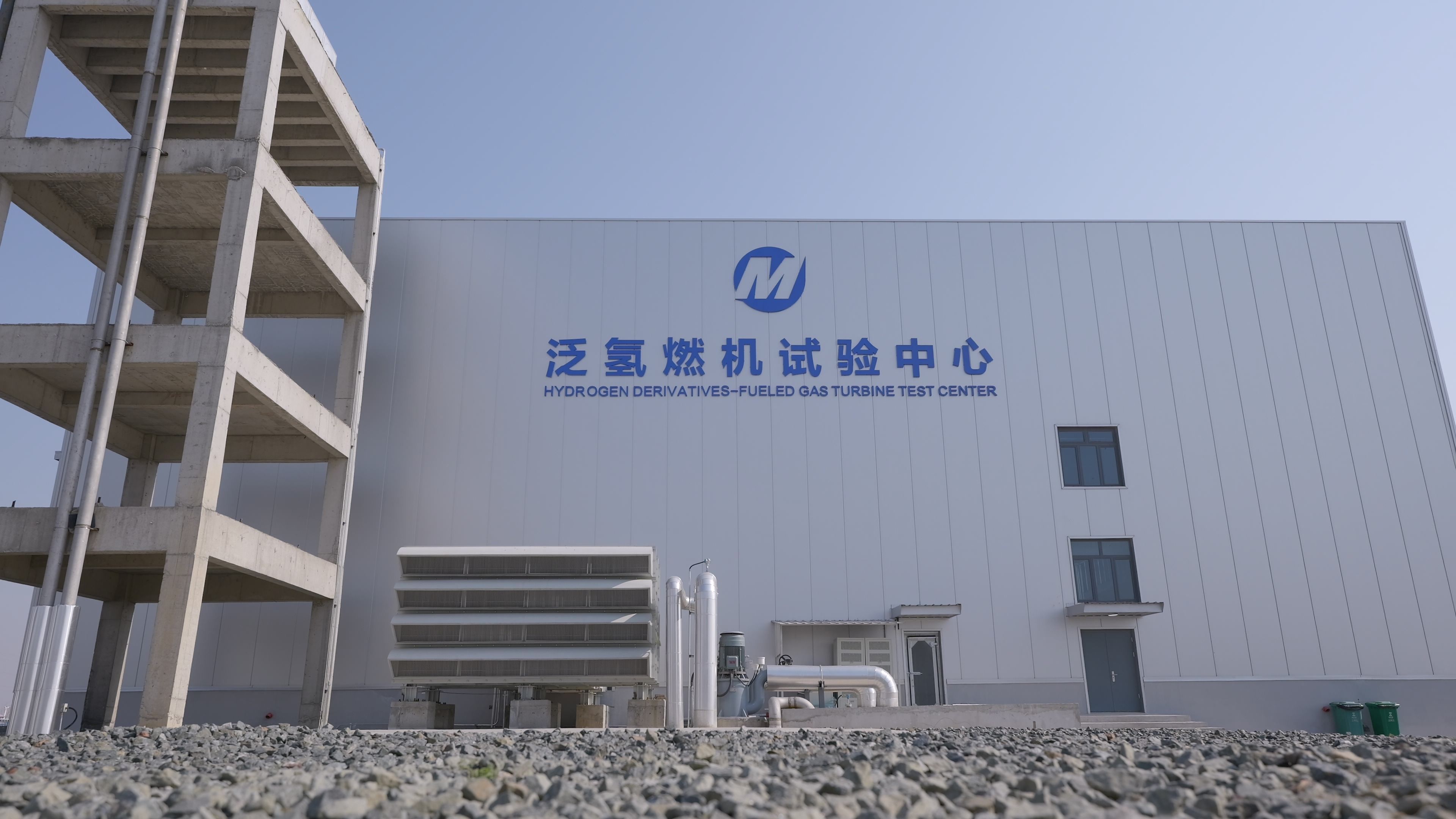
Mufan Power Gas Turbine Full-Load Testing Center
02 Gas Turbine: The optimal solution for AIDC power supply
The explosive growth of AI computing power has completely reshaped the industrial positioning of gas turbines — they are evolving from peak-shaving equipment for traditional power grids to an indispensable underlying power foundation for AIDC, directly determining the power supply quality and construction pace of computing infrastructure.
Mufan Power adopts the family-style product philosophy of "modular scaling, serialized design". Based on the same technology platform, it derives two main models of 8MW and 30MW, sharing core technologies such as three-fuel zero-carbon low-nitrogen burners. Among them, the 8MW model is currently promoted for green fuel scenarios, taking the lead in implementing applications such as by-product hydrogen utilization and hydrogen-ammonia fuel power generation, serving as the main carrier for the company to verify hydrogen-blended, pure hydrogen and pure ammonia technology paths. The 30MW model is targeted at AIDC power foundation scenarios, with a single-unit capacity that highly matches the typical power consumption level of a single AIDC building or modular computer room. Customers can flexibly match power scales from a single building to a park level through multi-unit parallel connection, achieving elastic expansion of "expanding as much as needed". The two models advance in coordination, not only supporting the current mass delivery of AIDC, but also reserving the same platform migration path for future green upgrades.
AIDC power supply requires 99.999% availability. Renewable energy sources such as wind and solar have inherent volatility and intermittency, and electrochemical energy storage represented by lithium batteries can only support short-term buffering for 0.5-4 hours — none of them can meet the baseload demand of 10,000-GPU level computing power 24/7. Gas turbines can operate at full load for several consecutive months, making them the best choice for large-capacity long-term self-owned power sources. With the lowest cost and highest efficiency, they solve the pain point of "huge losses caused by power outages", becoming the preferred baseload power source for data centers.
AI liquid cooling heat dissipation accounts for 20%-30% of the total energy consumption of data centers. Gas turbines integrate power generation and waste heat cooling, with a comprehensive energy utilization rate exceeding 80%, which can bring the PUE of AIDC below 1.1, significantly reducing long-term electricity expenses.
In terms of delivery cycles, the municipal power grid transformation cycle for 10,000-GPU level intelligent computing parks lasts 5-10 years with extremely high approval difficulty. Modular 30MW gas turbine units can be delivered and put into operation in only 12-16 months, supporting computing power customers to expand in phases by connecting 30MW units in parallel. Building self-owned gas turbine power stations has become a standard solution for North American tech giants — Microsoft, Google, Amazon, OpenAI, and xAI have all purchased gas turbines in bulk as self-owned power sources for AIDC.
In terms of market demand, the global supply-demand gap is huge, and the window for domestic substitution has opened. According to a research report by CITIC Securities, the surge in North American AI computing power demand is driving data centers into the era of "self-owned power plants". The compound annual growth rate of AI power demand from 2026 to 2028 reaches 73%, and the global supply-demand gap for gas turbines is expected to reach 16GW, 16GW, and 19GW respectively. Overseas gas turbine orders have been scheduled for production up to 2030, with delivery cycles as long as 3-5 years — this huge gap is creating a historic opportunity for Chinese gas turbine complete units to go global. Mufan Power plans to complete a manufacturing base with 1GW mass production capacity by 2026, which will become an important production capacity reserve to meet this global gap.
03 The 15th Five-Year Energy Blueprint unfolds, gas turbines stand at the multi-scenario outlet
In June 2026, the "15th Five-Year Plan for New Energy System Construction" was officially released, and the synergy between computing and electricity has risen to a national strategy, opening up multiple policy spaces for the gas turbine industry.
The plan proposes to "promote strengthening computing with electricity and promoting electricity with computing", enhancing the two-way empowerment of computing power and electricity. As the most critical conversion equipment between computing power and electricity, gas turbines play a pivotal role in AIDC self-owned power stations. The policy also clearly plans to "reasonably plan and construct natural gas power stations, and increase the demonstration and promotion of domestic gas turbines", requiring accelerated development of the hydrogen energy and green fuel industries, promoting the application of hydrogen, ammonia, and methanol in power generation and other fields, with the scale of renewable energy hydrogen production reaching 2 million tons by 2030. The plan also encourages thermal power plants to adopt zero-carbon and low-carbon fuel co-firing — this means gas turbines are evolving from simply burning natural gas to using hydrogen-rich fuels such as hydrogen-blended, ammonia-blended, or even pure hydrogen and pure ammonia, with application scenarios extending from peak shaving and heating to the entire field of zero-carbon power generation.
The plan emphasizes independent controllability of energy equipment, providing institutional guarantees for the engineering application of domestic gas turbines through the first set of major technical equipment demonstration system. The development of smart microgrids and integrated wind-solar-gas-storage microgrids has also expanded new application space for gas turbines in park-level combined cooling, heating and power supply, and green power consumption.
04 Looking to the future: The green path from stable power supply to zero-carbon power supply
The demand of AIDC for power is evolving from "whether it is available and stable" to "whether it is green and low-carbon". More and more international cloud vendors and computing power customers have included the proportion of renewable power and carbon emission intensity into site selection and procurement standards, which determines that gas turbine solutions must have a clear decarbonization evolution path, rather than a one-time transitional technology.
Benefiting from the family-style product design concept of "same platform, shared technology", Mufan Power's dual models work in coordination: the 8MW model takes the lead in verification, and the 30MW model follows synchronously. The hydrogen-blended, pure hydrogen and pure ammonia combustion technologies first verified by the 8MW model in green fuel scenarios such as by-product hydrogen utilization and hydrogen-ammonia fuel power generation can be smoothly reused on the 30MW model. This means that the 30MW gas turbine units delivered to AIDC today are not isolated transitional solutions, but share the same technology evolution curve with the 8MW green fuel model, reserving a definite path for customers' future green upgrades.
In the near term, gas-fired power is used to ensure supply to quickly fill the AIDC power gap. Relying on the advantages of the mature, stable 30MW units with short delivery cycles, we will first meet the urgent demand of AIDC for large-capacity, high-reliability baseload power sources, helping computing power customers cross the time bottleneck of grid expansion.
In the medium term, hydrogen and ammonia co-firing will enable smooth carbon reduction on the same equipment. Relying on the technology foundation of the three-fuel zero-carbon low-nitrogen burner, without hardware modification, the co-firing ratio of zero-carbon fuels such as hydrogen and ammonia will be gradually increased, allowing the already operational units to reduce carbon emissions synchronously with the improvement of green fuel supply capacity, avoiding the risk of asset obsolescence of "being eliminated right after completion".
In the long term, pure hydrogen and pure ammonia will lead to true zero-carbon power generation. As China's green hydrogen production capacity moves towards the 2 million ton target by 2030 and the green fuel supply chain gradually matures, Mufan Power's fully self-owned intellectual property hydrogen-ammonia gas turbines will support pure hydrogen and pure ammonia power generation, helping AIDC finally achieve the complete transition from "stable power supply" to "zero-carbon power supply".
This technical route of "starting with gas-fired power, transitioning through hydrogen blending, and finalizing with pure hydrogen and pure ammonia" enables Mufan Power's gas turbines not only to solve the most urgent power delivery problems of AIDC at present, but also to reserve a definite upgrade path for customers' future green and zero-carbon commitments.
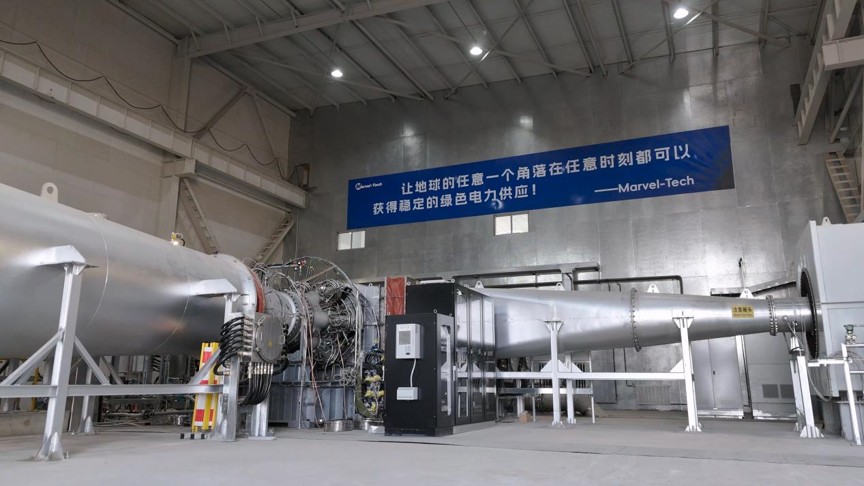
Mufan Power Production Base: "Let every corner of the Earth obtain a stable green power supply at any time"