Has Tencent AI turned the corner?
Last week, when large language models were being intensively unveiled one after another, Yao Shunyu, a former OpenAI researcher, also submitted his first official work report after joining Tencent.
On July 6, Tencent released the official version of Hunyuan Hy3. Without a grand launch event or overwhelming marketing campaigns, this flagship model entered the market in a low-key manner that rarely aligns with the usual practices of major tech firms.
However, it has made a considerable splash among developers.
Three days after its launch, Hy3, which was in a limited-time free access phase, rose to the 8th position on the most popular model ranking of OpenRouter, the global large model API calling platform. After being integrated into Tencent's office agent WorkBuddy, its call volume surged rapidly, with the queuing rate once exceeding 50%, forcing the project team to urgently expand its capacity. The capital market also responded: on the day of the release, Tencent's stock price rose by 4.82%.
This outcome was somewhat unexpected.
Over the past two years, Alibaba and ByteDance have continuously increased their investments in models, applications, and computing power infrastructure, while AI companies such as Zhipu AI and DeepSeek have also made their presence widely known with their hit models. Tencent alone has often been excluded from the first tier of domestic large model players.
It possesses WeChat, QQ, and a vast industrial ecosystem, yet it has never launched a foundational model capable of reshaping industry perceptions. The outside world even began to wonder whether Tencent was waiting for a more opportune moment to enter the market, or if it had already fallen behind in this round of technological competition.
As it turns out, Tencent did not choose to rest on its laurels.
After bringing in Yao Shunyu and restructuring the Hunyuan R&D system, Tencent was recently reported to have recruited Tian Yonglong, a former colleague of Yao's. Beyond the model itself, Tencent also participated in Keling's financing round of up to $3 billion, and rumors emerged that it was in talks to become the largest shareholder of the AI agent company Manus. From talent acquisition and model development to infrastructure investment, this internet giant, which had appeared overly restrained over the past two years, is ramping up its bets on artificial intelligence.
Hy3 is not yet sufficient to prove that Tencent has caught up with all its rivals; it is more like a phased signal. Tencent has reestablished a set of R&D methodologies that can connect models, products, and engineering systems, regaining a spot on developers' mainstream candidate lists.
But this is only the first step.
For Tencent, the real challenge is no longer just about whether it can develop another more powerful model, but whether this capability can support continuous iterations, and ultimately evolve into an agent within WeChat that is genuinely used by users to complete tasks and transactions.
01. Hy3 is not the strongest, but it is enough to bring Tencent back to the game
Judging solely from parameters and public rankings, Hy3 is not an immediately obvious "strongest model".
In this latest wave of domestic model updates, DeepSeek V4 Pro, Zhipu AI's GLM-5.2, and MiniMax M3 are all competing for the upper limit of capabilities: some have pushed the total parameter count to the trillion level, some have extended the context window to 1 million tokens, and others excel in coding and long-horizon agent tasks. In contrast, Hy3 has a total of 295 billion parameters and supports a 256K context window, without attempting to outperform competitors on every single metric.
To assess its true standing, two key factors need to be considered.
First, its capability boundaries in specific tasks.
On SWE-bench Verified, which measures software engineering capabilities, Hy3 scored 78 points, lagging behind closed-source models such as Claude Fable 5, as well as GLM-5.2 and DeepSeek V4 Pro. However, on the more challenging SWE-bench Pro, Hy3 overtook DeepSeek V4 Pro with a score of 57.9. On WildClawBench, a benchmark that more closely simulates real-world execution environments, it surpassed GLM-5.1 and DeepSeek V4 Pro, ranking among the top open models.
A blind test conducted by Tencent involving 270 professionals also showed that Hy3's overall performance outperformed GLM-5.1, with advantages concentrated in scenarios such as front-end development, data storage, and continuous integration.
Zhao Jiangjie, a seasoned agent industry practitioner, told *Dingjiao One* that Hy3 is currently positioned at "the upper end of the second tier in overall capabilities, and the first tier among open, low-cost models". It has strong competitiveness in front-end development, routine coding, search and browsing, and tool calling, but has not yet taken a comprehensive lead in highly difficult tasks. In practical use, high-frequency, low-to-medium difficulty tasks with verifiable results can now be completed independently by Hy3; moderately complex tasks can be executed by Hy3 and then reviewed; core architecture design and sensitive operations are still not suitable for unsupervised handover.
Therefore, if "catching up" means becoming the most capable domestic model, Hy3 has not achieved that yet; but if it means regaining visibility among developers, Tencent has already reclaimed its entry ticket.
Second, its emphasis on engineering implementation and cost control.
Hy3 adopts a Mixture-of-Experts (MoE) architecture, with a total of 295 billion parameters, but only activates approximately 21 billion parameters per inference. Instead of continuously pushing for peak performance, it strikes a balance between model capacity, running speed, and computing power costs.
For enterprises, the cost of a model is not limited to the per-token price. An agent completing a task often requires multiple rounds of inference, continuous tool calls, file reading and modification, and repeated verification of intermediate results. When the usage scale expands to thousands of employees, even tiny cost differences in a single call will be rapidly amplified by concurrency volume and task chains.
Fewer activated parameters mean Hy3 has an architectural foundation to reduce inference overhead and deployment barriers. However, fewer activated parameters do not inherently translate to lower real-world costs.
Zhao Jiangjie pointed out that model efficiency also depends on hardware, quantization methods, inference frameworks, context length, output length, concurrency scale, and task success rate. What Tencent has proven so far is that Hy3 has the potential to reduce costs, but under unified conditions, Hy3 still needs to verify whether it can deliver lower first-token latency, higher throughput, and lower cost per successful task.
Stability is also part of the cost equation.
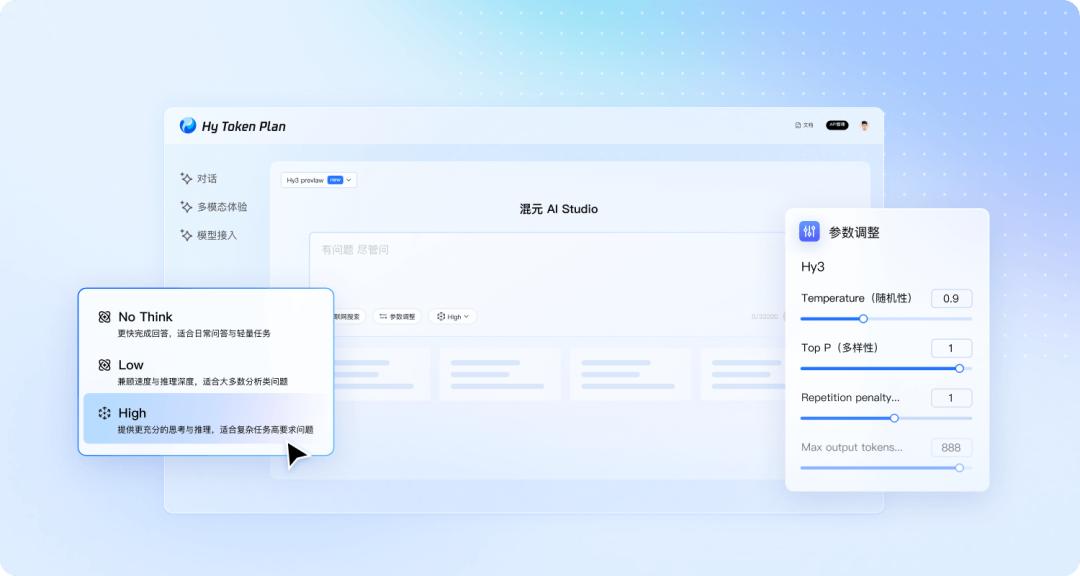
What enterprises need is not occasional brilliant performance from a model, but minimal errors, no "memory loss", and no interruptions across dozens of consecutive calls. Data released by Tencent shows that when Hy3 runs SWE-bench Verified under different agent frameworks, its accuracy fluctuation is controlled within 4%; in internal scenarios, its hallucination rate and multi-turn dialogue problem rate have also decreased significantly.
According to Zhao Jiangjie, the actual market evaluation of Hy3 is closer to "an engineering-focused model with outstanding cost-effectiveness, a clear agent orientation, but not yet sufficiently balanced in complex cognitive tasks", rather than a comprehensively leading general-purpose model.
After the release of Hy3 Preview, its daily average token consumption increased by 20 times, and the number of users who actively selected the model in WorkBuddy grew 6-fold. After the official version was launched, the computing power consumption of WorkBuddy quickly hit its upper limit, with the queuing rate once exceeding 50%, prompting the joint project team to urgently allocate additional computing power for expansion. Meanwhile, Tencent has integrated Hy3 into products such as Yuanbao, CodeBuddy, ima, and Marvis, using it to generate documents, create spreadsheets, edit files, manage computers, and orchestrate workflows.
Its popularity is not confined to Tencent's ecosystem. In OpenRouter's July usage ranking for coding models, Hy3 made it into the top four, sharing a similar call tier with the GLM-5.2, MiniMax M3, and DeepSeek V4 series.
However, these figures still need to be interpreted with caution.
Currently, Hy3 is available for a limited time for free on OpenRouter, and the call growth in WorkBuddy may also be influenced by points, free promotions, and internal traffic diversion. The real test will come after the free access period ends.
Even so, Hy3 has completed a step that Hunyuan had not managed to achieve before: making external developers willing to actively try it, and getting Tencent's internal products to start assigning real tasks to it. It does not prove that Tencent owns the strongest model, but it demonstrates that Tencent once again has a "usable model".
02. What Hunyuan is truly supplementing is the methodology for building models
When talking about the AI layouts of domestic internet giants, many industry practitioners used to give Tencent a straightforward evaluation: it has numerous scenarios, but its large models are not competitive.
Hunyuan was first released back in 2023. In the two years that followed, Tencent continuously improved its parameter scale, multimodal capabilities, and long-context performance, and gradually integrated the model into meetings, documents, advertising, games, and cloud services. However, compared with Alibaba, which built a developer ecosystem through open-source models, or DeepSeek, which broke through with inference capabilities and low costs, Hunyuan has always lacked a sufficiently clear market positioning.
Ma Huateng once used the metaphor of a "leaking boat" to describe Tencent's situation in the AI wave: it seemed to have already boarded the boat, but had not yet sat firmly. For Hunyuan, the real flaw was not that Tencent lacked products, scenarios, or data, but that it failed to continuously convert these resources into capabilities that drive model evolution.
The initial version of Hunyuan followed a typical "large and comprehensive" path: first train a general-purpose base model that covers as many tasks as possible, then integrate it into Tencent Cloud and internal businesses. This approach helped Tencent quickly catch up, but also trapped Hunyuan in homogeneous competition. It had capabilities across the board, but developers could hardly find a compelling reason to choose it over others.
Integrating DeepSeek into Yuanbao marked the first time Tencent clearly prioritized product experience over model ownership.
For users, what matters is whether a task can be completed, not which company's model is called at the underlying level. Third-party models can help Tencent quickly fill gaps in product capabilities and allow it to better understand what users truly need. This represented an adjustment in Tencent's understanding of the relationship between models and products: products no longer have to wait for self-developed models to mature, and models no longer automatically gain access to internal traffic.
However, this path also has its limits.
If Tencent's applications are built on top of others' models for the long term, it will only control the entry points, not the technological supply in the AI era. Decisions about model price adjustments, capability upgrades, sensitive data processing, and whether product feedback can enter the training closed loop will all be subject to external suppliers.
A multi-model strategy can buy time, but it cannot replace an autonomous, controllable foundational model capable of continuous iteration.
The real transformation took place after Yao Shunyu joined and the Hunyuan R&D system was restructured.
In September 2025, Yao Shunyu left OpenAI to join Tencent; in December of the same year, Tencent officially appointed him as its Chief AI Scientist, responsible for both large language models and AI infrastructure. His arrival was a landmark event in Tencent's reorganization of the Hunyuan R&D system. Since then, models, computing power, data, and evaluation have been brought into a more centralized decision-making chain.
Tencent did not rush to train a model with larger parameters. Instead, it first reworked the foundational engineering of model development: rebuilding the pre-training and reinforcement learning systems, expanding and cleaning datasets, and readjusting the post-training process. Public rankings are no longer the sole criterion; real product feedback, human blind tests, and internal tasks have all been incorporated into the evaluation system.
Hy3 is the first batch of results produced by this methodology.
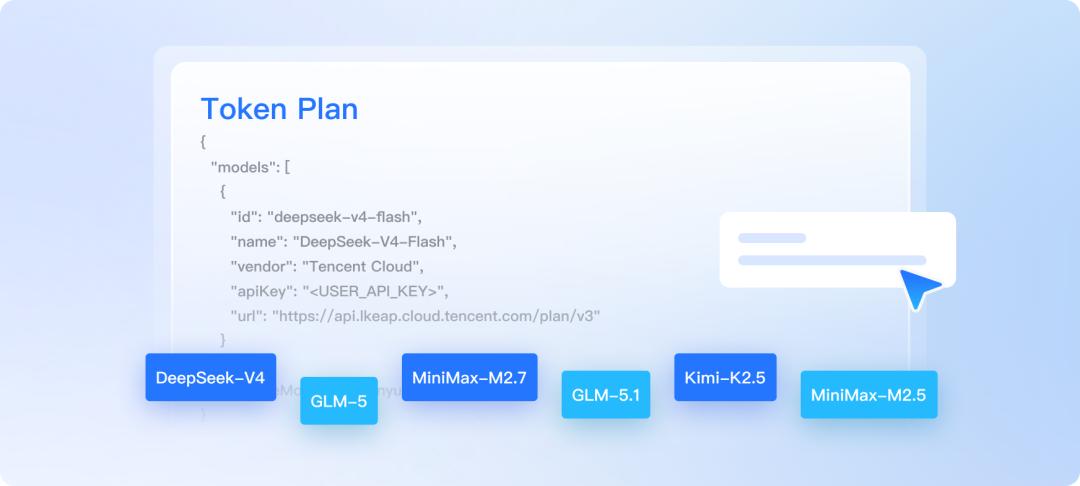
It focuses on solving inference, coding, tool calling, and long-horizon agent tasks. The R&D sequence was also reversed: first identifying what kind of models are needed for office work, programming, and knowledge management, then working backward to design the architecture, data processing, and training methods.
Products are no longer just distribution channels after a model is completed, but an integral part of the training system. As Yao Shunyu stated at the Tencent Cloud AI Industry Application Conference in June this year, the reborn Hunyuan models adhere to in-depth co-design with products. Through multi-product data feedback and systematic training, they continuously enhance performance while optimizing model size.
Zhao Jiangjie believes that the significance of Hy3 to Tencent goes far beyond the model itself. It has established an anchor point for model costs, reintroduced product feedback into the training closed loop, and tested Tencent's ability to organize the application ecosystems scattered across WeChat, office tools, cloud services, and development tools into real execution capabilities.
Over the past two years, what Tencent truly lacked was a methodology that could stably build models, integrate them into products, and then use product feedback to drive continuous model evolution.
Hy3 has temporarily proven that this cycle is starting to operate again, but a single success is not enough to demonstrate that Tencent has built long-term competitiveness.
03. Beyond Hunyuan, what else is Tencent missing?
Hy3 has given Tencent back a usable self-developed engine, but this engine is not yet powerful enough to drive everything in Tencent's AI landscape.
Tencent President Martin Lau stated at the March earnings conference that AI will not be a competition that produces only one champion. "A large number of existing applications will launch their own agents and agent capabilities, and different models will compete for adoption by these agents. This will be a more exciting, decentralized world that everyone can participate in."
Tencent's Chief Strategy Officer James Mitchell described it as a "cost-effectiveness curve": successful agents in the future will independently select appropriate models based on the capability requirements and cost constraints of different tasks; different models will be distributed at different positions on this curve. "We want to be one of the players, not the only choice."
According to this judgment, the future AI market will not have a single model covering all demands, but will form a multi-layered competitive landscape consisting of models, agents, applications, and infrastructure.
This also defines Hunyuan's role: it is not something Tencent can rely on to win against all competitors, but it is an indispensable foundational asset that Tencent cannot do without.
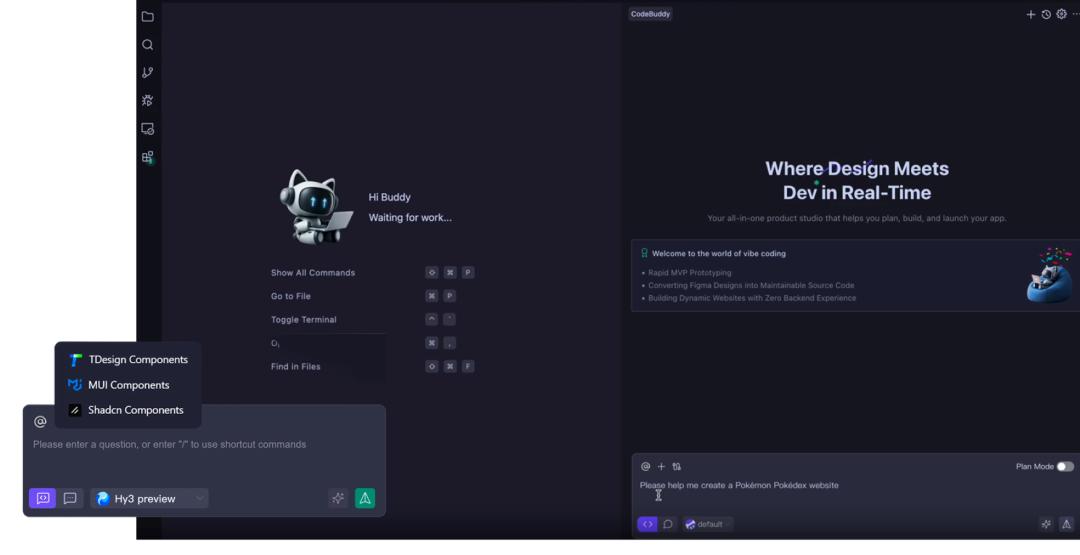
In the future, Hunyuan does not need to handle all tasks within Tencent's ecosystem, nor does it have to be the default model for every product. Highly difficult, low-frequency tasks can call on more powerful third-party models; high-frequency, sensitive tasks that require private deployment or have stricter cost constraints will be more assigned to self-developed models.
But this does not diminish the importance of Hunyuan. Zhao Jiangjie summarizes the strategic value of self-developed models as: cost anchor, supply security, co-training with products, privatization compliance, continuous learning capabilities, and the qualification to participate in next-generation technological competition. Without self-developed models, Tencent's products can still quickly improve their experience with the help of external suppliers, but it will remain constrained by others in the most critical production function of AI for a long time.
What truly determines the upper limit of Tencent's AI development lies in another set of capabilities.
Tencent holds strong assets: the 1.4 billion monthly active user entry of WeChat, identity and permission systems, mini-program tool ecosystem, payment and transaction capabilities, organizational workflows in WeCom, and cloud infrastructure. Compared with competitors, Alibaba has e-commerce and cloud services but no social entry; ByteDance has massive traffic but lacks