ZTE's Nubia AI Agent Phone is Coming, Can ZTE Turn the Tide with Doubao?
In the AI era, ZTE aims to return to the core of the smartphone market relying on Doubao.

Image source: Weibo
On July 8, 2026, Ni Fei, President of ZTE Communications Terminal Division and President of Nubia Technology Co., Ltd., posted on social media platforms that Nubia will launch "the world's first AI agent smartphone" at the 2026 World Artificial Intelligence Conference opening on July 17.
In fact, as early as half a year ago, ZTE had already launched the Nubia M153, an AI agent smartphone equipped with the "Doubao Mobile Assistant" that features cross-app task execution capabilities. However, as an engineering prototype carrying preview-version technology, the Nubia M153 had extremely limited stock, only available for geeks and developers to experience.
According to Ni Fei, the AI agent smartphone Nubia launched at the 2026 World Artificial Intelligence Conference is positioned as a "mass-produced flagship", not only targeting tech enthusiasts or business users, but serving all users who want a more relaxed life.
It is obvious that after half a year of iteration and optimization, the product capabilities of ZTE's AI agent smartphones have gradually matured, moving past the technology verification phase and penetrating into the mass market.
However, it should be noted that smartphones are not isolated hardware products, and the ecosystem is the key factor determining the upper limit of products. The maturity of underlying technology is only the first step. Whether ZTE's AI agent smartphones can connect applications, services, and developer ecosystems to become a disruptive force in the smartphone industry remains to be tested by time.
Once a leader in the smartphone industry, ZTE has now been marginalized
Nowadays, many users may feel very unfamiliar with ZTE smartphones. In fact, ZTE was once the dominant player in the Chinese smartphone market.
When smartphones rose to prominence, ZTE was deeply tied to carrier channels, launching customized devices that allowed it to quickly reach massive numbers of consumers. Data disclosed by IDC shows that in 2012, ZTE's global smartphone shipments reached 65 million units, including 35 million smartphones, ranking fourth in the world after Samsung, Nokia, and Apple.
In the Chinese smartphone market, as the leading member of the "China's Big Four" (ZTE, Huawei, Coolpad, Lenovo), ZTE was at the peak of its success, even temporarily surpassing Huawei.
Unfortunately, ZTE did not continue to lead the smartphone track. After 2013, with the rise of smartphone manufacturers such as Xiaomi, OPPO, and vivo, ZTE's smartphone shipments declined year after year.
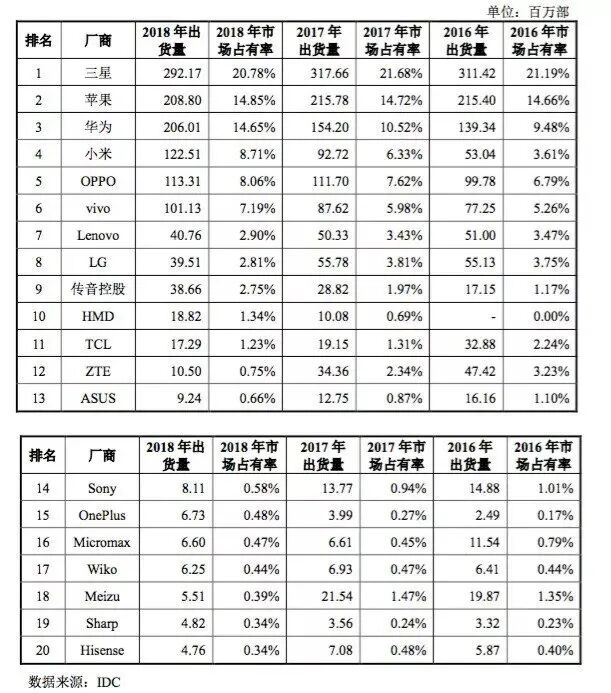
Image source: IDC
Data disclosed by IDC shows that in the global smartphone market in 2018, ZTE's smartphone shipments were only 10.5 million units, with a market share of just 0.75%, a stark contrast to Huawei's 206 million units of shipments.
The main reason ZTE smartphones were abandoned by consumers is that it failed to timely adjust its business strategies amid the drastically changing market environment.
Since 2013, as internet smartphone brands such as Xiaomi, Meizu, and OnePlus developed cost-effective products closely aligned with consumer demands, China's smartphone industry began to develop in the direction of quality improvement, widespread accessibility, and flagship-level performance.
Against this backdrop, as a B2B enterprise, ZTE lacked keen insight into the needs of C-end users. It continued to launch a large number of low-end smartphones through carrier channels, deviating from consumer demands, and was naturally abandoned by the market.
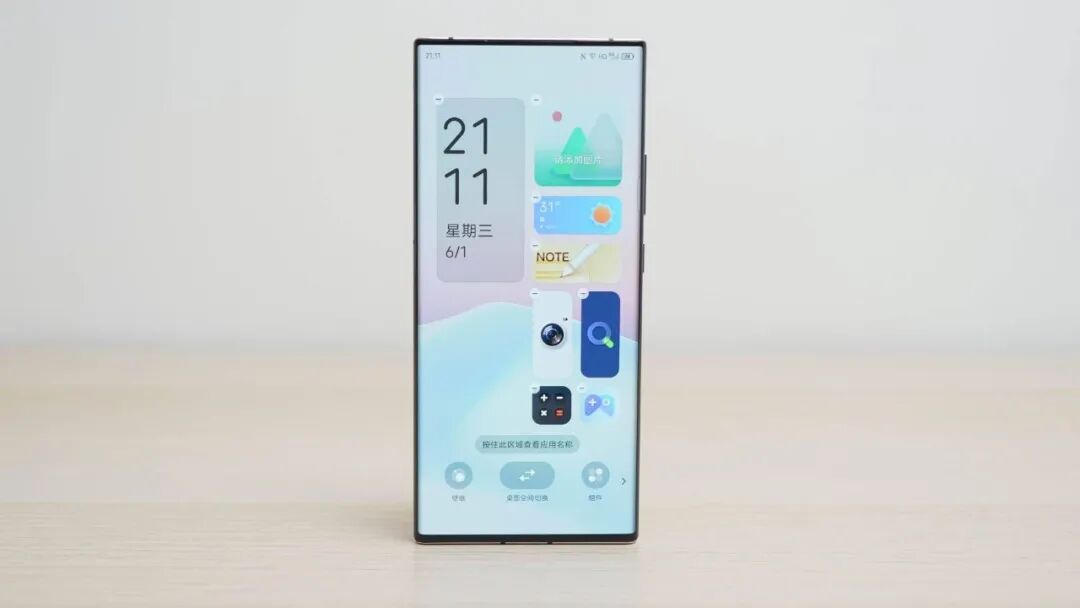
Image source: ZTE
In recent years, ZTE has actively adjusted its smartphone business, developing differentiated technologies such as under-display cameras, direct low-orbit satellite connectivity, and AI glasses-free 3D, and incubating brands like Nubia and RedMagic gaming smartphones. However, as China's smartphone industry has entered a stock market era with extremely fierce competition, where even major players are facing declining shipments, ZTE's smartphone business has struggled to move up the value chain.
After partnering with Doubao, ZTE sees a path to break through
Since 2022, after OpenAI launched ChatGPT and ignited the AI concept, numerous tech companies have seen the possibility of transformation, stepping into innovative hardware one after another, trying to build an "AI Phone" to become the next Apple.
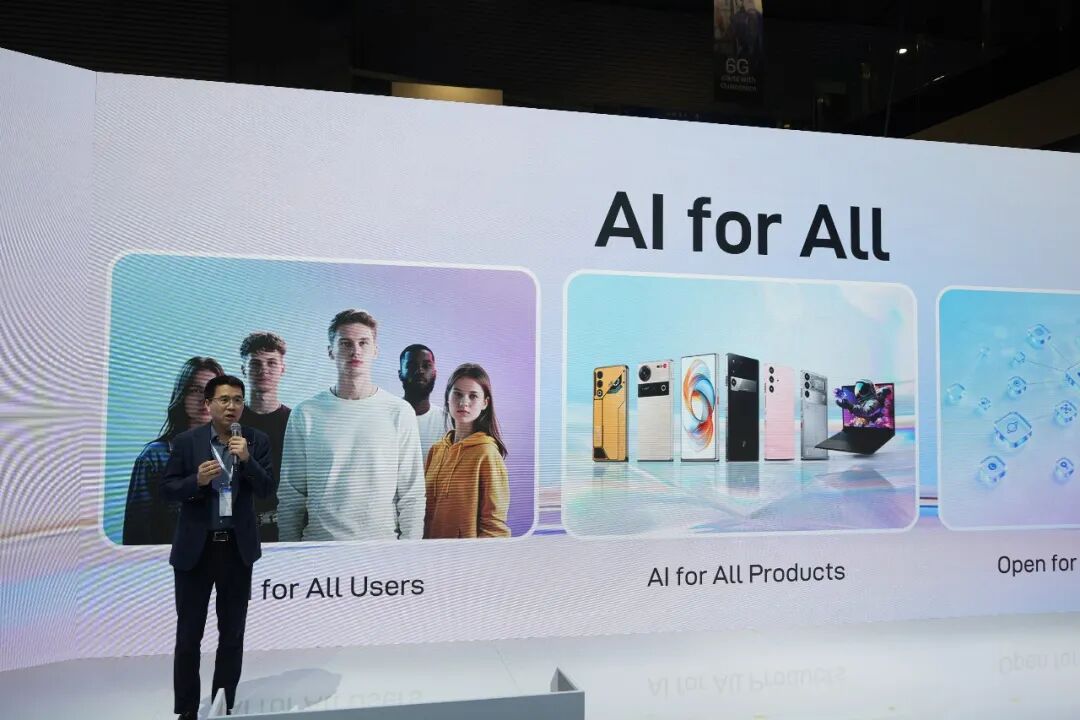
Image source: ZTE
In 2025, ZTE proposed the "All in AI, AI for All" strategy, committed to making AI technology benefit every user and household by reshaping interactive experiences and building a rich ecosystem.
Without historical burdens, ZTE's exploration of AI smartphones has been extremely aggressive. In December 2025, ZTE partnered with Doubao to launch the Nubia M153, an engineering prototype equipped with the technology preview version of Doubao Mobile Assistant, priced at 3499 yuan.
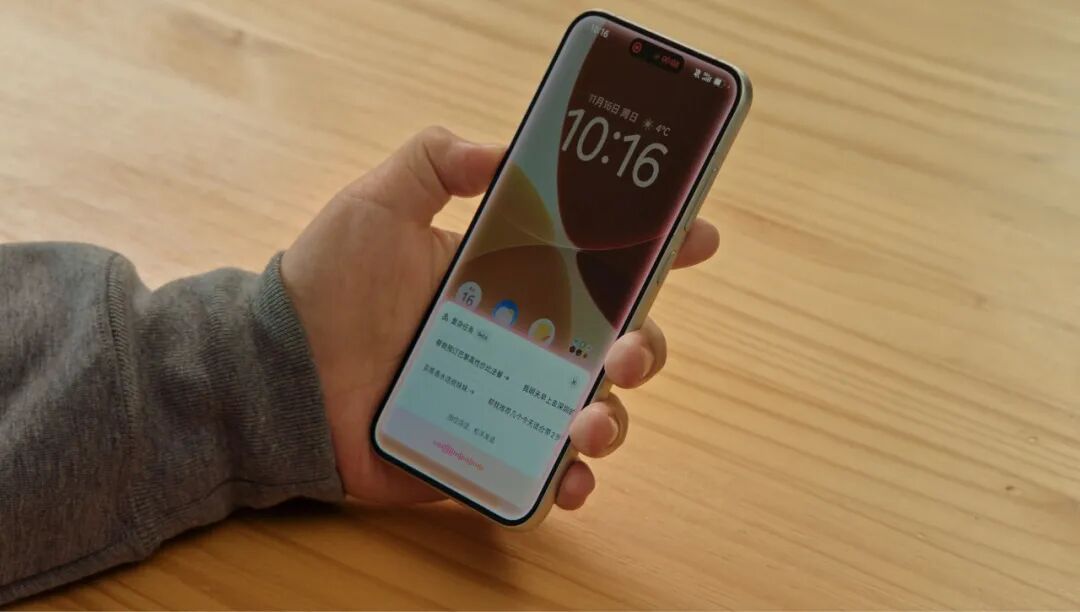
Image source: Doubao
The "Doubao Phone" has the same form as traditional smartphones, with its core highlight being that it can use GUI simulated click technology to achieve cross-app automatic operations based on the capabilities of the Doubao large model.
For example, when a user gives the Doubao Phone the instruction to order a cup of Luckin Coffee, the Doubao Mobile Assistant will automatically open the Luckin app, select a drink that matches the user's needs, and then call the payment app. Users only need to click to pay to complete the ordering process.
In comparison, most of the so-called "AI smartphones" on the market today only add fragmented functions such as AI photo editing, AI summarization, and AI calls at the system level. They do not, like the Doubao Phone, horizontally connect the mobile internet ecosystem to significantly enhance users' experience.
Due to its strong differentiation and the ability to free users from cumbersome operations, the Nubia M153 was enthusiastically received by consumers immediately after its launch. The first batch of 30,000 units sold out quickly, and second-hand products were resold at a premium of thousands of yuan.
In response, Luo Yonghao commented: "I don't know if the Doubao Phone will succeed, but ByteDance taking this first step is truly remarkable and deserves praise. AI assistants will definitely become ubiquitous, and our lives will be completely inseparable from them. Future generations will remember this historic day."
It is obvious that, given the tremendous transformative power of AI technology, ZTE has regarded the Doubao Phone as a key strategic lever to seize the window of opportunity in the AI era and reshape the competitive landscape of the smartphone industry.
Behind mature products, major internet companies stand as obstacles
Although the Doubao Phone has won users' favor with its differentiated experience, it has faced resistance from many developers at the ecosystem level. Just a few days after its release, apps including WeChat, Taobao, and Alipay blocked the Doubao Phone one after another.
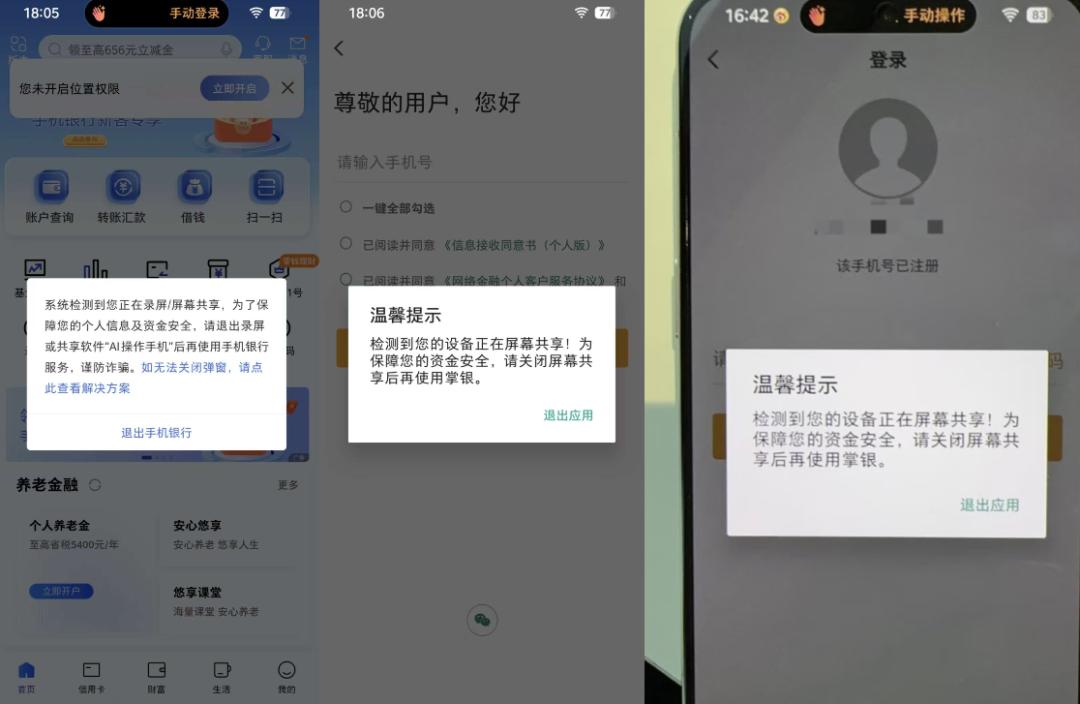
Image source: Weibo
The reason is that, without obtaining the API interfaces of third-party apps, the Doubao Phone can only rely on technologies such as simulated clicks and screen recognition to achieve "one-sentence task execution". This simple and crude interaction method has impacted the traffic entry points, data sovereignty, and security risk control systems of existing apps, thus being blacklisted by many internet platforms.
In response, at the annual employee meeting held in early 2026, Ma Huateng, Chairman and CEO of Tencent, stated that Tencent has always clearly opposed using malicious plug-in methods to record the screens of users' mobile phones and computers and upload the footage to the cloud, "because this is extremely unsafe and irresponsible".
In fact, the resistance from mobile internet platforms is precisely an important reason why the AI transformation of traditional smartphones has been slow.
In recent years, as tools such as Codex and Claude Code have gradually matured, Agents are no longer distant, unattainable technology.
Image source: OpenAI
However, it should be noted that the current carriers of Agent tools are mainly PCs, not smartphones. This is mainly because Agents rely heavily on third-party interfaces. Since the PC ecosystem is relatively open, Agents can call different tools and software to perform corresponding tasks.
In contrast, the mobile internet has a clear trend of app silos. To maintain competitiveness and prevent the loss of users and data, mobile apps have erected high data walls one after another.
Facing the transformative AI technology, most mobile developers are cautious. Because an omniscient and omnipotent AI is expected to become a new entry point. If API interfaces are fully opened, mobile apps may gradually degenerate from "traffic entry points" to "service providers", losing their user base and information distribution rights.
Take Meituan as an example. If users complete tasks such as ordering food delivery and instant shopping directly through the mobile AI assistant, although Meituan is still responsible for transactions and fulfillment, its connection with users will be weakened. In this scenario, Meituan's long-accumulated ecosystem advantages will be diluted, and its coordinated businesses built around instant retail, such as Xiaoxiang Supermarket, Meituan Instant Delivery, and Waima Alcohol Delivery, will struggle to achieve cross-traffic diversion through a unified entry point.
Given that major internet companies are generally cautious about system-level Agents, although this technology has become very mature, leading smartphone manufacturers do not dare to promote it rashly.
Unlike ZTE, which lacks a large user base, leading smartphone manufacturers such as Xiaomi, OPPO, and vivo ship hundreds of millions of units every year. If they adopt technologies such as GUI simulated clicks to achieve cross-app automatic operations and trigger developer resistance, leading to some apps not functioning properly, it will not only evolve into a public opinion crisis but also cause user loss.
A typical example is Honor. Although it is also actively increasing investment in AI smartphones, to avoid resistance from internet platforms, it has not adopted the simple and crude GUI simulated click technology. Instead, it implements Agents by connecting to official interfaces.
According to official information, the "YOYO Agent" equipped on Honor's Magic8 series smartphones mainly relies on the system-level MCP architecture to achieve "one-sentence automatic task execution", supporting automatic operations in over 3000 scenarios. However, since not all internet platforms actively open their interfaces, the applicable scope of Honor Magic8's AI functions is far less than that of the Doubao Phone, so it has failed to open up the market.
Looking back at the development history of the tech industry, every innovation that truly changes the industry landscape often comes from redefining existing rules. From the original iPhone reconstructing smartphones to the mobile internet reshaping the app ecosystem, the real winners have never been those who simply stack functions, but those who create a brand-new interaction paradigm.
The same applies to the AI era. ZTE was the first to bet on AI agent smartphones and try to reshape human-computer interaction, demonstrating the courage to break industry inertia. However, competition in the tech industry has never been won by radical ideas alone. Any new interaction method must ultimately be built on the basis of a win-win situation for user experience, developer ecosystem, and commercial interests.
For ZTE, the real test is not being the first to launch an AI agent smartphone, but whether it can connect the closed loop of hardware, system, and ecosystem, allowing AI to grow from an eye-catching new feature to a new entry point that users rely on every day.
It can be said that the final destination of AI smartphones may not be competing for model capabilities, but who can be the first to reconstruct the next-generation mobile ecosystem.
This article is from the WeChat official account "Shijiao Farsight", authored by the Shijiao Team, and published with authorization from 36Kr.