Why is it another pseudo-incest romance? They all look almost identical.
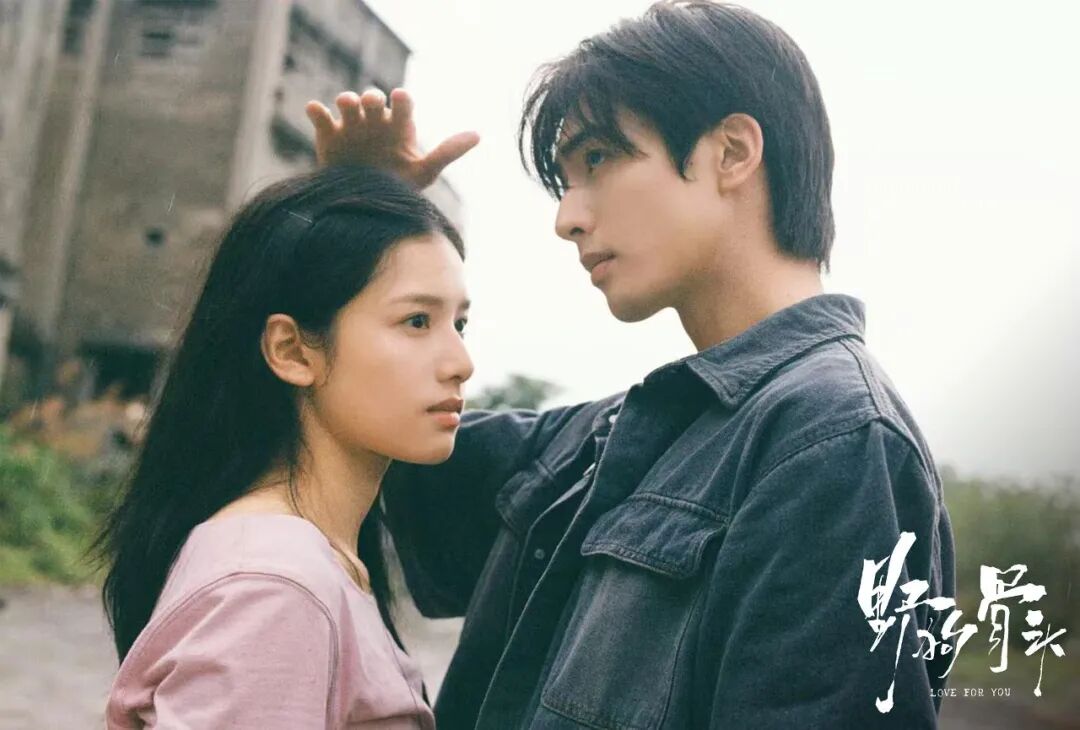
After the premiere of Wild Dog Bones, many contemporary romance viewers shared a similar feeling: suddenly, the screen is flooded with "sibling pairs with no blood relation."
In the past year or two, titles such as Dual Paths, Dazzling, Blazing Summer, and Wild Dog Bones have been released one after another. From campus settings to urban backdrops, from tragic romance to healing narratives, the pseudo-sibling dynamic can be spotted in nearly every niche of the contemporary romance genre, and this sudden cluster of themes caught everyone off guard. In fact, the pseudo-sibling trope is hardly a new concept in Chinese drama productions.
Earlier works like Blooming in the Wind and Cool Our Youth, Can We Not Be Sad centered the emotions of non-blood-related siblings as key narrative threads. Go Ahead and To Love also featured similar character dynamics, but these relationships either served as an ethical filter within tragic love stories, or remained secondary emotional subplots under family-focused narratives. They were always scattered experiments in the drama market, never developed as an independent category on a large scale.
The turning point came in 2023: Meng Yanchen's side story in Fireworks in My World unexpectedly went viral, while the cousin bond in Lost You Forever became one of the most widely discussed romantic lines in the series. This quickly alerted the industry to the viral potential of forbidden emotions.
What followed was rapid project greenlighting and concentrated premieres. This once-niche trope soon became a high-priority bet for streaming platforms. However, most of these dramas generated buzz at launch but faded quickly after wrapping, failing to produce a nationwide hit. Many even faced criticism for being formulaic and unrealistic shortly after release.
The rapid rise and subsequent cooling of pseudo-sibling dramas is far more complex than a simple boom-and-bust cycle for a theme. Behind it lie the creative inertia of the contemporary romance market, viewers' hidden emotional needs, and the unavoidable creative bottlenecks facing the entire genre.
From Scattered Details to Genre Betting: The Logic Behind the Pseudo-Sibling Trend
For a long time, the pseudo-sibling trope in Chinese dramas only served as a flavoring for tragic romance, rather than an independent thematic label.
The 2013 series Blooming in the Wind was one of the earlier works to use the pseudo-sibling dynamic as its main plot. Wei Rufeng and Xia Ruhua relied on each other through hardship; their sibling identity was both a natural shackle on their relationship and the foundation of their tragic fate. Audiences cared deeply about their destiny not because of the "pseudo-sibling" label, but because they were moved by the struggles and resistance of marginalized ordinary people.
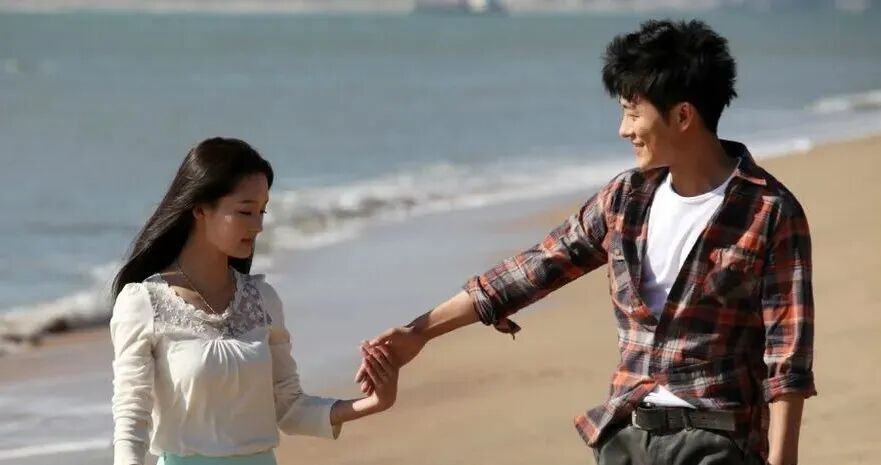
The 2018 series Cool Our Youth, Can We Not Be Sad followed the same pattern: the sibling bond between Liang Sheng and Jiang Sheng acted as an ethical weight in a love triangle. The core selling points of the drama were melodramatic triangular romance and youth's painful love, with the pseudo-sibling trope serving merely as one of many tools to drive emotional tension between characters.
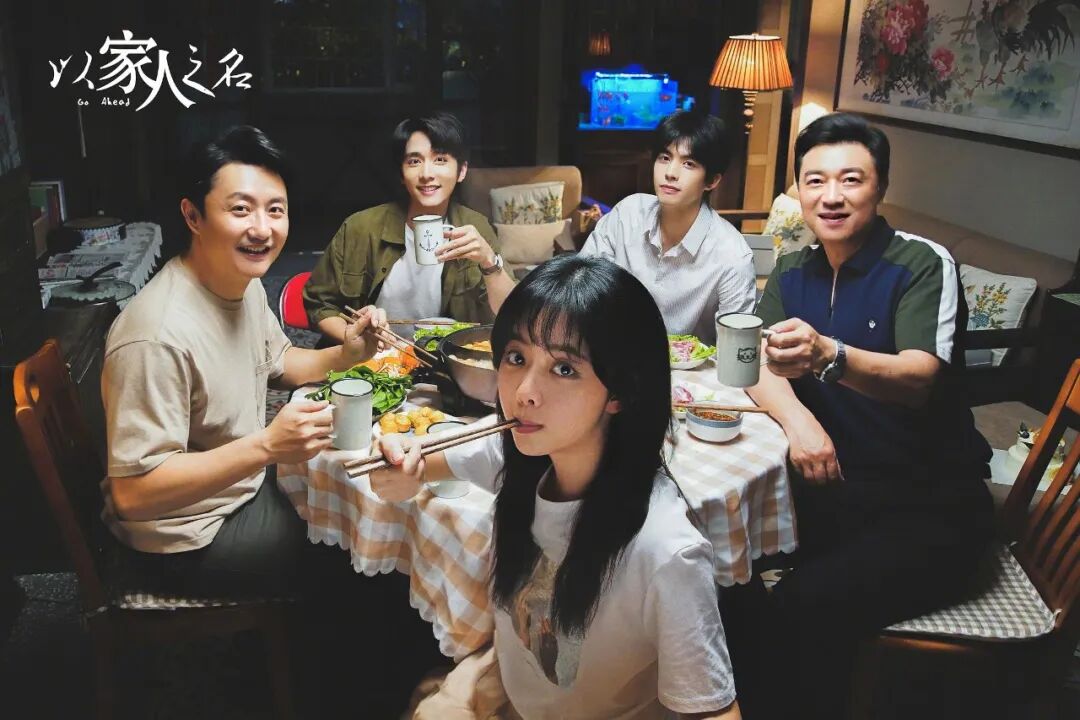
By 2020's Go Ahead, the pseudo-sibling dynamic took an even more backseat role. The mutual healing of three non-blood-related siblings became the main focus, with romantic relationships emerging naturally from character growth. The drama ultimately gained widespread attention through its exploration of "what family means," not through a forbidden love story.
All these works achieved solid market results, yet they never turned pseudo-sibling romance into a popular genre. That changed completely in 2023 with Fireworks in My World and Lost You Forever, which reshaped the industry's perceptions.
In Fireworks in My World, details like Meng Yanchen's internal turmoil and inferiority complex when facing Xu Qin, or his restrained, respectful support when she was drunk, resonated deeply with viewers. The theme of "repressive love" flooded social media, with many audiences even choosing to watch only the cut-scenes featuring the second male lead. In Lost You Forever, the cousin line between Cang Xuan and Xiao Yao, with its tragic sense of "cannot have both the kingdom and you," became the most enduring CP pairing in the entire series.
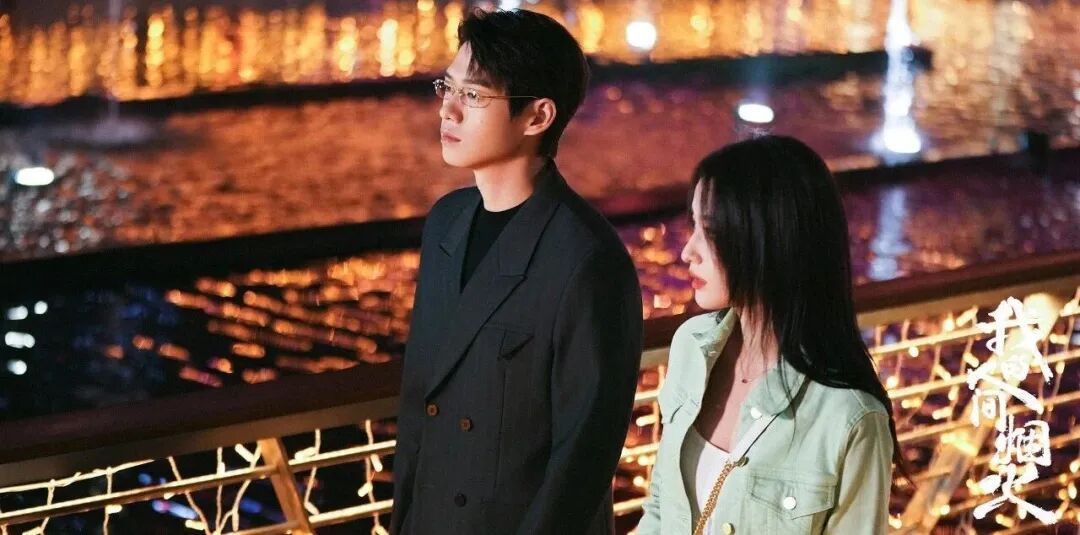
The breakout success of pseudo-sibling storylines in these two works led the industry to a simplified conclusion: the trope inherently carries viral potential. Thus, this once-marginal niche quickly became a new hotspot, with numerous new projects launching back-to-back.
From a creative perspective, the pseudo-sibling dynamic is indeed an efficient narrative tool during the slump of contemporary romance. Traditional modern romance dramas spend significant time setting up how leads meet and get to know each other, through workplace encounters, campus interactions, and other common scenarios. After years of thorough exploration, there are few new tricks left for the genre.
This is where the pseudo-sibling trope shines: it comes with a complete backstory. The shared growth experiences and natural bond of a "family" identity directly solve the problem of "where does their emotional foundation come from," allowing writers to skip the process of building relationships from scratch.
More crucially, the "nominal siblings" identity itself creates natural dramatic conflict, replacing overused tropes in traditional romance like misunderstandings, third parties, or status gaps. A bowl of hot soup, waiting late at night, or deliberate distance in public all carry the tension of testing boundaries, letting creators generate rich emotional friction without designing complex additional plots.
This low-barrier, high-emotion-density quality made pseudo-sibling romance a low-risk creative choice, leading to the flood of similar works hitting the screens.
Empty Characterization and Plot Replication: Collective Loss of Focus in Formulaic Storytelling
Yet in just over a year, the mass-produced pseudo-sibling dramas quickly fell into a homogenization trap. Viewers' complaints shifted from "why another pseudo-sibling drama" to "why does every one look the same."
When a theme evolves from a fresh concept into an assembly-line product, every creative shortcut turns into audience fatigue. These dramas all seem to have fallen into the same pitfall.
The most obvious problem is the reduction of the trope to a labeled shell, where the pseudo-sibling identity stops being a core conflict and becomes a dispensable facade. Blazing Summer piles on labels: high school romance, pseudo-siblings, wealthy family tragedy, and rekindled old flames, along with the classic character templates of a delinquent school heartthrob and a straight-A good girl. The overcrowded setup weakens the constraints from the sibling bond and family conflicts, reducing ethical tension to a mere marketing gimmick.
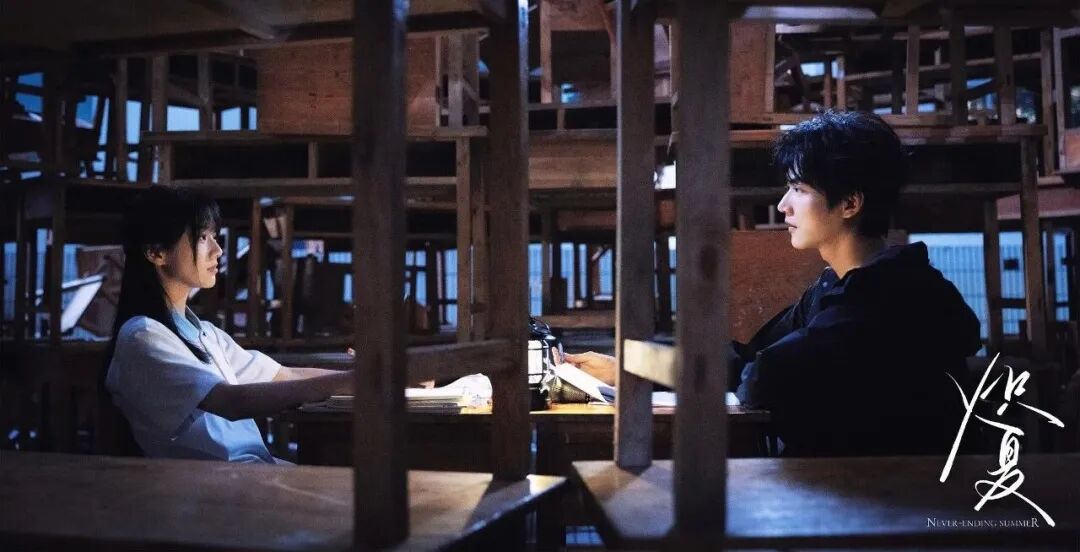
It can be said that without the "step-siblings" label, Blazing Summer is just a logically flawed, unrealistic melodramatic teen romance. The pseudo-sibling trope does nothing to support character motivations, acting merely as a gimmick to draw viewers in.
Dazzling shares the same problem: in this healing-themed pseudo-sibling drama, the leads' cousin status is only briefly mentioned at the start. Their subsequent interactions, redemption arcs, and growing romance have little connection to the "family" label, making it essentially a repackaged sweet romance about a fallen rich daughter and a dropout small-town youth finding salvation in each other.
Worse than the unrealistic setup is the heavy replication of narrative templates. Most current pseudo-sibling dramas follow the exact same formula: a blended family or cohabitation background, separate childhood traumas, mutual reliance in youth, separation due to misunderstandings or parental interference, and reunion as adults to rekindle their relationship — a standardized production pipeline for the genre.
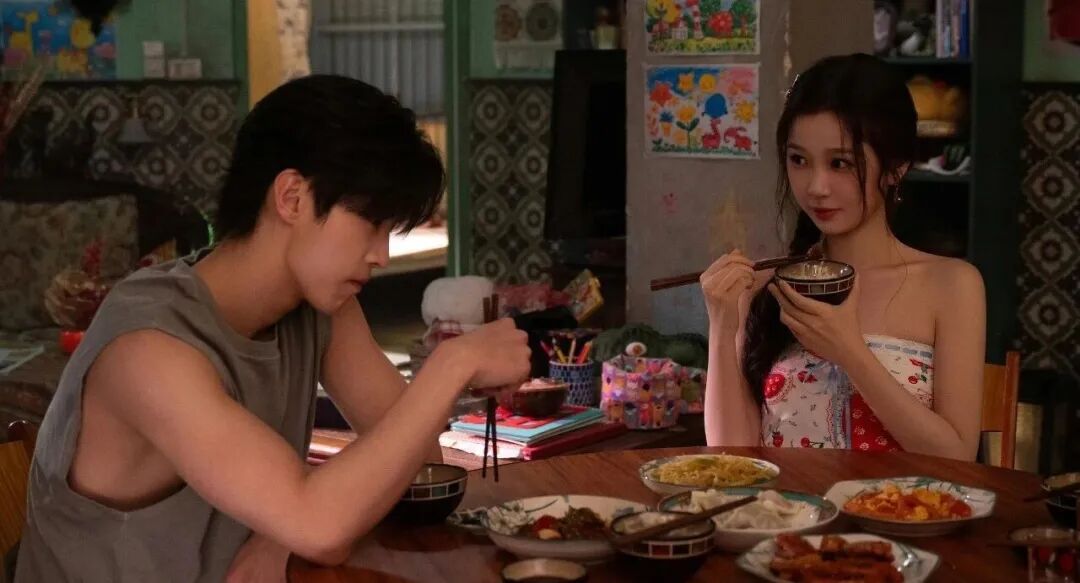
In the recently aired Wild Dog Bones, the leads are separated for years due to family tragedies and harsh living conditions. The plot leans on unreliable parents, a broken family, two ill-fated protagonists, and their reluctant separation and reunion — a foundation that strongly echoes the much older Blooming in the Wind.
Dual Paths uses dual timelines of youth and adulthood, but its core trajectory remains childhood companionship, separation for some reason, and reunion years later to resolve misunderstandings. The only difference is shifting the setting from a small town to a mix of city and foreign locations. Such similar structures and characters let viewers predict the entire plot after just a few episodes, turning the supposed forbidden tension into a repetitive industrial process.
The deeper issue is that flat characterization strips the "restrained yet passionate" love of pseudo-sibling romance of its weight. Meng Yanchen's breakout success came not just from understated affection, but from the charm of his "new Chinese-style domineering CEO" persona: a privileged figure humbling himself for love, whose jealousy is constrained by upbringing, exuding a naturally disciplined demeanor. This is the real anchor of his popularity hidden beneath the pseudo-sibling label.
But in most modern pseudo-sibling dramas, the "repressive older brother" archetype is reduced to little more than a cold face. Many recent works favor delinquent male leads, as seen in Dual Paths and Blazing Summer. Viewers can barely find grounded personalities in these roles, or witness their struggles between familial affection and romantic love — their inferiority and anxiety about their identity vanish, leaving only a hollow shell of "stubborn exterior, soft interior."
Meanwhile, the female leads' internal conflicts are limited to naive teenage worries like "does he love me or not," lacking consideration for family dynamics or social judgment. This is why the opening scene of Dual Paths, where the leads reunite after years, was criticized for looking more like ex-lovers meeting again than siblings.
When the sense of forbidden nature loses its inner foundation in characterization, all the emotional friction becomes forced, manufactured tragedy. It naturally becomes hard to make audiences truly empathize.
Side Stories Often Go Viral, Main Plots Rarely Succeed: The Safe Bet and Ceiling of Pseudo-Sibling Romance
Objectively speaking, pseudo-sibling romance has long had a stable fanbase. It shares the "growing up together, knowing each other thoroughly" emotional foundation with the popular childhood-sweethearts trope, but their core emotional logic is completely different.
The essence of childhood-sweethearts romance is relaxation and certainty: two people grow up side by side, with affection naturally developing in daily life, free of strong external obstacles. It emphasizes the security of companionship, the comfort of "I know you better than anyone else." But pseudo-sibling romance is fundamentally about tension and restraint — the stronger the external sense of taboo, the more powerful the emotional pull.
For audiences, what makes pseudo-sibling romance special is that it satisfies two seemingly contradictory emotional needs: extreme security and hidden forbidden thrill. On one hand, the "family" identity provides natural emotional backup. No matter how much they fight or drift apart, shared memories and family ties keep them connected, never letting them become total strangers. As the joke goes, "even after a breakup, you still have to eat at the same dinner table" — which perfectly reflects modern young viewers' desire for stable intimate relationships.
On the other hand, the thrill of crossing ethical boundaries brings strong emotional stimulation. For example, in Wild Dog Bones, the deliberate distance maintained when the two share a room, or the stolen glances they take at each other — these details of "mismatch between identity and true feelings" leave more room for imagination than straightforward confessions or hugs, perfectly matching viewers' preference for "emotional tension" and "atmosphere."
This dual nature gives pseudo-sibling romance a steady audience base in subcultural circles, proving it is no random trend. On Jinjiang Literature City, the pseudo-sibling tag is a permanent fixture in the romance category, spawning sub-types like adoptive siblings, step-siblings, and cousins, with continuous new works and loyal readers. Related book lists and discussion forums remain highly active.
In the otome game Love and Deep Space, the character Xia Yizhou built massive fan creation popularity before launch with his "non-blood-related older brother" setup. The brotherly protection paired with the imaginative space of breaking taboos perfectly hit the preferences of the target user base.
But having a fanbase does not equal guaranteed breakout success. The genre's subcultural traits naturally limit its mainstream appeal: for general audiences, the "siblings in love" premise carries an inherent ethical threshold that easily causes discomfort. More importantly, the charm of pseudo-sibling romance heavily relies on "restraint" and "unresolved longing."
In Blooming in the Wind and Cool Our Youth, Can We Not Be Sad, pseudo-sibling storylines end in regret. But the new wave of pseudo-sibling dramas, under the label of sweet tragedy, flood the early episodes with romantic moments to retain viewers — which means the sense of taboo fades far faster than expected. Audiences feel deeply for Meng Yanchen's unrequited love in Fireworks in My World, but when the pseudo-sibling dynamic shifts from a side plot to the main narrative, and the siblings' relationship speeds up, the unique allure of the trope naturally weakens.

Ultimately, the popularity of "pseudo-sibling culture" in niche circles proves this kind of narrative has its own rationality to exist. It represents a romantic imagination of intimate relationships for ordinary people: wanting both unreserved certainty and the thrill of breaking free. Understanding this underlying logic is the foundation for pseudo-sibling romance to cross over to the mainstream.
Yet most current pseudo-sibling dramas only see the gimmick of taboo, without grasping the emotional core behind it. They treat the trope as a quick-fix viral tool during the contemporary romance slump, hoping