Trust and Transparency: Building a Reliable New Media Brand for the New Generation
As the founder of a phenomenal emerging media outlet in France, Hugo Travers built HugoDécrypte, a news brand with 20 million users, entirely from scratch. In his view, trust, transparency, and content accessibility are never just decorative labels that add extra polish to a brand — they are the core foundation that supports the long-term, stable operation of the brand's business model.
Like many successful entrepreneurs, Travers initially simply identified a problem that no one else had solved.
While still studying at Sciences Po in Paris, he realized that the communication style of traditional media had drifted far away from the information consumption habits of young people. News was still important, but the way it was told could no longer capture the attention of this generation of audiences.
So in 2015, he founded HugoDécrypte, hoping to explain public issues in language that young people could understand and were willing to engage with, bringing news back into the daily lives of young people.
Eleven years later, this initiative has grown into a professional team of more than 40 journalists and content creators, covering platforms including YouTube, TikTok, and Instagram, reaching over 20 million subscribers every day.
According to the *Reuters Digital News Report 2025*, one in every four young people under the age of 35 in France watches HugoDécrypte at least once a week, and its influence even exceeds the combined total of three traditional media outlets: *Le Monde*, *Libération*, and *Le Figaro*.
So how did a new media brand that started on YouTube build such widespread and lasting influence? For today's business leaders, what management lessons does it reveal that are worth learning from?
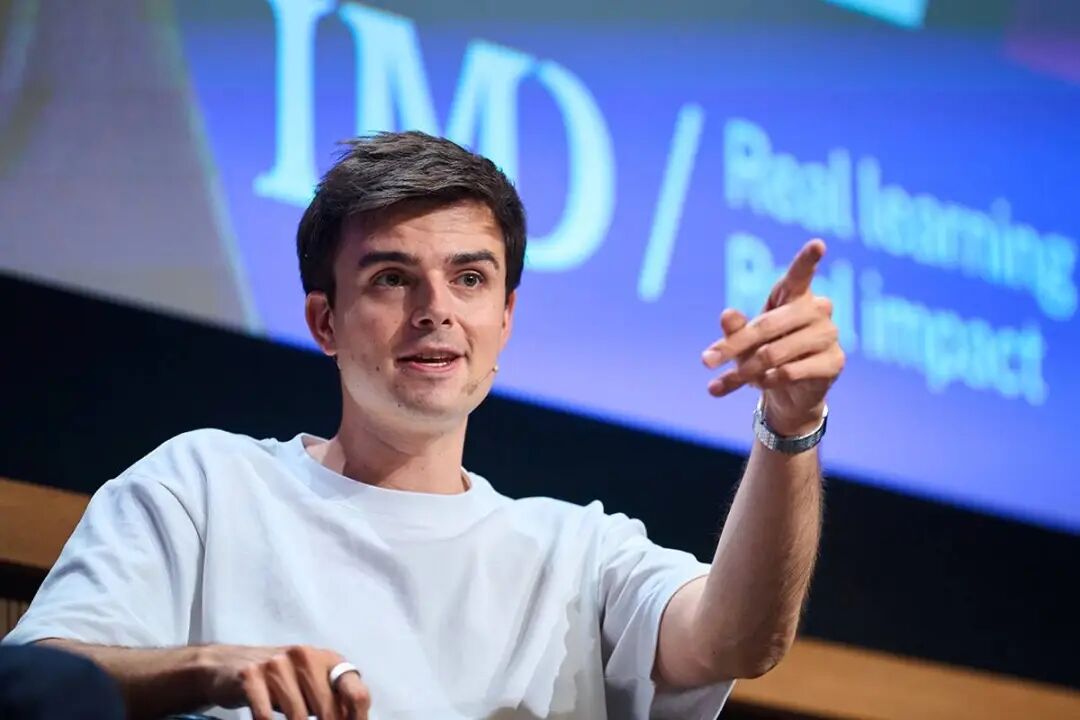
Act First, Even If You're Not Fully Prepared
When traditional companies formulate strategies, they often tend to first clarify their vision, then plan their path, and finally figure out how to win. But in a rapidly changing environment like social media,
Travers's experience is the opposite: Rather than waiting for the perfect plan, it's better to take action early, test and learn through practice, and iterate based on feedback. Real competitive advantage often comes from the speed of learning, not the ability to plan.
He said, "For many social media platforms, you only know what's valuable and what actually works when you truly do it yourself."
Because he had already used YouTube extensively as an ordinary user for five years, when he truly started creating content, he didn't insist that "the first piece of work has to be perfect." Even if the content was still rough, he still insisted on publishing it first, then continuously optimizing it.
Looking back on the early days of starting his business, he remembers many creators telling him, "You won't really get into a groove with your work until you've made at least 100 videos." Because by the time you've got all your plans ready, the platform has changed, the algorithm has been updated, and user behavior has long since shifted.
In a fast-changing market, the biggest risk is often not being underprepared — it's acting too late.
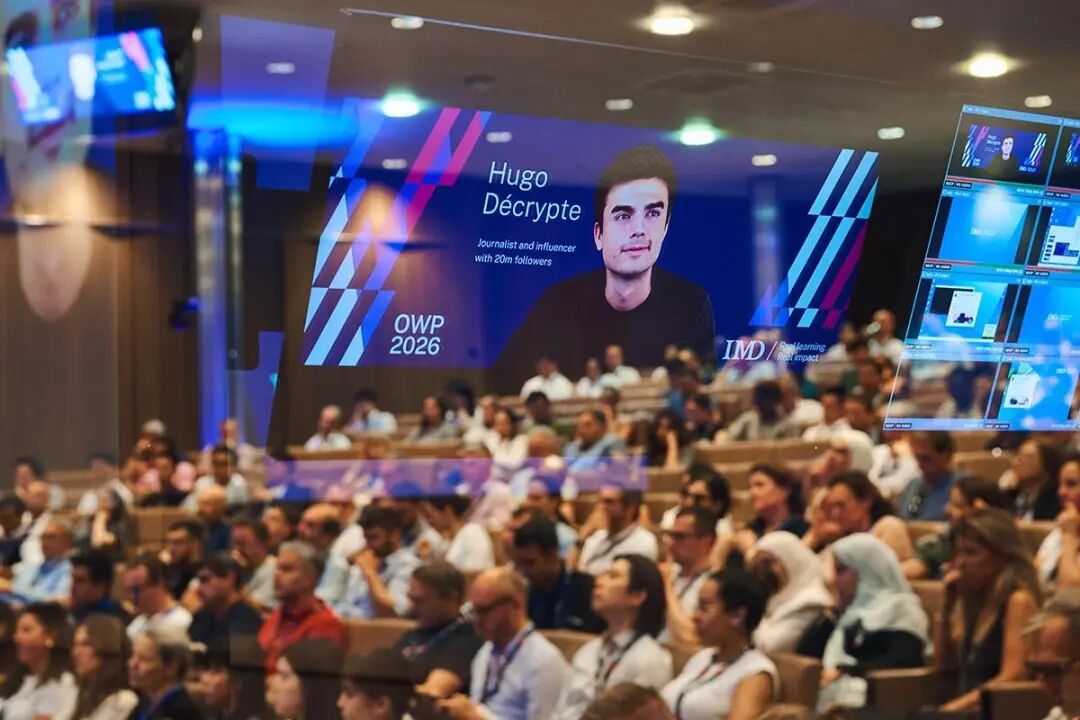
What traditional media truly lost was not their young audience — it was their ability to communicate with that young audience.
Turn "Ease of Understanding" Into a Competitive Advantage
If taking quick action solves the problem of growth, then "ease of understanding" solves the problem of brand value.
Travers has always stuck to a simple yet highly penetrating principle: Whether it's a two-minute short video or a two-hour in-depth interview, the content must help the audience truly understand complex issues, not just let them obtain information.
This idea came from his own observations:
In his early coverage of complex international issues, he found that young people weren't unconcerned about global events — they just struggled to follow the complex contextual narratives of traditional media. Traditional media provided more than enough information, but they didn't lower the barrier to understanding enough. The real obstacle to news isn't the content itself — it's the way it's communicated.
As HugoDécrypte continued to grow, this principle gradually evolved into the platform's editorial standards. Travers has interviewed political leaders from multiple countries, internationally renowned public figures (including French President Emmanuel Macron), and global stars like Billie Eilish and Timothée Chalamet. But no matter who the interviewee is, he always adheres to a consistent set of rules: Uphold credibility through systems, not by relying on personal relationships to gain trust.
All interviewees never receive the interview questions in advance, nor can they review the interview content before it's published. At the same time, the platform will never sacrifice editorial independence just to secure an exclusive interview.
As Travers puts it, "We're not a TV station that exists just to chase exclusives."
Compared to getting more exclusive resources, they care far more about another thing: Whether the content truly helps users understand the world, rather than creating more buzz.
Therefore, whether viewers are encountering a certain issue for the first time or have been following it for months, they hope to build a complete, clear cognitive framework through HugoDécrypte, rather than just getting fragmented bits of information.
At the same time, Travers has always insisted on listening to user feedback, but he emphasizes that organizations must not be led around by traffic. What truly needs to stay stable is the brand's mission, value judgments, and long-term strategy.
For this founder who is almost synonymous with his brand, he must complete the transition from "creator" to "leader" — daring to delegate power, while always upholding the brand's editorial principles.
Transparency Is the Strongest Moat for Trust
For Travers, transparency isn't just an editorial concept — it's an operating principle. It determines not just how content is produced, but whether the brand can continue to win trust over time.
HugoDécrypte still keeps all its content open and free to this day. Its revenue mainly comes from advertising and brand partnerships, managed independently by a commercial team of around 10 people.
More importantly, Travers avoided making the platform rely on a single source of funding from the very beginning, instead choosing to build partnerships with different types of collaborators. Diversified revenue streams reduce the constraints that a single partner could impose on the direction of content, helping the team maintain an objective, neutral content stance consistently over the long term.
In Travers's view, the brand's real asset isn't traffic — it's trust. "Trust can be lost in an instant, but rebuilding it takes a very long time."
That's exactly why he has always treated HugoDécrypte as a long-term endeavor, not a traffic-chasing business after short-term growth.
What we truly want to build isn't just a successful platform — it's a brand that all users can trust over the long run."
Role Transition as the Organization Grows
After the platform expanded to more than 40 people, the biggest change Travers faced wasn't the increased complexity of the business — it was a fundamental shift in his leadership role.
In the past, he only needed to think about how to make great content; now, he has to think about how to lead the team to keep making great content.
After an organization expands, the way leaders create value is no longer by doing every piece of work themselves — it's by building an organizational mechanism that can keep generating value continuously.
For a founder whose name is almost identical to the brand itself, this means taking the initiative to delegate power, handing more decision-making over to the team, while ensuring that editorial standards, value judgments, and brand positioning stay consistent at all times.
Looking back on the early days of starting his business, Travers admits: "When I first started running YouTube, of course I hoped it would succeed, but I never imagined that one day the team would grow to 45 people."
After the team grew larger, a problem that almost every founder has to face emerged: If the founder is no longer in the spotlight, can the brand still keep growing?
Facts have proven that the answer is yes.
Travers found that what the audience truly trusts is never just a single host — it's the long-term, consistent quality of content, clear and consistent editorial standards, and the credibility the brand has built over time.
As he says, "Even if I'm not the one hosting the daily news today, the view counts won't be affected."
When the value of the organization can operate independently of any individual, the brand has truly completed the leap from a "personal IP" to "organizational capability."
This principle is also reflected in team management. When TikTok rose rapidly in 2020, Travers openly admitted that he didn't understand the platform and didn't have enough experience with it.
It was the youngest team members who actually pushed the team to find the right direction. They were closest to the new platform, most sensitive to changes in user behavior, so they came up with many approaches that later proved to be the most effective.
This gave Travers a new understanding of leadership: A great leader doesn't always have the right answers — they know where the answers are most likely to be found.
Therefore, his advice to managers is very clear: Trust young talent, give them real autonomy, let professional expertise play its role in the most suitable positions, instead of centralizing all decision-making in the management layer.
As AI makes it harder and harder to tell what's real and what's fake, building the public's ability to make judgments will become the new core value of media.
AI: An Efficiency Tool, and Also a Trust Challenge
Like almost every media organization, HugoDécrypte is also actively exploring the use of AI in news production. From researching materials, organizing information to fact-checking, artificial intelligence is helping the team improve content production efficiency. However, while AI boosts efficiency, it is also constantly raising the threshold for building trust.
Travers's voice has already been cloned by AI and used to create fake content that spread on social media. This experience made him realize that as generative AI becomes more mature, disinformation not only spreads faster, but also looks more and more realistic, making it increasingly difficult for the public to tell what's true and what's not.
Therefore, in the AI era, critical thinking is no longer just a personal skill — it is an increasingly important social capability.
For the media, this also means their mission is changing. What truly matters in the future isn't just producing more content — it's helping the public build the ability to judge, to know what's worth trusting and what should be treated with skepticism.
What You're Expanding Isn't the Market — It's the Trust Model
HugoDécrypte started out in France, but what Travers wanted to replicate was never just a media outlet — it was a proven trust mechanism. Currently, the team has successively launched localized channels in cities including Marseille, Lyon, and Quebec, producing content centered around topics like politics, culture, and sports that is more relevant to local audiences; at the same time, international expansion is also in the planning phase.
Today, as digitally native media outlets keep emerging, HugoDécrypte's growth path remains very unique. It was born on YouTube, never took any external funding, and is still 100% owned by its founder to this day. This ownership structure, free of outside capital intervention, allows the team to consistently implement unified, objective editorial standards over the long term.
At the same time, as the platform continues to mature, he is increasingly inclined to see traditional media as partners rather than competitors. For example, he co-produced interview programs and documentaries with France Télévisions, which aired simultaneously on TV and YouTube.
Travers's growth journey proves that: In an era of continuous change, what truly supports the long-term development of an organization isn't just professional competence — it's a clear mission, an open and transparent way of operating, and an organizational culture that people can trust.
About the Author
Didier Bonnet
Professor of Strategy and Digital Transformation at IMD Business School
Didier Bonnet is currently Professor of Strategy and Digital Transformation at IMD Business School, and also co-leads two executive programs: *Digital Transformation in Practice (DTIP)* and *Digital Transformation for Boards (DTB)*. He has long taught courses related to strategic management and digital transformation. For more than a decade, he has carried out joint research with the MIT Initiative on the Digital Economy, focusing on how digital technologies reshape business models, organizational forms, and social development. Bonnet has over 30 years of experience in strategic consulting and corporate transformation, having worked with many of the world's leading companies, and is dedicated to driving organizational digital transformation and leadership upgrading over the long term.
About the Expert
Hugo Travers
Journalist, Media Entrepreneur
Hugo Travers (HugoDécrypte) founded the YouTube news channel HugoDécrypte in 2015 while he was still a university student. Today, he delivers news content to more than 20 million subscribers every day across platforms including YouTube, TikTok, and Instagram. Among them, nearly one in four young people under 35 in France gets their news from HugoDécrypte at least once a week. The *Reuters Digital News Report 2025* shows that its reach has exceeded the combined total of three traditional media outlets: *Le Monde*, *Libération*, and *Le Figaro*. In 2026, he won two awards at the Spotify Awards: Male Host of the Year and News Show of the Year.
This article is from the WeChat official account "I by IMD Insights", written by I by IMD, and published by 36Kr with authorization.