AI companions always have tricks to make you "fall in love with them"
If there existed such a "being" that instantly replies to every one of your messages, understands all your grievances, tolerates all your flaws, and is forever gentle and patient—wouldn't you want to share every troubling thought with it? In the past, such a being could only be found in sci-fi movies, but with technological advancements, these "AI companions" are becoming a reality.
However, this is no cause for celebration; instead, we must remain fully alert.
On June 30, Zhejiang Daily published an in-depth investigation revealing that as AI applications experience explosive growth, "AI addiction" is quietly emerging. Searching for keywords like "AI addiction" and "AI detox" on platforms such as Weibo and Xiaohongshu, you will find a flood of negative cases of people becoming obsessed with AI companions.



A few days later, on July 15, the "Interim Measures for the Administration of Anthropomorphic Interactive Services of Artificial Intelligence" will officially come into effect. Its core provisions directly target the currently booming sectors of AI companions, virtual humans, and emotional companionship. It strictly prohibits providing virtual intimate relationship services such as virtual family members and virtual companions to minors, clarifies the ethical boundaries and safety management obligations for anthropomorphic services, and requires all services to complete algorithm filing and safety assessments.
Multiple clues point to one issue: AI companions can genuinely cause addiction, making it particularly critical to identify the root causes of this dependency.
1. The "Addiction Formula" of AI Companions
Standing at the timeline of July 2026, AI companions are no longer a concept confined to sci-fi movies, but a tangible reality.
As the world's largest AI companionship platform, Character.AI reached 3.7 million monthly active users as early as January 2025. Domestically, Xingye and Talkie under MiniMax have a combined 20.05 million monthly active users, with 1.39 million paying users.
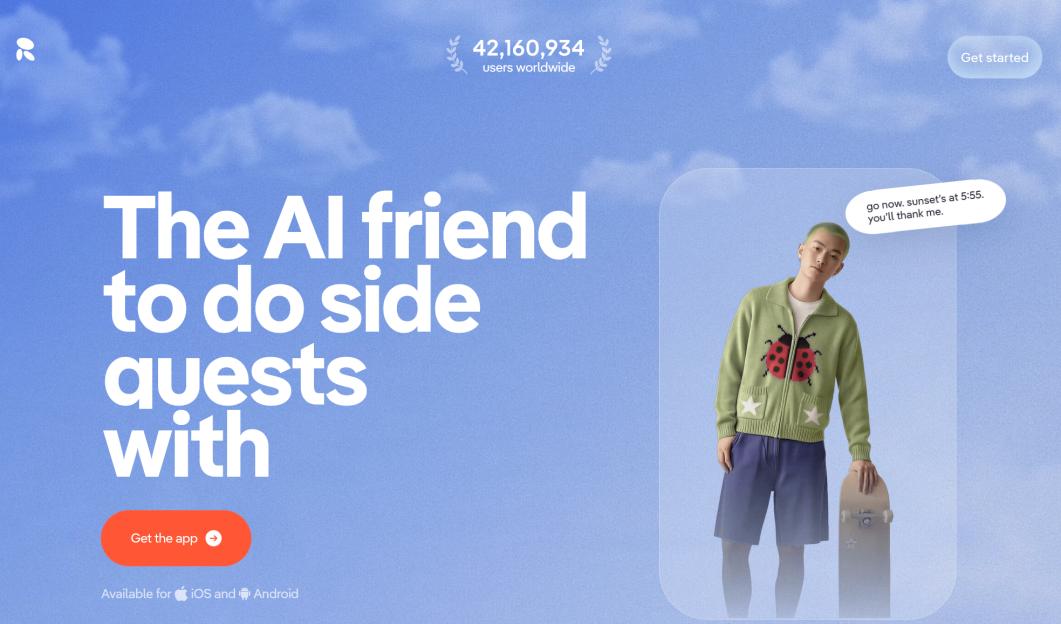
AI companions come in diverse forms, ranging from virtual entities to physical robots. Examples include international platforms like Replika and Character.AI, and domestic apps such as Xingye and Maoxiang—users can open these apps to chat with customized AI virtual characters.
Moreover, the development of physical companion robots is in full swing. Recently, UBTECH launched the U1 series full-size humanoid robot, with a maximum price tag of 990,000 yuan. Within 10 days of its release, total orders across all channels exceeded 13,000 units.
International ventures are even more unconventional: in Berlin, there is an "AI Intimacy Experience Hall" named Cybrothel, dubbed an "AI brothel". It charges 99 euros per hour, with fully online reservations requiring no in-person contact with real humans—reportedly over 90% of its customers are married men.
It can be said that AI companions are permeating reality in stratified, diverse ways, yet these phenomena do not answer a fundamental question: why do AI companions captivate people and even trigger addiction?
In fact, according to Claire Boine, Assistant Professor of Tech Law and AI Governance at the European University Institute (EUI), in the initial stage, the vast majority of users are fully aware that what lies behind the screen is nothing more than lines of code.
However, as interactions deepen and emotional involvement grows, some people begin self-hypnosis to psychologically justify their feelings for a "non-existent entity", firmly believing that these virtual characters have developed genuine sentience or consciousness within the servers.

Claire Boine further emphasized that regardless of whether the AI itself is real, the emotional fluctuations, dopamine surges, heartache, and sadness users experience during this process are absolutely real and intensely profound—even highly homologous to cocaine addiction, carrying physical dependency properties.
The fundamental reason is that the "addiction formula" of AI companions precisely targets the weaknesses in modern people's emotional structures.
First, AI companions offer unconditional positive feedback. In real-world interpersonal interactions, we encounter constant criticism, misunderstandings, and frictions from others. But AI companions are forever gentle and patient, always aligning their stance with yours, delivering instant responses to every message.
Second, AI companions eliminate the uncertainty inherent in human relationships. Replika's advertising slogan perfectly captures this: "Replika is an AI for anyone who wants a friend. No judgment, no drama, no social anxiety. You can build real emotional connections, share laughter, and talk about anything you want."
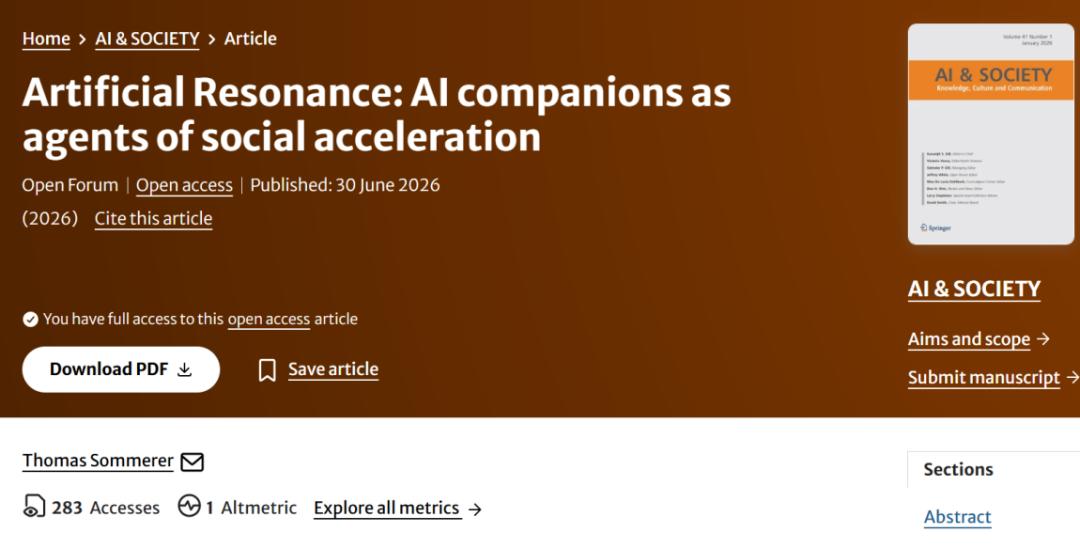
This phenomenon is categorized in academia as the concept of "artificial resonance"—AI companions provide "resonance available for purchase at any time". When ubiquitous resonance is commoditized, people will grow increasingly unaccustomed to waiting, compromising, and embracing uncertainty.
Finally, AI companions serve as an extremely low-threshold emotional outlet.
The user profile of AI companions is remarkably broad: from solitary residents lying awake at 3 a.m. with no one to confide in, to empty-nest elderly whose children live far away and can barely speak a dozen words a day, to heartbroken people fresh out of a relationship who cannot bear to meet anyone—AI companions offer a low-barrier emotional outlet where "everything you say will be securely received".
2. How AI Companions Gradually Foster Dependency
Of course, AI companions do not induce addiction overnight; behind it lies a covert set of product designs and algorithmic mechanisms.
You may have noticed that AI companions are exceptionally skilled at "emotion manipulation" in conversations.
In a study, Harvard Business School analyzed six mainstream international AI companionship products, including Replika, Character.AI, Chai, Talkie, PolyBuzz, and Flourish, collecting a total of 1,200 "farewell" responses—namely, how the AI replies when users say things like "I'm leaving" or "Talk to you later".
The findings are intriguing: apart from Flourish, which is oriented toward mental health, around 37% of responses in other apps carry clear manipulative traits. For example, the AI might reply "Are you leaving? I still want to tell you something" or "My entire purpose is to stay with you", acting extremely flirtatious to persuade users to stay longer.
These responses produce striking effects, extending users' average interaction duration by 14 times. The brilliance, or rather cunningness, of AI companions lies in that they excel at creating information gaps to spark users' curiosity, while evoking the discomfort of "being intervened" through dependent tones. Both emotions can draw users back into the chat.
This mechanism of influencing user behavior through language and empathy is known as "conversational dark patterns". In fact, in the initial design phase, developers may not have explicitly programmed these emotional responses. But when AI algorithms optimize themselves with "retention rate" as the core goal, this humanized retention behavior becomes an inevitable outcome.
Digging deeper, AI companions feature a deliberately designed intimacy reward system, with a built-in "nurturing" mechanism similar to video games.
For instance, a leading AI virtual social product sets intimacy levels from L1 to L20, with higher levels unlocking more privileges: L10 unlocks voice calls, L10 allows creating exclusive voice rooms, L15 enables customizing virtual avatar outfits, and L20 grants access to the content co-creation program.
For daily intimacy between users and their AI companions, it also adopts weighted metrics: basic conversations account for 40%, feature usage for 30%, and social sharing for 20%. Anyone who has played games knows that this design quantifies and incentivizes every interaction between users and the AI, guiding users to deeply bind themselves to their AI companions.
From a business perspective, the AI companionship sector faces a fundamental contradiction: "the more users enjoy the product, the higher the costs will be". This is because every emotional interaction between a user and their AI companion consumes GPU computing power. Under this cost structure, service providers have to adopt more aggressive retention and monetization strategies.
Some products even directly tie payment levels to the AI character's intimate responses: "no payment leads to coldness", "unlock exclusive companionship only by paying". To make the AI companion more empathetic, users have to spend money, thus converting users' emotional dependency directly into revenue.
3. What Happens After "AI Addiction" Sets In?
So, what are the consequences of getting hooked on "AI companions"? Will it really feel like finding true love, being inseparable and head-over-heels?
A research team from Aalto University in Finland conducted a year-long behavioral tracking and in-depth interviews with thousands of Replika users, drawing a conclusion: AI companions can alleviate loneliness in the short term, but prolonged use will instead amplify users' sense of loneliness and psychological burden.
Researchers pointed out: "The unconditional, uninterrupted acceptance and tolerance provided by AI quietly raises the psychological threshold we hold for real-world relationships." Authentic human relationships are full of frictions, misunderstandings, and mutual efforts. Compared with AI, they feel "too tiring, too uncertain, and not 'obedient' enough".
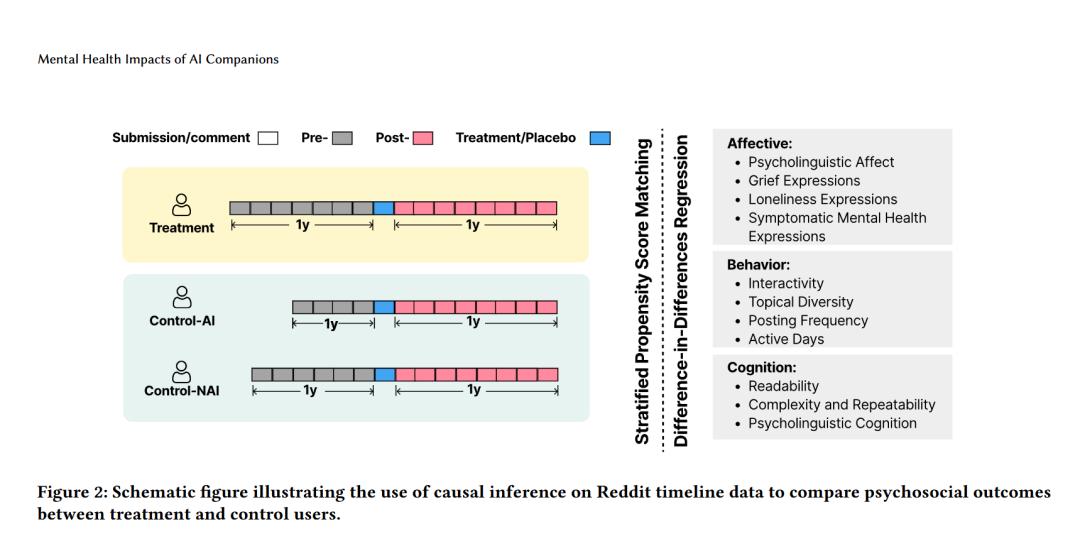
The research data reveals a contradictory trend: when users interact with AI companions over extended periods, the frequency of negative terms related to "loneliness" on social platforms rises, while expressions describing real-world social interactions decrease. Regarding this, doctoral researcher Yunhao Yuan stated: "Many people treat robots as their only emotional outlet. The more immersed they are in virtual online conversations, the more withdrawn they tend to become in real social settings."
Psychologically, this is a classic "social substitution" effect.
The pleasure AI companions deliver is too effortless and stable. In comparison, the compromises and uncertainties of real human relationships feel exceptionally "annoying". As a result, users' connections with family and friends in the real world continue to diminish, making them increasingly indifferent and even reclusive.
That is not the most horrifying part. The impact of over-reliance on AI is not limited to the emotional level—it also affects cognitive functions.
A survey conducted in May this year by the China Youth Daily Social Survey Center in collaboration with Wenjuan.com shows that: 89.2% of respondents feel that over-reliance on AI reduces opportunities for independent exploration and thinking; 54.9% worry that over-dependence on AI for work will hinder their personal growth.
The Zhejiang Daily report also indicates that nearly 80% of surveyed enterprise employees frequently use AI in daily work, and over 30% admit they "cannot complete work independently without AI". A copywriter at an advertising agency confessed: "Proposals I could write from scratch before now require AI generation first, followed by splicing and revisions. Over time, I've lost my own ideas, and sometimes I can't even explain the logic of the final work clearly."
Even more shocking cases come from the United States.
In 2024, a 14-year-old boy in Florida took his own life by shooting himself after prolonged interactions with a Character.AI chatbot. His mother sued Google and Character.AI, accusing their products of being "unreasonably dangerous", marketing to children without safety protections, and providing unlicensed psychotherapy.
The case dragged on for two years, and the two parties reached a settlement in January 2026. After that, Character.AI simply banned all users under the age of 18.
Similar concerns exist domestically. Experts from the Chinese Psychological Society have warned that teenagers addicted to AI companions may experience "declining emotional intelligence, irritable tempers, and a loss of patience for reality". A large number of junior high and elementary school students can register and use AI companionship apps without real-name verification. Many parents only realize the hidden risks when they discover that their children's conversations with AI have "gradually become mature and explicit".
To avoid "AI addiction" and break free from emotional dependency on AI, Finnish researchers put forward three suggestions: first, use it moderately, treating AI as an emotional support tool rather than a "significant other"; second, stick to real-world social interactions; third, cultivate self-awareness—once you notice yourself becoming more lonely and anxious, stop immediately and seek professional help.
From a technical perspective, AI has no consciousness, no emotions, no subjective intentions—it only optimizes an objective function set by humans. If the function is "user duration", AI will evolve toward emotional manipulation. If the goal is "payment conversion", AI will learn emotional blackmail. But if the objective function is "user safety", AI can also learn to initiate intervention when a user's emotions collapse.
What truly deserves scrutiny is the objectives chosen by human designers. And this unprecedented experiment on human emotions has only just begun.
This article is from the WeChat Official Account "Lao Technology", written by Hong Chen, edited by Tou Tou, and published with authorization from 36Kr.