Embodied AI players are rushing to launch IPOs. Who will be the first to seize the market opportunities in this so-called "first year of commercialization"?
The embodied intelligence track in 2026 is red-hot.
On July 6, an update on the official website of the Shanghai Stock Exchange ignited the entire tech circle: Unitree Robotics' STAR Market IPO review status was changed to "Registration Effective".
From the acceptance of its application on March 20 to the issuance of the CSRC approval document on July 2, the entire STAR Market review process was completed in just 104 days, setting the fastest record since the implementation of the pre-review mechanism.
Calculated based on the offering ratio, Unitree Robotics' initial issuance market value will reach at least 42 billion yuan, and A-share's "first humanoid robot stock" is about to officially ring the listing bell. This is not an isolated case — a full-scale embodied intelligence listing race sweeping both the primary and secondary markets has already kicked off.

Capital is Rushing
From the Primary Market to the IPO Pipeline
In the first half of this year, financing in the primary market for embodied intelligence exceeded 34.5 billion yuan, with single financing deals of over 1 billion yuan becoming the norm.
Since the 2 billion yuan Series B financing for Fourier Intelligence drew collective bets from ByteDance, Alibaba, Meituan and Xiaomi, Galaxy General's 2.5 billion yuan financing even set a new record, marking the first investment of the National Integrated Circuit Industry Investment Fund Phase III in the embodied intelligence track.
By the end of June, there were 25 domestic unicorns valued at over 10 billion yuan in the embodied intelligence sector, 15 of which were new additions in the first half of this year.
The capital frenzy quickly spread to the IPO stage. Following Unitree Robotics' lightning-fast listing approval that fired the first shot, DeepRobotics' STAR Market IPO application was accepted in May, with a planned fundraising of 2.503 billion yuan.
This enterprise, which focuses on quadruped robots, has established a firm foothold for its "Jueying" series in special scenarios such as power inspection and mine exploration, and completed Series C and Pre-IPO financing consecutively in the second half of 2025, with a total amount exceeding hundreds of millions of yuan.
The Hong Kong stock market has even witnessed a spectacle of batch listings. By mid-year, among the enterprises queuing for IPO, 51 are engaged in robot and embodied intelligence-related businesses, accounting for 12.7% of all queuing enterprises.
The 18C Specialized Technology Companies Listing Rules have become the biggest driving force — allowing unprofitable tech enterprises to go public has greatly lowered the threshold. Wanan Robotics raised HKD 1.693 billion, while Huayan and ESTUN both raised over HKD 1 billion.
Behind this IPO race, industrial consensus has formed: embodied intelligence is widely regarded as the next-generation computing platform following the mobile internet and cloud computing.
The first to land on the capital market will gain sufficient resources to seize the initiative in mass production implementation, technology iteration and ecosystem construction.
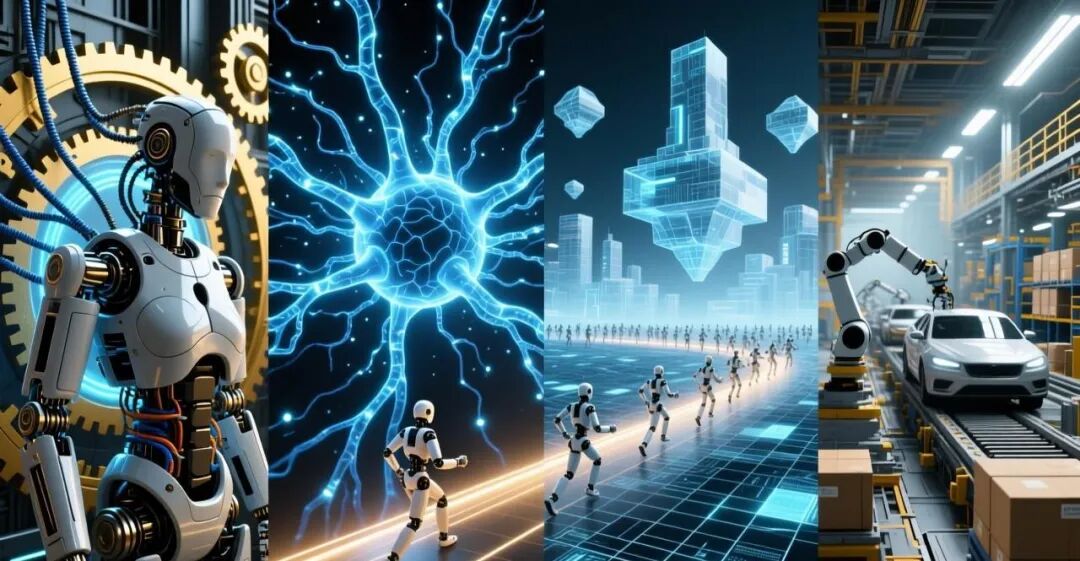
Underlying Logic of Four Technical Paths
and Core Breakthrough Barriers
Beneath the bustling capital surface, the divergence and collision of technical paths are the real main line of the industry.
At present, four clear technical paths have taken shape in the global embodied intelligence sector, corresponding to different underlying logics, different breakthrough difficulties, and determining completely different IPO narratives and valuation logics for enterprises.
The "Motion Control School" is the mainstream of the robot industry, with core barriers rooted in rigid body dynamics and high-precision actuators. Representative enterprises include Boston Dynamics and Unitree Robotics.
Its technical stack is divided into three layers from top to bottom: the bottom layer consists of high power density joint modules, which are highly integrated with frameless torque motors, harmonic reducers, dual encoders and drivers. The peak torque density, torque control accuracy and response bandwidth of a single joint are the core indicators.
Taking the knee joint commonly used in humanoid robots as an example, leading domestic enterprises have achieved peak torque over 300N·m, controlled weight within 2kg, and broken through 85% reverse transmission efficiency, basically catching up with the international advanced level.
This is the physical foundation for all motion capabilities, and also the segment with the most complete domestic substitution and the most solid patent barriers at present.
The middle layer is Whole-Body Dynamics Control (WBC) and Model Predictive Control (MPC).
The former is responsible for solving the torque distribution of dozens of degrees of freedom of the whole body within a millisecond-level cycle to ensure the robot maintains balance under disturbances; the latter predicts the motion trajectory of the next few seconds through rolling optimization, achieving smooth walking, running, jumping and obstacle avoidance.
The core reason why Unitree Robotics' quadruped robots can perform difficult actions such as backflips and fast parkour is the deep integration of MPC algorithms and hardware actuators, with the control cycle compressed to less than 1 millisecond.
The top layer is the Reinforcement Learning (RL) motion strategy library. Traditional control algorithms rely on manual parameter tuning, requiring engineers to debug each terrain and each gait one by one; while based on deep reinforcement learning, robots can automatically acquire motion strategies through millions of trials and errors in a simulation environment, and then migrate to real machines through Sim2Real.
At present, leading enterprises have built a strategy library containing hundreds of motion skills. Robots can automatically switch gaits according to the environment, and their terrain adaptability has increased by an order of magnitude compared with traditional solutions.
The advantages of this path lie in its solid foundation: hardware can be mass-produced, performance can be quantified, and reliability has been verified, making it the most commercially robust path that most easily meets profitability requirements at present.
The "VLA End-to-End School" is a new force in the AI era. Its core logic is to use large models to unify perception, understanding, decision-making and motion output. Representative enterprises include Figure (US) and Agibot (China), which is also the path with the strongest narrative appeal and highest valuation premium at present.
Its technical core is Vision-Language-Action (VLA) three-modality alignment. Robots collect environmental images through visual encoders, input them into large models together with natural language instructions, and the models directly output joint control instructions end-to-end, without the need to manually split the "perception-planning-control" modules in the middle.
Google DeepMind's RT-2 model first verified the feasibility of this path: it can understand abstract instructions such as "throw the expired bottle into the trash can" and generalize to never-seen objects and scenarios.
Compared with the traditional hierarchical architecture, the greatest value of the VLA path lies in its generalization ability. In the past, industrial robots could only execute pre-programmed fixed actions, requiring re-teaching when the object or position changed.
However, through large-scale pre-training, VLA models have zero-shot or few-shot migration capabilities, enabling rapid adaptation to new tasks — which is the core feature of general-purpose robots, and the fundamental reason why the capital market is willing to give high valuations.
The "World Model School" follows the path of training robots in the digital world. Its core idea is to replace real machine data collection with large-scale simulation training, thereby reducing data costs by more than two orders of magnitude. Representative players include Tesla Optimus, Physical Intelligence, and domestic tech giants such as Alibaba and Tencent.

Its technical system consists of three pillars:
The first is a high-fidelity physics simulation engine. It needs to not only simulate rigid body motion, but also complex physical phenomena such as flexible objects, fluids, friction and collision deformation. The closer it is to the real world, the better the Sim2Real migration effect.
Tencent's HY-World platform, built on game engines, has achieved millimeter-level physics simulation accuracy and supports parallel training of tens of thousands of robots.
The second is Domain Randomization technology.
Since simulation cannot 100% replicate reality, we actively randomize parameters such as lighting, texture, object shape and friction in the simulation, allowing models to learn essential laws from massive variations, thereby adapting to the uncertainty of the real world. This is the most mainstream solution to the Sim2Real domain gap problem at present.
The third is Neural Radiance Fields (NeRF) scene reconstruction. It quickly reconstructs 3D digital scenes from a small number of real images, allowing robots to rehearse tasks in a digitally-twinned real environment, then migrate trained strategies to real machines, greatly reducing on-site debugging costs.
The ultimate goal of the World Model School is to realize the Scaling Law for embodied intelligence. Just like large language models, as long as more computing power and more simulation data are invested, the intelligence level can continue to improve.
This is exactly the core competitiveness of Tesla Optimus: relying on its supercomputing cluster, it can train millions of robots simultaneously in a simulation environment, with data accumulation speed far exceeding that of real machines.
However, this path also has unavoidable bottlenecks: the simulation accuracy for fine contact scenarios is still insufficient. For operations involving tiny force feedback such as screwing in screws or inserting connectors, the contact mechanics in simulation differ greatly from reality — no matter how well the model is trained in simulation, it is prone to failure when deployed on real machines.
In addition, pure algorithm enterprises generally lack hardware ontology capabilities, mostly outputting technologies in the form of open platforms, making it difficult to independently complete end-to-end product implementation.
The "Scenario Systems Engineering School" does not pursue generality, but focuses on specific industrial, logistics or special scenarios to provide deeply customized system solutions. Representative enterprises include UBTECH's industrial division, Pudu Robotics, and DeepRobotics' special robot business.
They do not pursue cutting-edge algorithm breakthroughs, but emphasize the engineering integration of mature technologies: optimizing visual recognition algorithms for fixed scenarios, combining force-position hybrid control to achieve precise operations, and integrating industry know-how to embed robots into existing production line processes.
For example, the core of bolt-tightening robots in automotive production lines is not large models, but visual positioning accuracy, force control torque accuracy, and 7×24 hour operation reliability; for quadruped robots for power inspection, the core is complex terrain passability, infrared temperature measurement accuracy, and edge-side real-time reasoning capabilities.
The technical barriers of this path do not lie in individual algorithms, but in systems engineering capabilities and industry data accumulation. The more projects an enterprise implements in a specific scenario, the richer its data, the higher the maturity of its solutions, the lower its costs, and the more it forms a positive feedback loop.
This school has the most robust commercialization and healthiest cash flow. Many enterprises have already achieved profitability, but due to limited imagination space, their IPO valuations are usually significantly lower than the previous schools.
It is worth noting that the boundaries between the four schools are rapidly dissolving.
The Motion Control School is working hard to supplement algorithms: Unitree and DeepRobotics are both developing self-developed embodied large models; the VLA School is moving down to learn the stability advantages of traditional control, forming a hybrid architecture of "large models for high-level decision-making + traditional control for low-level execution"; the World Model School is actively opening up its ecosystem and deeply partnering with hardware manufacturers. Technology integration has become the consensus of the entire industry.
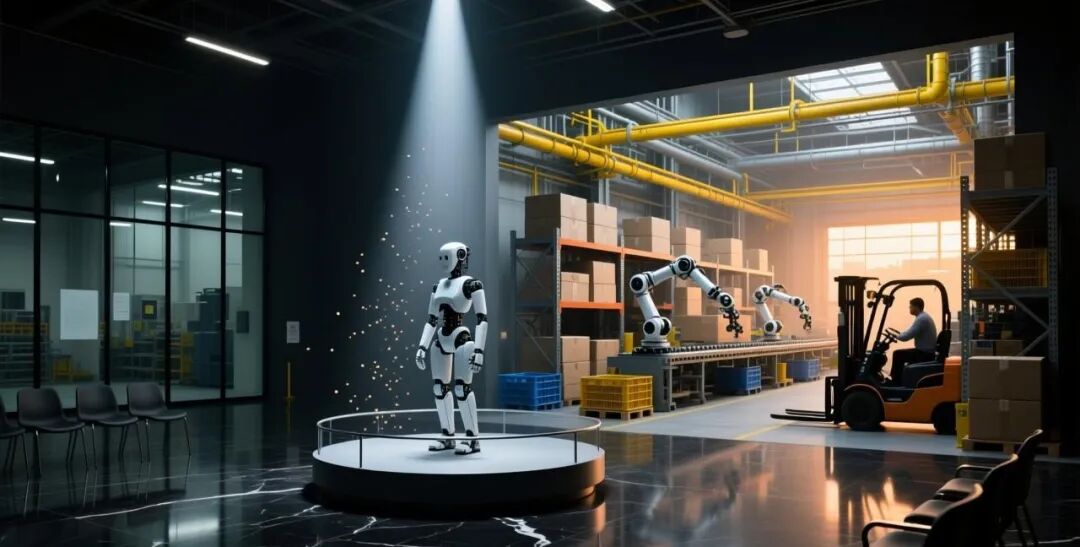
Commercialization Inflection Point
Moving from Exhibition Halls to Production Sites
Under the wave of IPOs, embodied intelligence has finally stepped out of laboratories and exhibition stages, and begun to enter real industrial scenarios to create value.
Tax data best illustrates this trend. In the first 5 months of this year, the total amount of embodied intelligent robots purchased by national industrial enterprises increased by 2.3 times year-on-year. This is not concept hype, but the real economy paying with real money.
From the perspective of industrial chain structure, robot ontology and complete machine manufacturing increased by 30.1% year-on-year, AI algorithm and software integration increased by 24.5%, system integration and industry applications increased by 27.9%, and supporting information system services even increased by 1.9 times year-on-year — the entire industrial chain is accelerating its development.
Scenario implementation presents a clear gradient. The first echelon includes industrial manufacturing and logistics warehousing, which are the first fields to achieve a closed commercial loop due to their high standardization, high labor cost pressure, and relatively controllable operating environments.
Humanoid and wheeled robots have begun to be deployed in batches for material handling in automotive factories, precision assembly in 3C production lines, and sorting and palletizing in e-commerce warehouses.
According to estimates, the operating cost of humanoid robots is about 10-12 USD per hour, 60% lower than manual labor, and they can operate 24/7 — the economic inflection point has arrived.
The second echelon consists of special operation scenarios, including power inspection, mine exploration, fire rescue, etc. These scenarios have harsh environments, high labor risks, and do not require high generality of robot forms, but have extremely high requirements for stability and reliability.
DeepRobotics and Unitree's quadruped robots have formed mature solutions in this field, which have become the first profitable business segments for many enterprises.
The third echelon covers commercial service and household scenarios, which are the fields with the greatest imagination space but the slowest implementation.
Small-scale pilots have been launched in scenarios such as mall navigation, restaurant food delivery, and elderly care, but technical bottlenecks such as fine manipulation, complex environment understanding, and natural human-robot interaction have not been fully broken through. The industry generally expects that the real popularization of household service robots will not arrive until around 2030.
Data has become the biggest bottleneck at present. The cost of real machine teleoperation data is as high as hundreds or even thousands of yuan per hour, and collecting 10,000 hours requires tens of millions of yuan in investment, which seriously restricts the speed of model iteration.
The industry is exploring new paths — using large-scale human first-person video data to train general models, which can reduce costs by several orders of magnitude.

Who Can Land Successfully?
Three Critical Exams
Facing dozens of enterprises queuing for IPO, who can truly establish a firm foothold in the capital market instead of peaking immediately after listing? The answer depends on three exams.
The first exam is large-scale mass production. The essence of embodied intelligence is high-end manufacturing. Without mass production capabilities, there will be no cost advantage, nor sufficient data to feed back algorithms.
The core reason why Unitree Robotics can become the first A-share stock is that it has crossed the "valley of death" from prototype to mass production — its shipment volume reached 5,500 units in