Generating electricity with mirrors, China is racing to be the world's number one
Recently, China's solar thermal power sector has made two major breakthroughs in succession.
On June 29, the 100 MW solar thermal power station at CGNPC Jixi Base, the first solar thermal facility in Northeast China, was officially put into operation in Da'an City, Jilin Province.
This is China's northernmost solar thermal power station, and also a global demonstration of solar thermal power generation technology applied in high-latitude severe cold regions.
On May 20, the first heliostat of the world's largest tower-type solar thermal power station — the CGNPC Golmud 350 MW Solar Thermal Demonstration Project — was successfully assembled and rolled off the production line.
How does solar thermal power generation work?
China's photovoltaic power generation capacity has long ranked first globally, so why do we still need to develop solar thermal power generation?
01
Unique Advantages
The principle of solar thermal power generation is not complicated.
When you were a kid, you probably played with a magnifying glass, focusing sunlight onto a single point to burn ants.
Solar thermal power stations do the exact same thing, except they use concave mirrors, and their light-collecting area is millions of times larger.
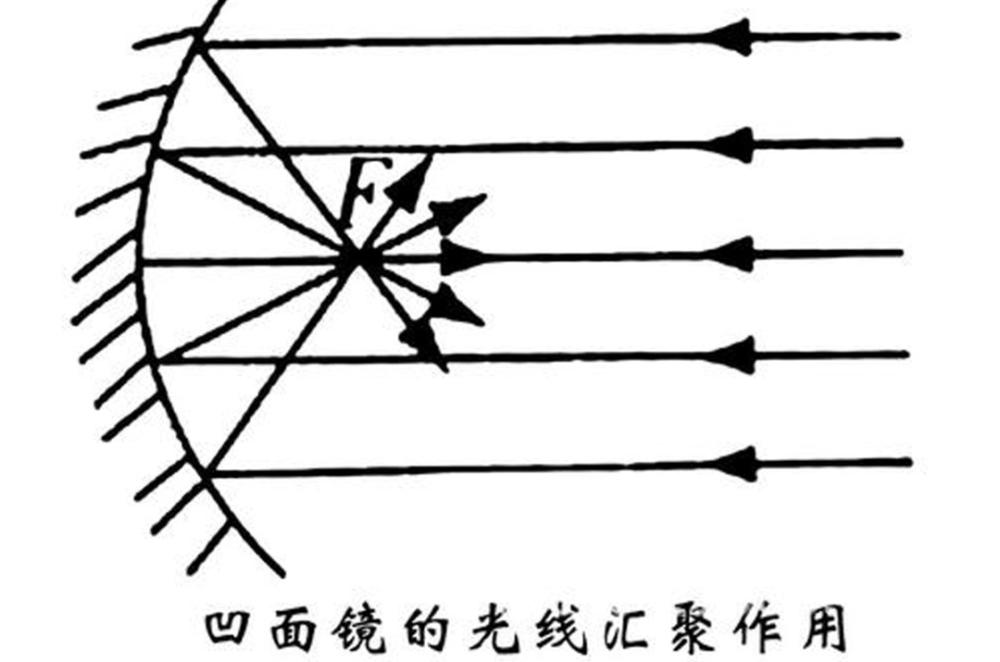
Concave mirror
Specifically, solar thermal power generation consists of four key stages: sun tracking, heat absorption, heat storage, and power generation.
In the sun tracking and concentration phase, thousands of computer-controlled reflectors, like sunflowers, track the sun's position in real time, accurately reflecting and focusing sunlight onto the central receiver or heat collection tubes.
The concentrated sunlight generates extremely high temperatures, heating and melting the heat transfer medium (such as molten salt) to complete the heat absorption stage.
After that, the heated molten salt, carrying excess heat from the daytime, is stored in large molten salt tanks and other heat storage systems, acting as a "power bank" for the power station to achieve energy storage.
When power generation is needed, such as at night, this high-temperature medium is released, heating water into high-temperature and high-pressure steam through heat exchangers, which drives steam turbines to rotate and in turn powers generators to produce electricity.
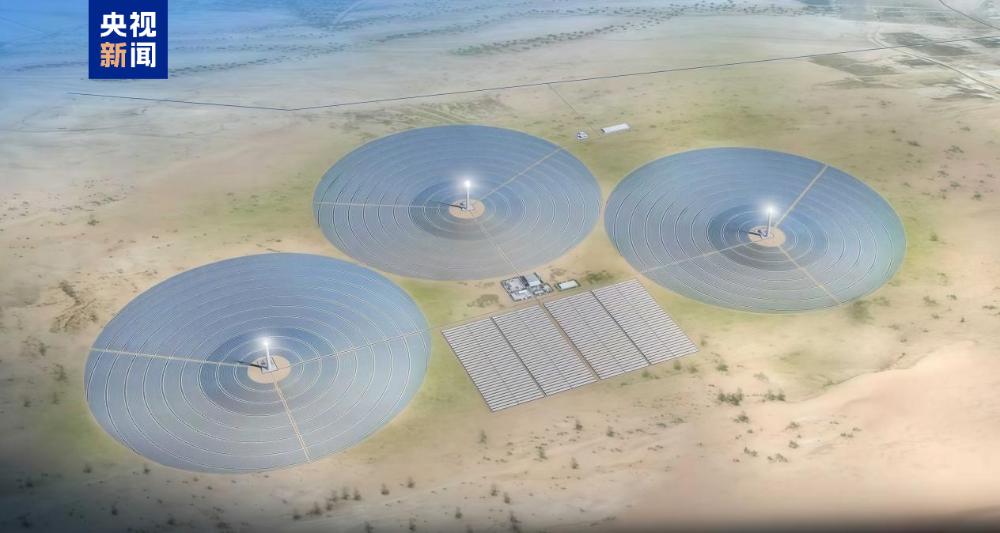
Rendering of the Golmud Project
The CGNPC Golmud Solar Thermal Project is equipped with a 14-hour molten salt heat storage system, which is fully capable of meeting electricity demand throughout the night.
Therefore, the underlying logic of generating electricity with mirrors is essentially "boiling water to drive turbines".
The molten salt used in the Golmud Project is a mixture of sodium nitrate and potassium nitrate. This mixture is solid at room temperature, but turns into a liquid when heated to 500-600°C, allowing it to flow, store heat, and transfer thermal energy.
This transferred heat is the direct energy source for nighttime power generation.
Solar thermal power stations can achieve zero carbon emissions over their entire operational lifecycle.
Of course, solar thermal power generation is not without drawbacks. Compared with photovoltaic power generation, its most notable disadvantage is high cost.
The initial construction investment for a solar thermal power station is far higher than that for a photovoltaic facility. Calculated by installed capacity, the construction cost per kilowatt is approximately 15,000 yuan.
Solar thermal power generation requires a large land area, so it can only be built in open areas such as deserts and Gobi regions.
For example, China's operational projects like the 50 MW solar thermal power station in Gonghe, Qinghai, the 50 MW tower-type solar thermal power station of China Power Investment Corporation in Yiwu County, Xinjiang, and the 100 MW molten salt tower-type solar thermal power station in Dunhuang are all located in sparsely populated regions.
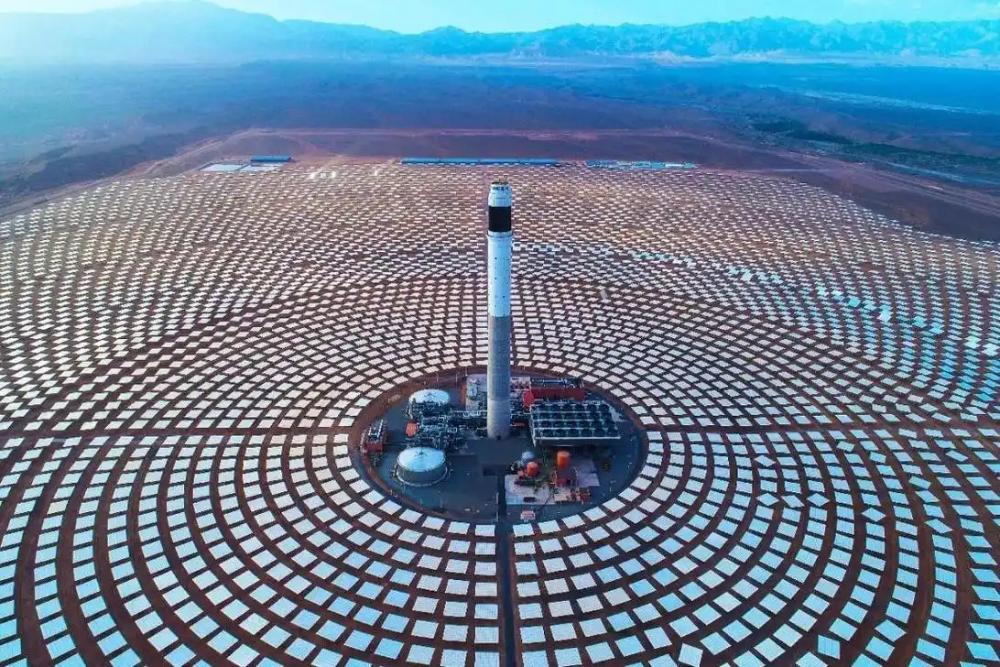
Dunhuang Shouhang 100 MW Molten Salt Tower Solar Thermal Power Station, China's first 100 MW-class molten salt tower solar thermal power station completed on December 27, 2018
Back to the earlier question: China's photovoltaic industry is already leading the world by a large margin, so why are we still building more expensive solar thermal power stations?
The answer is "long-duration energy storage".
Photovoltaic systems can only generate electricity during the daytime, which is "instant generation for immediate use". Any excess power that cannot be transmitted must be discarded.
Solar thermal power, however, can "store first, generate later": it stores heat during the day and releases it slowly at night, avoiding energy waste.
The alternating current output at night can be directly connected to the grid, and it can also complement photovoltaic and wind power to achieve peak shaving purposes.
This characteristic gives solar thermal power generation an irreplaceable advantage.
02
Leading the World
Solar thermal power generation emerged alongside the development of modern industry.
In the 1950s, Soviet scientists first proposed the design concept of tower-type solar thermal power stations and built a demonstration facility.
After that, solar thermal power generation technology experienced fluctuating development, but due to high power generation costs, it never saw large-scale application.
Factors such as the oil crisis and global warming have gradually increased attention to solar thermal technology.
In 2007, Spain built the world's first commercially operated tower-type solar thermal power station, PS10, in Andalusia, south of Seville, with an installed capacity of 11 MW.
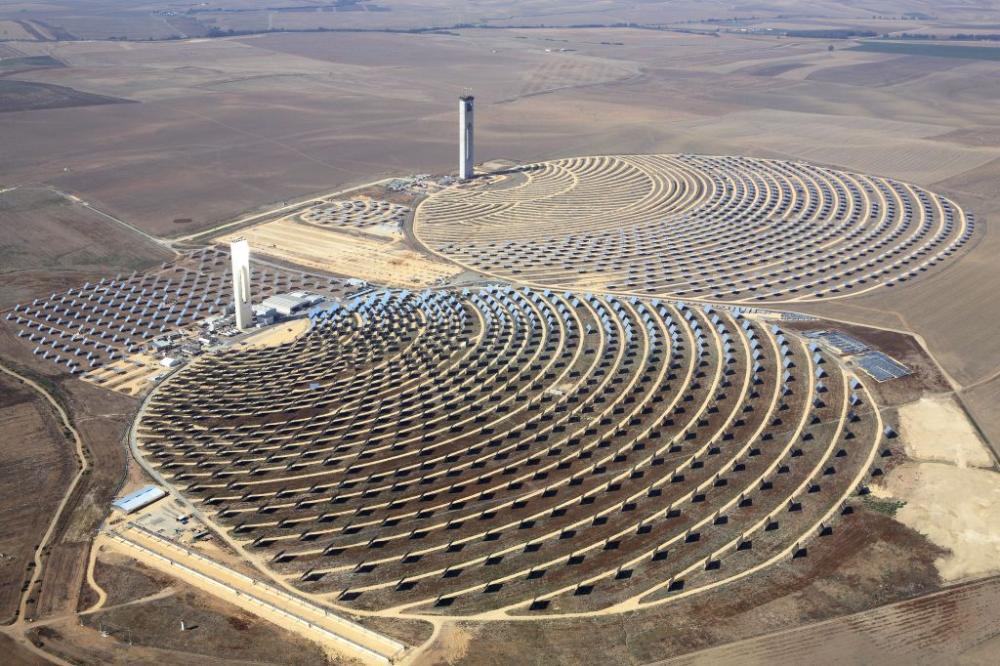
PS10 Solar Thermal Power Station (PS20 is located above it)
Since 2021, the proportion of installed capacity of renewable energy such as photovoltaic and wind power has been increasing continuously, creating an urgent demand for large-scale energy storage clean energy solutions with deep peak shaving capabilities.
After more than a decade of commercial operation, solar thermal power generation has become more technically mature, with outstanding peak shaving performance, and its development has entered a fast track.
In terms of technical routes, China has taken a path completely different from the global mainstream.
Existing solar thermal power generation technologies are divided into two routes: tower type and trough type. The tower type uses a large number of heliostats to reflect sunlight to the central receiver at the top of the tower, which belongs to point concentration.
The trough type uses parabolic trough reflectors to focus sunlight onto tubular receivers, which belongs to line concentration.
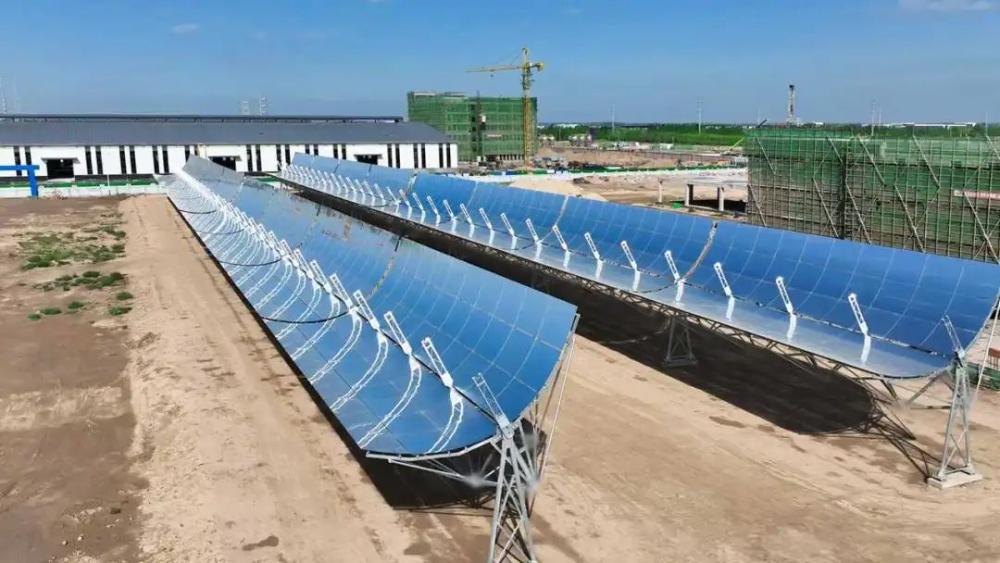
Trough-type solar thermal power generation facility
The two technologies differ greatly in operating temperature and efficiency. The tower type has a high concentration ratio, reaching over 1000 times, with the working medium temperature reaching 560°C or even exceeding 1000°C. Its theoretical power generation efficiency is also higher, generally between 35% and 40%.
The working medium temperature of the trough type is usually limited to around 400°C, with an efficiency of only about 30%.
The trough type has low technical barriers, a simple system structure, and easy operation and maintenance. It was the first to achieve commercialization, accounting for over 90% of the world's total installed capacity.
The tower type has higher technical complexity and strict requirements for control systems, but it is more suitable for large-scale power stations of 100 MW or above.
As a large country with a huge power grid, China chose the tower technology that supports large-scale deployment.
While the tower technology suits China's national conditions, large-scale application requires overcoming numerous challenges.
For example, the core heat-absorbing material for the central receiver in tower technology was once restricted by foreign supply chains.
Large-scale application means larger land area and more reflectors.
More reflectors mean more reflected sunlight, higher temperatures, and greater power generation capacity.
To transfer such a large amount of solar heat to molten salt, the central receiver must use special heat-absorbing materials.
In 2023, the team from the Lanzhou Institute of Chemical Physics, Chinese Academy of Sciences, broke through the key technology of nano high-entropy high-temperature solar absorber coatings, developed the SolarShot1108 high-temperature solar absorber coating, and achieved large-scale production, with a solar energy absorption rate of 0.975 under high-temperature operating conditions.
This coating has been applied in the aforementioned Dunhuang Shouhang Energy Conservation 100 MW Tower Molten Salt Solar Thermal Power Station.
That alone is not enough. To maximize solar energy absorption, the reflectors must track the sun's trajectory accurately, reflecting as much sunlight as possible to the central receiver.
The 700,000 kW "Solar Thermal Energy Storage +" project in Guazhou, Gansu Province, operated by Three Gorges Hengji Energy Pulse and put into use in October 2025, is the world's first "two towers, one unit" solar thermal energy storage power station.
The control system uses intelligent algorithms provided by Huawei, keeping the sun tracking accuracy of each mirror within 0.1°.
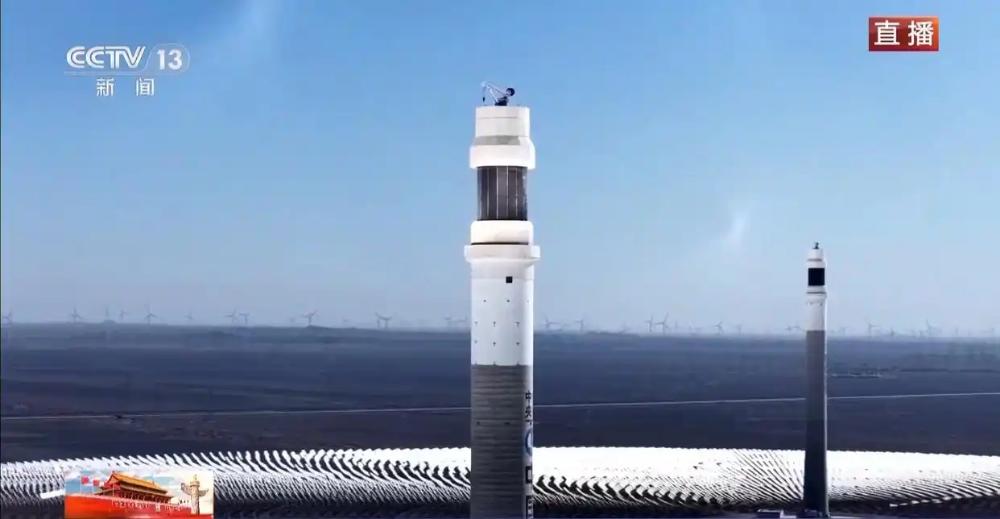
Guazhou "Solar Thermal Energy Storage +" Project in Gansu
Additionally, to break through the 560°C temperature limit of molten salt, China's R&D teams are exploring the use of solid particles such as quartz sand to replace molten salt, aiming to raise the heat absorption temperature above 1000°C, thereby increasing the theoretical power generation efficiency from 45% to 60%.
China's solar thermal power generation technology has continuously overcome technical difficulties. The localization rate of technical equipment has exceeded 95%, key materials and core equipment are fully self-sufficient and controllable, and power generation costs are decreasing.
China is also leading in the cutting-edge technologies of solar thermal power generation.
Larger reflectors collect more solar energy, requiring higher efficiency from the power generation units.
The "Supercritical Carbon No.1", which successfully entered commercial operation in Liupanshui, Guizhou at the end of last December, is the world's first commercial supercritical carbon dioxide power generation unit developed by Shougang Shuigang Group.
Supercritical carbon dioxide power generation is a new technology that can replace molten salt, and it will be compatible with solar thermal power generation in the future. Compared with the existing sintering waste heat steam power generation technology, the power generation efficiency of "Supercritical Carbon No.1" can be increased by over 85%.
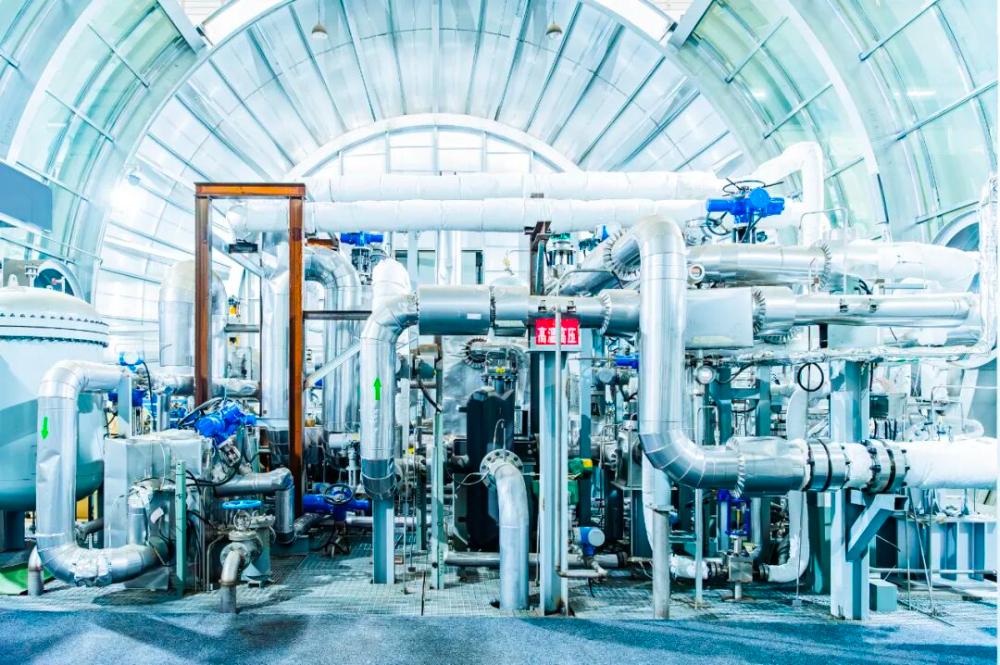
Experimental facility for supercritical carbon dioxide power generation technology
Higher efficiency means that the cost per kilowatt-hour for the same mirror field area is expected to be greatly reduced from the current 0.55 yuan!
In terms of scale, by the end of 2025, China had built 27 solar thermal power stations, with a total installed capacity of 1.738 GW and 1.72 GW connected to the grid, ranking third globally after Spain and the United States.
The installed capacity of projects under construction is about 2.7 GW, accounting for over 90% of the world's total under-construction solar thermal projects.
At this growth rate, China's total installed solar thermal power generation capacity will surpass Spain and become the world's largest no later than 2027.
As the scale expands, costs are also decreasing.
Currently, China's solar thermal power price has dropped from 1.15 yuan/kWh in the early demonstration phase to about 0.55 yuan/kWh.
In contrast, Spain, an early pioneer in solar thermal power generation, maintained a fixed feed-in tariff equivalent to around 1.6 yuan/kWh for a long time, with a maximum of 2.9 yuan/kWh.
China's next cost target for solar thermal power generation is 0.4 yuan/kWh.
At that point, solar thermal power generation will truly have the economic competitiveness to compete with gas-fired peak shaving power stations.
03
Diverse Applications
While both using sunlight, solar thermal and photovoltaic have formed a clear "dual-drive" pattern in China.
Photovoltaic power is the mainstay of global solar power generation.
By the end of 2025, China's total installed solar power capacity reached 1200 GW, with about 318 GW of new installed capacity added in 2025, accounting for over 45% of the global total.
The cost of centralized photovoltaic power has dropped to around 0.2 yuan per kilowatt-hour.
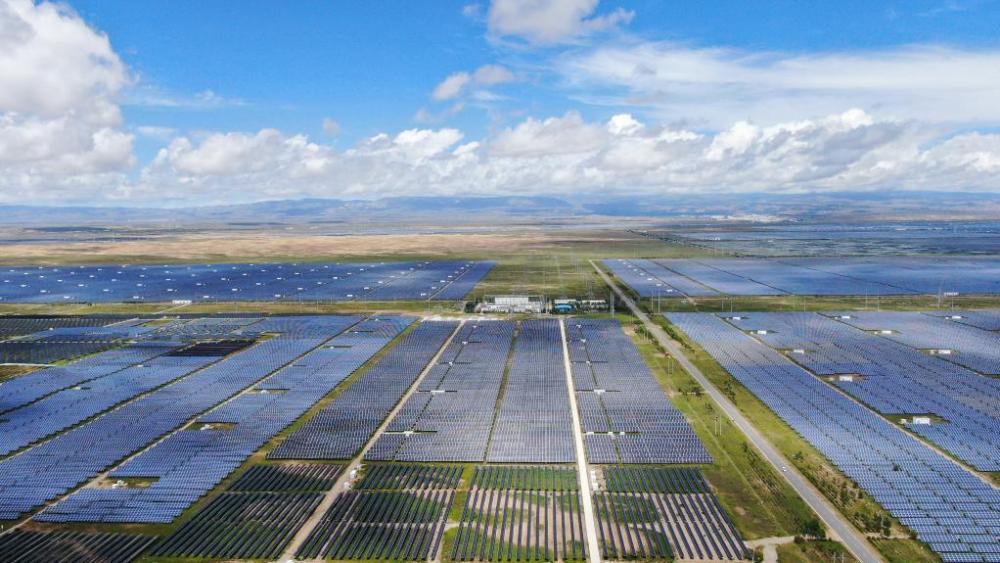
Tala Beach Photovoltaic Power Park in Gonghe County, Hainan Tibetan Autonomous Prefecture, Qinghai
Solar thermal power acts as a "stabilizer".
The current total installed solar thermal capacity of 1.738 GW sounds like a fraction of photovoltaic capacity, but solar thermal power overcomes the fatal flaw of photovoltaic power — stopping