Neolix: How far can a delivery courier's trillion-dollar driverless vehicle dream go?
The autonomous delivery vehicle industry is teetering on the precipice of transition from "10,000 units" to "100,000 units". 2026 is projected as a pivotal year with forecasted sales of 89,000 units, but the real bottleneck has never been technology — it lies in the collaborative evolution of regulations, ecosystem, and business models.
One afternoon in 2017, in Shunyi District, Beijing. Yu Enyuan knocked on the office door of Li Xiang, founder of Li Auto. The two were old friends who had known each other for years, and they made a pact when starting their businesses — "one transports people, the other transports goods". Li Xiang would build vehicles to carry passengers, while Yu Enyuan would build vehicles to deliver cargo.
At that time, Li Xiang was going through the most painful period since he founded his company. The SEV he had poured two years of effort into developing — a compact pure-electric low-speed vehicle — was forced to halt due to delayed domestic regulatory rollout. At the 750-acre factory in Changzhou, production lines worth 2 billion yuan sat idle, and its supporting battery facility "Vehicle Wings" fell into an awkward position: its supply capacity could not enter the passenger vehicle system, while its products were priced higher than competitors in the low-speed vehicle segment. In early 2018, Li Xiang posted on Weibo, drawing an analogy from *The Lord of the Rings* to describe the SEV's "death" and "rebirth": "The Grey Wizard is gone, returning reborn as the White Wizard."
The person who catalyzed this "transformation" was none other than Yu Enyuan.
The two hit it off immediately: Li Auto licensed its SEV chassis technology and Changzhou factory production lines to Neolix, and Li Auto also became Neolix's angel round investor. A passenger vehicle project that had been "killed" by policies thus found a second life in the logistics sector. In 2019, Neolix established the world's first L4-class autonomous vehicle smart manufacturing factory in Changzhou, integrating production, testing, and autonomous driving calibration, successfully achieving mass production.
Seventeen years later, that original pact of "one transports people, one transports goods" has evolved into two companies each with a market capitalization exceeding 100 billion yuan. Li Auto is now a leading player in China's new energy vehicle industry, while Neolix, founded by Yu Enyuan, has delivered over 17,000 L4-class autonomous vehicles in total, and secured over $600 million in Series D funding — the largest private financing deal in China's autonomous driving sector. Li Auto remains Neolix's second-largest shareholder to this day.
Yet the next chapter of this story is filled with uncertainties.
From parcel lockers to autonomous vehicles: The comeback of a "logistics fundamentalist"
Yu Enyuan's entrepreneurial resume reads like a chronicle of China's logistics intelligence evolution.
After graduating from Chongqing University with an automation degree in 1996, he entered the intelligent logistics equipment industry. Later, he invented the parcel locker, developed China's first dedicated PDA (handheld scanner) for courier services, generating annual revenue of hundreds of millions of yuan. In 2016, when AlphaGo defeated Lee Sedol, he realized that artificial intelligence could bring disruptive changes to logistics. In July 2018, Neolix was officially established in a modest office in Yizhuang, Beijing.
In the early days of the startup, cash on the balance sheet nearly ran out. Yu Enyuan met with 60 to 70 investment institutions back-to-back: "I had to spend two hours explaining what Neolix autonomous vehicles were, and many investors would shake their heads and leave after listening." The most pessimistic assessment was that "selling 500 units nationwide would be a good outcome". Out of options, he mortgaged his personal property to secure bank loans.
During those years, Neolix pursued the "mobile vending unit" path, attempting to use autonomous vehicles for retail operations. This direction later proved to be a dead end. The turning point came in 2021 — Neolix obtained China's first public-road autonomous delivery vehicle license, officially transitioning to become "a vehicle manufacturer focused on autonomous driving logistics vehicles".
Yu Enyuan's deep understanding of logistics forms the core competitive foundation of Neolix. He once worked as a courier, invented parcel lockers, and explored drone delivery operations. While most autonomous driving entrepreneurs were still debating algorithm precision, he already knew what courier outlet owners truly cared about: not how fancy the technology was, but whether it could help them save the cost of hiring a driver.
This "logistics fundamentalism" has allowed Neolix to carve out a unique position in the competitive landscape. As of 2025, Neolix secured over 70% of orders from the "Tongda Tu" courier group (ZTO, YTO, STO, and J&T Express). Its partnership with Didi Freight was particularly dramatic: only 3 vehicles were deployed during the initial pilot, but the number grew to over 800 within months, with per-vehicle efficiency even surpassing that of human-driven vehicles.
The 10,000-unit threshold: A daring leap from "toy" to "productive force"
2025 is widely regarded in the industry as the "first year of 10,000-unit deliveries" for autonomous delivery vehicles. Neolix achieved multiple milestones that year: cumulative deliveries exceeded 10,000 units, making it the world's first L4-class fleet to cross that mark; monthly deliveries surpassed 2,000 units; over 1,200 vehicles were deployed in Qingdao, helping the city become the world's urban area with the largest number of autonomous driving vehicles.
10,000 units is a magical number. In the autonomous driving industry, it is seen as the critical threshold for large-scale commercialization — only by reaching this scale can a virtuous cycle of technological cost reduction, data accumulation, and operational optimization be formed. Neolix built the world's first 10,000-unit-level smart manufacturing factory in Tonglu, with an annual production capacity of 10,000 units. Through a "Russian doll" style modular design, it has reduced overall vehicle costs by 50% to 70%.
Yu Enyuan's choice of technical path was also highly controversial. In 2021, when the industry largely relied on multi-LiDAR solutions, Neolix opted for a vision-dominant approach, simplifying sensors to a single LiDAR paired with 12 cameras. This was seen as "heretical" by some at the time, but in hindsight, this decision gave Neolix a massive advantage in cost control.
However, behind the 10,000-unit scale, financial performance figures are less impressive. In 2024, Neolix recorded 1.2 billion yuan in revenue, a net loss of 210 million yuan, with R&D investment accounting for 35% of revenue. While the company claimed to have achieved monthly profitability when monthly deliveries exceeded 1,000 units, whether full-year cash flow can turn positive remains uncertain. Hardware gross margin stands at 25%, and operational service gross margin at 60% — the latter figure sounds appealing, but it requires sufficient operational scale to amortize fixed costs.
Dual giants rivalry: The ecosystem war between Tencent-aligned and Alibaba-aligned factions
The autonomous delivery vehicle sector is undergoing a brutal process of "alliance building and strategic realignment".
In early 2026, two industrial and commercial registration changes shocked the industry: Guangxi Tencent Venture Capital Co., Ltd., under Tencent, officially took equity in Neolix; almost simultaneously, Alibaba's Cainiao formed a deep strategic integration with Jishi Intelligent through "business injection + cash investment".
This marks the industry's transition from the "technology validation phase" to the "ecosystem competition phase". Neolix and Jishi Intelligent, two leading players with cumulative deliveries exceeding 36,000 autonomous vehicles combined, have been "incorporated" into the Tencent and Alibaba camps respectively.
Jishi Intelligent is a formidable competitor. Founded in 2021, its fleet expanded from 200 units in early 2023 to 2,000 units in 2024, and reached 20,000 units after integration with Cainiao. It pioneered the "low-cost hardware + FSD subscription" model, with the E6 model priced as low as 19,800 yuan for the base vehicle, plus a monthly FSD subscription fee of 1,800 yuan. In early 2026, Jishi completed over $300 million in financing, becoming the world's first RoboVan enterprise with a valuation exceeding 10 billion yuan.
In terms of market share, Jishi Intelligent ranks first at 53.2%, followed closely by Neolix at 36.2%, with the two together occupying nearly 90% of the market. White Rhino, backed by SF Express, has clearly fallen behind in terms of scale and capital strength.
More dangerously, internet giants are not content with merely being investors. Meituan has deep collaboration with Haomo.AI, actively participating in the R&D of the Modao 20 vehicle, clearly aiming to master core technologies and build its own autonomous vehicle supply system. JD and Alibaba are also vigorously promoting their in-house autonomous delivery fleets. These giants are both Neolix's customers and potential competitors.
Yu Enyuan has a clear awareness of this dynamic. He candidly stated in an interview: "Whether an autonomous vehicle company can grow stronger and create real industry value depends on how quickly it can reduce the proportion of revenue coming from large B2B clients." His strategy is to rapidly expand into the small and micro B2B market — courier franchisees have high demand for standardized services and low demand for customization, which can improve the company's bargaining power. But this requires time, and time may be Neolix's scarcest resource.
Road rights: The greatest moat, yet also the deepest trap
"I don't believe road rights will become a competitive advantage, nor will they be exclusive. But we must respect road rights," Yu Enyuan remarked.
Behind this statement lies the most profound pain point of the autonomous delivery vehicle industry.
As of 2026, over 200 cities across China have opened road access for autonomous delivery vehicles, and more than 30 prefecture-level cities have issued technical specifications for autonomous courier vehicles. On July 1, 2026, the Ministry of Public Security's GA/T 2388-2026 traffic regulation will officially come into effect — China's first national traffic regulation covering all categories of autonomous delivery vehicles, establishing unified standards for road rights allocation and accident liability determination.
Yet policy progress cannot mask the fundamental institutional dilemma: what category of "vehicle" does an autonomous delivery vehicle belong to? Is it a motor vehicle or a non-motor vehicle? At the national regulatory level, a clear definition has not yet been established. This has led to inconsistent local policy standards, non-interoperable road right permissions, leaving autonomous vehicles stuck in the awkward situation of "able to operate in pilot zones, but difficult to deploy across entire regions".
Wang Lu, Deputy General Manager of the Intelligent Connected Vehicle Innovation Center at Western Science City, pointed out: "The ambiguity of legal status, the mismatch between regional supply and demand, and conflicts in traffic management are profoundly affecting the large-scale commercial adoption of the end-point delivery industry."
For Neolix, road rights are both a moat and a trap. It has secured road access in over 250 cities, but entering every new city requires renegotiation with local governments, standard adaptation, and re-accreditation. This fragmented "one policy for one city" dynamic severely limits the speed and efficiency of large-scale expansion.
More critically, after the new regulation takes effect on July 1, requirements for data compliance, safe operation records, and insurance mechanisms will only grow stricter. Prepared enterprises will reap dividends, while unprepared ones will be pushed out. The closing of the regulatory loop is raising industry barriers, and enterprises lacking mass production capacity, core road right resources, and sustainable business models will face enormous pressure.
Overseas expansion: Middle East glory and the shadow of geopolitics
Neolix's global expansion began with a historically significant license.
In September 2025, Neolix, in collaboration with its partner AutoGo, secured the Middle East's first autonomous delivery vehicle license issued by the Integrated Transport Center of Abu Dhabi. This was also the first license of its kind in the Middle East for the global autonomous delivery industry. Subsequently, Neolix launched commercial pilots in core areas such as Masdar City and Mussafah Industrial Zone, becoming the first enterprise to operate fully unmanned delivery services on public roads in the Middle East.
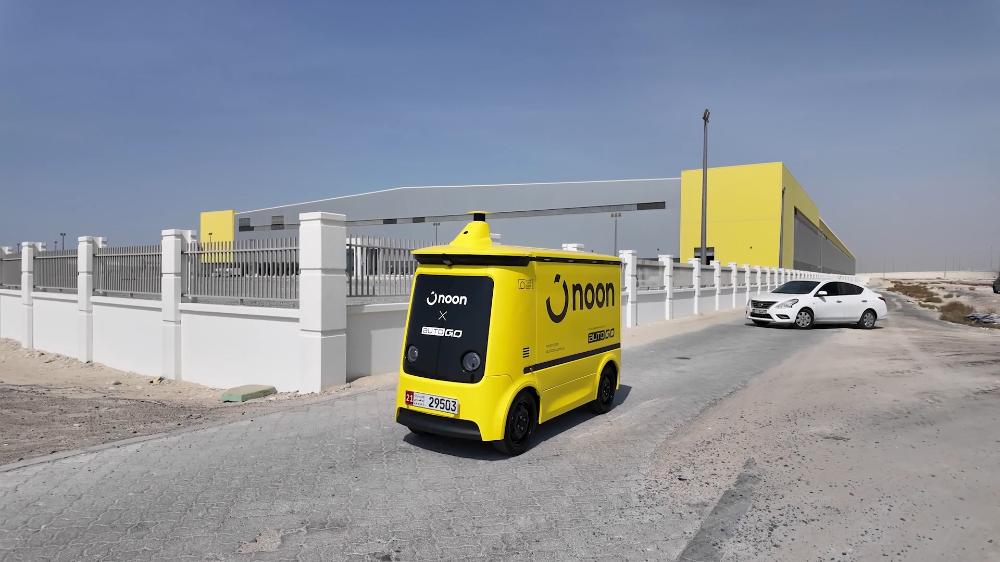
To obtain this license, the Neolix team invested tremendous effort. The Middle East's sandstorms, hot and dry climate, sandy terrain, and unstructured roads imposed harsh challenges on autonomous delivery technology. Neolix independently developed an L4-class mapless autonomous driving system, built a "vision-to-action" large model, and finally completed a 98-kilometer fully autonomous road test with zero human takeovers.
Stone Venture from the UAE led Neolix's Series D funding round, which was essentially a strategic investment. Yu Enyuan planned to use the UAE as the first stop for overseas expansion, building a strategic hub aligned with the Belt and Road Initiative.
However, in March 2026, as the Middle East situation escalated, Neolix's large fleet in the UAE had already been shipped and deployment preparations completed, but commercial operations were forced to hit a "pause button". The company stated that its "top priority is ensuring the safety of on-site personnel", but massive upfront investments cannot be converted into commercial value for the time being.
This is not a problem unique to Neolix. Overseas expansion is never just about product exports — it requires deep integration into local ecosystems. The "full closed-loop" service system for charging, dispatching, and maintenance, compliance requirements for local data storage, and tightened regulations triggered by military conflicts — these geopolitical risks are unavoidable hidden reefs on the global journey of every Chinese technology enterprise.
Hidden concerns: Who will foot the bill after the celebration?
Let us take a critical look behind the polished narrative of Neolix to examine the shadows.
First, the sustainability of its profit model. Neolix claims to have achieved monthly profitability, but still recorded a full-year loss of 210 million yuan in 2024. A 25% hardware gross margin is not particularly high in the manufacturing industry, and while a 60% operational service gross margin looks attractive, it requires massive operational scale to support. Amid an intensifying price war — with Jishi's E6 base vehicle price already slashed to 19,800 yuan — can Neolix maintain sufficient gross profit margins?
Second, the fragility of customer lock-in. SF Express is not only a major client of Neolix, but also a deep investor in its competitor White Rhino. Meituan, JD, and Alibaba are all developing in-house autonomous vehicle systems. Yu Enyuan himself admitted that it is "impossible to lock in" large B2B clients. This means Neolix could lose core orders at any time.
Third, financial risks from the heavy-asset model. Building self-owned factories, establishing in-house operational systems, and heavy R&D investment — under this model, if funding dries up, a full financial collapse can easily occur. Neolix has completed 7 funding rounds, and the $600 million Series D funding seems substantial, but with annual losses of 200 to 300 million yuan plus expansion investments, how long can this capital last?
Fourth, the long-term bet on its technical path. The vision-dominant approach has advantages in cost control, but can its reliability in complex weather and extreme scenarios continuously meet L4-class safety requirements? When the industry shifts back to multi-sensor fusion, could Neolix be burdened by technical debt?
Fifth, policy uncertainty. GA/T 2388-2026 is only an industry standard, not a formal law. Core issues such as the legal status of autonomous delivery vehicles, accident liability determination, and insurance mechanisms remain unresolved. A single major safety incident could set the entire industry back by years.
Sixth, the risk of valuation bubbles. Jishi Intelligent's valuation has exceeded 1