A major reshuffle in the futures industry: Among CITIC, Guotai Junan, Yong'an, CITIC Construction Investment, and Galaxy, who is swimming naked?
In 2026, the futures market bid farewell to the wild era of "easy profits from trading commissions".
In the current industry competition landscape, leading firms are expanding continuously, solidifying their positions and seizing market share through mergers and acquisitions. On the other hand, regulatory authorities are cracking down vigorously, intensifying penalties for intermediary violations, internal control deficiencies, and chaotic marketing activities, putting enormous pressure on small and medium-sized institutions.
Under the dual pressure of compliance accountability and capital restructuring, the Matthew effect of "the strong get stronger" is clearly evident, and the gaps between industry players are widening. In this fierce competition, the first tier of the futures industry has emerged, with five giants — CITIC Futures, Guotai Junan Futures, Yong'an Futures, CITIC Construction Investment Futures, and Galaxy Futures — taking the lead.
CITIC Futures: The All-Russian Overlord
In terms of overall strength, CITIC Futures leads the futures industry and is widely recognized as the "all-around benchmark" in the sector.
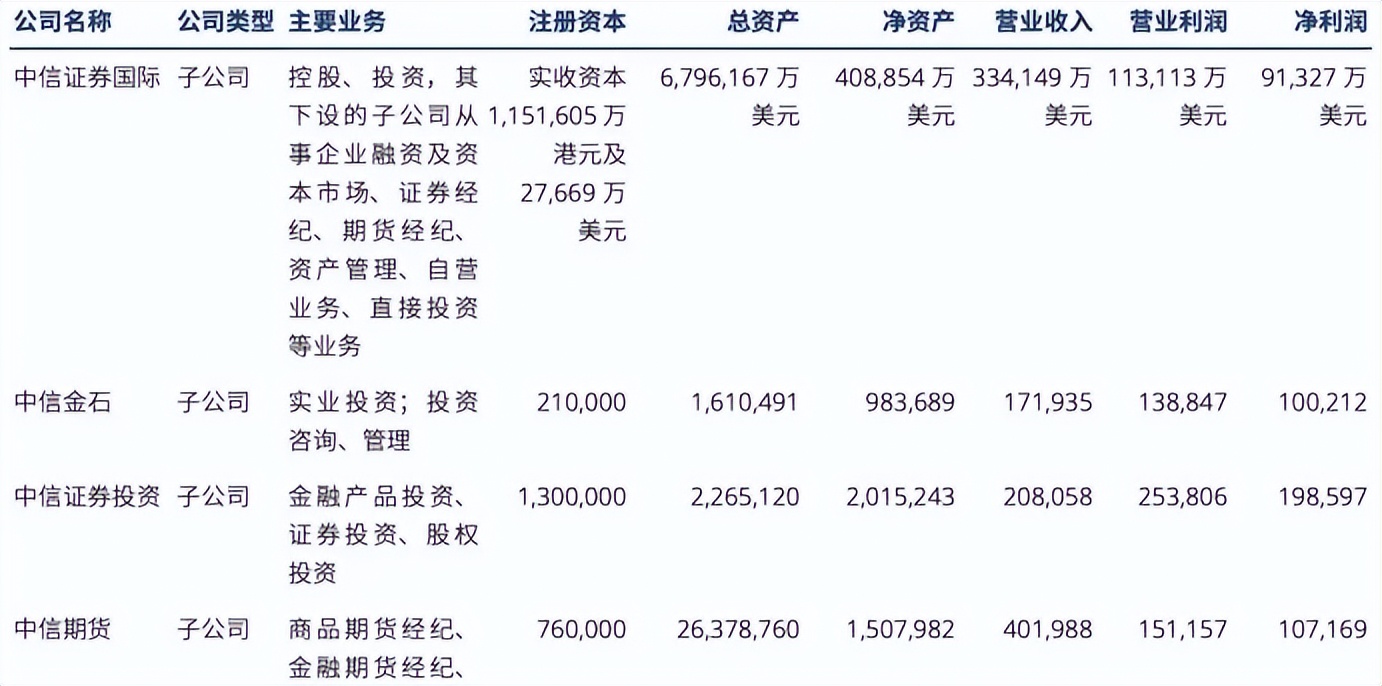
Boasting the industry's highest registered capital of 7.6 billion yuan and the largest net profit of 1.071 billion yuan in 2025, CITIC Futures far outpaces other firms in the industry in capital strength, profitability, and risk resistance, standing unrivaled at the top.
(Source: 2025 Annual Financial Report)
First, its capital moat is unmatched. OTC derivatives and market-making businesses are highly capital-intensive top-tier tracks in the futures industry. With abundant capital, CITIC Futures is not constrained by funding, enabling it to provide long-term, cross-market, comprehensive one-stop financial services for public funds, insurance companies, high-net-worth clients, and more.
Second, it offers first-class institutional services and cross-border businesses. With years of focus on institutional services, it has a high-speed trading platform and one-on-one clearing and custody services that fully meet the needs of institutional investors. Meanwhile, it has rich experience in cross-border futures businesses and complete risk prevention and control measures, making it one of the few local futures companies that can cover both domestic and international futures markets to serve clients worldwide.
Third, it has strong industrial empowerment and pricing power. Leveraging industrial advantages, it uses tools such as basis trading and warehouse receipt services to solve enterprises' hedging and price risk management problems. Its huge international influence continuously provides various information services, enhancing the visibility of "Chinese prices" in the global market.
Fourth, it boasts exceptional brand credibility. Its research institute has long been named the "China Gold Medal Futures Research Institute". Its research reports, viewpoints, and market trend judgments hold high reference value, serving as a key information source for many institutions and investors and carrying significant market influence.
Of course, this all-powerful leader is not without flaws.
First, the customer experience for high-net-worth individuals needs improvement. Its focus on institutional businesses has led to neglect of flexible margin adjustments for large personal deposit clients, and the convenience of customized services lags behind peers that target high-end retail clients.
Second, its specialized industry research is not yet fully mature. Its coverage of all product varieties is relatively balanced with no obvious weaknesses, but its in-depth research and industrial reputation in sectors like ferrous metals and energy chemicals are slightly inferior to Yong'an Futures, lacking distinctive highlights.
CITIC Futures is an irreplaceable all-around industry leader, with strengths in comprehensive strength and institutional barriers, while its weaknesses lie in the absence of segmented advantages and refined services for high-end individual clients.
Guotai Junan Futures: The M&A Dark Horse
In 2026, Guotai Junan Futures is a well-deserved reforming giant in the futures industry.
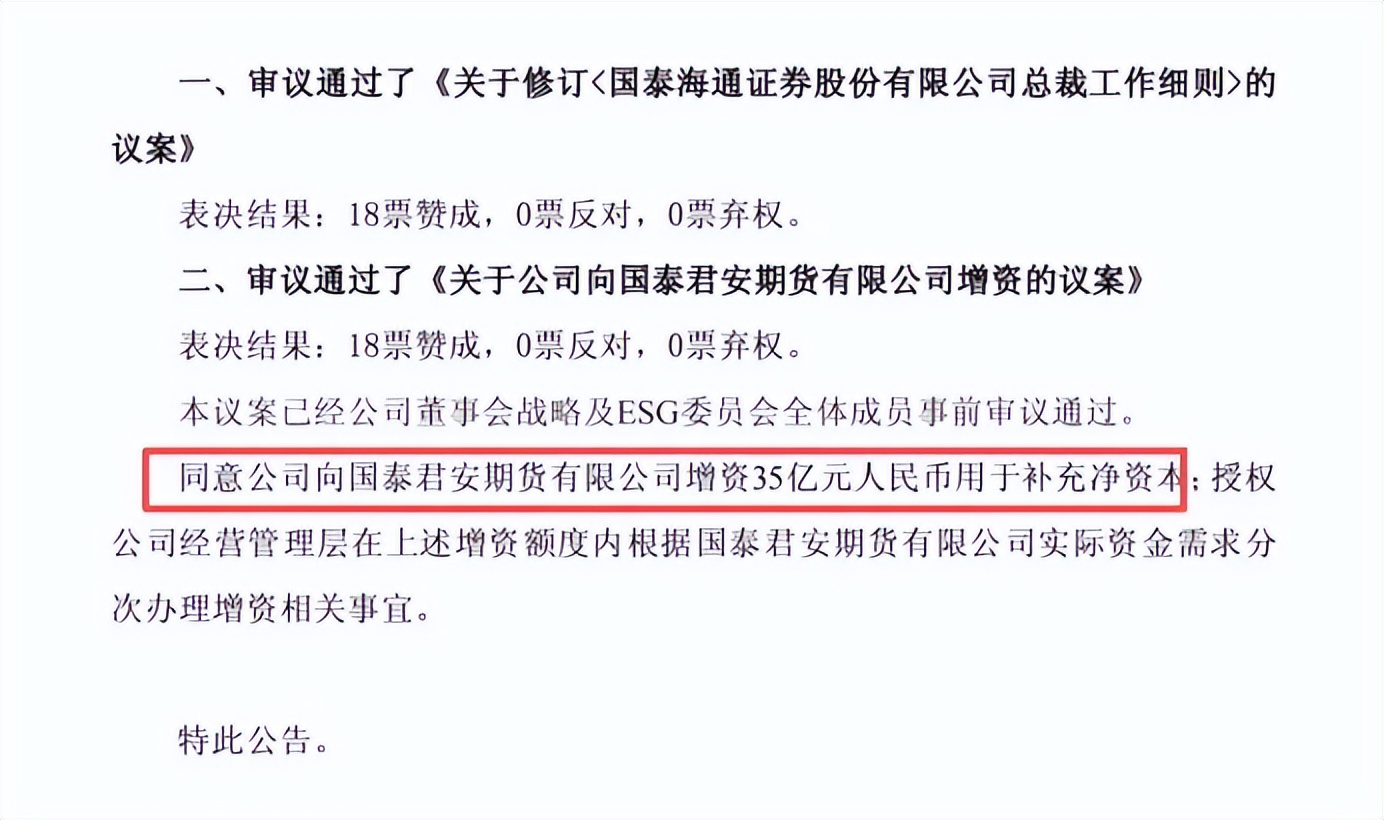
It completed a 3.5 billion yuan capital increase within the year, raising its registered capital to 7 billion yuan and ranking first among the industry's second tier. Meanwhile, with the completion of a major asset restructuring with Haitong Futures, Guotai Junan has taken a significant step toward growing stronger, sprinting to become a comprehensive derivatives service provider.
(Source: China Fund News)
Its greatest strengths are fintech, channel advantages, and capital growth.
In terms of trading experience, Guotai Junan is a domestic leader, having long invested heavily in information system construction. Its trading system upgrades are top-tier in speed and stability, with tools like lightning trading, algorithmic trading, and intelligent conditional orders serving as powerful aids for quantitative and high-frequency traders.
With enhanced capital, the company has effectively expanded its business boundaries. Sufficient funding supports businesses such as OTC options, option-included trading, and market-making, enabling it to continuously obtain various futures and option market-making qualifications and quickly make up for shortcomings in institutional pricing businesses.
Its channel network is second to none, leveraging over 400 IB business outlets of its parent company to advance both proprietary and IB businesses simultaneously, carrying out marketing services nationwide. Its IB business volume has long ranked first nationwide, and its customer acquisition and service levels are top-tier across the industry.
In addition, it has achieved full coverage of industrial research, establishing research teams for all aspects of bulk commodities. Its overseas branches operate smoothly, providing compliant and convenient global trading platforms, with its internationalization process advancing in an orderly manner.
However, the challenges behind the M&A dividends cannot be underestimated.
First, the painful period of M&A integration is not over. The integration with Haitong Futures involves combining all aspects including personnel, technology, businesses, and management methods. Short-term integration difficulties will occur, and internal management and operating performance will be affected to a certain extent.
Furthermore, the balance of business comprehensiveness needs improvement. Compared with leading professional institutions, the integration of commodity trading, quantitative investment, and industrial risk management is insufficient, and its full-range industrial chain service capabilities need to be enhanced.
Yong'an Futures: The Industrial King
Yong'an Futures is the only "industrial sector leader" among broker-affiliated futures companies, and the futures firm that best understands physical enterprises.
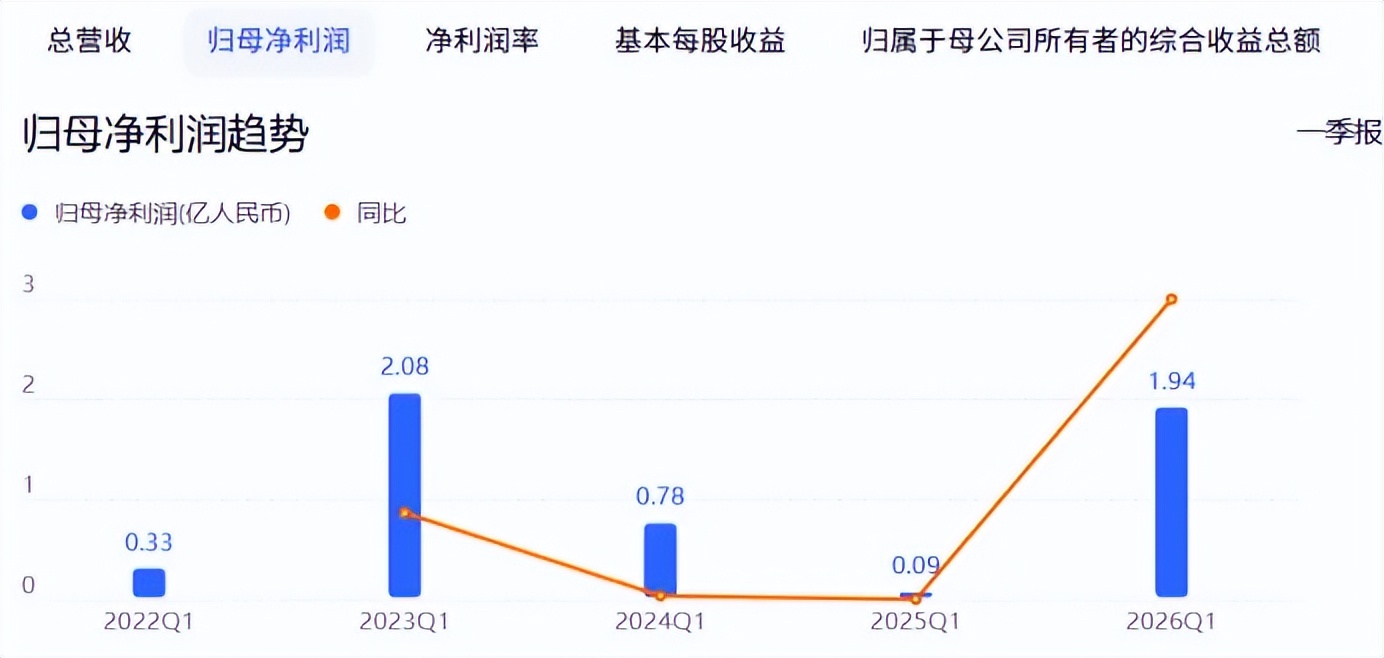
In 2025, its performance experienced significant fluctuations and achieved a U-shaped reversal. In the first quarter of 2026, its net profit surged 507% year-on-year. With strong cyclical resilience and a solid industrial foundation, it has stood firm amid the industry reshuffle.
(Source: Finscope)
First, it offers irreplaceable depth in industrial services. With years of experience in sectors like ferrous metals, energy chemicals, and agricultural products, it is well-versed in the industry's demand characteristics, capable of providing comprehensive risk management for large state-owned enterprises and listed companies, earning a high reputation across the sector.
Second, it has top-tier research and pricing capabilities. Its R&D department is known as the "Huangpu Military Academy" of the futures industry. Its published inventory reports, industrial chain reports, and price trend forecasts serve as key references for industrial clients and institutional investors, with the ability to discover prices and predict pricing for major varieties.
Third, its risk management businesses lead the industry. The scale and innovation of new risk management businesses such as basis trading, warehouse receipt services, and option-included trading remain at the forefront of the industry, deeply integrating into the actual operations of the industrial chain to truly serve the real economy and solve problems for enterprises.
Fourth, it is driven by the dual wheels of digitalization and globalization. All its core businesses have been fully digitized, reducing warehouse receipt delivery processing time to within 30 minutes and greatly improving efficiency. It has also established three global hubs in Hong Kong, Singapore, and the UK, building the industry reputation of "private equity firms turn to Yong'an for overseas expansion".
However, its industry characteristics also determine inherent shortcomings.
First, its performance stability is poor. It is significantly affected by factors such as financial asset valuation and fair value changes in warehouse receipts, leading to potential static valuation deviations. Its profitability is far from comparable to leading broker-affiliated firms.
Second, cyclical risks are unavoidable. Its core basis trading and spot-fusion businesses are entirely based on the bulk commodity market. When basis moves in the opposite direction or market volatility intensifies, the company's overall performance will decline, with obvious cyclical fluctuations.
It has the most solid industrial foundation, but unstable performance is also a "sweet burden" that this listed company has to bear.

CITIC Construction Investment Futures: The Compliance Benchmark
While other giants compete on scale, capital, and industry reach, CITIC Construction Investment Futures follows a differentiated path of compliant operations and extreme services.
Backed by a central SOE under Central Huijin Investment, it inherits the strict internal audit and compliance requirements of its parent company, serving as a model institution of "zero radicalness and stable operations" in the industry, and a dedicated harbor for many high-net-worth clients.
Its biggest highlight is its design tailored to the needs of ultra-large clients.
First, its margin flexibility ranks first in the industry. It subverts the fixed margin management model, capable of adjusting margin ratios based on the trading patterns and position status of large institutional clients, making full use of capital, greatly improving capital utilization and the tolerable capacity range, to meet high transaction volume demands.
Second, it has specially upgraded for large-value high-frequency trading. It has systematically optimized large-order and high-frequency trading instructions, making FPGA hardware acceleration and other high-speed channel access lower in cost and lower in latency, meeting the needs of large capital real accounts that pursue ultimate trading speed.
Third, its central SOE compliance foundation is solid. It always adheres to the philosophy of prudent operation, avoiding blind scale expansion or lowering internal control standards, and strictly controls risk exposure. Amid the industry's increasingly strict regulatory environment, it offers strong capital safety and compliance guarantees.
Finally, its customized services are meticulous, providing comprehensive services such as one-on-one exclusive account opening guidance, customized research reports, and quantitative strategy guidance for high-end clients, with rapid response and thoughtful services. Its customer experience far exceeds the industry average.
Beyond its differentiated path, its shortcomings are also obvious.
On one hand, its capital scale lags far behind. Its 1.4 billion yuan registered capital is no match for giants like CITIC and Guotai Junan, which restricts its development in capital-heavy counterparty trading products and large-scale market-making businesses. It also has strong intentions to increase share capital in the future.
On the other hand, its brand awareness is relatively low. By focusing solely on a niche high-end route, it falls behind leading firms with strong overall strength in consumer recognition and industry status, requiring enhanced brand influence.
CITIC Construction Investment is the ultimate experience player for large capital trading, holding the top position in the segmented field in terms of compliance and services. However, due to capital scale constraints, it is difficult for it to reach the top leader position.
Galaxy Futures: The Favorite of Foreign Investors
In 2026, Galaxy Futures has made significant progress.
In July, it successfully completed a new round of registered capital increase, with registered capital exceeding 5 billion yuan and entering the industry's first tier. This effectively solves the problem of capital shortage, laying a solid foundation for the development of innovative and cross-border businesses.
(Source: Tianyancha)
First, its foreign investor adaptability ranks among the top in the industry. As the futures market's opening-up continues to advance, Galaxy Futures has a sound regulatory system and international business standards, making it the preferred partner for foreign firms entering the Chinese market, and it has established good cooperative relationships with numerous foreign companies and top private equity firms.
Second, its trading system is reliable. Developed on the basis of the CTP trading platform, it features a simple and convenient account opening process, stable trading operations, and few operational issues, well meeting general trading demands and ordinary high-frequency trading needs, providing a good trading experience for clients.
Third, increased capital expands its growth space. The 5 billion yuan registered capital has greatly enhanced the company's net capital strength and risk resistance capabilities. It is gradually deploying innovative businesses such as OTC market derivatives and market-making, completely removing restrictions on business development.
Finally, backed by the brand credibility of a central SOE, it is now a wholly owned subsidiary of China Galaxy Securities, operating steadily with strict risk control. Its brand credibility and capital safety performance are highly recognized by the market.
However, compared with established leading institutions, Galaxy Futures still has obvious shortcomings.
First, its research and quantitative service levels are relatively low. Compared with firms focusing on research and quantitative trading such as Yong'an and Nanhua, there is huge room for improvement in its industrial chain research depth, quantitative trading environment, and personalized risk management services, with insufficient added value from professional services.
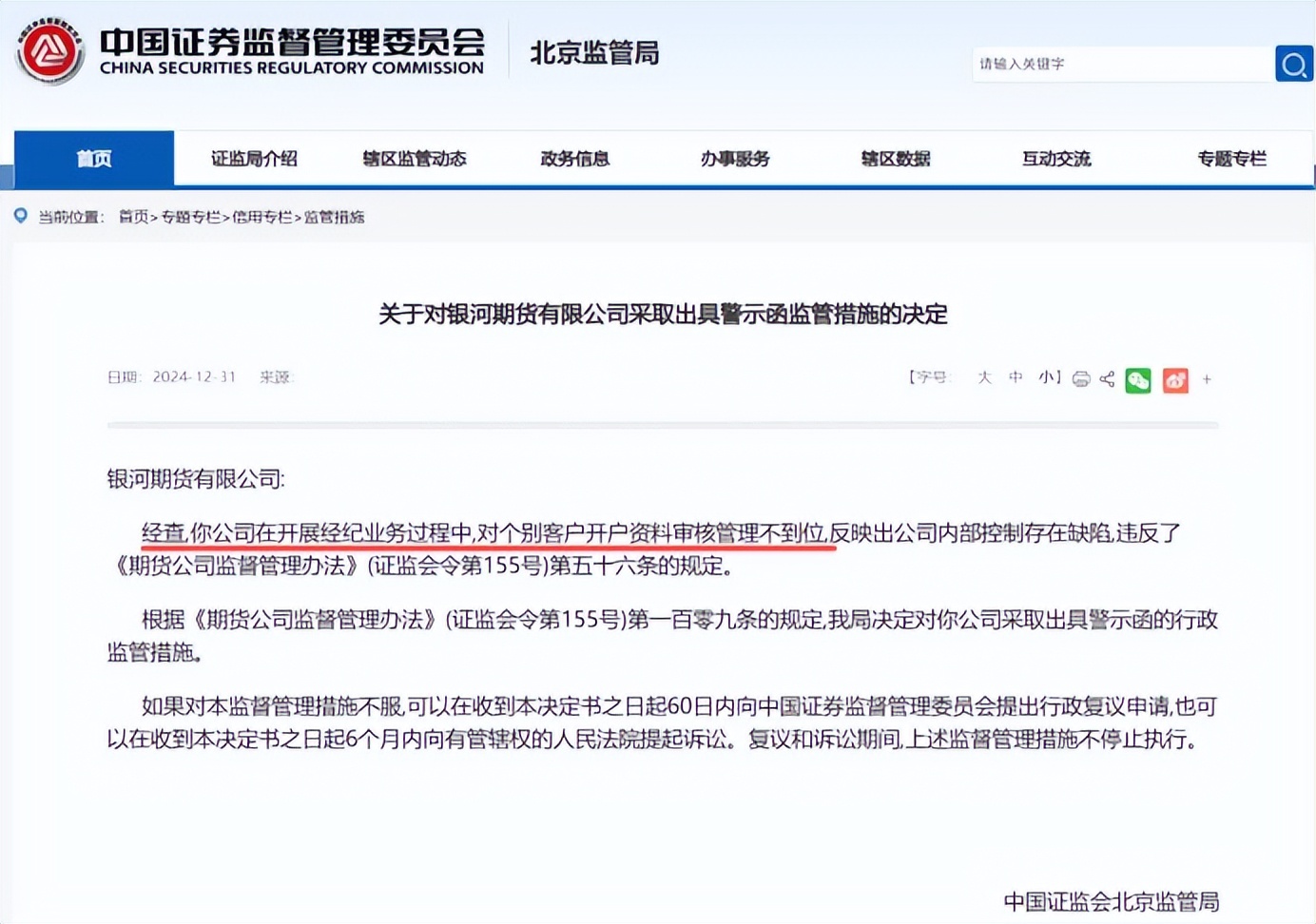
Second, past compliance deficiencies need to be rectified and strengthened. In 2024, it received regulatory warnings due to flaws in account opening reviews for brokerage businesses, indicating loopholes in compliance management at its grassroots outlets. It needs to further strengthen internal control management to prevent compliance risks in the future.
The Final Landscape Is Set: Three Iron Laws
The logic of competition in the current futures industry has completely changed.
The era of relying on commission price wars and channel expansion is over. The future market landscape will follow three principles, and the reshuffle will continue.
First, the core of competition: shifting from channel-based involution to capital-driven pricing.
The core competitiveness of futures companies in the future will lie in capital strength. Sufficient capital is the foundation for developing high value-added businesses such as OTC derivatives, market-making, and basis trading, and capital strength also determines the scope of business operations and pricing power. The industry has entered the era of "capital is king".
Second, the bottom line for survival: compliance and risk control determine life and death.
With strict daily supervision and accountability for violations, compliance is no longer an extra bonus item, but a basic condition for enterprise survival. In the future, enterprises with central or state-owned backgrounds and unified internal management systems will have stronger risk resistance, capable of operating normally even under strict supervision. In contrast, enterprises with imperfect internal control that profit from illegal activities will inevitably be eliminated by the market.
Third, the final landscape