36Kr Exclusive | Backed by leading investor SDIC Shanghai, this quantum sensing enterprise has deployed its products in inertial navigation, gas monitoring and other scenarios
Source / Enterprise
Author | Xue Ou
Editor | Silai Yuan
36Kr has learned that Shanghai Quantum Sensing Intelligence Technology Co., Ltd. (hereinafter referred to as "Quantum Sensing Intelligence") has recently completed tens of millions of yuan in angel round financing, led by Futeng Capital (under Shanghai State Investment), with participation from Liuhe Venture Capital.
Quantum Sensing Intelligence was founded in September 2023, incubated by members of the Quantum Sensing Research Institute of Shanghai Jiao Tong University. The company focuses on the quantum sensing sector, and its launched products cover markets such as inertial navigation and gas monitoring. The company is simultaneously deeply engaged in the R&D and application of quantum AI technology, promoting the rapid commercialization of related algorithms and hardware modules. Meanwhile, by integrating quantum sensing with quantum intelligent computing, the company is committed to developing quantum intelligent sensors.
According to 36Kr, the co-founding team of Quantum Sensing Intelligence consists of four members, all from Shanghai Jiao Tong University. Among them, the founder is one of the earliest domestic scholars engaged in quantum information technology research, who entered the field in the 1990s, and is currently a tenured professor and doctoral supervisor at Shanghai Jiao Tong University, a Humboldt Scholar of Germany, and the director of the Institute of Quantum Sensing and Information Processing of Shanghai Jiao Tong University.
Quantum technology is undergoing a crucial transition from laboratory research to industrialization. As one of the three major directions of quantum information, quantum sensing is relatively closer to practical application scenarios, with faster progress in implementation exploration.
In recent years, the rigid demand for trace gas monitoring in power grids and the urgent expectation for high-precision and low-cost gyroscopes in the inertial navigation field have all provided clear market space for quantum sensing technology.
Relying on its self-developed core photonic quantum enhancement technology, the company has built a product system covering quantum inertial navigation and quantum gas monitoring:
The first category is multi-gradient quantum navigation equipment, which can reduce costs and improve efficiency, optimize the operation capability of unmanned equipment. Its high-end technology can break through domestic process bottlenecks and fill industry gaps, suitable for core application scenarios related to high-end equipment, military and civilian use, and scientific research fields.
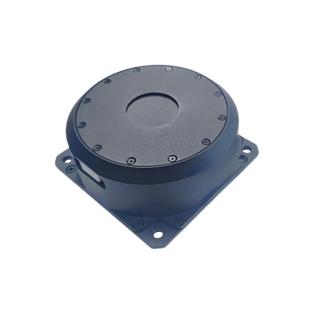
Quantum Gyroscope (Source / Enterprise)
The second category is power quantum gas monitoring equipment, which features sensitive detection and efficient operation, can meet the all-weather monitoring requirements of high-voltage equipment, and is expected to break the industry monopoly of foreign brands.
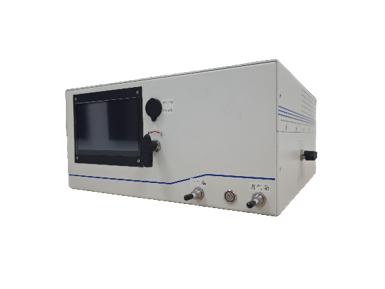
Quantum Gas Detector (Source / Enterprise)
The company is currently in the small-batch trial production stage, with a small number of orders already delivered, and its customers include power grid companies, aerospace research institutes, etc.
Below is an edited excerpt of the conversation between 36Kr and Kang Chen, Deputy General Manager of Quantum Sensing Intelligence:
36Kr: What makes Quantum Sensing Intelligence's technical route different from other quantum sensing companies on the market?
Kang Chen: Quantum Sensing Intelligence chooses photonic quantum enhancement technology as its core implementation method, which can operate at room temperature, with a breakthrough focus on "quantum enhancement technology". The founding team has been researching and refining this technology for more than 15 years, successively achieving a number of outstanding scientific research, technical and engineering results, which have been tested and verified in relevant application scenarios. The developed products use quantum enhancement technology to amplify weak signals and suppress system noise, and can be seamlessly integrated with existing sensor architectures directly, without changing the original supply chain and user habits. The products have good robustness and stability.
36Kr: Currently, quantum-related technologies are still relatively cutting-edge. Why has your core technology achieved commercial implementation so quickly?
Kang Chen: Quantum precision measurement is the closest to industrial applications among the three major directions of quantum information. In particular, our founding team has always adopted the overall layout idea of "mechanism exploration, technical research, and prototype development". Therefore, the relevant technologies we carried out in the early stage have gained engineering practice and application capabilities after years of refinement. For photonic quantum enhancement technology, we have carried out no less than 15 years of mechanism research and technology accumulation, completed a series of verifications from principles to engineering practices, and developed quantum enhancement module products with excellent performance, laying a solid foundation for the development of other series of products. For example, based on quantum enhancement technology, we have developed a miniature photonic quantum gyroscope, whose core part is only the size of a rice grain, yet can reach navigation-level precision. Last year, we further completed the field onboard test and verification, and are currently carrying out engineering implementation and relevant application verification. As another example: a few years ago, we proposed a new high-sensitivity, fast, multi-component trace gas detection scheme based on quantum enhancement technology, and on this basis, developed a prototype quantum gas detector, which passed the CNAS third-party testing and certification. After a power grid company purchased it, the product's performance was recognized, and follow-up cooperation is now being promoted.
36Kr: What is the company's next strategic priority?
Kang Chen: Focusing on three main aspects, the company will continue to rely on photonic quantum enhancement technology, taking "quantum perception" as the foundation, "quantum intelligent computing" as the elevation, and "quantum sensing and computing integration" as the direction, to provide customers with high-performance products and high-value solutions.
The first is product development. At present, we are rooted in the market with quantum sensors, refining products and optimizing iterations. Taking quantum gyroscopes as an example, while improving precision, we will reduce their size to cover both military and civilian markets. In the next stage, we will combine quantum sensors with quantum intelligence to create quantum intelligent sensing devices or systems.
The second is market cultivation. Quantum technology is still a new thing for many industries, and customers need time to verify its stability and cost-effectiveness. Last year, our revenue exceeded 10 million yuan, and for future growth, we will mainly focus on replicating existing scenarios.
The third is team expansion. We believe that with the support of capital, the company's R&D team and market team can grow rapidly, and the speed of product development and market expansion can achieve qualitative improvement, opening up a larger market for the company and accelerating the actual implementation of quantum products and industries.
Investor Perspectives:
Futeng Capital stated: The "15th Five-Year Plan" lists quantum technology as a key future industry direction, among which the industrialization path of quantum measurement is the clearest. It can directly break through the "stuck neck" problem of high-end sensors and quickly integrate into existing industrial and scientific research systems. The quantum sensing team of Shanghai Jiao Tong University has long been deeply engaged in quantum technology, and has made a number of breakthroughs in the field of quantum sensing. It has launched products such as quantum gyroscopes (series) and gas detectors (series), which have completed small-scale market trials, forming a clear industrialization foundation and showing good development prospects.
Liuhe Venture Capital stated: We firmly are optimistic about Quantum Sensing Intelligence's first-mover advantage and technical barriers in the field of quantum precision measurement. Quantum information technology is ushering in a crucial inflection point from laboratory research to engineering implementation, and high-precision quantum sensing is one of the earliest and most deterministic core directions for industrialization. The Quantum Sensing Intelligence team has achieved mechanism innovation in quantum enhanced measurement technology, and its product solutions have been verified in key scenarios such as high-precision navigation and positioning, and gas monitoring. After this round of financing, we expect Quantum Sensing Intelligence to accelerate the mass delivery of core products and the expansion of benchmark customers, and become a leading innovative force in quantum precision measurement.