Just now, Claude Fable 5 has been extended for 5 days, here's the money-saving guide
On July 7, Fable 5 was not taken offline!

In the early hours of the morning, Anthropic suddenly officially announced that the top-tier Claude Fable 5's limited-time free access has been extended to July 12.
This adds a full five extra days of free usage compared to the original plan.
The specific usage rules remain exactly the same as before: there is a 50% weekly usage quota, and once you exceed it, you will need to purchase credits to continue using the service.

The wish made by netizens has finally come true.

Right now, the entire internet is buzzing. People are spreading the news far and wide: what are you waiting for, go make the most of it now!



Max Out Fable 5's Full Capability, 5 More Days Remain
Just yesterday, when everyone assumed Fable 5's shutdown was a done deal, a flood of "rescue" guides swept across the community.
Developer Alex Prompter immediately shared an ingenious method to perfectly replicate Fable 5's capabilities onto Opus 4.8.
Even though we have been granted this 5-day reprieve, these practical self-help techniques are still extremely valuable.
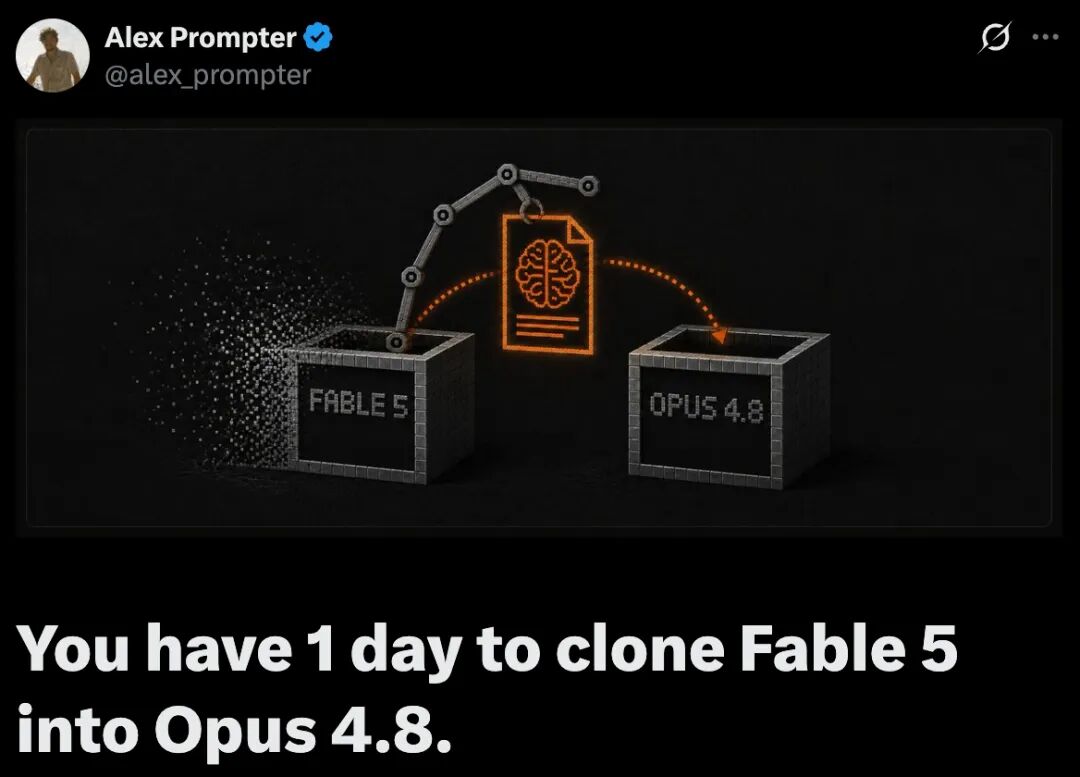
He shared a set of prompts that can extract Fable 5's unique "thinking patterns" and compile them into a usable, executable operation manual.
Then, use the Project instruction or system prompts via the API to port this manual over to Opus 4.8;
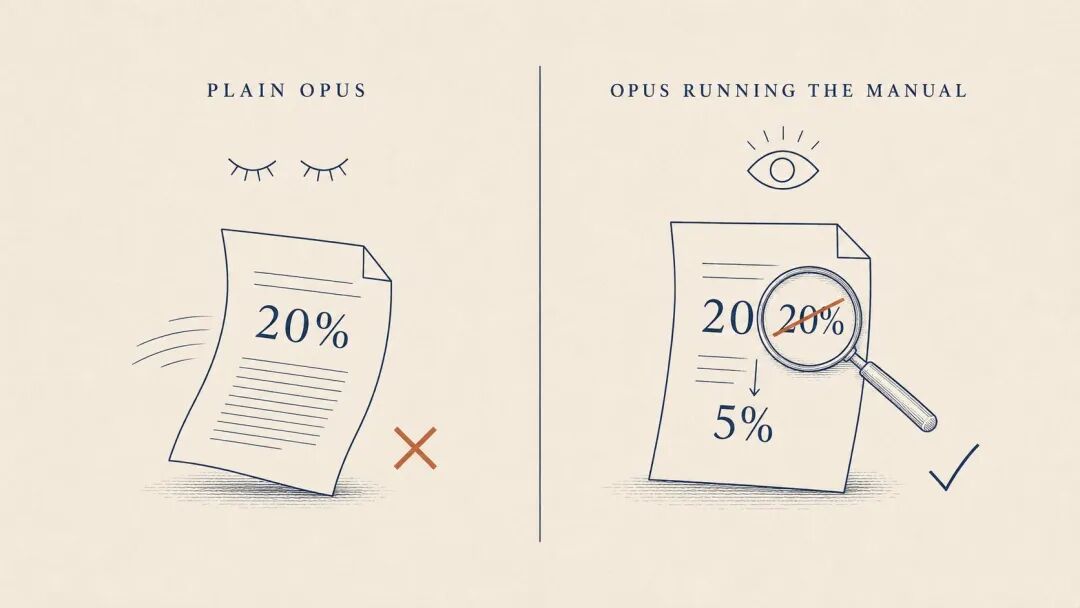
Finally, use a trick question that frames "5%" as "20%" to verify that the migration has taken effect properly.
Another developer, Machina, outlined five steps to fully extract all of Fable 5's accumulated knowledge, which are as follows:
1. Ask Fable to rewrite CLAUDE.md and all its custom skills;
2. Conduct a consultant-style business audit;
3. Break down in-depth research into atomic-level entries for your Obsidian knowledge base;
4. Use /goal and dynamic workflows to make full use of unattended processing time;
5. Install an additional skill that automatically records how the model processes its own reasoning.
The core logic is straightforward: you can extract more than 50,000 responses from a state-of-the-art frontier model to train a smaller model for a cost of less than $500. The leading model may be retired, but the trained "student" will remain operational permanently.

Anthropic Unveils Cost-Saving Usage Strategies
46% of the Cost Delivers a 92% Performance Boost
Just as users were complaining that "Fable 5 consumes credits far too quickly," Anthropic officially stepped forward to release two optimized system architectures —
Advisor Mode
Orchestrator Mode
In simple terms, this means letting the high-performance large model handle high-level guidance, while smaller, more efficient models carry out the bulk of the hands-on execution work.
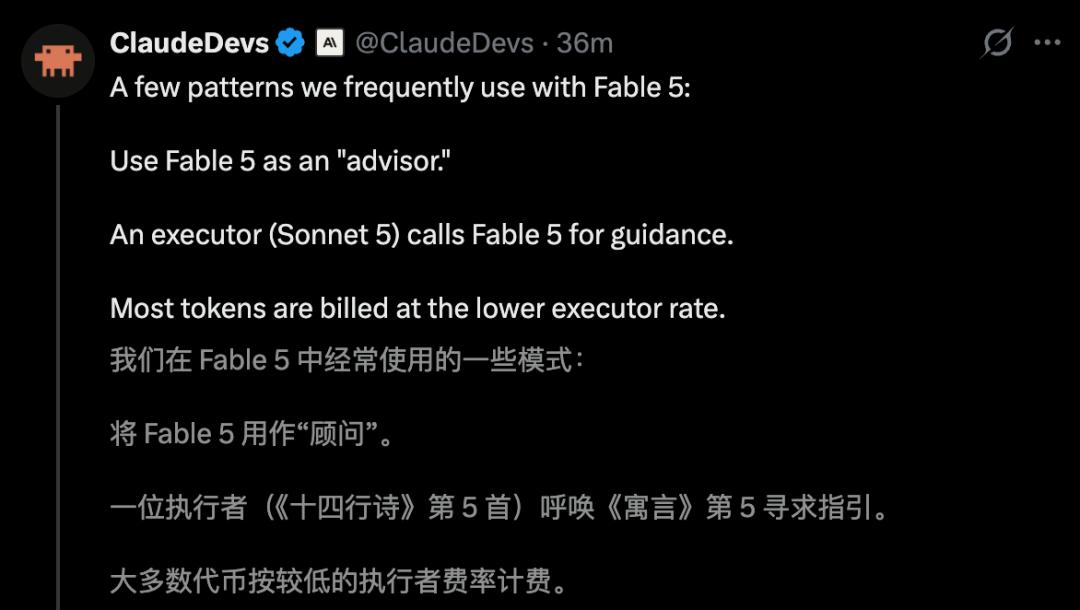
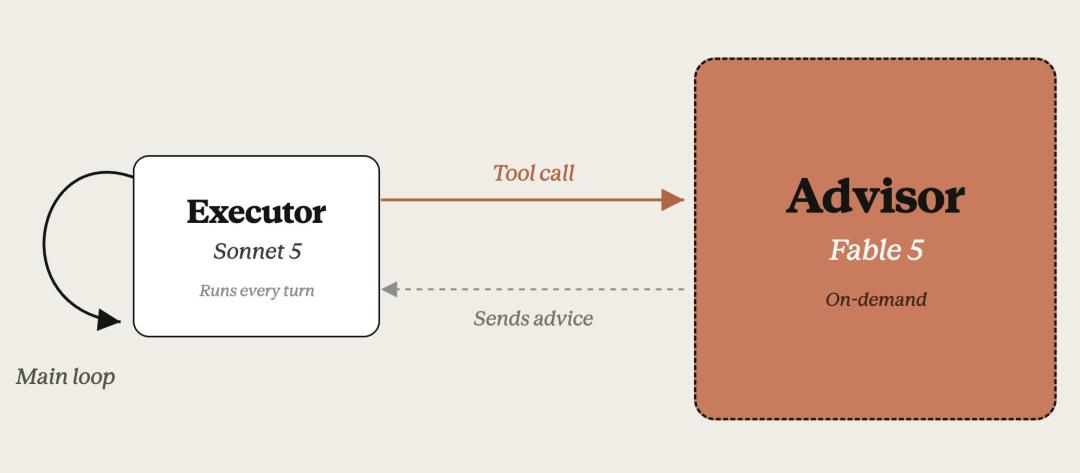
The first method is Advisor Mode.
Sonnet 5 acts as the primary execution model, and it only consults Fable 5 for guidance when it encounters critical, uncertain decision points.
The vast majority of tokens are billed at Sonnet 5's much lower rate.
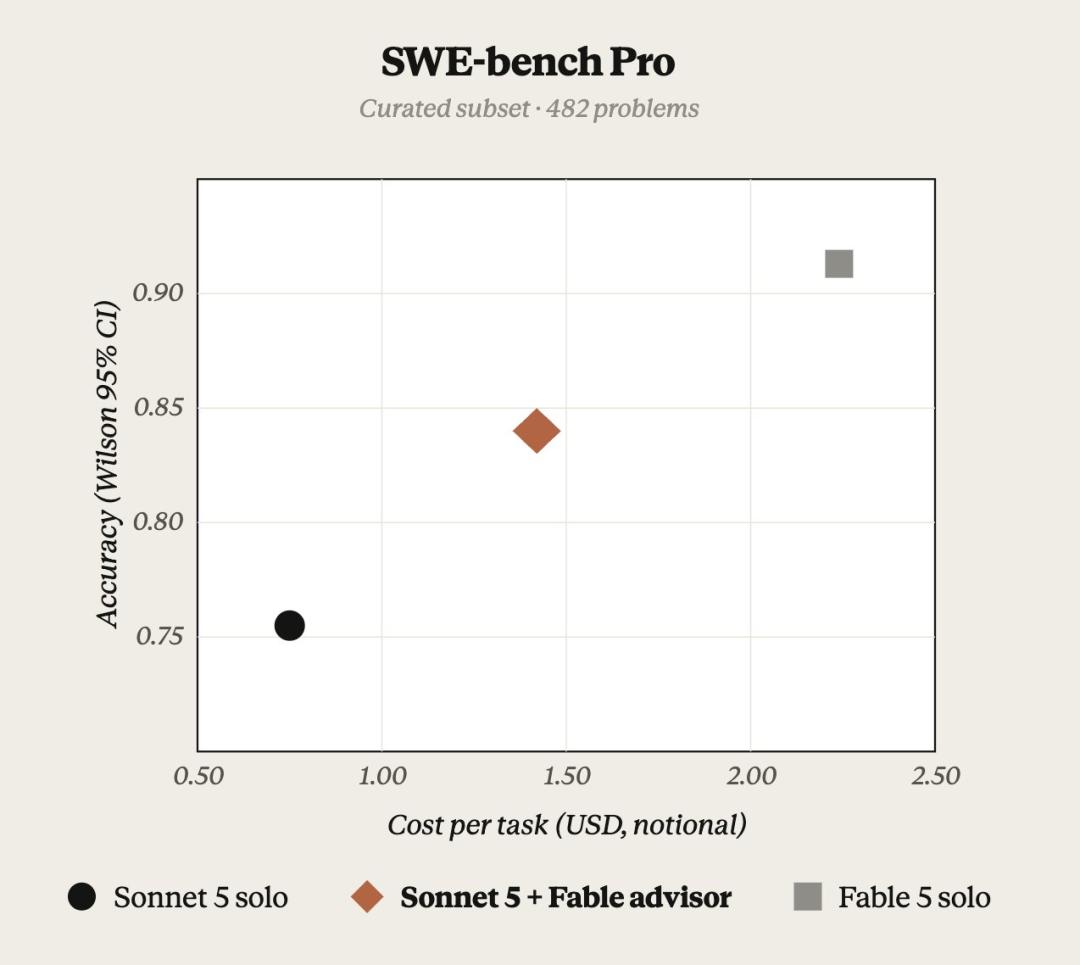
On rigorous coding benchmarks like SWE-bench Pro, the results are remarkably strong —
Pairing Sonnet 5 with Fable 5 as an advisor achieves approximately 92% of Fable 5's standalone performance, at only around 63% of the full cost.
Fable 5 is typically only called in once per entire task, to make high-level directional decisions at key forks in the workflow, while Sonnet 5 handles all the remaining heavy, repetitive work.
This is exactly what we mean by getting maximum value for minimal cost.
Anthropic has already documented this Advisor Mode in their official documentation, with a dedicated pre-built advisor tool that anyone can use to set up the workflow easily.
The logic is not complicated: within a single task, there are very few points that actually require high-level, complex judgment, while the vast majority of the work consists of straightforward, mechanical reading and writing operations.
By reserving the more expensive high-end model only for those rare critical moments, your total usage costs will naturally drop significantly.
The second method is Orchestrator Mode.
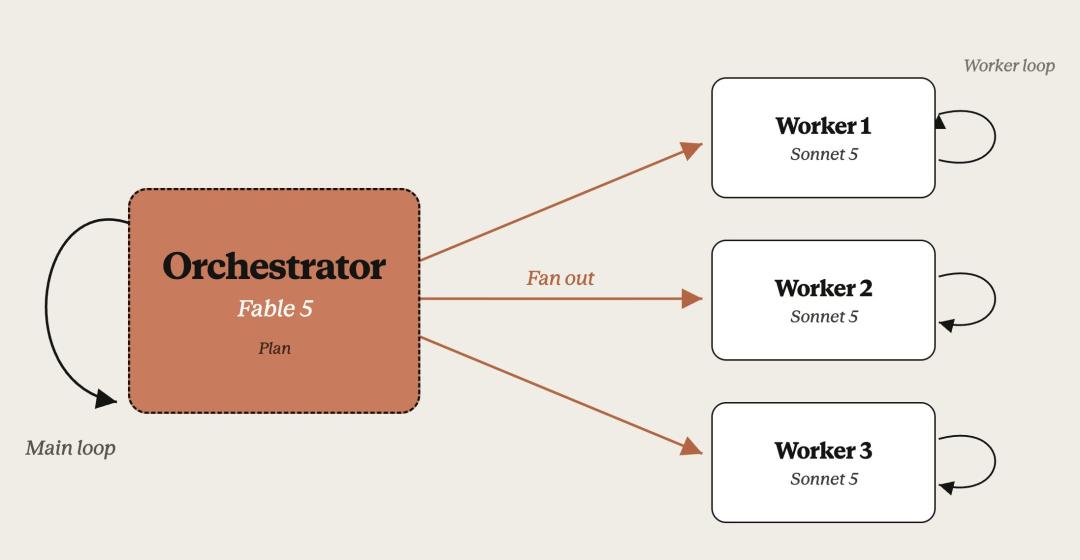
In this mode, Fable 5 takes on the role of a central commander, planning strategically, breaking down complex tasks, and delegating the execution work to subordinate Sonnet 5 sub-agents;
All token-heavy research tasks are offloaded to these more affordable sub-models.
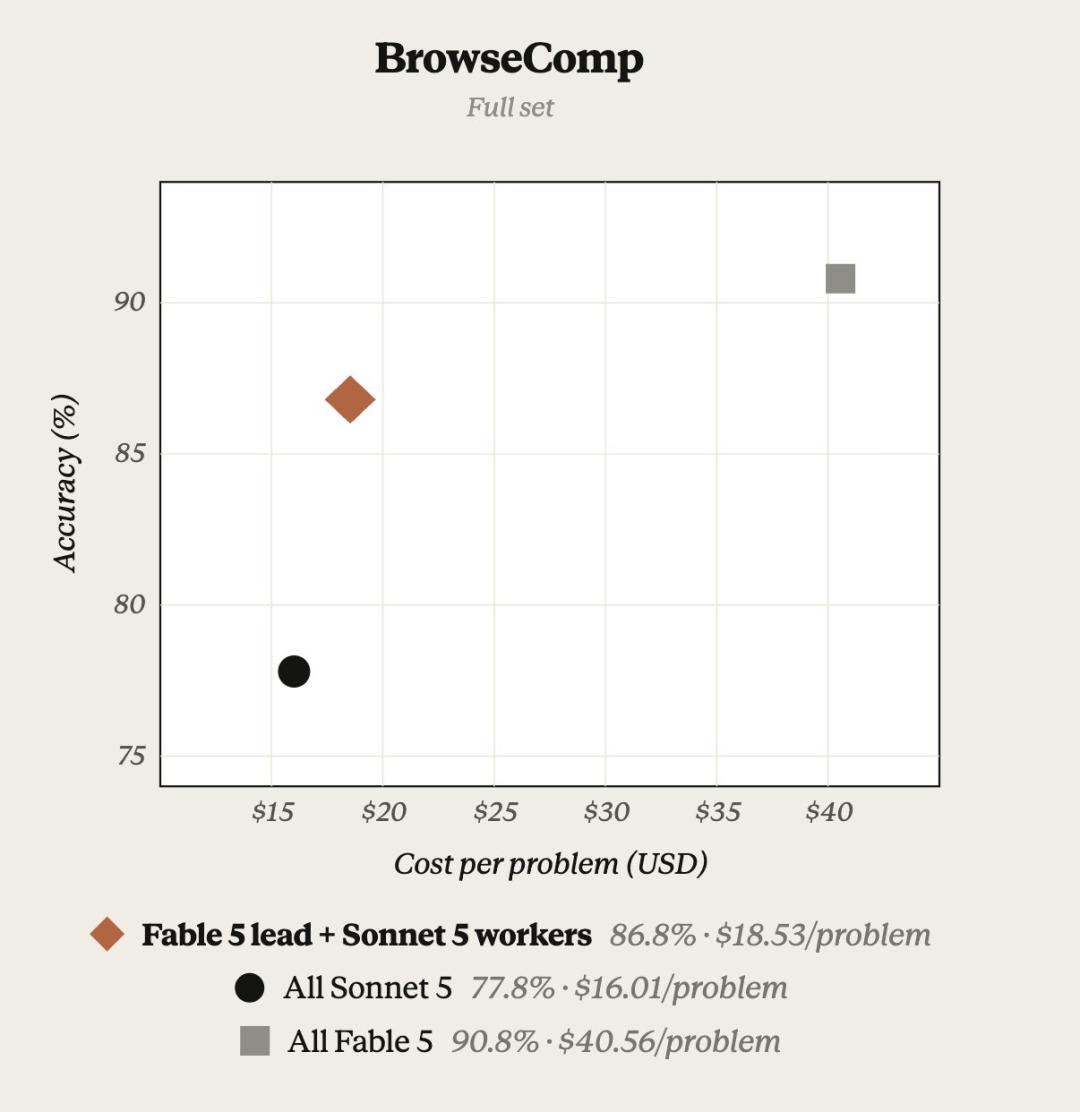
On the BrowseComp benchmark, which requires massive volumes of reading, this combination delivers outstanding performance —
The Fable 5 commander setup achieves 96% of the performance of Fable 5 running alone, while the total cost is reduced to an incredible 46%.
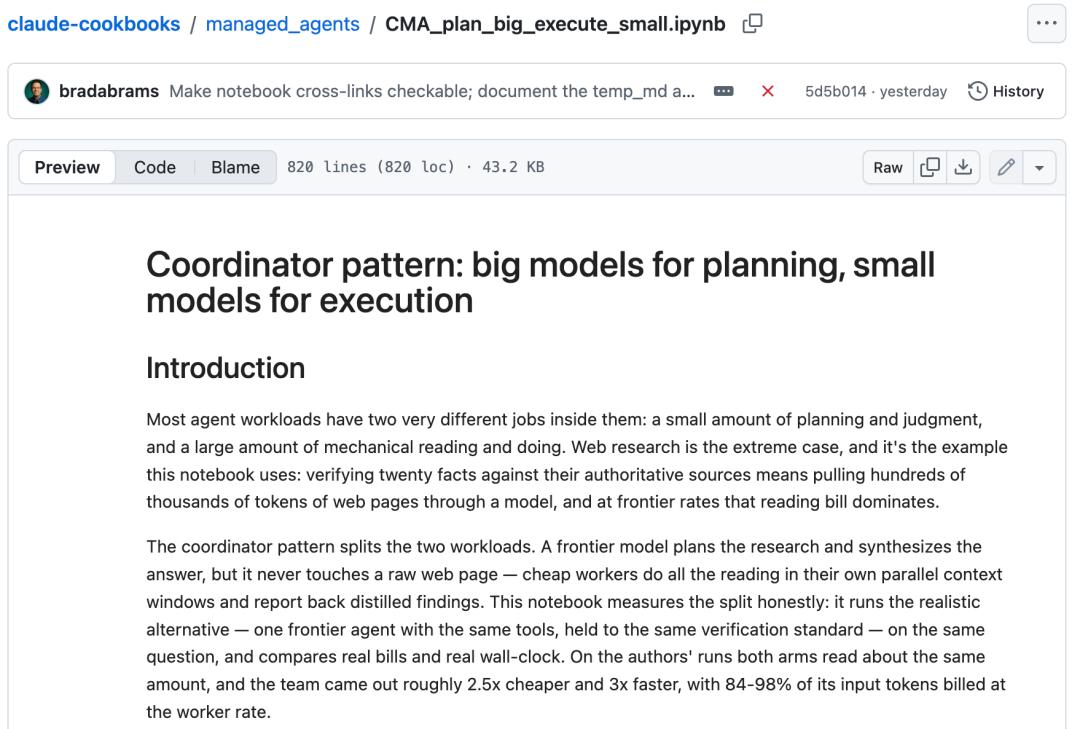
To make the cost savings even more concrete, Anthropic published a real-world usage bill in their Claude Cookbook.
The assigned task was to verify the entrance fees and reservation policies for 10 of the largest national parks in the United States, confirming 20 distinct facts, each of which had to be cross-checked against the official nps.gov website pages, with no answers allowed to be generated from memory.
This task is defined by heavy reading requirements: the vast majority of the cost comes from loading dozens of web pages into the model's context window.
Link: https://github.com/anthropics/claude-cookbooks/blob/main/managed_agents/CMA_plan_big_execute_small.ipynb
This is where the value of task division becomes crystal clear —
The Fable 5 commander handles all planning and final compilation, without ever directly processing a single web page itself;
Sonnet 5 sub-agents work in parallel to read web pages within their own individual context windows, then submit their summarized, refined findings back to the commander.
Under the exact same verification standards, the final costs break down as follows: the coordinated team setup costs a total of around $1.61; if a single Fable 5 had processed all 20 facts entirely on its own, the cost would jump to roughly $4.
The team approach is not only about 2.5 times cheaper, but also 3 times faster — completing the task in 194 seconds compared to 608 seconds, with over 80% of all tokens billed at the much lower worker model rate.
When you combine these two strategies, you'll see that Anthropic is essentially sending one unified message:
The correct way to use a top-tier flagship model is never to run the highest-performing model for every single step of the entire process.
Fable 5's free access window will close on July 12.
But the real game-changing value that Anthropic is offering during these days is not just letting users use their strongest model for free — it's teaching users hands-on how to keep using it affordably even after the free window ends.
Right now, the most cost-effective approach is to use Fable 5 as the high-level commander, paired with the low-cost Sonnet 5 models as dedicated worker agents!
References:
https://x.com/claudeai/status/2074548242386178258
https://support.claude.com/en/articles/15424964-claude-fable-5-promotional-access
https://x.com/ClaudeDevs/status/2074606058128224365?s=20
This article is from the WeChat public account "AI Era", author: ASI Insights, editor: Taozi, published by 36Kr with authorization.