With annual revenue surging over 8 times and being snapped up by Microsoft and Google: The rise of an AI research firm
Aaron Cannon is the founder and CEO of Outset. The company's revenue grew 8x last year, making it one of the fastest-growing AI companies in ABC's portfolio. More than 100 large enterprises are using Outset — leveraging AI-hosted interviews to understand their customers.
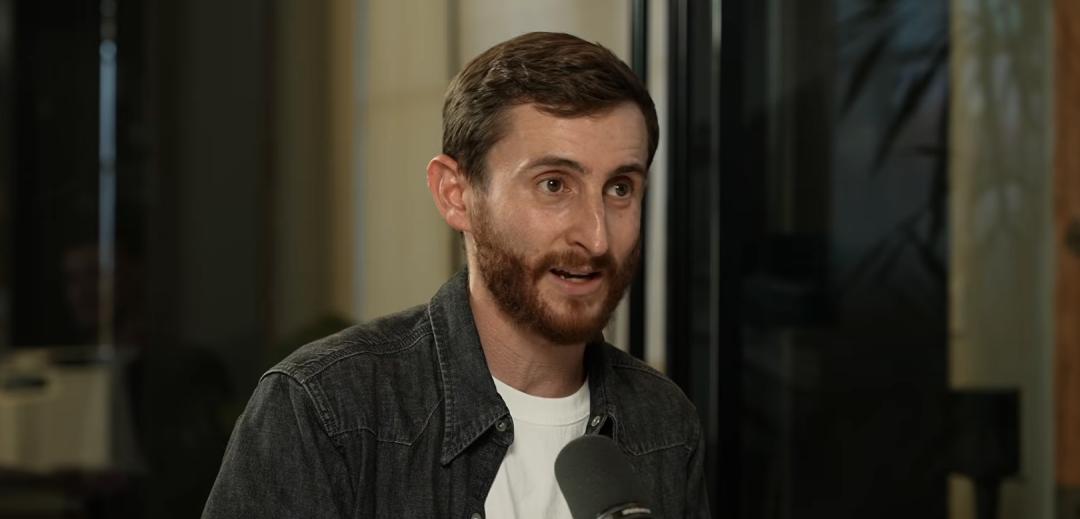
From VP of Product to founder, from the education market to explosive demand, Aaron's story chronicles how an AI startup seized the moment's opportunities, built a strong team, forged a unique culture, and — most importantly — solved a fundamental industry problem at exactly the right time.
Below is his full sharing from the latest exclusive interview.
1. Why Now?
Aaron's career spans research and the tech industry. He served as VP of Product at multiple tech companies until 2022, when large language models began to emerge — a moment that made him feel everything was about to change dramatically.
"I never started my own company until I had kids. That made me reset my perspective on my career: Are you really working for someone else, or are you building something that's yours?"
He is the quintessential "atypical founder" in Silicon Valley — not a 20-year-old genius who dropped out of school, but a "late-blooming" founder with years of industry experience who took action at the perfect moment.
"Being able to walk into a room and be taken seriously, having credibility, and being able to talk to executives as an equal — those things are incredibly valuable. I used to sit in their seats, so I know exactly what information they need about their customers to do their jobs well."
Co-founder Michael has an unexpected background: he was a professional firefighter who fought wildfires, and he also built Watch Duty, California's most popular wildfire tracking app.
"He's incredibly tough, and he's the best engineer in the company. He brings the principles he learned from firefighting into how we operate the company today. If we ever have to outperform others, or 'fight' with them, we're always on the right side," Aaron jokes.
More importantly, the two are perfectly complementary: "I've always been driven more by 'what could go right, what might work out,' while Michael is driven by 'what could go wrong.' It's incredibly valuable for a company to have both perspectives at the same time."
2. What Problem Does Outset Solve?
Aaron opens with a simple observation: "Research underpins almost everything we interact with in the world."
Billions of survey responses are completed every year, but they represent the lowest-quality data you can imagine. "You're just clicking buttons. That's not the voice of the user — that's just someone checking a box to finish a task."
The alternative is one-on-one interviews — deep, insightful, but completely unscalable. "You only have 24 hours in a day, and you're just one person."
This is the fundamental tradeoff: low-quality but massive scale (surveys), or high-quality but zero scale (human interviews).
Outset's core breakthrough is using AI as an interview host to conduct deep one-on-one conversations with users. It can have real dialogues — asking follow-ups, responding, and digging deeper — but it can scale infinitely.
"If you can get that level of interview depth with AI, and scale it infinitely, that's an obvious opportunity to become much smarter."
3. Why Are AI Interviews More Effective Than Human Interviews?
Aaron mentions a counterintuitive finding: "People actually share things with AI that they would never share with another human being."
There's a psychological concept behind this called "social desirability bias": when you talk to a real person, you want to make a good impression, so you shape your answers in a certain way.
"Political polls have massive biases because a lot of people won't admit they voted for Trump in certain scenarios. They want to be seen as someone who voted for Obama, even when they didn't."
AI interviews eliminate that pressure. "There's no one to impress, no one you need to please." This leads to far more honest, deeper insights.
4. How Do You Get Big Enterprise Customers to Trust You?
Outset's client list is impressive: Microsoft, Nestlé, Google, Uber. How does a startup win the trust of these global giants?
Aaron admits it's tough: "Enterprises move slowly, technology moves extremely fast, and people want to keep their jobs — you're dealing with three different speeds at once."
Their strategy is highly consultative. "We realized we weren't just replacing something — we were introducing a whole new behavior. Selling a new behavior is far more complex."
They even deploy researchers inside their clients' companies. "We're putting experts out in the field — professional researchers — to teach them what they could never do before with AI."
The key is that once the market is educated, demand becomes self-sustaining. "Over the last 18 months, the market has shifted from being default-skeptical and needing to be educated, to recognizing that this is the killer AI app for insights and research."
5. AI Doesn't Replace Researchers — It Empowers Them
Aaron emphasizes a core principle: Outset's mission is to empower researchers, not replace them.
"People tend to imagine this as an automation game, but that's not the case. Customer support is a static demand — you have a fixed number of tickets, you automate n% of them, and the goal is to get that number as high as possible."
"But in our case, demand isn't static. If we can bend the economic curve, we can do way more research."
"If you can do enough research to drive material changes in sales, you'll invest more in R&D — because it becomes a growth engine, not a cost center."
Researchers will have a different role in the future — they won't be doing tons of repetitive execution work. Instead, they'll either build the infrastructure to create a company-wide pipeline for listening to customers, or act as methodology experts to interpret data deeply.
"What we're building is self-driving research. Research shouldn't need a human to steer it the whole time — humans are the decision-makers in the loop."
6. Synthetic Research: Simulating Humans, Not Replacing Them
On the hot topic of "synthetic research" (using AI to simulate people for research), Aaron's view is very pragmatic:
"Humans are incredibly weird creatures. We evolve fast, we change our minds, things get trendy and then they disappear."
He believes the best use of synthetic research is to complement real human research. "You use human research to build a synthetic profile of someone. The more you work on that digital twin, the more it tells you 'what we don't know' — and then you go talk to a real person to find out."
"That creates a virtuous cycle. I don't need to call Jack every week to get the latest updates. But the real Jack validates the answers from the digital twin, and that loop will never go away."
7. Rapid Growth and a Unique Culture
Outset's revenue grew 8x last year, and the team expanded from 40 people to around 75.
How do you preserve culture during such rapid growth?
Aaron's view is clear: "One of my life missions is to prove that you can be an incredibly focused, ambitious, high-performing company without being a jerk."
Here's their approach:
First, extreme focus on the candidate experience. The co-founders meet every single candidate in person. "Our offer acceptance rate is over 80%, and we've beaten labs that offer multi-million dollar compensation packages."
Second, zero-regret attrition. "Since the company was founded, not a single person has left with regrets about their time here."
Third, extreme aversion to "management overhead." "Anything that feels like management overhead gets put under a microscope. Everyone is building, selling, supporting — that's pure business."
Fourth, no bureaucratic grouping. "We have more than 25 engineers. The traditional approach would be to split them into small teams — but we don't do that. We identify the most important projects for the next two weeks, and people gravitate toward them."
Fifth, rapid onboarding. "We don't have a month-long onboarding process. No big meetings where you have to sit through an entire day. Pass security training, and you're already doing your job."
8. What Makes Him Optimistic?
The standard closing question on the podcast was: "What makes you optimistic about the next 10 years in America?"
Aaron's answer: "When you truly understand what people need, what becomes possible? Think about the patient experience in hospitals — it's terrible, and everyone knows it. But figuring out 'why' and 'what' is incredibly hard."
"I love thinking about my kid — when he grows up, he won't get frustrated because digital products don't work the way they're supposed to. Things will actually align with people. This goes way beyond the products you buy — I'm talking about real experiences, healthcare, education. The truly important things in the world should get better."
"And we can help make that happen."
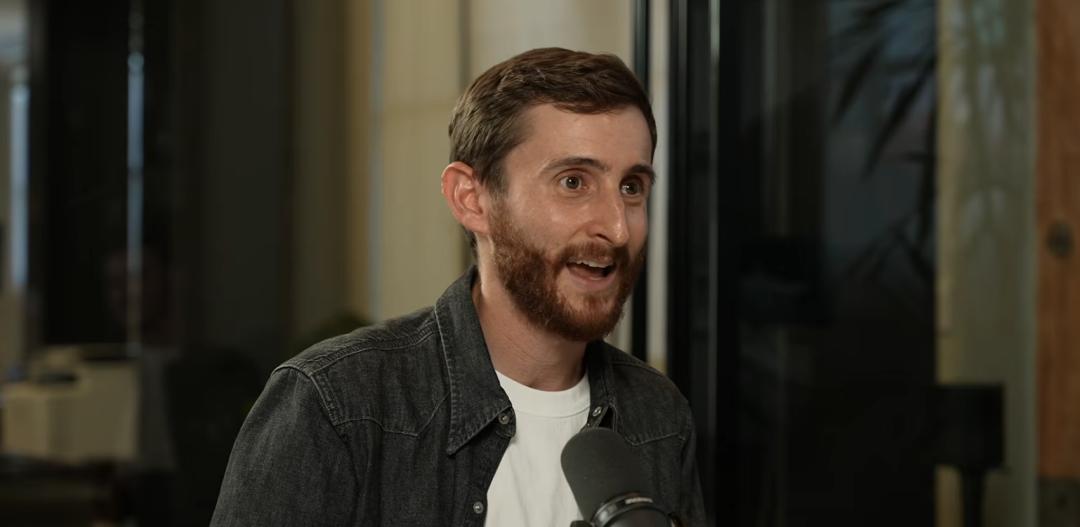
From the education market to defining a new category, from convincing industry giants to empowering researchers, Outset's story is not just the growth path of an AI company — it's a case study of how technology can solve fundamental human problems. When Aaron says "research underpins everything we interact with in the world," what he really means is: if we can better understand what people want, we can build a better world. And he's building the infrastructure to make that happen.
This article is from the WeChat public account "Postwave Evolution Planet", author: Mark, published with authorization from 36Kr.