AI assistant is a pseudo-proposition
In June this year, Zhipu AI and Minimax were successively included in the Hang Seng Tech Index, and JPMorgan Chase issued diametrically opposite ratings for the two companies in its report [1]:
It raised Zhipu AI's target price to HK$1400 and reiterated its "overweight" rating, while downgrading Minimax to "neutral" and slashing its target price directly from HK$1100 to HK$400.
Zhipu AI and Minimax landed on the Hong Kong stock market one after another and are often discussed side by side. After their listings, the two companies had comparable market capitalizations, but their fortunes diverged sharply in April this year.
Zhipu AI's market value skyrocketed, once exceeding one trillion Hong Kong dollars, and has now fallen back to over 700 billion, roughly equivalent to half of Alibaba's market cap; Minimax, by contrast, has slid all the way to just over 100 billion, almost returning to its post-listing starting point.
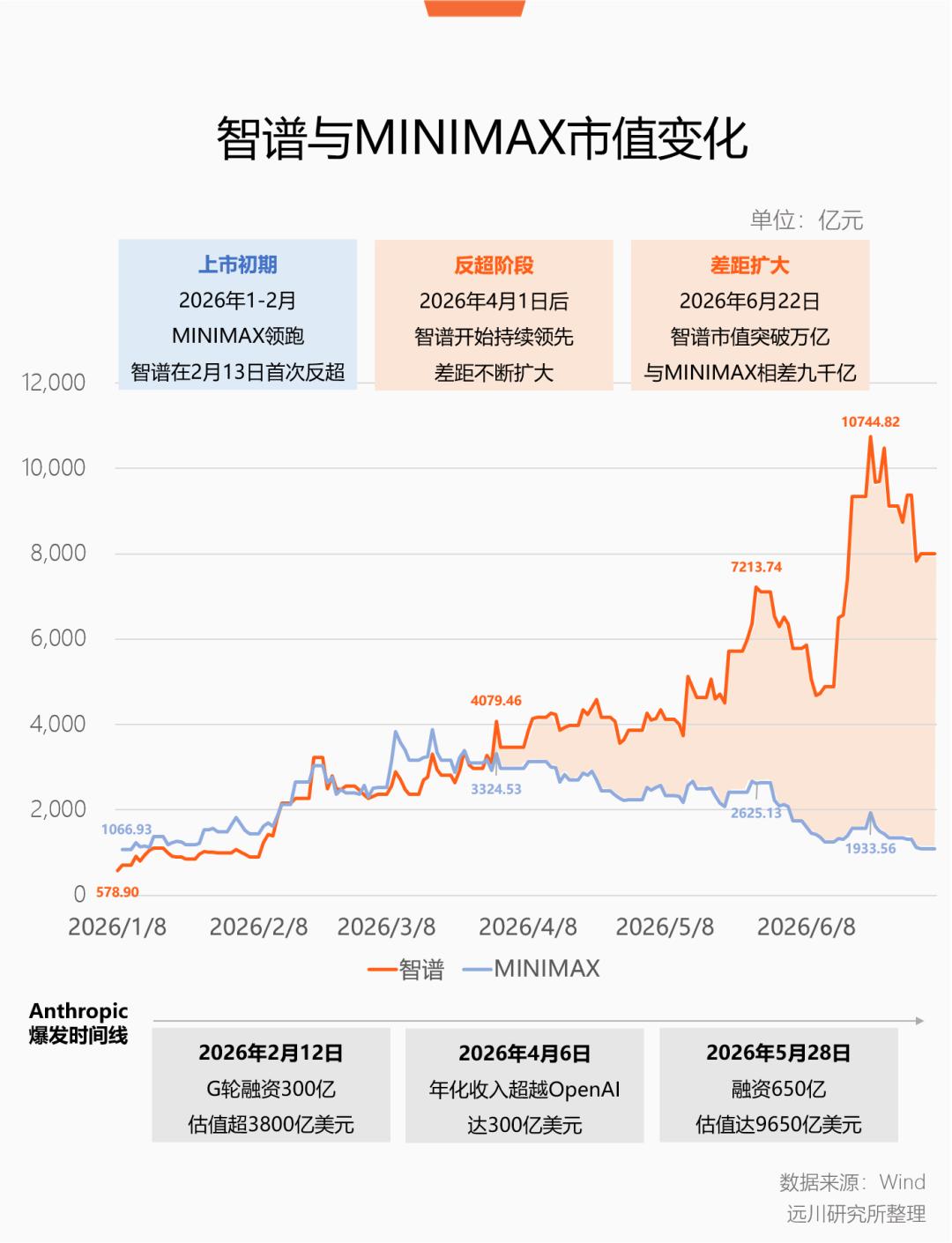
It's not that you begrudge your brother's hardships, but that you resent him driving a luxury Land Rover while you struggle. There have been no fundamental changes to the underlying business fundamentals of the two companies, yet the capital market's valuation logic has clearly undergone a dramatic shift.
What Kind of Model Are You Building?
The trigger for JPMorgan Chase's completely divergent ratings on Zhipu AI and Minimax was the starkly different market reactions to the two firms' model price adjustments.
In June this year, Minimax announced a price hike, setting its flagship M3 model at roughly double the price of its predecessor M2.7, which successfully alienated a large number of users. Just one week later, Minimax announced a permanent 50% price cut, rolling back to levels close to the M2.7 pricing.
By contrast, Zhipu AI's price increases were well received by the market. Since the start of this year, Zhipu AI has nearly doubled its API prices. After the release of GLM-5.2, Zhipu AI removed API discounts for older model versions, yet model usage volume has continued to grow steadily.
JPMorgan Chase subsequently concluded: Model capabilities are strongly correlated with pricing power, and companies that are forced to cut prices are inherently in a weaker position.
While the two companies are frequently compared, their operational strategies are fundamentally distinct.
Minimax focuses primarily on C-end AI-native applications, with products including the Minimax Agent, Hailuo AI, Talkie, and Stellar Field mobile apps. Zhipu AI, on the other hand, has bet heavily on the B-end, deriving its revenue from enterprise-grade large models/agents, open platforms, and API services.
In many respects, the two companies represent two core directions for AI firms: one that monetizes directly from C-end consumers, and another that generates revenue by selling to enterprise decision-makers.
The market's sharply different assessments of the two companies imply an underlying assumption: C-end users are not nearly as valuable as many once believed.
The C-End User Path Is Narrowing
During this year's Spring Festival, the AI industry battle overshadowed the stock market's "4000-point defense campaign". Alibaba's Tongyi Qianwen poured 3 billion yuan in cash subsidies, Tencent's Yuanbao red envelopes went viral across group chats, and ByteDance's Doubao made high-profile appearances on the Spring Festival Gala.
Doubao emerged as the undisputed biggest winner of the period, but the costs of that victory are now becoming apparent.
According to official statistics from ByteDance's Volcano Engine division, in March 2026, Doubao's large model exceeded 120 trillion daily average Token calls. For context, the daily average usage in May 2024 was only 120 billion — representing a 1000-fold increase in just two years.
Exact revenue growth for the model over the same period is not publicly available, but it is certain to have fallen far short of that 1000-fold growth rate.
At that time, major domestic tech firms were still adhering to the "entry point" narrative. Traditional internet products could generate profits from C-end consumers based on two extremely critical prerequisites.
First, there was an extremely strong marginal cost effect. After reaching a certain user scale threshold, the cost of serving one additional user became nearly zero. For example, once content was produced, it could be redistributed repeatedly, and as user volume grew, the resulting traffic could effectively amortize fixed costs.
Second, there were multiple viable monetization channels. It did not matter if users did not pay directly; as long as users spent long periods interacting with the product, there were abundant monetization methods like advertising and e-commerce integration available.
But large language models generate corresponding costs for every individual user served, and a massive user base creates enormous cost pressure. Lacking mature monetization channels such as advertising, free users become a pure operational cost burden.
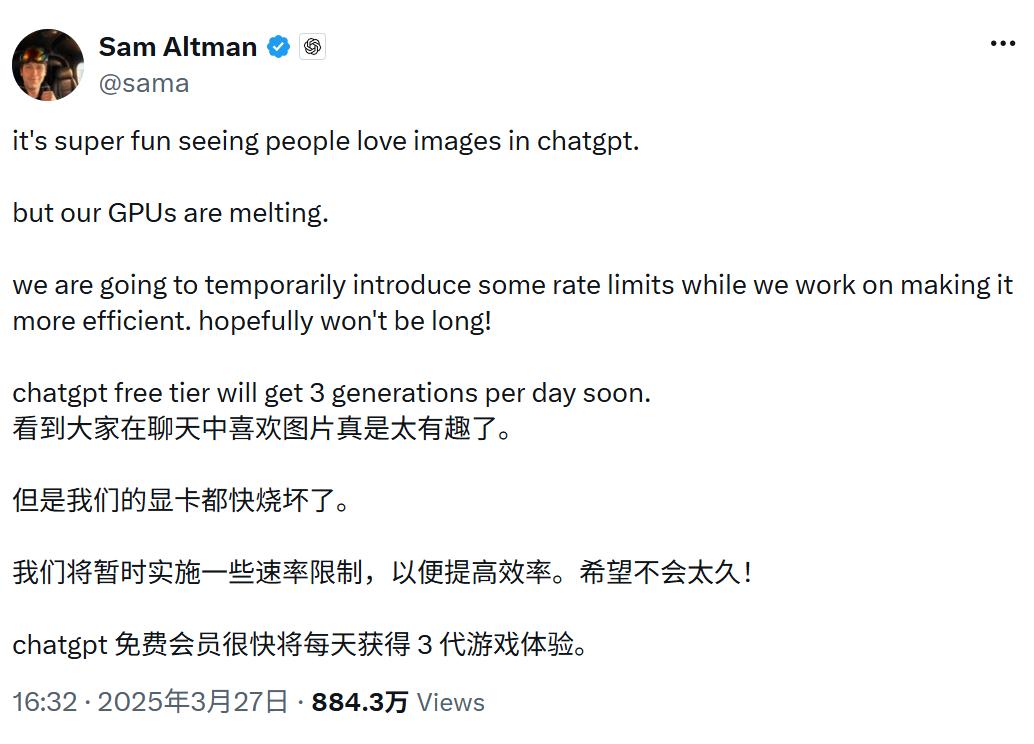
In March 2025, ChatGPT's image generation model went viral, with 130 million users generating 700 million images in a single week. This forced OpenAI CEO Sam Altman to post on Twitter complaining about the soaring computing power costs. By the first quarter of this year, for every $1 of revenue OpenAI generated, it was losing $1.22 [6], a problem directly caused by its excessively large user base.
Currently, ChatGPT's weekly active users exceed 900 million, with total paid subscribers surpassing 50 million. Based on these figures, its paid conversion rate is only 5% — lower than iQiyi's, and even lower than that of Zhihu.
According to statistics from RevenueCat, while the revenue contribution per paid user for AI apps is 41% higher than that of non-AI apps, user churn rates are also 30% faster [7]. Earlier this year, Sam Altman stated that he was considering testing advertising features in ChatGPT's free and Go tiers, because the vast majority of users are unwilling to pay for the service.
While large model companies were struggling with these challenges, Anthropic successfully demonstrated that by combining powerful models with high commercial value use cases, even a small user base can generate massive revenue:
Claude's suite of products has less than 5% of ChatGPT's daily active users, yet Anthropic's annualized revenue surpassed OpenAI's in April, entirely because the programming market segment delivers extremely high commercial value.
In February this year, Anthropic completed a $30 billion financing round, followed by another $650 billion round in May. In less than four months, the company's valuation jumped from $380 billion to $9650 billion. This single-handedly reshaped the capital market's valuation logic for AI companies, and showed a clear path to profitability for peers worldwide.
Productivity Scenarios Are the Only Viable Path
As the 4.5 billion yuan Spring Festival red envelope war came to an end, two significant events unfolded simultaneously.
First, OpenClaw was launched, and immediately gained widespread popularity among knowledge workers who quickly adopted it.
Second, Anthropic experienced explosive growth, with Claude Code exceeding $1 billion in annualized revenue within just six months [8], establishing Anthropic as the benchmark for AI coding tools.
Both developments point directly to productivity-focused use cases. The key to AI monetization is not helping users order bubble tea, but helping users get their work done. Model monetization paths have clearly converged around "productivity scenarios" including workflow integration, enterprise API consumption, and AI coding.
To use an imperfect but illustrative analogy:
Imagine you are selling surveillance cameras. C-end AI assistants are like selling cameras to parking lot operators — the cameras are depreciating assets that only generate thin, hard-earned profits. B-end programming and API services are like selling cameras to traffic management authorities — the cameras become productivity tools that capture violations and issue fines. As long as fine revenue covers the equipment investment, the business will consistently generate profits.
Which type of customer has stronger willingness and ability to pay is self-evident.
Large language models are prone to hallucinations, making paid conversion for chatbots extremely difficult, and there are almost no viable traffic monetization methods. AI assistants designed for shopping, ride-hailing, and food delivery have not delivered revolutionary experience improvements to date, and it remains questionable whether they even improve efficiency at all. Their commercialization prospects remain distant and uncertain.
By contrast, the transformation of B-end workflows by large models can be described as revolutionary. B-end applications represented by programming feature highly structured working methods and processes, which fall perfectly within the core strengths of large language models. More importantly, their return on investment can be clearly quantified.
According to estimates from Menlo Ventures [9], enterprise spending on generative AI reached $370 billion in 2025, with $190 billion of that flowing to the application layer. Within department-level AI expenditures, programming accounts for 55%, making it the single largest application scenario.
As a result, after concluding their battle for consumer market entry points, major tech firms are redirecting their heavy investment projects toward productivity scenarios.
In March this year, OpenAI deprioritized Sora and shifted its strategic focus to code development [10], concentrating resources to narrow its gap with Anthropic. Google has long pursued a native multi-modal strategy, but this came at the cost of falling behind comprehensively in coding capabilities. Once Claude began to dominate the coding space, Google also began concentrating resources to develop AI coding capabilities.
In China, Doubao launched a professional paid tier with access to the Doubao 2.1 Pro model. Its promotional messaging is very direct, highlighting that its flagship model has been upgraded across three key areas: coding, agents, and VLM — all of which are productivity-focused paid services.
Tencent has followed the same path. Although its WeChat AI assistant Xiaowei launched a high-profile public beta, this appears for now to be primarily a gesture responding to capital market expectations. Over the past quarter, the products Tencent has genuinely focused on promoting are WorkBuddy, CodeBuddy, and its enterprise-grade agent suite.
Tencent's official disclosures indicate that CodeBuddy is already used by over 95% of the company's engineers, reducing overall coding time by 40% [11].

Facts have proven that for large models to generate sustainable profits, the key is to get enterprise managers to willingly approve procurement invoices.
Delivering Market Reassurance
Elon Musk, widely regarded as a master of business strategy, ran the numbers in SpaceX's IPO filing:
The total future market size for AI applications will reach $28.5 trillion (excluding China and Russia), of which $2.4 trillion will go to infrastructure, and $22.7 trillion to enterprise applications. Even Musk, who is known for his bold projections, only estimated the C-end subscription and advertising market at $1.36 trillion — less than a small fraction of the enterprise-side market size.
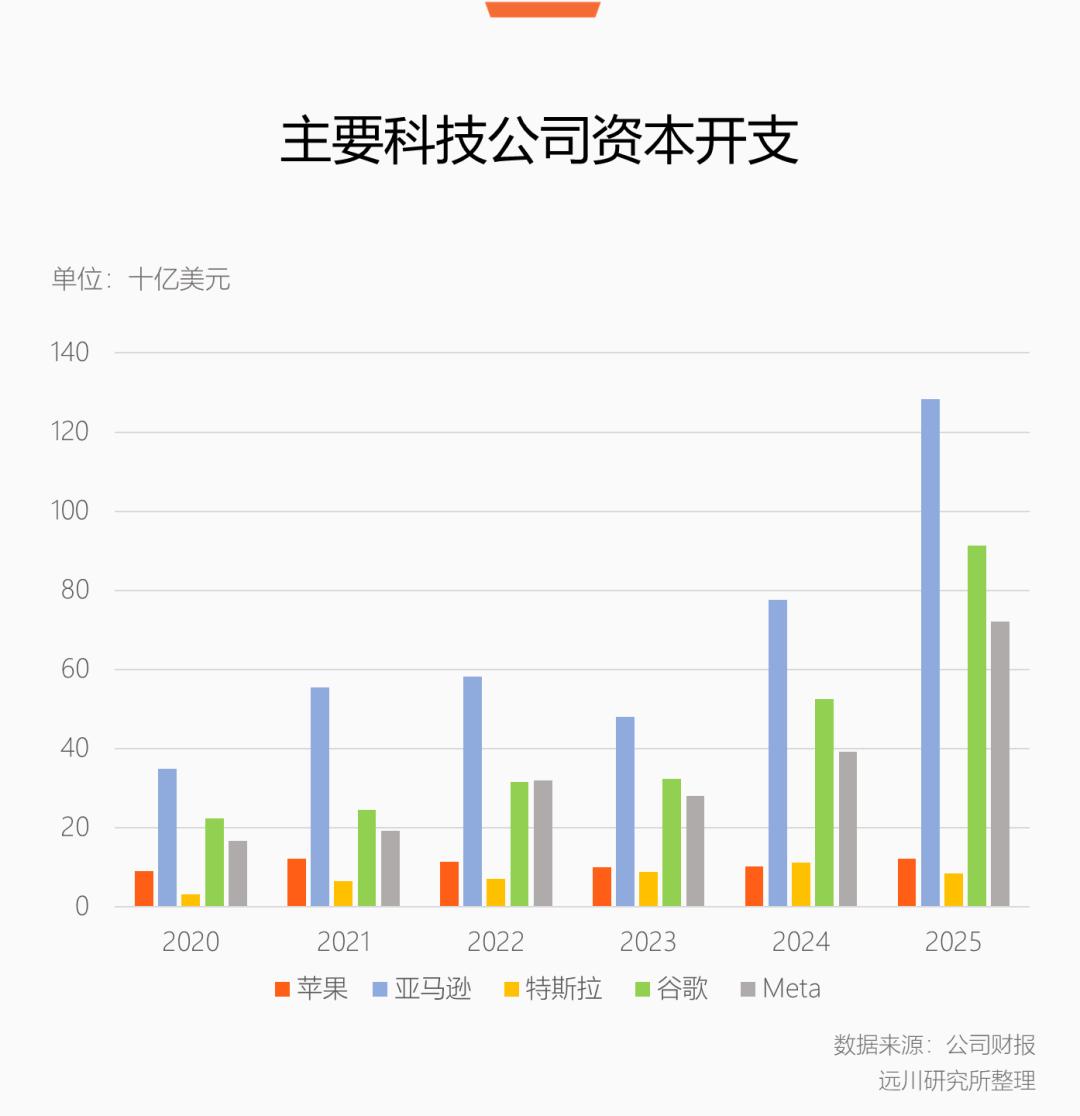
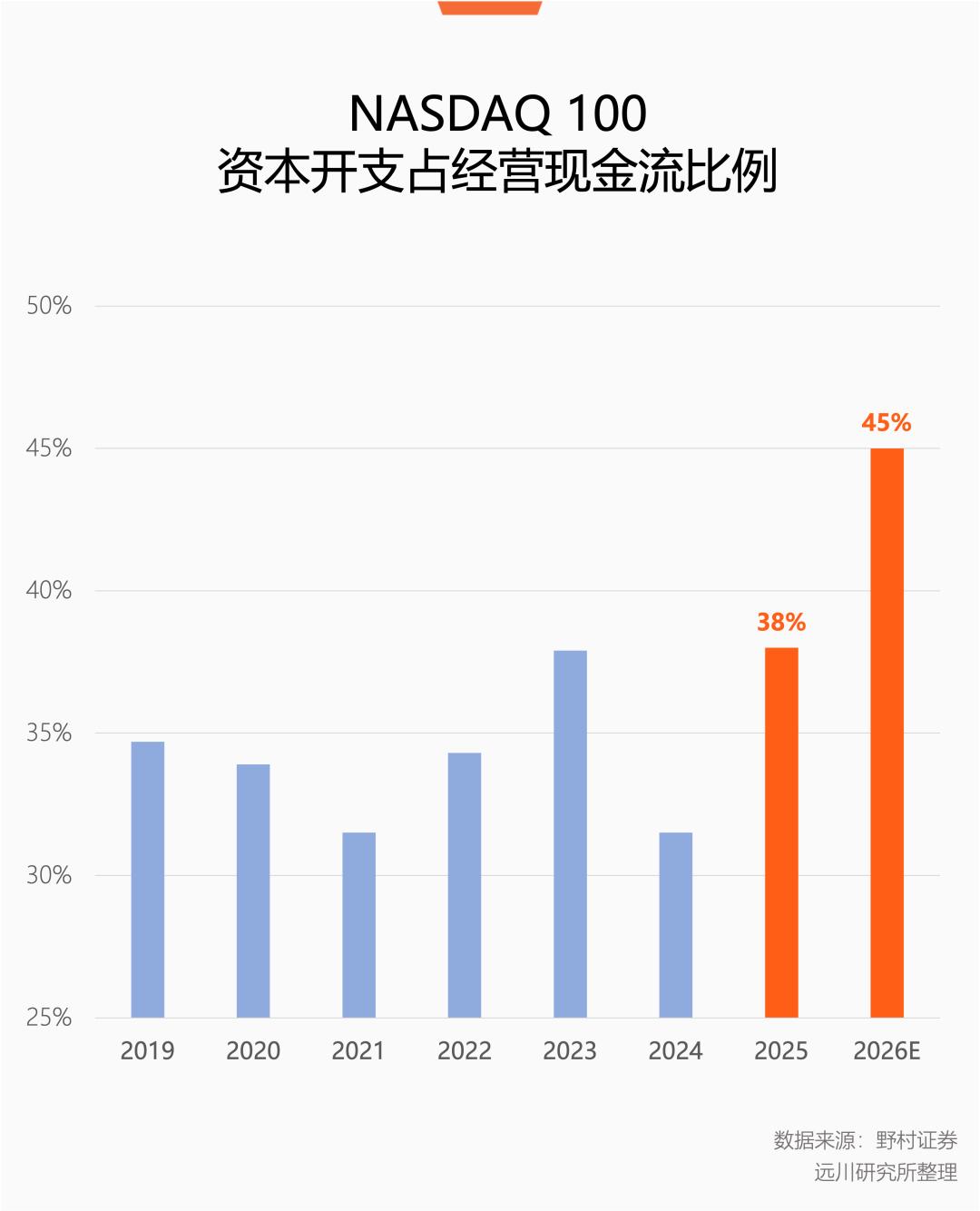
To train models and deliver cloud services, tech companies have unhesitatingly converted nearly all their available cash flow into GPUs, servers, and data centers. Capital expenditures have exploded across the industry, while operating cash flow has plummeted off a cliff.
Domestically, ByteDance's net profit dropped by 70%, Alibaba's free cash flow has turned negative, and even Tencent — long known for its conservative financial management — has drastically expanded its capital expenditures, as all major companies pour resources into AI infrastructure development.
In June, reports emerged that ByteDance was in talks with multiple banks to secure approximately $20 billion in new loans, to replenish funding for its AI infrastructure arms race [12]. This will be the largest offshore loan in ByteDance's history.
The trillion-dollar scale of upstream capital expenditures faces enormous depreciation pressure, and everyone in the industry needs a clear answer as to where the return on these massive investments will come from.
During Microsoft's fiscal 2026 Q3 earnings call, an analyst asked the ultimate question [13]: Everyone can see that AI demand is very strong, but the question is — who is going to pay for all of this?
Betting on productivity tools is not just a matter of monetization efficiency — it is also a deliberate move to deliver a credible reassurance to the capital market.
Compared to the countless vague future promises associated with the C-end market, productivity AI talks about paid seats, annual recurring revenue, KA enterprise customer orders, and usage-based billing — all of which sound far more concrete and reliable. Unlike C-end users who are generally reluctant to spend money, programmers show no hesitation when purchasing service credits and premium memberships.
A Meta employee built an internal leaderboard to track the company's Token consumption [15]. Within 30 days, total Token usage exceeded 60 trillion, and the top-ranked single user alone consumed 281 billion Tokens.
AI manufacturers have become highly skilled at expectation management. Microsoft is now emphasizing "Copilot paid seats", while Amazon and Oracle focus their messaging on AI cloud revenue and GPU utilization rates.
The most creative of all is Salesforce, which not only highlights ARR (Annual Recurring Revenue), but also coined a new conceptual metric comparable to a fully integrated ecosystem [14]: Agentic Work Units. Executives claim that the company has converted nearly 20 trillion tokens into 2.4 billion "moments where AI delivers tangible work outcomes".
As a result, high-tech companies are ramping up their procurement of model services, significantly improving operational efficiency. Yet employee payroll calculations are becoming increasingly unprofitable, leading to massive layoffs, while the remaining employees must prove they are highly proficient in using AI tools.
Employees, to avoid being laid off, are even willing to pay out of their own pockets for AI tools to demonstrate their productivity and keep their jobs.
Large language models are finally generating considerable returns — though the entire dynamic looks somewhat strange and counterintuitive.
References
[1] Zhipu AI: Mature intelligence deflates pricing, but GLM-5.2 shows frontier upgrades can do the opposite; OW, JPMorgan Chase
[2] Zhipu AI: The Rising Large Model Giant, China Merchants Securities
[3] China's AI Industry: Ten Questions for Investors, JPMorgan Chase
[4] Minimax Financial Statements
[5] Zhipu AI Financial Statements
[6] Doubao to Launch Paid Services, Domestic Large Models Begin Calculating Profitability, Cailian Press
[7] State of Subscription Apps 2026, RevenueCat
[8] Anthropic acquires Bun as Claude Code reaches $1B milestone, Anthrop