The rebirth of spatial computing: Apple's past push ended in failure, and AI is making AR glasses great again
AR glasses are finally starting to feel like proper AR glasses again.
Not long ago, Leikeji attended the Rokid Open Day 2026, where the next-generation spatial computer Rokid AR was unveiled in advance. Based on official announcements and what Leikeji observed, the Rokid AR continues to use a split design, with the computing end powered by a platform at the level of the 5th-generation Snapdragon 8 Elite, supporting full 6DoF spatial positioning.
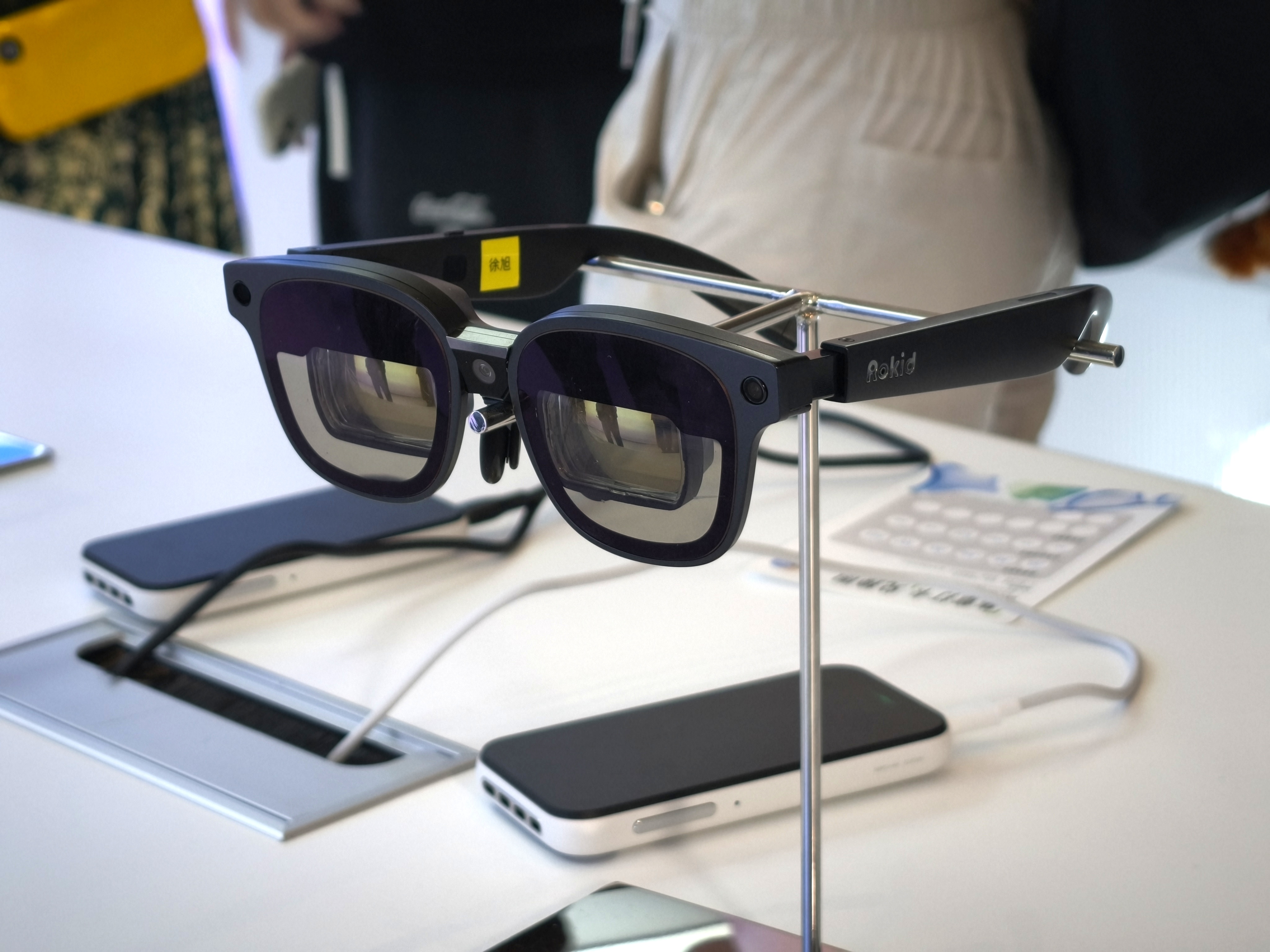
Rokid AR prototype at the Open Day site, Image source: Leikeji
Rokid even separates the "spatial camera" and the "AI camera": the former handles position and environment perception, while the latter is responsible for understanding what the user is looking at. Paired with a spatial computing co-processor, the glasses can also run spatial content like 4D Gaussian Splatting.
But this shift isn't unique to Rokid.
At the end of 2024, XREAL launched the One series, integrating native 3DoF directly into the glasses with its self-developed X1 chip. In 2025, VITURE unveiled the Beast, which later also added native 3DoF on the glasses side. This past May, TCL RayNeo released the GT and GT Max, which similarly incorporated an independent spatial computing chip and native 3DoF.
Additionally, the XREAL One Pro can even support further 6DoF with an added camera, and the VITURE Luma Ultra has already used environmental cameras to explore full spatial positioning.
A quick explanation here: 0DoF means the image stays fixed at the center of the field of view; 3DoF can recognize the head's up/down, left/right, and tilt rotation, allowing the screen to stay in a specific direction; 6DoF goes a step further and can detect the user's forward/backward, left/right, and up/down movements.
In just two years, almost all major consumer AR glasses manufacturers have been moving toward spatial positioning.
This situation is somewhat unusual. A few years prior, the entire consumer AR glasses industry was doing the exact opposite: removing cameras, abandoning full spatial perception, stepping away from complex AR applications, and focusing more energy on portable virtual large-screen displays—essentially acting as a dedicated "display."
After going full circle, not only 3DoF but even 6DoF is making a comeback.
AR Glasses Once Voluntarily Abandoned AR
Consumer AR glasses didn't lack ambition for spatial computing in the early days.
The Nreal Light (Nreal was later renamed XREAL), unveiled in 2019, was already equipped with environmental perception cameras and supported 6DoF positioning. After putting on the glasses, users could pin digital objects in the room, walk closer, step back, or move around to observe them. Microsoft HoloLens and Magic Leap went even further, with full capabilities for spatial scanning, gesture interaction, and environment understanding.
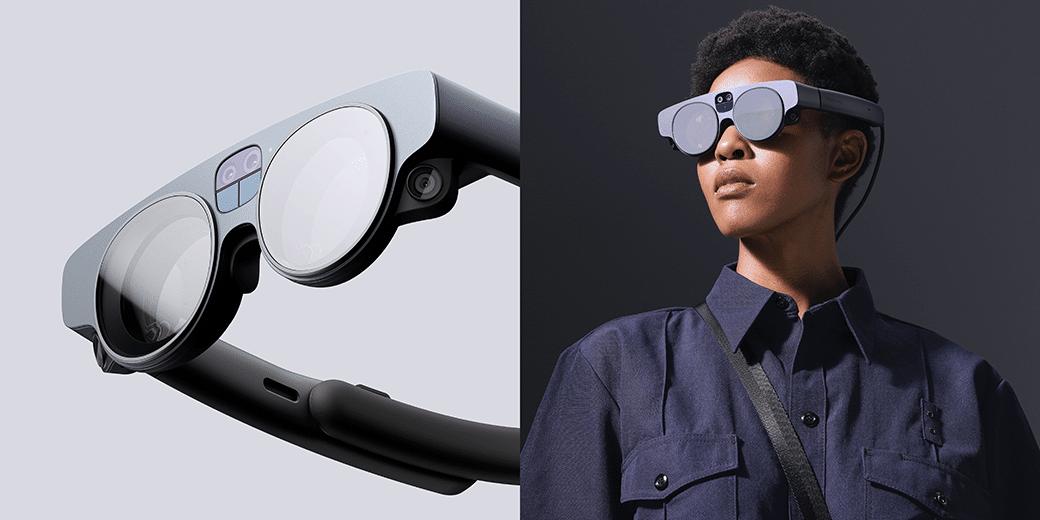
Magic Leap 2, Image source: Magic Leap
The product soon ran into real-world limitations.
Full 6DoF requires cameras, an IMU, SLAM algorithms, and a continuously running computing platform. The cameras need to observe the environment, the chip must determine in real time where the user is, which direction their head is facing, and where the digital content should be placed. Translated to the product, this means higher power consumption, more noticeable heat generation, a more complex structure, and greater difficulty in keeping weight and price down.
An even bigger problem is the content ecosystem. Mobile apps can be directly adapted to a 2D screen, but they can't be ported as-is into 3D space. Developers have to redesign interfaces, interactions, and content, yet after users buy the glasses, they can barely find a few spatial apps worth using long-term.
The tech demos looked cool, but no one knew what to actually use it for.
So starting around 2021, consumer AR glasses collectively began streamlining features. The Nreal Air, released after the Nreal Light, removed full environmental perception, shifting focus to Micro-OLED, Birdbath optics, and USB-C video input. Subsequent products like the Rokid Max, TCL RayNeo Air, and VITURE One followed a similar path:
No longer obsessing over mapping rooms, or trying to recognize tables, chairs, and walls. Plug in a phone, computer, Switch, or Steam Deck, and a 100-200 inch virtual screen appears right in front of you.

Image source: TCL RayNeo
Simple, direct, and genuinely useful. On planes, high-speed trains, and in hotels, users don't need to carry a physical display, nor do they have to completely block out reality like with VR headsets. Video platforms, console games, and computer desktops are all ready-made content, with no need to wait for a so-called "spatial ecosystem" to develop from scratch.
To be fair, this deliberate step back allowed consumer AR glasses to finally find a marketable position.
The tradeoff is that many so-called AR glasses no longer have much to do with actual AR. The image stays fixed at the center of the user's field of view, following wherever their head turns. The glasses can't perceive the real space, nor do they know which direction the screen should remain in. Strictly speaking, they're closer to head-mounted displays, even though manufacturers and the market still prefer to call them AR glasses.
Even 3DoF wasn't a default capability for a long time.
6DoF Spatial Positioning Is Making a Comeback
For a pair of glasses primarily used for watching videos, 3DoF is already very important. It determines whether the user is "looking at a screen in front of them" or facing an image that's always stuck right up to their face. So even as the industry settled on a product positioning focused on viewing displays, 3DoF never completely disappeared.
Over the past two years, 3DoF has re-established itself as a standard feature on many consumer AR glasses. The XREAL One, VITURE Beast, and TCL RayNeo GT series all integrated spatial screen stabilization directly into the glasses themselves. Users no longer need a specific console or to open dedicated software—a stable large screen has become a basic experience.
But this is only the first step. 3DoF solves the problem of "whether the screen should follow the head's movement," while 6DoF addresses "whether content should exist relative to the world." When glasses can only recognize head rotation, the screen can at most stay fixed in one direction. Once they begin to understand the user's positional changes in space, digital content truly gets the chance to be "placed in the real world."
This is exactly why manufacturers, after getting 3DoF in place, quickly turned their attention back to 6DoF.
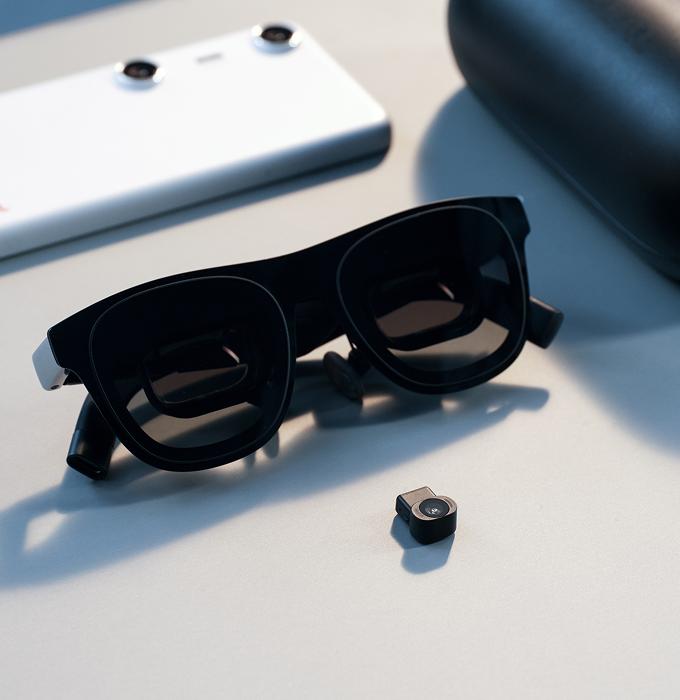
XREAL One Pro with external magnetic camera, Image source: XREAL
XREAL was one of the earlier players to revisit this space. After the One series, XREAL launched the One Pro, which supports an external magnetic camera, adding environmental perception to give the glasses basic 6DoF spatial positioning. Compared to a simple fixed screen, this means virtual windows can truly "stay in the room"—as the user walks closer, moves away, or even circles around, the image maintains the correct spatial relationship.
While it seems like just adding two more cameras, it's essentially a shift back from "display device" to "spatial device."
VITURE took a similar path. The Beast first built 3DoF into the glasses hardware to solve the most basic spatial stabilization problem; the subsequent Luma Ultra added environmental cameras to explore full 6DoF capabilities, going beyond just delivering a stable large-screen viewing experience.
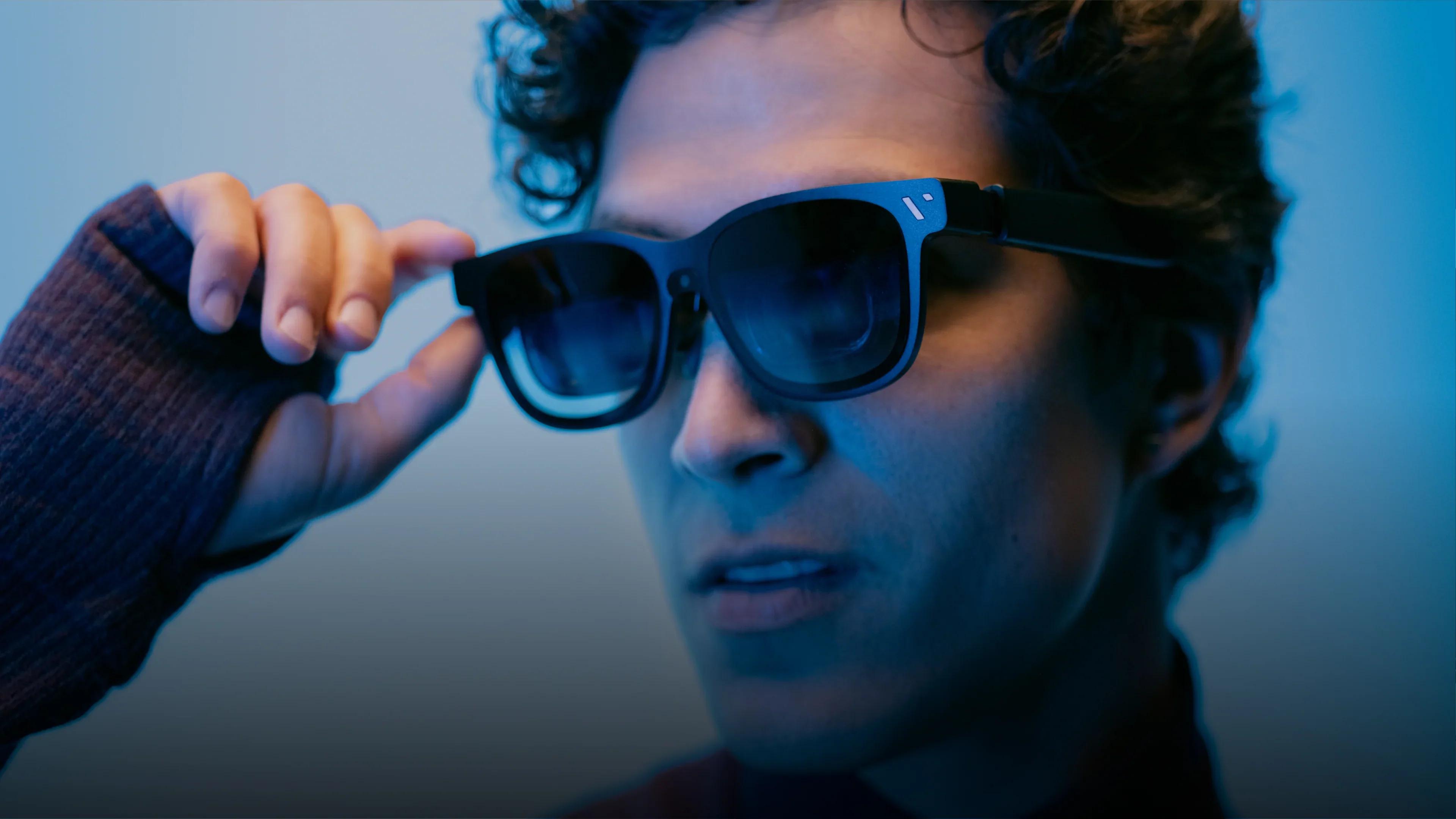
Luma Ultra, Image source: VITURE
TCL RayNeo is still at the 3DoF stage, but the addition of an independent spatial computing chip in the GT series shows it has reserved headroom for more advanced spatial perception. In other words, 3DoF is more of a transitional form, not the final destination.
At the Open Day, Rokid's next-generation AR directly positioned 6DoF as one of its core capabilities, explicitly distinguishing between "spatial camera" and "AI camera." The former handles positioning and environment modeling, while the latter understands the content the user is seeing, working in tandem with an external computing unit to perform more complex spatial computing.
Consumer AR glasses have come full circle back to their early direction, but this time with a more realistic path. So why are manufacturers once again investing in cameras, 6DoF, and full spatial computing?
AI Runs Through Content, Computing, and Interaction—When the Time Comes, All Forces Align
AI is an unavoidable game-changer.
In the early days of AR, the industry faced an awkward problem: what exactly should be placed in the space? Developers had to pre-make 3D models, scenes, and apps, then wait for users to actively open them. But content development costs were high, while the user base was small—creating an impossible chicken-and-egg problem.
Generative AI has changed how 3D content is created. On one hand, 2D-to-3D content technologies are becoming increasingly mature, and the continuous iteration of various world models or 3D generation models will further reshape the core of the future content ecosystem. At the same time, thanks to the rapid advancement of multimodal AI and large model ecosystems, many capabilities we once imagined are gradually becoming reality:
For example, when a user looks at an unfamiliar device, the glasses can recognize its model and place operation steps near the corresponding buttons; when they reach an intersection, navigation arrows can stay at the exact spot where a turn is needed; when talking to a foreigner, translated subtitles can appear in the direction the other person is standing.
AI determines what the user needs, and AR glasses decide where that information should appear. Without AI, AR glasses would still be limited to waiting for content from a small number of apps. But without AR glasses, AI outputs would just float in front of the user like notifications.
Chips are also evolving. Early lightweight AR glasses struggled to simultaneously support visual positioning, graphics rendering, and AI inference. When Qualcomm released the Snapdragon AR2 Gen 1 in 2022, it specifically adopted a distributed multi-chip architecture, cutting power consumption by roughly half while boosting AI performance—its exact goal was to bring spatial perception into slimmer, wireless AR glasses.
Today, on one side there are low-power spatial chips like the XREAL X1 and TCL RayNeo Zone 360, dedicated to processing IMU data, image reprojection, and image stabilization. On the other side, increasingly powerful phone-grade and XR computing platforms handle visual understanding, graphics rendering, and on-device model operations.
Rokid's next-generation AR uses a glasses-side chip plus a Snapdragon computing unit, making a similar tradeoff. The lightweight glasses handle display, sensors, and low-latency processing, while offloading heavy AI and spatial computing tasks to external computing devices.
Interaction has also found a more suitable solution. Past AR glasses often required users to use their phones as a trackpad, or to raise their arms for unstable mid-air gestures. It looked futuristic, but was cumbersome in actual use.
The voice interaction brought by large models doesn't just recognize individual commands—it's starting to understand continuous intentions and context. Users don't need to learn a whole new set of spatial interaction methods; they just need to look at something and say "what's this," "translate this," or "what do I do next," and the glasses can combine visual, voice, and positional information.
Of course, voice won't replace all interactions. Actions like clicking buttons or moving windows still require gestures, rings, or other input devices. But AI has at least drastically reduced the interaction cost of spatial computing.
Content, chips, and interaction—these previously independent technological lines are converging in the AI era. "When the time comes, all forces align"—this phrase fits today's AR glasses perfectly.
This article is from "Leikeji", republished with authorization from 36Kr.