At this World Cup, the Greater Bay Area has become the "fourth home stadium".
Whenever major events like the FIFA World Cup roll around, "Made in Yiwu" always becomes a hot topic in public discourse — from fan scarves to cheering horns, from tiny national flags to mascots, nearly all event merchandise has long been supplied by this small Chinese city.
But at this year's World Cup, the presence of the Greater Bay Area (GBA) stands out exceptionally prominently.
From the official match ball "Triple Wave" for the 2026 FIFA World Cup in Canada, Mexico and the United States, to the massive central LED funnel screens suspended above stadiums and the full suite of optoelectronic display solutions deployed across all three host countries, to the 4K broadcast links that support seamless viewing for billions of global audiences, the world-exclusive licensed FIFA World Cup Trophy replicas, and even the commemorative drinking cups fans raise in celebration.
While the Chinese national team is not competing on the pitch, GBA-based enterprises are present everywhere — from the core operations of the stadium to the tips of viewers' fingers, from hardware manufacturing to technical services. It's hard to imagine this World Cup could even function without the contributions of the Greater Bay Area.
1
The GBA's Footprints at the World Cup
Unlike Yiwu's deep dominance over the festive, fan-facing merchandise of the World Cup, GBA manufacturing underpins the core operational functions that keep the 2026 World Cup running. Among these, the official match ball "Triple Wave" is a standout example of "Shenzhen Smart Manufacturing."
This football, described by Sam Handy, General Manager of Adidas Football, as a "work of art," features a smart bladder embedded with a 500Hz chip that records touch data 500 times per second — including the ball's trajectory, speed, rotation, and directional changes — and transmits this data in real time to the VAR system to assist referees in making decisions. The contract manufacturer behind this innovation, based in Guangming District, Shenzhen, has supplied official match balls for five consecutive World Cups and four consecutive Euros dating back to the 2010 South Africa World Cup, earning its reputation as the exclusive workshop for top-tier tournament football production.
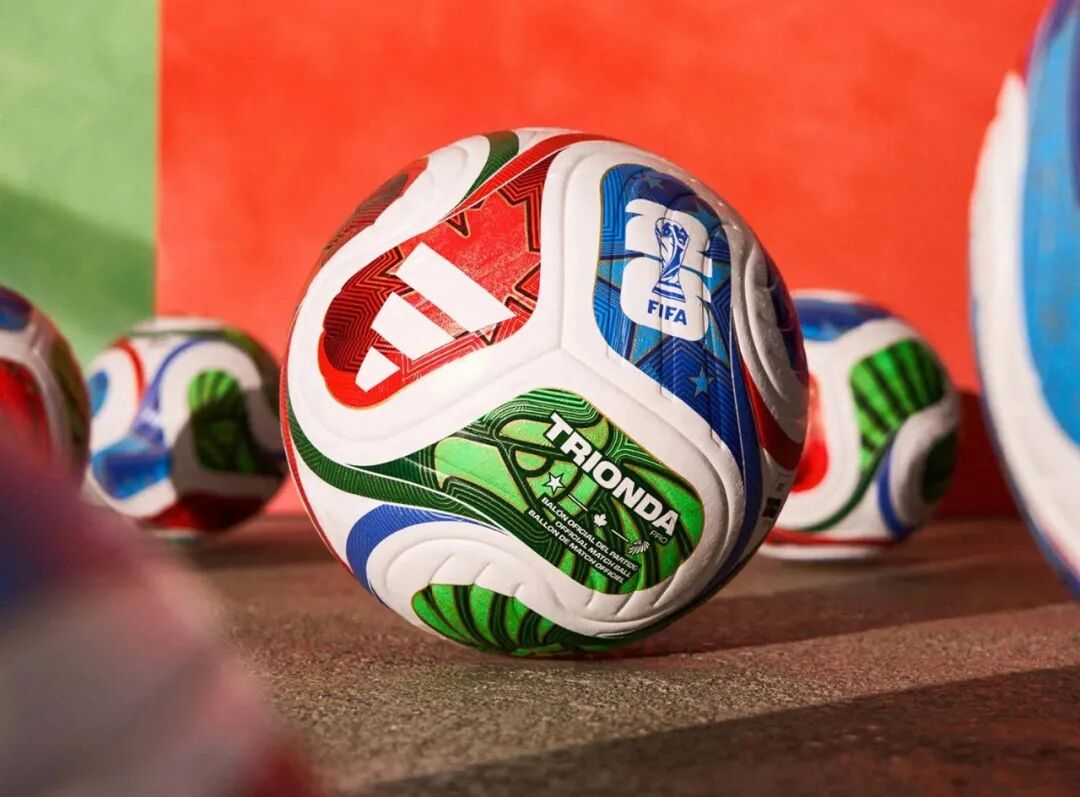
*Image source: Adidas official website
Looking up to the stadium domes, another "GBA calling card" shines just as brightly.
On June 25, at BC Place in Vancouver, Canada, which hosted the do-or-die Group B match between Switzerland and Canada, a central LED funnel screen spanning over 600 square meters hung directly above the pitch. With a 612-square-meter display area, an ultra-high refresh rate of 15,000Hz, and flicker-free 4K resolution, the screen ensured every one of the 50,000 spectators in attendance could catch every detail of goal moments from any angle. This is also the largest venue-mounted suspended display system in Canada, fully constructed by Shenzhen-based enterprise Absen.
Unilumin, another leading Shenzhen LED enterprise, has deployed its services on an even wider scale. Unilumin's optoelectronic display solutions can be found in competition venues and fan zones across all three host nations of the 2026 World Cup — the U.S., Canada, and Mexico. The total area of LED displays in competition venues alone is nearly 1,000 square meters, covering key sites such as Estadio Guadalajara in Mexico; at the FIFA Fan Festival in Dallas, USA, Unilumin also built a giant LED spherical screen to create an immersive viewing experience for fans outside the stadium. These outdoor screens boast a brightness of 10,000 nits, a high refresh rate, and wide viewing angles, allowing them to withstand the high temperatures and rainy weather of North American summers while ensuring TV broadcast footage remains clear and ripple-free.
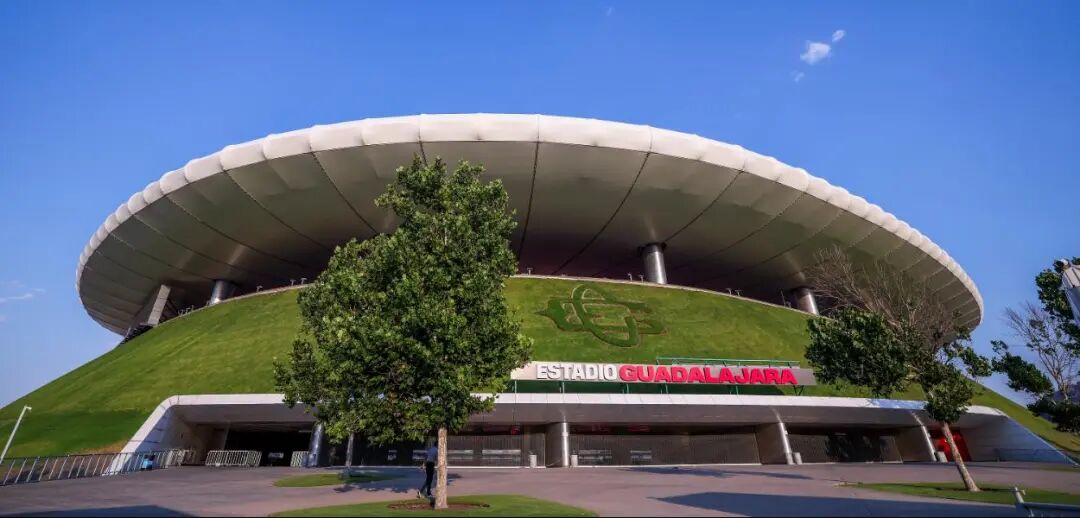
*Estadio Guadalajara, Mexico (Image source: Guadalajara Club official website)
What is visible on the pitch are the large screens and footballs; what is unseen beneath the surface is the data transmission and decoding infrastructure. The ability of billions of global viewers to watch high-definition, smooth World Cup live streams at home relies on the technical support of Shenzhen-based enterprise Hikvision.
Leveraging the industry's first smallest 4K ultra-HD encoder and low-latency, high-stability transmission algorithms, Hikvision's equipment supports the complex transmission requirements from event signal acquisition to multi-terminal adaptation, and currently serves over 20 domestic streaming platforms. The products have also been exported to key World Cup viewing regions such as Latin America and Southeast Asia through partners.
Even the GBA's "atmosphere team," which produces World Cup-themed cultural and creative merchandise, has incorporated a host of innovative elements.
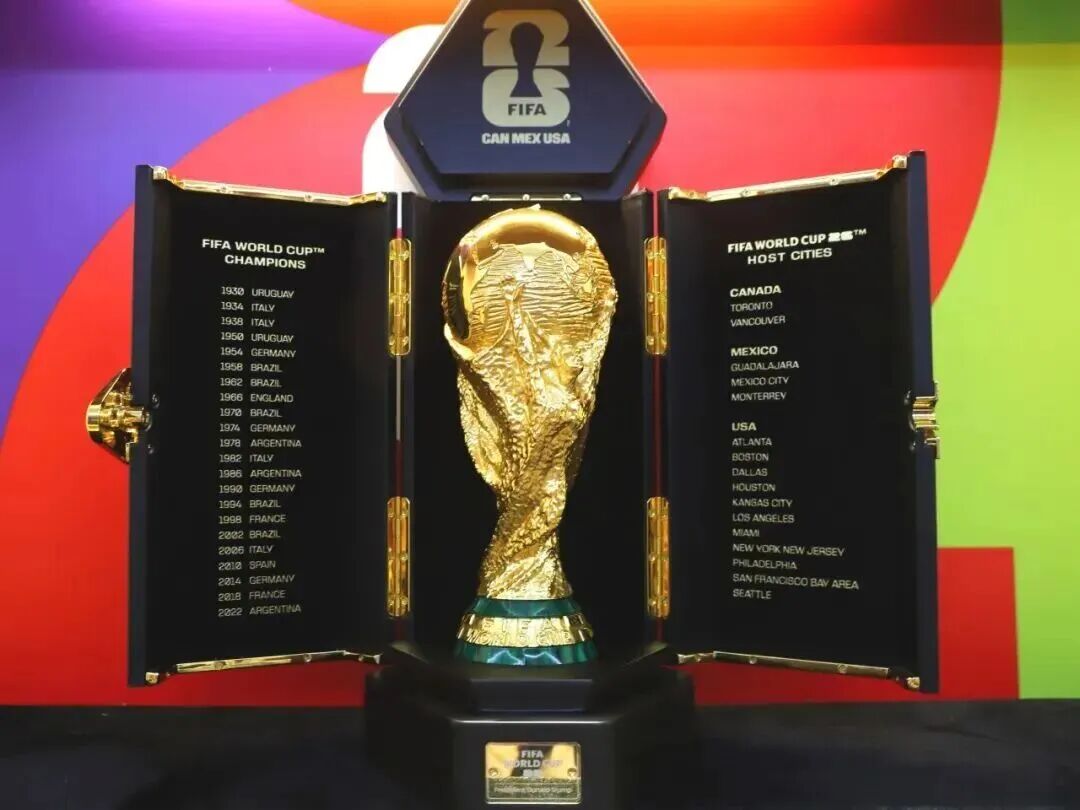
Dongguan Weiguang is the authorized manufacturer of this year's FIFA World Cup Trophy replicas. This replica is scaled 1:1.4 from the real FIFA World Cup Trophy, measuring 26 centimeters in total length, crafted from pure copper plated with real gold, with a base inlaid with genuine malachite. Only 2026 pieces are sold globally, each with a unique serial number.
Jiangmen Taishan-based Speed Hardware stood out in global bidding to win exclusive production rights for four full product lines: color-changing mugs, cola cups, thermos flasks, and aluminum bottles. The most technically challenging of these, the color-changing mug, gradually reveals hidden patterns on its surface when iced water is poured in.
It can be said that nearly every dimension of this World Cup bears the distinct imprint of the Greater Bay Area. This is not a single breakthrough by one isolated enterprise, but a collective demonstration of the entire industrial cluster's strength.
2
The Growth Curve of the "Sports" Greater Bay Area
The collective breakout of GBA enterprises at the World Cup did not happen overnight. Behind every enterprise lies a long, solid growth trajectory. The story of Absen, for example, is almost a microcosm of the rise of the GBA's LED industry.
In 1996, Ding Yanhui, founder of Absen, traveled south from Gansu to Shenzhen with a 500-yuan loan, starting as an assembly line worker and gradually mastering the full set of LED screen manufacturing technologies. At the 2005 Canton Fair, an overseas buyer took an interest in a product priced at 60,000 yuan, and after inspecting the workshop, immediately placed an order with a stack of US dollar cash. This unexpected overseas order opened Absen's eyes to opportunities in the international market and officially launched the company's global expansion journey.
Over the following decade, the company quietly focused on technological development and building overseas distribution channels, gradually penetrating global markets with its products. In 2014, Absen's annual sales exceeded 1 billion yuan, and it successfully listed on the A-share ChiNext market, becoming one of the earliest enterprises in the industry to go global and maintain a leading export volume for many consecutive years.
From the 2018 Russia World Cup to the 2022 Qatar World Cup, the 2023 FIFA Women's World Cup, and this year's Canada-Mexico-U.S. World Cup, this Shenzhen enterprise's screens have become a standard fixture of this top-tier football tournament.
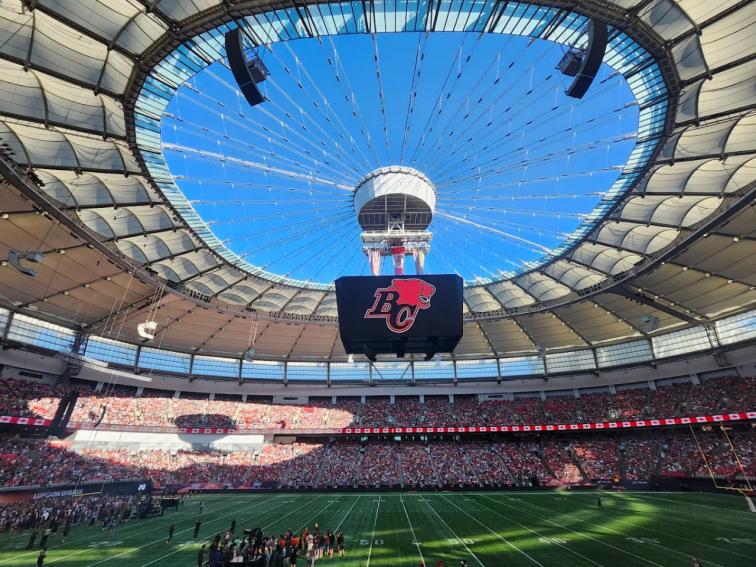
*BC Place Stadium, Vancouver (Image source: Absen official WeChat account)
Dongguan Weiguang's growth path is equally clear. When the enterprise first encountered the World Cup in 1994, it could only produce low-tech lanyards and keychains on a contract manufacturing basis, earning meager processing fees. But with every subsequent World Cup, Dongguan Weiguang moved forward: at the 2018 Russia World Cup, its product line expanded to over 50 items; at the 2022 Qatar World Cup, its product categories jumped to more than 180, and it began to obtain higher-level authorizations; by the 2026 World Cup, its categories surged to over 700, and it secured the highest-level, world-exclusive authorization for the FIFA World Cup Trophy replicas. The company expects its revenue to exceed 40 million USD this year.
While the 2026 World Cup is still ongoing, Dongguan Weiguang has already locked in global authorizations for the 2030 Spain-Portugal-Morocco World Cup and the 2034 Saudi Arabia World Cup.
Unilumin, meanwhile, has achieved another kind of accelerated growth. From the Russia World Cup to the Qatar World Cup, and now the 2026 World Cup, Unilumin's sports optoelectronic display solutions have been continuously upgraded, evolving from simply selling screens to delivering integrated "hardware + software + content" services.
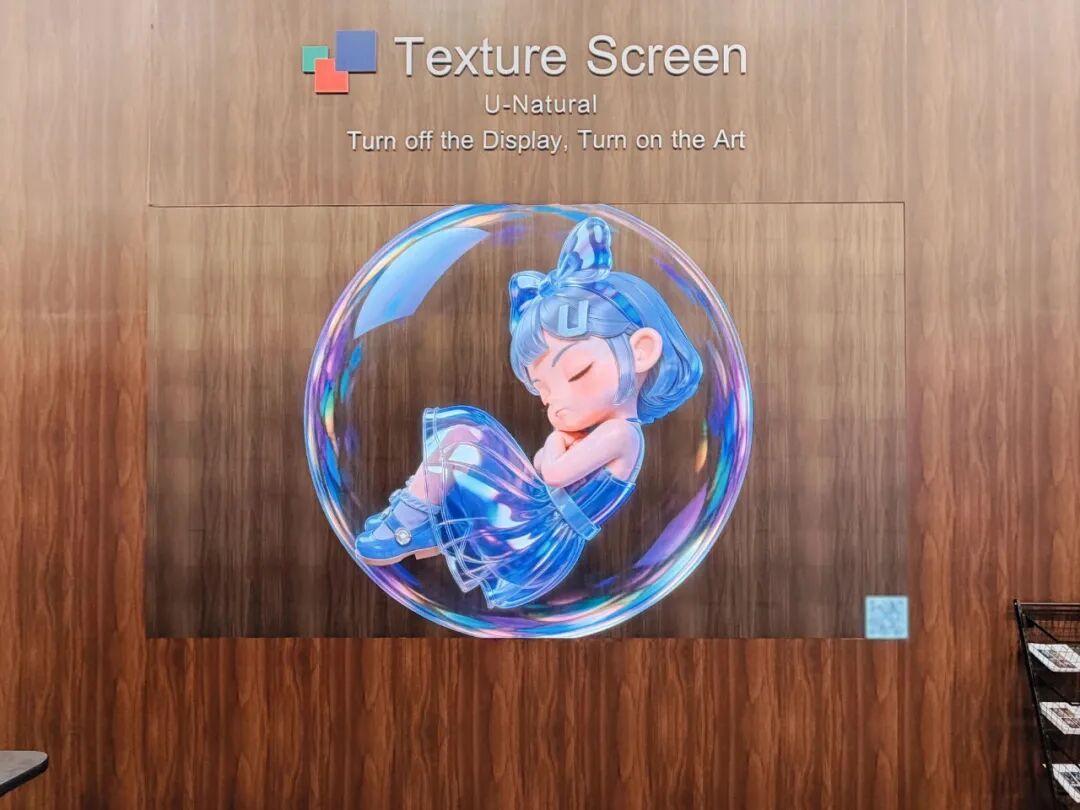
*Holographic transparent LED display (Image source: Unilumin official WeChat account)
In 2025, this Shenzhen-headquartered optoelectronic enterprise achieved annual operating revenue of 8.093 billion yuan, a year-on-year increase of 4.11%, breaking the 8-billion-yuan mark for the first time and ranking first globally in revenue scale among listed LED display enterprises. Its overseas business revenue reached 4.701 billion yuan, accounting for 58.08% of total revenue.
The growth of these three enterprises traces the trajectory of the GBA's sports manufacturing industry's leap forward. Behind them, the overall scale of the entire industry continues to expand. In 2025, the total scale of Guangdong's sports industry exceeded 900 billion yuan, accounting for one-fifth of the national total, and is on track to hit the 1-trillion-yuan milestone.
Every World Cup appearance is backed by decades of technological accumulation and market refinement. It is the steady, step-by-step rise of countless enterprises that has combined to form the overall strength of the GBA's sports industry today.
3
Industrial Clusters Amplify Event Effects
The GBA sports industry's current global influence is no accident — it is the result of the synergy between policy guidance and market vitality.
At the top-level design stage, Guangdong has long established a framework for the development of the sports industry. In the early period of the 14th Five-Year Plan, Guangdong had already clarified the path for high-quality development of the sports industry. Since then, Guangdong has vigorously fostered new "sports +" business forms, promoting deep integration between sports and industries such as manufacturing, technology, and cultural tourism.
Guided by policies and rooted in a solid manufacturing foundation, the GBA's sports industry has gradually formed a complete industrial system spanning upstream core components, midstream equipment manufacturing, and downstream event services. According to the 2025 list of national-level specialized and sophisticated "little giant" enterprises in the sports sector released by the General Administration of Sport of China, 294 enterprises across the country were selected, 63 of which are from Guangdong, ranking among the top in China. Shenzhen alone accounts for 35 of these enterprises, making up 55.6% of the provincial total and ranking first among all cities nationwide.
These "little giant" enterprises are not concentrated in low-end manufacturing; instead, they focus on high-tech cutting-edge fields such as smart sports equipment, sports rehabilitation medicine, sports digitization, and virtual sports, with a distinct technological orientation.
In terms of urban distribution, each city in the Greater Bay Area has its own focus in the sports industry, forming a pattern of differentiated development and complementary collaboration.

Leveraging its advantages in the electronic information industry, Shenzhen leads in sectors such as smart sports equipment, event display technology, and broadcast technology, spawning a group of tech-focused sports enterprises including Absen and Unilumin; Dongguan, drawing on its robust light industry manufacturing capacity, has deep expertise in sports cultural and creative products, event merchandise, and precision components, with Dongguan Weiguang as a representative; Foshan and Jiangmen have reached global top-tier levels in niche categories such as hardware products, sports protective gear, and specialized helmets; Guangzhou boasts deep heritage in brand operation, event services, and traditional sports equipment.
This cluster effect of "each with its own strengths, collaborating with one another" is the core competitiveness of the GBA's sports industry. When an enterprise receives a World Cup order, it can find all supporting suppliers within a radius of dozens of kilometers — from mold makers and surface treatment providers to packaging manufacturers and logistics companies, all within a one-hour drive. This highly efficient industrial collaboration is an advantage that no other region in the world can easily replicate.
For example, Unilumin's core headquarters is located at its smart manufacturing base in Daya Bay, Huizhou, where the entire process from R&D customization and smart manufacturing to quality control testing and global delivery can be completed entirely within the GBA.
In fact, the World Cup is just one window showcasing the strength of the GBA's sports industry. Today, GBA enterprises have penetrated into all kinds of top-tier global sports events. Absen, for example, has achieved full coverage of supporting services for the world's top events including the World Cup, Olympics, NBA, UEFA Euro, and Asian Games. Unilumin's service footprint has also extended to numerous top international events such as the Olympics, Euro, FIBA Basketball World Cup, and Asian Games.
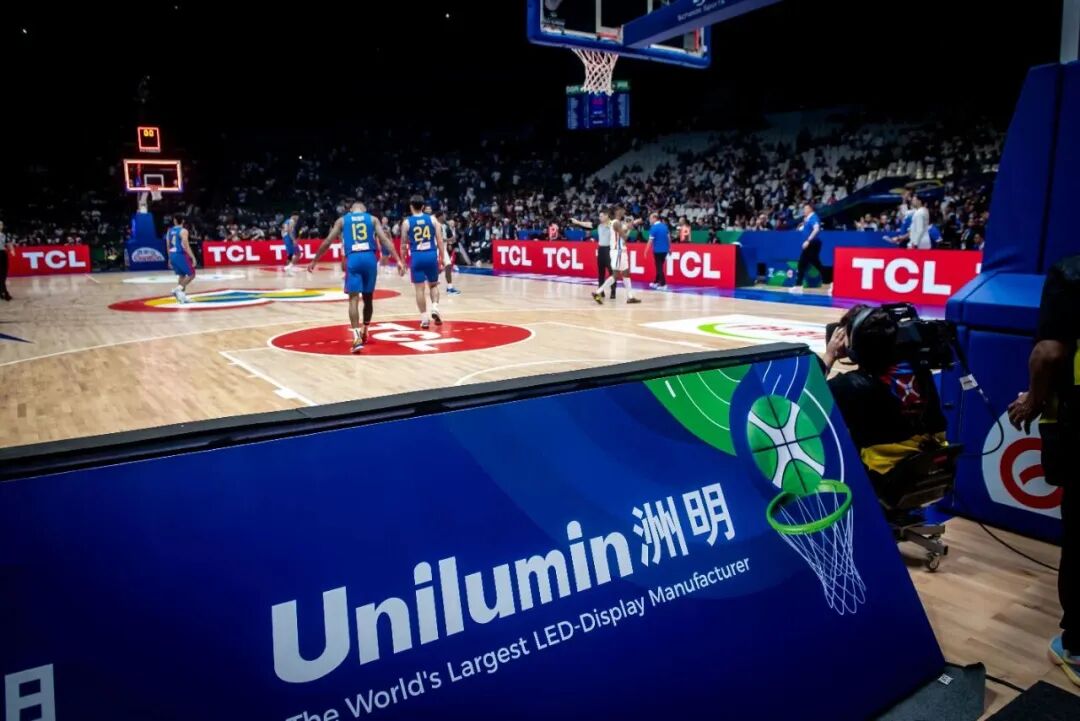
*2023 FIBA Basketball World Cup venue (Image source: Unilumin official WeChat account)
In addition, in the field of sports equipment, table tennis equipment from Guangzhou Double Happiness Sports has been successively used in top international table tennis events including the World Table Tennis Championships, World Cup, and Olympics. At the 2024 Paris Olympics, Double Happiness table tennis balls became the official match balls, and the company also launched innovative equipment such as referee ball-serving machines for the first time; LS2 brand helmets produced by Jiangmen Pengcheng Helmets were selected by the bobsleigh teams of Switzerland,