Three ideal musketeers embarked on their entrepreneurial journey, breaking the record for the fastest delivery of 100 units in the embodied intelligence industry.
Nearly a year into their startup journey, the three core leaders of the former Li Auto intelligent driving team — Wang Kai, Jia Peng, and Wang Jiajia — are finally ready to show off their hard-earned progress.
On July 6th, Extreme Simple Dynamics announced that its first full-scenario robot i7 Pro has completed the first batch of 100-unit deliveries.
This marks the fastest 100-unit delivery record in the embodied intelligence industry, achieved in less than a year.
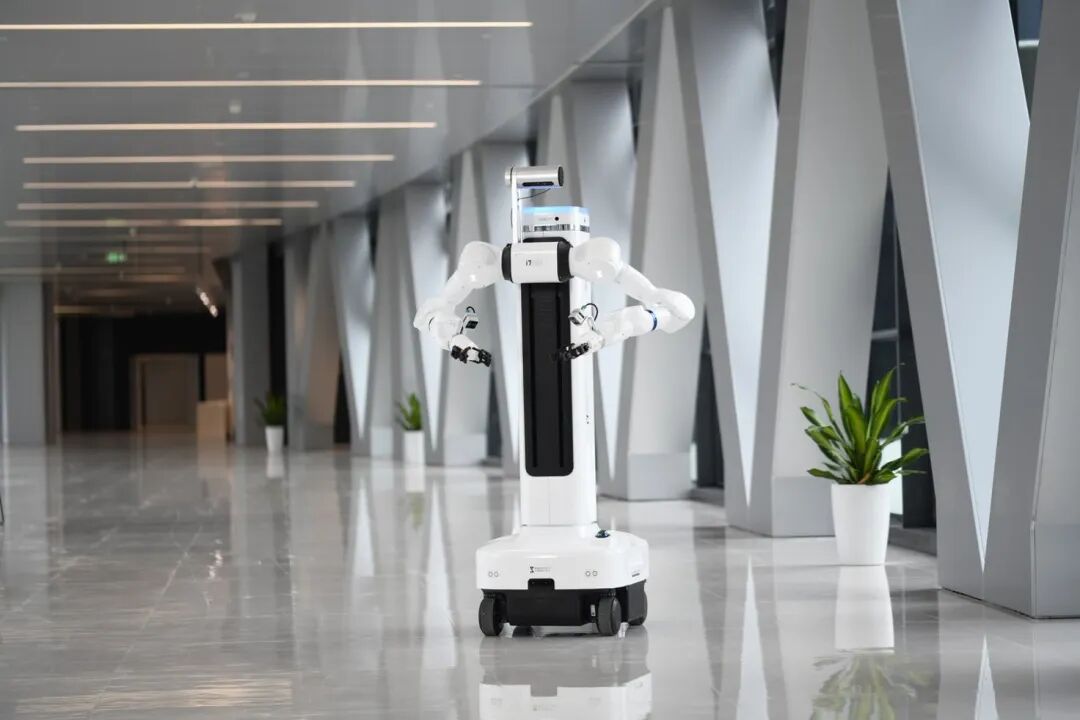
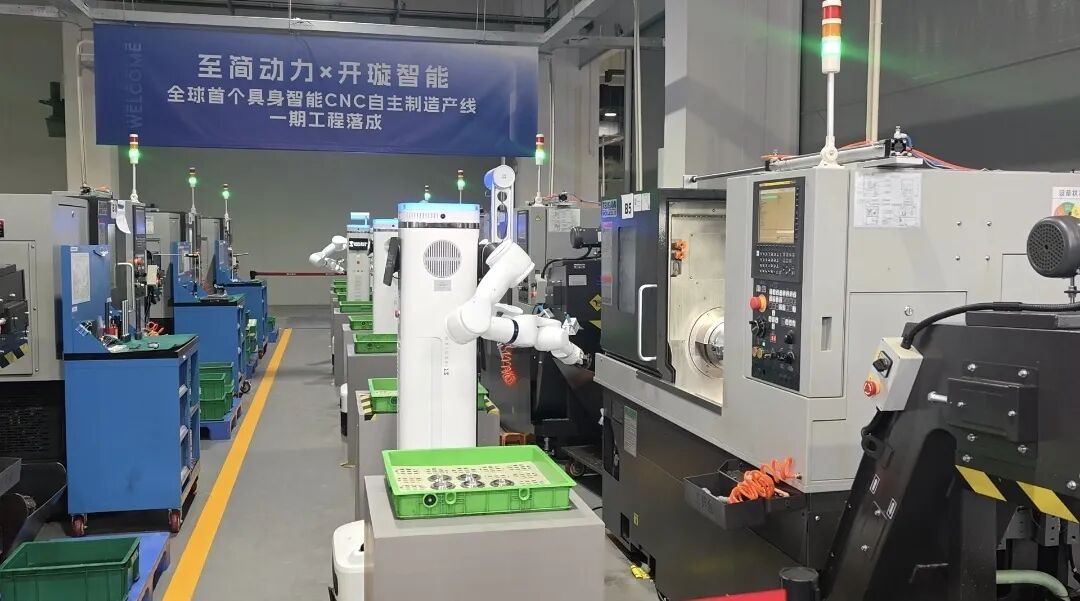
On the same day, the company also unveiled the world's first CNC intelligent embodied robot production line.
At this launch event, which served as a "progress report" for the past year's work, all of Extreme Simple Dynamics' ecosystem partners, clients, and developer partners were in attendance.
Even the front row had reserved seats for old colleagues from Li Auto, as this embodied intelligence startup with Li Auto roots made sure to welcome familiar faces.
QbitAI observed on site that not only Zhang Xiao, former President of the Second Product Line at Li Auto (currently Co-founder & CEO of Jump Smart), and Zhao Zhelun, former Marketing Head of the First Product Line at Li Auto (Co-founder of Vito Power), were invited.
Even Zhan Kun, current head of Li Auto's Autonomous Driving / AI Large Model division, and Zhan Yifei, head of the humanoid robot department at Li Auto, showed up to support their old teammates.
Looking at the founding team's resumes, Extreme Simple Dynamics is a very typical startup in the embodied intelligence track with strong autonomous driving genes.
The three founding members: Wang Kai (Chairman), Jia Peng (CEO & CTO), and Wang Jiajia (Co-founder & COO), all came from Li Auto's intelligent driving team.
At the end of July 2025, the three co-founders began preparing to establish their new company. Shortly after, in just half a year, they completed 5 consecutive rounds of financing, becoming the fastest-growing unicorn in the embodied intelligence industry.
They not only attracted attention from top financial institutions such as Yuanjing Capital and Sequoia China, but also drew in two internet giants: Tencent and Alibaba.
However, Jia Peng told QbitAI that before starting their business, their team's technical boundaries had already gone far beyond autonomous driving.
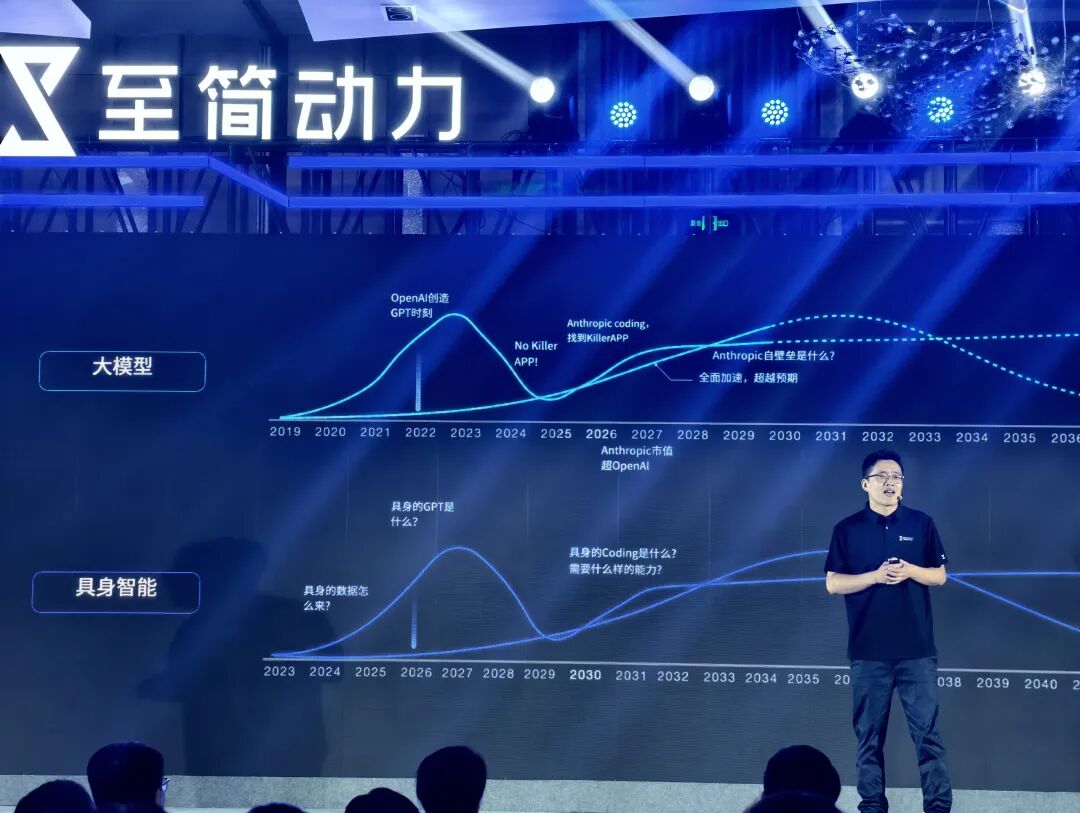
During their tenure at Li Auto, the team members had already implemented multiple embodied automation businesses:
For example, they self-developed an offline unmanned inspection production line for factories, which uses robotic arms + vision systems to fully automate appearance, infotainment system, and charging compatibility verification, and equips factory road tests with audio-visual sensors to automatically screen for abnormal noises.
"Before Jiajia (Co-founder & COO of Extreme Simple Dynamics) left Li Auto, he had already completed the automatic charging project."
In Jia Peng's view, industry technology spreads extremely fast, and the large models of many companies are nearly identical. What truly determines success or failure is the capability to build underlying infrastructure.
- Have you ever actually managed a 10,000-GPU training cluster?
- Have you ever trained your own foundational model?
- Have you ever worked with various types of chips?
Jia Peng said that his team has done all of these, and this startup is a "well-prepared" venture.
At the same time, he also admitted that embodied intelligence is "many, many times more difficult" than autonomous driving.
Fortunately, he worked at NVIDIA for 5 years in his early career, which helped him cultivate a strong mindset.
"Jensen Huang always conveyed to me the product philosophy: make a 'rubbish' product first, let people criticize it, and after enough criticism, the product will finally succeed."
Let i7 Pro manufacture itself
The i7 Pro is exactly the product that went through the "criticism" phase before moving to mass delivery.
It is reported that this world's first CNC intelligent embodied robot production line launched by Extreme Simple Dynamics was built in cooperation with Kai Xuan Intelligence, a subsidiary of Green Harmony, the leading domestic harmonic reducer manufacturer.
A harmonic reducer, in simple terms, is the "joint" of a robot.
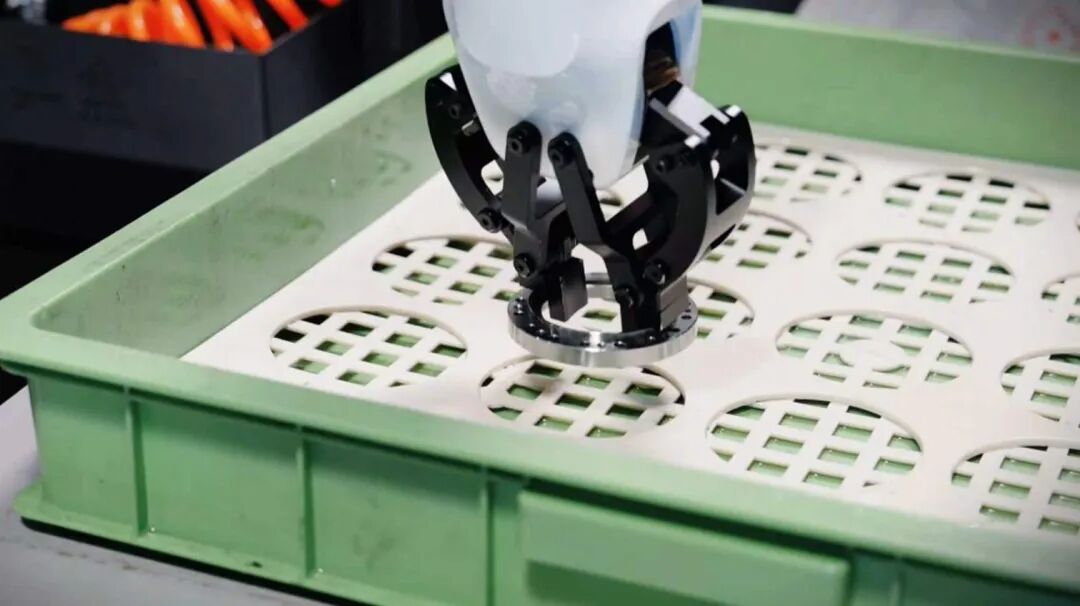
Whether a robot can walk steadily, move accurately, and be durable and robust all relies on this core component.
This collaboration between the two companies focuses on one key goal: let the i7 Pro manufacture "itself".
The robot is responsible for processing the internal parts of harmonic reducers on the production line, forming a hardware self-bootstrapping closed loop.
Jia Peng told QbitAI that the two parties have a mutually supplying, two-way supporting partnership.
The two teams worked on site together almost the entire time, living, eating, and working side by side for a long period.
After so much time working together, arguments were inevitable.
Because the real factory environment is far harsher than we imagine.
The CNC workshop is covered in cutting oil stains, with oily, slippery floors — a completely different world from clean and tidy laboratories.
When the i7 Pro first entered the site for testing, it immediately "crashed".
Its wheels kept slipping, the body swayed back and forth, it could not stand stably or move properly, and it could not even complete the most basic movement, let alone process parts accurately.
At that time, the team faced two choices: either spend money to renovate the workshop floor and redo the ground to adapt to the robot;
Or optimize the walking module to let the robot actively adapt to this harsh, oily and slippery working condition.
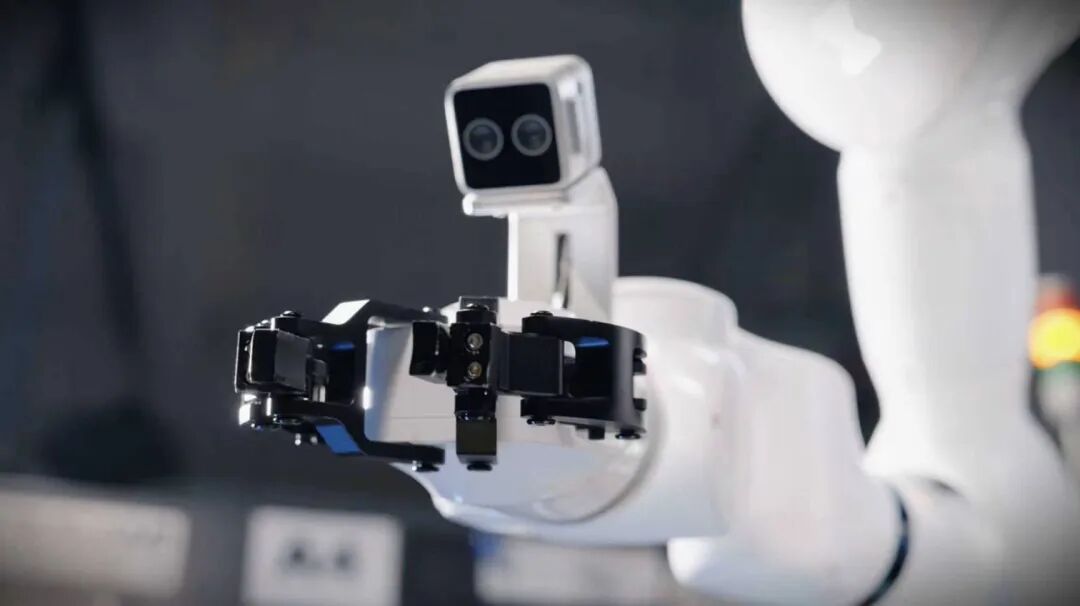
Besides slipping while walking, in the early stage, the robot's gripper struggled to accurately perform fine movements such as pressing machine tool buttons.
It was another choice: replace the gripper with a higher-precision one and pile on hardware to increase costs? Or modify the machine tool to adapt to the robot's operation logic?
Many teams encountering this problem would most likely choose the easier way: replace parts, pile on hardware, and modify the environment.
But the consequence of this approach is obvious: the robot will always be a "customized special machine", only suitable for this clean, tailored scenario, and will become useless when moved to another factory or production line.
The result they reached after many heated discussions was that they unanimously chose the more challenging path.
Extreme Simple Dynamics focused on perfecting the robot itself; Green Harmony reserved signal interaction interfaces on the machine tools, so that subsequent robots do not need to physically press buttons with grippers or rely heavily on tactile sensors, and can directly send digital signals to control the machine tool's start/stop, door opening/closing, and trigger function keys.
In Jia Peng's view, the two teams must share the same vision and be willing to endure hardship to quickly iterate and polish a good product.
"Moreover, we prefer to let users criticize the product first, rather than letting the robot crash on site and disrupt production."
It was by fixing countless small bugs that the i7 Pro got rid of the "laboratory demo" label and truly began working in factories.
Now, it is a universal robot platform that can be freely migrated and adapted to various industrial working conditions.
It is reported that besides the CNC production line, the i7 Pro has also been deployed in scenarios such as flexible PCB and optical module manufacturing.
Wang Jiajia, Co-founder & COO of Extreme Simple Dynamics, said that these scenarios have real, tangible demands.
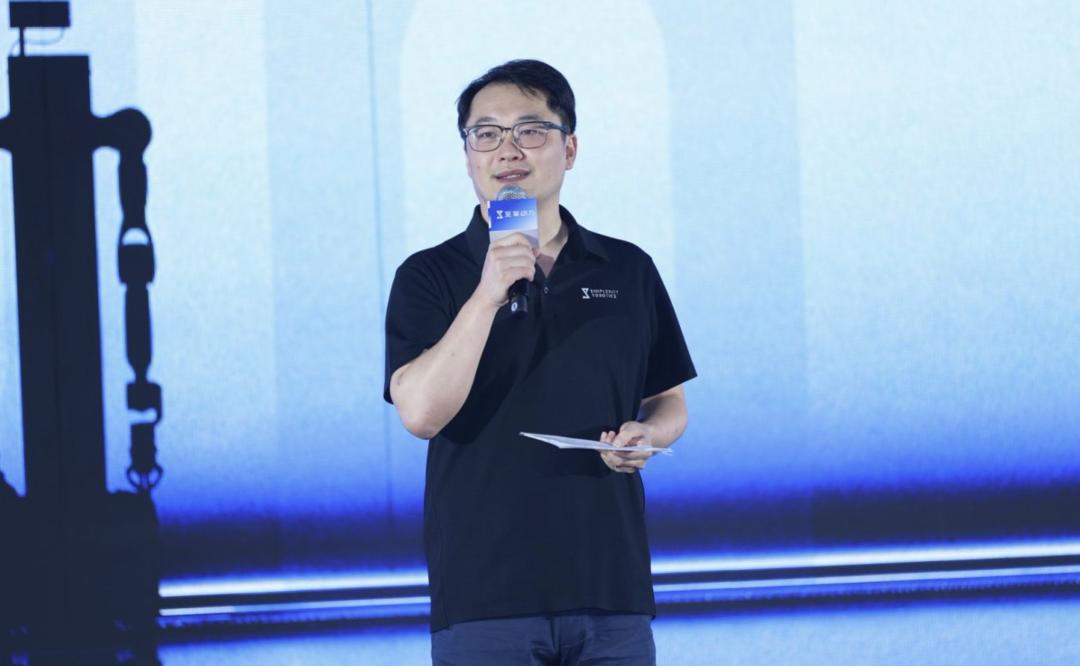
Processes like CNC, precision machining, and heat treatment already have high technical barriers, and labor costs are also rising.
If a client is building a new production line, designing it from the very beginning to be compatible with embodied intelligent robots, integrating tasks such as grasping, placing, picking, transporting, carrying, and loading/unloading, will make subsequent deployment much smoother.
Moreover, scenarios like optical modules and flexible PCBs are also linked to the growth of AI infrastructure.
"We hope to first train our capabilities in rapid deployment, stable operation, data closed-loop, and model optimization in these scenarios that have real demand, growing market potential, and high process difficulty."
QbitAI learned that besides industrial scenarios, Extreme Simple Dynamics also plans to enter the supermarket retail, smart logistics, and biomedical sectors in the future.
In terms of product matrix, the company will launch two new products next month.
Top-spec i7 Pro, priced at 229,800 RMB
When talking about why they chose to cooperate with Extreme Simple Dynamics, Chu Jianhua, CTO of Green Harmony and CEO of Kai Xuan Intelligence, admitted that the fundamental reason is the labor shortage facing the manufacturing industry.
Their previous factory had more than 1,000 CNC machine tools, and each piece of equipment required an "operator" to perform repetitive tasks such as loading/unloading, clamping, and inspection.
"Traditional operator jobs are tedious and boring, young people are unwilling to work night shifts, and factories are facing recruitment difficulties."
However, traditional industrial robots have not fully solved this problem.
The reason is that traditional robots are more suitable for highly standardized production environments.
Once faced with manufacturing scenarios with multiple product varieties, small batches, and frequent line changes, they require re-teaching and re-debugging, leading to extremely high deployment costs.
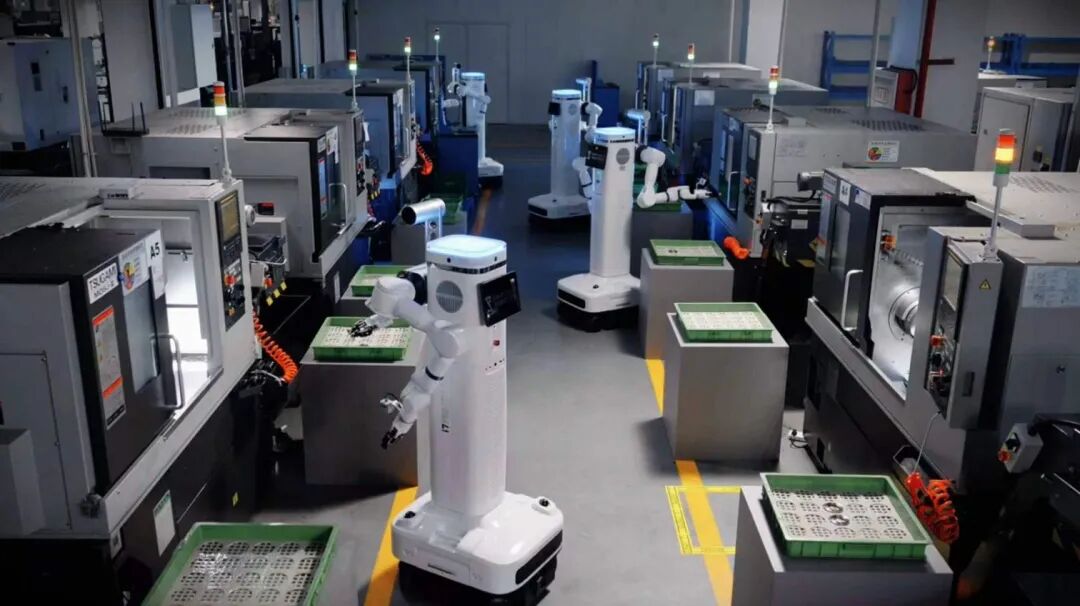
They need embodied intelligent robots that rely on hand-eye-brain collaborative models, can think autonomously, allow parts to be placed randomly, find their own positions and complete clamping, and adapt to different scenarios.
Moreover, it can complete automatic flexible grasping based on different sizes, types, and shapes of parts.
But a realistic problem is: embodied intelligent robots are too expensive.
To endow robots with stronger capabilities, more sensors, more complex actuators, higher computing power platforms, and massive software and algorithm investments are required.
All of these directly translate to higher overall machine prices.
It is reported that the top-spec version of the i7 Pro is priced at only 229,800 RMB.
That is far cheaper than some humanoid robots in the industry that sell for five or six hundred thousand RMB.
"If you were the client, who would you buy from?" Wang Jiajia calculated that compared with traditional solutions, purchasing the i7 Pro can achieve payback in 1.5 years.
"The average salary in the machining industry is 8,000 to 10,000 RMB per month. You don't even need to calculate the ROI — just look at the salary numbers and you will know."
Chu Jianhua also said that using embodied intelligent robots can recover labor costs in about a year.
But behind the 229,800 RMB price tag, it is not just about simply cutting profits.
In Wang Jiajia's view, the robot industry now resembles the early stage of the new energy vehicle industry.
The problem back then was not that no one needed cars, but that battery costs, supply chains, and manufacturing capabilities restricted large-scale adoption.
The robot industry now faces similar challenges.
What Extreme Simple Dynamics aims to do is to drive the maturity of the manufacturing system in reverse through real-world applications.
This is the core logic behind the concept of "robots making robots".
Wang Jiajia described this process as:
Previously, everyone debated which came first, the chicken or the egg. Now we already have the chicken, and it's starting to lay eggs.
This is actually very similar to what Tesla did in the past:
First build the Roadster (high-priced niche product), then use its technology to build the Model S/X (high-end mass-market products), and finally use the accumulated supply chain and manufacturing capabilities to launch the Model 3/Y (mass popularization products).
Every iteration uses the "egg" from the previous generation to hatch the next generation's "chicken".
In this logic, robots are not just products for sale, but a continuously iterating manufacturing platform.
The data generated by robots will in turn optimize the model;
Real production feedback will drive hardware improvements;
As the scale expands, R&D and manufacturing costs will be further diluted.
Eventually, a positive cycle will be formed.

Of course, this cycle will not be formed overnight.